Europe MRI System Market Size, Growth, Share & Trends Analysis

Europe MRI System Market by Component (Magnet, RF Coil, Cooling System, Shim System), Field Strength (1.5T, 3T, 7T), Application (Brain, Spine & MSK, Vascular, Breast, Pediatric, Pelvic, Cardiac), Installed Base & Replacement Rate - Forecast to 2031




OVERVIEW
Source: Secondary Research, Interviews with Experts, MarketsandMarkets Analysis
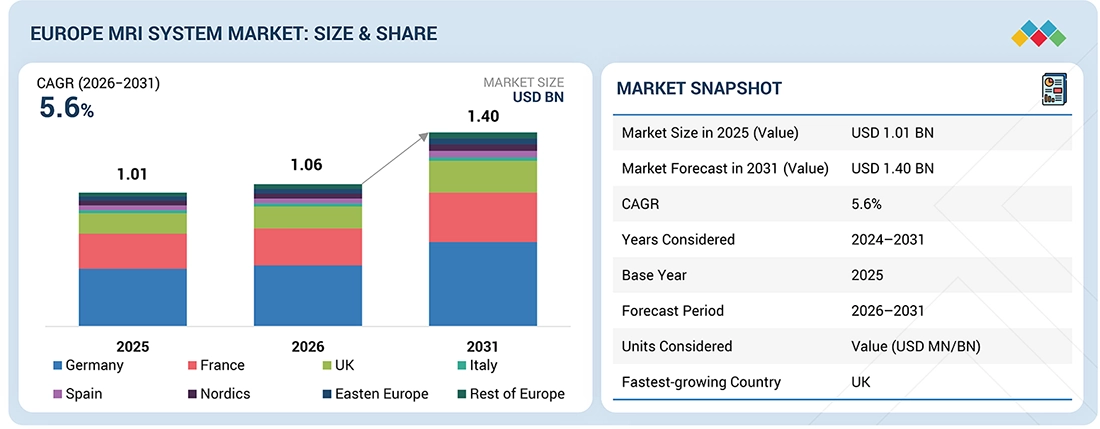
The Europe MRI system market, valued at USD 1.01 billion in 2025, stood at USD 1.06 billion in 2026 and is projected to advance at a resilient CAGR of 5.6% from 2026 to 2031, culminating in a forecasted valuation of USD 1.40 billion by the end of the period. The regional market is experiencing growth as various clinical, technological and policy-related advancements are driving the industry forward. The combination of an increasing elderly population and rising cancer cases results in greater demand for diagnostic services, which drives hospitals to implement more MRI procedures. The UK and several other nations need to expand their medical imaging capacity due to ongoing imaging backlogs and shortages in qualified personnel. Hospitals receive national and EU funding to upgrade their imaging systems through Al integration and advanced MRI technology implementation. The usage of low-field and portable MRI systems is increasing access to MRI services, while Al-based reconstruction tools enhance scanning efficiency and capacity. The market for medical imaging systems is affected by ongoing replacement cycles, rising demand for specialized MRI systems and environmental sustainability objectives, which include energy reduction and helium conservation efforts. The emergence of new vendors with competitive prices creates procurement challenges that impact purchasing practices across the region.
KEY TAKEAWAYS
-
BY REGIONGermany accounted for a 26.1% share of the Europe MRI system market in 2025.
-
BY COMPONENT TYPEBy component type, the magnets & electromagnets segment is expected to register the highest CAGR of 7.1% during the forecast period.
-
BY FIELD STRENGTHBy field strength, the 3T MRI systems segment is expected to record the highest CAGR of 5.7% between 2026 and 2031.
-
BY ARCHITECTUREBy architecture, the wide bore MRI systems segment is likely to exhibit a growth rate of 5.6% during the forecast period.
-
BY DESIGNBy design, the floor fixed MRI systems segment is projected to register a growth rate of 5.5% from 2026 to 2031.
-
BY APPLICATIONBy application, the brain & neurological MRI segment held a 31.1% share of the Europe MRI system market in 2025.
-
BY END USERBy end user, the hospitals segment held a 53.1% share of the MRI system market in 2025.
-
COMPETITIVE LANDSCAPE - KEY PLAYERSCompanies GE healthcare (US), Siemens Healthineers (Germany), and Philips Healthcare (Netherlands) were identified as some of the key players in the Europe MRI system market. Companies are driven by demand of advanced diagnostics, technological innovation (AI, silent MRI, better software), government support for healthcare infrastructure, and increasing focus on patient comfort & accessibility (open MRIs, lower radiation), all leading to greater demand for high-quality, efficient imaging.
-
COMPETITIVE LANDSCAPE - STARTUPS/SMESCompanies such as Oxford Instruments (NanoScience) (UK), MR Solutions Ltd (UK), and neoscan solutions gmbh (Germany) are among the startups/SMEs in the Europe MRI system market.
The Europe MRI system market is projected to grow steadily from 2026 to 2031, driven by rising diagnostic needs from an aging population and increasing cancer cases. Persistent imaging backlogs and workforce shortages are pushing hospitals to purchase new scanners and outsource services. EU and national funding programs are driving upgrades to advanced systems and accelerating the adoption of AI-enabled imaging. Growing interest in low-field and portable MRI is improving access, while replacement cycles and demand for specialized applications support continued investment. Sustainability goals and competitive pricing pressures from new entrants are also influencing procurement decisions across the region.
TRENDS & DISRUPTIONS IMPACTING CUSTOMERS' CUSTOMERS
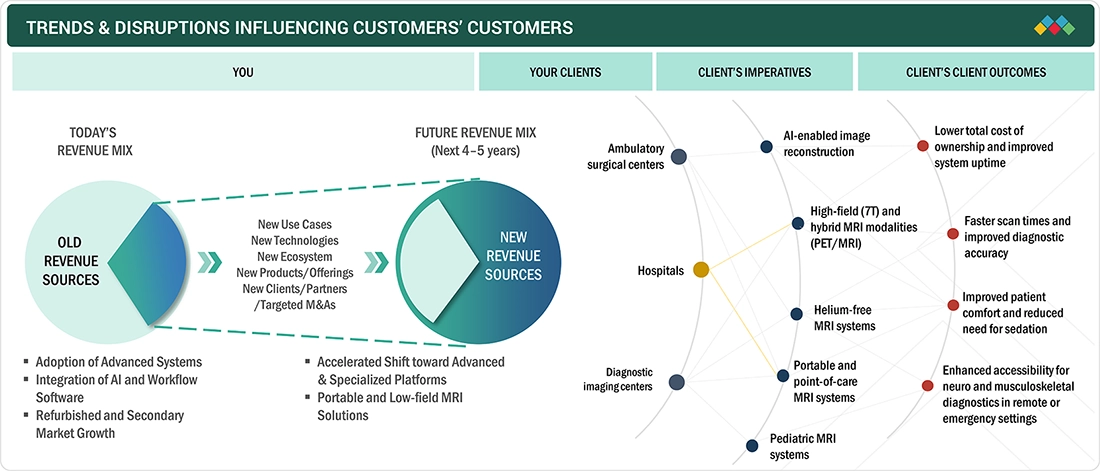
The Europe MRI system market is undergoing major transformation through the combination of technological disruptions and the changing priorities of customers. As the revenue mix shifts toward advanced applications, Al, and ecosystem partnerships, hospitals and imaging centers are increasingly adopting high-field, hybrid, and helium-free MRI platforms to address rising diagnostic demand and operational pressures. The introduction of AI-enabled reconstruction, with workflow automation and quantitative imaging technology, enables providers to enhance their scanning capacity while more effectively handling their existing operational difficulties. At the same time, portable and low-field MRI solutions are expanding accessibility, particularly in emergency, pediatric, and remote care settings. The requirements for sustainability drive companies to develop energy-efficient solutions and zero-helium systems, which national and EU funding programs support through their financial backing of digital modernization efforts. The combination of these trends creates a new market, which enables procurement decisions to improve imaging efficiency and drive the market.
Source: Secondary Research, Interviews with Experts, MarketsandMarkets Analysis
MARKET DYNAMICS

Level
-
Adoption of high-field systems, portable/low-field solutions for point-of-care and faster sequences

-
Increasing use of AI for image reconstruction, noise reduction, and protocol optimization


Level
-
Large upfront investment, lengthy service contracts, and rising total cost of ownership

-
Variable reimbursement policies and capacity constraints in public hospitals


Level
-
AI and software monetization

-
Mid- and low-field MRI expansion


Level
-
Pricing and tender competition in public systems

Source: Secondary Research, Interviews with Experts, MarketsandMarkets Analysis
Driver: Adoption of high-field systems, portable/low-field solutions for point-of-care and faster sequences
Hospitals and imaging centers throughout Europe are purchasing high-field MRI systems, which include 1.5T and 3.0T units, as clinical standards demand greater accuracy for neurological and cancer and heart disease diagnostic procedures. The previous year, 3.0T superconducting systems saw strong adoption across the region, with Germany, France, and the UK serving as major distribution centers for healthcare organizations that needed to balance high patient flow with accurate results during their most complicated patient cases. Hyperfine and other providers work toward obtaining CE certification for their portable ultra-low-field MRI systems, which they plan to launch through European distribution agreements while using Al technology to enhance patient flow in remote healthcare environments. Advanced features, such as faster imaging sequences and Al-enabled reconstruction, reduce scan times and improve patient throughput that supports workflow efficiency in busy public and private facilities. Medical facilities utilize portable and mobile MRI units for stroke evaluations and point-of-care assessments at outpatient clinics, which enables operators to provide medical services outside of standard radiology departments.
Restraint: Large upfront investment, lengthy service contracts, and rising total cost of ownership
MRI systems present clinical benefits but their pricing structure creates a major obstacle for European healthcare facilities. The complete initial cost increases when medical facilities need to install magnetic shielding systems and HVAC systems. The maintenance expenses for annual service contracts particularly the maintenance of traditional helium-cooled superconducting magnets create additional operational costs, which pressure hospital and diagnostic-chain financial resources. Fiscal constraints on public health systems force them to slow down their procurement processes while their network upgrades face limitations due to budgetary constraints that offer lower reimbursement rates and have competing funding needs. When healthcare facilities face budget restrictions smaller outpatient centers choose to postpone equipment acquisitions or select mid-field and refurbished systems. The NHS Commercial Solutions of the UK issued a substantial Managed Equipment Services (MES) procurement framework in 2025, which combines equipment and service and maintenance and lifecycle support for up to approximately eight years as providers need to distribute their initial costs and service responsibilities across time instead of financing complete MRI system purchases at once. The financial burden of operating advanced MRI systems together with public budget constraints leads to budget difficulties for healthcare facilities.
Opportunity: AI and software monetization
European MRI vendors have a growing opportunity to monetize beyond hardware sales by offering software and cloud platforms and AI imaging tools. The hospitals use AI algorithms which reconstruct images and select protocols and perform quantitative analysis as their preferred solution for achieving standardized imaging workflows and better diagnostic results. The Spanish company Quibim and the French company Raidium which develops radiology AI solutions show how domestic companies create regional innovations, which enhance MRI systems through their analytics and decision support technologies. Cloud-based image management and enterprise imaging platforms enable multi-site networks to share and review scans efficiently which creates subscription-based revenue streams and stronger customer relationships while the system supports interoperability across national health services. European AI-centric imaging companies experience increasing market presence. The Spanish AI imaging solutions provider Quibim expanded its partnerships and raised significant funding while it developed cloud-based MRI analytics platforms to help hospitals improve diagnostic processes in their existing MRI systems.
Challenge: Pricing and tender competition in public systems
In Europe's largely publicly funded healthcare landscape, national and regional tenders dominate MRI procurement. These competitive processes exert downward pricing pressure, extend decision timelines and reward suppliers who can offer comprehensive cost-of-ownership solutions rather than just equipment. Vendors must increasingly adopt flexible commercial models, such as leasing, managed services, outcome-based contracts and fleet-wide uptime, guarantees to align with hospital OPEX budgets and win tenders. Price sensitivity is particularly acute in markets with tight budgets or slow reimbursement adjustments, encouraging suppliers to innovate in financing and service delivery to maintain margins and secure long-term partnerships with healthcare providers. Tender platforms show active public procurement notices in 2025 for rental of MRI systems (second-hand 1.5T units in France) and acquisition/installation tenders in Portugal and Romania, indicating that many healthcare buyers are resorting to leasing or rental modalities rather than new purchase due to budget constraints.
EUROPE MRI SYSTEM MARKET: COMMERCIAL USE CASES ACROSS INDUSTRIES
| COMPANY | USE CASE DESCRIPTION | BENEFITS |
|---|---|---|
 |
Installation of the Freelium sealed-magnet MRI platform at European hospitals to support sustainability and reduce helium dependency; the platform targets facilities with constrained infrastructure, enabling simpler siting, improved uptime, and broader access to advanced MRI | Lowers total cost of ownership | Reduces helium use and service burden | Supports sustainability goals and infrastructure flexibility |
 |
Radiology Operations Command Center pilot with remote scanning capability deployed across multiple NHS and EU hospitals (e.g., Imperial College Healthcare NHS Trust); this enables remote MR scan editing and expert oversight across sites | Boosts scanning efficiency (e.g., Imperial pilot showed ~9% throughput improvement) |
 |
Imaging value partnership with University Hospital Nantes (France) installation of six new MRI systems as part of a ~12-year collaboration to modernize public hospital imaging infrastructure | Expands access to cutting-edge MRI across multiple public hospitals | Improves clinical service continuity and equipment lifecycle planning |
 |
Adoption of advanced modular and workflow-enhancing MRI solutions in European radiology networks, with emphasis on intelligent imaging workflow and improved diagnostic confidence across both 1.5T and 3T systems | Streamlines MRI workflow with intelligent automation and processing | Offers scalable technology for facilities of varying sizes |
Logos and trademarks shown above are the property of their respective owners. Their use here is for informational and illustrative purposes only.
MARKET ECOSYSTEM
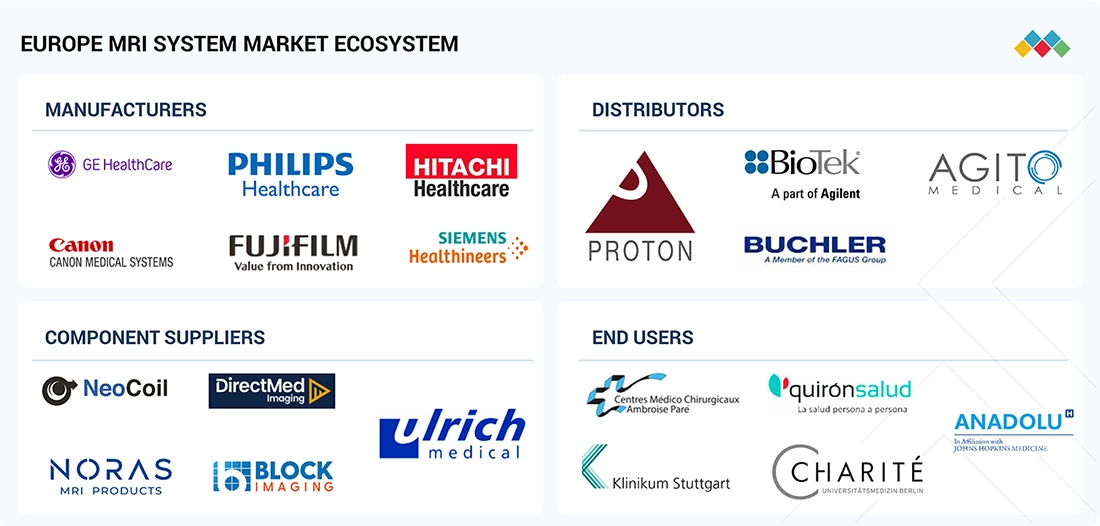
The Europe MRI system ecosystem operates within a mature ecosystem that links leading manufacturers, distributors, component suppliers, and end users. Major OEMs, such as GE Healthcare, Philips Healthcare, Siemens Healthineers, Canon Medical Systems, Hitachi Healthcare, and Fujifilm, develop high-resolution, AI-enabled MRI platforms tailored to European clinical and regulatory requirements, setting technology and pricing benchmarks for the region. Distributors including Proton, BioTek, Agito Medical, and Buchler provide regional sales coverage, logistics, and service, enabling penetration into secondary hospitals and independent imaging centers. A specialized network of component suppliers, such as Ulrich Medical, NeoCoil, Noras MRI Products, DirectMed, and Block Imaging, delivers coils, gradients, and refurbished parts that sustain performance and extend system life cycles. The ecosystem is completed by hospitals, specialty clinics, and diagnostic chains—Centres Médico Chirurgicaux Ambroise Paré, Klinikum Stuttgart, Charité Berlin, and Quirónsalud—which drive the demand through rising imaging volumes and influence vendors’ product roadmaps via clinical collaborations and reference sites.
Logos and trademarks shown above are the property of their respective owners. Their use here is for informational and illustrative purposes only.
MARKET SEGMENTS
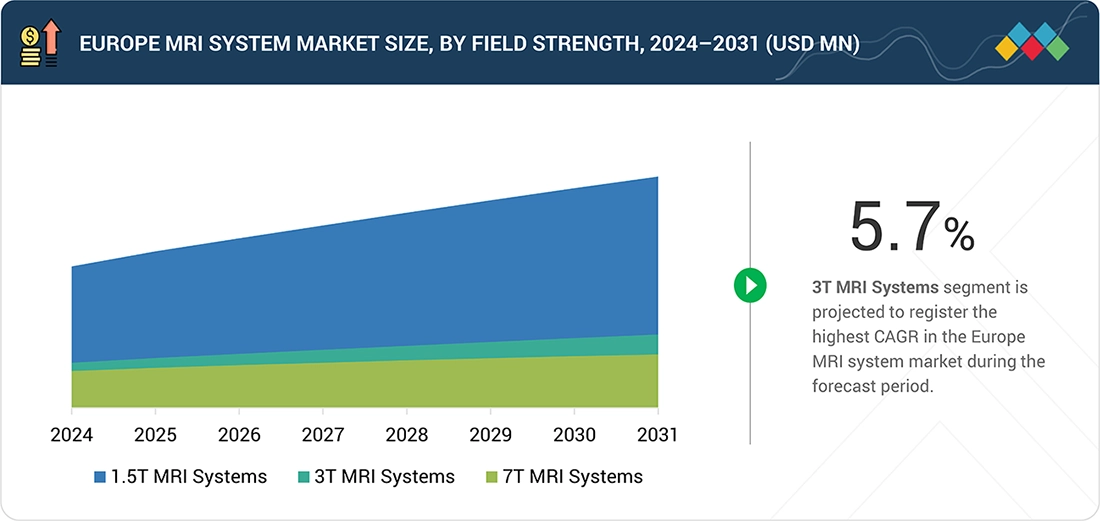
Source: Secondary Research, Interviews with Experts, MarketsandMarkets Analysis
Europe MRI System Market, By Field Strength
By field strength, the Europe MRI system market is segmented into 1.5T MRI systems, 3T MRI systems, and 7T MRI systems. The 3T MRI segment is expanding rapidly due to its superior image quality, higher signal-to-noise ratio, and enhanced diagnostic accuracy—especially for neurology, musculoskeletal, oncology, and cardiovascular imaging. European hospitals are increasingly adopting 3T systems to support precision diagnostics, research-driven healthcare models, and advanced clinical applications, such as functional MRI, diffusion imaging, and spectroscopy. Growing demand for early disease detection and complex case evaluation is also accelerating upgrades from older 1.5T systems. Additionally, technology advancements—faster scan times, improved workflow automation, reduced artifacts, and AI-based reconstruction—are making 3T systems more efficient and cost-effective. Supportive reimbursement structures and rising investment in high-end imaging across the UK, Germany, France, and the Nordics further boost the segmental growth.
Europe MRI System Market, By Design
By design, the Europe MRI system market is categorized into floor-fixed MRI systems, ceiling-fixed MRI systems, and portable MRI systems. Floor-fixed MRI systems are expected to see strong growth due to their superior stability, high imaging performance, and ability to support advanced high-field configurations, such as 1.5T and 3T systems. European hospitals and diagnostic centers prefer these systems as they enable consistent, high-resolution imaging for complex clinical applications—neurology, oncology, and cardiology—where precision and minimal vibration are critical. The segment also benefits from increasing hospital modernization projects across the UK, Germany, France, and the Nordics, where institutions are investing in permanent, full-capacity MRI suites. Additionally, floor-fixed systems support broader patient throughput, seamless integration with AI-enabled workflows, and long-term scalability. Their reliability, reduced motion artifacts, and compatibility with advanced coils and imaging software further reinforce their dominance in high-volume European clinical environments.
Europe MRI System Market, By Application
By application, the Europe MRI system market is categorized into brain & neurological MRI, spine & musculoskeletal MRI, vascular MRI, pelvic & abdominal MRI, breast MRI, cardiac MRI, pediatric MRI, other application. The brain & neurological MRI segment leads the Europe MRI system market due to the high prevalence of neurological disorders, including stroke, dementia, epilepsy, multiple sclerosis, and neurodegenerative diseases, that require frequent and advanced imaging for diagnosis and monitoring. Europe’s rapidly aging population—particularly in Germany, Italy, France, and the UK—continues to increase demand for high-resolution brain imaging. The segment also benefits from accelerated adoption of 3T MRI systems, which offer superior image clarity for detecting micro-lesions, white-matter changes, and early-stage neurological conditions. Advancements in functional MRI (fMRI), diffusion tensor imaging (DTI), and AI-assisted neuroimaging workflows further expand clinical use. Strong investments in neuroscience research across European academic hospitals and national health systems, as well as expanding stroke centers and neuro-oncology programs, continue to reinforce this segment’s dominant share.
Europe MRI System Market, By End User
By end user, the Europe MRI system market is categorized into hospitals, ambulatory surgical centers, diagnostic imaging centers, and other end users. The hospital segment dominates the Europe MRI systems market due to their comprehensive diagnostic capabilities, high patient volumes, and ability to invest in advanced imaging technologies. European hospitals—especially tertiary and academic centers—manage a range of complex cases involving neurology, oncology, cardiology, and trauma, all of which require frequent and high-resolution MRI examinations. Strong government funding and public healthcare reimbursement across the UK, Germany, France, Italy, Spain, and the Nordics support hospital-led upgrades to 1.5T, 3T, and AI-enabled MRI systems. Hospitals also prioritize integrated PACS/RIS workflows, whole-body imaging, and advanced clinical applications such as functional MRI, diffusion imaging, and cardiac MRI, further increasing adoption. Additionally, the rise of hybrid care models, expansion of emergency and stroke units, and the need for rapid, accurate diagnostics reinforce hospitals’ leading role in MRI procurement and utilization.
REGION
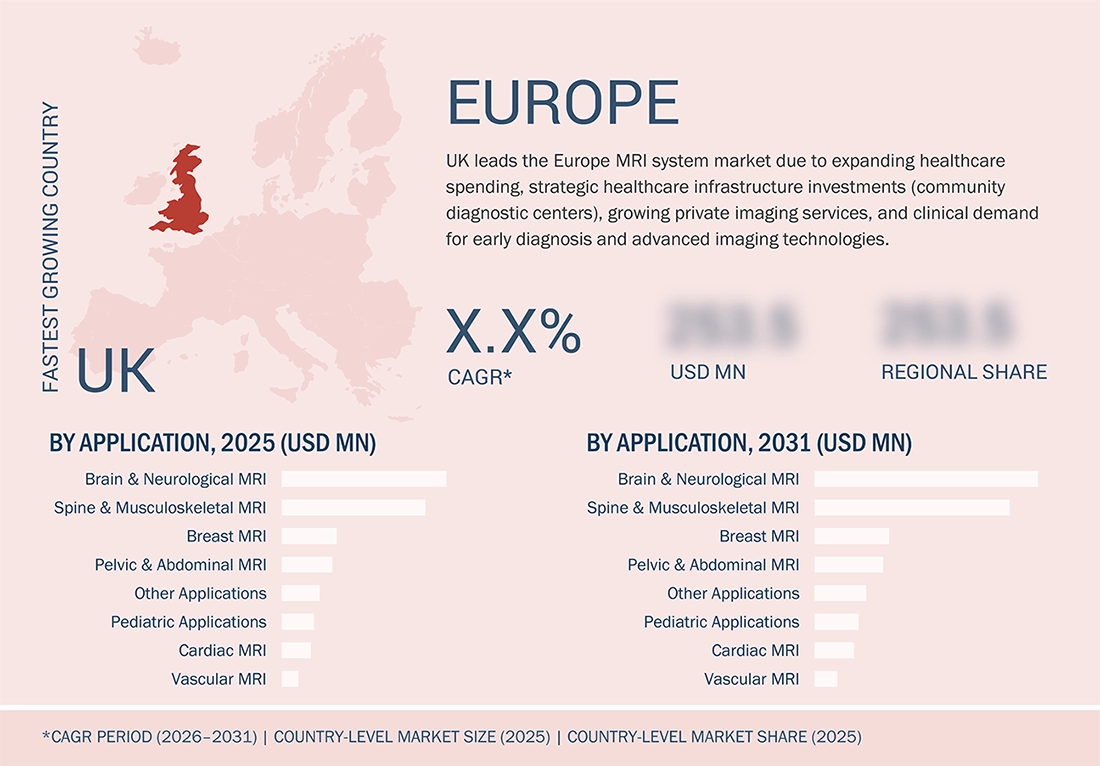
UK to be fastest-growing country in Europe MRI system market during forecast period
The Europe MRI system market is studied for Germany, France, UK, Italy, Spain, Eastern Europe, the Nordics, and Rest of Europe. The UK is witnessing strong growth in the Europe MRI system market, driven by multiple converging factors. An aging population and rising prevalence of chronic and neurological diseases are increasing the demand for advanced diagnostic imaging, particularly MRI, for early detection and disease management. Government initiatives, including expanded healthcare budgets and capital investments in hospital imaging infrastructure, are supporting acquisition and modernization of MRI systems. The establishment of community diagnostic centers under the NHS is improving patient access and throughput, while private imaging providers and public-private partnerships further enhance utilization. Additionally, the adoption of advanced 3T MRI and AI-enabled workflow solutions boosts efficiency and clinical capabilities. Growing awareness of early diagnosis and preventive care, coupled with digital health initiatives, is strengthening the demand for high-quality imaging services. Collectively, these factors position it as a prominent country in Europe MRI adoption and investment.
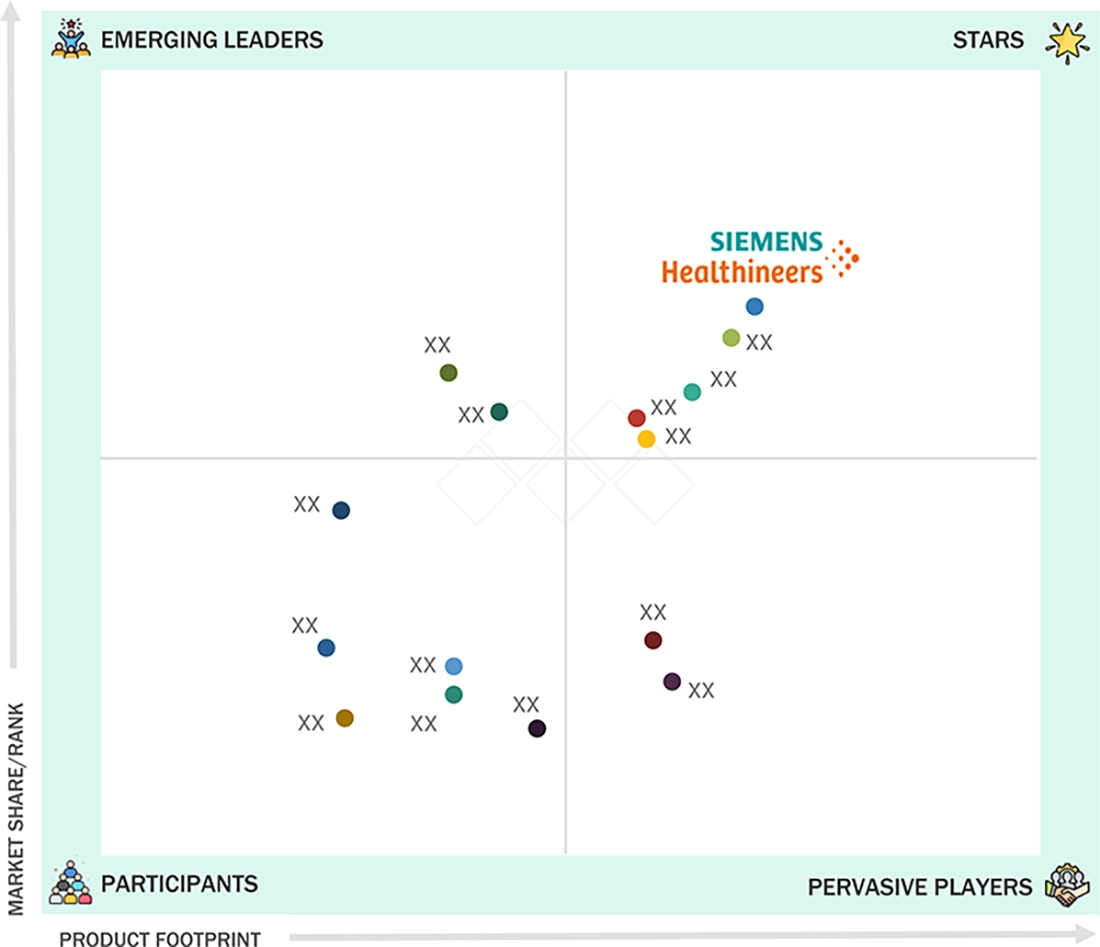
EUROPE MRI SYSTEM MARKET: COMPANY EVALUATION MATRIX
The company evaluation matrix for the Europe MRI system market highlights a competitive landscape shaped by differences in market share and product breadth, positioning Siemens Healthineers as a clear Star with both a wide product footprint and strong regional presence driven by its strong technological leadership, broad product portfolio, and early adoption of advanced MRI innovations, such as AI-driven imaging, low-helium and energy-efficient systems, and high-productivity workflows. Its deep installed base across the UK, Germany, France, Italy, and the Nordics reinforces customer loyalty and drives recurring upgrades. Continued R&D investments, strong collaborations with European hospitals, and compliance with strict EU regulatory standards further strengthen its position. Additionally, Siemens benefits from robust service networks, training programs, and digital platforms that enhance system uptime and clinical efficiency. These factors collectively position Siemens Healthineers as a top MRI “star player” in Europe.
Source: Secondary Research, Interviews with Experts, MarketsandMarkets Analysis
KEY MARKET PLAYERS
- GE Healthcare (US)
- Fujifilm Corporation (Japan)
- Philips Healthcare (Netherlands)
- Siemens Healthineers (Germany)
- Canon Medical Systems (Japan)
- Fonar Corporation (US)
- Shanghai United Imaging Healthcare Co.Ltd (China)
- Beijing Wandong Medical Technology Co., Ltd (China)
- Esaote SPA (Italy)
- Time Medical Holding (Hong Kong)
MARKET SCOPE
| REPORT METRIC | DETAILS |
|---|---|
| Market Size in 2025 (Value) | USD 1.01 Billion |
| Market Forecast in 2031 (Value) | USD 1.40 Billion |
| Growth Rate | CAGR of 5.6% from 2026–2031 |
| Years Considered | 2024–2031 |
| Base Year | 2025 |
| Forecast Period | 2026–2031 |
| Units Considered | Value (USD Million/Billion) |
| Report Coverage | Revenue forecast, company ranking, competitive landscape, growth factors, and trends |
| Segments Covered |
|
| Geographies Covered | Germany, France, the UK, Italy, Spain, Nordics, Eastern Europe, and Rest of Europe |
| Parent & Related Segment Reports |
MRI Systems Market Asia-Pacific MRI system market US MRI system market Functional Brain MRI system market Spine MRI system market |
WHAT IS IN IT FOR YOU: EUROPE MRI SYSTEM MARKET REPORT CONTENT GUIDE
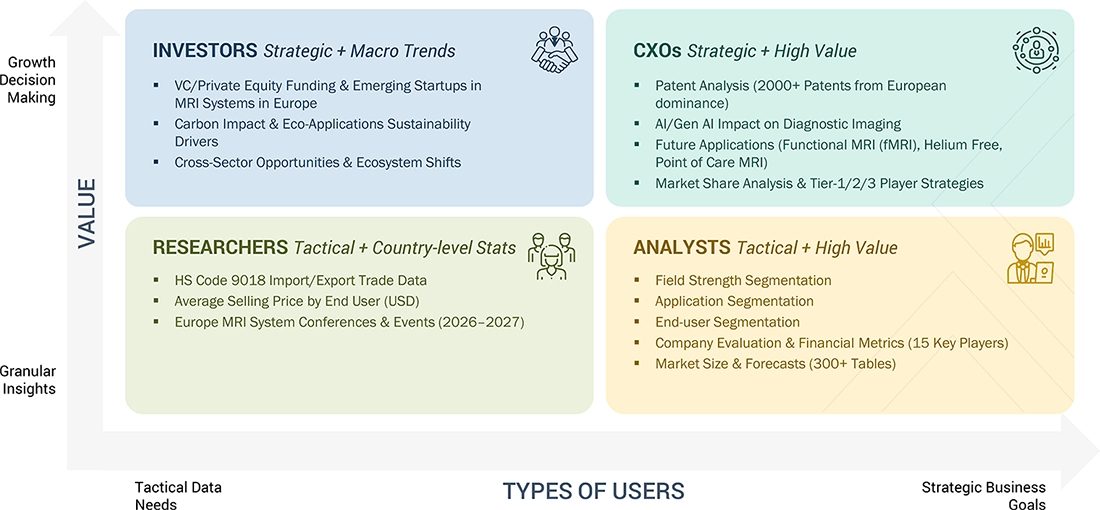
DELIVERED CUSTOMIZATIONS
We have successfully delivered the following deep-dive customizations:
| CLIENT REQUEST | CUSTOMIZATION DELIVERED | VALUE ADDS |
|---|---|---|
| MRI Manufacturers |
|
|
RECENT DEVELOPMENTS
- December 2025 : In December 2025, GE HealthCare integrated NVIDIA's accelerated computing technology into several new imaging solutions, including the Photonova Spectra CT, SIGNA Sprint with Freelium and SIGNA Bolt MRIs, Vivid Pioneer ultrasound, and Pristina Recon DL. These technologies, powered by AI and NVIDIA GPUs, are designed to enhance image quality, speed up processing, and streamline workflows for better diagnostic accuracy.
- May 2025 : Siemens Healthineers showcased its latest MRI system (MAGNETOM Flow RT Pro Edition) for radiation therapy at this year’s European Society for Radiotherapy and Oncology congress.
- February 2025 : Philips Healthcare announced its AI-enabled innovations in precision imaging that was showcased at the European Congress of Radiology (ECR) annual congress in Vienna. The company also aims to accelerate the availability of its cloud-based radiology services to European customers.
Table of Contents
 Exclusive indicates content/data unique to MarketsandMarkets and not available with any competitors.
Methodology
This study analyzed various market variables related to small and medium-sized businesses and major corporations to balance primary and secondary research for the Europe MRI systems market. The next phase involved conducting primary research with industry experts along the value chain to validate the findings, assumptions, and market sizing. Several methodologies were employed to estimate the overall market size, including both top-down and bottom-up approaches.
This study focuses on key market segments, emerging trends, regulatory frameworks, and competitive environments. It also examines leading market players and their strategies within this sector. In conclusion, the total market size was determined using top-down and bottom-up approaches and data triangulation to arrive at the final figure. Ongoing primary research was conducted throughout the study to validate and test each hypothesis.
Secondary Research
During the study, secondary research utilized a variety of sources, including directories and databases such as Bloomberg Businessweek, D&B Hoovers, and Factiva. Additional materials included white papers, annual reports, SEC filings, and investor presentations. This research approach is aimed at collecting and generating data that offers comprehensive, technical, and market-focused insights into the Europe MRI systems market. The data provides information on key players and market segmentation based on recent industry trends and significant market developments. Additionally, a database of leading industry figures was created through this secondary research.
Primary Research
Primary research involved activities aimed at obtaining both qualitative and quantitative data. Several individuals from the supply and demand sides were interviewed during this phase. On the supply side, participants included key figures such as CEOs, vice presidents, marketing and sales, directors of technology and innovation, and other important leaders. On the demand side, primary sources included academic institutions and research organizations. This real-world primary study was conducted to validate market segmentation, identify prominent market participants, and gain insights into significant industry trends and market dynamics.
Market Size Estimation
The report comprehensively analyzes the Europe MRI systems market and reviews major companies and their revenue shares. Key players with significant market shares were identified through secondary research, and their MRI systems business revenues were calculated and subsequently validated through primary research. The secondary research involved analyzing leading market participants' annual and financial reports. In contrast, primary research included in-depth interviews with influential leaders, such as directors, CEOs, and marketing executives. The segmental revenue was calculated based on the revenue mapping of service and product providers to determine the global market value. The process involved the following steps:
- List of key players that operate in the Europe MRI systems market at the regional level
- Formation of product mapping of manufacturers of MRI systems and related product lines at the regional level
- Revenue mapping for listed players from MRI systems and related products & services
- Revenue mapping of major players to cover at least ~90% of the global market share as of 2024
- Revenue mapping extrapolation for players will drive the global market value for the respective segment
- Summation of market value for all segments and subsegments to achieve the actual value of the Europe MRI systems market
Data Triangulation
After getting the overall market size from the market size estimation process mentioned above, the Europe MRI systems market was split into segments and subsegments. Data triangulation and market segmentation procedures were used to complete the overall market engineering process and arrive at the exact statistics for all segments and subsegments. The data was triangulated by studying and analyzing various factors and trends from both the demand and supply sides. Additionally, top-down and bottom-up approaches verified and validated the Europe MRI systems market.
Market Definition
Magnetic resonance imaging (MRI) is a diagnostic technique designed to visualize/create images of the internal structures of the human body using magnetic and electromagnetic fields, which induce a resonance effect of hydrogen atoms on body parts. The associated software registers and processes the electromagnetic emission created by these atoms to produce images of the body structures. These modalities help healthcare professionals visualize the internal structure and surrounding tissues. MRI systems are primarily used in hospitals and diagnostic imaging centers.
Stakeholders
- Hospitals
- Clinics
- Diagnostic Imaging Centers
- Manufacturers & Suppliers of MRI Systems
- Product Suppliers, Distributors, and Channel Partners
- Research Institutes
- Regulatory Authorities & Industry Associations
- Venture Capitalists & Investment Firms
Report Objectives
- To define, describe, and forecast the size of Europe MRI systems market based on field strength, architecture, design, application, end user, and region
- To provide detailed information regarding the factors influencing the growth potential of the Europe MRI systems market (drivers, restraints, opportunities, challenges, and trends)
- To analyze micro markets with respect to individual growth trends, prospects, and contributions to the Europe MRI systems market.
- To analyze key growth opportunities in the Europe MRI systems market for key stakeholders and provide details of the competitive landscape for market leaders in the Europe MRI systems market
- To forecast the size of market segments and/or subsegments concerning Europe (Germany, France, the UK, Spain, Italy, and the rest of Europe) in the Europe MRI systems market
- To profile the key players in the Europe MRI systems market and comprehensively analyze their market shares and core competencies
- To track and analyze the competitive developments undertaken in the Europe MRI systems market, such as product launches/approvals, agreements, expansions, collaborations, and acquisitions.


Personalize This Research
- Triangulate with your Own Data
- Get Data as per your Format and Definition
- Gain a Deeper Dive on a Specific Application, Geography, Customer or Competitor
- Any level of Personalization
Let Us Help You
- What are the Known and Unknown Adjacencies Impacting the Europe MRI System Market
- What will your New Revenue Sources be?
- Who will be your Top Customer; what will make them switch?
- Defend your Market Share or Win Competitors
- Get a Scorecard for Target Partners

Custom Market Research Services
We Will Customise The Research For You, In Case The Report Listed Above Does Not Meet With Your Requirements
Get 10% Free CustomisationTESTIMONIALS

JAYANT RAJPUROHIT
Director of Market Insights, Data and Analytics
SFI Health,
Leading Pharmaceutical Companywww.sfihealth.com/

We at SFI Health approached MarketsandMarkets for an Opportunity Assessment on "Incidence and Prevalence of Focus Indications" as we wanted to know the most attractive HCPs like Physician, Functional MD, Naturopath and Pharmacist. The project was critical for us to ensure our focus on the right target which would enable sustainable growth and profitability for SFI Health. The business insights provided exceeded our expectations and we were extremely impressed. The team at MarketsandMarkets is highly professional and detail oriented and very well understood our business needs. MarketsandMarkets offers a unique combination of expertise and dedicated engagement model. We identified 2 new products to be launched in coming months, based on the research findings provided by MarketsandMarkets. We are happy with the services and would strongly recommend MarketsandMarkets to my peers in the industry.

BEATRIZ DE LA CALLE
Head of Commercial Analytics
Qualicaps,
Leading Pharmaceutical Companywww.qualicaps.com/

We partnered with MarketsandMarkets for an assessment study on hard empty capsules. The team was extremely professional in understanding our business requirements and we received timely responses to all our queries. The market intelligence and the recommendations has met our business requirements. We were extremely impressed to see the final study results; it really exceeded our expectations. The market intelligence offered by MarketsandMarkets, and clarity on next steps will help us achieve our business objective for the Year 2021. We are happy with the services and would strongly recommend MarketsandMarkets to my peers in the industry.

Bob Williams,
Senior Director Business Development & Innovation
Bracco Diagnostics Inc.,
Italian Multinational in life sciences sector and a World Leader in imaging diagnosticsimaging.bracco.com/us-en
We were pleased with targeted insights that MarketsandMarkets identified from a custom study on the 'Radiation Dose Management Solutions Market'. Your team identified and characterized the market participants as well as underlying trends accurately. This study was useful to Bracco in formulating business strategies for our dose monitoring product lines and we thank MarketsandMarkets for the job well done.
Cody Coonradt,
Market Development and Strategy Manager
3M Health Information Systems,
Leader in Health care Coding, Payment & Analytics Solutions.www.3m.com/3M/en_US/health-information-systems-us
The value for our organization comes from three things: depth of research, specificity of segments and being easy to work with. As important as the first two are, the third can't be underestimated. MarketsandMarkets, maybe more than any other research vendor, wants to know what is top of mind for our team and what big questions we are grappling to answer.
Their customer first approach and high value engagement model, have given us great analysis and excellent value for money






Growth opportunities and latent adjacency in Europe MRI System Market