Asia Pacific MRI System Market Size, Growth, Share & Trends Analysis

Asia Pacific MRI System Market by Component (Magnet, RF coil, Cooling System, Shim System), Field Strength (1.5T, 3T, 7T), Application (Brain, Spine & MSK, Vascular, Breast, Pediatric, Pelvic, Cardiac), Installed Base & Replacement Rate - Forecast to 2031




OVERVIEW
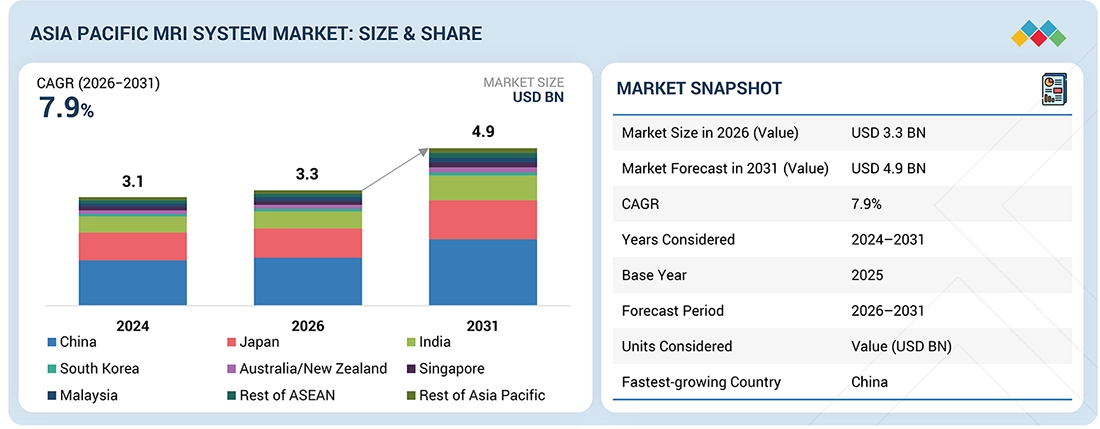
Source: Secondary Research, Interviews with Experts, MarketsandMarkets Analysis
The Asia Pacific MRI system market, valued at USD 3.1 billion in 2024, stood at USD 3.3 billion in 2026 and is projected to advance at a resilient CAGR of 7.9% from 2026 to 2031, culminating in a forecasted valuation of USD 4.9 billion by the end of the period. The major driving factor for the Asia Pacific MRI system market is the increase in infrastructure development in the Asia Pacific region, and also an increase in demand from the region. This is especially in the context of developed and developing nations in the Asia Pacific, pertaining to the early detection and accurate diagnosis of ailments, which have a tendency to cause chronic health conditions when left untreated in a timely manner. Thus, both hospitals and infrastructures within the Asia Pacific have resorted to technologically more advanced equipment for their respective requirements to keep abreast and have assisted in the development and growth of the Asia Pacific MRI system market.
KEY TAKEAWAYS
-
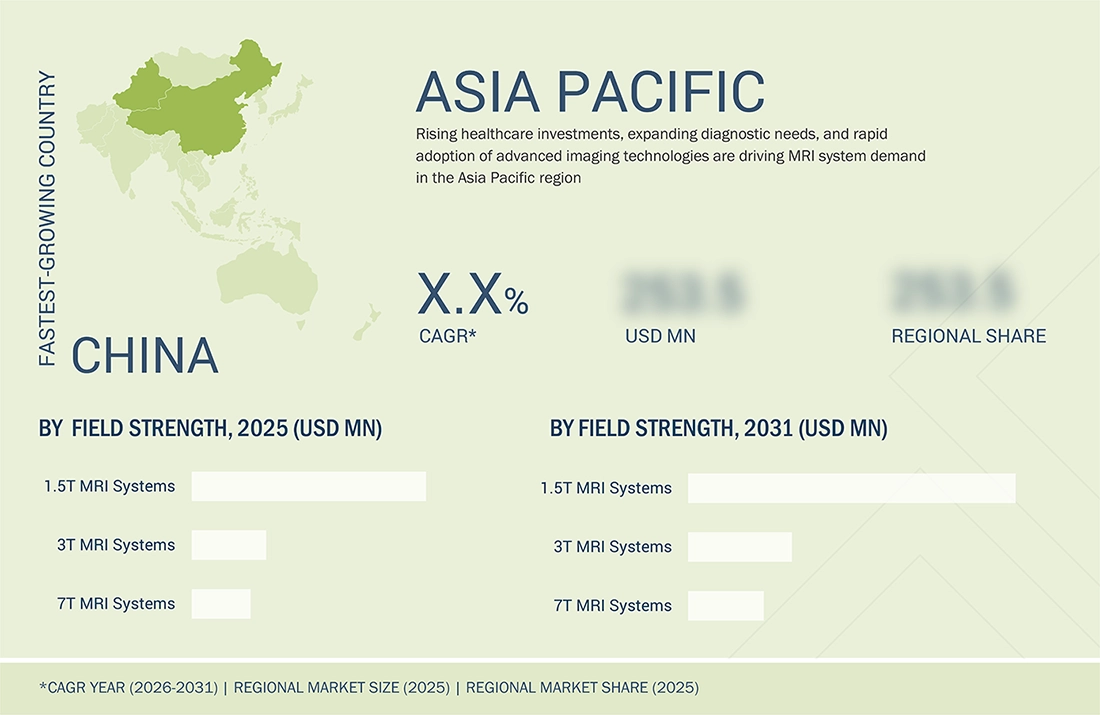
BY REGIONChina’s MRI systems market in the Asia Pacific region is expected to grow at a CAGR of 8.5% during the forecast period.
-
BY FIELD STRENGTHBy 3T MRI system, the 3T MRI system are expected to register the highest CAGR of 7.9%
-
BY ARCHITECTUREBy architecture, the standard bore MRI system are expected to register the highest CAGR of 6.5%
-
BY DESIGNBy design, the floor-fixed MRI system are expected to register the highest CAGR of 7.0%
-
BY APPLICATIONBy application, the brain & neurological MRI segment held a 8.2% share of the MRI system market in 2025.
-
BY END USERBy end user, the hospitals segment held a 8.0% share of the MRI system market in 2025.
-
COMPETITIVE LANDSCAPE- KEY PLAYERSCompanies GE healthcare (US), Siemens Healthineers (Germany), and Philips Healthcare (Netherlands) were identified as some of the key players in the Asia-Pacific MRI system market, Companies in the Asia-Pacific MRI market are driven by rising demand for advanced diagnostics, expanding healthcare infrastructure, and increasing adoption of innovative MRI technologies.
-
COMPETITIVE LANDSCAPE- STARTUPSCompanies Kanga intercontinental medical equipment co,ltd (India), and Beljing Wandong Medical Technology Co., Ltd. (China), among others, SME MRI companies in Asia-Pacific are driven by growing demand for affordable, compact imaging solutions and increasing opportunities created by expanding regional healthcare infrastructure.
The Asia-Pacific MRI system market is projected to grow steadily from 2026 to 2031, driven by rising healthcare spending, increasing prevalence of chronic diseases such as cancer and neurological disorders, and a growing emphasis on early and accurate diagnostic imaging. Expanding healthcare infrastructure across emerging economies, coupled with government initiatives to improve access to advanced medical technologies, is further accelerating MRI adoption. Additionally, technological advancements such as faster scanning, improved image quality, and AI-enabled workflow optimization are boosting demand, while the expanding private hospital sector and rising medical tourism continue to create strong growth opportunities in the region.
TRENDS & DISRUPTIONS IMPACTING CUSTOMERS' CUSTOMERS
The Asia Pacific MRI systems market is also subject to influence by modifications in the requirements placed on healthcare providers and the growing need for improving patient outcomes. As suggested by the figure, several major client segments, which include hospitals, imaging facilities, and ambulatory surgery centers, place considerable emphasis on systems required to maximize system availability, reduce system operation expenses, and maximize access to leading imaging modalities. These drivers and requirements also correlate considerably to Asia Pacific healthcare requirements and challenges, such as addressing considerable patient levels and requirements for enhanced access to imaging infrastructure, as well as requirements for accelerating and improving imaging determination. Consequently, several notable outcomes, which include accelerating imaging speeds, improving imaging determination accuracy, enhanced patient comfort requiring minimal sedation, and maximizing access to imaging modalities such as neuro musculoskeletal imaging, have begun to become core values influencing client requirements. The growing need to adopt and utilize high-field and PET imaging modalities also underscores the emphasis now placed on precise determination and translational research in the Asia Pacific region. Technology, access, and efficiency have thus become crucial drivers influencing the adoption and expansion of MRI systems in the Asia Pacific region, as suggested by the figure.
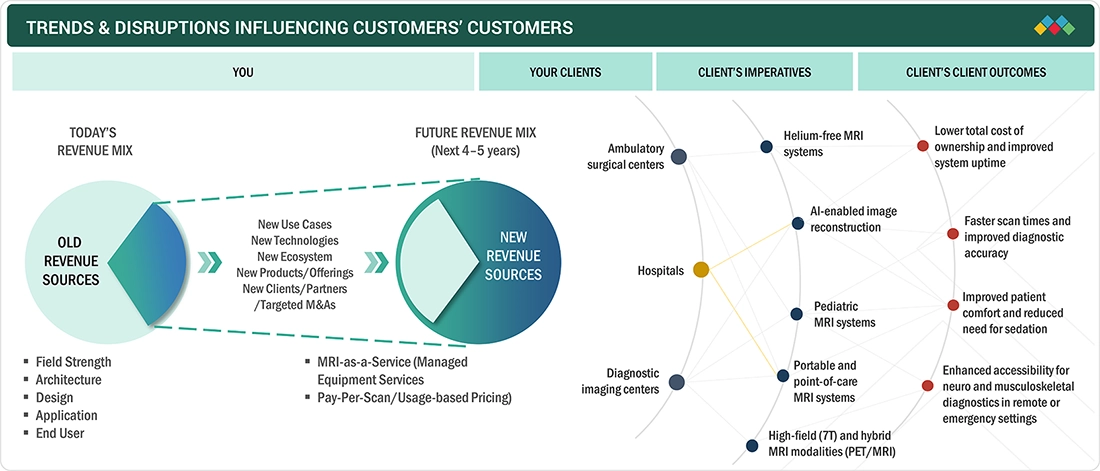
Source: Secondary Research, Interviews with Experts, MarketsandMarkets Analysis
MARKET DYNAMICS

Level
-
Increasing MSD cases and a growing elderly population are boosting demand for MRI systems

-
Public-private partnerships are expanding diagnostic imaging in Asia Pacific


Level
-
Premium MRI pricing limits market growth

-
Complex MRI operation and maintenance hinder market growth


Level
-
MRI efficiency via AI boosts market expansion

-
Healthcare expansion and advanced MRI adoption create growth opportunities


Level
-
Shortages of skilled professionals

Source: Secondary Research, Interviews with Experts, MarketsandMarkets Analysis
Driver: Public-private partnerships are expanding diagnostic imaging in Asia Pacific
Public–private partnerships are increasingly strengthening diagnostic imaging capabilities in MRI systems by fostering collaboration between governments and private healthcare entities across funding, infrastructure development, and advanced technology deployment. These alliances accelerate the introduction of cutting-edge MRI units, expand access in underserved regions, reduce financial strain on public hospitals, and elevate service quality through shared expertise and efficient operational models. For example, in November 2025, Profound Medical partnered with Getz Healthcare to expand access to its TULSA-PRO technology in Australia and New Zealand, while in October 2025, Siemens Healthineers collaborated with the National University Hospital to advance non-invasive liver disease diagnostics initiatives that reflect how such partnerships enhance imaging innovation and availability. Moreover, these collaborations streamline the modernization of imaging networks by utilizing private-sector strengths in innovation, training, and maintenance, enabling public institutions to adopt high-capacity or specialized MRI systems without bearing full capital investment. As a result, patient throughput improves, wait times decrease, and overall diagnostic imaging capabilities within regional healthcare systems are significantly strengthened.
Restraint: Complex MRI operation and maintenance hinder market growth
Complex MRI operation and maintenance pose a significant challenge to market growth in the Asia Pacific region, as many healthcare facilities especially in emerging economies lack the specialized workforce required to manage advanced imaging technologies. MRI systems demand highly trained radiologists, technicians, and biomedical engineers to ensure accurate imaging, proper calibration, and safe handling, yet the shortage of skilled professionals limits the efficient utilization of installed systems. Additionally, the sophisticated nature of MRI equipment requires strict adherence to operational protocols and continuous skill development, creating barriers for smaller hospitals and diagnostic centers that struggle to maintain the required expertise. Maintenance complexity further hinders adoption, as MRI systems involve high-precision components, cryogen management, and regular service interventions that can be costly and technically demanding. In many parts of Asia Pacific, limited access to reliable service infrastructure, expensive spare parts, and dependence on foreign engineers extend downtime and increase operational costs for healthcare providers. These constraints make it difficult for facilities to sustain long-term performance, discouraging investment in new MRI units and slowing overall market expansion across the region.
Opportunity: MRI efficiency via AI boosts market expansion
AI-enabled MRI efficiency is significantly accelerating market expansion in the Asia Pacific region, as hospitals and imaging centers increasingly adopt AI-driven tools to shorten scan times, automate image reconstruction, and improve diagnostic accuracy. These capabilities help reduce patient backlog, enhance workflow, and optimize utilization of existing MRI infrastructure critical advantages for regions facing high patient volumes and limited radiology workforce availability. In November 2025, initiatives such as Medical AI training programs at Asan Medical Center in South Korea highlight the region’s growing focus on developing AI-ready healthcare professionals, supporting faster integration of AI into MRI workflows and improving overall imaging performance. Furthermore, AI-powered data platforms and digital health innovations are strengthening the MRI ecosystem by enabling more informed and data-driven decision-making. For example, Naver’s launch of a new search service that provides access to health insurance data on over 100 common diseases supports greater healthcare transparency and contributes to improved diagnostic pathways, indirectly increasing demand for advanced MRI assessments. As AI solutions become more embedded in clinical operations from automated reporting to predictive maintenance MRI systems in Asia Pacific are becoming more efficient, cost-effective, and patient-centered, thereby driving robust market growth across the region.
Challenge: Shortages of skilled professionals
A shortage of skilled professionals is a key factor restraining the growth of the MRI systems market in the Asia Pacific region. Operating an MRI machine requires trained radiologists, MRI technologists, and biomedical engineers who understand complex imaging protocols, safety standards, calibration procedures, and advanced diagnostic interpretation. However, many countries in the region especially emerging markets face a widening gap between the rapid installation of new MRI units and the availability of qualified personnel to operate them. This skills deficit leads to underutilization of installed systems, lower throughput, and increased risk of diagnostic errors, ultimately limiting the effectiveness of MRI investments. The shortage also impacts long-term market expansion because healthcare providers are hesitant to adopt high-end or specialized MRI technologies without sufficient expertise to manage them. Additionally, the lack of well-structured training programs, uneven distribution of skilled staff in rural versus urban areas, and dependence on international experts for advanced imaging procedures increase operational challenges and costs. As hospitals struggle to maintain optimal performance of MRI systems, delays in diagnostic workflows and reduced service efficiency discourage further purchases, slowing overall MRI market growth across the Asia Pacific region.
ASIA PACIFIC MRI SYSTEM MARKET: COMMERCIAL USE CASES ACROSS INDUSTRIES
| COMPANY | USE CASE DESCRIPTION | BENEFITS |
|---|---|---|
 |
At Macka EMAR Diagnostic Center in Istanbul, systems were upgraded to SIGNA Works with AIR Recon DL and multi-purpose coils | Scanning times were shortened (from roughly 45 minutes to around 28 minutes), image quality improved, repeat scans decreased, and overall patient throughput increased |
 |
Entry into the US market with the first domestic installation of the uMR 570 1.5T MRI system | Supports US market expansion, validates baseline clinical performance, and strengthens service infrastructure for future growth in the region |
 |
Providing remote MRI scanning assistance through the syngo Virtual Cockpit across several hospital locations (InHealth/GenesisCare) | Allows experienced radiographers to guide MRI exams from afar, minimizing travel requirements, improving scheduling flexibility, and reducing workflow bottlenecks by enabling remote oversight |
 |
At St. Joseph’s Hospital in Phoenix, Arizona, MRI technology is used in the Neuro Emergency Department with rapid imaging protocols | MRI is applied in emergency cases to provide more detailed diagnostic information (e.g., soft tissue and spinal cord) compared with CT. Some scan protocols have been reduced to approximately 10 minutes |
Logos and trademarks shown above are the property of their respective owners. Their use here is for informational and illustrative purposes only.
MARKET ECOSYSTEM
The Asia Pacific MRI system market operates within a comprehensive ecosystem comprising major manufacturers, component suppliers, regulatory bodies, and healthcare end users. Leading global and regional manufacturers, including GE HealthCare, Philips Healthcare, United Imaging, Canon Medical Systems, Fujifilm, and Siemens Healthineers, drive innovation and produce advanced MRI systems tailored to diverse clinical needs. Supporting them is a network of component suppliers such as The Imaging Solutions Company, MXR Imaging, Analogic, NeoCoil, NORAS MRI Products, DirectMed Imaging, and Block Imaging, which provide essential MRI parts, coils, and system components that ensure performance, maintenance, and system longevity. Regulatory authorities across the region, including OSHA, the International Organization for Standardization (ISO), Japan’s PMDA, the Australian Department of Health & Aged Care, India’s CDSCO, and the Korean Ministry of Food and Drug Safety, enforce stringent safety, quality, and compliance standards to ensure safe deployment of MRI systems. The ecosystem is completed by key end users such as Singapore General Hospital, Mount Alvernia Hospital, Manipal Hospitals, Macquarie University Hospital, Fortis Healthcare, and other major medical centers that drive demand for high-quality imaging and influence technology adoption across the region.
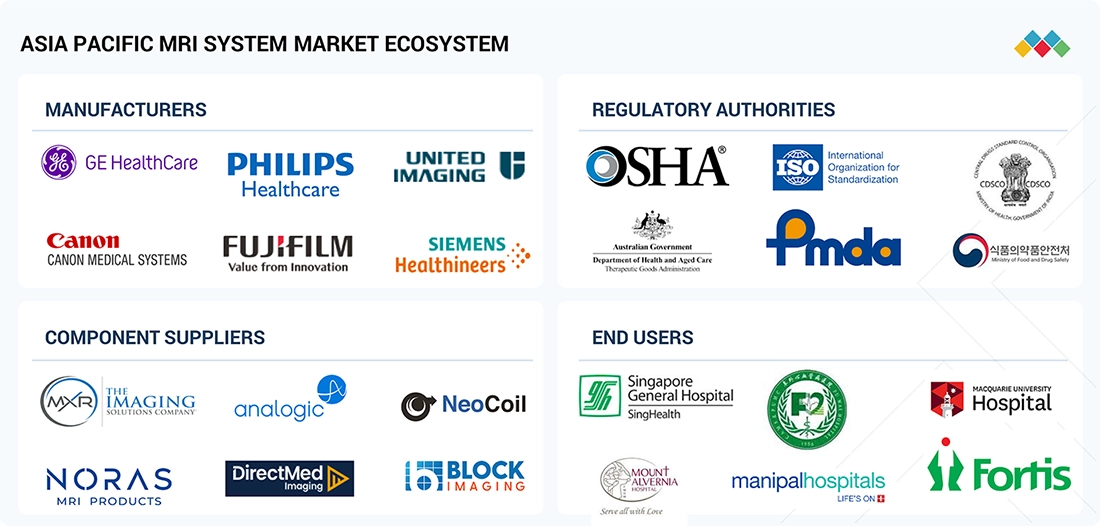
Logos and trademarks shown above are the property of their respective owners. Their use here is for informational and illustrative purposes only.
MARKET SEGMENTS
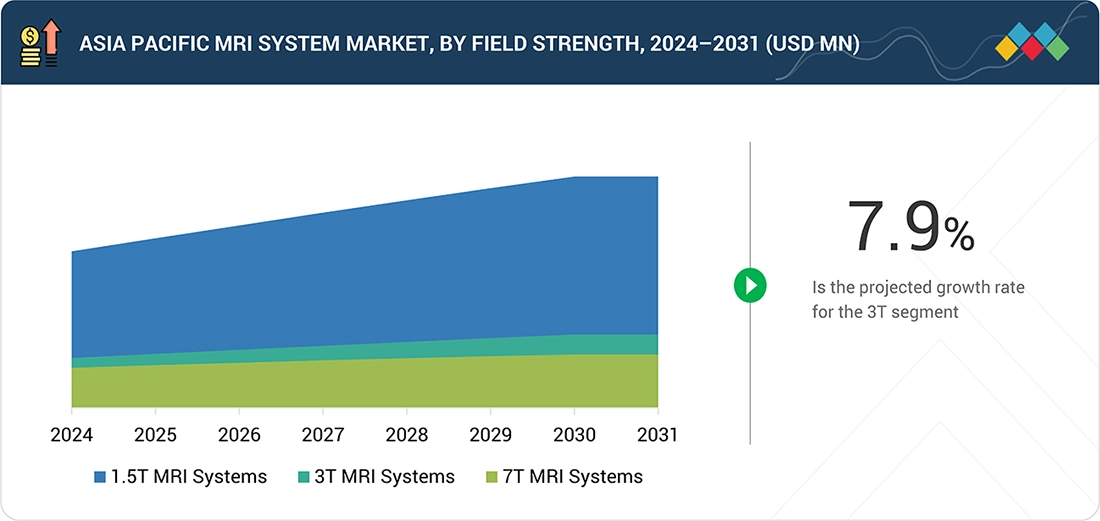
Source: Secondary Research, Interviews with Experts, MarketsandMarkets Analysis
Asia Pacific MRI System Market, By Field Strength
By field strength, the Asia Pacific MRI system market is segmented into 1.5T MRI systems, 3T MRI systems, and 7T MRI systems. The key driving factor for 1.5T MRI systems is their strong balance between high-quality imaging performance and cost-effectiveness, making them the most widely adopted field strength for routine clinical diagnostics. These systems provide reliable image resolution, faster scan times, and broad application coverage across neurology, orthopedics, cardiology, and whole-body imaging, which supports their extensive use in both developed and emerging healthcare markets. Additionally, 1.5T MRI systems require lower operational and maintenance costs compared to higher-field systems like 3T, making them a preferred choice for hospitals and diagnostic centers seeking advanced imaging capabilities without significant infrastructure upgrades or budget expansion.
Asia Pacific MRI System Market, By Architecture
By design, the Asia Pacific MRI system market is categorized into floor-fixed MRI systems, ceiling-fixed MRI systems, and portable MRI systems. The major driving factor for portable MRI systems in the Asia Pacific region is the growing need for accessible and cost-efficient imaging solutions that can reach underserved and remote areas where conventional MRI infrastructure is limited. Portable MRI systems offer significant advantages such as lower installation and maintenance costs, minimal space requirements, and the ability to perform bedside or point-of-care imaging, making them ideal for rural hospitals, emergency departments, and mobile healthcare units. Additionally, the rising prevalence of neurological disorders, increasing investment in telemedicine, and government-led initiatives to strengthen primary healthcare delivery across countries like India, China, and Southeast Asian nations are accelerating the adoption of portable MRI technologies, fueling market growth in the region.
Asia Pacific MRI System Market, By Application
By application, the Asia Pacific MRI system market is categorized into brain & neurological MRI, spine & musculoskeletal MRI, vascular MRI, pelvic & abdominal MRI, breast MRI, cardiac MRI, pediatric MRI, and other applications. The key driving factor for brain and neurological MRI systems in the Asia Pacific region is the rising prevalence of neurological disorders such as stroke, dementia, brain tumors, epilepsy, and Parkinson’s disease, coupled with the growing demand for early and accurate diagnosis. As populations age across countries like Japan, China, and South Korea, the need for advanced neuroimaging solutions has significantly increased. Rapid improvements in MRI technologies, including high-resolution imaging, diffusion MRI, and functional MRI (fMRI), are enabling clinicians to detect neurological abnormalities at earlier stages, supporting better treatment outcomes. Additionally, expanding healthcare infrastructure, increased investments in neurology-focused diagnostic centers, and government initiatives to enhance neurodiagnostic capabilities are further boosting adoption, making neurological MRI a critical driver of growth in the Asia Pacific MRI system market.
Asia Pacific MRI System Market, By End User
By end user, the Asia Pacific MRI system market is categorized into hospitals, ambulatory surgical centers, diagnostic imaging centers, and other end users. Hospitals are driving the demand for MRI systems due to the rising burden of chronic diseases, especially neurological, oncological, and musculoskeletal disorders, which require high-precision diagnostic imaging for early detection and treatment planning. Increasing patient volumes, expansion of multispecialty and tertiary care centers, and the push for technologically advanced imaging capabilities further accelerate MRI adoption. Additionally, hospitals are investing in high-field and advanced MRI modalities to improve diagnostic accuracy, enhance workflow efficiency, and support complex clinical procedures, while government healthcare funding and the shift toward integrated diagnostic infrastructure continue to strengthen MRI system demand in hospital settings.
REGION
China to be fastest-growing region in Asia Pacific MRI system market during forecast period
The Asia Pacific MRI system market is segmented across seven prominent countries: China, Japan, India, South Korea, Australia/New Zealand, Singapore, Malaysia, Rest of ASEAN, and the rest of Asia Pacific Belt. China is experiencing significant growth in the market. The MRI system market in China is driven by the country’s rapidly aging population, which significantly increases demand for advanced diagnostic imaging to manage neurological, cardiac, and musculoskeletal disorders. Strong government support for high-quality healthcare infrastructure, early adoption of cutting-edge imaging technologies, and continuous upgrades of existing MRI fleets further stimulate market growth. Additionally, China’s focus on precision medicine, rising prevalence of chronic diseases, and the presence of leading domestic imaging manufacturers strengthen the adoption of high-field, wide-bore, and AI-integrated MRI systems across hospitals and diagnostic centers.
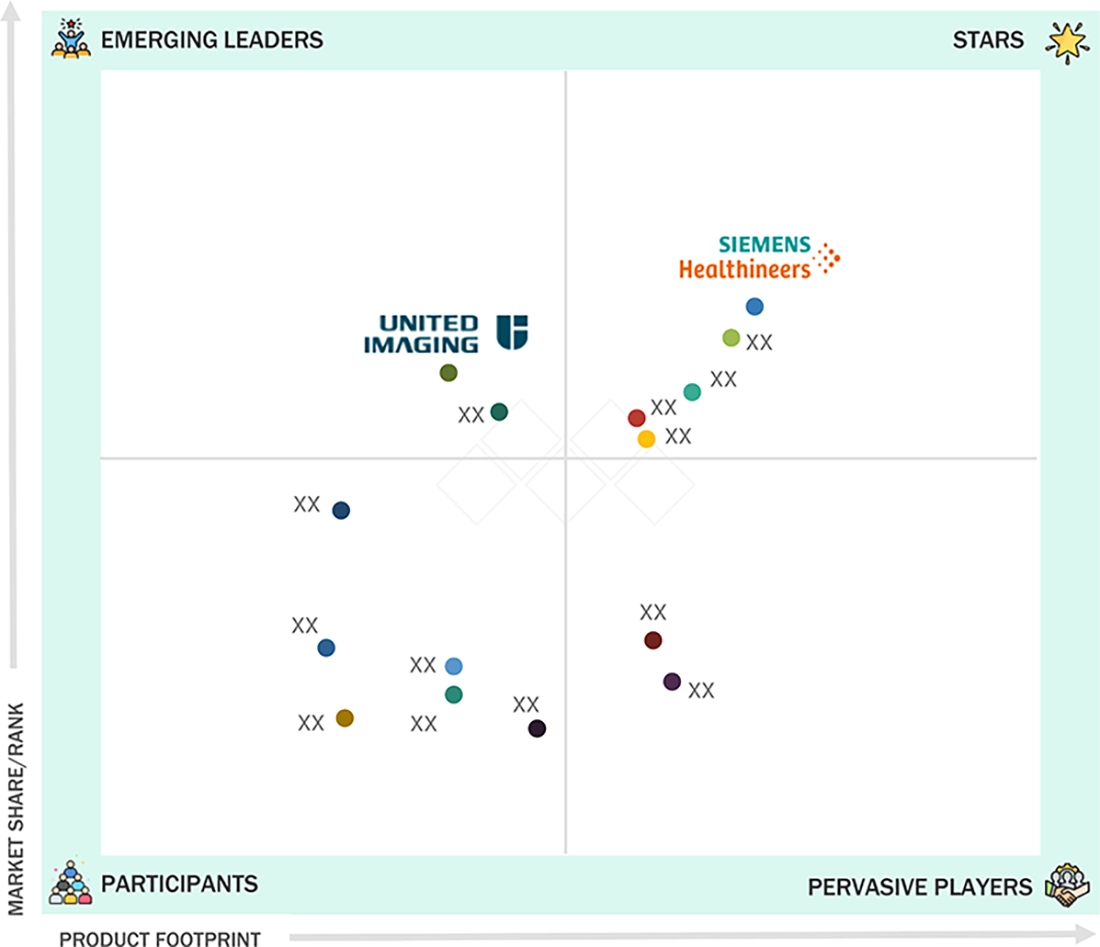
ASIA PACIFIC MRI SYSTEM MARKET: COMPANY EVALUATION MATRIX
The company evaluation matrix for the Asia Pacific MRI system market highlights a competitive landscape shaped by differences in market share and product breadth, positioning Siemens Healthineers as a clear Star with both a wide product footprint and strong regional presence driven by continuous technological innovation and broad clinical adoption. United Imaging emerges as a fast-growing Emerging Leader, demonstrating rising market share and expanding product capabilities, reflecting its growing influence and rapid acceptance across APAC markets. Several mid-tier vendors populate the Pervasive Players quadrant, offering broad product portfolios yet facing challenges in achieving higher market dominance due to intensified competition and varying regional demands. Meanwhile, companies positioned as Participants hold more limited offerings and smaller market shares, often serving niche or budget-sensitive segments with incremental growth. Overall, the matrix underscores a market where global leaders retain strong positions, regional innovators gain momentum, and product footprint continues to be a key differentiator in meeting the diverse clinical and economic needs of the Asia Pacific MRI ecosystem.
Source: Secondary Research, Interviews with Experts, MarketsandMarkets Analysis
KEY MARKET PLAYERS
- GE Healthcare (US)
- Fujifilm corporation (Japan)
- Philips Healthcare (Netherlands)
- Siemens Healthineers (Germany)
- Canon Medical Systems (Japan)
- Shenzhen Mindray Bio-Medical Electronics Co., Ltd (China)
- Shanghai United Imaging Healthcare Co. Ltd (China)
- Beijing Wandong Medical Technology Co., Ltd (China)
- Esaote SPA (Italy)
- Time Medical Holding (Hong Kong)
MARKET SCOPE
| REPORT METRIC | DETAILS |
|---|---|
| Market Size in 2026 (Value) | USD 3.3 Billion |
| Market Forecast in 2031 (value) | USD 4.9 Billion |
| Growth Rate | CAGR of 7.9% during 2026–2031 |
| Years Considered | 2024–2031 |
| Base Year | 2025 |
| Forecast Period | 2026–2031 |
| Units Considered | Value (USD Billion) |
| Report Coverage | Revenue forecast, company ranking, competitive landscape, growth factors, and trends |
| Segments Covered |
|
| Countries Covered | China, Japan, India, South Korea, Australia/New Zealand, Singapore, Malaysia, Rest of ASEAN, Rest of Asia Pacific |
| Parent & Related Segment Reports |
MRI Systems Market European MRI system market US MRI system market Functional Brain MRI system market Spine MRI system market |
WHAT IS IN IT FOR YOU: ASIA PACIFIC MRI SYSTEM MARKET REPORT CONTENT GUIDE
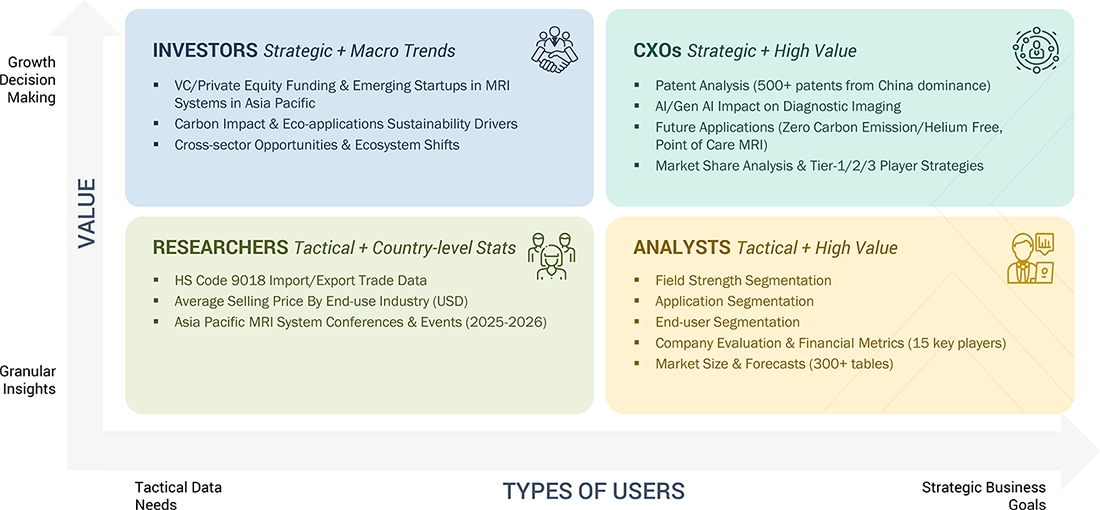
DELIVERED CUSTOMIZATIONS
We have successfully delivered the following deep-dive customizations:
| CLIENT REQUEST | CUSTOMIZATION DELIVERED | VALUE ADDS |
|---|---|---|
| Biopharmaceutical Companies |
|
|
RECENT DEVELOPMENTS
- April 2025 : Siemens Healthineers and Tower Health entered into a 10-year partnership to improve Tower Health’s radiology, cardiology, and oncology departments with Siemens Healthineers equipment, including computed tomography and magnetic resonance.
- January 2025 : Philips partnered with Myocardial Solutions to transform cardiac care through innovative, sustainable, and AI-driven solutions, particularly in cardiac magnetic resonance (CMR) imaging.
- February 2025 : GE Healthcare unveiled Freelium, a next-generation sealed magnet platform MRI platform that operates without helium, making it a sustainable option.
Table of Contents
 Exclusive indicates content/data unique to MarketsandMarkets and not available with any competitors.
Methodology
This study analyzed various market variables related to small and medium-sized businesses and major corporations to balance primary and secondary research for the Asia Pacific MRI systems market. The next phase involved conducting primary research with industry experts along the value chain to validate the findings, assumptions, and market sizing. Several methodologies were employed to estimate the overall market size, including both top-down and bottom-up approaches.
This study focuses on key market segments, emerging trends, regulatory frameworks, and competitive environments. It also examines leading market players and their strategies within this sector. In conclusion, the total market size was determined using top-down and bottom-up approaches and data triangulation to arrive at the final figure. Ongoing primary research was conducted throughout the study to validate and test each hypothesis.
Secondary Research
During the study, secondary research utilized a variety of sources, including directories and databases such as Bloomberg Businessweek, D&B Hoovers, and Factiva. Additional materials included white papers, annual reports, SEC filings, and investor presentations. This research approach is aimed at collecting and generating data that offers comprehensive, technical, and market-focused insights into the Asia Pacific MRI systems market. The data provides information on key players and market segmentation based on recent industry trends and significant market developments. Additionally, a database of leading industry figures was created through this secondary research.
Primary Research
Primary research involved activities aimed at obtaining both qualitative and quantitative data. Several individuals from the supply and demand sides were interviewed during this phase. On the supply side, participants included key figures such as CEOs, vice presidents, marketing and sales, directors of technology and innovation, and other important leaders. On the demand side, primary sources included academic institutions and research organizations. This real-world primary study was conducted to validate market segmentation, identify prominent market participants, and gain insights into significant industry trends and market dynamics.
Market Size Estimation
The report comprehensively analyzes the Asia Pacific MRI systems market and reviews major companies and their revenue shares. Key players with significant market shares were identified through secondary research, and their MRI systems business revenues were calculated and subsequently validated through primary research. The secondary research involved analyzing leading market participants' annual and financial reports. In contrast, primary research included in-depth interviews with influential leaders, such as directors, CEOs, and marketing executives. The segmental revenue was calculated based on the revenue mapping of service and product providers to determine the market value. The process involved the following steps:
- List of key players that operate in the Asia Pacific MRI systems market at the regional level
- Formation of product mapping of manufacturers of MRI systems and related product lines at the regional level
- Revenue mapping for listed players from MRI systems and related products & services
- Revenue mapping of major players to cover at least ~90% of the global market share as of 2024
- Revenue mapping extrapolation for players will drive the global market value for the respective segment
- Summation of market value for all segments and subsegments to achieve the actual value of the Asia Pacific MRI systems market
Data Triangulation
After getting the overall market size from the market size estimation process mentioned above, the Asia Pacific MRI systems market was split into segments and subsegments. Data triangulation and market segmentation procedures were used to complete the overall market engineering process and arrive at the exact statistics for all segments and subsegments. The data was triangulated by studying and analyzing various factors and trends from both the demand and supply sides. Additionally, top-down and bottom-up approaches verified and validated the Asia Pacific MRI systems market.
Market Definition
Magnetic resonance imaging (MRI) is a diagnostic technique designed to visualize/create images of the internal structures of the human body using magnetic and electromagnetic fields, which induce a resonance effect of hydrogen atoms on body parts. The associated software registers and processes the electromagnetic emission created by these atoms to produce images of the body structures. These modalities help healthcare professionals visualize the internal structure and surrounding tissues. MRI systems are primarily used in hospitals and diagnostic imaging centers.
Stakeholders
- Hospitals
- Clinics
- Diagnostic Imaging Centers
- Manufacturers & Suppliers of MRI Systems
- Product Suppliers, Distributors, and Channel Partners
- Research Institutes
- Regulatory Authorities & Industry Associations
- Venture Capitalists & Investment Firms
Report Objectives
- To define, describe, and forecast the size of Asia Pacific MRI systems market based on field strength, architecture, design, application, end user, and region
- To provide detailed information regarding the factors influencing the growth potential of the Asia Pacific MRI systems market (drivers, restraints, opportunities, challenges, and trends)
- To analyze micro markets with respect to individual growth trends, prospects, and contributions to the Asia Pacific MRI systems market
- To analyze key growth opportunities in the Asia Pacific MRI systems market for key stakeholders and provide details of the competitive landscape for market leaders
- To forecast the size of market segments and/or subsegments concerning Asia Pacific (Japan, China, India, Australia, South Korea, and the rest of Asia Pacific)
- To profile the key players in the Asia Pacific MRI systems market and comprehensively analyze their market shares and core competencies
- To track and analyze the competitive developments undertaken in the Asia Pacific MRI systems market, such as product launches/approvals, agreements, expansions, collaborations, and acquisitions


Personalize This Research
- Triangulate with your Own Data
- Get Data as per your Format and Definition
- Gain a Deeper Dive on a Specific Application, Geography, Customer or Competitor
- Any level of Personalization
Let Us Help You
- What are the Known and Unknown Adjacencies Impacting the Asia Pacific MRI System Market
- What will your New Revenue Sources be?
- Who will be your Top Customer; what will make them switch?
- Defend your Market Share or Win Competitors
- Get a Scorecard for Target Partners

Custom Market Research Services
We Will Customise The Research For You, In Case The Report Listed Above Does Not Meet With Your Requirements
Get 10% Free CustomisationTESTIMONIALS

JAYANT RAJPUROHIT
Director of Market Insights, Data and Analytics
SFI Health,
Leading Pharmaceutical Companywww.sfihealth.com/

We at SFI Health approached MarketsandMarkets for an Opportunity Assessment on "Incidence and Prevalence of Focus Indications" as we wanted to know the most attractive HCPs like Physician, Functional MD, Naturopath and Pharmacist. The project was critical for us to ensure our focus on the right target which would enable sustainable growth and profitability for SFI Health. The business insights provided exceeded our expectations and we were extremely impressed. The team at MarketsandMarkets is highly professional and detail oriented and very well understood our business needs. MarketsandMarkets offers a unique combination of expertise and dedicated engagement model. We identified 2 new products to be launched in coming months, based on the research findings provided by MarketsandMarkets. We are happy with the services and would strongly recommend MarketsandMarkets to my peers in the industry.

BEATRIZ DE LA CALLE
Head of Commercial Analytics
Qualicaps,
Leading Pharmaceutical Companywww.qualicaps.com/

We partnered with MarketsandMarkets for an assessment study on hard empty capsules. The team was extremely professional in understanding our business requirements and we received timely responses to all our queries. The market intelligence and the recommendations has met our business requirements. We were extremely impressed to see the final study results; it really exceeded our expectations. The market intelligence offered by MarketsandMarkets, and clarity on next steps will help us achieve our business objective for the Year 2021. We are happy with the services and would strongly recommend MarketsandMarkets to my peers in the industry.

Bob Williams,
Senior Director Business Development & Innovation
Bracco Diagnostics Inc.,
Italian Multinational in life sciences sector and a World Leader in imaging diagnosticsimaging.bracco.com/us-en
We were pleased with targeted insights that MarketsandMarkets identified from a custom study on the 'Radiation Dose Management Solutions Market'. Your team identified and characterized the market participants as well as underlying trends accurately. This study was useful to Bracco in formulating business strategies for our dose monitoring product lines and we thank MarketsandMarkets for the job well done.
Cody Coonradt,
Market Development and Strategy Manager
3M Health Information Systems,
Leader in Health care Coding, Payment & Analytics Solutions.www.3m.com/3M/en_US/health-information-systems-us
The value for our organization comes from three things: depth of research, specificity of segments and being easy to work with. As important as the first two are, the third can't be underestimated. MarketsandMarkets, maybe more than any other research vendor, wants to know what is top of mind for our team and what big questions we are grappling to answer.
Their customer first approach and high value engagement model, have given us great analysis and excellent value for money






Growth opportunities and latent adjacency in Asia Pacific MRI System Market