
South Africa Active Harmonic Filter Market (2025-2030)

The South Africa Active Harmonic Filter Market was valued at $7.25 Million in 2025 and projected to reach to $8.47 Million by 2030, representing a compound annual growth rate of 3.2%. South Africa's active harmonic filter market is positioned for steady growth as industrial facilities and utilities prioritize power quality management.


| Market Size in | USD 26.32 MN |
| Market Forecast in | |
| CAGR | |
| Forecast Period | |
| Units Considered | Value (USD MN) |
South Africa Active Harmonic Filter Market Trends and Insights
- This moderate growth trajectory reflects South Africa's ongoing investment in power quality infrastructure and industrial modernization.
- South Africa's market expansion is driven by increasing demand from manufacturing, mining, and utility sectors seeking to reduce harmonic distortion and improve electrical system efficiency. The active harmonic filter market in South Africa is characterized by steady adoption among large industrial consumers and critical infrastructure operators.
- South Africa's growth rate of 3.2% is notably lower than the global average of 7.8%, indicating a more conservative market penetration relative to developed economies.
- However, South Africa's strategic position as Africa's largest economy and its focus on grid stability and renewable energy integration present sustained opportunities for market participants through 2030..
Key Market Statistics
- CAGR (2025-2030) 3.2% CAGR
- Market Size, 2025 ~USD 7.25 Million
- Forecast, 2030 ~USD 8.47 Million
- Country South Africa
South Africa Active Harmonic Filter Market Overview
Market Size & Growth :
South Africa's active harmonic filter market is valued at USD 7.25 million in 2025, with projected growth to USD 8.47 million by 2030, reflecting a steady CAGR of 3.2% driven by industrial modernization and power quality demands.
Industrial Power Quality Focus :
South African manufacturing and mining sectors are increasingly adopting active harmonic filters to mitigate power quality issues, reduce equipment downtime, and comply with evolving electrical standards in industrial operations.
Infrastructure Investment Trends :
Growing investments in South Africa's power distribution infrastructure and renewable energy integration are creating demand for advanced harmonic mitigation solutions to stabilize grid performance and protect sensitive equipment.
Regional Market Dynamics :
South Africa's market growth lags the global CAGR of 7.8%, indicating untapped opportunities in tier-2 cities and emerging industrial zones where power quality infrastructure remains underdeveloped.
South Africa Active Harmonic Filter Market Dynamics
- The country's mining and manufacturing sectors, critical to the economy, are increasingly investing in harmonic mitigation technologies to reduce operational losses and equipment failures.
- Government initiatives supporting industrial modernization and renewable energy integration further support market expansion.
- However, economic constraints and capital expenditure limitations may moderate growth compared to global benchmarks, presenting opportunities for cost-effective solutions tailored to South African industrial needs..
Market Ecosystem
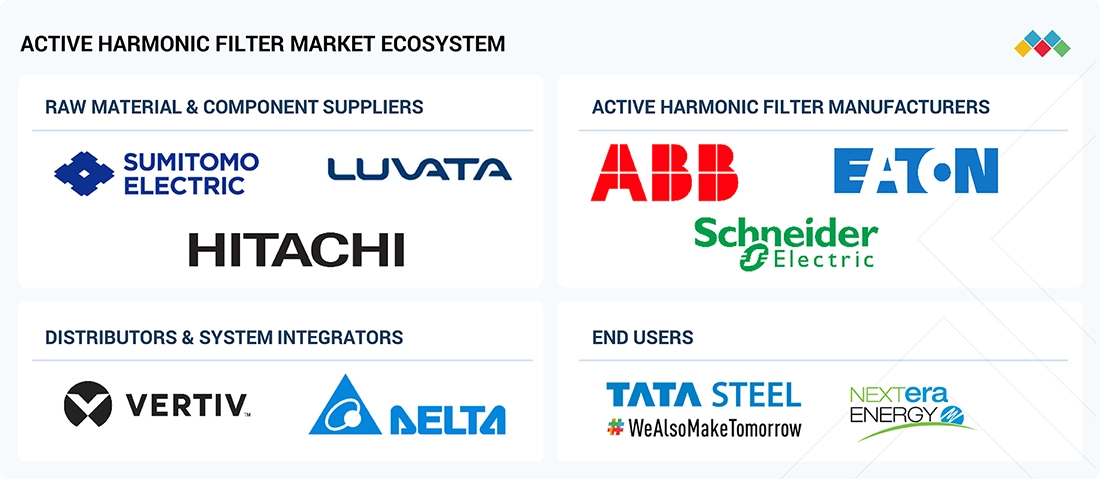
active harmonic filter market: COMMERCIAL USE CASES ACROSS INDUSTRIES
| COMPANY | USE CASE DESCRIPTION | BENEFITS |
|---|---|---|
 |
Ford Motor Company of Southern Africa (FMCSA) operates the Silverton Assembly Plant in Pretoria, which assembles light commercial vehicles, and the Struandale Engine Plant in Port Elizabeth, producing engine component kits for local assembly and export. FMCSA invested approximately USD 272 million to upgrade both plants into world-class facilities, increasing the Silverton Assembly Plant’s annual capacity to 110,000 units. To reduce direct and indirect costs associated with harmonic pollution on the electrical power system, FMCSA implemented AHFs across its substations. | The implementation of AHFs reduced peak RMS currents through the 14 transformers, lowered copper and core losses, and decreased kVA demand, contributing to reduced electricity costs. Transformer life was extended due to lower operating temperatures. Indirect costs from unplanned downtime were minimized, and source balancing of unbalanced load currents improved the LV supply voltage for other sensitive equipment, ensuring reliable plant operation. |
Logos and trademarks shown above are the property of their respective owners. Their use here is for informational and illustrative purposes only.
Related Ecosystem
Power Infrastructure
- Geographical Information System (GIS)
- Cogeneration
- Battery Electric Vehicle (BEV)
- Cellular Network
- Fuel Cell
- Siemens ag
- ABB India Limited
- SCHNEIDER ELECTRIC SE
- General Electric Company
- Eaton Corporation plc
Key Takeaways
- South Africa's active harmonic filter market is valued at USD 7.25 million in 2025 and will reach USD 8.47 million by 2030.
- South Africa exhibits a 3.2% CAGR, reflecting moderate but steady market growth driven by industrial and utility sector demand.
- South Africa's market growth is supported by increasing focus on power quality, grid stability, and renewable energy integration.
- South Africa's market penetration remains below global averages, indicating significant untapped potential for expansion and technology adoption.
Active Harmonic Filter Market Report Scope
| Report Metric | Details |
|---|---|
| Base Year | 2025 |
| Fastest Growing Segment | DATA CENTERS (Application) |
| Forecast Period | 2025–2030 |
| Growth Rate | CAGR of 7.8% from 2025 to 2030 |
| Largest Segment | THREE-PHASE (Phase) |
| Market Size Base Year (Billions) | ~USD 0.76 (2025) |
| Revenue Forecast (Billions) | ~USD 1.1 (2030) |
| Segments Covered | Type, Phase, Voltage, Application, Industry |
South Africa Active Harmonic Filter Market Report Segmentation
5 segment dimensions are covered across the global market.
By Type
- Hybrid
- Shunt
By Phase
- Single-Phase
- Three-Phase
By Voltage
- Low
- Medium
By Application
- Automation & Electronics
- Commercial & Residential Buildings
- Data Centers
- Industrial
- Power Infrastructure & Transportation
- Water & Wastewater Treatment
By Industry
- Mining
- Oil & Gas
- Other Industries
- Steel & Metallurgy
Target Audience
- Industrial Equipment Manufacturers : South African manufacturers need market data to develop localized harmonic filter solutions, understand customer pain points in mining and processing industries, and establish competitive pricing strategies.
- Utility Companies & Grid Operators : Power utilities require insights into harmonic mitigation technologies to improve grid stability, reduce losses, and plan infrastructure investments aligned with South Africa's renewable energy integration goals.
- Mining & Processing Operators : Mining companies need to understand harmonic filter adoption trends and ROI metrics to justify capital investments in power quality solutions that reduce equipment downtime and operational costs.
- Electrical Distributors & Resellers : South African distributors require market intelligence to identify growth segments, forecast demand, and develop targeted sales strategies for harmonic filter products across industrial and utility sectors.
- Engineering & Consulting Firms : Consulting firms need localized market data to advise clients on power quality solutions, provide feasibility assessments, and recommend harmonic filter technologies suited to South African industrial applications.
Key Companies in the South Africa Active Harmonic Filter Market
| Company | HQ | Ownership | Strongest segments |
|---|---|---|---|
| EATON | Ireland | Public Company | Shunt active harmonic filters,Hybrid active harmonic filters,Low voltage (<1 kV), |
| SCHNEIDER ELECTRIC | Canada | Public Company | Shunt active harmonic filters,Hybrid active harmonic filters,Low voltage (<1 kV), |
| DANFOSS | Denmark | Private Company | Shunt active harmonic filters,Hybrid active harmonic filters, |
| TE CONNECTIVITY | Switzerland | Public Company | Shunt active harmonic filter content (connectors, sensors, EMC, wiring),Hybrid active filter content (medium-voltage, high-power systems),Industrial & automation applications, |
| MTE CORPORATION | Indonesia | Public Company | Shunt active harmonic filters,Hybrid active filters,Low voltage (<1 kV), |
| HAMMOND POWER SOLUTIONS | Canada | Public Company | Shunt active harmonic filters – Low voltage (<1 kV),Shunt active harmonic filters – Medium voltage (1–35 kV),Hybrid filters – Low voltage (<1 kV), |
| SINEXCEL | China | Public Company | Shunt Active Harmonic Filters - Low Voltage (<1 kV),Shunt Active Harmonic Filters - Medium Voltage (1–35 kV),Hybrid Filters and Power Quality Systems, |
| MERUS POWER | Finland | Public Company | Shunt active harmonic filters (Merus A2 and variants),Hybrid power quality systems (Merus HPQ and related),STATCOM/SVC power quality systems (Merus STATCOM, Merus SVC), |
EATON
Eaton is a publicly traded company headquartered in Ireland, founded in 1911, with approximately 97,303 employees. The company operates as a diversified industrial manufacturer and service provider.
SCHNEIDER ELECTRIC
Schneider Electric is a publicly traded company based in Canada, founded in 1836, employing approximately 158,122 people. The company is a global leader in energy management and automation solutions.
DANFOSS
Danfoss is a privately held company headquartered in Denmark, established in 1933, with approximately 39,360 employees. The company specializes in engineering solutions for heating, cooling, and refrigeration applications.
TE CONNECTIVITY
TE Connectivity is a publicly traded company headquartered in Switzerland, founded in 1941, employing approximately 80,000 people. The company designs and manufactures connectivity and sensor solutions for multiple industries.
MTE CORPORATION
MTE Corporation is a publicly traded company based in Indonesia, founded in 1995, with approximately 568 employees. The company operates as a manufacturer in the industrial sector.
HAMMOND POWER SOLUTIONS
Hammond Power Solutions is a publicly traded company based in Canada, founded in 1917, with approximately 2,121 employees. The company specializes in the design and manufacture of transformers and power distribution equipment.
SINEXCEL
Sinexcel is a publicly traded company headquartered in China, founded in 2007, with approximately 2,669 employees. The company operates in the power electronics and renewable energy sectors.
MERUS POWER
Merus Power is a publicly traded company based in Finland, founded in 2008, with approximately 146 employees. The company specializes in power electronics and energy conversion solutions.
Reasons to Buy this Report
- Localized Market Intelligence : Gain deep insights into South Africa's specific market dynamics, including regional industrial demand patterns, mining sector requirements, and utility infrastructure investments that differ from global trends.
- Competitive Positioning Strategy : Understand South Africa's market landscape to identify competitive gaps, pricing strategies, and distribution channels specific to the country's industrial and utility sectors.
- Growth Opportunity Identification : Discover untapped segments in tier-2 cities and emerging industrial zones where harmonic filter adoption remains low, enabling targeted market entry and expansion strategies.
- Investment Decision Support : Make informed capital allocation decisions with accurate market sizing, growth forecasts, and sector-specific demand drivers for South Africa's active harmonic filter segment.
- Regulatory & Standards Compliance : Stay updated on South African electrical standards, compliance requirements, and infrastructure regulations that influence harmonic filter specifications and market adoption rates.
Frequently asked questions
What is the current size of South Africa's active harmonic filter market?
South Africa's active harmonic filter market is estimated at USD 7.25 million in 2025.
What is the projected market size for South Africa by 2030?
South Africa's active harmonic filter market is forecast to reach USD 8.47 million by 2030.
What is the CAGR for South Africa's active harmonic filter market?
South Africa's active harmonic filter market is expected to grow at a CAGR of 3.2% from 2025 to 2030.
Which industries drive demand for active harmonic filters in South Africa?
South Africa's primary demand drivers include manufacturing, mining, utilities, and critical infrastructure sectors seeking improved power quality and grid stability.
How does South Africa's market growth compare to global trends?
South Africa's 3.2% CAGR is lower than the global average of 7.8%, indicating more conservative adoption rates but steady market development.
RESEARCH METHODOLOGY
This research study utilized extensive secondary sources, including press releases, investment reports, industry white papers, presentations, and other publicly available data, to gather information relevant to the technical, market-oriented, and commercial aspects of the AHF market. Primary sources included industry experts from the power quality, automation, and electrical equipment sectors, as well as manufacturers, suppliers, distributors, service providers, and technology developers across the AHF value chain. In-depth interviews were conducted with key industry participants, subject-matter experts, C-level executives, and market consultants to validate qualitative and quantitative insights and assess growth opportunities and future trends within the global market.
Secondary Research
Secondary sources consulted for this research study include annual reports, press releases, investor presentations from companies, white papers, certified publications, articles by recognized authors, and databases from various companies and associations. Secondary research has been mainly used to obtain key information about the industry’s supply chain to identify the key players offering various products and services, market classification and segmentation according to the offerings of major players, industry trends to the bottom-most level, regional markets, and key developments from market- and technology-oriented perspectives.
Primary Research
During the primary research process, various primary sources from both the supply and demand sides were interviewed to gather qualitative and quantitative information for this report. Primary sources from the supply side include industry experts such as chief executive officers (CEO), vice presidents, marketing directors, technology and innovation directors, and related key executives from various companies and organizations operating in the active harmonic filter market.
In the market engineering process, both top-down and bottom-up approaches were extensively employed, along with several data triangulation methods, to estimate market sizes and forecast values for all segments and subsegments listed in this report. Extensive qualitative and quantitative analyses were conducted to complete the market engineering process, listing key information/insights throughout the report.
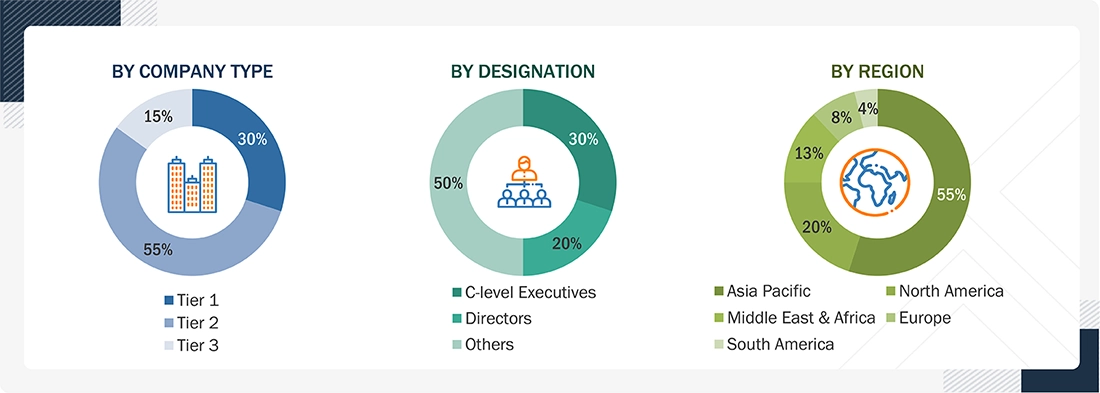
Note 1: Others include sales managers, marketing managers, and product managers.
Note 2: Tier 1 companies’ revenues are more than USD 10 billion; tier 2 companies’ revenues range between USD 1 and 10 billion; and tier 3 companies’ revenues range between USD 500 million and USD 1 billion.
Source: Industry Experts
To know about the assumptions considered for the study, download the pdf brochure
Market Size Estimation
Both top-down and bottom-up approaches were used to estimate and validate the size of the global AHF market and its dependent submarkets. The key players in the market were identified through secondary research, and their market shares in the respective regions were determined through a combination of primary and secondary research. The research methodology employed in this study draws on annual and financial reports of top market players, as well as interviews with industry experts, including CEOs, VPs, directors, sales managers, and marketing executives, to gather key insights, both quantitative and qualitative, into the market. The following segments provide details about the overall market size estimation process employed in this study.
Active Harmonic Filter Market : Top-Down and Bottom-Up Approach

Data Triangulation
After determining the overall market size through the estimation process explained below, the total market was divided into several segments and subsegments. The data triangulation and market breakdown procedures were employed, wherever applicable, to complete the overall market engineering process and arrive at the exact statistics for all the segments and subsegments. The data was triangulated by studying various factors and trends from both the demand and supply sides. Additionally, the market was validated using both top-down and bottom-up approaches.
Market Definition
Active harmonic filters—also known as active filters—are devices that utilize power electronics (such as switching converters and transistors) to inject compensating currents into the power network, thereby canceling or reducing harmonic distortion while simultaneously performing functions like reactive power compensation, load balancing, and damping.
Stakeholders
- Manufacturers/Suppliers
- End Users
- Regulatory Bodies and Standards Organizations
- Research & Development/Innovators
- Consultants/Engineering Firms/System Integrators
- Government/Policy Makers
- Utilities/Power Grid Operators
- Financers/Investors
- Distributors
- Consumers/Public/Industry Associations
- Maintenance/Service Providers
Report Objectives
- To define, describe, segment, and forecast the size of the active harmonic filters market, by type, voltage, application, end user, and region, in terms of value
- To segment and forecast the size of the active harmonic filters market by region, in terms of volume
- To forecast the market sizes for five key regions, namely North America, Europe, Asia Pacific, the Middle East & Africa, and South America
- To provide detailed information regarding key drivers, restraints, opportunities, and challenges influencing the growth of the active harmonic filters market
- To offer the supply chain analysis, trends/disruptions impacting customer business, ecosystem analysis, regulatory landscape, patent analysis, case study analysis, technology analysis, key conferences & events, the impact of AI/Gen AI, macroeconomic outlook, pricing analysis, Porter’s five forces analysis, and regulatory analysis, the impact of the 2025 US tariff on the market
- To analyze opportunities for stakeholders in the active harmonic filters market and draw a competitive landscape of the market
- To benchmark market players using the company evaluation matrix, which analyzes market players on broad categories of business and product strategies adopted by them
- To compare key market players for the market share, product specifications, and end uses
- To strategically profile key players and comprehensively analyze their market ranking and core competencies
- To analyze competitive developments, such as contracts, agreements, partnerships, and joint ventures, in the active harmonic filters market
Available Customizations
MarketsandMarkets offers customizations tailored to the specific needs of companies, utilizing the provided market data.
The following customization options are available for the report:
Product Analysis
- Product matrix, which gives a detailed comparison of the product portfolio of each company
Geographic Analysis as per Feasibility
- Further breakdown of the active harmonic filter market by region, including North America, Europe, Asia Pacific, Middle East & Africa, and South America.
Company Information
- Detailed analysis and profiling of additional market players (up to five)
Get the Full Active Harmonic Filter Market Report
Full forecast, segment splits, and company analysis for all Active Harmonic Filter Market.
- China Active Harmonic Filter Market
- Japan Active Harmonic Filter Market
- India Active Harmonic Filter Market
- South Korea Active Harmonic Filter Market
- Australia Active Harmonic Filter Market
- Canada Active Harmonic Filter Market
- Mexico Active Harmonic Filter Market
- US Active Harmonic Filter Market
- Germany Active Harmonic Filter Market
- France Active Harmonic Filter Market
- Italy Active Harmonic Filter Market
- UK Active Harmonic Filter Market
- Spain Active Harmonic Filter Market
- Saudi Arabia Active Harmonic Filter Market
- UAE Active Harmonic Filter Market
- Egypt Active Harmonic Filter Market
- Brazil Active Harmonic Filter Market
- Argentina Active Harmonic Filter Market
- Chile Active Harmonic Filter Market
- Rest Of Europe Active Harmonic Filter Market
- Rest Of Asia Pacific Active Harmonic Filter Market
- GCC Active Harmonic Filter Market
- Rest Of GCC Active Harmonic Filter Market
- Rest Of South America Active Harmonic Filter Market
Need a Tailored Report?
Customize this report to your needs
Get 10% FREE Customization
Customize This Report
