
Japan Advanced Magnetic Materials Market (2023-2028)

The Japan Advanced Magnetic Materials Market was valued at $1501.2 Million in 2023 and projected to reach to $2363.2 Million by 2028, representing a compound annual growth rate of 9.5%. Japan's advanced magnetic materials market is poised for sustained growth through 2028, driven by the country's established dominance in electronics manufacturing and automotive production.


| Market Size in | USD 26.32 MN |
| Market Forecast in | |
| CAGR | |
| Forecast Period | |
| Units Considered | Value (USD MN) |
Japan Advanced Magnetic Materials Market Trends and Insights
- Japan's leadership in electronics, automotive, and renewable energy sectors drives sustained demand for high-performance magnetic materials used in motors, generators, and magnetic devices.
- The country's commitment to electrification and industrial automation positions Japan as a critical hub for advanced magnetic material innovation and consumption within the Asia Pacific region. Japan's mature manufacturing ecosystem and technological expertise support the adoption of rare-earth and non-rare-earth magnetic materials across diverse applications.
- Japan's investments in electric vehicle production, industrial robotics, and clean energy infrastructure accelerate market growth through 2028.
- The competitive landscape in Japan reflects strong domestic producers and global suppliers competing to meet stringent quality and performance standards demanded by Japan's precision-focused industries..
Key Market Statistics
- CAGR (2023-2028) 9.5% CAGR
- Market Size, 2023 ~USD 1501.2 Million
- Forecast, 2028 ~USD 2363.2 Million
- Country Japan
Japan Advanced Magnetic Materials Market Overview
Market Valuation :
Japan's advanced magnetic materials market reached USD 1,501.2 million in 2023, with projections to grow to USD 2,363.2 million by 2028, representing a robust 9.5% CAGR.
Electronics & Automotive Dominance :
Japan's world-leading electronics and automotive industries are primary drivers of demand for advanced magnetic materials, particularly for high-performance motors, generators, and precision magnetic devices.
Renewable Energy Integration :
Japan's commitment to renewable energy expansion, including wind and solar technologies, significantly boosts demand for magnetic materials used in power generation and energy conversion systems.
Technological Innovation Hub :
Japan's position as a global innovation leader in materials science ensures continuous development of next-generation magnetic materials for emerging applications in robotics and IoT devices.
Japan Advanced Magnetic Materials Market Dynamics
- The 9.5% CAGR reflects strong demand from industries requiring high-performance magnetic components for electric vehicles, industrial motors, and consumer electronics.
- Japan's strategic focus on renewable energy infrastructure and green technology adoption further accelerates market expansion, as magnetic materials are critical for wind turbines and energy storage systems.
- The market benefits from Japan's advanced manufacturing capabilities and R&D investments in materials science, positioning the country as a key hub for premium magnetic material production and innovation..
Market Ecosystem
Related Ecosystem
Speciality Chemicals
- Corrosion Inhibitors
- Polyetheretherketone (PEEK)
- Acrylonitrile Butadiene Styrene (ABS)
- Epoxy Resin
- Polycarbonate
- Basf se
- DOW CHEMICAL COMPANY
- Evonik industries ag
- Clariant ag.
- Solvay sa
Mining Minerals And Metals
- Wastewater Treatment
- Fiberglass
- Light Commercial Vehicles (LCVs)
- Nitrogen
- Acetic Acid
- LHOIST S.A
- SEVERSTAL JSC
- ArcelorMittal S.A.
- TW METALS, INC.
- Linde plc
Locomotives And Rolling Stock
- Sensors
- Passenger Information System (PIS)
- Cartesian Robots
- Flow Sensors
- Gas Sensors
- Siemens ag
- Alstom s.a.
- Hitachi, Ltd.
- Knorr-bremse ag
- SYSTRA LTD.
Key Takeaways
- Japan's advanced magnetic materials market reached USD 1,501.2 million in 2023 with projected growth to USD 2,363.2 million by 2028.
- Japan's automotive and electronics sectors are primary drivers of demand for advanced magnetic materials in motors and precision devices.
- Japan's focus on electrification and renewable energy infrastructure supports sustained 9.5% CAGR through the forecast period.
- Japan's stringent quality standards and technological expertise position the country as a premium market for high-performance magnetic solutions.
Advanced Magnetic Materials Market Report Scope
| Report Metric | Details |
|---|---|
| Base Year | 2023 |
| Fastest Growing Segment | AUTOMOTIVE (End-Use Industry) |
| Forecast Period | 2023-2028 |
| Growth Rate | CAGR of 9.5% from 2023 to 2028 |
| Largest Segment | PERMANENT MAGNETIC MATERIALS (Type) |
| Market Size Base Year (Billions) | ~USD 24.27 (2023) |
| Revenue Forecast (Billions) | ~USD 38.2 (2028) |
| Segments Covered | End-Use Industry, Type, End-Use Industry. 2020-2022 |
Japan Advanced Magnetic Materials Market Report Segmentation
3 segment dimensions are covered across the global market.
By End-Use Industry
- Automotive
- Electronics
- Industrial
- Medical
- Power Generation
By Type
- Permanent Magnetic Material
- Permanent Magnetic Materials
- Semi-Hard Magnetic Material
- Semi-Hard Magnetic Materials
- Soft Magnetic Material
- Soft Magnetic Materials
By End-Use Industry. 2020-2022
- Automotive
- Electronics
- Industrial
- Medical
- Power Generation
JAPAN: ADVANCED MAGNETIC MATERIALS MARKET, BY END-USE INDUSTRY, 2023–2028
| Segment | 2023 | 2024 | 2025 | 2026 | 2027 | 2028 | CAGR (%) |
|---|---|---|---|---|---|---|---|
| AUTOMOTIVE | 362.7 | 397.9 | 436.7 | 479.1 | 525.7 | 576.9 | 9.7 |
| ELECTRONICS | 232.7 | 254.8 | 279 | 305.5 | 334.5 | 366.3 | 9.5 |
| INDUSTRIAL | 300.2 | 328.8 | 360 | 394.2 | 431.6 | 472.6 | 9.5 |
| MEDICAL | 164.2 | 179.5 | 196.2 | 214.4 | 234.3 | 256.1 | 9.3 |
| OTHERS | 126.2 | 137.6 | 150.2 | 163.8 | 178.7 | 195 | 9.1 |
| POWER GENERATION | 315.2 | 345.2 | 378 | 413.9 | 453.2 | 496.3 | 9.5 |
| TOTAL | 1501.2 | 1643.8 | 1800 | 1971 | 2158.2 | 2363.2 | 9.5 |
Target Audience
- Materials Manufacturers : Japanese and international magnetic materials producers need detailed market data to optimize production capacity, identify growth segments, and develop targeted strategies for the Japanese market.
- Automotive OEMs : Japanese automotive manufacturers require insights into magnetic materials supply trends and pricing forecasts to secure reliable sourcing for electric vehicle motors and advanced drivetrain systems.
- Electronics Companies : Consumer electronics and industrial equipment manufacturers in Japan need market intelligence to plan component sourcing, manage supply chains, and anticipate cost trends for magnetic materials.
- Investment & Private Equity Firms : Investors evaluating opportunities in Japan's advanced materials sector require comprehensive market analysis, growth projections, and competitive landscape data for informed investment decisions.
- Renewable Energy Developers : Japanese renewable energy companies and wind/solar developers need market insights on magnetic materials availability and pricing to optimize project economics and supply chain planning.
Reasons to Buy this Report
- Japan-Specific Market Sizing : Access precise valuation data for Japan's market at USD 1,501.2M (2023) and USD 2,363.2M (2028), enabling accurate financial forecasting and investment planning specific to the Japanese market.
- Sector-Specific Demand Insights : Understand Japan's unique demand drivers across electronics, automotive, and renewable energy sectors, with detailed analysis of how each industry influences magnetic materials consumption patterns.
- Competitive Landscape Analysis : Identify key Japanese manufacturers, suppliers, and market players dominating the advanced magnetic materials space, including their market share and strategic positioning.
- Growth Opportunity Identification : Leverage the 9.5% CAGR forecast to identify high-growth segments within Japan's market, including emerging applications in robotics, IoT, and next-generation automotive technologies.
- Regulatory & Trade Insights : Gain Japan-specific intelligence on regulatory frameworks, trade policies, and supply chain dynamics affecting magnetic materials sourcing, manufacturing, and distribution.
Frequently asked questions
What is the current size of Japan's advanced magnetic materials market?
Japan's advanced magnetic materials market was valued at USD 1,501.2 million in 2023 and is expected to grow to USD 2,363.2 million by 2028.
What is the projected growth rate for Japan's advanced magnetic materials market?
Japan's advanced magnetic materials market is projected to grow at a CAGR of 9.5% from 2023 to 2028.
Which industries drive demand for advanced magnetic materials in Japan?
Japan's automotive, electronics, industrial automation, and renewable energy sectors are the primary drivers of demand for advanced magnetic materials.
What types of magnetic materials are most used in Japan?
Japan utilizes both rare-earth magnets and non-rare-earth alternatives in applications including motors, generators, sensors, and magnetic devices across multiple industries.
Why is Japan a significant market for advanced magnetic materials?
Japan's advanced manufacturing capabilities, technological expertise, and leadership in automotive and electronics production make it a critical market for high-performance magnetic materials in the Asia Pacific region.
RESEARCH METHODOLOGY
The study involves two major activities in estimating the current size of the advanced magnetic materials market. Exhaustive secondary research was done to collect information on the market, the peer market, and the parent market. The next step was to validate these findings, assumptions, and sizing with industry experts across the value chain through primary research. Both the top-down and bottom-up approaches were employed to estimate the total market size. After that, market breakdown and data triangulation procedures were used to determine the extent of market segments and sub-segments.
Secondary Research
In the secondary research process, information has been sourced from annual reports, press releases & investor presentations of companies; white papers; certified publications; trade directories; articles from recognized authors; and databases. Secondary research has been used to obtain critical information about the industry's value chain, the total pool of key players, market classification & segmentation according to industry trends to the bottom-most level, and regional markets. These have also been utilized to obtain information about the key developments from a market-oriented perspective. Secondary research was mainly conducted to obtain key information about the supply chain of the industry, the total pool of players, market classification and segmentation according to industry trends to the bottom-most level, regional markets, and key developments from both market- and technology-oriented perspectives.
Primary Research
The stakeholders in the value chain of the advanced magnetic materials market include raw material suppliers, processors, end-product manufacturers, and end users. Various primary sources from the supply and demand sides of the market have been interviewed to obtain qualitative and quantitative information. Primary sources from the demand side include key opinion leaders from various end-use industries in the advanced magnetic materials market. Primary sources from the supply side include experts from companies involved in the advanced magnetic materials.
The Breakup of Primary Research :
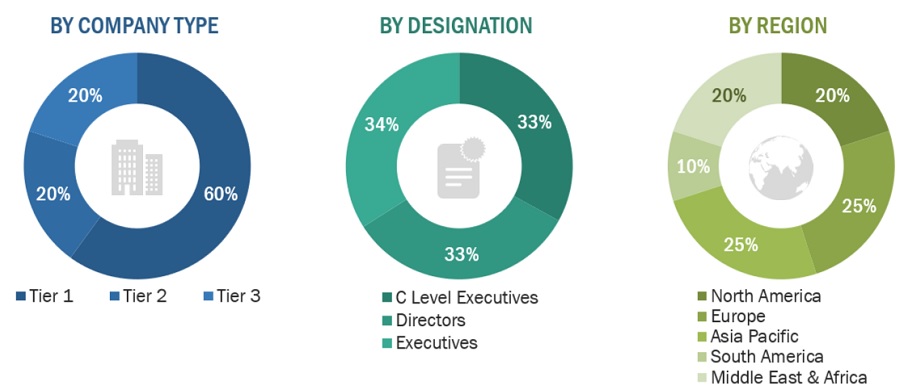
To know about the assumptions considered for the st udy, download the pdf brochure
Market Size Estimation
The research methodology used to estimate the size of the advanced magnetic materials market includes the following details. The market sizing of the market was undertaken from the demand side. The market was upsized based on procurements and modernizations in advanced magnetic materials in different applications of the advanced magnetic materials industry at a regional level. Such procurements provide information on the demand aspects of the advanced magnetic materials industry for each application. For each application, all possible segments of the advanced magnetic materials market were integrated and mapped.
Advanced magnetic materials Market Size: Botton Up Approach
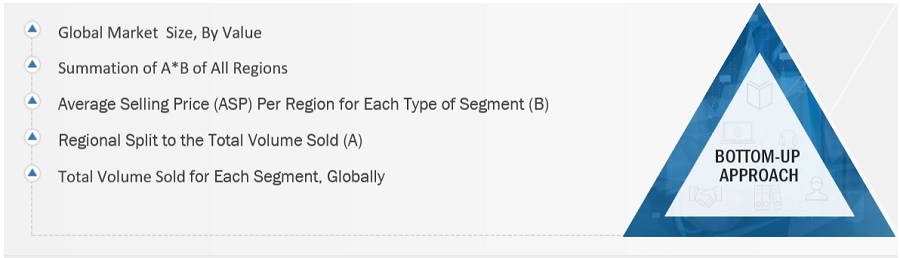
To know about the assumptions considered for the study, Request for Free Sample Report
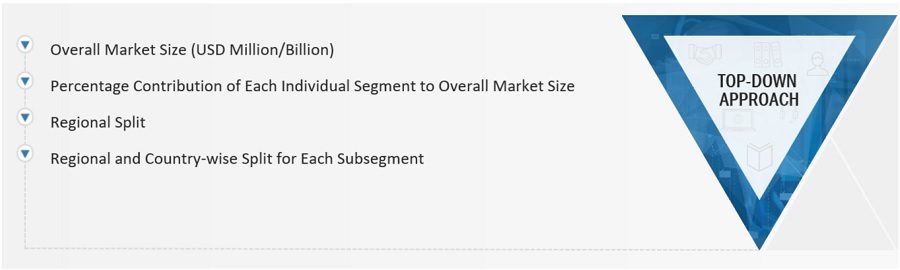
Advanced magnetic materials Market Size: Top Down Approach
Data Triangulation
After arriving at the overall size from the market size estimation process explained above, the total market was split into several segments and subsegments. The data triangulation and market breakdown procedures explained below were implemented, wherever applicable, to complete the overall market engineering process and arrive at the exact statistics for various market segments and subsegments. The data was triangulated by studying various factors and trends from the demand and supply sides. Along with this, the market size was validated using both the top-down and bottom-up approaches.
Market Definition
Fiber-reinforced composites are used in end-use industries including aerospace & defense, wind energy, automotive & transportation, marine, construction, pipe & tank, electrical & electronics, and sporting goods. However, due to several reasons such as lightning, collision, bird strike, erosion, corrosion, or manufacturing defects, the composite structure gets damaged. As composite parts replacement is costlier, advanced magnetic materials is performed on disbands or delamination, holes or punctures, cracks, and other damages to bring back the part to its previous working condition.
Key Stakeholders
- Senior Management
- End User
- Finance/Procurement Department
- R&D Department
Report Objectives
- To analyze and forecast the global advanced magnetic materials market size, in terms of volume and value
- To provide detailed information about the key factors (drivers, restraints, opportunities, and challenges) influencing the growth of the market
- To analyze the market segmentation and forecast the market size based on type, and end-use industry.
- To analyze and forecast the market size based on five main regions, namely, Asia Pacific (APAC), Europe, North America, Middle East & Africa (MEA), and South America.
- To analyze the market with respect to individual growth trends, prospects, and contribution of submarkets to the total market
- To analyze the market opportunities and the competitive landscape for stakeholders and market leaders
- To analyze competitive developments such as expansions, partnership, agreement, new product/technology launch, joint venture, contract, and merger & acquisition in the market
- To profile key players and comprehensively analyze their market share and core competencies
Available Customizations
MarketsandMarkets offers following customizations for this market report:
- Additional country-level analysis of the advanced magnetic materials market
Product Analysis
- Product matrix, which provides a detailed comparison of the product portfolio of each company's market
Get the Full Advanced Magnetic Materials Market Report
Full forecast, segment splits, and company analysis for all Advanced Magnetic Materials Market.
- US Advanced Magnetic Materials Market
- Canada Advanced Magnetic Materials Market
- Mexico Advanced Magnetic Materials Market
- Germany Advanced Magnetic Materials Market
- France Advanced Magnetic Materials Market
- UK Advanced Magnetic Materials Market
- Italy Advanced Magnetic Materials Market
- China Advanced Magnetic Materials Market
- India Advanced Magnetic Materials Market
- South Korea Advanced Magnetic Materials Market
- Saudi Arabia Advanced Magnetic Materials Market
- UAE Advanced Magnetic Materials Market
- Brazil Advanced Magnetic Materials Market
- Argentina Advanced Magnetic Materials Market
- Rest Of Europe Advanced Magnetic Materials Market
- Rest Of Asia Pacific Advanced Magnetic Materials Market
- Rest Of South America Advanced Magnetic Materials Market
Need a Tailored Report?
Customize this report to your needs
Get 10% FREE Customization
Customize This Report
