
South Africa Agricultural Micronutrients Market (2023-2028)

The South Africa Agricultural Micronutrients Market was valued at $31.8 Million in 2023 and projected to reach to $44.6 Million by 2028, representing a compound annual growth rate of 7.0%. South Africa's agricultural micronutrients market is positioned for steady growth as farmers increasingly prioritize soil health and crop productivity enhancement.


| Market Size in | USD 26.32 MN |
| Market Forecast in | |
| CAGR | |
| Forecast Period | |
| Units Considered | Value (USD MN) |
South Africa Agricultural Micronutrients Market Trends and Insights
- South Africa's agricultural sector is increasingly adopting micronutrient solutions to enhance crop productivity and soil health, driven by rising awareness of nutrient deficiencies in local farming practices.
- The market expansion in South Africa reflects growing demand from both large-scale commercial farms and smallholder operations seeking to optimize yields and sustainability. South Africa's micronutrients market is supported by favorable climatic conditions for diverse crop production and government initiatives promoting agricultural modernization.
- Between 2023 and 2028, South Africa is expected to see accelerated adoption of zinc, boron, iron, and manganese-based products across maize, wheat, and horticultural segments.
- South Africa's strategic position as a regional agricultural hub positions it as a key growth market within the Rest of World segment, with increasing investment in precision agriculture and soil amendment technologies..
Key Market Statistics
- CAGR (2023-2028) 7.0% CAGR
- Market Size, 2023 ~USD 31.8 Million
- Forecast, 2028 ~USD 44.6 Million
- Country South Africa
South Africa Agricultural Micronutrients Market Overview
Market Valuation Growth :
South Africa's agricultural micronutrients market reached USD 31.8 million in 2023 and is expected to expand to USD 44.6 million by 2028, driven by increasing adoption of nutrient-enriched farming practices across the country's diverse agricultural regions.
Soil Health Awareness :
South African farmers are increasingly recognizing nutrient deficiencies in local soils, prompting widespread adoption of micronutrient solutions to improve crop yields and long-term soil sustainability in both commercial and smallholder farming operations.
Competitive CAGR Performance :
With a 7.0% CAGR through 2028, South Africa's market growth slightly trails the global average of 8.6%, reflecting steady regional demand but indicating opportunities for market acceleration through innovation and farmer education initiatives.
Agricultural Sector Modernization :
South Africa's farming sector is undergoing modernization with increased investment in precision agriculture and soil management technologies, creating favorable conditions for micronutrient product adoption and market expansion.
South Africa Agricultural Micronutrients Market Dynamics
- The market's 7.0% CAGR reflects growing awareness among both large-scale commercial operations and emerging smallholder farmers regarding the critical role of micronutrients in addressing regional soil deficiencies.
- Government agricultural initiatives and extension services are supporting farmer education on nutrient management practices. Looking ahead, South Africa's market will be shaped by climate variability, water scarcity concerns, and the need for sustainable farming practices.
- Rising input costs and competition from imported products present challenges, while opportunities exist in developing localized micronutrient formulations tailored to South African soil profiles and crop types.
- Strategic partnerships between agricultural input suppliers and farmer cooperatives will be essential for market penetration in rural areas..
Market Ecosystem




OVERVIEW
Source: Secondary Research, Interviews with Experts, MarketsandMarkets Analysis
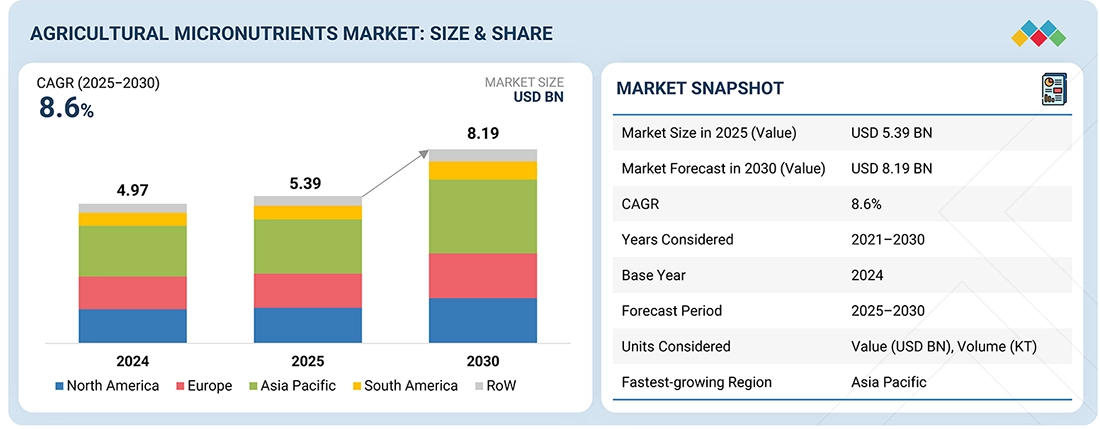
The global agricultural micronutrients market is projected to grow from USD 5.39 billion in 2025 to USD 8.19 billion by 2030, registering a CAGR of 8.6%, owing to the rising focus on providing well-rounded diets for crops and adopting science-backed agronomic practices. The rising demand for micronutrients that improve crop yield, quality, nutrient uptake efficiency, and resilience to various stresses, such as insects, diseases, and climatic extremes, across crop types, including cereals & grains, fruits & vegtables, and oils & pulses, will boost the growth of the agricultural micronutrients market.
Market Size and Forecast:
- Market Size Value in 2024: USD 4.97 Billion
- Market Size Value in 2025: USD 5.39 Billion
- Revenue Forecast in 2030: USD 8.19 Billion
- Growth Rate: CAGR of 8.6% from 2025 to 2030
- Base year: 2024
- Forecast period: 2025–2030
- Asia Pacific is expected to account for a significant share of 43% of the agricultural micronutrients market in 2025.
- The molybdeum segment is expected to dominate with a market share of 34.9% of the agricultural micronutrients market in 2025.
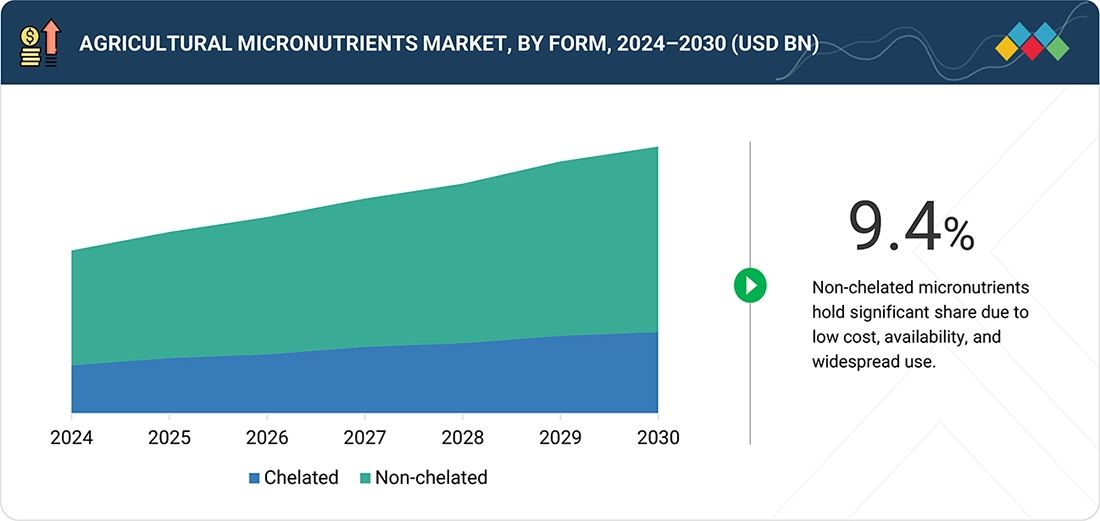
- The non-chelated micronutrients segment is estimated to hold a 69.1% market share in 2025.
Key Market Trends and Insights
- By Nutrient Type: Rising adoption of zinc, boron, iron, and manganese-based fertilizers is driving strong demand in the agriculture micronutrients market.
- By Form: Chelated and liquid micronutrients are witnessing increasing adoption due to their higher nutrient efficiency, faster absorption, and compatibility with precision farming techniques.
- Performance Benefits: Agricultural micronutrients enhance crop productivity, improve nutrient absorption, strengthen plant immunity, and support better yield quality across diverse crop types.
- Market Transformation Trends: Farmers are increasingly shifting toward precision farming, balanced fertilization practices, and micronutrient-enriched crop nutrition solutions to improve soil fertility and sustainable agricultural output.
- Strategic Growth Scope: Expanding demand for high-value crops, increasing soil nutrient deficiencies, and growing investments in advanced fertilizer technologies are creating significant market expansion opportunities.
KEY TAKEAWAYS
-
BY REGIONAsia Pacific is expected to account for a significant share of 43% of the agricultural micronutrients market in 2025.
-
BY TYPEBy type, the molybdeum segment is expected to dominate with a market share of 34.9% of the agricultural micronutrients market in 2025.
-
BY CROP TYPEBy crop type, the fruits & vegetables segment is projected to register a notable growth rate during the forecast period.
-
BY FORMBy form, the non-chelated micronutrients segment is estimated to hold a 69.1% market share in 2025.
-
BY MODE OF APPLICATIONBy mode of application, the foliar application segment is expected to lead by 36.9% of the agricultural micronutrients market in 2025.
-
COMPETITIVE LANDSCAPE - KEY PLAYERSBASF SE, Nouryon, Nufarm, Yara International ASA, Syngenta AG, The Mosaic Company, and Coromandel International Limited were identified as some of the key players in the agricultural micronutrients market.
-
COMPETITIVE LANDSCAPE - STARTUPSManvert, Zuari Agrochemicals, Haifa Negev Technologies, Stoller Enterprises, and ATP Nutrition, among others, have established a presence as emerging players in the agricultural micronutrients market.
The market for agricultural micronutrients is currently growing steadily with an increase in the interest of growers in ensuring that their crops receive well-balanced nutrients. Additionally, the rising awareness of micronutrient deficiencies in the soil and the adoption of modern farming technologies have increased the application of micronutrients in major crops.
TRENDS & DISRUPTIONS IMPACTING CUSTOMERS' CUSTOMERS
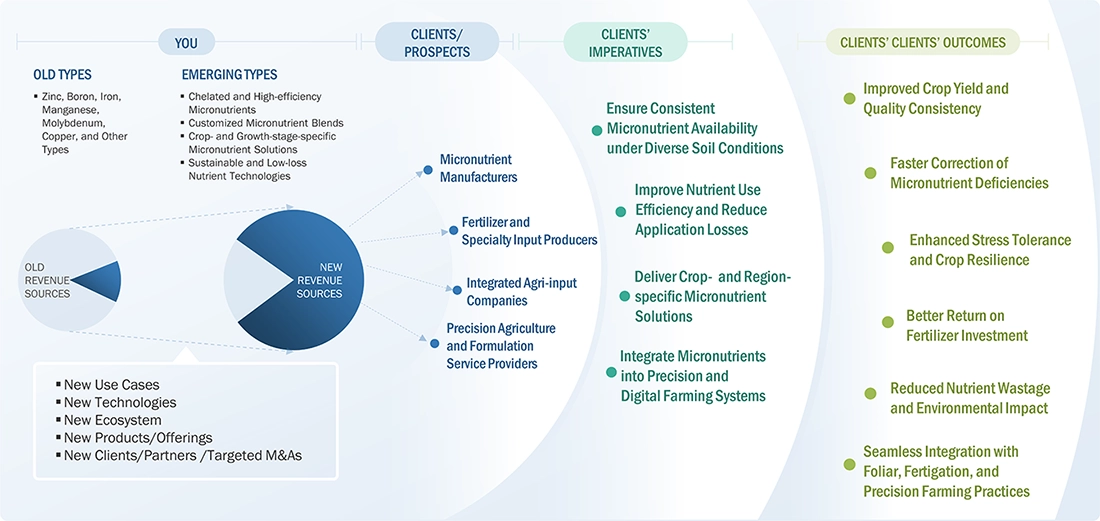
The market for micronutrients is shifting from conventional to advanced, diversified solutions. Although currently the revenue is generated from conventional micronutrients such as zinc, boron, iron, manganese, molybdenum, and copper, future revenue will be generated from emerging solutions such as chelated micronutrients, customized blends, crop-specific solutions, and sustainable low-loss nutrients being developed by various companies such as micronutrient companies, fertilizer companies, integrated ag input companies, and precision agriculture service companies. These emerging solutions are aimed at maximizing efficiency, ensuring the presence of nutrients in various soil conditions, and facilitating precision farming to increase crop yield and quality, correct nutrient deficiencies quickly, and improve return on investment from fertilizers.
Source: Secondary Research, Interviews with Experts, MarketsandMarkets Analysis
MARKET DYNAMICS

Level
-
Expansion of commercial and intensive farming systems

-
Rising focus on improving crop yield, quality, and nutrient use efficiency


Level
-
Volatility in raw material and fertilizer input prices

-
Limited awareness and adoption among smallholder farmers


Level
-
Growing demand for chelated and specialty micronutrient formulations

-
Adoption of precision agriculture and targeted nutrient application


Level
-
Price competition from conventional fertilizer products

-
Regulatory compliance and formulation standardization

Source: Secondary Research, Interviews with Experts, MarketsandMarkets Analysis
Driver: Expansion of commercial and intensive farming systems
The growing need for integrated agricultural methodologies and commercial farming is triggering a demand for well-balanced micronutrient application for overcoming soil deficiencies and enhancing produce quality and efficiency.
Restraint: Volatility in raw material and fertilizer input prices
The fluctuations with respect to fertilizer prices and raw materials increase the cost inputs, making it difficult for micronutrient products to be adopted.
Opportunity:Growing demand for chelated and specialty micronutrient formulations
The increasing use of chelated and specialized micronutrients, driven by practices such as precision agriculture, is offering various opportunities for targeted, value-added crop nutrient management.
Challenge: Price competition from conventional fertilizer products
Price competition offered by traditional fertilizers, as well as the requirement to adhere to different regulations in different regions, remain obstacles in the adoption of advanced micronutrient compounds.
AGRICULTURAL MICRONUTRIENTS MARKET: COMMERCIAL USE CASES ACROSS INDUSTRIES
| COMPANY | USE CASE DESCRIPTION | BENEFITS |
|---|---|---|
 |
Application of chelated micronutrients in cereals, fruits, and vegetables to address soil nutrient deficiencies | Improves nutrient availability | Enhances crop yield and quality | Supports sustainable soil management |
 |
Integration of micronutrient-enriched fertilizers through soil and fertigation systems | Enables balanced crop nutrition | Improves nutrient use efficiency | Supports precision agriculture practices |
 |
Use of specialty chelating agents in micronutrient formulations for broad-acre and horticultural crops | Enhances micronutrient stability |Improves uptake under challenging soil conditions | Reduces nutrient losses |
 |
Deployment of crop-specific micronutrient solutions combined with crop protection programs | Strengthens plant health | Iproves stress tolerance | Supports integrated crop management strategies |
Logos and trademarks shown above are the property of their respective owners. Their use here is for informational and illustrative purposes only.
MARKET ECOSYSTEM
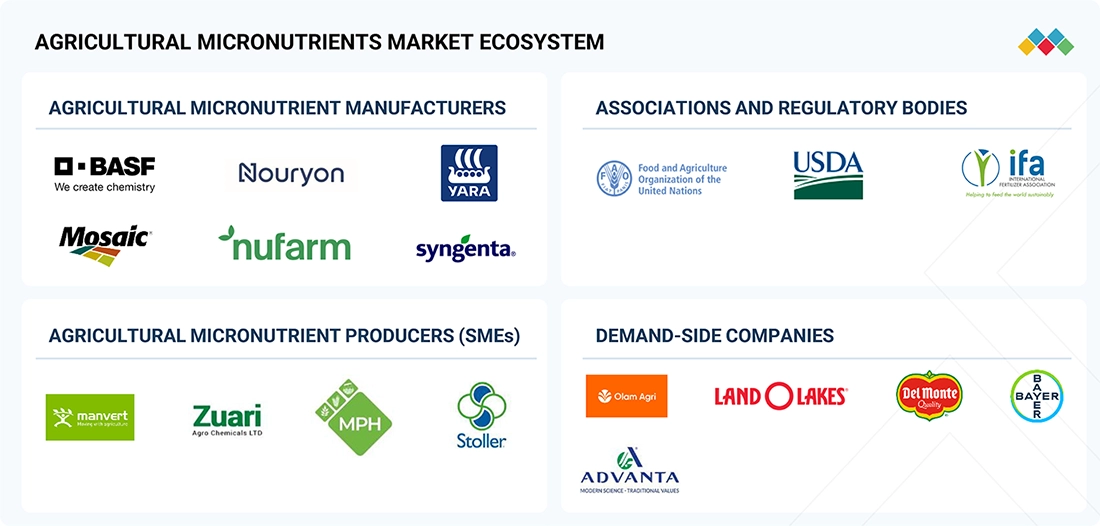
The agricultural micronutrients market is a part of a comprehensive global agricultural micronutrients ecosystem, which includes entities such as agricultural micronutrient producers; fertilizer, specialty, and agricultural input producers; agricultural micronutrient distributors; agricultural micronutrient regulatory agencies; agricultural research agencies; agricultural communities; and end users. The agricultural micronutrients market is a continuously growing, agronomy-based sector that is shaped by advancements in soil health, balanced plant nutrition, and sustainable yield growth. Multinational and local companies come together as part of this sector, resulting in the growth of innovative agricultural micronutrients.
Logos and trademarks shown above are the property of their respective owners. Their use here is for informational and illustrative purposes only.
MARKET SEGMENTS
Source: Secondary Research, Interviews with Experts, MarketsandMarkets Analysis
Agricultural Micronutrients Market, by Type
The market is anticipated to be dominated by molybdenum due to the importance of the element in the fixation of nitrogen and enzyme functions, especially in legume and cereal crops, as well as due to the increasing use of the element to counter nutrient deficiencies in the soil.
Agricultural Micronutrients Market, by Crop Type
The fruits & vegetables category is projected to register robust growth, as horticultural crops are very responsive to the treatment of micronutrients and need accurate nutrient management to enhance the quality, storage life, and appearance of produce.
Agricultural Micronutrients Market, by Form
The market share of non-chelated micronutrients is expected to be significant, as these micronutrients are are cost-effective, readily available, and are used widely by many farmers as a mode of conventional or large-scale agriculture.
Agricultural Micronutrients Market, by Mode of Application
The foliar application is poised to lead due to its quick uptake of nutrients, targeted delivery, and efficiency in rapidly addressing micronutrient deficiencies in a broad spectrum of agricultural products.
REGION
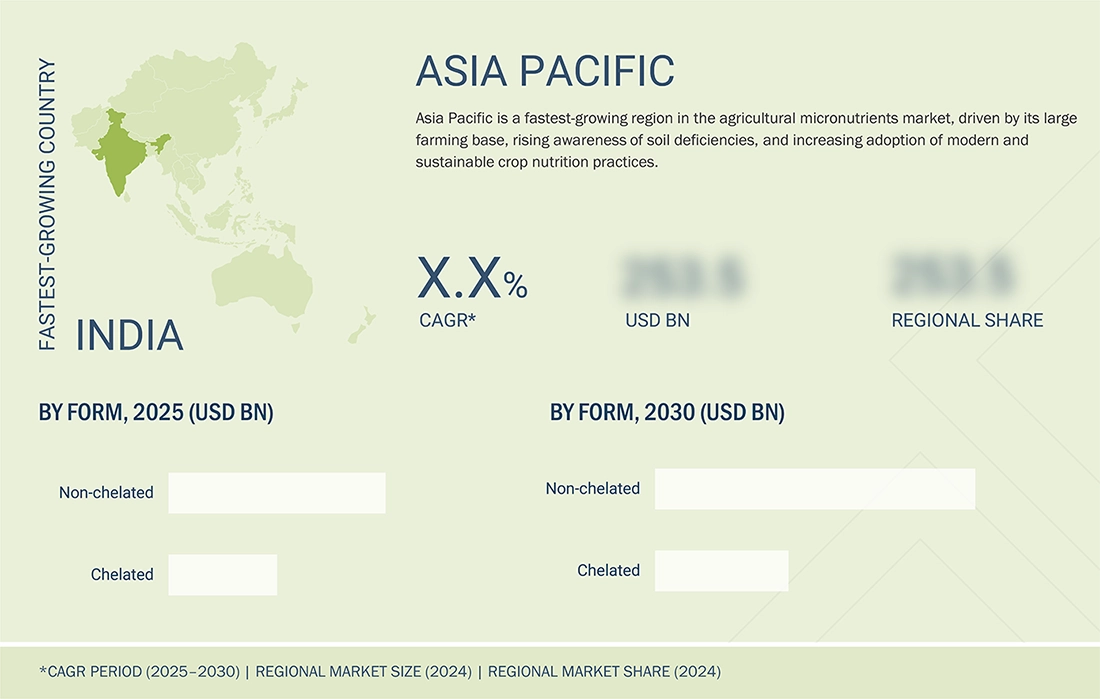
Asia Pacific is expected to dominate the agricultural micronutrients market
Asia Pacific is poised to lead the market for agricultural micronutrients, owing to its vast agricultural base, extremely high cropping intensity, and rising awareness regarding soil micronutrient deficiencies. The increasing acceptance of advanced agriculture practices and measures by governments to enhance crop productivity and soil health will also boost the demand for micronutrient-based crop nutritional solutions in the Asia Pacific region.
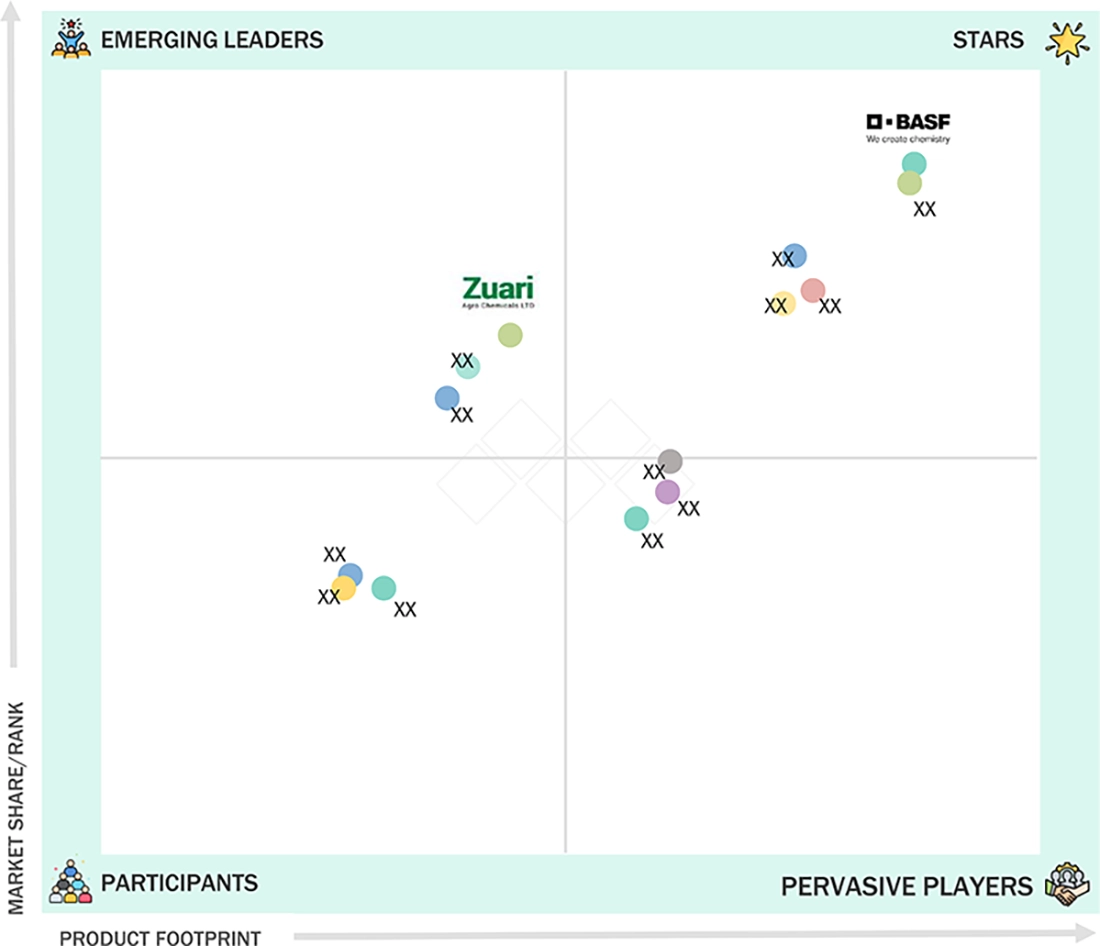
AGRICULTURAL MICRONUTRIENTS MARKET: COMPANY EVALUATION MATRIX
In the agricultural micronutrients market landscape, leading players such as BASF SE and Yara International ASA (Star) hold strong market positions, supported by their large-scale production capabilities, comprehensive micronutrient portfolios, and well-established global distribution networks. Their integration with fertilizer and crop nutrition programs and emphasis on consistent, science-backed micronutrient solutions reinforce their dominance. Meanwhile, Zuari Agro Chemicals Ltd (Emerging Leader) is strengthening its presence through specialized micronutrient blends and customized crop nutrition solutions, addressing region-specific soil deficiencies and evolving crop productivity and quality requirements.
Source: Secondary Research, Interviews with Experts, MarketsandMarkets Analysis
KEY MARKET PLAYERS
- BASF SE (Germany)
- Yara International ASA (Norway)
- Nouryon (Netherlands)
- Syngenta AG (Switzerland)
- The Mosaic Company (US)
- Coromandel International Limited (India)
- Nufarm Limited (Australia)
- Haifa Negev Technologies Ltd (Israel)
- Manvert (Spain)
- Zuari Agrochemicals Ltd (India)
MARKET SCOPE
| REPORT METRIC | DETAILS |
|---|---|
| Market Size in 2025 (Value) | USD 5.39 Billion |
| Market Forecast in 2030 (Value) | USD 8.19 Billion |
| Growth Rate | CAGR of 8.6% from 2025 to 2030 |
| Years Considered | 2021–2030 |
| Base Year | 2024 |
| Forecast Period | 2025–2030 |
| Units Considered | Value (USD Billion), Volume (Kiloton) |
| Report Coverage | Revenue Forecast, Company Ranking, Competitive Landscape, Growth Factors, and Trends |
| Segments Covered | By Type: Zinc, Boron, Iron, Manganese, Molybdenum, Copper, and Other Types By Form: Chelated Micronutrients (EDTA, EDDHA, DTPA, IDHA, and Other Chelates) and Non-Chelated Micronutrients By Crop Type: Cereals & Grains, Oilseeds & Pulses, Fruits & Vegetables, and Other Crop Types By Mode of Application: Foliar, Fertigation, Soil, and Other Modes of Application |
| Regions Covered | North America, Europe, Asia Pacific, South America, and RoW |
WHAT IS IN IT FOR YOU: AGRICULTURAL MICRONUTRIENTS MARKET REPORT CONTENT GUIDE
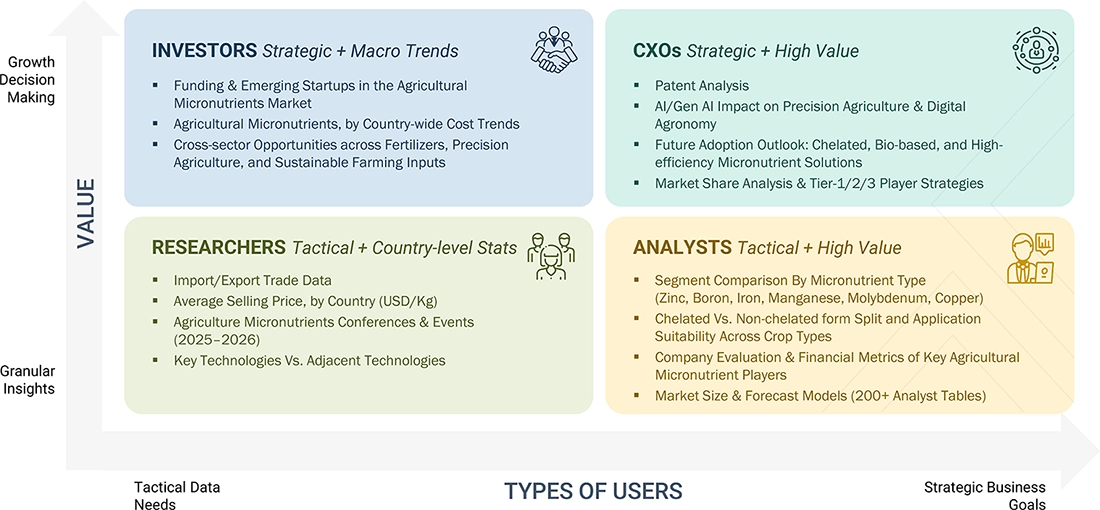
DELIVERED CUSTOMIZATIONS
We have successfully delivered the following deep-dive customizations:
| CLIENT REQUEST | CUSTOMIZATION DELIVERED | VALUE ADDS |
|---|---|---|
| US-based Agricultural Micronutrient Manufacturers | Detailed analysis of the agricultural micronutrients market, by micronutrient type (zinc, boron, iron, manganese, molybdenum, copper, and others), form (chelated and non-chelated), mode of application (soil, foliar, fertigation), and crop type (cereals & grains, fruits & vegetables, oilseeds & pulses, and others). Comprehensive competitive landscape assessment covering key micronutrient manufacturers, fertilizer companies, and specialty input suppliers, including evaluation of production capabilities, product portfolios, and distribution presence. Customer landscape evaluation across growers, agri-input distributors, and cooperatives, along with market benchmarking, pricing dynamics, and regulatory review for agricultural micronutrients in the US. | Identified and profiled 20+ agricultural micronutrient manufacturers and suppliers operating in North America, including global leaders, regional players, and specialty micronutrient providers. Tracked adoption trends for micronutrient application across major crop segments, highlighting demand driven by yield optimization, soil health improvement, and sustainable farming practices. Mapped regulatory and compliance requirements for micronutrient usage in agriculture, supporting client decision-making on product positioning, formulation strategy, and market entry. |
| Agricultural micronutrients – Type, Form & Application Segment Assessment | Segmentation of agricultural micronutrient demand by micronutrient type, crop type, form, and mode of application. Benchmarked adoption and usage patterns of micronutrients across cereals, horticultural crops, and oilseeds, with emphasis on nutrient deficiency correction, yield response, and crop quality improvement. Assessed switching barriers for farmers and distributors, including cost sensitivity, formulation effectiveness, compatibility with existing fertilization practices, and regulatory compliance. | Delivered revenue share and growth outlook for key micronutrient segments across crop categories. Identified substitution risks and opportunities between conventional micronutrient products and chelated or specialty formulations in cost-sensitive markets. Mapped regulatory frameworks and approval pathways relevant to agricultural micronutrients, enabling clearer go-to-market and product differentiation strategies. |
RECENT DEVELOPMENTS
- October 2021 : Grupa Azoty announced its 2021–2030 strategy, positioning Green Azoty as a flagship initiative focused on decarbonization and carbon-emission reduction. The strategy includes R&D projects aligned with the European Green Deal and the development of new environmentally friendly solutions, including micronutrient-enriched formulations derived from utilized waste streams.
- April 2021 : Compass Minerals entered into a definitive agreement with Koch Agronomic Service (LLP), a subsidiary of Koch Industries, to sell its North American micronutrient assets for approximately USD 60.25 million, strengthening Koch’s position in agricultural micronutrients.
- March 2021 : The Mosaic Company and Sound Agriculture announced a strategic partnership to develop nutrient-efficient fertilizer products using a proprietary blend of bio-inspired chemistry and key micronutrients, aimed at improving crop yields and enhancing soil health across major crops.
- May 2024 : Yara International ASA (Norway) and BASF SE (Germany) announced a strategic partnership to co-develop and commercialize next-generation micronutrient fertilizers, with a focus on sustainable, high-efficiency solutions for global agricultural applications.
Related Ecosystem
Agrochemicals
- Phosphatic Fertilizers
- Potassic Fertilizers
- Fungicides
- Anticoagulant Rodenticides
- Ammonium Nitrate
- AZELIS HOLDINGS SA
- Basf se
- Origin Enterprises plc
- MITSUI AGRO BUSINESS SACO
- SNF HOLDING COMPANY INC.
Key Takeaways
- South Africa's agricultural micronutrients market is valued at USD 31.8 million in 2023 and will reach USD 44.6 million by 2028.
- South Africa is experiencing a 7.0% CAGR, driven by increased adoption of micronutrient solutions among commercial and smallholder farmers.
- South Africa's market growth is supported by government agricultural modernization initiatives and rising awareness of soil nutrient deficiencies.
- South Africa's diverse crop portfolio and regional agricultural leadership position it as a key growth driver in the Rest of World segment.
Agricultural Micronutrients Market Report Scope
| Report Metric | Details |
|---|---|
| Base Year | 2023 |
| Fastest Growing Segment | EDTA (Type) |
| Forecast Period | 2023–2028 |
| Growth Rate | CAGR of 8.6% from 2023 to 2028 |
| Largest Segment | NON-CHELATED (Form) |
| Market Size Base Year (Billions) | ~USD 4.57 (2023) |
| Revenue Forecast (Billions) | ~USD 6.9 (2028) |
| Segments Covered | Crop Type, Subtype, Form, Type, Mode Of Application |
South Africa Agricultural Micronutrients Market Report Segmentation
5 segment dimensions are covered across the global market.
By Crop Type
- Cereals & Grains
- Fruits & Vegetables
- Oilseeds & Pulses
- Other Crop Types
By Subtype
- Canola
- Corn
- Dtpa
- Eddha
- Edta
- Idha
- Other Cereals & Grains
- Other Chelated Micronutrients
- Other Oilseed & Pulses
- Other Oilseeds & Pulses
- Rice
- Soybean
- Wheat
By Form
- Chelated
- Non-Chelated
By Type
- Boron
- Copper
- Dtpa
- Eddha
- Edta
- Idha
- Iron
- Manganese
- Molybdenum
- Other Chelated Micronutrients
- Other Types
- Zinc
By Mode Of Application
- Fertigation
- Foliar
- Other Modes Of Application
- Soil
Target Audience
- Agricultural Input Suppliers : Micronutrient manufacturers and distributors need South Africa-specific market data to develop localized product portfolios, establish competitive pricing, and identify high-potential regions for market penetration and sales growth.
- Commercial Farming Operations : Large-scale farmers require market insights to make informed decisions about micronutrient investments, understand regional soil deficiency patterns, and benchmark their nutrient management practices against industry standards.
- Agricultural Investment Firms : Private equity and venture capital investors need detailed South Africa market analysis to evaluate investment opportunities in agribusiness, assess growth potential, and identify promising companies in the micronutrient sector.
- Government & Policy Makers : Agricultural departments and policy officials require market data to develop evidence-based agricultural policies, design farmer support programs, and allocate resources for soil health and productivity improvement initiatives.
- Agronomic Consultants & Extension Services : Agricultural advisors and extension officers need market insights to provide farmers with current recommendations on micronutrient adoption, understand regional trends, and guide sustainable farming practice implementation.
Reasons to Buy this Report
- Market Size & Growth Validation : Obtain precise valuation data for South Africa's micronutrients market (USD 31.8M in 2023) with verified 5-year forecasts, enabling accurate business planning and investment decisions specific to this regional market.
- Competitive Positioning Intelligence : Understand South Africa's 7.0% CAGR relative to global 8.6% growth, identifying market gaps and competitive advantages for product positioning, pricing strategies, and market entry approaches tailored to local conditions.
- Farmer Adoption Insights : Access detailed analysis of South African farmer awareness regarding soil nutrient deficiencies and micronutrient adoption patterns, enabling targeted marketing campaigns and product development aligned with regional agricultural practices.
- Regional Market Dynamics : Gain comprehensive understanding of South Africa-specific factors including climate challenges, water scarcity impacts, and government agricultural policies that directly influence micronutrient demand and market opportunities.
- Strategic Partnership Opportunities : Identify key stakeholder segments including commercial farmers, cooperatives, and agricultural extension services in South Africa, facilitating informed partnership strategies and distribution channel development for market expansion.
Frequently asked questions
What is the current size of South Africa's agricultural micronutrients market?
South Africa's agricultural micronutrients market was valued at USD 31.8 million in 2023 and is expected to grow to USD 44.6 million by 2028.
What is the projected growth rate for South Africa's micronutrients market?
South Africa's agricultural micronutrients market is projected to grow at a CAGR of 7.0% from 2023 to 2028.
Which micronutrients are most in demand in South Africa?
South Africa shows strong demand for zinc, boron, iron, and manganese-based micronutrient products across maize, wheat, and horticultural applications.
What factors are driving growth in South Africa's micronutrients market?
South Africa's market growth is driven by rising awareness of nutrient deficiencies, government agricultural modernization initiatives, and adoption of precision farming practices.
Who are the primary users of micronutrients in South Africa?
South Africa's micronutrients market serves both large-scale commercial farms and smallholder operations seeking to optimize crop productivity and soil health.
RESEARCH METHODOLOGY
Get the Full Agricultural Micronutrients Market Report
Full forecast, segment splits, and company analysis for all Agricultural Micronutrients Market.
- US Agricultural Micronutrients Market
- Canada Agricultural Micronutrients Market
- Mexico Agricultural Micronutrients Market
- France Agricultural Micronutrients Market
- Germany Agricultural Micronutrients Market
- Italy Agricultural Micronutrients Market
- Poland Agricultural Micronutrients Market
- Spain Agricultural Micronutrients Market
- UK Agricultural Micronutrients Market
- China Agricultural Micronutrients Market
- India Agricultural Micronutrients Market
- Japan Agricultural Micronutrients Market
- Australia Agricultural Micronutrients Market
- Vietnam Agricultural Micronutrients Market
- Brazil Agricultural Micronutrients Market
- Argentina Agricultural Micronutrients Market
- Turkey Agricultural Micronutrients Market
Need a Tailored Report?
Customize this report to your needs
Get 10% FREE Customization
Customize This Report
