
Italy AI in Precision Medicine Market (2024-2029)

The Italy AI in Precision Medicine Market was valued at $1.34 Million in 2024 and projected to reach to $6.34 Million by 2029, representing a compound annual growth rate of 23.0%. Italy's AI in Precision Medicine market is positioned for substantial expansion through 2029, driven by government healthcare modernization initiatives and alignment with European Union digital health directives.


| Market Size in | USD 26.32 MN |
| Market Forecast in | |
| CAGR | |
| Forecast Period | |
| Units Considered | Value (USD MN) |
Italy AI in Precision Medicine Market Trends and Insights
- This expansion reflects Italy's increasing investment in healthcare digitalization and adoption of artificial intelligence technologies across diagnostic and therapeutic applications.
- Italy's healthcare system is progressively integrating AI-driven precision medicine solutions to enhance patient outcomes and optimize clinical decision-making. The Italian market benefits from strong government support for digital health initiatives and a growing ecosystem of biotech and healthcare technology companies.
- Italy's aging population and rising prevalence of chronic diseases are driving demand for personalized treatment approaches powered by AI.
- Between 2024 and 2029, Italy is expected to see accelerated deployment of machine learning algorithms in genomics, drug discovery, and patient stratification, positioning the country as a key precision medicine hub within Europe..
Key Market Statistics
- CAGR (2024-2029) 23.0% CAGR
- Market Size, 2024 ~USD 1.34 Million
- Forecast, 2029 ~USD 6.34 Million
- Country Italy
Italy AI in Precision Medicine Market Overview
Market Valuation Growth :
Italy's AI in Precision Medicine market is valued at $1.34 billion in 2024, with projections reaching $6.34 billion by 2029, demonstrating a strong 23% CAGR that outpaces many European counterparts.
Healthcare Digitalization Investment :
Italy is significantly increasing investment in healthcare digitalization, with AI technologies becoming central to diagnostic and therapeutic applications across hospitals, research institutions, and private healthcare providers.
Regional Growth Momentum :
Italy's 23% CAGR reflects accelerating adoption of precision medicine solutions, driven by government healthcare reforms, EU digital health initiatives, and growing collaboration between Italian biotech firms and international AI developers.
Clinical Application Expansion :
Italian healthcare institutions are expanding AI implementation in oncology, cardiology, and genomics, with increasing focus on personalized treatment protocols and predictive diagnostics to improve patient outcomes.
Italy AI in Precision Medicine Market Dynamics
- The country's robust pharmaceutical and biotech sectors are increasingly integrating AI-powered diagnostic tools and personalized treatment platforms, supported by growing venture capital investment and academic research partnerships. Key growth catalysts include Italy's aging population requiring advanced diagnostic solutions, increased adoption of electronic health records, and regulatory frameworks supporting AI innovation in healthcare.
- Strategic collaborations between Italian hospitals and technology companies, combined with EU funding for digital health infrastructure, will further accelerate market penetration across both urban and regional healthcare systems..
Market Ecosystem
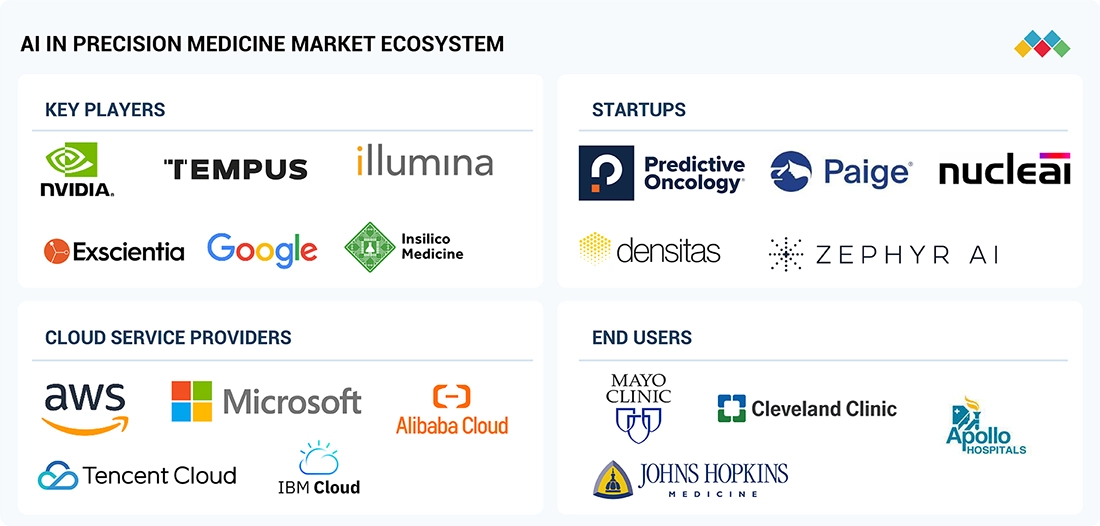
AI IN PRECISION MEDICINE MARKET: GROWTH, SIZE, SHARE, AND TRENDS: COMMERCIAL USE CASES ACROSS INDUSTRIES
| COMPANY | USE CASE DESCRIPTION | BENEFITS |
|---|---|---|
 |
AI computing platforms enabling large-scale genomic analysis, multimodal data processing, digital twins, and predictive modeling for personalized care. | Faster interpretation of complex biological data, improved treatment predictions, and enhanced ability to tailor therapies to individual patients. |
 |
AI-driven precision oncology and clinical data platforms integrating genomic sequencing, molecular profiling, and real-world evidence. | More accurate patient stratification, optimized therapy selection, and higher likelihood of successful treatment outcomes. |
 |
AI-enhanced genomic sequencing and interpretation solutions supporting personalized diagnostics and targeted therapy development. | Improved genomic variant detection, faster diagnosis, and more effective use of personalized treatment plans. |
 |
AI-driven drug design and patient-specific therapy modeling using deep learning and multimodal biological data. | Accelerated discovery of tailored therapeutics, improved prediction of patient response, and enhanced precision in treatment development. |
 |
Advanced AI and deep learning models for medical imaging, genomics, and predictive analytics supporting precision medicine initiatives. | Earlier detection of diseases, more accurate diagnostic predictions, and improved personalization of care using large-scale data insights. |
Logos and trademarks shown above are the property of their respective owners. Their use here is for informational and illustrative purposes only.
Related Ecosystem
Advanced Genetic Sequencing
- Polymerase Chain Reaction (PCR)
- Reagents
- Assay Kits
- Bioinformatics
- Flow Cytometry
- Thermo Fisher Scientific Inc.
- Illumina, Inc.
- Agilent Technologies, Inc.
- Qiagen N.V.
- Danaher Corporation
Analytical And Scientific Instrumentation
- Environmental Testing
- Gas Chromatography
- Polymerase Chain Reaction (PCR)
- Automated Liquid Handling Systems
- Flow Cytometry
- Thermo Fisher Scientific Inc.
- Danaher Corporation
- Agilent Technologies, Inc.
- Shimadzu Corporation
- Merck KGaA
Healthcare Analytics
- Machine Learning
- Natural Language Processing (NLP)
- Blood Pressure Monitors
- Computed Tomography (CT)
- Magnetic Resonance Imaging (MRI)
- Oracle Corporation
- PHILIPS HEALTHCARE
- Siemens healthineers
- Zensar Technologies Limited
- EPIC SYSTEMS CORPORATION
Key Takeaways
- Italy's AI in Precision Medicine market is valued at $1.34 billion in 2024 and is projected to reach $6.34 billion by 2029, growing at a 23.0% CAGR.
- Italy's healthcare infrastructure is increasingly adopting AI technologies for genomic analysis, drug discovery, and personalized patient treatment strategies.
- Government digital health initiatives and regulatory support are accelerating AI adoption across Italy's public and private healthcare sectors.
- Italy's aging demographic and high burden of chronic diseases create strong demand for precision medicine solutions powered by artificial intelligence.
AI in Precision Medicine Market Report Scope
| Report Metric | Details |
|---|---|
| Base Year | 2024 |
| Fastest Growing Segment | IMAGE ANALYSIS (Tool) |
| Forecast Period | 2024-2029 |
| Growth Rate | CAGR of 30.7% from 2024 to 2029 |
| Largest Segment | SOFTWARE (Component) |
| Market Size Base Year (Billions) | ~USD 0.79 (2024) |
| Revenue Forecast (Billions) | ~USD 3.92 (2029) |
| Segments Covered | Application, Type, Therapeutic Area, Component, Tool, Deployment, End User, Deployment 2022-2030 |
Italy AI in Precision Medicine Market Report Segmentation
8 segment dimensions are covered across the global market.
By Application
- Clinical Development
- De Novo Drug Design
- Diagnostic & Screening
- Diagnostics & Screening
- Drug Discovery
- Drug Discovery & Development
- Drug Optimization
- Drug Repurposing
- Safety
- Therapeutics
- Understanding Diseases
By Type
- Deep Learning
- Disease Diagnosis
- Disease Progression, Staging & Prognosis
- Disease Screening
- Other Machine Learning Types
- Post Treatment Surveillance & Follow-Up
- Reinforcement Learning
- Risk Assessment & Patient Stratification
- Supervised Learning
- Therapy Monitoring
- Therapy Selection & Planning
- Unsupervised Learning
By Therapeutic Area
- Cardiology
- Hematology
- Infectious Diseases
- Neurology
- Oncology
- Other Therapeutic Area
- Other Therapeutic Areas
- Rare Disease
- Rare Diseases
By Component
- Services
- Software
By Tool
- Computer Vision
- Context Aware Processing
- Context-Aware Processing
- Context-Aware Processing & Computing
- Image Analysis
- Machine Learning
- Natural Language Processing
- Nlp
- Other Tools
By Deployment
- Cloud-Based
- Cloud-Based Model
- Hybrid
- Hybrid Model
- On-Premise
- On-Premise Model
By End User
- Healthcare Providers
- Medical Device/Equipment Companies
- Other End Users
- Pharmaceutical & Biotechnology Companies
- Research Centers, Academic Institutes & Government Organizations
- Research Centers, Academic Institutes, & Government Organizations
By Deployment 2022-2030
- Cloud Based
- Cloud-Based
- Hybrid
- On-Premise
ITALY: ARTIFICIAL INTELLIGENCE IN PRECISION MEDICINE MARKET, BY END USER, 2022–2030
| Segment | 2022 | 2023 | 2024 | 2025 | 2026 | 2027 | 2028 | 2029 | 2030 | CAGR (%) |
|---|---|---|---|---|---|---|---|---|---|---|
| HEALTHCARE PROVIDERS | 3.93 | 5.22 | 6.93 | 9.19 | 12.19 | 16.15 | 21.4 | 28.34 | 37.52 | 32.5 |
| MEDICAL DEVICE/EQUIPMENT COMPANIES | 2.67 | 3.53 | 4.66 | 6.15 | 8.13 | 10.73 | 14.16 | 18.67 | 24.62 | 32 |
| OTHER END USERS | 0.99 | 1.3 | 1.7 | 2.22 | 2.91 | 3.8 | 4.97 | 6.49 | 8.47 | 30.7 |
| PHARMACEUTICAL & BIOTECHNOLOGY COMPANIES | 3.18 | 4.13 | 5.37 | 6.97 | 9.04 | 11.73 | 15.2 | 19.7 | 25.53 | 29.7 |
| RESEARCH CENTERS, ACADEMIC INSTITUTES, & GOVERNMENT ORGANIZATIONS | 1.96 | 2.52 | 3.25 | 4.18 | 5.39 | 6.93 | 8.91 | 11.45 | 14.72 | 28.6 |
| TOTAL | 12.73 | 16.7 | 21.91 | 28.72 | 37.65 | 49.34 | 64.64 | 84.66 | 110.86 | 31 |
Target Audience
- Healthcare Technology Investors : Investors seeking high-growth opportunities in European healthcare AI need Italy-specific market data to evaluate investment potential, identify emerging companies, and assess market timing for portfolio allocation.
- Pharmaceutical & Biotech Companies : Italian and international pharma firms require detailed market intelligence to develop precision medicine strategies, identify partnership opportunities, and understand competitive dynamics in Italy's growing AI-driven healthcare sector.
- Healthcare IT Solution Providers : Software and AI solution vendors need Italy market insights to tailor product offerings, identify customer segments, understand regulatory requirements, and develop go-to-market strategies for Italian healthcare providers.
- Hospital & Healthcare Systems : Italian hospital networks and healthcare administrators require market data to benchmark AI adoption, evaluate technology investments, understand peer implementations, and plan digital transformation initiatives.
- Government & Policy Makers : Italian health ministry officials and regional healthcare authorities need market analysis to inform digital health policy, allocate healthcare budgets, and develop regulatory frameworks supporting AI innovation in precision medicine.
Reasons to Buy this Report
- Market-Specific Sizing & Forecasts : Access Italy-exclusive valuation data ($1.34B in 2024 growing to $6.34B by 2029) with detailed segment breakdowns, enabling precise investment planning and resource allocation for the Italian market.
- Competitive Landscape Intelligence : Identify key Italian and international players operating in precision medicine AI, understand their market positioning, partnerships, and strategic initiatives specific to Italy's healthcare ecosystem.
- Regulatory & Reimbursement Insights : Gain comprehensive understanding of Italy's healthcare regulations, EU compliance requirements, reimbursement policies, and government initiatives affecting AI adoption in precision medicine.
- Growth Driver Analysis : Understand Italy-specific factors driving the 23% CAGR, including healthcare digitalization investments, aging demographics, clinical adoption trends, and regional healthcare infrastructure developments.
- Strategic Entry & Expansion Planning : Develop data-driven market entry strategies, identify high-potential segments, assess partnership opportunities with Italian healthcare institutions, and benchmark against regional performance metrics.
Frequently asked questions
What is the current market size of AI in Precision Medicine in Italy?
Italy's AI in Precision Medicine market was valued at $1.34 billion in 2024 and is expected to grow to $6.34 billion by 2029.
What is the projected growth rate for Italy's AI in Precision Medicine market?
Italy's AI in Precision Medicine market is projected to grow at a compound annual growth rate (CAGR) of 23.0% from 2024 to 2029.
What are the main drivers of AI adoption in Italy's precision medicine sector?
Key drivers include Italy's aging population, rising chronic disease prevalence, government digital health initiatives, and increasing investment in healthcare technology infrastructure.
Which applications of AI are most prominent in Italy's precision medicine market?
Italy is seeing significant adoption of AI in genomic analysis, drug discovery, patient stratification, diagnostic imaging, and personalized treatment planning.
How does Italy's market compare to the global AI in Precision Medicine market?
Italy's 23.0% CAGR is competitive within Europe, though slightly below the global CAGR of 30.7%, reflecting Italy's mature healthcare system and regulatory environment.
RESEARCH METHODOLOGY
The study involved significant activities to estimate the current size of the AI in precision medicine market. Exhaustive secondary research was done to collect information on the AI in precision medicine market. The next step was to validate these findings, assumptions, and sizing with industry experts across the value chain using primary research. Different approaches, such as top-down and bottom-up, were employed to estimate the total market size. After that, the market breakup and data triangulation procedures were used to estimate the market size of the segments and subsegments of the AI in precision medicine market.
Secondary Research
This research study involved the wide use of secondary sources, directories, and databases such as Dun & Bradstreet, Bloomberg Businessweek, and Factiva; white papers, annual reports, and companies’ house documents; investor presentations; and the SEC filings of companies. The market for the companies offering AI in precision medicine solutions is arrived at by secondary data available through paid and unpaid sources, analyzing the product portfolios of the major companies in the ecosystem, and rating the companies by their performance and quality. Various sources were referred to in the secondary research process to identify and collect information for this study. The secondary sources include annual reports, press releases, investor presentations of companies, white papers, journals, certified publications, and articles from recognized authors, directories, and databases.
Various secondary sources were referred to in the secondary research process to identify and collect information related to the study. These sources included annual reports, press releases, investor presentations of AI in precision medicine vendors, forums, certified publications, and whitepapers. The secondary research was used to obtain critical information on the industry’s value chain, the total pool of key players, market classification, and segmentation from the market and technology-oriented perspectives.
Primary Research
In the primary research process, various primary sources from both the supply and demand sides were interviewed to obtain qualitative and quantitative information for this report. The primary sources from the supply side included industry experts, such as Chief Executive Officers (CEOs), Vice Presidents (VPs), marketing directors, technology and innovation directors, and related key executives from various key companies and organizations operating in the AI in precision medicine market.
After the complete market engineering (calculations for market statistics, market breakdown, market size estimations, market forecasting, and data triangulation), extensive primary research was conducted to gather information and verify and validate the critical numbers arrived at. Primary research was also undertaken to identify the segmentation types, industry trends, competitive landscape of AI in precision medicine solutions offered by various market players, and key market dynamics, such as drivers, restraints, opportunities, challenges, industry trends, and key player strategies.
In the complete market engineering process, the top-down and bottom-up approaches and several data triangulation methods were extensively used to perform the market estimation and market forecasting for the overall market segments and subsegments listed in this report. Extensive qualitative and quantitative analysis was performed on the complete market engineering process to list the key information/insights throughout the report.
Breakdown of Primary Participants:
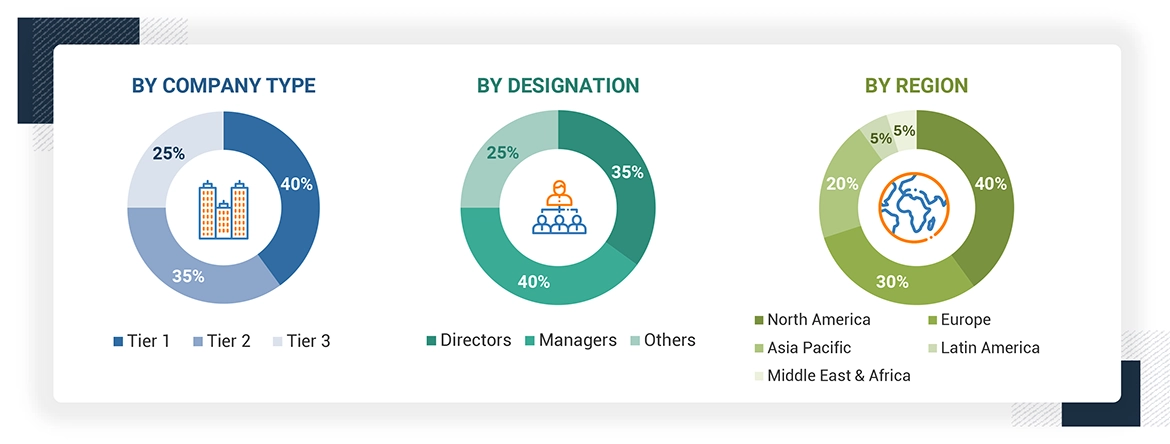
Note 1: Others include sales managers, marketing managers, and product managers.
Note 2: Tiers of companies are defined based on their total revenues in 2023. Tier 1 = >USD 1 billion, Tier 2 = USD 500 million to USD 1 billion, and Tier 3 = < USD 500 million.
To know about the assumptions considered for the study, download the pdf brochure
Market Size Estimation
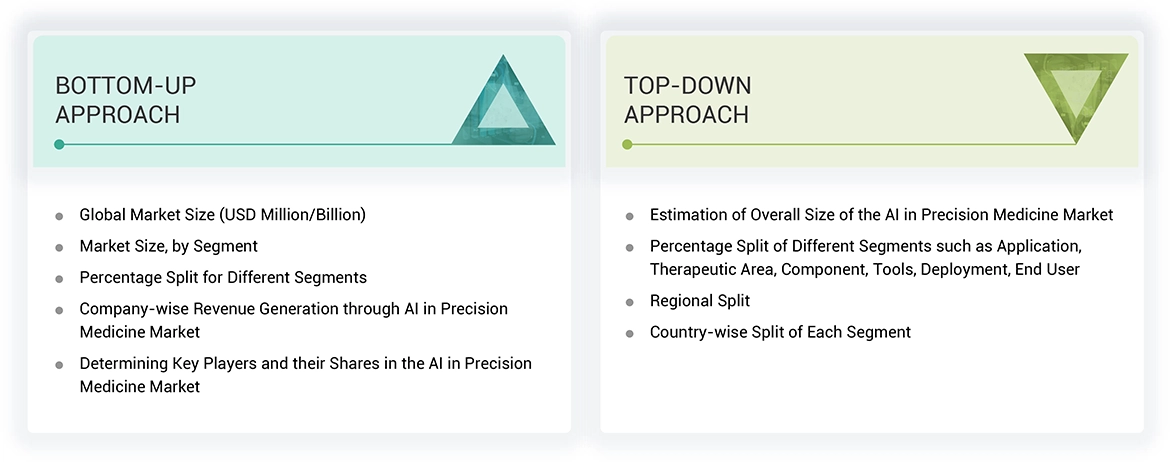
Both top-down and bottom-up approaches were used to estimate and validate the total size of the AI in precision medicine market. These methods were also used extensively to estimate the size of various subsegments in the market. The research methodology used to estimate the market size includes the following:
- The key players in the industry and markets have been identified through extensive secondary research.
- The industry’s supply chain and market size, in terms of value, have been determined through primary and secondary research processes.
- All percentage shares, splits, and breakdowns have been determined using secondary sources and verified through primary sources.
Data Triangulation
After arriving at the overall market size using the market size estimation processes explained above, the market was split into several segments and subsegments. The data triangulation and market breakup procedures were employed, wherever applicable, to complete the overall market engineering process and arrive at the exact statistics of each market segment and subsegment. The data was triangulated by studying various factors and trends from both the demand and supply sides.
Market Definition
The AI in precision medicine market utilises AI technologies such as machine learning and natural language processing to analyse complicated biological and clinical data in order to provide possibly personalised healthcare solutions. It promotes applications such as drug discovery, diagnostics, predictive analytics, and tailored treatment plans by integrating genomics, proteomics, and real-world data using AI capabilities with the goal of improving patient outcomes and accelerating innovation benefits for stakeholders ranging from pharmaceutical companies and healthcare providers to researchers.
Stakeholders
- Transfection products manufacturing companies
- Pharmaceutical & Biopharmaceutical Companies
- Chemical Companies
- Biopharmaceutical Companies
- Contract Research Organizations (CROs)
- Contract Development and Manufacturing Organizations (CDMOs)
- Research Institutes and Universities
- Venture Capitalists & Investors
- Government Associations
Report Objectives
- To define, describe, and forecast the AI in precision medicine market based on application, therapeutic area, component, tools, deployment, end user, and region.
- To provide detailed information about the major factors (drivers, opportunities, restraints, and challenges) influencing the growth of the market
- To analyze opportunities for stakeholders by identifying the high-growth segments of the market
- To forecast the size of the market segments with respect to five main regions: North America, Europe, Asia Pacific, the Middle East & Africa, and Latin America
- To analyze subsegments of the market with respect to individual growth trends, prospects, and contributions to the overall market
- To profile the key players and comprehensively analyze their market sizes and core competencies.
- To track and analyze competitive developments such as acquisitions, collaborations, agreements, mergers, product launches & updates, partnerships, expansions, and other recent developments in the market globally.
Get the Full AI in Precision Medicine Market Report
Full forecast, segment splits, and company analysis for all AI in Precision Medicine Market.
- Canada AI in Precision Medicine Market
- US AI in Precision Medicine Market
- UK AI in Precision Medicine Market
- Germany AI in Precision Medicine Market
- France AI in Precision Medicine Market
- Spain AI in Precision Medicine Market
- Japan AI in Precision Medicine Market
- China AI in Precision Medicine Market
- India AI in Precision Medicine Market
- Brazil AI in Precision Medicine Market
- Mexico AI in Precision Medicine Market
- Rest Of Europe AI in Precision Medicine Market
- Rest Of Asia Pacific AI in Precision Medicine Market
Need a Tailored Report?
Customize this report to your needs
Get 10% FREE Customization
Customize This Report
