
Japan Aviation Cloud Market (2024-2029)

The Japan Aviation Cloud Market was valued at $330.9 Million in 2024 and projected to reach to $812.2 Million by 2029, representing a compound annual growth rate of 19.7%. Japan's aviation cloud market is poised for sustained growth through 2029, driven by the nation's commitment to aerospace modernization and digital transformation.


| Market Size in | USD 26.32 MN |
| Market Forecast in | |
| CAGR | |
| Forecast Period | |
| Units Considered | Value (USD MN) |
Japan Aviation Cloud Market Trends and Insights
- Japan is leveraging cloud technologies to modernize its aerospace infrastructure, with major airlines and maintenance providers adopting digital solutions for fleet management, predictive maintenance, and operational efficiency.
- The market in Japan is driven by the country's advanced technological capabilities, regulatory support for digital transformation, and the presence of leading aerospace manufacturers and carriers. The 19.7% compound annual growth rate (CAGR) reflects Japan's commitment to aviation digitalization and cloud infrastructure investment.
- Japan's aviation sector is increasingly integrating artificial intelligence, data analytics, and real-time monitoring systems through cloud platforms.
- By 2029, Japan is expected to solidify its position as a key regional hub for aviation cloud adoption, supported by investments in cybersecurity, regulatory compliance frameworks, and partnerships between Japanese technology firms and international aerospace players..
Key Market Statistics
- CAGR (2024-2029) 19.7% CAGR
- Market Size, 2024 ~USD 330.9 Million
- Forecast, 2029 ~USD 812.2 Million
- Country Japan
Japan Aviation Cloud Market Overview
Rapid Market Expansion :
Japan's aviation cloud market is projected to grow from $330.9 million in 2024 to $812.2 million by 2029, representing a robust 19.7% CAGR, outpacing the global growth rate of 16.1%.
Digital Transformation in Aerospace :
Japanese airlines and maintenance providers are increasingly adopting cloud-based solutions for fleet management, predictive maintenance, and real-time operational efficiency, modernizing the nation's aerospace infrastructure.
Strategic Technology Adoption :
Major Japanese carriers are leveraging cloud technologies to enhance safety, reduce downtime, and optimize maintenance schedules, positioning Japan as a leader in aerospace digitalization in the Asia-Pacific region.
Competitive Market Dynamics :
Japan's aviation cloud market is driven by regulatory compliance requirements, aging fleet modernization initiatives, and the need for integrated digital ecosystems among domestic and international operators.
Japan Aviation Cloud Market Dynamics
- Japanese carriers such as ANA and JAL are investing heavily in cloud infrastructure to enhance operational efficiency, reduce maintenance costs, and improve passenger experiences.
- The market will benefit from increased adoption of AI-powered predictive maintenance, real-time fleet monitoring, and integrated supply chain management solutions tailored to Japan's regulatory environment and operational standards. The outlook remains positive as Japan strengthens its position in the global aerospace sector.
- Government initiatives supporting digital infrastructure, coupled with the need to maintain aging aircraft fleets, will accelerate cloud adoption among maintenance providers and regional operators.
- Additionally, Japan's focus on sustainability and carbon reduction will drive demand for cloud-based optimization tools that enhance fuel efficiency and operational performance across the aviation industry..
Market Ecosystem
Related Ecosystem
Aviation
- Narrow Body Aircraft
- Wide Body Aircraft
- Military Helicopters
- Special Mission Aircraft
- Fighter Aircraft
- HONEYWELL INTERNATIONAL INC.
- COLLINS AEROSPACE
- Thales group
- Safran group
- HEICO Corporation
Key Takeaways
- Japan's aviation cloud market is valued at $330.9 million in 2024 and will reach $812.2 million by 2029, representing a 19.7% CAGR.
- Japan is adopting cloud-based solutions for fleet management, predictive maintenance, and operational efficiency across its aviation sector.
- Japan's advanced technological infrastructure and regulatory support are accelerating digital transformation in aerospace and defence.
- By 2029, Japan will emerge as a regional leader in aviation cloud adoption, driven by investments in AI, data analytics, and cybersecurity.
Aviation Cloud Market Report Scope
| Report Metric | Details |
|---|---|
| Base Year | 2024 |
| Fastest Growing Segment | INFRASTRUCTURE-AS-A-SERVICE (Service Model) |
| Forecast Period | 2024-2029 |
| Growth Rate | CAGR of 16.1% from 2024 to 2029 |
| Largest Segment | AIRPORTS (End User) |
| Market Size Base Year (Billions) | ~USD 6.12 (2024) |
| Revenue Forecast (Billions) | ~USD 12.9 (2029) |
| Segments Covered | Deployment Type, Service Model, End User |
Japan Aviation Cloud Market Report Segmentation
3 segment dimensions are covered across the global market.
By Deployment Type
- Hybrid Cloud
- Private Cloud
- Public Cloud
By Service Model
- Infrastructure-As-A-Service
- Platform-As-A-Service
- Software-As-A-Service
By End User
- Airlines
- Airports
- Mros
- Oems
Target Audience
- Cloud Solution Providers : Cloud vendors and SaaS companies need Japan-specific market data to develop localized offerings, understand competitive positioning, and identify high-value customer segments among Japanese airlines and MRO providers.
- Aviation & Aerospace Companies : Japanese and international airlines, maintenance providers, and aircraft manufacturers require market intelligence to benchmark cloud adoption rates, identify technology gaps, and plan digital transformation investments in Japan.
- Investment & Private Equity Firms : Investors evaluating opportunities in Japan's aerospace technology sector need validated market sizing, growth projections, and competitive landscape data to assess portfolio companies and identify acquisition targets.
- Government & Policy Makers : Japanese aviation authorities and government agencies need market research to inform digital infrastructure policies, support aerospace modernization initiatives, and align regulatory frameworks with cloud adoption trends.
- Management Consultants & Analysts : Consulting firms advising Japanese aviation clients require detailed market segmentation, trend analysis, and forecasts to develop strategic recommendations for cloud adoption and operational efficiency improvements.
Reasons to Buy this Report
- Market Size & Growth Validation : Obtain precise valuation data for Japan's aviation cloud market ($330.9M in 2024) with verified 19.7% CAGR projections through 2029, enabling accurate business planning and investment decisions specific to this high-growth market.
- Competitive Intelligence for Japan : Identify key players, market share distribution, and competitive strategies among Japanese airlines, MRO providers, and cloud vendors operating in Japan's aerospace sector to inform market entry or expansion strategies.
- Regulatory & Compliance Insights : Understand Japan-specific regulatory requirements, safety standards, and compliance frameworks governing aviation cloud adoption, ensuring solutions align with local aviation authority mandates and operational requirements.
- Customer Segmentation & Demand Drivers : Access detailed analysis of Japan's aviation customer base—major carriers, regional operators, and MRO facilities—with insights into their specific cloud adoption priorities, pain points, and investment timelines.
- Strategic Growth Opportunities : Discover emerging opportunities in predictive maintenance, fleet optimization, and digital ecosystem integration specific to Japan's aging aircraft fleet and modernization initiatives through 2029.
Frequently asked questions
What is the current size of Japan's aviation cloud market?
Japan's aviation cloud market was valued at $330.9 million in 2024 and is projected to grow to $812.2 million by 2029.
What is the growth rate of Japan's aviation cloud market?
Japan's aviation cloud market is growing at a compound annual growth rate (CAGR) of 19.7% from 2024 to 2029.
Which sectors in Japan are driving aviation cloud adoption?
Japan's major airlines, maintenance providers, and aerospace manufacturers are the primary drivers of aviation cloud adoption, focusing on fleet management and predictive maintenance.
What technologies are being integrated into Japan's aviation cloud solutions?
Japan's aviation cloud platforms are increasingly incorporating artificial intelligence, data analytics, real-time monitoring systems, and cybersecurity frameworks.
How does Japan's aviation cloud market compare to the global market?
Japan's aviation cloud market is growing at 19.7% CAGR, outpacing the global average of 16.1%, reflecting strong regional demand and technological advancement.
RESEARCH METHODOLOGY
This research study on the aviation cloud market involved the extensive use of secondary sources, directories, and databases such as Hoovers, Bloomberg BusinessWeek, and Factiva to identify and collect information relevant to the market. Primary sources included industry experts, service providers, manufacturers, solution providers, technology developers, alliances, and organizations related to all segments of this industry's value chain. In-depth interviews with primary respondents, including key industry participants, subject matter experts, industry consultants, and C-level executives, were conducted to obtain and verify critical qualitative and quantitative information about the aviation cloud market and assess the market's growth prospects.
Secondary Research
The market share of companies in the aviation cloud market was determined using the secondary data acquired through paid and unpaid sources and analyzing the product portfolios of major companies operating in the market. These companies were rated based on the performance and quality of their products. Primary sources further validated these data points.
Secondary sources referred to for this research study on the airline cloud computing market included government sources, such as, International Air Transport Association (IATA), Airport Council International (ACI), International Civil Aviation Organization (ICAO) and federal and state governments of various countries; corporate filings, such as annual reports, investor presentations, and financial statements; and business, and professional associations; among others. Secondary data was collected and analyzed to determine the overall size of the aviation cloud market, which primary respondents further validated.
Primary Research
Extensive primary research was conducted after acquiring information regarding the Aviation Cloud market scenario through secondary research. Several primary interviews were conducted with market experts from both the demand and supply sides across major countries of North America, Europe, Asia Pacific, the Middle East, Africa and Latin America. Primary data was collected through questionnaires, emails, and telephonic interviews.
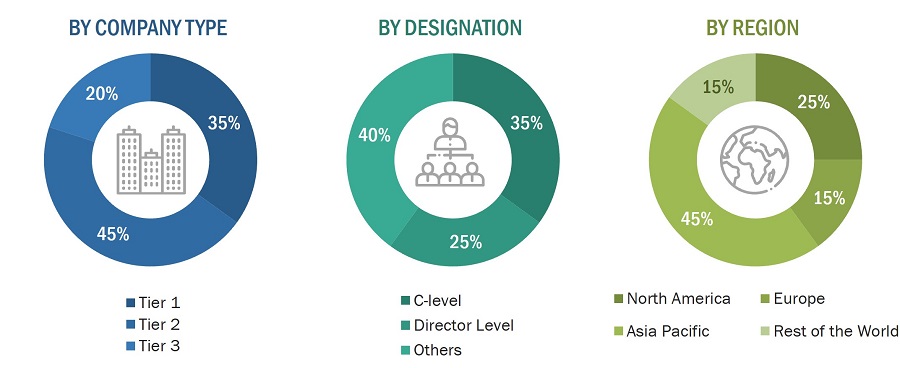
To know about the assumptions considered for the study, download the pdf brochure
Market Size Estimation
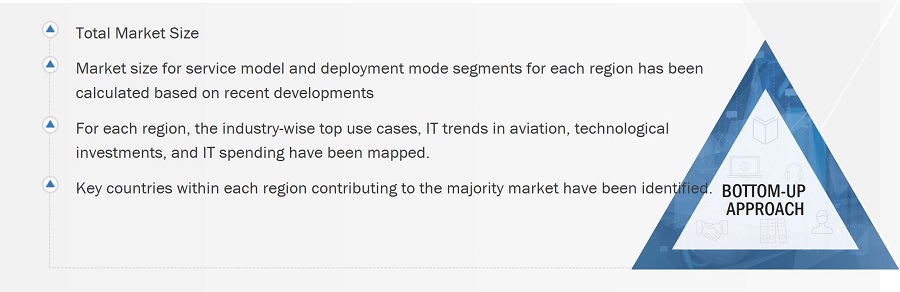
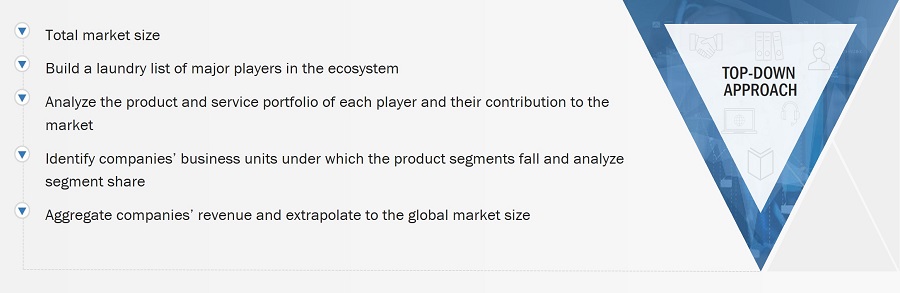
- Both top-down and bottom-up approaches were used to estimate and validate the size of the Aviation Cloud market.
- Key players were identified through secondary research, and their market ranking was determined through primary and secondary research. This included a study of annual and financial reports of the top market players and extensive interviews of leaders, including CEOs, directors, and marketing executives.
- All percentage shares, splits, and breakdowns were determined using secondary sources and verified through primary sources. All possible parameters that affect the markets covered in this research study were accounted for, viewed in extensive detail, verified through primary research, and analyzed to obtain the final quantitative and qualitative data. This data was consolidated, enhanced with detailed inputs, analyzed by MarketsandMarkets, and presented in this report.
Market size estimation methodology: Bottom-up Approach
Market size estimation methodology: Top-Down Approach
Data Triangulation
After arriving at the overall size of the aviation cloud market from the market size estimation process explained above, the total market was split into several segments and subsegments. Wherever applicable, data triangulation and market breakdown procedures explained below were implemented to complete the overall market engineering process and arrive at the exact statistics for various market segments and subsegments. The data was triangulated by studying various factors and trends from both the demand and supply sides. Additionally, the market size was validated using both top-down and bottom-up approaches.
Market Definition
Aviation cloud refers to the specialized application of cloud computing technologies within the aviation industry. It encompasses the use of scalable, on-demand cloud services to manage, process, and store data that is crucial for aviation operations, which include everything from passenger management systems, flight operations, and ticketing to cargo handling and crew scheduling. The cloud platform allows airlines and airports to enhance their operational efficiency, improve data security, and ensure real-time data availability across global networks. It also supports regulatory compliance and facilitates the integration of emerging technologies, such as artificial intelligence (AI) and big data analytics, into daily operations, helping to meet the demands of the evolving aviation industry.
Stakeholders
Various stakeholders of the market are listed below:
- Airlines
- MRO Service Providers
- Aircraft Manufacturers
- Cloud Service Providers (CSPs)
- Networking Companies
- Information Technology (IT) Infrastructure Providers
- Consultants/Consultancies/Advisory Firms
- Component Providers
- Telecom Service Providers
- System Integrators (SIs)
- Support and Maintenance Service Providers
- Support Service Providers
- Third-party Providers
- Government Organizations and Standardization Bodies
- Datacenter Providers
- Regional Associations
- Independent Hardware and Software Vendors
- Value-added Resellers and Distributors
Report Objectives
- To define, describe, and forecast the aviation cloud market based on deployment type, service model, application, end-user, and region.
- To forecast the market size of segments across North America, Europe, Asia Pacific, and the Rest of the World, along with major countries in these regions
- To analyze the demand- and supply-side indicators of the market and provide a factor analysis for the same
- To identify and analyze key drivers, restraints, opportunities, and challenges influencing the growth of the market
- To identify the current industry, market, and technology trends in the market
- To strategically analyze micromarkets1 with respect to individual technological trends and prospects
- To analyze the degree of competition in the market by identifying key market players
- To analyze competitive developments such as deals, contracts, and product launches/developments undertaken by key market players
- To identify the financial position, key products, and major developments of leading market players
- To strategically profile key market players and comprehensively analyze their market shares and core competencies
Available customizations
Along with the market data, MarketsandMarkets offers customizations as per the specific needs of companies. The following customization options are available for the report:
Product Analysis
- Product matrix, which gives a detailed comparison of the product portfolio of each company.
Regional Analysis
- Further breakdown of the market segments at the country level
Company Information
- Detailed analysis and profiling of additional market players (up to 5)
Get the Full Aviation Cloud Market Report
Full forecast, segment splits, and company analysis for all Aviation Cloud Market.
- Canada Aviation Cloud Market
- US Aviation Cloud Market
- UK Aviation Cloud Market
- Germany Aviation Cloud Market
- France Aviation Cloud Market
- China Aviation Cloud Market
- India Aviation Cloud Market
- Singapore Aviation Cloud Market
- Rest Of Europe Aviation Cloud Market
- Rest Of Asia Pacific Aviation Cloud Market
Need a Tailored Report?
Customize this report to your needs
Get 10% FREE Customization
Customize This Report
