
Canada Bioactive Dressings Market (2024-2029)

The Canada Bioactive Dressings Market was valued at $163 Million in 2024 and projected to reach to $222 Million by 2029, representing a compound annual growth rate of 6.4%. Canada's bioactive dressings market is positioned for steady growth through 2029, supported by an aging population with increasing chronic wound prevalence and a healthcare system committed to advanced treatment modalities.


| Market Size in | USD 26.32 MN |
| Market Forecast in | |
| CAGR | |
| Forecast Period | |
| Units Considered | Value (USD MN) |
Canada Bioactive Dressings Market Trends and Insights
- This steady expansion reflects Canada's advancing healthcare infrastructure and increasing adoption of advanced wound care solutions across hospitals, clinics, and home care settings.
- Canada's aging population and rising prevalence of chronic wounds, including diabetic ulcers and pressure injuries, are driving demand for innovative bioactive dressing technologies that accelerate healing and reduce infection rates. The Canadian market benefits from strong regulatory oversight through Health Canada and widespread reimbursement coverage for advanced wound care products through provincial health systems.
- Canada's emphasis on evidence-based medicine and clinical outcomes has positioned bioactive dressings as a preferred choice among healthcare providers seeking to improve patient outcomes while managing healthcare costs.
- Between 2024 and 2029, Canada is anticipated to see increased investment in wound care research and development, alongside growing awareness among patients and practitioners about the benefits of bioactive dressing solutions..
Key Market Statistics
- CAGR (2024-2029) 6.4% CAGR
- Market Size, 2024 ~USD 163 Million
- Forecast, 2029 ~USD 222 Million
- Country Canada
Canada Bioactive Dressings Market Overview
Market Size & Growth :
Canada's bioactive dressings market is valued at $163.0 million in 2024 and is projected to reach $222.0 million by 2029, growing at a CAGR of 6.4%, driven by increasing demand for advanced wound care solutions.
Aging Population Impact :
Canada's rapidly aging demographic is a key growth driver, with seniors requiring specialized wound care management. This demographic shift is accelerating adoption of bioactive dressings in both clinical and home care environments across the country.
Healthcare Infrastructure Advancement :
Canada's robust and modernizing healthcare system is increasingly integrating advanced wound care technologies. Provincial health systems and private clinics are investing in bioactive dressing solutions to improve patient outcomes and reduce healthcare costs.
Multi-Setting Adoption :
Bioactive dressings are gaining traction across Canadian hospitals, outpatient clinics, and home care settings. This diversified adoption pattern reflects the country's comprehensive approach to wound management and patient-centered care delivery.
Canada Bioactive Dressings Market Dynamics
- Provincial healthcare initiatives and rising awareness among healthcare professionals are driving adoption across urban and rural settings.
- The market benefits from strong regulatory frameworks and reimbursement policies that support innovative wound care solutions.
- Continued investment in healthcare infrastructure and growing patient preference for effective, faster-healing wound treatments will sustain market expansion.
- Competition among manufacturers and increasing product availability are expected to enhance market penetration across Canadian healthcare facilities and home care providers..
Market Ecosystem
Related Ecosystem
Medical Devices
- Polymerase Chain Reaction (PCR)
- Magnetic Resonance Imaging (MRI)
- Disposable Autoinjectors
- Pulse Oximeters
- Blood Pressure Monitors
- Medtronic plc
- Abbott Laboratories
- Stryker Corporation
- Becton, Dickinson and Company
- CONMED Corporation
Key Takeaways
- Canada's bioactive dressings market is projected to grow from $163.0 million in 2024 to $222.0 million in 2029 at a 6.4% CAGR.
- Canada's aging demographic and rising chronic wound prevalence are key drivers of bioactive dressing adoption across healthcare settings.
- Strong regulatory frameworks and provincial reimbursement policies in Canada support market expansion and product accessibility.
- Canada's focus on evidence-based wound care and clinical outcomes positions bioactive dressings as a standard-of-care solution through 2029.
Bioactive Dressings Market Report Scope
| Report Metric | Details |
|---|---|
| Base Year | 2024 |
| Fastest Growing Segment | HOME CARE SETTINGS (End User) |
| Forecast Period | 2024-2029 |
| Growth Rate | CAGR of 10.5% from 2024 to 2029 |
| Largest Segment | HOSPITALS & CLINICS (End User) |
| Market Size Base Year (Billions) | ~USD 3.52 (2024) |
| Revenue Forecast (Billions) | ~USD 5.8 (2029) |
| Segments Covered | Product, Type, Property Type, Application, End User |
Canada Bioactive Dressings Market Report Segmentation
5 segment dimensions are covered across the global market.
By Product
- Bioactive Dressings
- Skin Substitutes
By Type
- Acellular Animal-Derived Products
- Alginate Dressings
- Biosynthetic Products
- Burns
- Chitosan Dressings
- Collagen Dressings
- Diabetic Foot Ulcers
- Honey Dressings
- Human Donor Tissue-Derived Products
- Inpatient Settings
- Other Bioactive Dressings
- Other Chronic Wounds
- Outpatient Settings
- Pressure Ulcers
- Surgical Wounds
- Traumatic Wounds
- Venous Leg Ulcers
By Property Type
- Antimicrobial Dressings
- Non-Antimicrobial Dressings
By Application
- Acute Wounds
- Chronic Wounds
By End User
- Home Care Settings
- Hospitals & Clinics
- Long Term Care Facilities
- Long-Term Care Facilities
- Other End Users
CANADA: BIOACTIVE DRESSINGS MARKET, BY END USER, 2022–2029
| Segment | 2022 | 2023 | 2024 | 2025 | 2026 | 2027 | 2028 | 2029 | CAGR (%) |
|---|---|---|---|---|---|---|---|---|---|
| HOME CARE SETTINGS | 11.4 | 12.5 | 13.7 | 14.9 | 16.2 | 17.6 | 19.1 | 20.8 | 8.8 |
| HOSPITALS & CLINICS | 114.4 | 122.7 | 131.3 | 140.2 | 149.4 | 159.1 | 169.1 | 179.7 | 6.5 |
| LONG-TERM CARE FACILITIES | 10.5 | 11 | 11.5 | 12 | 12.5 | 13 | 13.5 | 14 | 4.1 |
| OTHER END USERS | 6.2 | 6.4 | 6.6 | 6.8 | 6.9 | 7.1 | 7.3 | 7.5 | 2.7 |
| TOTAL | 142.5 | 152.5 | 163 | 173.9 | 185.1 | 196.9 | 209 | 222 | 6.4 |
Target Audience
- Medical Device Manufacturers : Bioactive dressing producers need Canada-specific market data to assess market potential, identify growth opportunities, and develop localized go-to-market strategies for Canadian healthcare providers.
- Healthcare System Administrators : Hospital networks and provincial health authorities require market insights to make informed procurement decisions, evaluate product portfolios, and optimize wound care programs across their facilities.
- Investment & Private Equity Firms : Investors evaluating opportunities in Canadian healthcare need detailed market analysis to assess growth potential, competitive dynamics, and return on investment in the bioactive dressings sector.
- Wound Care Specialists & Clinicians : Healthcare professionals need market data to understand product availability, emerging treatment options, and adoption trends to enhance clinical decision-making and patient care quality in Canada.
- Market Research & Consulting Firms : Research organizations require comprehensive Canada-specific data to support client advisory services, competitive analysis, and strategic recommendations in the healthcare and medical device sectors.
Reasons to Buy this Report
- Country-Specific Market Sizing : Obtain precise market valuation data for Canada ($163M in 2024) with accurate 5-year forecasts, enabling targeted investment and expansion decisions specific to the Canadian bioactive dressings market.
- Demographic & Healthcare Insights : Understand Canada's aging population dynamics and their impact on wound care demand. Gain insights into how provincial healthcare systems are adopting bioactive dressings and the implications for market growth.
- Regional Growth Drivers : Identify key factors driving the 6.4% CAGR in Canada, including healthcare infrastructure investments, reimbursement policies, and clinical adoption patterns across hospitals, clinics, and home care settings.
- Competitive Landscape Analysis : Benchmark your position against competitors in the Canadian market. Understand market dynamics, key players, and opportunities for differentiation in this growing healthcare segment.
- Strategic Planning & Forecasting : Develop evidence-based strategies for market entry, expansion, or product development in Canada. Use reliable forecasts to guide resource allocation and long-term business planning decisions.
Frequently asked questions
What is the current size of Canada's bioactive dressings market?
Canada's bioactive dressings market is valued at $163.0 million in 2024 and is expected to reach $222.0 million by 2029.
What is the projected growth rate for bioactive dressings in Canada?
Canada's bioactive dressings market is projected to grow at a compound annual growth rate (CAGR) of 6.4% from 2024 to 2029.
What factors are driving growth in Canada's bioactive dressings market?
Key drivers include Canada's aging population, rising prevalence of chronic wounds such as diabetic ulcers and pressure injuries, strong regulatory support from Health Canada, and widespread provincial reimbursement coverage for advanced wound care products.
How does Canada's healthcare system support bioactive dressing adoption?
Canada's provincial health systems provide reimbursement coverage for advanced wound care products, and Health Canada's regulatory oversight ensures product safety and efficacy, supporting widespread adoption among healthcare providers.
Which healthcare settings in Canada are driving bioactive dressing demand?
Bioactive dressing demand in Canada is driven across hospitals, outpatient clinics, long-term care facilities, and home care settings, reflecting the diverse needs of Canada's aging and chronically ill population.
RESEARCH METHODOLOGY
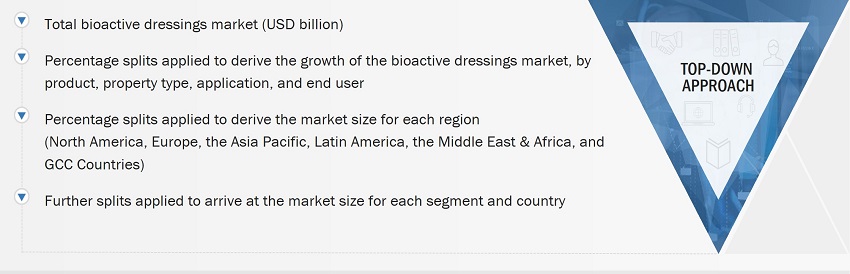
The objective of the study is to analyze the key market dynamics, such as drivers, opportunities, challenges, restraints, and key player strategies. To track company developments such as acquisitions, product launches, expansions, collaborations, agreements, and partnerships of the leading players, the competitive landscape of the bioactive dressings market to analyze market players on various parameters within the broad categories of business and product strategy. Top-down and bottom-up approaches were used to estimate the market size. To estimate the market size of segments and subsegments, the market breakdown and data triangulation were used.
The four steps involved in estimating the market size are:
Collecting Secondary Data
The secondary research data collection process involves the usage of secondary sources, directories, databases (such as Bloomberg Businessweek, Factiva, and D&B), annual reports, investor presentations, and SEC filings of companies. Secondary research was used to identify and collect information useful for the extensive, technical, market-oriented, and commercial study of the bioactive dressings market. A database of the key industry leaders was also prepared using secondary research.
Collecting Primary Data
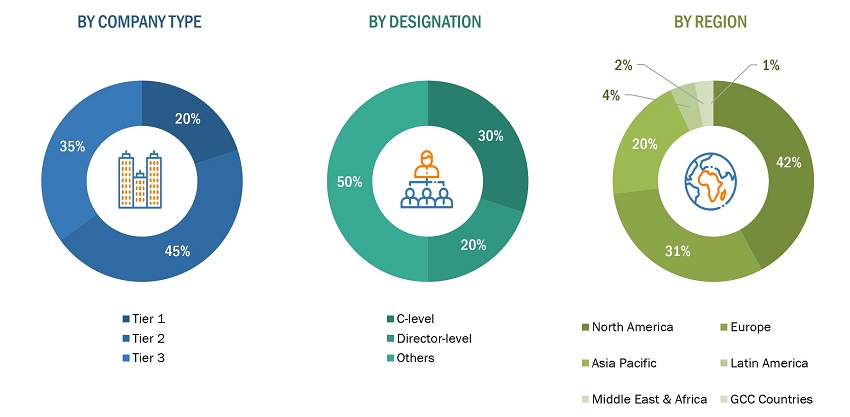
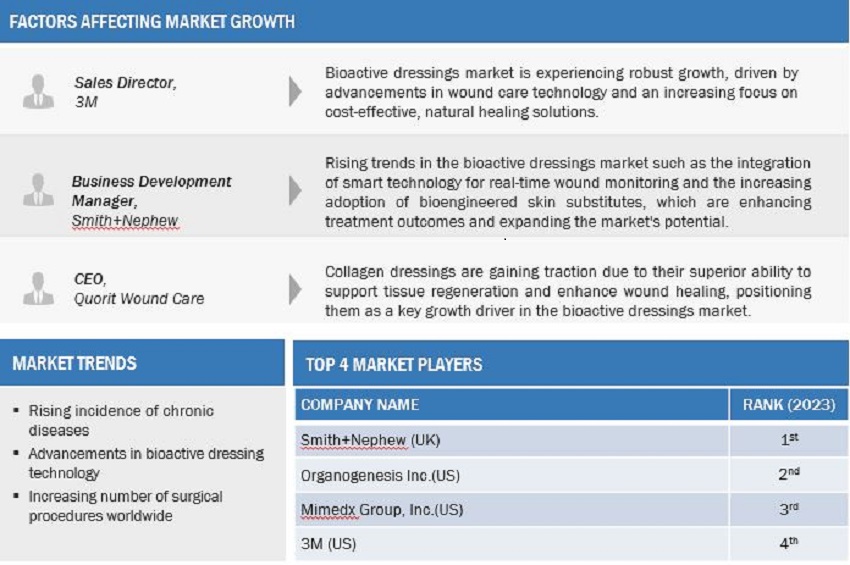
The primary research data was conducted after acquiring knowledge about the bioactive dressings market scenario through secondary research. A significant number of primary interviews were conducted with stakeholders from both the demand side (such as hospitals & clinics, home care settings, wound centers and research centers) and supply side (such as included various industry experts, such as Directors, Chief X Officers (CXOs), Vice Presidents (VPs) from business development, marketing, and product development teams, product manufacturers, wholesalers, channel partners, and distributors) across major countries of North America, Europe, Asia Pacific, the Middle East & Africa, and Latin America. Approximately 40% of the primary interviews were conducted with stakeholders from the demand side, while those from the supply side accounted for the remaining 60%. Primary data for this report was collected through questionnaires, emails, and telephonic interviews.
A breakdown of the primary respondents is provided below:
To know about the assumptions considered for the study, download the pdf brochure
Market Size Estimation
All major product manufacturers offering various bioactive dressings were identified at the global/regional level. Revenue mapping was done for the major players and was extrapolated to arrive at the global market value of each type of segment. The market value bioactive dressings market was also split into various segments and subsegments at the region and country level based on:
- Product mapping of various manufacturers for each type of bioactive dressings market at the regional and country-level
- Relative adoption pattern of each bioactive dressings market among key application segments at the regional and/or country-level
- Detailed primary research to gather qualitative and quantitative information related to segments and subsegments at the regional and/or country level
- Detailed secondary research to gauge the prevailing market trends at the regional and/or country level
Global Bioactive Dressings Market Size: Bottom-Up Approach
Global Bioactive Dressings Market Size: Top-Down Approach
To know about the assumptions considered for the study, Request for Free Sample Report
Data Triangulation
After arriving at the overall market size—using the market size estimation processes—the market was split into several segments and subsegments. To complete the overall market engineering process and arrive at the exact statistics of each market segment and subsegment, data triangulation and market breakdown procedures were employed, wherever applicable. The data was triangulated by studying various factors and trends from both the demand and supply sides in the bioactive dressings industry.
Market Definition
Bioactive dressings are special wound dressings designed to promote the healing process by creating an optimal environment for wound healing. They primarily maintain moisture balance, prevent infections, promote tissue regeneration and reduce inflammation. These dressings are enriched with active ingredients such as antimicrobials, growth factors and collagen that accelerate cell proliferation and promote the formation of new blood vessels, resulting in faster wound closure and healing.
Key Stakeholders
- Manufacturers and distributors of bioactive dressing products
- Wound care associations
- Research & development (R&D) companies
- Distributors of wound care devices
- Contract manufacturers of bioactive dressing products
- Research laboratories & academic institutes
- Healthcare institutes (hospitals & clinics, ambulatory surgical centers, home care settings, and long-term care facilities)
- Healthcare payers
- Government associations
- Venture capitalists & investors
Report Objectives
- To define, describe, segment, and forecast the bioactive dressings market by product type, property type, application, end user, and region
- To provide detailed information regarding the major factors influencing the market growth (drivers, restraints, opportunities, and challenges)
- To analyze micromarkets with respect to individual growth trends, prospects, and contributions to the overall market
- To analyze market opportunities for stakeholders and provide details of the competitive landscape for key players
- To forecast the size of the market segments with respect to six regions: North America, Europe, the Asia Pacific, Middle East & Africa, Latin America, and GCC countries
- To profile the key players and comprehensively analyze their product portfolios, market positions, and core competencies
- To track and analyze company developments such as product launches & approvals, acquisitions, agreements, and expansions in the bioactive dressings market
- To benchmark players within the bioactive dressings market using the Company Evaluation Matrix framework, which analyzes market players on various parameters within the broad categories of business strategy, market share, and product offerings
Available Customizations
MarketsandMarkets offers the following customizations for this market report:
Additional country-level analysis of the bioactive dressings market
Profiling of additional market players (up to 5)
Product Analysis
- Product matrix, which provides a detailed comparison of the product portfolio of each company in the Bioactive Dressings Market
Get the Full Bioactive Dressings Market Report
Full forecast, segment splits, and company analysis for all Bioactive Dressings Market.
- US Bioactive Dressings Market
- Germany Bioactive Dressings Market
- UK Bioactive Dressings Market
- France Bioactive Dressings Market
- Italy Bioactive Dressings Market
- Spain Bioactive Dressings Market
- China Bioactive Dressings Market
- Japan Bioactive Dressings Market
- India Bioactive Dressings Market
- Brazil Bioactive Dressings Market
- Mexico Bioactive Dressings Market
- Rest Of Europe Bioactive Dressings Market
- Rest Of Asia Pacific Bioactive Dressings Market
- Rest Of Latin America Bioactive Dressings Market
Need a Tailored Report?
Customize this report to your needs
Get 10% FREE Customization
Customize This Report
