
South Korea Biopharmaceutical Process Analytical Technology Market (2024-2029)

The South Korea Biopharmaceutical Process Analytical Technology Market was valued at $27.5 Million in 2024 and projected to reach to $64.9 Million by 2029, representing a compound annual growth rate of 18.7%. South Korea's biopharmaceutical PAT market is positioned for exceptional growth through 2029, driven by the country's commitment to pharmaceutical excellence and regulatory modernization.


| Market Size in | USD 26.32 MN |
| Market Forecast in | |
| CAGR | |
| Forecast Period | |
| Units Considered | Value (USD MN) |
South Korea Biopharmaceutical Process Analytical Technology Market Trends and Insights
- This represents a compound annual growth rate of 18.7%, significantly outpacing global trends.
- South Korea's advanced pharmaceutical manufacturing infrastructure, coupled with increasing regulatory emphasis on real-time quality monitoring, is driving adoption of PAT solutions across the country's biopharmaceutical sector. The market growth in South Korea is fueled by the nation's commitment to biopharmaceutical innovation and stringent quality standards.
- South Korea's leading contract manufacturing organizations and integrated biopharmaceutical companies are increasingly investing in analytical technologies to enhance process efficiency and ensure compliance with international regulatory frameworks.
- Between 2024 and 2029, South Korea is expected to see accelerated deployment of PAT systems in cell and gene therapy manufacturing, monoclonal antibody production, and vaccine development. South Korea's position as a regional biopharmaceutical hub, combined with government support for life sciences R&D, positions the country as a key growth market within Asia Pacific.
- South Korea's market dynamics reflect both domestic demand and export-oriented manufacturing capabilities that require sophisticated process control technologies..
Key Market Statistics
- CAGR (2024-2029) 18.7% CAGR
- Market Size, 2024 ~USD 27.5 Million
- Forecast, 2029 ~USD 64.9 Million
- Country South Korea
South Korea Biopharmaceutical Process Analytical Technology Market Overview
Fastest Growing Market Segment :
South Korea's biopharmaceutical PAT market is expanding at 18.7% CAGR, significantly exceeding the global growth rate of 16%, driven by stringent regulatory requirements and advanced manufacturing capabilities.
Strong Manufacturing Infrastructure :
South Korea's world-class pharmaceutical manufacturing ecosystem, supported by government initiatives and technological innovation, creates a favorable environment for PAT adoption and implementation.
Regulatory Compliance Drivers :
Increasing regulatory emphasis from Korean health authorities on process monitoring and quality assurance is accelerating the adoption of analytical technologies across biopharmaceutical production facilities.
Market Valuation Growth :
The market is projected to grow from USD 27.5 million in 2024 to USD 64.9 million by 2029, representing a 136% increase over the five-year forecast period.
South Korea Biopharmaceutical Process Analytical Technology Market Dynamics
- The nation's advanced manufacturing base, combined with increasing investments in biotech innovation, creates substantial opportunities for PAT solution providers.
- South Korean manufacturers are increasingly adopting real-time monitoring and quality control technologies to meet both domestic and international standards. The market's outperformance relative to global trends reflects South Korea's strategic focus on biopharmaceutical competitiveness and export capabilities.
- Government support for pharmaceutical R&D, coupled with rising demand for biologics and complex drug formulations, will continue to fuel PAT adoption.
- By 2029, the market is expected to mature with widespread implementation across major pharmaceutical hubs and contract manufacturing organizations..
Market Ecosystem
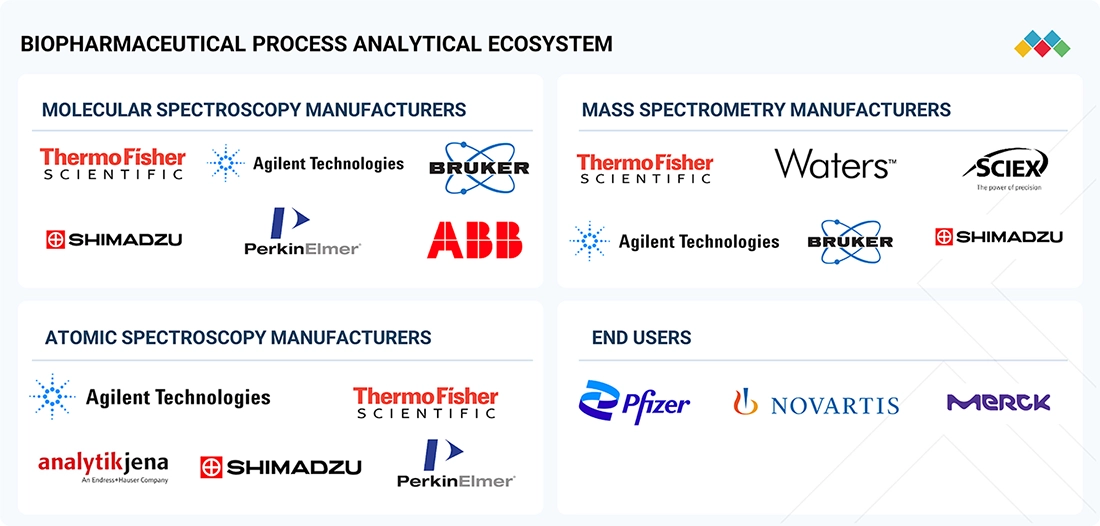
BIOPHARMACEUTICAL PROCESS ANALYTICAL TECHNOLOGY MARKET: COMMERCIAL USE CASES ACROSS INDUSTRIES
| COMPANY | USE CASE DESCRIPTION | BENEFITS |
|---|---|---|
 |
Provides chromatography, mass spectrometry, and spectroscopy solutions for real-time monitoring of upstream, downstream, and quality control processes in biopharmaceutical manufacturing | Improves process understanding, enables real-time quality monitoring, reduces batch failures, supports FDA PAT and QbD initiatives, accelerates process development, and ensures regulatory compliance |
 |
Offers UPLC, LC-MS, and PAT systems for continuous process monitoring, protein purification, impurity analysis, and real-time release testing | Enhances process control, increases product yield, minimizes waste, supports continuous manufacturing, and enables faster product release |
 |
Delivers chromatography, spectroscopy, TOC analyzers, and automation solutions for bioprocess monitoring, purification, and cleaning validation | Enables continuous monitoring, improves workflow efficiency, enhances data integrity, reduces manual intervention, and ensures consistent product quality |
 |
Provides integrated PAT solutions through Cytiva, Pall, Beckman Coulter, and SCIEX for upstream, downstream, and continuous bioprocessing | Improves process scalability, enables real-time monitoring, reduces process variability, supports digital manufacturing, and accelerates biologics production |
Logos and trademarks shown above are the property of their respective owners. Their use here is for informational and illustrative purposes only.
Related Ecosystem
Analytical And Scientific Instrumentation
- Environmental Testing
- Gas Chromatography
- Polymerase Chain Reaction (PCR)
- Automated Liquid Handling Systems
- Flow Cytometry
- Thermo Fisher Scientific Inc.
- Danaher Corporation
- Agilent Technologies, Inc.
- Shimadzu Corporation
- Merck KGaA
Biotechnology
- Reagents
- Polymerase Chain Reaction (PCR)
- Stem Cells
- Assay Kits
- Flow Cytometers
- Thermo Fisher Scientific Inc.
- Merck KGaA
- Danaher Corporation
- Agilent Technologies, Inc.
- Bio-Rad Laboratories, Inc.
Key Takeaways
- South Korea's PAT market is valued at USD 27.5 million in 2024 and will grow to USD 64.9 million by 2029, representing an 18.7% CAGR.
- South Korea's advanced biopharmaceutical manufacturing base and regulatory requirements are primary drivers of PAT technology adoption.
- South Korea's investment in cell and gene therapy, monoclonal antibodies, and vaccine manufacturing is accelerating PAT system deployment.
- South Korea's market growth outpaces global averages, positioning the country as a critical Asia Pacific growth hub for process analytical technologies.
Biopharmaceutical Process Analytical Technology Market Report Scope
| Report Metric | Details |
|---|---|
| Base Year | 2024 |
| Fastest Growing Segment | SOFTWARE (Product Type) |
| Forecast Period | 2024-2029 |
| Growth Rate | CAGR of 16% from 2024 to 2029 |
| Largest Segment | ONLINE MEASUREMENT (Mode) |
| Market Size Base Year (Billions) | ~USD 1.24 (2024) |
| Revenue Forecast (Billions) | ~USD 2.6 (2029) |
| Segments Covered | Type, Mode, Application, Product Type |
South Korea Biopharmaceutical Process Analytical Technology Market Report Segmentation
4 segment dimensions are covered across the global market.
By Type
- Differential Light Scattering
- Gas Chromatography
- Infrared Spectroscopy
- Liquid Chromatography/Hplc
- Mass Spectrometry
- Next-Generation Sequencing
- Nmr Spectroscopy
- Other Technologies
- Particle Counters & Imaging
- Raman Spectroscopy
- Real-Time Pcr/Qpcr
By Mode
- At-Line Measurement
- In-Line Measurement
- Offline Measurement
- Online Measurement
By Application
- Biosimilars & Biologics
- Cell & Gene Therapy
- Hormonal Therapy
- Other Applications
- Vaccines
By Product Type
- Analyzers
- Samplers
- Samples
- Sensors & Probes
- Software
Target Audience
- PAT Solution Providers : Companies offering analytical instruments, software, and monitoring systems need South Korea-specific market data to identify growth opportunities and tailor solutions to local regulatory and manufacturing requirements.
- Biopharmaceutical Manufacturers : Korean and international pharmaceutical companies operating in South Korea require market insights to benchmark their PAT investments, optimize production processes, and maintain regulatory compliance.
- Contract Manufacturing Organizations (CMOs) : CMOs serving the South Korean market need detailed market analysis to justify PAT investments, enhance service offerings, and remain competitive in the rapidly evolving biopharmaceutical landscape.
- Investment & Private Equity Firms : Investors targeting the South Korean pharmaceutical sector require market-specific data to evaluate investment opportunities, assess growth potential, and identify acquisition targets in the PAT space.
- Regulatory & Consulting Bodies : Regulatory agencies, consultants, and industry associations need comprehensive market data to inform policy development, guide industry standards, and support strategic planning initiatives.
Reasons to Buy this Report
- Market-Specific Growth Intelligence : Gain detailed insights into South Korea's 18.7% CAGR trajectory, understanding the unique drivers and dynamics that differentiate this market from global trends and competing regions.
- Regulatory Landscape Analysis : Understand South Korean regulatory requirements and compliance frameworks that are accelerating PAT adoption, enabling strategic positioning for market entry and expansion.
- Competitive Positioning Data : Identify key players, market gaps, and opportunities specific to South Korea's biopharmaceutical sector, supporting informed investment and partnership decisions.
- Forecast-Driven Strategy : Leverage precise market projections (USD 27.5M to USD 64.9M by 2029) to develop targeted business strategies and resource allocation plans for the South Korean market.
- Manufacturing Hub Insights : Access detailed analysis of South Korea's pharmaceutical manufacturing infrastructure, identifying key regions, facilities, and growth opportunities for PAT technology deployment.
Frequently asked questions
What is the current market size of biopharmaceutical PAT in South Korea?
South Korea's biopharmaceutical process analytical technology market was valued at USD 27.5 million in 2024.
What is the projected market size for South Korea's PAT market by 2029?
South Korea's PAT market is projected to reach USD 64.9 million by 2029, growing at an 18.7% CAGR.
What factors are driving PAT adoption in South Korea?
South Korea's PAT adoption is driven by advanced manufacturing infrastructure, stringent regulatory standards, and significant investment in biopharmaceutical innovation including cell and gene therapies.
How does South Korea's PAT market growth compare to global trends?
South Korea's 18.7% CAGR significantly exceeds the global market CAGR of 16%, reflecting the country's accelerated biopharmaceutical sector expansion.
Which biopharmaceutical segments are driving PAT demand in South Korea?
South Korea's PAT demand is primarily driven by monoclonal antibody production, cell and gene therapy manufacturing, and vaccine development sectors.
RESEARCH METHODOLOGY
The biopharmaceutical process analytical technology market was assessed through a balanced combination of primary and secondary research, with a detailed evaluation of key market variables influencing small, medium, and large enterprises. Primary interviews with industry experts across the value chain were conducted to validate the research findings, assumptions, and market estimates. The overall market size was determined using both top-down and bottom-up estimation approaches, ensuring robust and reliable analysis. The study further evaluates market segments, emerging trends, regulatory developments, competitive landscape, and the strategic initiatives adopted by leading market participants. Finally, data triangulation was applied to reconcile findings from multiple sources and methodologies, resulting in accurate market size estimates, while primary research was used throughout the study to validate key assumptions and hypotheses.
Secondary Research
During the study, secondary research was conducted using a range of sources, including directories and databases such as Bloomberg Businessweek, D&B Hoovers, and Factiva. Additional materials included white papers, annual reports, SEC filings, and investor presentations. This research approach was adopted to collect and analyze data that provides comprehensive, technical, and market-focused insights into the biopharmaceutical process analytical technology market. The findings offer insights into key players and market segmentation, informed by recent industry trends and significant developments. A database comprising leading industry figures was also created as part of this secondary research.
Primary Research
Primary research involved activities designed to gather both qualitative and quantitative data. A variety of individuals from both the supply and demand sides were interviewed during this phase. On the supply side, key figures such as CEOs, vice presidents, directors of marketing and sales, directors of technology and innovation, and other important leaders were interviewed by industry experts. On the demand side, primary sources included academic institutions and research organizations. This research aimed to validate market segmentation, identify prominent market participants, and gain insights into significant industry trends and market dynamics through a real-world primary study.
Following is the breakdown of primary respondents:
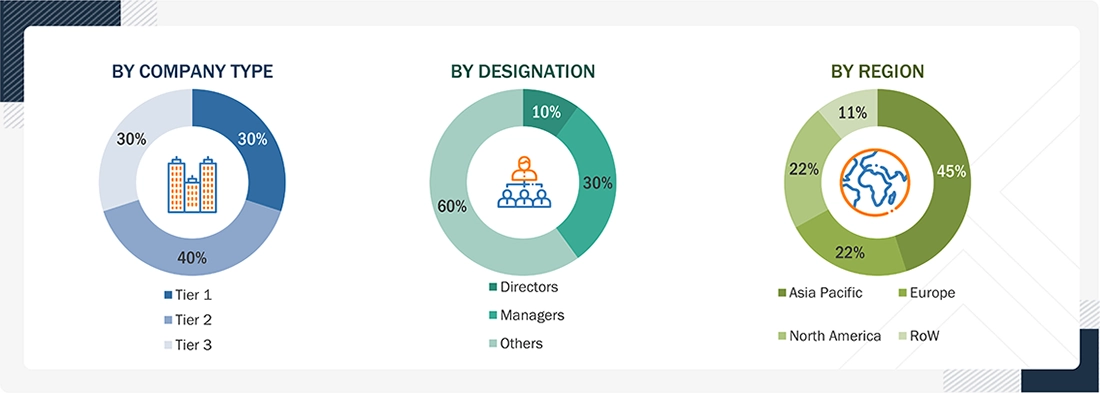
Note: Others include distributors, suppliers, product managers, business development managers, marketing managers, and sales managers.
Companies are categorized into tiers based on their total revenue. As of 2025, Tier 1 = > USD 1,000 million, Tier 2 = USD 500–1,000 million, and Tier 3 = < USD 500 million.
To know about the assumptions considered for the study, download the pdf brochure
Market Size Estimation
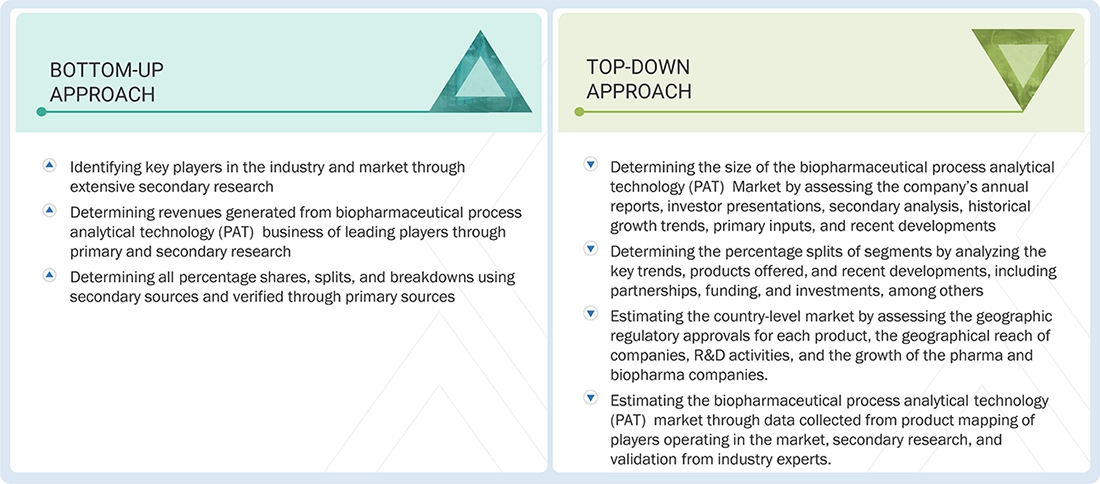
This report provides an analysis of the global biopharmaceutical process analytical technology market size by reviewing the revenue shares of prominent companies. Key players with significant market shares were identified through secondary research, and their revenue from biopharmaceutical process analytical technology sales was calculated and subsequently validated through primary research. The secondary research included an analysis of annual and financial reports from leading market participants. Meanwhile, the primary research involved in-depth interviews with key thought leaders, such as directors, CEOs, and marketing executives.
To calculate the global market value, segmental revenues were determined based on the revenue mapping of service and product providers. The process involved the following steps:
- Generating a list of key players that operate in the biopharmaceutical process analytical technology market at regional or global levels
- Mapping the products of manufacturers of biopharmaceutical process analytical technology and related product lines at the regional level
- Mapping the revenues of listed players through the sales of biopharmaceutical process analytical technology and related products
- Mapping the revenues of major players to cover at least ~40% of the global market share as of 2025
- Extrapolating the mapped revenues of players to arrive at the global market value for the respective segment
- Summing up the market value for all segments and subsegments to achieve the actual value of the global biopharmaceutical process analytical technology market
Biopharmaceutical Process Analytical Technology Market : Top-Down and Bottom-Up Approach
Data Triangulation
Following the estimation of the overall market size, the biopharmaceutical process analytical technology market was segmented into various subsegments. The market engineering process was completed through data triangulation and detailed market segmentation to generate accurate estimates for each segment and subsegment. This process involved evaluating key trends and factors from both the demand and supply sides. The market estimates were further validated using a combination of top-down and bottom-up approaches to ensure the accuracy and consistency of the findings.
Market Definition
The biopharmaceutical process analytical technology (PAT) market comprises analytical instruments and technologies used to monitor, measure, and control critical process parameters and product quality attributes during biopharmaceutical manufacturing in real time. This market includes solutions such as liquid chromatography (HPLC), gas chromatography, mass spectrometry, real-time PCR/qPCR, next-generation sequencing (NGS), nuclear magnetic resonance (NMR) spectroscopy, Raman spectroscopy, infrared spectroscopy, particle counters and imaging, differential light scattering, and other advanced analytical techniques. These technologies enable process optimization, regulatory compliance, improved product quality, and efficient manufacturing across biologics, vaccines, cell and gene therapies, and other biopharmaceutical products.
Key Stakeholders
- Process analytical technology manufacturers, suppliers, and providers
- Pharmaceutical & biopharmaceutical firms
- Contract research organizations (CROs)
- Academic & private research institutions
- Research & development (R&D) companies
- Medical research laboratories
- Academic institutions & private research institutions
- Regulatory agencies
- Quality control & assurance companies
- Contract manufacturing organizations (CMOs)
- Environmental & safety regulatory bodies
- Public & private research institutions
- Third-party testing laboratories
Report Objectives
- To define, describe, and forecast the size of the biopharmaceutical process analytical technology (PAT) market based on type, technology, mode, application, and region
- To provide detailed information regarding the factors influencing the growth potential of the global biopharmaceutical process analytical technology market (drivers, restraints, opportunities, challenges, and trends)
- To analyze micro markets with respect to individual growth trends, prospects, and contributions to the global biopharmaceutical process analytical technology market.
- To analyze key growth opportunities in the global biopharmaceutical process analytical technology market for key stakeholders and provide details of the competitive landscape for market leaders
- To forecast the size of market segments and/or subsegments concerning five regions, namely, North America (US and Canada), Europe (Germany, France, the UK, Spain, Italy, and the rest of Europe), Asia Pacific (Japan, China, India, Australia, South Korea, and the rest of Asia Pacific), Latin America (Brazil, Mexico, and the rest of Latin America), and the Middle East & Africa (GCC Countries and the rest of the Middle East & Africa).
- To profile the key players in the biopharmaceutical process analytical technology market and comprehensively analyze their market shares and core competencies
- To track and analyze the competitive developments undertaken in the global biopharmaceutical process analytical technology market, such as product launches/approvals, agreements, expansions, collaborations, and acquisitions
Available customizations:
With the given market data, MarketsandMarkets offers customizations based on your company’s specific needs. The following customization options are available for the present global biopharmaceutical process analytical technology (PAT) market report:
Product Analysis
-
Product matrix, which gives a detailed comparison of the product portfolios of the top 15 companies
Company Information
- Detailed analysis and profiling of additional market players (up to 13)
Geographical Analysis
-
Further breakdown of the Rest of Europe biopharmaceutical process analytical technology (PAT) market into Russia, Belgium, the Netherlands, Switzerland, Austria, Finland, Sweden, Poland, and Portugal
-
Further breakdown of the Rest of Asia Pacific biopharmaceutical process analytical technology (PAT)market into Singapore, Taiwan, New Zealand, the Philippines, Malaysia, and other Asia Pacific countries
-
Further breakdown of the Rest of Latin America biopharmaceutical process analytical technology (PAT) market into Argentina, Chile, Peru, and Colombia
Get the Full Biopharmaceutical Process Analytical Technology Market Report
Full forecast, segment splits, and company analysis for all Biopharmaceutical Process Analytical Technology Market.
- US Biopharmaceutical Process Analytical Technology Market
- Canada Biopharmaceutical Process Analytical Technology Market
- Germany Biopharmaceutical Process Analytical Technology Market
- France Biopharmaceutical Process Analytical Technology Market
- UK Biopharmaceutical Process Analytical Technology Market
- Italy Biopharmaceutical Process Analytical Technology Market
- Spain Biopharmaceutical Process Analytical Technology Market
- China Biopharmaceutical Process Analytical Technology Market
- Japan Biopharmaceutical Process Analytical Technology Market
- India Biopharmaceutical Process Analytical Technology Market
- Australia Biopharmaceutical Process Analytical Technology Market
- Brazil Biopharmaceutical Process Analytical Technology Market
- Mexico Biopharmaceutical Process Analytical Technology Market
- Rest Of Europe Biopharmaceutical Process Analytical Technology Market
- Rest Of Asia Pacific Biopharmaceutical Process Analytical Technology Market
- Rest Of Latin America Biopharmaceutical Process Analytical Technology Market
Need a Tailored Report?
Customize this report to your needs
Get 10% FREE Customization
Customize This Report
