
South Korea Bioresorbable Polymers Market (2024-2029)

The South Korea Bioresorbable Polymers Market was valued at $10.3 Million in 2024 and projected to reach to $19.4 Million by 2029, representing a compound annual growth rate of 13.4%. South Korea's bioresorbable polymers market is positioned for exceptional growth, expanding from USD 10.3 million in 2024 to USD 19.4 million by 2029.


| Market Size in | USD 26.32 MN |
| Market Forecast in | |
| CAGR | |
| Forecast Period | |
| Units Considered | Value (USD MN) |
South Korea Bioresorbable Polymers Market Trends and Insights
- This represents a compound annual growth rate (CAGR) of 13.4%, significantly outpacing global trends.
- South Korea's advanced healthcare infrastructure, strong pharmaceutical and medical device sectors, and government support for biomedical innovation are driving adoption of bioresorbable polymers across surgical implants, drug delivery systems, and tissue engineering applications. The market expansion in South Korea reflects increasing demand for minimally invasive surgical solutions and biodegradable medical devices.
- South Korea's position as a leading biotechnology hub in Asia Pacific, combined with rising healthcare expenditure and aging population demographics, creates favorable conditions for bioresorbable polymer adoption.
- South Korea's manufacturers and research institutions are investing heavily in developing next-generation bioresorbable materials to meet both domestic and regional market needs. Key end-use sectors driving growth in South Korea include orthopedic implants, cardiovascular devices, and regenerative medicine applications.
- South Korea's regulatory environment and quality standards support commercialization of innovative bioresorbable polymer products, positioning the country as a critical market within the Asia Pacific region through 2029..
Key Market Statistics
- CAGR (2024-2029) 13.4% CAGR
- Market Size, 2024 ~USD 10.3 Million
- Forecast, 2029 ~USD 19.4 Million
- Country South Korea
South Korea Bioresorbable Polymers Market Overview
Fastest Growing Market in Asia-Pacific :
South Korea's bioresorbable polymers market grows at 13.4% CAGR, outpacing the global rate of 11.6%, driven by advanced medical device manufacturing and R&D investments in regenerative medicine.
Strong Healthcare Infrastructure :
South Korea's world-class healthcare system and high medical device adoption rates create substantial demand for bioresorbable polymers in surgical implants, drug delivery systems, and tissue engineering applications.
Government Biomedical Support :
Strategic government initiatives and funding for biomedical innovation, including tax incentives and research grants, accelerate commercialization of bioresorbable polymer-based medical solutions.
Pharmaceutical & Medical Device Excellence :
South Korea's robust pharmaceutical and medical device sectors, home to leading manufacturers, drive significant demand for bioresorbable polymers in orthopedic, cardiovascular, and dental applications.
South Korea Bioresorbable Polymers Market Dynamics
- This 13.4% CAGR reflects the country's commitment to advanced healthcare solutions and biomedical innovation.
- The market benefits from strong domestic demand in orthopedic implants, cardiovascular devices, and drug delivery systems, supported by a highly skilled workforce and cutting-edge manufacturing capabilities. Looking ahead, South Korea's bioresorbable polymers sector will be propelled by increasing investments in regenerative medicine, rising geriatric population requiring surgical interventions, and expanding export opportunities to regional markets.
- Collaborations between government research institutions, universities, and private manufacturers will accelerate product development and commercialization, positioning South Korea as a key hub for bioresorbable polymer innovation in Asia-Pacific..
Market Ecosystem
Related Ecosystem
Green Bio Chemicals
- Animal-Based Sealants
- Bacterial Fermentation
- Corrosion Inhibitors
- Hydrogen Peroxide
- Nitrile Butadiene Rubber (NBR)
- Basf se
- Evonik industries ag
- Solvay sa
- AZELIS HOLDINGS SA
- CARGILL, INCORPORATED
Resins And Polymers
- Polycarbonate
- Acrylonitrile Butadiene Styrene (ABS)
- Epoxy Resin
- Light Commercial Vehicles (LCVs)
- Polypropylene (PP)
- Basf se
- DOW CHEMICAL COMPANY
- Solvay sa
- Saudi arabia basic industries corporation (sabic)
- DuPont de Nemours, Inc.
Key Takeaways
- South Korea's bioresorbable polymers market is valued at USD 10.3 million in 2024 and is forecast to reach USD 19.4 million by 2029, growing at a 13.4% CAGR.
- South Korea's advanced healthcare infrastructure and biotech sector leadership drive strong demand for bioresorbable medical devices and implants.
- Orthopedic implants, cardiovascular devices, and tissue engineering are the primary growth drivers in South Korea's bioresorbable polymers market.
- South Korea's aging population and rising healthcare spending support sustained market expansion through 2029.
Bioresorbable Polymers Market Report Scope
| Report Metric | Details |
|---|---|
| Base Year | 2024 |
| Fastest Growing Segment | PLGA (Type) |
| Forecast Period | 2024-2029 |
| Growth Rate | CAGR of 11.6% from 2024 to 2029 |
| Largest Segment | ORTHOPEDIC DEVICES (Application) |
| Market Size Base Year (Billions) | ~USD 0.5 (2024) |
| Revenue Forecast (Billions) | ~USD 0.87 (2029) |
| Segments Covered | Type, Application |
South Korea Bioresorbable Polymers Market Report Segmentation
2 segment dimensions are covered across the global market.
By Type
- Other Types
- Pcl
- Pga
- Pla
- Plga
- -Pdlla
- -Plla
By Application
- Drug Delivery
- Hip
- Knee
- Oral
- Orthopedic Devices
- Other Applications
- Other Drug Delivery Applications
- Other Orthopedic Device Applications
- Parenteral
- Spine
- Sports Injury
- Trauma
Target Audience
- Medical Device Manufacturers : South Korean and international medical device companies need market intelligence to identify growth opportunities, assess competitive positioning, and develop bioresorbable polymer-based products for local and regional markets.
- Pharmaceutical Companies : Pharmaceutical firms require detailed market data to evaluate bioresorbable polymer applications in drug delivery systems, understand regulatory pathways, and plan product launches in South Korea's advanced healthcare market.
- Polymer & Material Suppliers : Raw material suppliers and polymer manufacturers need South Korea-specific demand forecasts to optimize production capacity, identify key customers, and develop tailored solutions for local medical device manufacturers.
- Healthcare Investors & PE Firms : Investment professionals require comprehensive market analysis to evaluate funding opportunities in South Korean biomedical startups and established companies focused on bioresorbable polymer innovations.
- Government & Research Institutions : Korean government agencies, universities, and research centers need market insights to align biomedical research initiatives, allocate funding effectively, and support commercialization of bioresorbable polymer technologies.
Reasons to Buy this Report
- Market-Specific Growth Projections : Access precise forecasts for South Korea's bioresorbable polymers market through 2029, enabling accurate business planning and investment decisions tailored to this high-growth regional market.
- Competitive Landscape Intelligence : Identify key South Korean manufacturers, suppliers, and market players in bioresorbable polymers, understanding competitive positioning and partnership opportunities within the domestic market.
- Regulatory & Government Insights : Understand South Korea-specific regulatory frameworks, government incentives, and biomedical policies that influence market dynamics and create opportunities for market entry and expansion.
- Application-Specific Demand Analysis : Gain detailed insights into South Korean demand drivers across orthopedic implants, cardiovascular devices, dental applications, and drug delivery systems with localized market data.
- Strategic Market Entry Planning : Develop informed go-to-market strategies for South Korea with comprehensive data on healthcare infrastructure, medical device adoption rates, and regional supply chain dynamics.
Frequently asked questions
What is the current market size of bioresorbable polymers in South Korea?
South Korea's bioresorbable polymers market was valued at USD 10.3 million in 2024 and is expected to grow to USD 19.4 million by 2029.
What is the projected growth rate for South Korea's bioresorbable polymers market?
South Korea's bioresorbable polymers market is projected to grow at a compound annual growth rate (CAGR) of 13.4% from 2024 to 2029.
Which applications drive demand for bioresorbable polymers in South Korea?
South Korea's primary applications include orthopedic implants, cardiovascular devices, drug delivery systems, and tissue engineering solutions.
Why is South Korea a significant market for bioresorbable polymers?
South Korea's advanced healthcare infrastructure, strong biotech sector, government innovation support, and aging population create favorable conditions for bioresorbable polymer adoption.
What factors support market growth in South Korea through 2029?
South Korea's rising healthcare expenditure, increasing demand for minimally invasive procedures, regulatory support, and investment in biomedical R&D drive sustained market expansion.
RESEARCH METHODOLOGY
The study involved four major activities in estimating the market size for bioresorbable polymers market. Exhaustive secondary research was done to collect information on the market, the peer market, and the parent market. The next step was to validate these findings, assumptions, and sizing with industry experts across the value chain through primary research. Both top-down and bottom-up approaches were employed to estimate the complete market size. After that, the market breakdown and data triangulation procedures were used to estimate the market size of the segments and subsegments.
Secondary Research
Secondary sources used in this study included annual reports, press releases, and investor presentations of companies; white papers; certified publications; articles from recognized authors; and gold standard & silver standard websites such as Factiva, ICIS, Bloomberg, and others. The findings of this study were verified through primary research by conducting extensive interviews with key officials such as CEOs, VPs, directors, and other executives. The breakdown of profiles of the primary interviewees is illustrated in the figure below:
Primary Research
The bioresorbable polymers market comprises several stakeholders, such as raw material suppliers, end-product manufacturers, and regulatory organizations in the supply chain. The demand side of this market is characterized from key opinion leaders in various applications for the bioresorbable polymers market. The supply side is characterized by advancements in technology and diverse application industries. Various primary sources from both the supply and demand sides of the market were interviewed to obtain qualitative and quantitative information.
The following is a breakdown of the primary respondents:
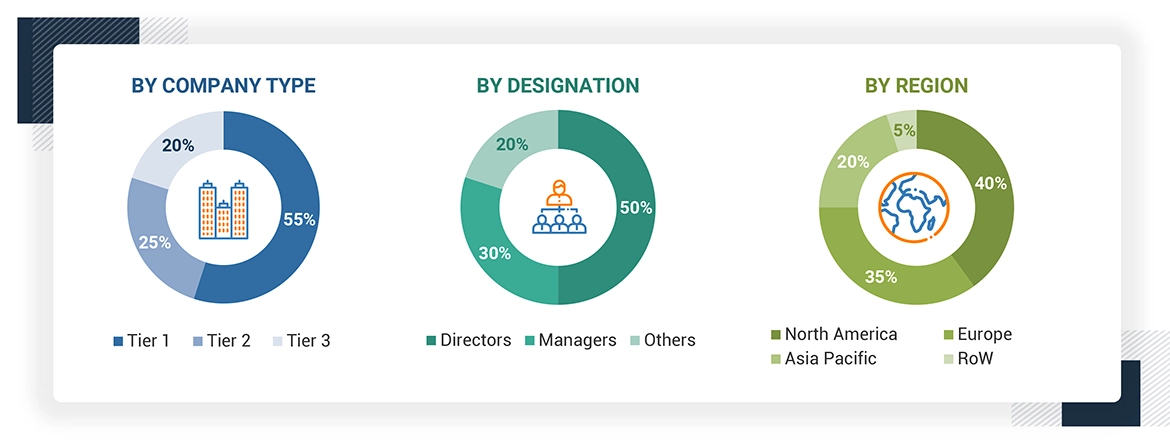
Note: Tier 1, Tier 2, and Tier 3 companies are classified based on their market revenue in 2022/ 2023, available in the public domain, product portfolios, and geographical presence.
Other designations include consultants and sales, marketing, and procurement managers.
To know about the assumptions considered for the study, download the pdf brochure
| COMPANY NAME | DESIGNATION | |
|---|---|---|
| Evonik Industries AG | Sales Manager | |
| Ashland Global Holdings Inc. | R&D Manager | |
| KLS Martin Group | Global R&D Head | |
| DSM Biomedical | Business Development Manager | |
| Poly-Med Incorporated | Regional Sales Manager | |
Market Size Estimation
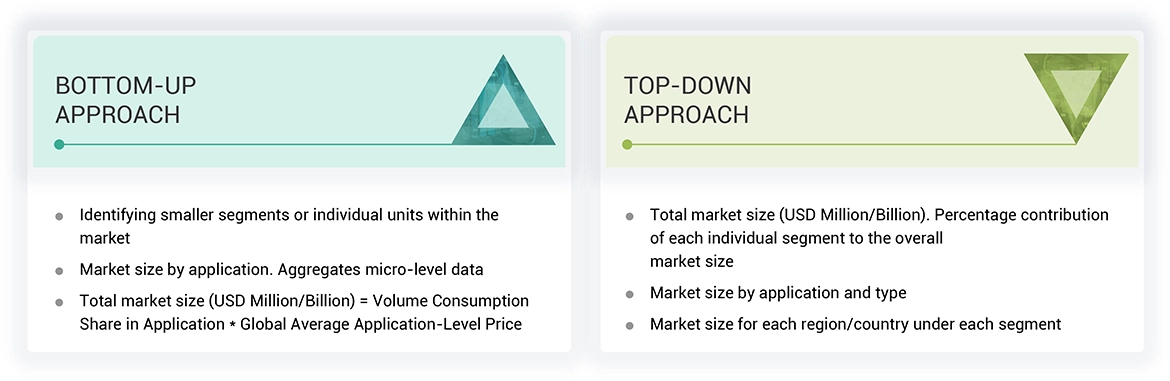
Both top-down and bottom-up approaches were used to estimate and validate the total size of the bioresorbable polymers market. These methods were also used extensively to estimate the size of various subsegments in the market. The research methodology used to estimate the market size includes the following:
- The key players in the industry have been identified through extensive secondary research.
- The supply chain of the industry has been determined through primary and secondary research.
- All percentage shares, splits, and breakdowns have been determined using secondary sources and verified through primary sources.
- All possible parameters that affect the markets covered in this research study have been accounted for, viewed in extensive detail, verified through primary research, and analyzed to obtain the final quantitative and qualitative data.
Data Triangulation
After arriving at the overall market size—using the market size estimation processes as explained above—the market was split into several segments and subsegments. To complete the overall market engineering process and arrive at the exact statistics of each market segment and subsegment, data triangulation, and market breakdown procedures were employed, wherever applicable. The data was triangulated by studying various factors and trends from both the demand and supply sides in the bioresorbable polymers industry.
Market Definition
The bioresorbable polymers are the type of polymers. They are designed to naturally degrade and be absorbed within biological environments. These polymers are utilized in medical and healthcare sectors, where they are used to manufacture orthopedic devices and drug delivery systems. The demand of bioresorbable polymers influenced by the innovation in medical devices and the need for the eco-friendly alternatives to the permanent implants. The key components of the bioresorbable polymers are PLA, PGA, PLGA, and PCL.
Stakeholders
- Bioresorbable polymers manufacturers
- Bioresorbable polymers suppliers
- Raw material suppliers
- Application sector companies
- Government bodies
Report Objectives
- To define, describe, and forecast the bioresorbable polymers market in terms of value and volume
- To provide detailed information regarding the drivers, opportunities, restraints, and challenges influencing market growth
- To estimate and forecast the market size by type, application, and region
- To forecast the size of the market for five main regions: Asia Pacific, Europe, North America, South America, and the Middle East & Africa, along with their key countries
- To strategically analyze micromarkets1 with respect to their growth trends, prospects, and contribution to the overall market
- To analyze opportunities in the market for stakeholders and provide a competitive landscape for market leaders
- To analyze competitive developments, such as deals and expansions, in the market
- To strategically profile key players and comprehensively analyze their growth strategies
Get the Full Bioresorbable Polymers Market Report
Full forecast, segment splits, and company analysis for all Bioresorbable Polymers Market.
- US Bioresorbable Polymers Market
- Canada Bioresorbable Polymers Market
- Mexico Bioresorbable Polymers Market
- Germany Bioresorbable Polymers Market
- UK Bioresorbable Polymers Market
- France Bioresorbable Polymers Market
- Italy Bioresorbable Polymers Market
- Russia Bioresorbable Polymers Market
- China Bioresorbable Polymers Market
- Japan Bioresorbable Polymers Market
- India Bioresorbable Polymers Market
- Brazil Bioresorbable Polymers Market
- Argentina Bioresorbable Polymers Market
- Rest Of Europe Bioresorbable Polymers Market
- Rest Of Asia Pacific Bioresorbable Polymers Market
- Saudi Arabia Bioresorbable Polymers Market
- UAE Bioresorbable Polymers Market
- Rest Of South America Bioresorbable Polymers Market
Need a Tailored Report?
Customize this report to your needs
Get 10% FREE Customization
Customize This Report
