
Brazil Biosimilars Market (2025-2030)

The Brazil Biosimilars Market was valued at $208.8 Million in 2025 and projected to reach to $589.1 Million by 2030, representing a compound annual growth rate of 10.9%. Brazil's biosimilars market is positioned for exceptional growth over the next five years, driven by a convergence of healthcare economics, disease prevalence, and supportive regulatory frameworks.


| Market Size in | USD 26.32 MN |
| Market Forecast in | |
| CAGR | |
| Forecast Period | |
| Units Considered | Value (USD MN) |
Brazil Biosimilars Market Trends and Insights
- This represents a compound annual growth rate of 10.9%, significantly outpacing global market growth of 7.5%.
- Brazil's biosimilars sector is driven by increasing healthcare costs, growing prevalence of chronic diseases, and rising government initiatives to improve drug accessibility across the nation's diverse population. The Brazilian market benefits from a well-established regulatory framework and growing adoption of biosimilar therapies among healthcare providers and patients.
- Brazil's position as Latin America's largest economy provides substantial opportunities for biosimilar manufacturers seeking to expand their regional footprint.
- By 2030, Brazil is expected to consolidate its leadership in the Latin American biosimilars market, supported by favorable reimbursement policies and increasing clinical acceptance of biosimilar products..
Key Market Statistics
- CAGR (2025-2030) 10.9% CAGR
- Market Size, 2025 ~USD 208.8 Million
- Forecast, 2030 ~USD 589.1 Million
- Country Brazil
Brazil Biosimilars Market Overview
Rapid Market Expansion :
Brazil's biosimilars market is projected to grow from USD 208.8 million in 2025 to USD 589.1 million by 2030, representing a 10.9% CAGR that significantly exceeds the global growth rate of 7.5%.
Healthcare Cost Pressures :
Rising healthcare expenditures and budget constraints in Brazil's public health system are driving adoption of cost-effective biosimilar alternatives to expensive biologic therapies.
Chronic Disease Burden :
Increasing prevalence of chronic conditions including rheumatoid arthritis, cancer, and autoimmune disorders in Brazil is creating sustained demand for biologic and biosimilar treatments.
Government Support & Initiatives :
Brazilian government policies promoting biosimilar adoption, regulatory streamlining, and inclusion in public healthcare programs are accelerating market penetration and accessibility.
Brazil Biosimilars Market Dynamics
- The 10.9% CAGR reflects strong momentum as healthcare providers and patients increasingly recognize biosimilars as viable, cost-effective alternatives to originator biologics.
- Government initiatives promoting biosimilar adoption within Brazil's unified health system (SUS) are expanding patient access and market opportunities. Looking ahead, market expansion will be sustained by rising chronic disease incidence, growing healthcare infrastructure investments, and increasing physician and patient awareness.
- However, success will depend on continued regulatory clarity, reimbursement policies, and manufacturing capacity development within Brazil.
- Strategic partnerships between international biosimilar manufacturers and local distributors will be critical to capturing market share in this high-growth Latin American market..
Market Ecosystem
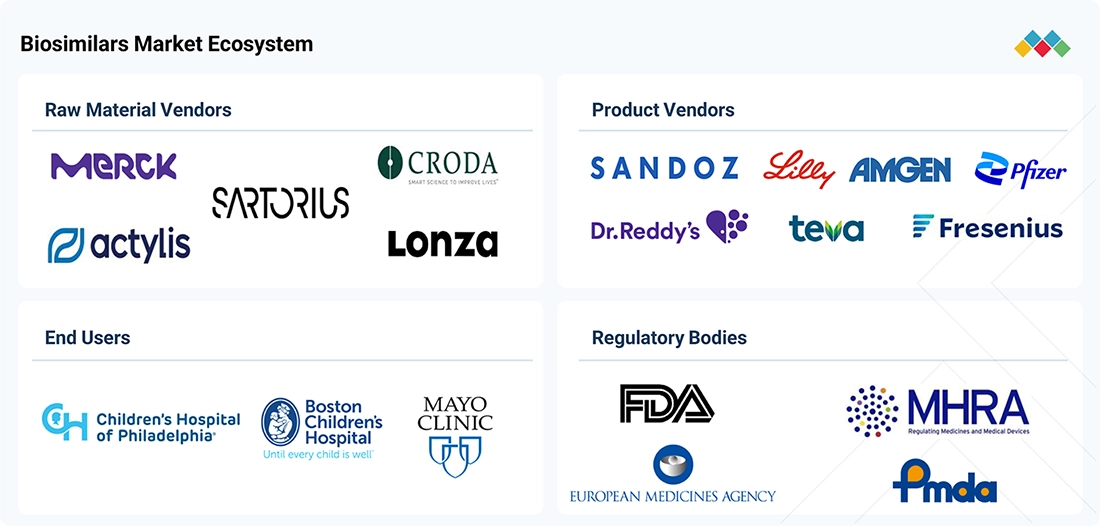
BIOSIMILARS MARKET: COMMERCIAL USE CASES ACROSS INDUSTRIES
| COMPANY | USE CASE DESCRIPTION | BENEFITS |
|---|---|---|
 |
Develops, manufactures, and commercializes a broad portfolio of biosimilars across oncology, immunology, ophthalmology, endocrinology, and other therapeutic areas. Its portfolio includes products such as Hyrimoz, Pyzchiva, Tyruko, Afqlir, Wyost, and Jubbonti. | Expands access to biologic therapies, provides lower-cost treatment alternatives, increases competition following loss of exclusivity, and supports healthcare-system cost savings. Sandoz reported USD 3.3 billion in biosimilar sales in 2025. |
 |
Operates an integrated biosimilar model spanning R&D, manufacturing, regulatory activities, and commercialization, with products covering insulin, monoclonal antibodies, and recombinant proteins across advanced and emerging markets. | Enables large-scale commercialization across >100 countries, improves affordability and availability of biologics, and supports patient access through patient assistance, injection training, pharmacy coordination, and other support programs. |
 |
Develops, manufactures, and directly commercializes antibody biosimilars including Remsima, Truxima, Herzuma, Yuflyma, Vegzelma, Omlyclo, Eydenzelt, Steqeyma, and denosumab products across major global markets. | Vertical integration and direct sales provide greater control over manufacturing, supply, pricing, and commercialization while supporting broader access to biosimilars across approximately 100 countries. |
 |
Develops and commercializes biosimilars to major biologics across oncology, immunology, and supportive care, while actively engaging with policymakers and healthcare stakeholders regarding biosimilar adoption. | Enables competition with originator biologics, reduces treatment costs, expands treatment options, and can generate healthcare-system savings through lower biosimilar and reference-product prices. |
 |
Commercializes established biosimilars including Abrilada, Ruxience, Trazimera, Retacrit, Nivestym, and infliximab biosimilars across selected markets. | Provides lower-cost alternatives in oncology, immunology, hematology, and supportive care while increasing treatment availability and generating competition in mature biologic markets. |
Logos and trademarks shown above are the property of their respective owners. Their use here is for informational and illustrative purposes only.
Related Ecosystem
Biotechnology
- Reagents
- Polymerase Chain Reaction (PCR)
- Stem Cells
- Assay Kits
- Flow Cytometers
- Thermo Fisher Scientific Inc.
- Merck KGaA
- Danaher Corporation
- Agilent Technologies, Inc.
- Bio-Rad Laboratories, Inc.
Pharmaceuticals
- Bioreactors
- Analytical Testing
- Bioanalytical Testing Services
- Cell Counters
- Data Management Services
- Thermo Fisher Scientific Inc.
- Merck KGaA
- SANOFI
- Pfizer Inc.
- NOVARTIS
Key Takeaways
- Brazil's biosimilars market will grow from USD 208.8 million in 2025 to USD 589.1 million by 2030, representing a 10.9% CAGR.
- Brazil's biosimilars growth rate significantly exceeds the global average of 7.5%, positioning the country as a key regional growth engine.
- Brazil's regulatory framework and government healthcare initiatives are accelerating biosimilar adoption and market penetration.
- Brazil's large patient population and rising chronic disease burden create substantial long-term demand for cost-effective biosimilar therapies.
Biosimilars Market Report Scope
| Report Metric | Details |
|---|---|
| Base Year | 2025 |
| Fastest Growing Segment | USTEKINUMAB (Type) |
| Forecast Period | 2025–2030 |
| Growth Rate | CAGR of 7.5% from 2025 to 2030 |
| Largest Segment | MONOCLONAL ANTIBODIES (Drug Class) |
| Market Size Base Year (Billions) | ~USD 35.07 (2025) |
| Revenue Forecast (Billions) | ~USD 50.35 (2030) |
| Segments Covered | Drug Class, Type, Indication |
Brazil Biosimilars Market Report Segmentation
3 segment dimensions are covered across the global market.
By Drug Class
- Aflibercept
- Anticoagulants
- Erythropoietin
- Etanercept
- Follitropin
- Glp-1 Antagonist
- Granulocyte Colony-Stimulating Factor
- Insulin
- Interferons
- Monoclonal Antibodies
- Other Drug Class
- Other Drug Classes
- Recombinant Human Growth Hormone
- Recombinant Human Growth Hormones
- Teriparatide
By Type
- Adalimumab
- Dupilumab
- Infliximab
- Other Monoclonal Antibodies
- Pembrolizumab
- Risankizumab
- Rituximab
- Trastuzumab
- Ustekinumab
By Indication
- Blood Disorders
- Chronic Diseases
- Growth Hormone Deficiency
- Infectious Diseases
- Inflammatory & Autoimmune Diseases
- Obesity
- Oncology
- Other Indications
- Type Ii Diabetes
Target Audience
- Biosimilar Manufacturers : Global and regional biosimilar producers need Brazil-specific market data to evaluate market entry feasibility, competitive positioning, and revenue forecasting for product launches and portfolio optimization.
- Pharmaceutical Distributors & Wholesalers : Brazilian and Latin American distributors require market insights to assess demand trends, identify growth opportunities, and develop supply chain strategies aligned with projected market expansion.
- Healthcare Payers & Insurers : Brazilian health insurance companies and government health agencies need market intelligence to inform reimbursement policies, budget allocation, and biosimilar adoption strategies within their systems.
- Investment & Private Equity Firms : Investors evaluating healthcare opportunities in Brazil require validated market data, growth projections, and competitive analysis to assess investment returns and portfolio company valuations.
- Healthcare Providers & Hospital Networks : Brazilian hospitals and healthcare systems need market insights to understand biosimilar availability, cost-benefit analysis, and procurement strategies for optimizing treatment protocols and budgets.
Key Companies in the Brazil Biosimilars Market
| Company | HQ | Ownership | Strongest segments |
|---|---|---|---|
| PATHEON INC | Netherlands | Private Company | mAbs (Adalimumab, Infliximab, Rituximab, Trastuzumab and others),Insulin,GCSF, |
| ASTRAZENECA | United Kingdom | Public Company | mAbs (Adalimumab, Infliximab, Rituximab, Trastuzumab),Insulin,GLP-1, |
| SANOFI | Spain | Public Company | Insulin biosimilars and follow-on biologics,GLP-1 and obesity-adjacent biologic biosimilars,mAb biosimilars (adalimumab, infliximab, rituximab, trastuzumab), |
| NOVO NORDISK A/S | Denmark | Public Company | Insulin originators (human and analog),GLP-1 originators (incl. Wegovy and related),Rare disease biologics (incl. rhGH, rare endocrine), |
| BRISTOL-MYERS SQUIBB | United States | Public Company | mAbs (Oncology and Autoimmune originators),Anticoagulant (Eliquis and related),Cell and Gene / Advanced Therapies, |
| ALLERGAN PLC | Ireland | Private Company | mAbs (Adalimumab, Infliximab, Rituximab, Trastuzumab),Insulin,GCSF, |
| BIOGEN | United States | Public Company | mAbs – Adalimumab (Autoimmune),mAbs – Etanercept (Autoimmune),mAbs – Infliximab (Autoimmune), |
| GENENTECH | United States | Private Company | mAbs – Trastuzumab,mAbs – Rituximab,mAbs – Other (including Avastin-class and related), |
| GILEAD SCIENCES INC | United States | Public Company | mAbs-related oncology exposure (Trodelvy, cell therapy adjacencies),Autoimmune / inflammatory exposure via partnerships,Metabolic and GLP-1–adjacent exposure, |
| MERCK KGAA | United States | Public Company | mAbs-related (Adalimumab, Infliximab, Rituximab, Trastuzumab),Insulin and GLP-1–related,GCSF and anticoagulant-related, |
| SHIRE | Ireland | Private Company | mAbs (Adalimumab, Infliximab, Rituximab, Trastuzumab),GCSF,Insulin, |
| FLUOR CORPORATION | United States | Public Company | mAbs (Adalimumab, Infliximab, Rituximab, Trastuzumab and other mAbs),Insulin,GLP-1, |
| CELGENE CORPORATION | United States | Private Company | Oncology originators at risk from mAb and related biosimilars,Autoimmune and immunoscience originators,Hematology supportive and niche therapies, |
| SANDOZ GROUP AG | Switzerland | Public Company | mAbs (Adalimumab, Infliximab, Rituximab, Trastuzumab),GCSF,Insulin, |
| PFIZER INC. | India | Public Company | mAbs (Adalimumab, Infliximab, Rituximab, Trastuzumab),GCSF,Insulin, |
| AMGEN INC. | United States | Public Company | mAbs – Oncology (e.g., MVASI, trastuzumab, rituximab class),mAbs – Autoimmune (e.g., AMJEVITA/AMGEVITA, adalimumab class),GCSF (e.g., NEULASTA biosimilar class), |
| CELLTRION INC. | South Korea | Public Company | mAbs – Autoimmune (Infliximab, Adalimumab, SC formulations),mAbs – Oncology (Rituximab, Trastuzumab, Bevacizumab),Ophthalmology and Immunology (Omlyclo, Eydenzelt, Steqeyma, Avtozma), |
| BIOCON | India | Public Company | Insulin and insulin analog biosimilars,Oncology mAbs (including trastuzumab, rituximab, others),Autoimmune mAbs (including adalimumab, infliximab), |
| DR. REDDY’S LABORATORIES LTD. | India | Public Company | mAbs (Adalimumab, Infliximab, Rituximab, Trastuzumab),GCSF,Insulin, |
| ELI LILLY AND COMPANY | United States | Public Company | Insulin (Basaglar, Humalog, Humulin family),GLP-1 and incretin-based (Mounjaro, Trulicity, orforglipron pipeline),Oncology biologics (Cyramza, Erbitux, TYVYT, Verzenio, others), |
| TEVA PHARMACEUTICAL INDUSTRIES LTD. | Israel | Public Company | |
| STADA ARZNEIMITTEL AG | Germany | Private Company | mAbs (Adalimumab, Infliximab, Rituximab, Trastuzumab),GCSF,Insulin, |
| SAMSUNG BIOLOGICS | South Korea | Public Company | mAbs biosimilars (Adalimumab, Infliximab, Rituximab, Trastuzumab and other mAbs),GCSF and other hematology biosimilars,Insulin biosimilars, |
| AMNEAL PHARMACEUTICALS LLC | United States | Public Company | mAbs (Adalimumab, Infliximab, Rituximab, Trastuzumab),GCSF,Insulin, |
| COHERUS BIOSCIENCES | United States | Public Company | G-CSF (UDENYCA / Neulasta biosimilar),Oncology mAbs / Immunotherapies (LOQTORZI, Casdozokitug, CHS-114, toripalimab-related),Other biosimilars and partnered biologics, |
| BIO THERA SOLUTIONS | China | Public Company | mAbs – Autoimmune (Adalimumab, Infliximab, Tocilizumab-class, others),mAbs – Oncology (Bevacizumab-class and other oncology mAbs),Other Biologics for Autoimmune/Cardiovascular/Eye (non-mAb and novel biologics), |
PATHEON INC
Patheon Inc. is a Netherlands-based pharmaceutical company with 9,100 employees operating as a private entity. The company provides contract manufacturing and development services to the pharmaceutical industry.
ASTRAZENECA
AstraZeneca is a United Kingdom-based public pharmaceutical company founded in 1992 with 96,100 employees. It focuses on the discovery, development, and commercialization of prescription medicines across multiple therapeutic areas.
SANOFI
Sanofi is a Spain-based public pharmaceutical company founded in 1994 with 74,846 employees. The company engages in the research, development, and distribution of pharmaceutical products and vaccines.
NOVO NORDISK A/S
Novo Nordisk A/S is a Denmark-based public company founded in 1923 with 67,900 employees. The company specializes in diabetes care, obesity management, and other chronic disease treatments.
BRISTOL-MYERS SQUIBB
Bristol-Myers Squibb is a United States-based public pharmaceutical company founded in 1887 with 32,500 employees. It develops and manufactures prescription medicines for oncology, immunology, cardiovascular, and cell therapy.
ALLERGAN PLC
Allergan PLC is an Ireland-based private pharmaceutical company founded in 1983 with 17,400 employees. The company specializes in eye care, neurotoxin, and aesthetic pharmaceutical products.
BIOGEN
Biogen is a United States-based public biotechnology company founded in 1978 with 7,500 employees. It focuses on discovering, developing, and delivering therapies for neurological and neurodegenerative diseases.
GENENTECH
Genentech is a United States-based private biotechnology company founded in 1976 with 11,186 employees. The company specializes in the discovery and development of biopharmaceutical products.
GILEAD SCIENCES INC
Gilead Sciences Inc. is a United States-based public biopharmaceutical company founded in 1987 with 17,000 employees. It develops and commercializes antiviral drugs, immunology products, and oncology medicines.
MERCK KGAA
Merck KGaA is a United States-based public company founded in 1668 with 59,077 employees. It operates in pharmaceuticals, life sciences, and performance materials sectors.
SHIRE
Shire is an Ireland-based private pharmaceutical company founded in 1986 with 23,044 employees. The company specializes in rare diseases, neuroscience, and gastrointestinal treatments.
FLUOR CORPORATION
Fluor Corporation is a United States-based public engineering and construction company founded in 1912 with 22,995 employees. It provides services to the energy, chemicals, and pharmaceutical industries.
CELGENE CORPORATION
Celgene Corporation is a United States-based private biopharmaceutical company founded in 1986 with 8,852 employees. It develops and commercializes therapies for cancer, inflammatory, and immunological diseases.
SANDOZ GROUP AG
Sandoz Group AG is a Switzerland-based public pharmaceutical company founded in 1886 with 22,356 employees. It specializes in generic and biosimilar medicines.
PFIZER INC.
Pfizer Inc. is an India-based public pharmaceutical company founded in 1950 with 1,244 employees. The company manufactures and distributes pharmaceutical products.
AMGEN INC.
Amgen Inc. is a United States-based public biotechnology company founded in 1980 with 31,500 employees. It discovers, develops, manufactures, and delivers human therapeutics with a focus on oncology, cardiovascular disease, and inflammation.
CELLTRION INC.
Celltrion Inc. is a South Korea-based public biopharmaceutical company founded in 2002 with 2,680 employees. It specializes in the development and manufacturing of biosimilar and biopharmaceutical products.
BIOCON
Biocon is an India-based public biopharmaceutical company founded in 1978 with 16,447 employees. It develops and manufactures biopharmaceuticals, including insulins, monoclonal antibodies, and recombinant proteins.
DR. REDDY’S LABORATORIES LTD.
Dr. Reddy's Laboratories Ltd. is an India-based public pharmaceutical company founded in 1984 with 27,527 employees. It manufactures and markets generic pharmaceuticals, active pharmaceutical ingredients, and specialty drugs.
ELI LILLY AND COMPANY
Eli Lilly and Company is a United States-based public pharmaceutical company founded in 1876 with 50,000 employees. It discovers, develops, manufactures, and markets pharmaceutical products across multiple therapeutic areas.
TEVA PHARMACEUTICAL INDUSTRIES LTD.
Teva Pharmaceutical Industries Ltd. is an Israel-based public pharmaceutical company founded in 1901 with 32,008 employees. It develops and manufactures generic and specialty pharmaceutical products.
STADA ARZNEIMITTEL AG
STADA Arzneimittel AG is a Germany-based private pharmaceutical company founded in 1895 with 11,500 employees. It develops and manufactures generic and branded pharmaceutical products.
SAMSUNG BIOLOGICS
Samsung Biologics is a South Korea-based public biopharmaceutical company founded in 2011 with 5,195 employees. It provides contract manufacturing services for biopharmaceutical products.
AMNEAL PHARMACEUTICALS LLC
Amneal Pharmaceuticals LLC is a United States-based public pharmaceutical company founded in 2002 with 8,700 employees. It develops and manufactures generic and specialty pharmaceutical products.
COHERUS BIOSCIENCES
Coherus BioSciences is a United States-based public biopharmaceutical company founded in 2010 with 145 employees. It focuses on the development and commercialization of biosimilar medicines.
BIO THERA SOLUTIONS
Bio Thera Solutions is a China-based public biopharmaceutical company founded in 2003 with 1,426 employees. It engages in the research, development, and manufacturing of biopharmaceutical products.
Reasons to Buy this Report
- Market Size & Growth Validation : Obtain precise market valuation for Brazil (USD 208.8M in 2025) and verified five-year forecast (USD 589.1M by 2030) to support investment decisions and business planning in this high-growth market.
- Competitive Positioning Intelligence : Understand Brazil-specific market dynamics, regulatory landscape, and competitive pressures to identify entry strategies, partnership opportunities, and differentiation tactics for biosimilar manufacturers and distributors.
- Government Policy & Reimbursement Insights : Access detailed analysis of Brazilian government initiatives, SUS reimbursement policies, and regulatory pathways to navigate market access and optimize pricing strategies for biosimilar products.
- Disease & Patient Demand Analysis : Leverage Brazil-specific epidemiological data on chronic disease prevalence and treatment patterns to identify high-opportunity therapeutic areas and patient segments for biosimilar commercialization.
- Strategic Market Entry Planning : Utilize comprehensive Brazil market intelligence to develop localized go-to-market strategies, identify key stakeholders, and forecast revenue potential for biosimilar product launches and portfolio expansion.
Frequently asked questions
What is the current size of Brazil's biosimilars market?
Brazil's biosimilars market is valued at USD 208.8 million in 2025 and is expected to grow to USD 589.1 million by 2030.
What is the growth rate of Brazil's biosimilars market?
Brazil's biosimilars market is growing at a compound annual growth rate (CAGR) of 10.9% from 2025 to 2030.
How does Brazil's biosimilars growth compare to global trends?
Brazil's biosimilars market is growing at 10.9% CAGR, which significantly outpaces the global biosimilars market growth rate of 7.5%.
What factors are driving biosimilar adoption in Brazil?
Brazil's biosimilar market growth is driven by increasing healthcare costs, rising prevalence of chronic diseases, favorable regulatory frameworks, and government initiatives to improve drug accessibility.
Why is Brazil important for the Latin American biosimilars market?
Brazil, as Latin America's largest economy, serves as a key market for biosimilar manufacturers and is expected to lead regional growth through 2030.
RESEARCH METHODOLOGY
This research study extensively used secondary sources, directories, and databases to identify and collect valuable information to analyze the biosimilars market. In-depth interviews were conducted with primary respondents, including key industry participants, subject-matter experts (SMEs), C-level executives of leading market players, and industry consultants, to obtain and verify critical qualitative and quantitative information and to assess the market's growth prospects. The global market size estimated through secondary research was then triangulated with primary research inputs to arrive at the final market size.
Secondary Research
Secondary research was used mainly to identify and collect information for the extensive, technical, market-oriented, and commercial study of the biosimilars market. The secondary sources used for this study included US Food and Drug Administration (US FDA), European Medicines Agency (EMA), World Health Organization (WHO), National Institute for Health and Care Excellence (NICE), Health Canada, Australian Government Department of Health and Aged Care, Ministry of Food and Drug Safety (MFDS) (South Korea), Brazilian Health Regulatory Agency (ANVISA), Health Products Regulatory Authority (HPRA), Ministry of Health, Labour, and Welfare (Japan), Central Drugs Standard Control Organization (CDSCO), National Medical Products Administration (NMPA) (China), Purple Book, GaBI Generics and Biosimilars Initiative, National Center for Biotechnology Information (NCBI); corporate filings such as annual reports, SEC filings, investor presentations, and financial statements; press releases; and trade, business, professional associations. These sources were also used to obtain key information on major players, market classification, and segmentation aligned with industry trends, regional/country-level markets, market developments, and technology perspectives.
Primary Research
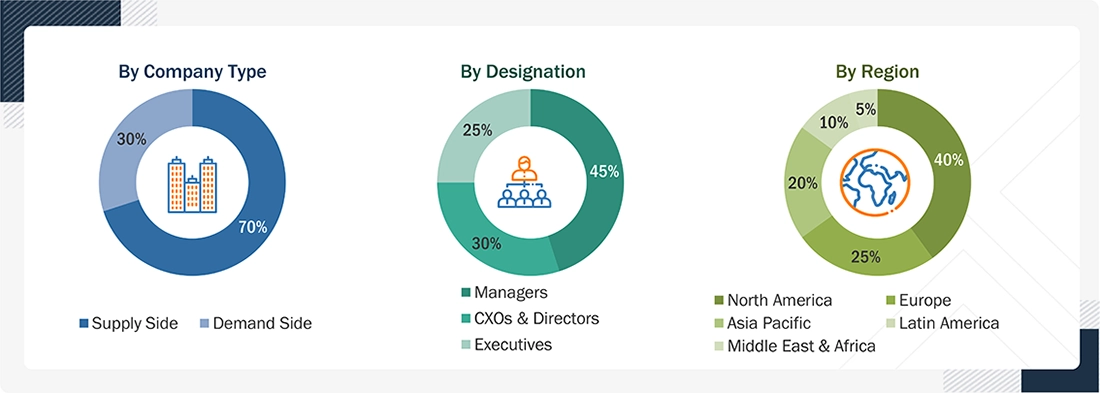
Following an initial assessment of the biosimilars market landscape through secondary research, comprehensive primary research was undertaken. This involved conducting in-depth interviews with market experts from the demand side, including stakeholders from pharmaceutical and biotechnology firms, CROs, CMOs, and academic and research institutions. Additionally, interviews were conducted with key supply-side participants, including C-suite and senior executives, product managers, and marketing and sales leaders from prominent manufacturers, distributors, and channel partners. The research covered six major geographical regions: North America, Europe, Asia Pacific, Latin America, the Middle East, and Africa. Approximately 70% of the primary interviews were conducted with supply-side participants, while 30% were conducted with demand-side experts. Data collection methods included structured questionnaires, email correspondence, online surveys, personal interviews, and telephonic discussions to comprehensively understand market dynamics.
The following is a breakdown of the primary respondents:
To know about the assumptions considered for the study, download the pdf brochure
Market Size Estimation
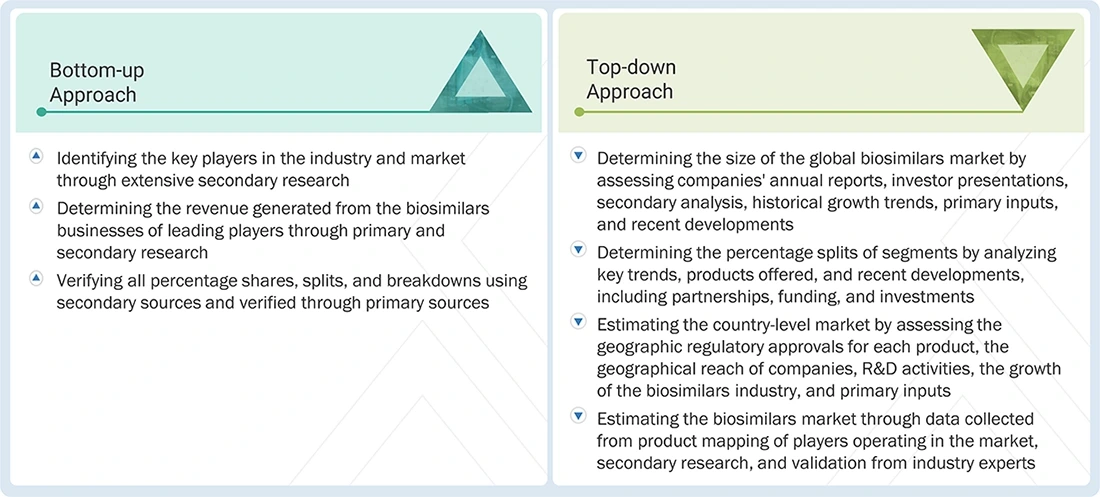
Both bottom-up and top-down approaches were used to estimate and validate the total size of the biosimilars market. These methods were also widely used to estimate the sizes of various subsegments in the market. The research methodology used to estimate the market size includes the following:
- A list of the major global players operating in the biosimilars market was generated.
- The revenues generated from their biosimilars product portfolios were determined through annual reports and secondary sources (including paid databases).
- The products were mapped according to the segments of the market. Percentage shares and splits were determined based on each segment's revenue contribution. This was verified using secondary sources and by industry experts.
- All assumptions, approaches, and individual shares/revenue estimates were validated through interviews with experts.
Biosimilars Market : Top-Down and Bottom-Up Approach
Data Triangulation
After arriving at the market size from the estimation process explained above, the total market was divided into several segments and subsegments. To complete the overall market engineering process and obtain exact statistics for all segments and subsegments, data triangulation and market breakdown procedures were employed, as applicable. The data were triangulated by studying various factors and trends from both the demand and supply sides.
Market Definition
Biosimilars are complex biological products that exhibit high similarity to their reference (originator) biologics, demonstrating comparable efficacy, safety, and quality. These therapeutic alternatives can be developed and brought to market once the patent protection of the original biologic elapses. Per the US FDA's definition, a biosimilar is a biological product highly similar to an already approved reference product, with no clinically significant differences in safety, purity, or potency, despite minor variations in clinically inactive components. The biosimilars market encompasses currently available products and those anticipated for launch within the forecasting horizon. This market includes a diverse array of therapeutic areas, notably oncology and inflammatory & autoimmune diseases, where biosimilars are increasingly utilized as treatment options, providing cost-effective alternatives to reference biologics while ensuring patient safety and therapeutic efficacy.
Key Stakeholders
- Manufacturers and Distributors of Biosimilar Products
- Pharmaceutical and Biotechnology Companies
- Contract Research Organizations (CROs)
- Contract Development & Manufacturing Organizations (CDMOs)
- Market Research and Consulting Firms
- R&D Centers
- Academic & Research Institutes
- Regulatory Agencies
- Health Insurers and Payers
- Venture Capitalists
- Government Organizations
- Industry Associations & Professional Societies
- Private & Government Funding Organizations
- Patient Advocacy Groups
Report Objectives
- To define, describe, and forecast the biosimilars market based on drug class and indication
- To provide detailed information regarding the major factors influencing market growth (such as drivers, restraints, opportunities, and challenges)
- To strategically analyze micromarkets concerning individual growth trends, prospects, and contributions to the overall market
- To analyze the opportunities in the market for stakeholders and provide details of the competitive landscape for market leaders
- To forecast the size of the market segments concerning six main regions: North America, Europe, Asia Pacific, Latin America, Middle East, and Africa
- To profile the key players in the market and comprehensively analyze their product portfolios, market positions, and core competencies
- To analyze competitive developments such as product approvals and launches, expansions, agreements, and collaborations in the market
- To benchmark players within the market using the company evaluation matrix framework, which analyzes market players based on various parameters within the broad categories of business and service strategy
Available customizations:
With the given market data, MarketsandMarkets offers customizations to meet your company's needs. The following customization options are available for this report:
Portfolio Assessment
- Product Matrix, which gives a detailed comparison of the product portfolios of the top three companies.
Company Information
- Detailed analysis and profiling of additional market players (up to three).
Geographical Analysis
-
A further breakdown of the Rest of Asia Pacific biosimilars market into countries
-
A further breakdown of the Rest of Europe biosimilars market into countries
-
A further breakdown of the Rest of Latin America biosimilars market into countries
Get the Full Biosimilars Market Report
Full forecast, segment splits, and company analysis for all Biosimilars Market.
- UK Biosimilars Market
- France Biosimilars Market
- Italy Biosimilars Market
- Spain Biosimilars Market
- Japan Biosimilars Market
- China Biosimilars Market
- India Biosimilars Market
- South Korea Biosimilars Market
- Australia Biosimilars Market
- Canada Biosimilars Market
- Mexico Biosimilars Market
- US Biosimilars Market
- Rest Of Europe Biosimilars Market
- Rest Of Asia Pacific Biosimilars Market
- Rest Of Latin America Biosimilars Market
- Germany Biosimilars Market
Need a Tailored Report?
Customize this report to your needs
Get 10% FREE Customization
Customize This Report
