
Brazil Color Masterbatch Market (2026-2031)

The Brazil Color Masterbatch Market was valued at $125.1 Million in 2026 and projected to reach to $167.9 Million by 2031, representing a compound annual growth rate of 6.06%. Brazil's color masterbatch market is positioned for sustained growth through 2031, driven by the country's thriving plastics processing ecosystem and expanding packaging sector.


| Market Size in | USD 26.32 MN |
| Market Forecast in | |
| CAGR | |
| Forecast Period | |
| Units Considered | Value (USD MN) |
Brazil Color Masterbatch Market Trends and Insights
- Valued at USD 125.1 million in 2026, Brazil's market is expected to expand to USD 167.9 million by 2031, reflecting a compound annual growth rate of 6.06%.
- This expansion is underpinned by Brazil's robust plastics processing industry, rising demand from packaging and consumer goods manufacturers, and increasing adoption of color masterbatch solutions across automotive and construction applications. The Brazilian market benefits from the country's established petrochemical infrastructure and growing emphasis on sustainable colorant solutions.
- Brazil's manufacturers are increasingly investing in advanced masterbatch formulations to meet both domestic demand and export requirements.
- Between 2026 and 2031, Brazil is anticipated to capture significant market share within the South American region, driven by industrial modernization and the expansion of end-use industries that rely on high-performance color additives..
Key Market Statistics
- CAGR (2026-2031) 6.06% CAGR
- Market Size, 2026 ~USD 125.1 Million
- Forecast, 2031 ~USD 167.9 Million
- Country Brazil
Brazil Color Masterbatch Market Overview
Market Valuation Growth :
Brazil's color masterbatch market is valued at USD 125.1 million in 2026 and is projected to reach USD 167.9 million by 2031, representing a robust 6.06% CAGR over the forecast period.
Plastics Processing Leadership :
Brazil's well-established plastics processing industry serves as a primary demand driver, with manufacturers increasingly adopting color masterbatch solutions for enhanced product differentiation and production efficiency.
Packaging Sector Expansion :
Rising demand from Brazil's packaging industry, fueled by e-commerce growth and consumer goods expansion, is accelerating color masterbatch adoption across flexible and rigid packaging applications.
Regional Market Position :
Brazil represents a key growth engine within South America's chemicals and materials sector, outpacing broader regional trends and attracting significant investment from global and local manufacturers.
Brazil Color Masterbatch Market Dynamics
- The 6.06% CAGR reflects increasing industrialization, rising consumer demand for packaged goods, and manufacturers' focus on product customization and quality enhancement.
- Key growth catalysts include e-commerce expansion, growing consumer goods production, and rising adoption of advanced coloring solutions across automotive, electrical, and consumer applications. The market outlook remains positive as Brazilian manufacturers invest in modernization and sustainability initiatives.
- Growing environmental awareness is spurring demand for eco-friendly masterbatch formulations, while technological advancements enable cost-effective production.
- Strategic partnerships between local processors and global suppliers are expected to strengthen market penetration, particularly in emerging segments such as biodegradable plastics and specialty applications..
Market Ecosystem
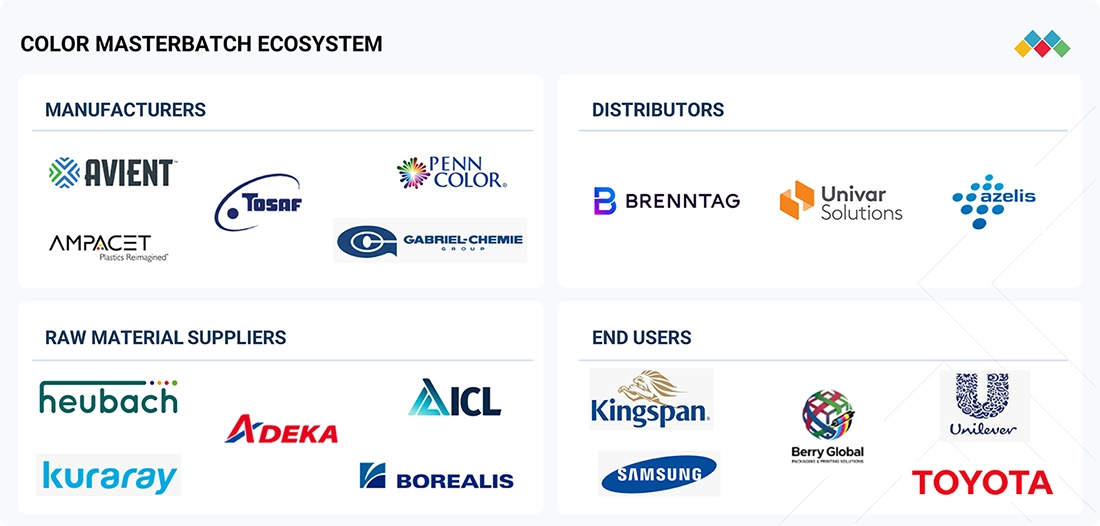
COLOR MASTERBATCH MARKET: COMMERCIAL USE CASES ACROSS INDUSTRIES
| COMPANY | USE CASE DESCRIPTION | BENEFITS |
|---|---|---|
 |
Use of color masterbatch in plastic packaging for personal care, home care, and food products to achieve consistent brand colors. | Enhanced color consistency, improved packaging aesthetics, reliable processing performance, and stronger brand differentiation. |
 |
Incorporation of color masterbatch into automotive plastic components such as dashboards, trims, and interior panels. | Consistent component coloration, improved UV and heat resistance, reduced finishing requirements, and enhanced visual quality. |
 |
Application of color masterbatch in flexible films, containers, closures, and other plastic packaging products for customized coloration. | Uniform color dispersion, efficient production, reduced pigment handling, and improved product appearance across high-volume manufacturing. |
 |
Use of color masterbatch in polymer-based insulation boards, roofing products, and building components to provide durable coloration. | Improved color uniformity, enhanced weather resistance, simplified processing, and longer-lasting visual performance in building applications. |
Logos and trademarks shown above are the property of their respective owners. Their use here is for informational and illustrative purposes only.
Related Ecosystem
Speciality Chemicals
- Corrosion Inhibitors
- Polyetheretherketone (PEEK)
- Acrylonitrile Butadiene Styrene (ABS)
- Epoxy Resin
- Polycarbonate
- Basf se
- DOW CHEMICAL COMPANY
- Evonik industries ag
- Clariant ag.
- Solvay sa
Key Takeaways
- Brazil's color masterbatch market is valued at USD 125.1 million in 2026 and is projected to reach USD 167.9 million by 2031.
- Brazil's market is growing at a CAGR of 6.06%, driven by strong demand from packaging, automotive, and construction sectors.
- Brazil's established petrochemical infrastructure and plastics processing capabilities position it as a regional leader in South America.
- Brazil's manufacturers are increasingly adopting sustainable and high-performance masterbatch formulations to meet evolving market demands.
Color Masterbatch Market Report Scope
| Report Metric | Details |
|---|---|
| Base Year | 2026 |
| Fastest Growing Segment | SPECIALTY COLOR (Type) |
| Forecast Period | 2026-2031 |
| Growth Rate | CAGR of 6.24% from 2026 to 2031 |
| Largest Segment | STANDARD COLOR (Type) |
| Market Size Base Year (Billions) | ~USD 4.94 (2026) |
| Revenue Forecast (Billions) | ~USD 6.68 (2031) |
| Segments Covered | Type, Polymer Type, Application |
Brazil Color Masterbatch Market Report Segmentation
3 segment dimensions are covered across the global market.
By Type
- Specialty Color
- Standard Color
- Tailor-Made Colors
By Polymer Type
- Hdpe
- Ldpe & Lldpe
- Other Polymer Types
- Pp
- Ps
By Application
- Agriculture
- Automotive
- Building & Construction
- Consumer Goods
- Other Applications
- Packaging
Target Audience
- Plastics Manufacturers & Processors : Brazilian plastic processors need detailed market insights to optimize color masterbatch sourcing, evaluate supplier partnerships, and align production strategies with growing demand from packaging and consumer goods sectors.
- Masterbatch Producers & Suppliers : Global and regional masterbatch manufacturers require Brazil-specific market data to assess expansion opportunities, competitive positioning, and customer acquisition strategies in this high-growth South American market.
- Packaging & Consumer Goods Companies : Brazilian packaging and consumer goods manufacturers need market intelligence to understand color masterbatch availability, pricing trends, and innovation opportunities to enhance product differentiation and competitiveness.
- Investment & Private Equity Firms : Investors evaluating opportunities in Brazil's chemicals and materials sector require validated market data, growth forecasts, and competitive analysis to support due diligence and portfolio decision-making.
- Chemical Distributors & Traders : Distributors and trading companies operating in Brazil need accurate market sizing and demand forecasts to optimize inventory management, identify growth segments, and develop effective sales and marketing strategies.
Reasons to Buy this Report
- Market Size & Growth Validation : Obtain precise market valuation data for Brazil (USD 125.1M in 2026, USD 167.9M in 2031) to validate investment decisions, competitive positioning, and revenue forecasting for operations in South America's largest economy.
- Sector-Specific Demand Insights : Understand Brazil-specific demand drivers from packaging, consumer goods, and plastics processing industries to identify high-potential customer segments and tailor product offerings for maximum market penetration.
- Competitive Landscape Intelligence : Analyze Brazil's competitive dynamics, local manufacturer strategies, and market consolidation trends to benchmark performance, identify partnership opportunities, and develop differentiated go-to-market strategies.
- Regional Growth Opportunity Assessment : Evaluate Brazil's position as South America's growth leader in color masterbatch to prioritize resource allocation, expansion planning, and investment decisions across the broader Latin American region.
- Trend & Forecast Accuracy : Access Brazil-specific CAGR data (6.06%) and multi-year forecasts to support strategic planning, supply chain optimization, and long-term business development initiatives with country-level precision.
Frequently asked questions
What is the current size of Brazil's color masterbatch market?
Brazil's color masterbatch market is valued at USD 125.1 million in 2026 and is expected to grow to USD 167.9 million by 2031.
What is the growth rate of Brazil's color masterbatch market?
Brazil's color masterbatch market is growing at a compound annual growth rate (CAGR) of 6.06% from 2026 to 2031.
Which industries drive demand for color masterbatch in Brazil?
Brazil's primary demand drivers include packaging, consumer goods, automotive, and construction industries that rely on color additives for plastic products.
Why is Brazil significant in the South American color masterbatch market?
Brazil's significance stems from its established petrochemical infrastructure, large plastics processing sector, and regional manufacturing capabilities that support both domestic and export markets.
What trends are shaping Brazil's color masterbatch market?
Brazil's market is shaped by increasing adoption of sustainable formulations, industrial modernization, and growing demand for high-performance colorant solutions across multiple end-use sectors.
RESEARCH METHODOLOGY
The study involved four major activities in estimating the market size for color masterbatch. Exhaustive secondary research was done to collect information on the market, the peer market, and the parent market. The next step was to validate these findings, assumptions, and sizing with industry experts across the value chain through primary research. Both top-down and bottom-up approaches were employed to estimate the complete market size. After that, the market breakdown and data triangulation procedures were used to estimate the market size of the segments and subsegments.
Secondary Research
Secondary sources used in this study included annual reports, press releases, and investor presentations of companies; white papers; certified publications; articles from recognized authors; and gold-standard and silver-standard websites, such as Factiva, ICIS, Bloomberg, and others. The findings of this study were verified through primary research, which involved conducting extensive interviews with key officials, including CEOs, VPs, directors, and other executives. The breakdown of profiles of the primary interviewees is illustrated in the figure below:
Primary Research
The color masterbatch market comprises several stakeholders, such as raw material suppliers, end-product manufacturers, and regulatory organizations in the supply chain. Various primary sources from both the supply and demand sides of the market were interviewed to obtain qualitative and quantitative information.
BREAKDOWN OF PRIMARY PARTICIPANTS
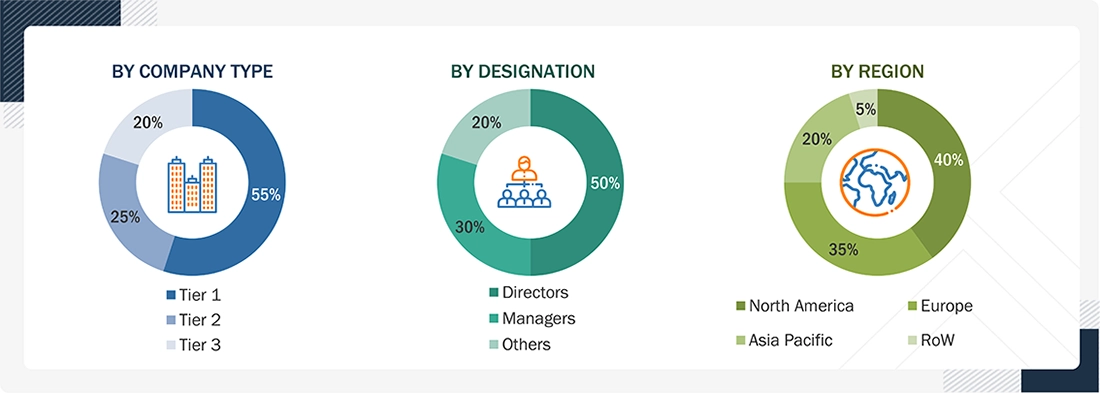
Notes: Tier 1, Tier 2, and Tier 3 companies are classified based on their market revenue in 2024/2025 available in the public domain, product portfolios, and geographical presence.
Other designations include consultants and sales, marketing, and procurement managers.
|
COMPANY NAME |
DESIGNATION |
|
Avient Corporation |
Senior Manager |
|
Ampacet Corporation |
Innovation Manager |
|
Tosaf Group |
Production Supervisor |
|
Penn Color, Inc. |
Sales Manager |
To know about the assumptions considered for the study, download the pdf brochure
Market Size Estimation
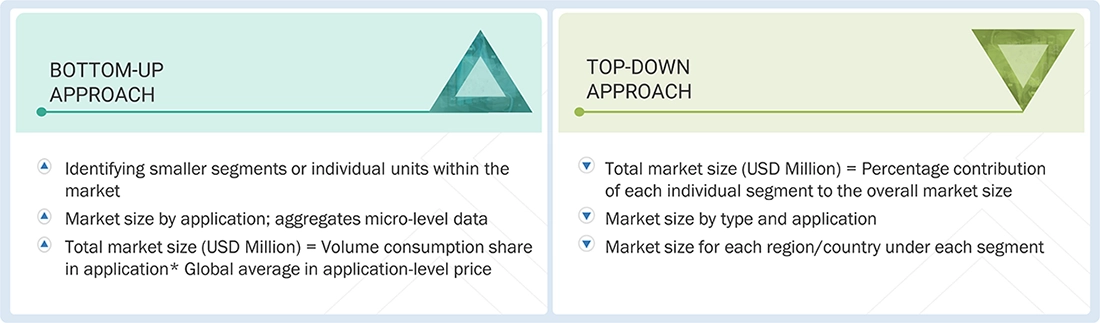
Both top-down and bottom-up approaches were used to estimate and validate the total size of the color masterbatch market. These methods were also used extensively to estimate the size of various subsegments in the market. The research methodology used to estimate the market size includes the following:
- The key players in the industry have been identified through extensive secondary research.
- The supply chain of the industry has been determined through primary and secondary research.
- All percentage shares, splits, and breakdowns have been determined using secondary sources and verified through primary sources.
- All possible parameters that affect the markets covered in this research study have been accounted for, viewed in extensive detail, verified through primary research, and analyzed to obtain the final quantitative and qualitative data.
Color Masterbatch Market : Top-Down and Bottom-Up Approach
Data Triangulation
After determining the overall market size using the market size estimation processes explained above, the market was divided into several segments and subsegments. To complete the overall market engineering process and determine the exact statistics for each market segment and subsegment, data triangulation and market breakdown procedures were employed, as applicable. The data was triangulated by studying various factors and trends from both the demand and supply sides in the color masterbatch industry.
Market Definition
According to the Society of Plastics Engineers (SPE), color masterbatches are concentrated mixtures of pigments or dyes uniformly dispersed in a polymer carrier resin and supplied in pellet form for coloring plastic materials during processing. They are designed to provide consistent color distribution, improved processing efficiency, and accurate dosing while maintaining the physical properties of the base polymer. Color masterbatches are widely used in packaging, automotive, consumer goods, construction, electrical, and household applications to achieve uniform appearance and product performance.
Key Stakeholders
- Color masterbatch manufacturers
- Color masterbatch distributors
- Raw material suppliers
- Government and research organizations
- Investment banks and private equity firms
Report Objectives
- To analyze and forecast the size of the global color masterbatch market in terms of value and volume
- To provide detailed information about the major drivers, restraints, challenges, and opportunities influencing the market growth
- To define, describe, and segment the market based on type, polymer type, application, and region
- To forecast the size of the market segments based on regions such as Asia Pacific, North America, Europe, the Middle East & Africa, and South America
- To strategically analyze micromarkets with respect to individual growth trends, prospects, and their contribution to the overall market
- To strategically analyze the segmented markets with respect to individual growth trends, prospects, and contributions to the overall market
- To identify and analyze opportunities for stakeholders in the market
- To analyze competitive developments such as expansions, partnerships, joint ventures, mergers & acquisitions, agreements, and product launches in the market
- To strategically profile the key companies and comprehensively analyze their core competencies
Available customizations:
Along with the given market data, MarketsandMarkets offers customizations according to the company’s specific needs. The following customization options are available for the report:
Regional Analysis
- Further breakdown of a region with respect to a particular country or additional application
Company Information
- Detailed analysis and profiles of additional market players (up to five)
Get the Full Color Masterbatch Market Report
Full forecast, segment splits, and company analysis for all Color Masterbatch Market.
- China Color Masterbatch Market
- India Color Masterbatch Market
- Japan Color Masterbatch Market
- South Korea Color Masterbatch Market
- Canada Color Masterbatch Market
- Mexico Color Masterbatch Market
- US Color Masterbatch Market
- Germany Color Masterbatch Market
- France Color Masterbatch Market
- UK Color Masterbatch Market
- Italy Color Masterbatch Market
- Spain Color Masterbatch Market
- Saudi Arabia Color Masterbatch Market
- Iran Color Masterbatch Market
- Argentina Color Masterbatch Market
- Rest Of Europe Color Masterbatch Market
- Rest Of Asia Pacific Color Masterbatch Market
- Rest Of South America Color Masterbatch Market
Need a Tailored Report?
Customize this report to your needs
Get 10% FREE Customization
Customize This Report
