
UK Composite Decking & Railing Market (2026-2031)

The UK Composite Decking & Railing Market was valued at $256.6 Million in 2026 and projected to reach to $371.8 Million by 2031, representing a compound annual growth rate of 7.7%. The UK composite decking and railing market is positioned for sustained expansion through 2031, supported by demographic shifts toward outdoor living investments and increasing availability of premium composite products.


| Market Size in | USD 26.32 MN |
| Market Forecast in | |
| CAGR | |
| Forecast Period | |
| Units Considered | Value (USD MN) |
UK Composite Decking & Railing Market Trends and Insights
- The UK market is driven by increasing consumer preference for low-maintenance, durable outdoor solutions and growing residential renovation activity across the country.
- The UK's composite decking sector benefits from rising environmental awareness and the shift toward sustainable building materials that offer longevity and aesthetic appeal. The UK market demonstrates strong momentum as homeowners and commercial developers prioritize composite materials over traditional wood alternatives.
- Between 2026 and 2031, the UK is expected to maintain a steady 7.7% compound annual growth rate, reflecting sustained demand for premium outdoor living spaces.
- The UK's mature construction market and emphasis on property enhancement continue to support market expansion, with composite decking and railing systems becoming increasingly mainstream in both residential and commercial applications..
Key Market Statistics
- CAGR (2026-2031) 7.7% CAGR
- Market Size, 2026 ~USD 256.6 Million
- Forecast, 2031 ~USD 371.8 Million
- Country UK
UK Composite Decking & Railing Market Overview
Market Valuation Growth :
The UK composite decking and railing market is valued at £256.6 million in 2026, with strong projected growth to £371.8 million by 2031, representing a robust 7.7% CAGR over the forecast period.
Low-Maintenance Demand Driver :
UK consumers increasingly prefer composite decking solutions due to their durability and minimal maintenance requirements compared to traditional wood, aligning with busy lifestyles and long-term cost savings.
Residential Renovation Boom :
Growing residential renovation and garden improvement activity across the UK is significantly boosting composite decking adoption, as homeowners invest in outdoor living spaces and property enhancements.
Environmental Consciousness :
Rising environmental awareness among UK consumers drives demand for sustainable composite materials made from recycled content, supporting eco-friendly outdoor construction practices.
UK Composite Decking & Railing Market Dynamics
- Consumer education regarding product longevity and environmental benefits continues to strengthen market penetration across residential segments. Key growth catalysts include ongoing garden renovation trends, rising disposable incomes in suburban areas, and regulatory support for sustainable building materials.
- The market will likely see increased competition from both established manufacturers and new entrants, driving innovation in design aesthetics and performance characteristics tailored to UK climate conditions..
Market Ecosystem
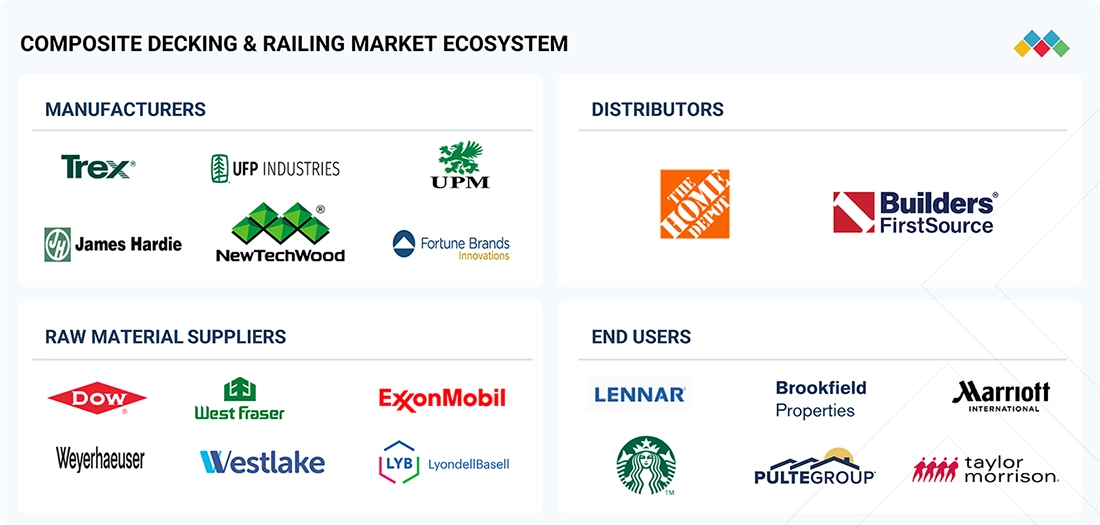
COMPOSITE DECKING & RAILING MARKET: COMMERCIAL USE CASES ACROSS INDUSTRIES
| COMPANY | USE CASE DESCRIPTION | BENEFITS |
|---|---|---|
 |
Composite decking and railing in residential communities and outdoor living spaces | Low maintenance, long service life, enhanced aesthetics |
 |
Composite decking around pools, terraces, and outdoor lounges | Slip resistance, low maintenance, long-lasting appearance |
 |
Composite decking in multifamily residential and mixed-use developments | Sustainable materials, reduced maintenance, aesthetic appeal |
Logos and trademarks shown above are the property of their respective owners. Their use here is for informational and illustrative purposes only.
Related Ecosystem
Fibers And Composites
- Polyetheretherketone (PEEK)
- Polyphenylene Sulfide (PPS)
- Epoxy Resin
- Polycarbonate
- Polyester Resin
- Toray Industries, Inc.
- Teijin Limited
- Hexcel Corporation
- Sgl carbon se
- Solvay sa
Key Takeaways
- The UK composite decking and railing market is valued at £256.6 million in 2026 and will reach £371.8 million by 2031.
- The UK market is growing at a 7.7% CAGR, driven by demand for low-maintenance and sustainable outdoor materials.
- The UK's residential renovation sector and commercial development activity are primary growth catalysts for composite decking adoption.
- The UK market reflects strong consumer preference for durable, eco-friendly alternatives to traditional wood decking solutions.
Composite Decking & Railing Market Report Scope
| Report Metric | Details |
|---|---|
| Base Year | 2026 |
| Fastest Growing Segment | POLYPROPYLENE (Resin Type) |
| Forecast Period | 2026-2031 |
| Growth Rate | CAGR of 8.1% from 2026 to 2031 |
| Largest Segment | RESIDENTIAL (Application) |
| Market Size Base Year (Billions) | ~USD 5.55 (2026) |
| Revenue Forecast (Billions) | ~USD 8.19 (2031) |
| Segments Covered | Type, Resin Type, Application |
UK Composite Decking & Railing Market Report Segmentation
3 segment dimensions are covered across the global market.
By Type
- Capped
- Uncapped
By Resin Type
- Other Resin Types
- Polyethylene
- Polypropylene
- Polyvinyl Chloride
By Application
- Non-Residential
- Residential
Target Audience
- Composite Decking Manufacturers : Manufacturers need UK-specific market data to assess production capacity requirements, distribution strategies, and product development priorities aligned with regional consumer preferences and growth forecasts.
- Retailers & Distributors : UK retailers and distributors require market insights to optimize inventory management, identify high-growth segments, and develop targeted sales strategies for composite decking and railing products.
- Construction & Landscaping Firms : Contractors and landscapers need market intelligence to understand demand trends, pricing dynamics, and material sourcing opportunities to enhance service offerings and project profitability.
- Real Estate & Property Developers : Developers require UK market data to inform property enhancement decisions, outdoor space specifications, and material selections that appeal to homebuyers and maximize property value.
- Investment & Private Equity Firms : Investors need comprehensive UK market analysis to evaluate acquisition targets, assess growth potential, and make informed funding decisions in the composite decking and railing sector.
Reasons to Buy this Report
- Market Size & Growth Validation : Obtain precise UK market valuation data (£256.6M in 2026, £371.8M in 2031) to validate business expansion strategies and investment decisions with credible, research-backed figures.
- Competitive Landscape Intelligence : Understand UK-specific market dynamics, consumer preferences, and competitive positioning to identify gaps and opportunities for product differentiation and market share capture.
- Regional Demand Drivers : Access detailed insights into UK-specific growth catalysts including residential renovation trends, environmental consciousness, and consumer behavior patterns driving composite decking adoption.
- Strategic Planning & Forecasting : Leverage 5-year forecast data and 7.7% CAGR projections to develop accurate business plans, resource allocation strategies, and long-term market entry or expansion roadmaps for the UK.
- Investment & Risk Assessment : Evaluate market viability and growth potential in the UK composite decking sector to support funding decisions, partnership evaluations, and risk mitigation strategies.
Frequently asked questions
What is the current size of the UK composite decking and railing market?
The UK composite decking and railing market is valued at £256.6 million in 2026 and is projected to grow to £371.8 million by 2031.
What is the growth rate of the UK composite decking market?
The UK market is expected to grow at a compound annual growth rate (CAGR) of 7.7% from 2026 to 2031.
What factors are driving growth in the UK composite decking market?
Key drivers include increasing demand for low-maintenance outdoor solutions, residential renovation activity, environmental sustainability concerns, and the shift away from traditional wood materials in the UK.
Who are the primary consumers of composite decking in the UK?
The UK market serves both residential homeowners seeking durable outdoor living spaces and commercial developers requiring long-lasting railing and decking systems.
How does the UK composite decking market compare to other regions?
The UK market's 7.7% CAGR reflects strong regional demand, supported by the country's mature construction sector and emphasis on property enhancement and sustainability.
RESEARCH METHODOLOGY
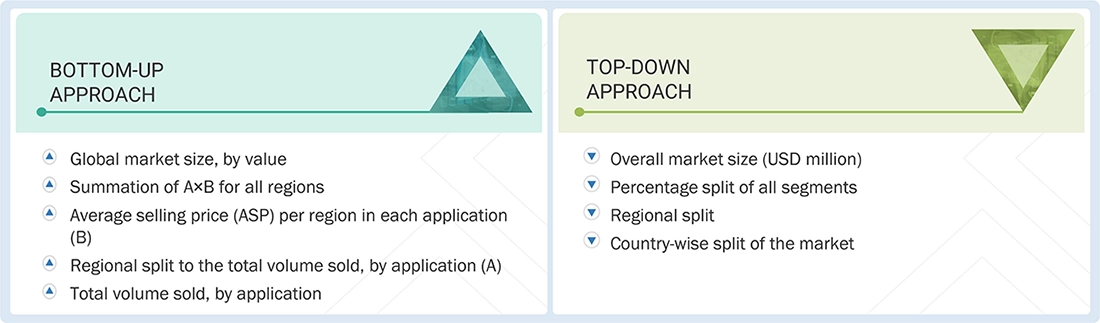
The study involved two major activities in estimating the current market size for the composite decking & railing market. Exhaustive secondary research was done to collect information on the market, peer market, and parent market. The next step was to validate these findings, assumptions, and sizing with industry experts across the value chain through primary research. Both top-down and bottom-up approaches were employed to estimate the complete market size. Afterward, data triangulation was used to estimate the market size for segments and subsegments.
Secondary Research
Secondary sources referred to for this research study include financial statements of companies offering composite decking & railing and information from various trade, business, and professional associations. Secondary research has been used to obtain critical information on the industry’s value chain, the total pool of key players, market classification, and segmentation by industry trends, down to the bottom-most level and regional markets. Secondary data were collected and analyzed to determine the overall size of the composite decking & railing market, which was validated by primary respondents.
Primary Research
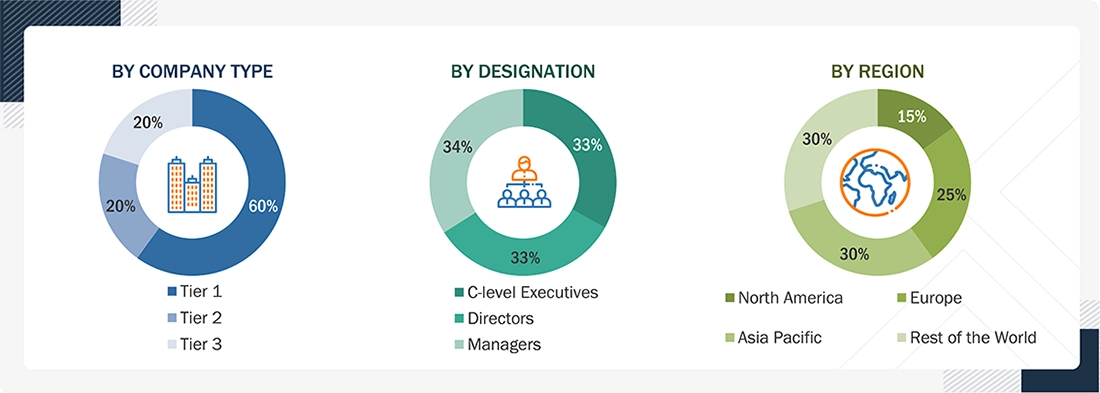
Extensive primary research was conducted after obtaining information regarding the composite decking & railing market scenario through secondary research. Several primary interviews were conducted with market experts from both the demand and supply sides across major countries of North America, Europe, Asia Pacific, and the Rest of the World. Primary data was collected through questionnaires, emails, and telephonic interviews. The primary sources from the supply side included various industry experts, such as Chief X Officers (CXOs), Vice Presidents (VPs), Directors from business development, marketing, product development/innovation teams, and related key executives from composite decking & railing industry vendors; system integrators; component providers; distributors; and key opinion leaders.
Primary interviews were conducted to gather insights, including market statistics, revenue data from products and services, market breakdowns, market size estimates, market forecasting, and data triangulation. Primary research also helped in understanding the various trends related to type, resin type, application, and region.
Stakeholders from the demand side, such as CIOs, CTOs, CSOs, and installation teams of the customers/end users who are using composite decking & railing, were interviewed to understand the buyers’ perspective on the suppliers, products, component providers, and their current usage of composite decking & railing and future outlook of their business, which will affect the overall market.
To know about the assumptions considered for the study, download the pdf brochure
Market Size Estimation
The research methodology used to estimate the size of the composite decking & railing market includes the following details. Market sizing was conducted from the demand side. The market was upsized to accommodate procurements and modernizations of composite decking & railing across different applications at the regional level. Such procurements provide information on the demand aspects of the composite decking & railing industry for each application. For each application, all possible segments of the composite decking & railing market were integrated and mapped.
Data Triangulation
After arriving at the overall size from the market size estimation process explained above, the total market was split into several segments and subsegments. The data triangulation and market breakdown procedures explained below were implemented, where applicable, to complete the overall market engineering process and derive the exact statistics for various market segments and subsegments. The data was triangulated by examining various factors and trends on both the demand and supply sides. In addition, the market size was validated using both top-down and bottom-up approaches.
Market Definition
A deck is usually a flat surface that supports the weight of a structure, just like a floor. They are constructed outdoors above the ground and are connected to a building. In the building industry, there is a growing demand for high-performance, low-maintenance, and low-cost building products. To meet this demand, composite decking & railing are being used as they suit the requirements for building & construction materials. Due to the steady and tough nature of composite decking, a deck made of it is durable and capable of bearing enough weight. Composite decking is eco-friendly and maintenance-free. Due to its inherent characteristics, rainwater is drained out through the gaps between the flooring planks, thus keeping the surface dry even during rain.
Key Stakeholders
- Composite decking & railing manufacturers
- Raw material manufacturers
- Government and research organizations
- R&D institutions
- National and local government organizations
- Institutional investors
- Composite decking & railing suppliers
- End users
Report Objectives
- To define, describe, and forecast the composite decking & railing market size in terms of volume and value
- To provide detailed information regarding the key factors, such as drivers, restraints, opportunities, and challenges influencing market growth
- To analyze and project the global composite decking & railing market by type, resin type, application, and region
- To forecast the market size concerning main regions (along with country-level data), namely, North America, Europe, Asia Pacific, and Rest of the World, and analyze the significant region-specific trends
- To strategically analyze micromarkets with respect to individual growth trends, prospects, and contributions of the submarkets to the overall market
- To analyze the market opportunities and the competitive landscape for stakeholders and market leaders
- To assess recent market developments and competitive strategies, such as agreements, contracts, acquisitions, and product developments/product launches, to draw the competitive landscape
- To strategically profile the key market players and comprehensively analyze their core competencies.
Available customizations:
MarketsandMarkets offers the following customizations for this market report:
- Additional country-level analysis of the composite decking & railing market
Product Analysis
- Product matrix, which provides a detailed comparison of the product portfolio of each company’s market
Get the Full Composite Decking & Railing Market Report
Full forecast, segment splits, and company analysis for all Composite Decking & Railing Market.
- US Composite Decking & Railing Market
- Canada Composite Decking & Railing Market
- Mexico Composite Decking & Railing Market
- Germany Composite Decking & Railing Market
- France Composite Decking & Railing Market
- China Composite Decking & Railing Market
- Japan Composite Decking & Railing Market
- Australia Composite Decking & Railing Market
- Brazil Composite Decking & Railing Market
- Rest Of Europe Composite Decking & Railing Market
- Rest Of Asia Pacific Composite Decking & Railing Market
- Middle East Composite Decking & Railing Market
Need a Tailored Report?
Customize this report to your needs
Get 10% FREE Customization
Customize This Report
