
UK Digital Risk Protection Market (2023-2028)

The UK Digital Risk Protection Market was valued at $4943.6 Million in 2023 and projected to reach to $10847.9 Million by 2028, representing a compound annual growth rate of 17.0%. The UK Digital Risk Protection Market is poised for sustained expansion as organizations prioritize cybersecurity investments amid evolving threat landscapes and regulatory mandates.


| Market Size in | USD 26.32 MN |
| Market Forecast in | |
| CAGR | |
| Forecast Period | |
| Units Considered | Value (USD MN) |
UK Digital Risk Protection Market Trends and Insights
- The UK market reflects strong demand for advanced threat detection, brand protection, and vulnerability management solutions as organizations across the country face escalating cyber threats and regulatory pressures.
- UK enterprises are increasingly investing in digital risk protection platforms to safeguard their digital assets, customer data, and brand reputation in an increasingly complex threat landscape. Driven by heightened regulatory compliance requirements, including GDPR and sector-specific mandates, the UK market is experiencing accelerated adoption of integrated risk protection solutions.
- The UK's mature financial services, healthcare, and technology sectors are leading investment in these capabilities, recognizing the critical importance of proactive threat intelligence and incident response.
- Between 2023 and 2028, the UK market will benefit from growing awareness of emerging threats such as supply chain attacks, API vulnerabilities, and dark web exposure, positioning digital risk protection as a strategic priority for UK organizations..
Key Market Statistics
- CAGR (2023-2028) 17.0% CAGR
- Market Size, 2023 ~USD 4943.6 Million
- Forecast, 2028 ~USD 10847.9 Million
- Country UK
UK Digital Risk Protection Market Overview
Market Valuation Growth :
The UK Digital Risk Protection Market reached $4,943.6 million in 2023 and is forecast to grow to $10,847.9 million by 2028, demonstrating a robust 17% CAGR driven by increasing cyber threats and regulatory compliance demands.
Regulatory Compliance Pressure :
UK organizations face stringent data protection regulations including GDPR, NIS Regulations, and sector-specific requirements, driving substantial investment in digital risk protection solutions to maintain compliance and avoid penalties.
Brand Protection Demand :
UK enterprises increasingly prioritize brand protection and threat intelligence capabilities to combat counterfeiting, phishing, and reputational risks in digital channels, particularly across e-commerce and financial services sectors.
Advanced Threat Detection Adoption :
UK organizations are accelerating adoption of AI-powered threat detection and vulnerability management solutions to address sophisticated cyber attacks, ransomware campaigns, and zero-day exploits targeting critical infrastructure and sensitive data.
UK Digital Risk Protection Market Dynamics
- Financial services, healthcare, and critical infrastructure sectors are leading adoption of comprehensive risk protection platforms.
- The market will benefit from increased government initiatives promoting cyber resilience and mandatory breach reporting requirements.
- Enterprise demand for integrated solutions combining threat detection, brand protection, and vulnerability management will accelerate market growth through 2028, with particular momentum in mid-market and large enterprise segments..
Market Ecosystem
Related Ecosystem
Application Security
- Cloud Security
- Security Analytics
- Network Testing
- Security Testing
- Web Application Security
- REDINGTON
- International Business Machines Corporation
- MICROSOFT CORPORATION
- Cisco Systems, Inc.
- PALO ALTO NETWORKS, INC
Cyber Security
- Cloud Security
- Biometric Systems
- Data Loss Prevention (DLP)
- Multi-Factor Authentication
- Security Analytics
- REDINGTON
- International Business Machines Corporation
- Cisco Systems, Inc.
- MITSUI BUSSAN SECURE DIRECTIONS INC
- MICROSOFT CORPORATION
Endpoint Security
- Cloud Security
- Security Analytics
- Multi-Factor Authentication
- Biometric Security and Authentication System
- Critical Communication Network
- REDINGTON
- International Business Machines Corporation
- MICROSOFT CORPORATION
- Cisco Systems, Inc.
- PALO ALTO NETWORKS, INC
Key Takeaways
- The UK Digital Risk Protection Market is projected to more than double from $4,943.6M in 2023 to $10,847.9M by 2028, driven by regulatory compliance and escalating cyber threats.
- The UK market's 17.0% CAGR reflects strong organizational investment in threat intelligence, brand protection, and vulnerability management across financial services, healthcare, and technology sectors.
- GDPR compliance and sector-specific regulations are primary growth catalysts, compelling UK enterprises to adopt comprehensive digital risk protection solutions.
- Emerging threats including supply chain attacks, API vulnerabilities, and dark web exposure are positioning digital risk protection as a strategic priority for UK organizations through 2028.
Digital Risk Protection Market Report Scope
| Report Metric | Details |
|---|---|
| Base Year | 2023 |
| Fastest Growing Segment | DARK WEB INTELLIGENCE (Solution Type) |
| Forecast Period | 2023-2028 |
| Growth Rate | CAGR of 19.6% from 2023 to 2028 |
| Largest Segment | LARGE ENTERPRISES (Organization Size) |
| Market Size Base Year (Billions) | ~USD 64.48 (2023) |
| Revenue Forecast (Billions) | ~USD 157.8 (2028) |
| Segments Covered | Offering, Services, Solution Type, Security Type, Organization Size, Deployment Mode, Vertical, Subtype, Technology, Application |
UK Digital Risk Protection Market Report Segmentation
10 segment dimensions are covered across the global market.
By Offering
- Services
- Solutions
By Services
- Managed Security Services
- Professional Services
By Solution Type
- App Protection
- Automated Threat Mitigation
- Brand Protection
- Dark Web Intelligence
- Incident Response
- Other Solution Types
- Phishing Protection
- Supply Chain Security
By Security Type
- Application Security
- Cloud Security
- Endpoint & IoT Security
- Network Security
By Organization Size
- Large Enterprises
- Smes
By Deployment Mode
- Cloud
- On-Premises
By Vertical
- Aerospace & Defense
- Bfsi
- Government
- Healthcare
- Healthcare & Life Science
- It & Ites
- Manufacturing
- Media & Entertainment
- Other Verticals
- Retail & E-Commerce
By Subtype
- Email-Based Phishing
- Non-Email-Based Phishing
By Technology
- Covert
- Digital
- Forensic
- Overt
By Application
- Apparels
- Automobiles
- Cosmetics
- Electronics
- Food & Beverages
- Luxury Goods
- Pharmaceuticals
UK: DIGITAL RISK PROTECTION MARKET, BY VERTICAL, 2023–2028
| Segment | 2023 | 2024 | 2025 | 2026 | 2027 | 2028 | CAGR (%) |
|---|---|---|---|---|---|---|---|
| BFSI | 992.2 | 1127.3 | 1271.4 | 1465.8 | 1710.6 | 1966.8 | 14.7 |
| GOVERNMENT | 806.6 | 943.2 | 1127.6 | 1337.9 | 1589.1 | 1937.5 | 19.2 |
| HEALTHCARE | 541.2 | 619.3 | 706.1 | 821.8 | 963.1 | 1120.8 | 15.7 |
| IT & ITES | 1021.7 | 1189.9 | 1421 | 1678.8 | 1997.3 | 2433 | 18.9 |
| MEDIA & ENTERTAINMENT | 495.6 | 572.7 | 670.4 | 787.1 | 930.5 | 1112.3 | 17.5 |
| OTHER VERTICALS | 317.8 | 368.9 | 437.1 | 518.2 | 618.7 | 748 | 18.7 |
| RETAIL & E-COMMERCE | 768.6 | 875.5 | 985.6 | 1142.1 | 1332.7 | 1529.6 | 14.8 |
| TOTAL | 4943.6 | 5696.8 | 6619.2 | 7751.6 | 9142 | 10847.9 | 17 |
Target Audience
- UK Enterprise Security Leaders : CISOs and security directors managing UK operations need market intelligence to justify cybersecurity budgets, evaluate vendor solutions, and align digital risk protection strategies with organizational priorities and regulatory obligations.
- UK Financial Services Institutions : Banks, insurers, and fintech companies require comprehensive digital risk protection to safeguard customer data, maintain regulatory compliance, and protect against sophisticated financial fraud and cyber attacks targeting the sector.
- UK Healthcare Organizations : NHS trusts and private healthcare providers need threat detection and vulnerability management solutions to protect patient data, ensure business continuity, and comply with healthcare-specific security and privacy regulations.
- UK Technology & Software Vendors : Cybersecurity solution providers and system integrators need market data to identify growth opportunities, benchmark competitive positioning, and develop UK-focused product strategies and sales approaches.
- UK Government & Critical Infrastructure : Public sector organizations and critical infrastructure operators require digital risk protection insights to strengthen national cyber resilience, meet government security standards, and protect essential services from emerging threats.
Reasons to Buy this Report
- UK-Specific Market Sizing : Obtain precise valuation data for the UK market ($4.9B in 2023) with detailed forecasts through 2028, enabling accurate budget allocation and investment planning tailored to the British market landscape.
- Regulatory Compliance Insights : Understand how GDPR, NIS Regulations, and UK-specific compliance requirements drive digital risk protection adoption, helping organizations align solutions with mandatory regulatory frameworks and avoid costly penalties.
- Competitive Landscape Analysis : Identify leading UK and international vendors, their market positioning, and differentiation strategies within the UK market, enabling informed vendor selection and partnership decisions for your organization.
- Sector-Specific Opportunities : Discover growth opportunities across UK financial services, healthcare, critical infrastructure, and retail sectors with tailored insights into sector-specific threat vectors and protection requirements.
- Strategic Growth Planning : Leverage UK market trends, emerging technologies, and customer preferences to develop data-driven go-to-market strategies and identify high-potential customer segments for expansion and revenue growth.
Frequently asked questions
What is the current size of the UK Digital Risk Protection Market?
The UK Digital Risk Protection Market was valued at $4,943.6 million in 2023 and is expected to reach $10,847.9 million by 2028.
What is the projected growth rate for the UK market?
The UK Digital Risk Protection Market is expected to grow at a compound annual growth rate (CAGR) of 17.0% from 2023 to 2028.
Which sectors are driving UK Digital Risk Protection adoption?
Financial services, healthcare, and technology sectors are leading adoption in the UK, driven by regulatory compliance requirements and heightened security concerns.
What regulatory factors influence the UK market?
GDPR compliance, sector-specific mandates, and data protection regulations are primary drivers compelling UK organizations to invest in digital risk protection solutions.
What emerging threats are shaping the UK market?
Supply chain attacks, API vulnerabilities, dark web exposure, and advanced persistent threats are key emerging threats driving UK market growth through 2028.
RESEARCH METHODOLOGY
The research study involved four major activities in estimating the digital risk protection market size. Exhaustive secondary research has been done to collect important information about the market and peer markets. The next step has been to validate these findings, assumptions, and sizing with the help of primary research with industry experts across the value chain. Both top-down and bottom-up approaches have been used to estimate the market size. Post which the market breakdown and data triangulation have been adopted to estimate the market sizes of segments and sub-segments.
Secondary Research
In the secondary research process, various secondary sources were referred to identify and collect information for the study. These included journals, annual reports, press releases, investor presentations of companies and white papers, certified publications, and articles from recognized associations and government publishing sources. Secondary research was mainly used to obtain key information about industry insights, the market's monetary chain, the overall pool of key players, market classification, and segmentation according to industry trends to the bottom-most level, regional markets, and key developments from both market and technology-oriented perspectives.
Primary Research
In the primary research process, various primary sources from both the supply and demand sides were interviewed to obtain qualitative and quantitative information for the report. The primary sources from the supply side included industry experts, such as Chief Executive Officers (CEOs), Chief Technology Officers (CTOs), Chief Operating Officers (COOs), Vice Presidents (VPs), marketing directors, technology and innovation directors, and related key executives from various companies and organizations operating in the digital risk protection market. The primary sources from the demand side included consultants/specialists, Chief Information Officers (CIOs), and subject-matter experts.
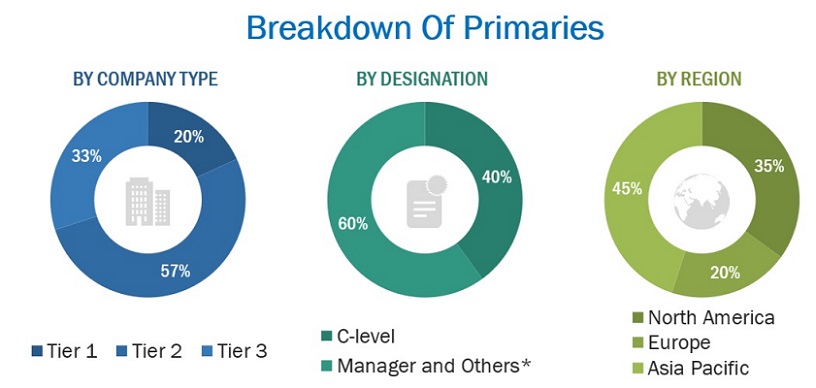
To know about the assumptions considered for the study, download the pdf brochure
Market Size Estimation
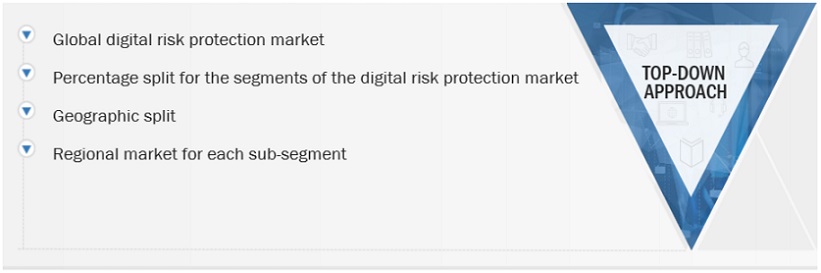
Multiple approaches were adopted to estimate and forecast the digital risk protection market. The first approach involved estimating the market size by summating companies' revenue generated through digital risk protection solutions.
Both top-down and bottom-up approaches were used to estimate and validate the total size of the market. The research methodology used to estimate the market size includes the following:
- Key players in the digital risk protection market have been identified through secondary research.
- Regarding value, the industry's supply chain and market size have been determined through primary and secondary research processes.
- All percentage shares, splits, and breakups have been determined using secondary sources and verified through primary sources.
Market Size Estimation Methodology-Bottom-up approach
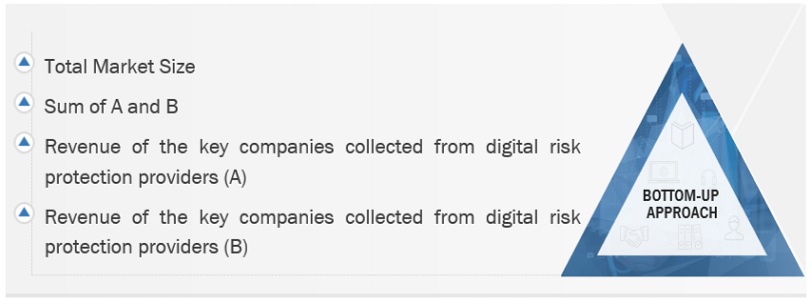
To know about the assumptions considered for the study, Request for Free Sample Report
Market Size Estimation Methodology-top-down approach
Data Triangulation
The data triangulation procedures were used to complete the overall market engineering process and arrive at the exact statistics for all segments and subsegments. The data was triangulated by studying various factors and trends from the demand and supply sides. Along with data triangulation and market breakdown, the market size was validated by the top-down and bottom-up approaches.
Market Definition
The digital risk protection market is experiencing exponential growth, catering to businesses seeking robust defenses against cyber threats. This sector offers multifaceted solutions encompassing the dark web and social media surveillance to preemptively detect references to a company or its brand, thereby averting potential reputational damage and security breaches. Additionally, these services extend to identifying and eliminating instances of unauthorized replication of a company's intellectual property, safeguarding its innovations and assets. Moreover, in the event of security incidents, these platforms facilitate swift and effective response strategies, mitigating the impact of breaches and enhancing overall cybersecurity posture. The market presents a comprehensive suite of tools and services essential for modern enterprises to combat the evolving landscape of cyber threats proactively.
Key Stakeholders
- Enterprise and Corporations
- Technology Partners
- Third-Party Vendors
- Digital Risk Protection providers
- Regulatory Bodies and Government agencies
- IT Security Teams
- Legal advisors
- Financial Institutes and Insurance Companies
- Cybersecurity Firms
- Educational and healthcare organizations
- Investors and venture Capitalists
The main objectives of this study are as follows:
- To define, describe, and forecast the digital risk protection market based on segment offerings, solution types, security, organization sizes, deployment modes, and verticals with regions covered.
- To forecast the size of the market segments with respect to five regions: North America, Europe, Asia Pacific (APAC), Middle East and Africa (MEA), and Latin America.
- To provide detailed information on the major factors (drivers, opportunities, threats, and challenges) influencing the growth of the market.
- To analyze each submarket with respect to individual growth trends, prospects, and contributions to the global digital risk protection market.
- To analyze opportunities in the market for stakeholders by identifying high-growth segments of the global digital risk protection protection market.
- To profile the key market players, such as top and emerging vendors; provide a comparative analysis based on their business overviews, product offerings, and business strategies; and illustrate the market's competitive landscape.
- To track and analyze competitive developments in the market, such as new product launches, product enhancements, partnerships, acquisitions, and agreements and collaborations.
Available Customizations
With the given market data, MarketsandMarkets offers customizations per the company's specific needs. The following customization options are available for the report:
Company Information
- Detailed analysis and profiling of additional market players (up to 5)
Get the Full Digital Risk Protection Market Report
Full forecast, segment splits, and company analysis for all Digital Risk Protection Market.
- US Digital Risk Protection Market
- Canada Digital Risk Protection Market
- Germany Digital Risk Protection Market
- France Digital Risk Protection Market
- Italy Digital Risk Protection Market
- China Digital Risk Protection Market
- Japan Digital Risk Protection Market
- India Digital Risk Protection Market
- UAE Digital Risk Protection Market
- South Africa Digital Risk Protection Market
- Brazil Digital Risk Protection Market
- Mexico Digital Risk Protection Market
- Rest Of Europe Digital Risk Protection Market
- Rest Of Asia Pacific Digital Risk Protection Market
- Rest Of Latin America Digital Risk Protection Market
- Ksa Digital Risk Protection Market
Need a Tailored Report?
Customize this report to your needs
Get 10% FREE Customization
Customize This Report
