
Canada Drone Warfare Market (2023-2028)

The Canada Drone Warfare Market was valued at $85.65 Million in 2023 and projected to reach to $103.56 Million by 2028, representing a compound annual growth rate of 3.9%. Canada's drone warfare market is positioned for steady growth as the Canadian Armed Forces continue modernizing their unmanned systems capabilities in alignment with NATO standards and continental defence priorities.


| Market Size in | USD 26.32 MN |
| Market Forecast in | |
| CAGR | |
| Forecast Period | |
| Units Considered | Value (USD MN) |
Canada Drone Warfare Market Trends and Insights
- Canada's participation in NATO and ongoing modernization of defence capabilities are driving incremental adoption of unmanned systems across military operations.
- The Canadian Armed Forces' investment in autonomous technologies reflects broader North American trends toward advanced surveillance and precision strike capabilities. Canada's drone warfare sector remains moderately paced compared to global expansion, with growth anchored in domestic procurement cycles and international partnerships.
- Between 2023 and 2028, Canada is expected to strengthen its unmanned aerial vehicle (UAV) portfolio through both indigenous development and strategic acquisitions.
- Canada's regulatory environment and defence procurement timelines influence market velocity, positioning the country as a steady contributor to regional aerospace and defence innovation..
Key Market Statistics
- CAGR (2023-2028) 3.9% CAGR
- Market Size, 2023 ~USD 85.65 Million
- Forecast, 2028 ~USD 103.56 Million
- Country Canada
Canada Drone Warfare Market Overview
NATO Integration Driver :
Canada's commitment to NATO defence standards and interoperability requirements is accelerating adoption of advanced drone warfare systems across the Canadian Armed Forces, creating sustained demand for unmanned platforms.
Defence Modernization Investment :
The Canadian government's ongoing modernization initiatives and increased defence spending are directly supporting the integration of autonomous and remotely-piloted systems into military operations and procurement strategies.
Modest Growth Trajectory :
At 3.9% CAGR through 2028, Canada's drone warfare market reflects steady but conservative expansion, growing from USD 85.65 million in 2023 to USD 103.56 million, indicating measured technology adoption rates.
Arctic Operations Focus :
Canada's strategic interest in Arctic surveillance and reconnaissance capabilities is driving specialized demand for long-endurance drone systems suited to extreme climate conditions and remote monitoring requirements.
Canada Drone Warfare Market Dynamics
- The 3.9% CAGR reflects a measured approach to technology adoption, with investments focused on surveillance, reconnaissance, and autonomous platforms that support both domestic security and international commitments. Key growth drivers include increased defence budgets, Arctic operational requirements, and the need for interoperable systems with allied nations.
- However, growth remains constrained compared to global markets (8.6% CAGR) due to Canada's smaller military footprint, regulatory considerations, and prioritization of specific operational domains.
- Strategic partnerships with allied defence contractors and domestic innovation will shape market evolution through 2028..
Market Ecosystem
Related Ecosystem
Key Takeaways
- Canada's drone warfare market reached USD 85.65 million in 2023 with a projected value of USD 103.56 million by 2028.
- Canada's 3.9% CAGR reflects moderate growth driven by NATO commitments and domestic defence modernization initiatives.
- Canada's regulatory framework and procurement cycles create a structured but deliberate market expansion trajectory.
- Canada's investment in autonomous systems positions the country as a strategic player in North American unmanned defence technology.
Drone Warfare Market Report Scope
| Report Metric | Details |
|---|---|
| Base Year | 2023 |
| Fastest Growing Segment | DELIVERY (Application) |
| Forecast Period | 2023-2028 |
| Growth Rate | CAGR of 8.6% from 2023 to 2028 |
| Largest Segment | SEMI-AUTONOMOUS (Mode Of Operation) |
| Market Size Base Year (Billions) | ~USD 20.19 (2023) |
| Revenue Forecast (Billions) | ~USD 30.5 (2028) |
| Segments Covered | Capability, Platforms, Services, Application, Unmanned Combat Aerial Vehicles, Loitering Munitions, Mode Of Operation |
Canada Drone Warfare Market Report Segmentation
7 segment dimensions are covered across the global market.
By Capability
- Application Software
- Drone Launch And Recovery Systems
- Ground Control Station
- Ground Control Stations
- Ground Control Systems
- Platforms
- Services
By Platforms
- Small Drones
- Strategic Drones
- Tactical Drones
By Services
- Repair And Maintenance
- Simulation And Training
By Application
- Delivery
- Intelligence, Surveillance, And Maintenance
- Intelligence, Surveillance, And Reconnaissance
- Unmanned Combat Aerial Vehicles
By Unmanned Combat Aerial Vehicles
- Lethal Drones
- Loitering Munitions
- Stealth Drones
- Target Drones
By Loitering Munitions
- Expendables
- Recoverables
By Mode Of Operation
- Autonomous
- Semi-Autonomous
CANADA: DRONE WARFARE MARKET, BY APPLICATION, 2023–2028
| Segment | 2023 | 2024 | 2025 | 2026 | 2027 | 2028 | CAGR (%) |
|---|---|---|---|---|---|---|---|
| DELIVERY | 2.11 | 2.61 | 3.23 | 4.01 | 4.98 | 6.19 | 24 |
| INTELLIGENCE, SURVEILLANCE, AND RECONNAISSANCE | 48.37 | 49.5 | 50.67 | 51.74 | 52.77 | 53.64 | 2.1 |
| UNMANNED COMBAT AERIAL VEHICLES | 35.18 | 36.66 | 38.29 | 39.99 | 41.82 | 43.74 | 4.5 |
| TOTAL | 85.65 | 88.77 | 92.19 | 95.74 | 99.57 | 103.56 | 3.9 |
Target Audience
- Canadian Defence Contractors : Drone manufacturers and systems integrators operating in Canada need market sizing and growth forecasts to guide R&D investment, bid strategy, and product positioning for Canadian Armed Forces procurement opportunities.
- Government Defence Agencies : Canadian Department of National Defence and procurement officials require market intelligence to validate budget requirements, assess technology readiness, and benchmark international capabilities for strategic capability planning.
- Allied Defence Suppliers : International aerospace and defence companies seeking to enter or expand in the Canadian market need localized market data, growth drivers, and regulatory insights to develop effective go-to-market strategies.
- Investment & Private Equity Firms : Investors evaluating opportunities in Canadian defence technology and aerospace sectors require market forecasts, growth trajectories, and sector dynamics to assess portfolio companies and identify acquisition targets.
- Military & Strategic Analysts : Defence policy researchers, military strategists, and think tanks analyzing Canadian defence capabilities and NATO contributions need market data to contextualize technology adoption trends and capability gaps.
Reasons to Buy this Report
- Canada-Specific Market Sizing : Access precise valuation data for Canada's drone warfare market with historical baseline (2023: USD 85.65M) and 5-year forecast (2028: USD 103.56M), enabling accurate budget allocation and investment planning for Canadian defence initiatives.
- NATO Alignment Intelligence : Understand how Canada's NATO commitments and interoperability requirements are shaping drone procurement decisions, helping defence contractors and government agencies align product development with Canadian military standards and allied specifications.
- Arctic Operations Insights : Gain competitive intelligence on Canada's unique operational requirements for Arctic surveillance and extreme-climate drone systems, identifying specialized market opportunities distinct from global trends and other regional markets.
- Defence Budget Tracking : Monitor Canadian government defence spending patterns and modernization priorities that directly influence drone warfare market growth, enabling stakeholders to anticipate procurement cycles and strategic investment windows.
- Comparative Regional Analysis : Benchmark Canada's 3.9% CAGR against the global 8.6% growth rate to understand market maturity, adoption barriers, and growth potential relative to faster-expanding regions, informing strategic market entry and expansion decisions.
Frequently asked questions
What is the current size of Canada's drone warfare market?
Canada's drone warfare market was valued at USD 85.65 million in 2023 and is expected to reach USD 103.56 million by 2028.
What is the growth rate of Canada's drone warfare market?
Canada's drone warfare market is growing at a compound annual growth rate (CAGR) of 3.9% from 2023 to 2028.
What factors are driving growth in Canada's drone warfare sector?
Canada's growth is driven by NATO participation, defence modernization initiatives, Canadian Armed Forces procurement cycles, and investment in autonomous surveillance and precision technologies.
How does Canada's market growth compare to global trends?
Canada's 3.9% CAGR is more moderate than the global drone warfare market CAGR of 8.6%, reflecting Canada's structured procurement environment and regional defence priorities.
What role does Canada play in North American drone warfare development?
Canada contributes to North American unmanned systems innovation through indigenous UAV development, strategic defence partnerships, and integration with allied military capabilities.
RESEARCH METHODOLOGY
This research study on the drones warfare market involved the extensive use of secondary sources, directories, and databases such as Hoovers, Bloomberg BusinessWeek, and Factiva to identify and collect information relevant to the market. Primary sources included industry experts, service providers, manufacturers, solution providers, technology developers, alliances, and organizations related to all segments of this industry's value chain. In-depth interviews with primary respondents, including key industry participants, subject matter experts, industry consultants, and C-level executives, were conducted to obtain and verify critical qualitative and quantitative information about the drone warfare market and assess the market's growth prospects.
Secondary Research
The ranking analysis of companies in the drone warfare market was determined using secondary data from paid and unpaid sources and by analyzing major companies’ product portfolios and service offerings. These companies were rated based on the performance and quality of their products. These data points were further validated by primary sources.
Secondary sources referred for this research study on the drone warfare market included financial statements of companies offering drone warfare capability, along with various trade, business, and professional associations, among others. The secondary data was collected and analyzed to arrive at the overall size of the drone warfare market, which was validated by primary respondents.
In addition, the secondary research was used to obtain key information about the industry’s value chain and supply chain to identify key players operating in the market; market classifications and segmentation according to offerings of major players; and industry trends related to the capability, application, mode of operation, and regions as well as key developments in the market.
Primary Research
Extensive primary research was conducted after obtaining information about the current scenario of the drone warfare market through secondary research. Several primary interviews were conducted with market experts from both the demand and supply sides across six regions: North America, Europe, Asia Pacific, the Middle East, Latin America, and Africa. This primary data was collected through questionnaires, emails, and telephonic interviews.
These interviews were conducted to gather insights such as market statistics, data on revenue collected from the products and services, market breakdowns, market size estimations, market size forecasting, and data triangulation. It also helped analyze the capability, application, and mode of operation segments of the market for six key regions.
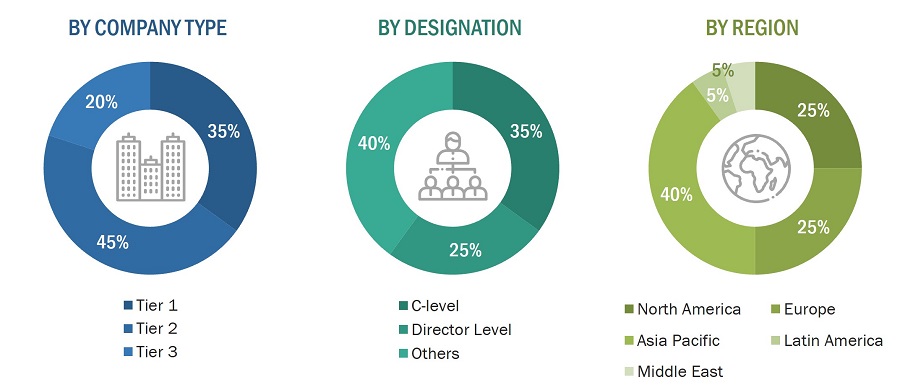
To know about the assumptions considered for the study, download the pdf brochure
Market Size Estimation
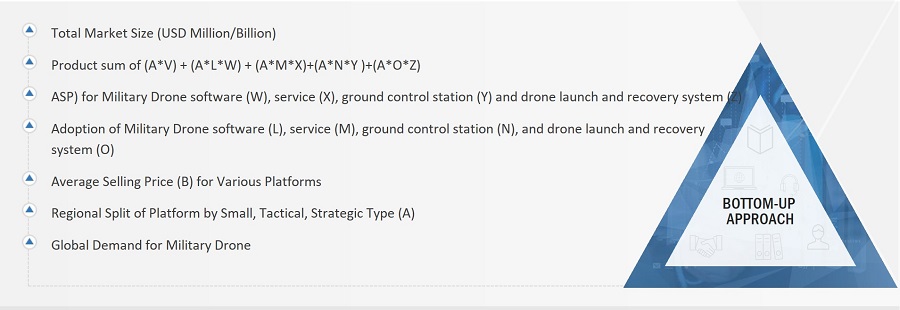
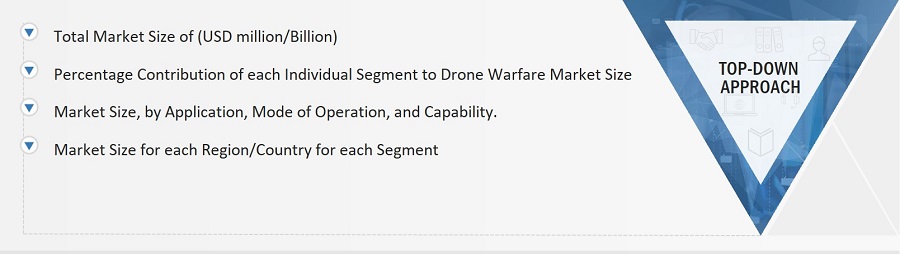
- Both top-down and bottom-up approaches were used to estimate and validate the size of the Drone warfare market.
- Key players were identified through secondary research, and their market ranking was determined through primary and secondary research. This included a study of annual and financial reports of the top market players and extensive interviews of leaders, including CEOs, directors, and marketing executives.
- All percentage shares, splits, and breakdowns were determined using secondary sources and verified through primary sources. All possible parameters that affect the markets covered in this research study were accounted for, viewed in extensive detail, verified through primary research, and analyzed to obtain the final quantitative and qualitative data. This data was consolidated, enhanced with detailed inputs, analyzed by MarketsandMarkets, and presented in this report.
Market size estimation methodology: Bottom-up Approach
Market size estimation methodology: Top-down Approach
Data triangulation
After arriving at the overall size of the drone warfare market from the market size estimation process explained above, the total market was split into several segments and subsegments. To complete the overall market engineering process and arrive at the exact statistics for various market segments and subsegments, data triangulation and market breakdown procedures explained below were implemented, wherever applicable. The data was triangulated by studying various factors and trends from both the demand and supply sides. Along with this, the market size was validated using both top-down and bottom-up approaches.
Market Definition
Drone warfare, also known as unmanned aerial vehicles, find application in diverse military roles like combat, intelligence, surveillance, reconnaissance (ISR), and delivery. The global armed forces increasingly embrace unmanned combat aerial vehicles (UCAVs), including lethal drones, combat drones, and target drones. These drones can be remotely piloted, optionally piloted, or fully autonomous, and they are categorized based on platforms such as small, strategic, and tactical. High Altitude Long Endurance (HALE) and Medium Altitude Long Endurance (MALE) drones, characterized by extended endurance, serve as fixed platforms capable of carrying substantial ISR payloads and precision munitions for combat.
Stakeholders
Various stakeholders of the market are listed below:
- Military Drone Manufacturers
- Defence contractors
- Original Equipment Manufacturers
- Military Service Providers
- Payload & Warhead Suppliers
- Research Organizations
- Investors and Venture Capitalists
- Ministries of Defense
- R&D Companies
Report Objectives
- To define, describe, and forecast the size of the drone warfare market based on Capability, application, mode of operation and region from 2023 to 2028
- To forecast the size of market segments with respect to five major regions, namely North America, Europe, Asia Pacific, the Middle East, Latin America and Africa.
- To identify and analyze key drivers, restraints, opportunities, and challenges influencing the growth of the market
- To strategically analyze micromarkets1 with respect to individual growth trends, prospects, and their contribution to the market
- To analyze opportunities for stakeholders in the market by identifying key market trends
- To analyze competitive developments such as contracts, acquisitions, expansions, agreements, joint ventures and partnerships, product developments, and research and development (R&D) activities in the market
- To provide a detailed competitive landscape of the -market, in addition to an analysis of business and corporate strategies adopted by leading market players
- To strategically profile key market players and comprehensively analyze their core competencies2
1 Micromarkets are referred to as the segments and subsegments of the Drone warfare markets considered in the scope of the report.
2 Core competencies of companies were captured in terms of their key developments and key strategies adopted to sustain their positions in the market.
Available customizations
Along with the market data, MarketsandMarkets offers customizations as per the specific needs of companies. The following customization options are available for the report:
Product Analysis
- Product matrix, which gives a detailed comparison of the product portfolio of each company
Regional Analysis
- Further breakdown of the market segments at the country level
Company Information
- Detailed analysis and profiling of additional market players (up to 5)
Get the Full Drone Warfare Market Report
Full forecast, segment splits, and company analysis for all Drone Warfare Market.
- US Drone Warfare Market
- France Drone Warfare Market
- Germany Drone Warfare Market
- Italy Drone Warfare Market
- Russia Drone Warfare Market
- Sweden Drone Warfare Market
- UK Drone Warfare Market
- Ukraine Drone Warfare Market
- Australia Drone Warfare Market
- China Drone Warfare Market
- India Drone Warfare Market
- Japan Drone Warfare Market
- South Korea Drone Warfare Market
- Saudi Arabia Drone Warfare Market
- UAE Drone Warfare Market
- Israel Drone Warfare Market
- Turkey Drone Warfare Market
- Brazil Drone Warfare Market
- Mexico Drone Warfare Market
- Rest Of Europe Drone Warfare Market
- Rest Of Asia Pacific Drone Warfare Market
- GCC Drone Warfare Market
- Rest Of Middle East Drone Warfare Market
Need a Tailored Report?
Customize this report to your needs
Get 10% FREE Customization
Customize This Report
