
Brazil ECG Sensor Patches Market (2025-2030)

The Brazil ECG Sensor Patches Market was valued at $12.89 Million in 2025 and projected to reach to $30.81 Million by 2030, representing a compound annual growth rate of 13.3%. Brazil's ECG sensor patches market is positioned for significant expansion through 2030, driven by increasing cardiovascular health awareness and the country's digital health transformation.


| Market Size in | USD 26.32 MN |
| Market Forecast in | |
| CAGR | |
| Forecast Period | |
| Units Considered | Value (USD MN) |
Brazil ECG Sensor Patches Market Trends and Insights
- This 13.3% compound annual growth rate reflects Brazil's increasing adoption of wearable cardiac monitoring technologies driven by rising healthcare awareness and digital health initiatives.
- Brazil's growing middle class and expanding private healthcare sector are accelerating demand for non-invasive, continuous cardiac monitoring solutions. The Brazilian market benefits from favorable demographic trends, including an aging population with higher cardiovascular disease prevalence.
- Brazil's regulatory environment and investment in healthcare infrastructure are creating opportunities for ECG sensor patch manufacturers.
- By 2030, Brazil is expected to become a significant regional hub for wearable cardiac diagnostics, supported by increasing smartphone penetration and telemedicine adoption across the country. Brazil's position within Latin America underscores the nation's leadership in healthcare innovation and digital health transformation, positioning it as a key growth market for ECG sensor patch technologies through the forecast period..
Key Market Statistics
- CAGR (2025-2030) 13.3% CAGR
- Market Size, 2025 ~USD 12.89 Million
- Forecast, 2030 ~USD 30.81 Million
- Country Brazil
Brazil ECG Sensor Patches Market Overview
Market Valuation Growth :
Brazil's ECG sensor patches market is valued at USD 12.89 million in 2025, with projections reaching USD 30.81 million by 2030, representing a robust 13.3% CAGR that outpaces the global average of 12%.
Rising Healthcare Awareness :
Increasing cardiovascular disease prevalence in Brazil is driving demand for continuous cardiac monitoring solutions, with healthcare providers and patients increasingly adopting wearable ECG technologies for preventive care.
Digital Health Expansion :
Brazil's digital health initiatives and telemedicine adoption are accelerating ECG sensor patch integration into remote patient monitoring programs, particularly in urban centers and private healthcare networks.
Growing Middle Class Purchasing Power :
Brazil's expanding middle class and increasing private healthcare sector investment are creating favorable conditions for premium wearable cardiac monitoring devices and sensor patch technologies.
Brazil ECG Sensor Patches Market Dynamics
- The 13.3% CAGR reflects strong adoption momentum among both healthcare providers and consumers seeking advanced cardiac monitoring solutions.
- Private healthcare sector growth and rising disposable incomes are enabling broader market penetration beyond major metropolitan areas. Government health initiatives and partnerships with technology providers are expected to accelerate market development.
- The convergence of wearable technology adoption, telemedicine infrastructure improvements, and preventive healthcare trends will sustain growth momentum.
- Brazil's position as Latin America's largest economy provides significant scaling opportunities for ECG sensor patch manufacturers and healthcare technology innovators..
Market Ecosystem
ECG Sensor Patches Market: COMMERCIAL USE CASES ACROSS INDUSTRIES
| COMPANY | USE CASE DESCRIPTION | BENEFITS |
|---|---|---|
 |
Wearable ECG sensor patches integrated into connected care solutions | Supports continuous heart monitoring and remote patient management, improving outcomes for patients with chronic cardiac conditions while reducing hospital readmissions |
 |
Zio ECG sensor patches for long-term ambulatory cardiac monitoring | Provides continuous monitoring for up to 14 days, with AI-powered analytics to detect arrhythmias; reduces diagnostic delays and hospital visits; enables accurate remote cardiac care |
 |
Wearable ECG sensor patches integrated with digital platforms and telehealth | Enables real-time heart monitoring, seamless data sharing with clinicians, and improved patient engagement in clinical and home care environments |
 |
Advanced cardiac monitoring patches for outpatient and ambulatory care | Enhances early arrhythmia detection and supports patient management outside hospital settings, contributing to reduced healthcare costs and improved care delivery |
 |
ECG sensor patches with wireless data transfer and cloud integration | Offers high-accuracy continuous ECG recording with secure data transmission, enabling physicians to analyze patient heart health remotely and efficiently |
Logos and trademarks shown above are the property of their respective owners. Their use here is for informational and illustrative purposes only.
Related Ecosystem
Medical Devices
- Polymerase Chain Reaction (PCR)
- Magnetic Resonance Imaging (MRI)
- Disposable Autoinjectors
- Pulse Oximeters
- Blood Pressure Monitors
- Medtronic plc
- Abbott Laboratories
- Stryker Corporation
- Becton, Dickinson and Company
- JOHNSON & JOHNSON
Key Takeaways
- Brazil's ECG sensor patches market will grow from USD 12.89M (2025) to USD 30.81M (2030) at a 13.3% CAGR, outpacing global growth rates.
- Brazil's aging population and rising cardiovascular disease burden are primary drivers of ECG sensor patch adoption across the country.
- Brazil's expanding telemedicine infrastructure and smartphone penetration are enabling widespread deployment of wearable cardiac monitoring in both urban and emerging markets.
- Brazil's private healthcare sector and regulatory support position the nation as Latin America's leading market for advanced cardiac monitoring technologies.
ECG Sensor Patches Market Report Scope
| Report Metric | Details |
|---|---|
| Base Year | 2025 |
| Fastest Growing Segment | SINGLE-LEAD ECG SENSOR PATCHES (Lead Type) |
| Forecast Period | 2025-2030 |
| Growth Rate | CAGR of 12% from 2025 to 2030 |
| Largest Segment | PHYSICIAN-PRESCRIBED (Prescription Type) |
| Market Size Base Year (Billions) | ~USD 1.05 (2025) |
| Revenue Forecast (Billions) | ~USD 1.85 (2030) |
| Segments Covered | Lead Type, Product Type, Prescription Type, Usage Modality, End User |
Brazil ECG Sensor Patches Market Report Segmentation
5 segment dimensions are covered across the global market.
By Lead Type
- 12-Lead Ecg Sensor Patches
- 2-Lead Ecg Sensor Patches
- 3-Lead Ecg Sensor Patches
- Other Lead Types
- Single-Lead Ecg Sensor Patches
By Product Type
- Disposable
- Reusable
By Prescription Type
- Otc
- Physician-Prescribed
By Usage Modality
- Wired/Connected
- Wireless
By End User
- Ambulatory Care Centers
- Home Care Settings
- Hospitals & Clinics
- Other End Users
- Primary Health Centers
- Urgent Care Centers
BRAZIL: ECG SENSOR PATCHES MARKET, BY END USER, 2023–2032
| Segment | 2023 | 2024 | 2025 | 2029 | 2030 | 2031 | 2032 | CAGR (%) |
|---|---|---|---|---|---|---|---|---|
| AMBULATORY CARE CENTERS | 3.84 | 4.17 | 4.56 | 6.95 | 7.85 | 8.9 | 10.14 | 12.1 |
| HOME CARE SETTINGS | 3.57 | 3.88 | 4.27 | 6.65 | 7.54 | 8.6 | 9.85 | 12.7 |
| HOSPITALS & CLINICS | 7.85 | 8.53 | 9.27 | 13.78 | 15.46 | 17.42 | 19.72 | 11.4 |
| OTHER END USERS | 1.16 | 1.26 | 1.34 | 1.8 | 1.97 | 2.16 | 2.39 | 8.7 |
| PRIMARY HEALTH CENTERS | 0.68 | 0.74 | 0.79 | 1.09 | 1.2 | 1.32 | 1.47 | 9.3 |
| URGENT CARE CENTERS | 0.95 | 1.03 | 1.11 | 1.59 | 1.77 | 1.98 | 2.22 | 10.4 |
| TOTAL | 18.04 | 19.61 | 21.32 | 31.86 | 35.79 | 40.39 | 45.8 | 11.5 |
Target Audience
- Medical Device Manufacturers : ECG sensor patch producers need Brazil-specific market intelligence to assess expansion opportunities, understand regulatory pathways, and identify distribution partnerships in Latin America's largest healthcare market.
- Healthcare Technology Investors : Investment firms evaluating Brazil's digital health sector require detailed market forecasts and growth drivers to identify promising ECG wearable companies and assess portfolio opportunities.
- Telemedicine & Digital Health Platforms : Remote patient monitoring providers need Brazil market data to integrate ECG sensor patches into their platforms and expand cardiac monitoring capabilities across the country's growing telehealth ecosystem.
- Private Healthcare Providers : Brazilian hospitals and clinics require market insights to evaluate ECG sensor patch adoption, understand patient demand, and plan digital cardiac monitoring infrastructure investments.
- Healthcare Consultants & Analysts : Strategy consultants and research firms need Brazil-specific ECG market data to support client advisory work, competitive analysis, and healthcare technology trend reporting.
Reasons to Buy this Report
- Market Entry Strategy : Gain detailed insights into Brazil's unique market dynamics, competitive landscape, and regulatory environment to develop effective market entry and localization strategies for ECG sensor patch products.
- Growth Opportunity Assessment : Identify high-potential segments within Brazil's 13.3% CAGR market, including private healthcare adoption, telemedicine integration, and emerging consumer segments with purchasing power.
- Investment Decision Support : Access comprehensive market sizing, forecast data, and growth drivers to support investment decisions, partnership evaluations, and resource allocation for Brazil operations.
- Competitive Positioning : Understand Brazil-specific competitive dynamics, market gaps, and differentiation opportunities to position products effectively against local and international competitors.
- Stakeholder Alignment : Leverage Brazil market data to align internal teams, secure executive buy-in, and communicate market potential to investors, partners, and healthcare system stakeholders.
Frequently asked questions
What is the current size of Brazil's ECG sensor patches market?
Brazil's ECG sensor patches market was valued at USD 12.89 million in 2025 and is expected to reach USD 30.81 million by 2030.
What is the projected growth rate for ECG sensor patches in Brazil?
Brazil's ECG sensor patches market is projected to grow at a compound annual growth rate (CAGR) of 13.3% from 2025 to 2030.
What factors are driving growth in Brazil's ECG sensor patches market?
Key drivers include Brazil's aging population, rising cardiovascular disease prevalence, expanding telemedicine adoption, increasing smartphone penetration, and growing private healthcare investment.
How does Brazil's market compare to the global ECG sensor patches market?
Brazil's 13.3% CAGR exceeds the global average of 12%, demonstrating stronger regional growth momentum and market opportunity in the country.
What role does Brazil play in the Latin American ECG sensor patches market?
Brazil is the largest and fastest-growing market in Latin America for ECG sensor patches, driven by its advanced healthcare infrastructure, regulatory environment, and digital health initiatives.
RESEARCH METHODOLOGY
This study involved the extensive use of both primary & secondary sources. The research process involved the study of various factors affecting industry to identify segmentation types, industry trends, key players, competitive landscape, key market dynamics, and key player strategies.
Secondary Research
This research study involved the usage of comprehensive secondary sources; directories; databases such as Bloomberg Business, Factiva, and Dun & Bradstreet; white papers; annual reports; company house documents; investor presentations; and SEC filings of companies. Secondary research was used to identify and collect information useful for an extensive, technical, market-oriented, and commercial study of the ECG sensor patches market. It was also used to obtain important information about the key players, market classification and segmentation according to industry trends to the bottommost level, and key developments related to market and technology perspectives. A database of the key industry leaders was also prepared using secondary research.
Primary Research
In the primary research process, various supply and demand sources were interviewed to obtain qualitative and quantitative information for this report. Primary sources from the supply side include project/sales/marketing/business development managers, presidents, CEOs, vice presidents, chairpersons, chief operating officers, chief strategy officers, directors, chief information officers, and chief medical information officers related to the ECG sensor patches markets. Primary sources from the demand side include healthcare professionals from hospitals, ambulatory surgery centers, and diagnostic centers.
A breakdown of the primary respondents is provided below:
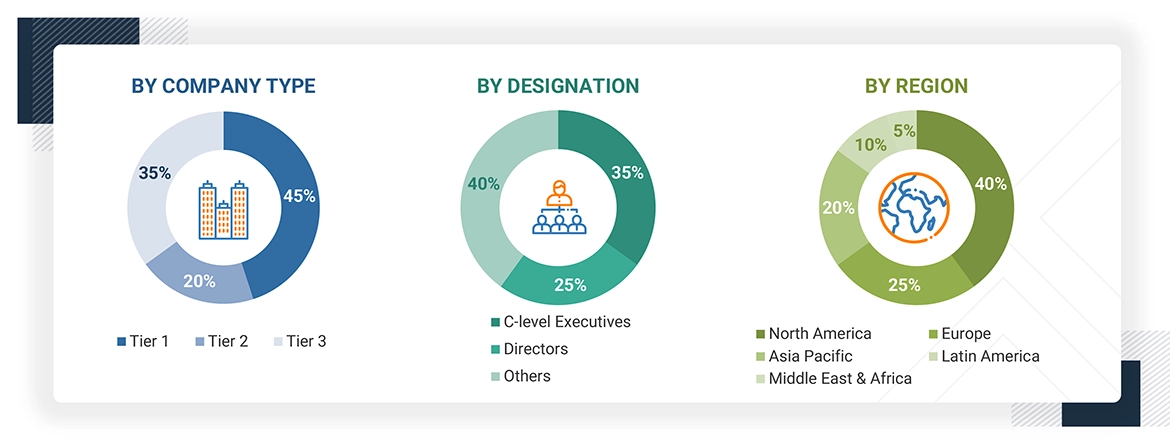
Note 1: C-level primaries include CEOs, COOs, CTOs, and VPs.
Note 2: Others include sales, marketing, and product managers.
Note 3: Tiers are defined based on a company’s total revenue. As of 2024: Tier 1 = >USD 1 billion, Tier 2 = USD 500 million to USD 1 billion, and Tier 3 = < USD 500 million.
To know about the assumptions considered for the study, download the pdf brochure
Market Size Estimation
The total size of the ECG sensor patches market was determined after data triangulation from three approaches, as mentioned below. After each approach, the weighted average of the three approaches was taken based on the level of assumptions used in each approach.
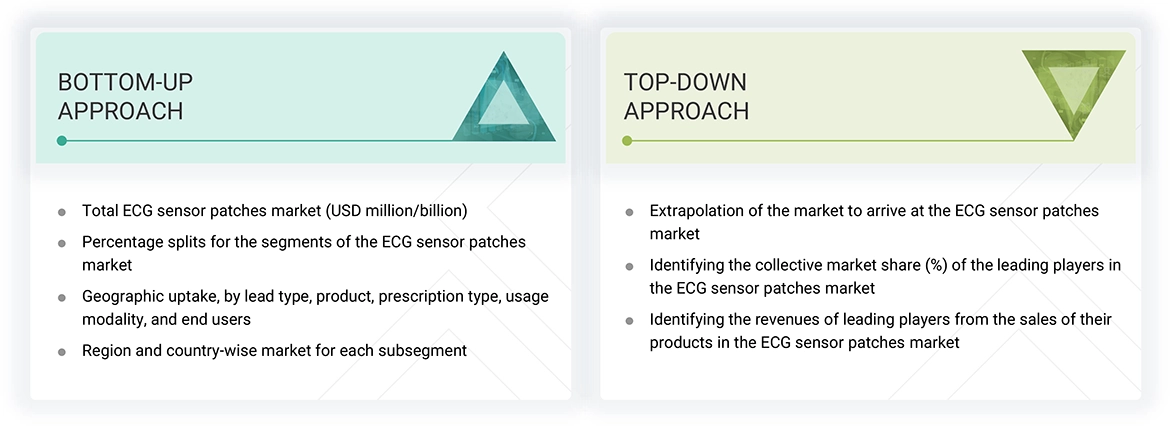
Data Triangulation
After arriving at the market size, the total market was divided into several segments and subsegments. Data triangulation and market breakdown procedures were employed wherever applicable to complete the overall market engineering process and arrive at the exact statistics for all segments and subsegments. The following figure shows the market validation, source structure, and data triangulation methodology implemented in the market engineering process.
Market Definition
The ECG sensor patches comprises lightweight, wearable devices that monitor a patient’s heart activity by recording electrocardiogram (ECG) signals. These patches typically adhere to the chest and include integrated electrodes, sensors, and wireless transmitters to capture and send real-time cardiac data. Some versions may connect external electrode patches to a separate sensor unit or Holter monitor via lead wires, offering extended monitoring capabilities in a compact form. These products enable real-time, non-invasive cardiac monitoring. They are widely used for arrhythmia detection, post-operative surveillance, and remote patient management in modern cardiology and home-based healthcare settings.
Stakeholders
- ECG Sensor Patch Product Manufacturers
- Component Suppliers
- Software & Platform Developers
- Contract Manufacturing Organizations (CMOs)
- Healthcare Technology Companies
- Cardiologists & Electrophysiologists
- Primary Care Physicians & General Practitioners
- Hospitals & Clinics
- Ambulatory Surgery Centers (ASCs)
- Urgent Care Centers
- Home Healthcare Providers
- Telehealth & Remote Patient Monitoring Companies
- Health Insurance Companies & Payers
- Regulatory Authorities (e.g., the US FDA and the EMA)
- Distributors & Medical Device Wholesalers
- Fitness & Sports Medicine Clinics
- Research Institutes and Universities
Report Objectives
- To define, describe, and forecast the ECG sensor patches market by lead type, product, prescription type, usage modality, end user, and region.
- To provide detailed information about the key factors influencing market growth, such as drivers, restraints, opportunities, challenges, and industry trends.
- To strategically analyze the regulatory scenario, value chain analysis, supply chain analysis, Porter’s five forces analysis, ecosystem analysis, trade analysis, pricing analysis, patent analysis, impact of AI/generative AI on the ECG sensor patches market, case study analysis, adjacent market analysis, unmet needs/end user expectations in ECG sensor patches market, and trends/disruptions impacting customers’ businesses in the market.
- To analyze the micromarkets with respect to individual growth trends, prospects, and contributions to the overall ECG sensor patches market.
- To analyze market opportunities for stakeholders and provide details of the competitive landscape for key players.
- To strategically profile the key players in this market and comprehensively analyze their market shares and core competencies
- To strategically analyze the ECG sensor patches market across North America, Europe, the Asia Pacific, Latin America, and the Middle East & Africa.
- To track and analyze competitive developments such as product launches & approvals, acquisitions, partnerships, collaborations, and expansions in the ECG sensor patches market.
Get the Full ECG Sensor Patches Market Report
Full forecast, segment splits, and company analysis for all ECG Sensor Patches Market.
- UAE ECG Sensor Patches Market
- Rest Of Europe ECG Sensor Patches Market
- Rest Of Asia Pacific ECG Sensor Patches Market
- Rest Of Latin America ECG Sensor Patches Market
- Rest Of GCC Countries ECG Sensor Patches Market
- US ECG Sensor Patches Market
- Canada ECG Sensor Patches Market
- Germany ECG Sensor Patches Market
- UK ECG Sensor Patches Market
- France ECG Sensor Patches Market
- Italy ECG Sensor Patches Market
- Spain ECG Sensor Patches Market
- China ECG Sensor Patches Market
- Japan ECG Sensor Patches Market
- India ECG Sensor Patches Market
- South Korea ECG Sensor Patches Market
- Australia ECG Sensor Patches Market
- Mexico ECG Sensor Patches Market
- Saudi Arabia ECG Sensor Patches Market
Need a Tailored Report?
Customize this report to your needs
Get 10% FREE Customization
Customize This Report
