
Argentina Electric Tractor Market (2024-2029)

The Argentina Electric Tractor Market was valued at $19 Million in 2024 and projected to reach to $129 Million by 2029, representing a compound annual growth rate of CAGR 37.6%. Argentina's electric tractor market is poised for transformative growth through 2029, driven by the country's commitment to agricultural sustainability and technological advancement.


| Market Size in | USD 26.32 MN |
| Market Forecast in | |
| CAGR | |
| Forecast Period | |
| Units Considered | Value (USD MN) |
Argentina Electric Tractor Market Trends and Insights
- This represents a compound annual growth rate of 37.6%, significantly outpacing global trends driven by Argentina's agricultural modernization initiatives and increasing adoption of sustainable farming practices.
- Argentina's vast agricultural sector is increasingly recognizing the operational cost savings and environmental benefits of electric tractors, positioning the country as a key growth market in the Americas. The expansion of Argentina's electric tractor market reflects broader shifts toward electrification in the agricultural equipment industry.
- Argentina's government incentives for green technology adoption and rising fuel costs are accelerating the transition from traditional diesel-powered machinery to electric alternatives.
- By 2029, Argentina is expected to capture substantial market share within the region, driven by infrastructure development, improved battery technology accessibility, and growing farmer awareness of long-term economic advantages associated with electric tractor ownership..
Key Market Statistics
- CAGR (2024-2029) CAGR 37.6%
- Market Size, 2024 ~USD 19 Million
- Forecast, 2029 ~USD 129 Million
- Country Argentina
Argentina Electric Tractor Market Overview
Exceptional Growth Trajectory :
Argentina's electric tractor market is projected to grow from $19.0 million in 2024 to $129.0 million by 2029, representing a 37.6% CAGR—significantly outpacing the global average of 28.3%.
Agricultural Modernization Drive :
Argentina's vast agricultural sector is undergoing rapid mechanization and sustainability transformation, with government incentives and subsidies accelerating the adoption of electric farming equipment across major agricultural regions.
Sustainable Farming Adoption :
Increasing environmental regulations and farmer awareness of sustainable practices are driving demand for zero-emission tractors, positioning Argentina as a regional leader in green agricultural technology adoption.
Regional Market Leadership :
Argentina's electric tractor market growth rate significantly exceeds Latin American peers, establishing the country as a key market for manufacturers and technology providers targeting South American agricultural modernization.
Argentina Electric Tractor Market Dynamics
- Government policies promoting renewable energy adoption in farming, combined with declining battery costs and improved charging infrastructure, are creating favorable conditions for market expansion.
- The nation's large-scale farming operations and export-oriented agricultural sector provide substantial opportunities for electric tractor manufacturers. Key growth catalysts include increasing farmer awareness of operational cost savings, environmental compliance requirements, and access to green financing options.
- As Argentina strengthens its position as a regional agricultural hub, the electric tractor market will benefit from technology transfer, local manufacturing initiatives, and strategic partnerships with international OEMs seeking to establish Latin American production bases..
Market Ecosystem
Related Ecosystem
On Highway Off Highway Vehicles
- Internal Combustion Engine (ICE)
- Agricultural Tractors
- Crawler Excavator
- Battery Electric Vehicle (BEV)
- Excavators
- Visteon Corporation
- Deere & Company
- AB VOLVO PENTA
- Honda Motor Co., Ltd.
- Komatsu Ltd.
Key Takeaways
- Argentina's electric tractor market is projected to grow from $19.0M (2024) to $129.0M (2029) at a 37.6% CAGR.
- Argentina's agricultural sector is rapidly adopting electric tractors due to cost savings and sustainability pressures.
- Government incentives and rising diesel costs are primary catalysts accelerating electrification in Argentina.
- Argentina is positioned as a leading growth market for electric tractors in the Americas region by 2029.
Electric Tractor Market Report Scope
| Report Metric | Details |
|---|---|
| Base Year | 2024 |
| Fastest Growing Segment | >100 KWH (Battery Capacity) |
| Forecast Period | 2024-2029 |
| Growth Rate | CAGR of 28.3% from 2024 to 2029 |
| Largest Segment | BATTERY ELECTRIC (Propulsion) |
| Market Size Base Year (Billions) | ~USD 0.76 (2024) |
| Revenue Forecast (Billions) | ~USD 2.65 (2029) |
| Segments Covered | Propulsion, Battery Chemistry, Battery Capacity, Power Output, Function |
Argentina Electric Tractor Market Report Segmentation
5 segment dimensions are covered across the global market.
By Propulsion
- Battery Electric
- Hybrid Electric
- Hydrogen
By Battery Chemistry
- Lithium Iron Phosphate
- Lithium Nickel Manganese Cobalt Oxide
By Battery Capacity
- 51-100 Kwh
- <50 Kwh
- >100 Kwh
By Power Output
- 51-100 Hp
- <50 Hp
- >100 Hp
By Function
- Agriculture & Forestry
- Industrial
- Utility
Target Audience
- Agricultural Equipment Manufacturers : OEMs and equipment manufacturers need Argentina market data to assess production opportunities, localization strategies, and demand forecasts for electric tractor development and commercialization in South America.
- Investment & Private Equity Firms : Investors evaluating opportunities in agritech and sustainable agriculture require detailed Argentina market sizing, growth projections, and competitive landscape analysis to support funding and M&A decisions.
- Government & Policy Makers : Argentine agricultural and energy policy officials need market intelligence to design effective incentive programs, regulatory frameworks, and infrastructure investments supporting electric tractor adoption and rural sustainability.
- Distributors & Dealers : Agricultural equipment distributors and dealers in Argentina require market forecasts, customer demand patterns, and competitive positioning data to optimize inventory, sales strategies, and service offerings.
- Technology & Battery Suppliers : Battery manufacturers, charging infrastructure providers, and agritech solution companies need Argentina-specific demand forecasts and adoption trends to plan production capacity, partnerships, and market expansion initiatives.
Reasons to Buy this Report
- Market Entry Strategy : Comprehensive Argentina-specific data enables manufacturers and distributors to develop targeted market entry strategies, identify key customer segments, and establish competitive positioning in Latin America's fastest-growing electric tractor market.
- Investment Decision Support : Detailed forecasts and growth metrics provide investors with quantified market opportunity assessment, risk analysis, and ROI projections specific to Argentina's electric tractor sector through 2029.
- Competitive Intelligence : Argentina-focused insights reveal local competitor landscape, emerging players, technology preferences, and market dynamics essential for strategic planning and competitive differentiation in this high-growth market.
- Supply Chain Optimization : Market data informs supply chain decisions, manufacturing location selection, distribution network planning, and partnership opportunities tailored to Argentina's agricultural infrastructure and regulatory environment.
- Policy & Regulatory Navigation : Argentina-specific analysis covers government incentives, environmental regulations, import/export policies, and subsidy programs affecting electric tractor adoption and market dynamics through the forecast period.
Frequently asked questions
What is the current size of Argentina's electric tractor market?
Argentina's electric tractor market was valued at $19.0 million in 2024 and is expected to reach $129.0 million by 2029.
What is the growth rate of Argentina's electric tractor market?
Argentina's electric tractor market is growing at a compound annual growth rate (CAGR) of 37.6% from 2024 to 2029.
What factors are driving growth in Argentina's electric tractor market?
Key drivers include government incentives for green technology, rising diesel fuel costs, agricultural modernization initiatives, and increased farmer awareness of long-term economic benefits of electric tractors in Argentina.
How does Argentina's electric tractor market compare to global trends?
Argentina's 37.6% CAGR significantly exceeds the global electric tractor market CAGR of 28.3%, making Argentina one of the fastest-growing markets in the sector.
What is the forecast for Argentina's electric tractor market by 2029?
Argentina's electric tractor market is forecasted to reach $129.0 million by 2029, representing a 579% increase from the 2024 baseline of $19.0 million.
RESEARCH METHODOLOGY
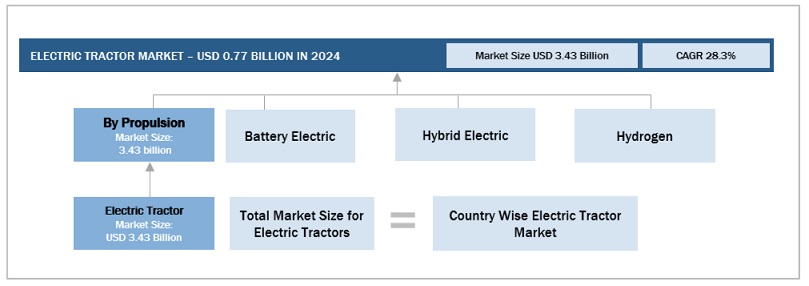
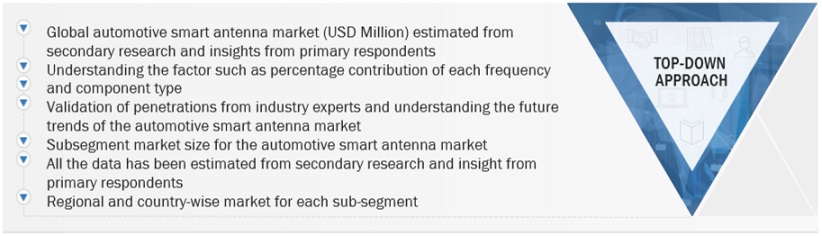
Various secondary sources, directories, and databases have been used to identify and collect information for an extensive electric tractor market study. The study involved four main activities in estimating the current size of the electric tractor market: secondary research, validation through primary research, assumptions, and market analysis. Exhaustive secondary research was carried out to collect information on the market, such as different propulsion types and the upcoming technologies and trends. The next step was to validate these findings, assumptions, and market analysis with industry experts across the value chain through primary research. The top-down approach was employed to estimate the complete market size for different segments considered in this study.
Secondary Research
In the secondary research process, various secondary sources have been used to identify and collect information useful for an extensive commercial study of the electric tractor market. Secondary sources include company annual reports/presentations, press releases, industry association publications [such as publications on Committee for European Electric Off-highway Vehicle (CECE), Environmental Protection Agency (EPA), Agriculture Equipment Manufacturers Union (AXEMA), Association of Equipment Manufacturers (AEM), Italian Agricultural Machinery Manufacturers Federation (FEDERUNACOMA), Japan Agricultural Machinery Manufacturers Association (JAMMA), China Agricultural Machinery Distribution Association (CAMDA), VDMA (Verband Deutscher Maschinen- und Anlagenbau), Russian Association of Specialized Machinery and Equipment Manufacturers (ROSSPETSMASH), Brazilian Association of Industrial Machinery and Equipment (ABIMAQ), Agricultural Engineers Association (AEA). The electric tractor-related magazine articles, directories, technical handbooks, World Economic Outlook, trade websites, and technical articles. Additionally, secondary research has been carried out to understand the average cost of electric tractors, which come with different battery capacities, and the historical sales of vehicles.
Primary Research
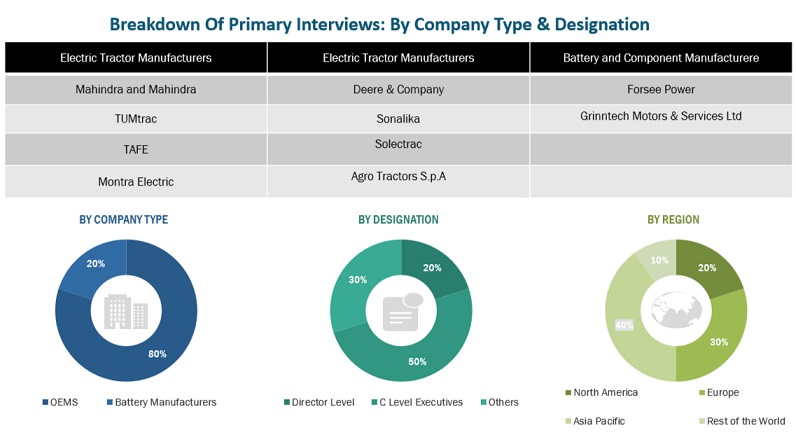
In the primary research process, various primary sources from both the supply and demand sides were interviewed to obtain qualitative and quantitative information on the market. The primary sources from the supply side included industry experts such as CXOs, vice presidents, directors from business development, marketing, product development/innovation teams, and related key executives from various key companies. Various system integrators, industry associations, independent consultants/industry veterans, and key opinion leaders were also interviewed.
In the primary research process, various sources from both the supply and demand sides have been interviewed to obtain qualitative and quantitative information for this report. The primary sources from the supply side include industry experts such as research and development experts, CEOs, CTOs, COOS, vice presidents, marketing directors, technology and innovation directors, and related key executives from different key companies operating in the electric tractor market.
After the complete market engineering, which includes calculations for market statistics, market breakdown, market size estimations, market forecasting, and data triangulation, extensive primary research has been conducted to gather information and verify and validate the critical numbers arrived at. Primary research has also been undertaken to identify and validate the segmentation, industry trends, key players, competitive landscape, and market dynamics, such as drivers, restraints, opportunities, challenges, industry trends, and key strategies. Extensive qualitative and quantitative analysis has been performed on the complete market engineering process to list key information/insights throughout the report.
After interacting with industry experts, we have also conducted brief sessions with highly experienced independent consultants to reinforce the findings from our primaries. This and the in-house subject matter expert’s opinions have led us to the conclusions described in this report's remainder.
To know about the assumptions considered for the study, download the pdf brochure
Market Size Estimation
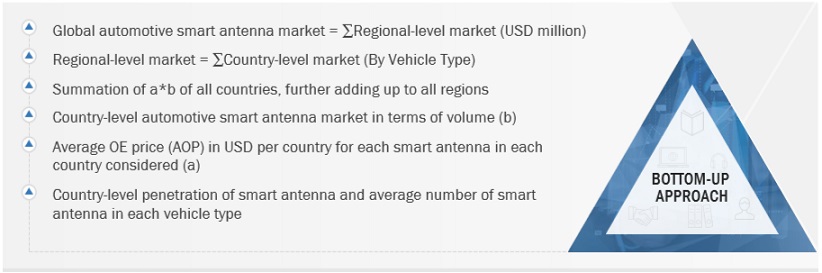
A detailed market estimation approach was followed to estimate and validate the value of the electric tractor market and other dependent submarkets, as mentioned below:
- Key players in the electric tractor market were identified through secondary research, and their global market shares were determined through primary and secondary research.
- The research methodology included studying annual and quarterly financial reports, regulatory filings of major market players (public), and interviews with industry experts for detailed market insights.
- All industry-level penetration rates, percentage shares, splits, and breakdowns for the electric tractor market were determined using secondary sources and verified through primary sources.
- All key macro indicators affecting the revenue growth of the market segments and sub-segments have been accounted for, viewed in extensive detail, verified through primary research, and analyzed to get the validated and verified quantitative and qualitative data.
- The gathered market data was consolidated and added with detailed inputs, analyzed, and presented in this report.
Electric Tractor Market: Bottom-Up Approach
To know about the assumptions considered for the study, Request for Free Sample Report
Electric Tractor Market: Top-Down Approach
Extensive secondary and primary research was conducted to understand the global market scenario and penetration for hybrid tractors per region. While estimating the regional market for hybrid electric tractors by power output, the regional shares of <50HP, 51 – 100HP, and >100HP power output were identified and multiplied by the regional market size in terms of the volume, of hybrid electric tractors. In terms of volume, the regional-level market size was then multiplied by the regional-level average selling price of the hybrid electric tractor mentioned above and the power output of the tractor. This resulted in regional-level market size, by powerout put, in terms of value. This information was validated through primary interviews with OEMs and Tier I suppliers.
Data Triangulation
After arriving at the overall market size, the market was split into several segments and sub-segments—using the market size estimation processes as explained above. Where applicable, data triangulation and market breakdown procedures were employed to complete the overall market engineering process and determine each market segment's and sub-segments exact statistics. The data was triangulated by studying various factors and trends.
Market Definition
Electric tractors include both battery-electric and hybrid-electric tractors. The hybrid electric tractor is powered by an internal combustion engine (ICE) combined with one or more electric motors that use energy stored in batteries to meet the additional auxiliary power needs of the equipment, electronic devices, and power tools. The battery-electric tractor is fully electric, and the combustion engine is replaced with batteries and an electric motor that powers the movement of the machine and its attachments.
These tractors provide zero emissions, reduce carbon footprint, and contribute to sustainability goals. They also operate silently, improving the work environment and potentially complying with noise regulations. Functionally, electric tractors perform the same tasks as their diesel counterparts, including soil preparation, seeding, harvesting, and transporting materials. However, they come with distinct features such as regenerative braking that feeds energy back to the battery, multiple power levels catering to various needs, and connected data monitoring and optimization technologies.
Stakeholders
- Electric Tractor Component Manufacturing Associations
- Electric tractor Component Suppliers
- Farm Tractor Dealers and Distributors
- Government and Regulatory Authorities
- Research Professionals
- Farm Tractor Importers, Retailers, and Dealers
- Tier 1 System Suppliers
- Raw Material Suppliers for Electric Farm Tractor
- Battery and Drivetrain Suppliers
- Electric Tractor Manufacturers
- Electric tractor Manufacturers
- Traders, Distributors, and Suppliers of Electric tractor Systems/Components
- Automotive Industry Associations, Government Authorities, and Research Organizations
Report Objectives
-
To define, describe, and forecast the electric tractor market in terms of value
(USD million), based on the following segments: - Propulsion (Battery Electric, Hybrid Electric, and Hydrogen)
- Battery Chemistry (Lithium Iron Phosphate (LFP), Lithium nickel manganese cobalt oxides (LI-NMC), and Others)
- Hybrid Electric Tractor Market, by Power Output (<50 HP, 51-100 HP, and >100 HP)
- Battery capacity (<50 KWH, 51-100 KWH, and >100 KWH)
- Function (Agriculture & Forestry, Utility, and Industrial)
- Region (Asia Pacific, Europe, and Americas)
- To understand the market dynamics (Drivers, Restraints, Opportunities, and Challenges) and conduct Patent Analysis, Pricing Analysis, Recession Impact, Key Buying Criteria, Trade Analysis, Technology Analysis, ASP Analysis, Trades and Conferences, Case Study Analysis, Supply Chain Analysis, Regulatory Analysis, Key Conference and Events, Bill of Material, Total Cost of Ownership, Investment & Funding Scenario, Funding by Use Case Scenario, Battery Technology, and Ecosystem Mapping
- To understand the dynamics of the market players and distinguish them into stars, emerging leaders, pervasive players, and participants according to their product portfolio strength and business strategies.
- To strategically analyze markets concerning individual growth trends, prospects, and contributions to the total market
- To analyze recent developments, such as partnerships, supply agreements, joint ventures/mergers and acquisitions, geographic expansions, and product developments of key players in the market
Available Customizations
Along with the market data, MarketsandMarkets offers customizations based on company-specific needs.
The following customization options are available for the report:
Electric Tractor Market By Region
- UAE
- Saudi Arabia
- Egypt
Electric Tractor Market, By Battery Capacity
- Asia Pacific (China, India, Japan, South Korea, Rest of Asia Pacific)
- Europe (Germany, France, UK, Spain, Russia, Italy, Turkey, and Rest of Europe)
- Americas (US, Canada, Mexico, Brazil, and Argentina)
- Detailed Analysis And Profiling Of Additional Market Players (Up To 3)
Get the Full Electric Tractor Market Report
Full forecast, segment splits, and company analysis for all Electric Tractor Market.
- China Electric Tractor Market
- India Electric Tractor Market
- Japan Electric Tractor Market
- South Korea Electric Tractor Market
- Germany Electric Tractor Market
- UK Electric Tractor Market
- France Electric Tractor Market
- Spain Electric Tractor Market
- Russia Electric Tractor Market
- Italy Electric Tractor Market
- Canada Electric Tractor Market
- Mexico Electric Tractor Market
- Brazil Electric Tractor Market
- US Electric Tractor Market
- Rest Of Europe Electric Tractor Market
- Rest Of Asia Pacific Electric Tractor Market
Need a Tailored Report?
Customize this report to your needs
Get 10% FREE Customization
Customize This Report
