
China Fluid Management Systems Market (2025-2030)

The China Fluid Management Systems Market was valued at $460.7 Million in 2025 and projected to reach to $747.4 Million by 2030, representing a compound annual growth rate of 10.2%. China's Fluid Management Systems Market is positioned for sustained growth through 2030, expanding from $460.7 million in 2025 to $747.4 million, representing a 10.2% CAGR.


| Market Size in | USD 26.32 MN |
| Market Forecast in | |
| CAGR | |
| Forecast Period | |
| Units Considered | Value (USD MN) |
China Fluid Management Systems Market Trends and Insights
- This represents a compound annual growth rate of 10.2%, significantly outpacing global market expansion.
- China's healthcare infrastructure modernization, coupled with rising surgical volumes and increased adoption of advanced medical technologies, is driving demand for sophisticated fluid management solutions across hospitals and surgical centers. The Chinese market benefits from substantial government investments in healthcare infrastructure and a growing patient population requiring surgical interventions.
- China's expanding middle class and improved healthcare accessibility are accelerating the adoption of fluid management systems in both urban and emerging healthcare facilities.
- By 2030, China is expected to solidify its position as a critical growth engine within the Asia Pacific region, with fluid management systems becoming increasingly integral to surgical and critical care protocols throughout the country..
Key Market Statistics
- CAGR (2025-2030) 10.2% CAGR
- Market Size, 2025 ~USD 460.7 Million
- Forecast, 2030 ~USD 747.4 Million
- Country China
China Fluid Management Systems Market Overview
Rapid Market Expansion :
China's Fluid Management Systems Market is growing at 10.2% CAGR, significantly outpacing the global rate of 7%, driven by healthcare infrastructure modernization and increased surgical procedures across urban and emerging tier-2/3 cities.
Healthcare Infrastructure Investment :
Government initiatives to upgrade hospital facilities and expand surgical capabilities in rural regions are accelerating demand for advanced fluid management technologies, creating substantial opportunities for market players.
Rising Surgical Volumes :
China's aging population and increasing prevalence of chronic diseases are driving higher surgical procedure volumes, directly boosting adoption of sophisticated fluid management systems in operating rooms and critical care units.
Technology Adoption Acceleration :
Chinese hospitals are increasingly adopting automated and digitalized fluid management solutions to improve patient outcomes, reduce medical errors, and enhance operational efficiency in clinical settings.
China Fluid Management Systems Market Dynamics
- This growth trajectory reflects China's commitment to healthcare modernization, rising middle-class demand for advanced medical care, and government policies supporting hospital infrastructure development.
- The market benefits from increasing surgical volumes driven by an aging demographic and higher prevalence of chronic conditions requiring intervention. Key growth drivers include technological advancement in fluid management devices, integration of IoT and AI-enabled monitoring systems, and expanding healthcare coverage in secondary and tertiary cities.
- Foreign and domestic manufacturers are investing heavily in R&D and localized production to capture market share.
- Regulatory improvements and standardization of medical device approvals are further facilitating market entry and accelerating adoption rates across Chinese healthcare institutions..
Market Ecosystem
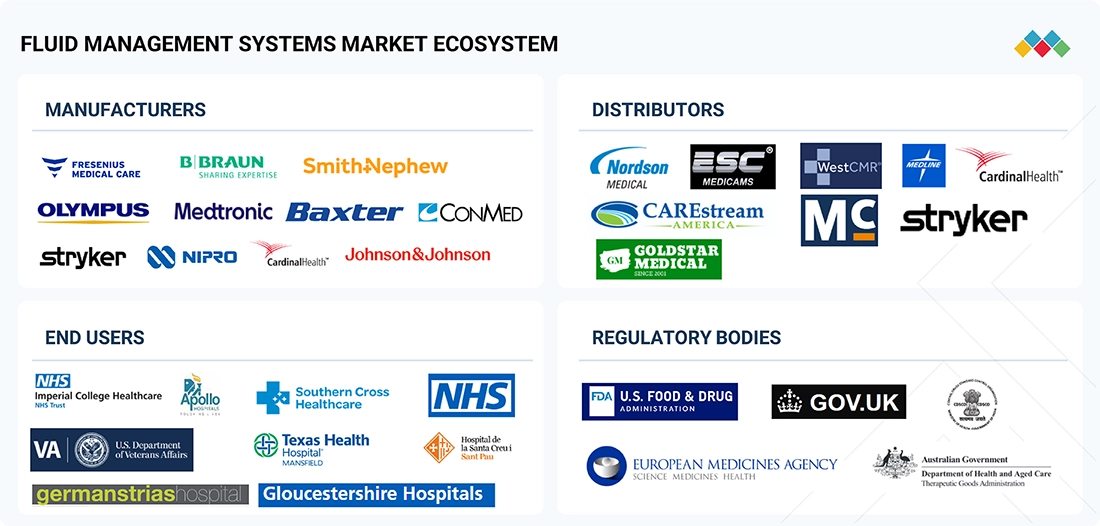
Fluid Management Systems Market: COMMERCIAL USE CASES ACROSS INDUSTRIES
| COMPANY | USE CASE DESCRIPTION | BENEFITS |
|---|---|---|
 |
Integrated fluid management systems used in surgical procedures, combining suction, irrigation, and fluid collection functions for minimally invasive surgeries | Improve surgical efficiency, reduce procedure time, minimize cross-contamination risk, and ensure precise control of fluid balance during operations |
 |
Fluid waste management systems for hospitals and surgical centers, designed for closed, automated collection and disposal of surgical waste fluids | Enhance safety by reducing staff exposure to biohazards, lower hospital-acquired infection risks, ensure regulatory compliance, and improve workflow efficiency |
 |
Endoscopic irrigation and suction systems tailored for gastroenterology, urology, and laparoscopy procedures | Maintain clear visualization, reduce procedural complications, improve diagnostic accuracy, and enhance surgeon efficiency during minimally invasive interventions |
 |
Fluid warming systems used in operating rooms, ICUs, and emergency care to deliver warmed IV fluids or blood products to patients | Prevent perioperative hypothermia, improve patient outcomes, reduce infection risks, and support faster recovery in surgical and critical care settings |
 |
Insufflation and distention systems for laparoscopy and gynecology procedures, ensuring safe and controlled cavity expansion with fluid or gas | Enhance surgical visualization, reduce risk of organ injury, support minimally invasive approaches, and improve procedural outcomes |
Logos and trademarks shown above are the property of their respective owners. Their use here is for informational and illustrative purposes only.
Related Ecosystem
Medical Devices
- Polymerase Chain Reaction (PCR)
- Magnetic Resonance Imaging (MRI)
- Disposable Autoinjectors
- Pulse Oximeters
- Blood Pressure Monitors
- Medtronic plc
- Abbott Laboratories
- Stryker Corporation
- Becton, Dickinson and Company
- JOHNSON & JOHNSON
Key Takeaways
- China's Fluid Management Systems Market will grow from $460.7M (2025) to $747.4M (2030) at a 10.2% CAGR, outpacing global growth rates.
- China's healthcare modernization and rising surgical volumes are primary catalysts for fluid management system adoption across medical facilities.
- Government healthcare investments and expanding middle-class access are accelerating demand for advanced fluid management technologies in China.
- By 2030, China will represent a dominant growth segment within Asia Pacific's Fluid Management Systems Market landscape.
Fluid Management Systems Market Report Scope
| Report Metric | Details |
|---|---|
| Base Year | 2025 |
| Fastest Growing Segment | INTEGRATED SYSTEMS (Type) |
| Forecast Period | 2025-2030 |
| Growth Rate | CAGR of 7% from 2025 to 2030 |
| Largest Segment | HOSPITALS (End User) |
| Market Size Base Year (Billions) | ~USD 13.26 (2025) |
| Revenue Forecast (Billions) | ~USD 18.6 (2030) |
| Segments Covered | Product, Type, Application, End User |
China Fluid Management Systems Market Report Segmentation
4 segment dimensions are covered across the global market.
By Product
- Disposables & Accessories
- Systems
By Type
- Bloodlines
- Cannulas
- Catheters
- Dialyzers
- Fluid Warming Systems
- Fluid Waste Management Systems
- Insufflators
- Integrated Systems
- Other Disposables & Accessories
- Other Standalone Systems
- Pressure Monitoring Lines
- Pressure Transducers
- Standalone Systems
- Suction Canisters
- Suction/Evacuation & Irrigation Systems
- Tubing Sets
- Valves, Connectors, And Fittings
By Application
- Cardiovascular Surgery
- Ent
- Gastroenterology
- General Surgery
- Gynecology
- Neurosurgery
- Orthopedics
- Other Applications
- Urology & Nephrology
By End User
- Ambulatory Surgical Centers
- Dialysis Center
- Dialysis Centers
- Hospitals
- Other End Users
CHINA: FLUID MANAGEMENT SYSTEMS MARKET, BY END USER, 2023–2030
| Segment | 2023 | 2024 | 2025 | 2026 | 2027 | 2028 | 2029 | 2030 | CAGR (%) |
|---|---|---|---|---|---|---|---|---|---|
| AMBULATORY SURGICAL CENTERS | 89.1 | 96.5 | 104.6 | 113.7 | 124.4 | 135.8 | 149.1 | 162.2 | 9.2 |
| DIALYSIS CENTERS | 118.5 | 128.5 | 139.4 | 151.8 | 166.2 | 181.7 | 199.6 | 217.5 | 9.3 |
| HOSPITALS | 456.8 | 498 | 542.9 | 594.2 | 653.9 | 718.3 | 793.1 | 868.4 | 9.9 |
| OTHER END USERS | 31.6 | 34 | 36.6 | 39.6 | 43 | 46.7 | 50.9 | 55.1 | 8.5 |
| TOTAL | 696 | 756.9 | 823.5 | 899.3 | 987.6 | 1082.4 | 1192.6 | 1303.2 | 9.6 |
Target Audience
- Medical Device Manufacturers : Manufacturers need China-specific market data to develop localized product strategies, identify distribution channels, and understand competitive positioning to successfully enter or expand in this high-growth healthcare market.
- Healthcare Investors & PE Firms : Investment professionals require detailed China market analysis to evaluate acquisition targets, assess growth potential, and make informed capital allocation decisions in the expanding fluid management systems sector.
- Hospital & Healthcare Administrators : Hospital decision-makers need market insights to benchmark procurement strategies, evaluate supplier options, and understand technology trends to optimize fluid management system investments and patient care outcomes.
- Market Consultants & Strategists : Consultants advising healthcare clients require China-specific data to develop market entry strategies, competitive analyses, and growth roadmaps tailored to the unique dynamics of this rapidly expanding market.
- Government & Policy Organizations : Healthcare policy makers and government agencies need market intelligence to inform healthcare infrastructure planning, medical device regulations, and investment priorities aligned with China's modernization objectives.
Reasons to Buy this Report
- Market Size & Growth Data : Access precise valuation ($460.7M in 2025) and forecast projections ($747.4M by 2030) specific to China, enabling accurate financial planning and investment decisions for market entry or expansion strategies.
- Competitive Landscape Intelligence : Understand China-specific competitive dynamics, local and international player positioning, and market share distribution to identify partnership opportunities and competitive advantages in this high-growth market.
- Regulatory & Policy Insights : Gain detailed knowledge of Chinese healthcare regulations, medical device approval processes, and government initiatives driving market growth to navigate compliance requirements and capitalize on policy-driven opportunities.
- Segment & Application Analysis : Identify high-demand surgical specialties, hospital types, and clinical applications within China to optimize product development, marketing strategies, and resource allocation for maximum market penetration.
- Growth Driver Identification : Understand China-specific factors including aging population trends, surgical volume increases, and technology adoption patterns to forecast demand and develop targeted go-to-market strategies for sustained revenue growth.
Frequently asked questions
What is the current market size of Fluid Management Systems in China?
China's Fluid Management Systems Market is valued at $460.7 million in 2025, with expectations to reach $747.4 million by 2030.
What is the projected growth rate for China's Fluid Management Systems Market?
China's market is projected to grow at a compound annual growth rate (CAGR) of 10.2% from 2025 to 2030.
What factors are driving growth in China's Fluid Management Systems Market?
Key drivers include healthcare infrastructure modernization, rising surgical volumes, government healthcare investments, and increased adoption of advanced medical technologies across Chinese hospitals and surgical centers.
How does China's growth rate compare to the global market?
China's 10.2% CAGR significantly exceeds the global market CAGR of 7%, positioning China as a high-growth region within the Fluid Management Systems Market.
What is China's role in the Asia Pacific Fluid Management Systems Market?
China is emerging as a critical growth engine within Asia Pacific, driven by its large patient population, expanding healthcare accessibility, and substantial government healthcare investments.
RESEARCH METHODOLOGY
The study involved major activities in estimating the current size of the fluid management systems market. Exhaustive secondary research was done to collect information on the fluid management systems market. The next step was to validate these findings, assumptions, and sizes with industry experts across the value chain using primary research. Different approaches, such as top-down and bottom-up, were employed to estimate the total market size. After that, the market breakup and data triangulation procedures were used to estimate the market size of the segments and subsegments of the fluid management systems market.
Secondary Research
This research study involved the wide use of secondary sources, directories, databases such as Dun & Bradstreet, Bloomberg Businessweek, Factiva, whitepapers, and companies’ house documents. Secondary research was undertaken to identify and collect information for this extensive, technical, market-oriented, and commercial study of the fluid management systems market. It was also used to obtain important information about the top players, market classification, and segmentation according to industry trends to the bottom-most level, geographic markets, and key developments related to the market. A database of the key industry leaders was also prepared using secondary research.
Primary Research
In the primary research process, various supply- and demand-side sources were interviewed to obtain qualitative and quantitative information for this report. Primary sources from the supply side included industry experts such as CEOs, vice presidents, marketing and sales directors, technology & innovation directors, engineers, and related key executives from various companies and organizations operating in the fluid management systems market. Primary sources from the demand side included pediatric hospitals, maternity & birthing centers, clinics, researchers, lab technicians, purchase managers, and stakeholders in corporate & government bodies.
Breakdown of Primary Interviews
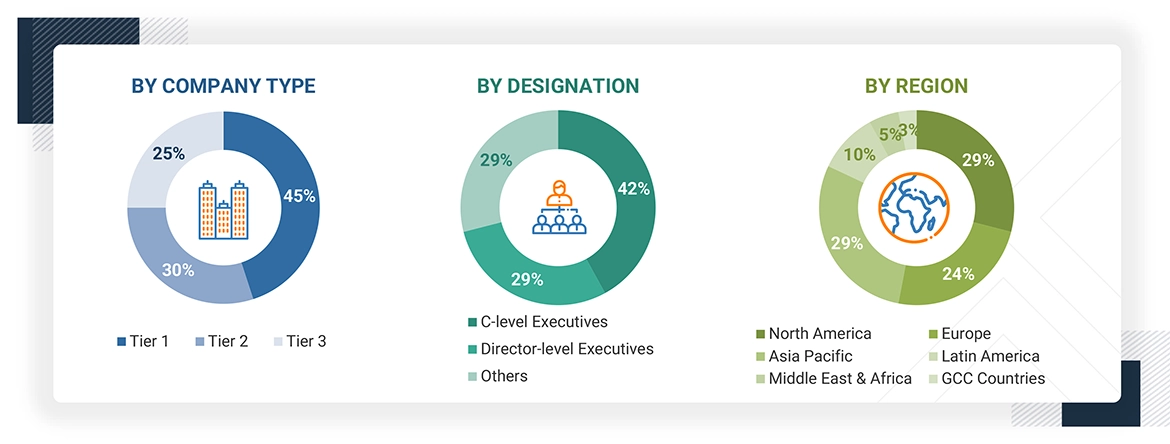
Note 1: C-level primaries include CEOs, COOs, and CTOs.
Note 2: Others include sales managers, marketing managers, and product managers.
Note 3: Companies are classified into tiers based on their total revenue. As of 2024: Tier 1=>USD 1 billion, Tier 2 = USD 500 million to USD 1 billion, Tier 3=< USD 500 million
To know about the assumptions considered for the study, download the pdf brochure
Market Size Estimation
Both top-down and bottom-up approaches were used to estimate and validate the total size of the fluid management systems market. These methods were also used extensively to estimate the size of various subsegments in the market. The research methodology used to estimate the market size includes the following:
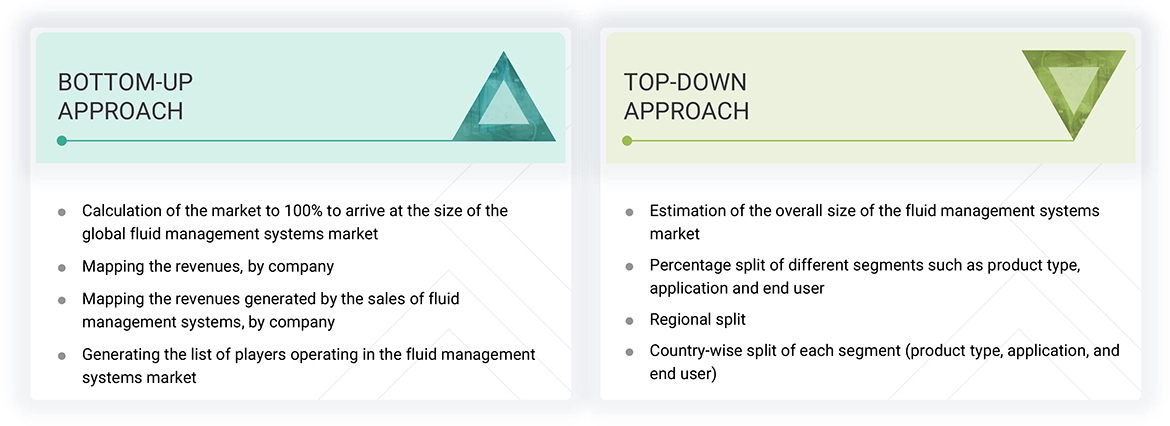
Data Triangulation
When the market size was determined, the entire market was split into three segments. Data triangulation and market breakdown processes were used where necessary to complete the entire market engineering process and arrive at precise statistics for all segments.
Approach to derive the market size and estimate market growth.
Using secondary data from paid and unpaid sources, the market rankings for the major players were determined following a thorough analysis of their sales of fluid management systems. Due to data restrictions, the revenue share in certain cases was determined after a thorough analysis of the product portfolio of big corporations and their individual sales performance. This information was verified at each stage by in-depth interviews with professionals in the field.
Market Definition
Fluid management systems and accessories are used in surgical procedures to perform various functions, such as irrigating and suctioning irrigation fluid, fluid filtration, fluid warming, distention of the body cavity, and collecting and disposing of body fluids and waste.
Stakeholders
- Fluid management system and accessory manufacturers
- Fluid management system and accessory distributors
- Research and development (R&D) companies
- Medical device procurement agencies
- Government bodies/municipal corporations
- Business research and consulting service providers
- Venture capitalists
Report Objectives
- To describe, analyze, and forecast the fluid management systems market, by product, application, end user, and region
- To describe and forecast the fluid management systems market for key regions: North America, Europe, the Asia Pacific, Latin America, the Middle East & Africa, and GCC Countries
- To provide detailed information regarding drivers, restraints, opportunities, and challenges influencing the growth of the fluid management systems market
- To strategically analyze the ecosystem, regulations, patenting trend, value chain, Porter’s five forces, and prices pertaining to the market under study
- To strategically analyze micromarkets with respect to individual growth trends, prospects, and contributions to the overall market
- To analyze market opportunities for stakeholders and provide details of the competitive landscape for market players
- To profile key players and comprehensively analyze their market shares and core competencies in the fluid management systems market
- To analyze competitive developments such as collaborations, acquisitions, product launches, expansions, and R&D activities in the fluid management systems market
Get the Full Fluid Management Systems Market Report
Full forecast, segment splits, and company analysis for all Fluid Management Systems Market.
- Canada Fluid Management Systems Market
- US Fluid Management Systems Market
- Germany Fluid Management Systems Market
- France Fluid Management Systems Market
- UK Fluid Management Systems Market
- Italy Fluid Management Systems Market
- Spain Fluid Management Systems Market
- Japan Fluid Management Systems Market
- India Fluid Management Systems Market
- South Korea Fluid Management Systems Market
- Australia Fluid Management Systems Market
- Brazil Fluid Management Systems Market
- Mexico Fluid Management Systems Market
- GCC Countries Fluid Management Systems Market
- Rest Of Europe Fluid Management Systems Market
- Rest Of Asia Pacific Fluid Management Systems Market
- Rest Of Latin America Fluid Management Systems Market
Need a Tailored Report?
Customize this report to your needs
Get 10% FREE Customization
Customize This Report
