
Asia Pacific Food Pathogen Safety Testing Equipment & Supplies Market (2026-2031)

The Asia Pacific Food Pathogen Safety Testing Equipment & Supplies Market was valued at $871.9 Million in 2026 and projected to reach to $1328.3 Million by 2031, representing a compound annual growth rate of 8.8%. Asia Pacific's food pathogen safety testing market is poised for substantial growth through 2031, driven by heightened regulatory scrutiny, increasing foodborne illness incidents, and rising consumer awareness of food safety standards.


| Market Size in | USD 26.32 MN |
| Market Forecast in | |
| CAGR | |
| Forecast Period | |
| Units Considered | Value (USD MN) |
Asia Pacific Food Pathogen Safety Testing Equipment & Supplies Market Trends and Insights
- Asia Pacific's accelerating growth reflects heightened regulatory scrutiny, increasing foodborne illness incidents, and rising consumer awareness of food safety standards across the region.
- The market in Asia Pacific is driven by rapid industrialization of food production, expanding retail and export sectors, and strengthening government food safety mandates that require advanced pathogen detection technologies. Asia Pacific's market growth outpaces the global average, with an 8.8% compound annual growth rate compared to the global CAGR of 7.8%.
- This differential reflects Asia Pacific's emerging middle class, growing food trade volumes, and investment in modern food safety infrastructure.
- Key markets within Asia Pacific—including China, India, Japan, and Southeast Asia—are adopting PCR-based testing, immunoassay platforms, and rapid detection systems to meet both domestic and international food safety compliance requirements.
- The forecast period through 2031 positions Asia Pacific as a critical growth engine for food pathogen safety testing solutions globally..
Key Market Statistics
- CAGR (2026-2031) 8.8% CAGR
- Market Size, 2026 ~USD 871.9 Million
- Forecast, 2031 ~USD 1328.3 Million
- Geography Asia Pacific
Asia Pacific Food Pathogen Safety Testing Equipment & Supplies Market Overview
Rapid Market Expansion :
Asia Pacific's food pathogen safety testing equipment and supplies market is growing at 8.8% CAGR, outpacing the global rate of 7.8%, driven by stringent regulatory frameworks and increasing food safety compliance requirements across the region.
Rising Foodborne Illness Awareness :
Escalating foodborne illness incidents across Asia Pacific have intensified consumer demand for advanced pathogen detection solutions, prompting food manufacturers and retailers to invest heavily in testing equipment and supplies.
Regulatory Pressure & Compliance :
Governments across China, Japan, India, and Southeast Asia are implementing stricter food safety standards and mandatory pathogen testing protocols, creating sustained demand for certified testing equipment and consumables.
Market Valuation Growth :
The Asia Pacific market is valued at USD 871.9 million in 2026 and is projected to reach USD 1,328.3 million by 2031, representing significant investment opportunities for equipment manufacturers and supply chain providers.
Asia Pacific Food Pathogen Safety Testing Equipment & Supplies Market Dynamics
- The region's expanding food processing industry, coupled with growing international trade requirements, necessitates advanced testing capabilities across manufacturing facilities, distribution centers, and retail environments. Key growth catalysts include government mandates for pathogen testing, modernization of food safety infrastructure in emerging economies, and adoption of rapid detection technologies.
- Investment in laboratory automation and real-time monitoring systems will accelerate market penetration, particularly in China, Japan, India, and Southeast Asia, where food safety regulations continue to tighten and consumer expectations for safe food products remain high..
Market Ecosystem
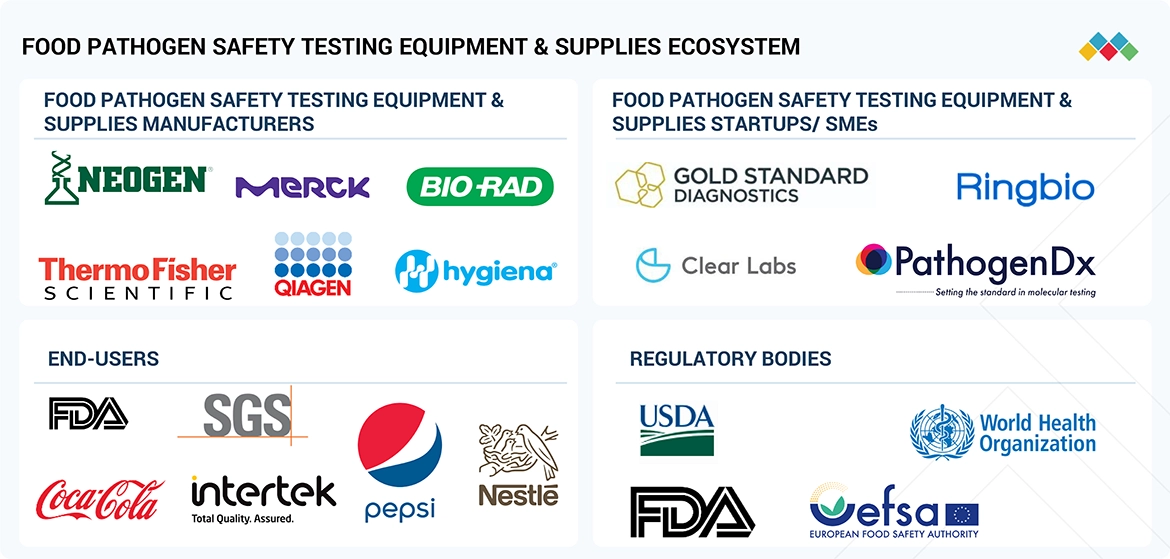
FOOD PATHOGEN SAFETY TESTING EQUIPMENT AND SUPPLIES MARKET: COMMERCIAL USE CASES ACROSS INDUSTRIES
| COMPANY | USE CASE DESCRIPTION | BENEFITS |
|---|---|---|
 |
Bio-Rad offers molecular diagnostic assays like real-time PCR assays to detect and characterize foodborne pathogens in dairy, seafood, and ready-to-eat food products. | Enhances sensitivity and testing efficiency of the detection as well as assist in the regular monitoring of microbes in the food production setting |
 |
Merck provides microbial culture media, reagents, and sterile sampling systems that are utilised by laboratories in food contamination testing to detect contamination during the processing and packaging phase. | Assures good growth and analysis of microbes, facilitates good testing results and quality control in food safety operations |
 |
Neogen invents systems of integrated pathogen detection and consumable kits of food sample testing in processing plants and third-party service laboratories. | Improves testing throughput and consistency and makes it possible to effectively monitor contamination among food high-risk categories |
Logos and trademarks shown above are the property of their respective owners. Their use here is for informational and illustrative purposes only.
Related Ecosystem
Food Safety And Tic
- Dairy Products
- Polymerase Chain Reaction (PCR)
- Campylobacter
- Enzyme-Linked Immunosorbent Assay (ELISA)
- Safety Testing
- EUROFINS SCIENTIFIC SE
- Intertek Group plc
- Sgs s.a.
- Als limited
- PROMEGA CORPORATION
Key Takeaways
- Asia Pacific's food pathogen safety testing market will grow from USD 871.9 million (2026) to USD 1,328.3 million (2031) at an 8.8% CAGR, outpacing global growth.
- Regulatory tightening and export-driven food safety standards are accelerating adoption of advanced pathogen detection equipment across Asia Pacific.
- China, India, Japan, and Southeast Asia represent the largest growth opportunities within Asia Pacific due to expanding food manufacturing and trade.
- Rapid detection technologies and molecular testing platforms are becoming essential compliance tools for food producers and exporters in Asia Pacific.
Food Pathogen Safety Testing Equipment & Supplies Market Report Scope
| Report Metric | Details |
|---|---|
| Base Year | 2026 |
| Fastest Growing Segment | GMOS (Target Tested) |
| Forecast Period | 2026–2031 |
| Growth Rate | CAGR of 7.8% from 2026 to 2031 |
| Largest Segment | PATHOGENS (Target Tested) |
| Market Size Base Year (Billions) | ~USD 9.1 (2026) |
| Revenue Forecast (Billions) | ~USD 13.25 (2031) |
| Segments Covered | Type, Subtype, Food Tested, Site, System, Target Tested |
Asia Pacific Food Pathogen Safety Testing Equipment & Supplies Market Report Segmentation
6 segment dimensions are covered across the global market.
By Type
- Consumables
- Consumables & Kits
- Microbial Culture Media
- Systems
- Test Kits
By Subtype
- Chromatography-Based
- Hybridization-Based
- Immunoassay-Based
- Microbial Culture Media
- Reagents & Other Consumables
- Spectrometry-Based
- Test Kits
By Food Tested
- Cereals & Grains
- Dairy Products
- Fish & Seafood
- Fruits & Vegetables
- Meat & Poultry
- Other Food Products
- Processed Food
By Site
- Government Labs
- In-House Laboratories (Factory Labs)
- Outsourcing Facilities (Service Labs)
By System
- Chromatography-Based
- Hybridization-Based
- Immunoassay-Based
- Spectrometry-Based
By Target Tested
- Allergens
- Gmos
- Heavy Metals
- Other Targets Tested
- Pathogens
- Pesticides
- Toxins
Target Audience
- Food Testing Equipment Manufacturers : Manufacturers need Asia Pacific market data to identify growth opportunities, understand regional regulatory requirements, and develop products tailored to the region's expanding food safety testing demand.
- Laboratory & Testing Service Providers : Testing laboratories require market insights to forecast demand for pathogen detection services, plan capacity expansion, and invest in advanced equipment to meet growing compliance requirements across Asia Pacific.
- Food & Beverage Producers : F&B manufacturers need to understand testing equipment availability, compliance standards, and supply chain options in Asia Pacific to implement robust food safety programs and meet regulatory mandates.
- Regulatory & Government Agencies : Government food safety authorities require market intelligence to develop effective food safety policies, identify technology gaps, and support industry compliance initiatives across Asia Pacific nations.
- Investors & Business Consultants : Investment firms and consultants need Asia Pacific market forecasts and growth drivers to identify acquisition targets, evaluate market entry strategies, and support due diligence for food safety sector investments.
Key Companies in the Asia Pacific Food Pathogen Safety Testing Equipment & Supplies Market
| Company | HQ | Ownership | Strongest segments |
|---|---|---|---|
| THERMO FISHER SCIENTIFIC INC. | United States | Public Company | Life Sciences Solutions,Analytical Instruments,Specialty Diagnostics, |
| BIO-RAD LABORATORIES, INC. | United States | Public Company | Clinical Diagnostics,Life Science Research Tools,Informatics and Software, |
| MERCK KGAA | United States | Public Company | Life Science (reagents, consumables, instruments, software, services),Bioprocessing and CDMO (traditional and novel therapies support),Healthcare (oncology, rare diseases, neurology, immunology, fertility, cardio-metabolic), |
| NEOGEN CORPORATION | United States | Public Company | Food Safety Diagnostics & Consumables,Animal Safety Products & Instruments,Genomics Services (Livestock & Companion Animals), |
| SHIMADZU CORPORATION | Japan | Public Company | Analytical & Measuring Instruments (chromatography, MS, spectroscopy, TOC, thermal, particle, balances, software),Medical Systems (angiography, fluoroscopy, radiography, mobile X-ray, PET, fluorescence imaging),Vacuum & Industrial Machinery, Mechatronics, Hydraulic Equipment, |
| BIOMéRIEUX | France | Public Company | Clinical microbiology (VITEK, CHROMID, culture media, BACT/ALERT),Molecular diagnostics (BIOFIRE, SPOTFIRE, ARGENE, NUCLISENS/EMAG),Immunoassays and sepsis markers (VIDAS, Hybiome CLIA), |
| AGILENT TECHNOLOGIES, INC. | United States | Public Company | Life Sciences and Diagnostics Markets,Agilent CrossLab,Applied Markets, |
| QIAGEN | Netherlands | Public Company | Sample technology consumables (nucleic acid purification, stabilization),Molecular diagnostics assays (TB IGRA, oncology, SRH, transplant, viral load),PCR and NGS research consumables and instruments, |
| BRUKER | United States | Public Company | BSI BioSpin (NMR, EPR, preclinical imaging),BSI CALID (mass spectrometry, molecular diagnostics, automation, digital),BSI Nano (X-ray, AFM, electron microscopy analytics, optical microscopy), |
| PERKINELMER INC. | United States | Public Company | Diagnostics instruments and detection platforms,Diagnostics reagents, assays, and screening panels,Life science reagents and consumables, |
| ROKA BIO SCIENCE | United States | Private Company | Atlas instruments (capital sales and leases),Atlas detection assays – Salmonella,Atlas detection assays – Listeria & L. monocytogenes, |
THERMO FISHER SCIENTIFIC INC.
Thermo Fisher Scientific Inc. is a leading global provider of laboratory equipment, reagents, and services for scientific research and diagnostics. Founded in 1956 and headquartered in the United States, the company operates as a public entity with approximately 125,000 employees worldwide.
BIO-RAD LABORATORIES, INC.
Bio-Rad Laboratories, Inc. is a publicly traded American company founded in 1952 that manufactures and distributes life science research products and clinical diagnostics solutions. With 7,450 employees, the company serves customers in research, healthcare, and industrial markets.
MERCK KGAA
Merck KGaA is a diversified science and technology company with roots dating back to 1668, operating as a public company with approximately 59,077 employees. The company provides pharmaceuticals, life sciences, and performance materials solutions globally.
NEOGEN CORPORATION
Neogen Corporation is an American public company founded in 1981 that develops and markets products for food and animal safety, as well as genomics solutions. With 2,974 employees, the company serves customers across food production, agriculture, and life sciences sectors.
SHIMADZU CORPORATION
Shimadzu Corporation is a Japanese public company established in 1875 that manufactures analytical and measuring instruments, medical devices, and industrial equipment. The company employs approximately 14,649 people and serves customers worldwide across multiple industries.
BIOMéRIEUX
bioMérieux is a French public company founded in 1963 specializing in in vitro diagnostics and microbiology testing solutions for clinical and industrial applications. With 14,894 employees, the company is a global leader in diagnostic testing and microbial detection.
AGILENT TECHNOLOGIES, INC.
Agilent Technologies, Inc. is an American public company founded in 1999 that provides analytical instruments, software, and services for life sciences, diagnostics, and applied chemical markets. The company employs approximately 18,000 people globally.
QIAGEN
QIAGEN is a Netherlands-based public company founded in 1984 that develops and manufactures molecular diagnostics and life sciences products. With 5,500 employees, the company serves research, clinical, and applied testing markets worldwide.
BRUKER
Bruker is an American public company founded in 1960 that manufactures scientific instruments for molecular and materials research, including mass spectrometry and analytical systems. The company employs approximately 11,085 people globally.
PERKINELMER INC.
PerkinElmer Inc. is an American public company established in 1937 that provides diagnostic and research instruments, software, and services for life sciences and environmental testing. With 11,000 employees, the company serves healthcare, pharmaceutical, and industrial customers.
ROKA BIO SCIENCE
Roka Bioscience is a privately held American company founded in 2009 with 90 employees that develops molecular diagnostic solutions and real-time PCR-based testing technologies. The company focuses on rapid and accurate detection systems for various applications.
Countries within Asia Pacific - compare and drill down
| Country | 2025 size (native) |
|---|---|
| China | USD 849.5 Million |
| Japan | USD 921.6 Million |
| India | USD 653.7 Million |
| Australia & New Zealand | USD 548.5 Million |
| Southeast Asia | USD 372.7 Million |
| Rest Of Asia Pacific | USD 288.1 Million |
Country market size visualization
Reasons to Buy this Report
- Regional Market Intelligence : Gain detailed insights into Asia Pacific's fastest-growing food safety market with country-level data on China, Japan, India, Australia, and Southeast Asia to identify high-potential investment and expansion opportunities.
- Competitive Positioning Strategy : Understand regional regulatory requirements, consumer preferences, and competitive dynamics specific to Asia Pacific to develop targeted product strategies and market entry plans for testing equipment and supplies.
- Growth Forecasting & Planning : Access accurate 5-year forecasts (2026-2031) with 8.8% CAGR projections to support capital allocation, R&D investment decisions, and long-term business planning in the Asia Pacific region.
- Regulatory Compliance Roadmap : Identify emerging food safety regulations and mandatory testing standards across Asia Pacific countries to ensure product compliance and anticipate market-driven demand shifts for testing solutions.
- Supply Chain Optimization : Leverage market data to optimize distribution networks, identify key customer segments, and establish strategic partnerships with food manufacturers and testing laboratories across Asia Pacific.
Frequently asked questions
What is the projected market size for food pathogen safety testing in Asia Pacific by 2031?
Asia Pacific's food pathogen safety testing equipment and supplies market is projected to reach USD 1,328.3 million by 2031, up from USD 871.9 million in 2026.
What is the CAGR for Asia Pacific's food pathogen safety testing market?
Asia Pacific's market is expected to grow at a compound annual growth rate of 8.8% between 2026 and 2031, exceeding the global CAGR of 7.8%.
Which countries drive the largest demand for pathogen testing equipment in Asia Pacific?
China, India, Japan, and Southeast Asian nations are the primary growth drivers in Asia Pacific, fueled by expanding food manufacturing, export requirements, and regulatory enforcement.
What technologies are most in demand in Asia Pacific's food safety testing market?
PCR-based molecular testing, immunoassay platforms, and rapid pathogen detection systems are the most sought-after technologies in Asia Pacific to meet compliance and export standards.
Why is Asia Pacific's market growing faster than the global average?
Asia Pacific's above-average growth is driven by rapid food industry industrialization, increasing international trade, rising regulatory standards, and growing consumer food safety awareness across the region.
RESEARCH METHODOLOGY
This study employed two primary approaches to estimate the current size of the food pathogen safety testing equipment & supplies market. Exhaustive secondary research was conducted to collect information on the type, food tested, site, and technology (qualitative) segments of the market. The next step involved validating these findings, assumptions, and sizing with industry experts across the value chain through primary research. The top-down and bottom-up approaches were employed to estimate the complete market size. Thereafter, data triangulation was used to estimate the market size of segments and subsegments.
Secondary Research
This research study utilized extensive secondary sources, including directories and databases such as Bloomberg Businessweek and Factiva, to identify and collect information for a technical, market-oriented, and commercial market study. In the secondary research process, sources such as annual reports, press releases & investor presentations of companies, white papers, journals, certified publications, articles from recognized authors, directories, and databases were referred to for identifying and collecting information. Secondary research was mainly used to obtain key information about the industry’s supply chain, the pool of key players, and market classification and segmentation based on the industry trends to the bottom-most level, regional markets, and key developments from market- and technology-oriented perspectives.
Primary Research
Extensive primary research was conducted after obtaining information regarding the food pathogen safety testing equipment & supplies market scenario through secondary research. Several primary interviews were conducted with market experts from the demand and supply sides across major countries of North America, Europe, Asia Pacific, South America, and the Rest of the World. Primary data was collected through questionnaires, emails, and telephonic interviews. The primary sources from the supply side included various industry experts, such as chief experience officers (CXOs), vice presidents (VPs), directors from business development, marketing, research, and development teams, as well as key executives from distributors and key opinion leaders.
Primary interviews were conducted to gather insights, including market statistics, revenue data from products and services, market breakdowns, market size estimations, market forecasting, and data triangulation. Primary research also helped to understand the various trends related to type, food tested, site, technology (qualitative), and region. Stakeholders from the demand side, such as distributors, importers, exporters, and end-use sectors such as meat & poultry, fish & seafood, processed food, fruits & vegetables, dairy products cereals & grains, and other food products industries, were interviewed to understand the buyers’ perspective on the suppliers, products, and the outlook of their business, which will affect the overall market.
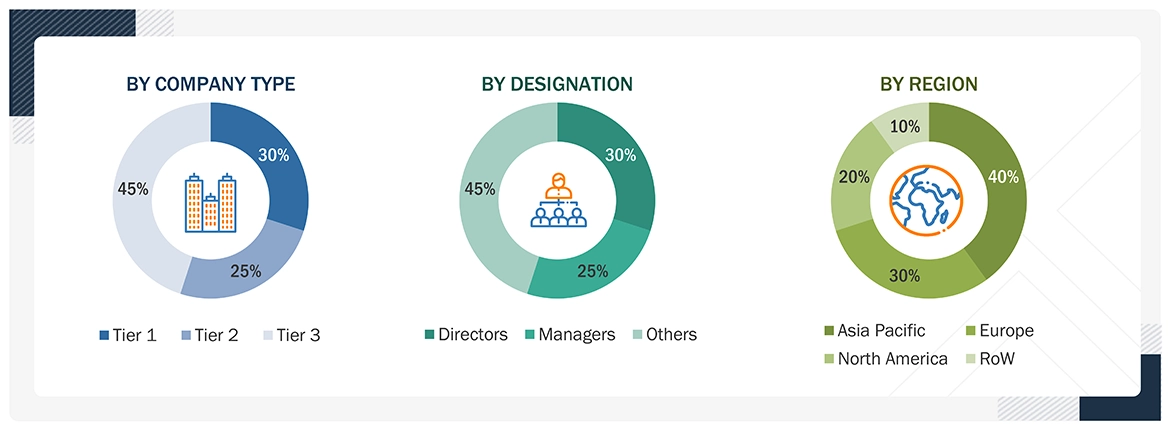
Note: The three tiers of the companies are defined based on their total revenues in 2023 or 2024, based on the availability of financial data: Tier 1: Revenue > USD 1 billion; Tier 2: USD 100 million ≤ revenue ≤ USD 1 billion; Tier 3: Revenue < USD 100 million. RoW includes Africa and the Middle East.
To know about the assumptions considered for the study, download the pdf brochure
| COMPANY NAME | DESIGNATION | |
|---|---|---|
| Abbvie, Inc. (US) | Marketing Manager | |
| InMode Ltd. (US) | Senior Product Manager | |
| Bausch Health Companies, Inc. (US) | Marketing Manager | |
Market Size Estimation
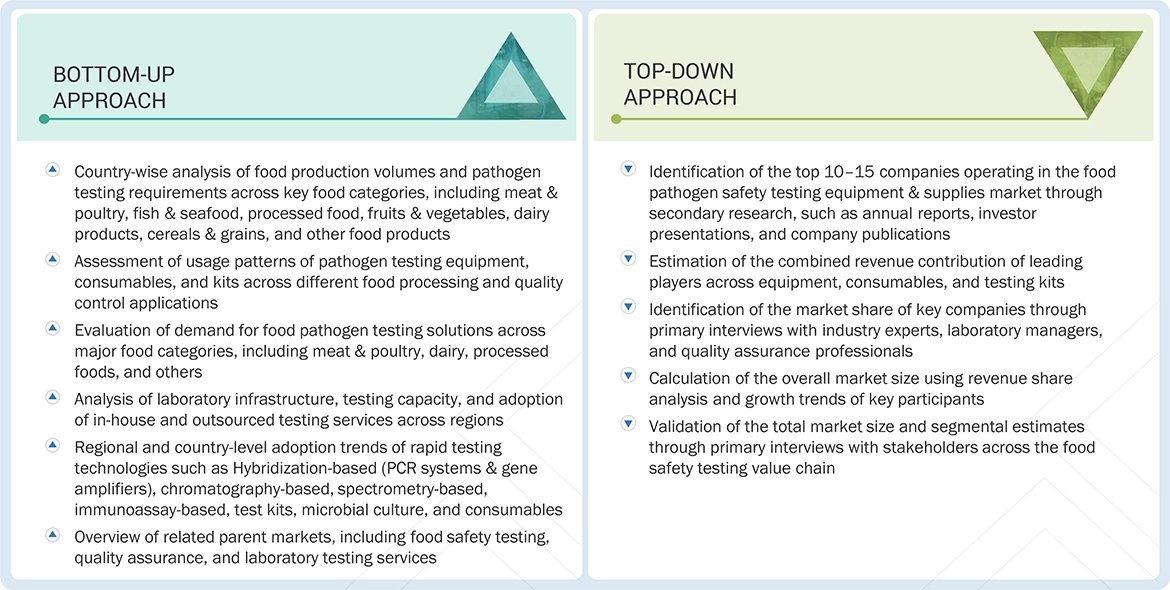
The top-down and bottom-up approaches were used to estimate and validate the total size of the food pathogen safety testing equipment & supplies market. These approaches were also used extensively to determine the size of various subsegments in the market. The research methodology used to estimate the market size includes the following details:
- The key players in the industry and the overall markets were identified through extensive secondary research.
- All shares, splits, and breakdowns were determined using secondary sources and verified through primary sources.
- All possible parameters that affect the market covered in this research study were accounted for, viewed in extensive detail, verified through primary research, and analyzed to obtain final quantitative and qualitative data.
- The research included the study of reports, reviews, and newsletters of top market players, along with extensive interviews for opinions from leaders, such as CEOs, directors, and marketing executives.
Food Pathogen Safety Testing Equipment & Supplies Market: Bottom-up and Top-down Approaches
Data Triangulation
After determining the overall market size from the estimation process explained above, the total market was split into several segments and subsegments. The data triangulation procedure was employed, wherever applicable, to estimate the overall food pathogen safety testing equipment & supplies market and obtain precise statistics for all segments and subsegments. The data was triangulated by studying various factors and trends from the demand and supply sides. The market size was also validated using the top-down and bottom-up approaches.
Market Definition
Food pathogen safety testing equipment and supplies are designed to identify food contamination and quality parameters at various supply chain stages, including storage, manufacturing, processing, and packaging. Food pathogen safety testing equipment includes systems that detect the presence of microbial contaminants in food samples to help monitor the safety of food samples. It also includes systems, test kits, and microbial culture media essential to perform food safety tests and obtain accurate and specific results.
Food safety testing is performed to supervise the quality and prevent unwanted foodborne illnesses, toxicity, or poisoning incidents.
- “Food safety audit” means a systematic and functionally independent examination of food safety measures adopted by manufacturing units to determine whether such measures and related results meet food safety objectives.
- “Food Safety Management System (FSMS)” means adopting good manufacturing practices, good hygienic practices, hazard analysis, critical control points, and other practices as may be specified by the regulations for the food business.
According to Governing Food Security in Indonesia, the Food Law No 18/2012: “Food safety is a condition and effort that is required to prevent food from the possibility of biological, chemical, and other pollution that can interfere, harm, and endanger the human health as well as not conflicting with religion, belief, and culture of the society so that it is safe for consumption.
Stakeholders
- Manufacturers and suppliers of food pathogen safety testing equipment and supplies
- Intermediate stakeholders, including distributors, retailers, associations, and regulatory bodies
- Food manufacturers and processors
- Manufacturers and traders of food products, including bakery products, snacks & spreads, ready meals, confectionery products, meat & poultry products, fish & seafood, fruits & vegetables, dairy products, and other applications
- Trade associations and industry bodies
- Government organizations, research organizations, and consulting firms
- Importers and exporters of food ingredients
-
Associations, regulatory bodies, and other industry-related bodies:
- Food and Agriculture Organization (FAO)
- United States Department of Agriculture (USDA)
- Food and Drug Administration (FDA)
- European Food Safety Agency (EFSA)
- Food Standards Australia New Zealand (FSANZ)
- Food Safety and Standards Authority of India (FSSAI)
Report Objectives
- To determine and project the size of the food pathogen safety testing equipment & supplies market based on type, food tested, site, and technology (qualitative), region, over five years, ranging from 2026 to 2031
- To identify the attractive opportunities in the market by determining the largest and fastest-growing segments across regions
- To provide detailed information about the key factors influencing market growth (drivers, restraints, opportunities, and challenges)
- To analyze the opportunities in the market for stakeholders and provide details of the competitive landscape for market leaders
- To analyze the micromarkets with respect to individual growth trends, prospects, and their contribution to the total market
- To identify and profile the key players in the market
- To understand the competitive landscape and identify the major growth strategies adopted by players across the key regions
Get the Full Food Pathogen Safety Testing Equipment & Supplies Market Report
Full forecast, segment splits, and company analysis for all Food Pathogen Safety Testing Equipment & Supplies Market.
- US Food Pathogen Safety Testing Equipment & Supplies Market
- Canada Food Pathogen Safety Testing Equipment & Supplies Market
- Mexico Food Pathogen Safety Testing Equipment & Supplies Market
- Germany Food Pathogen Safety Testing Equipment & Supplies Market
- France Food Pathogen Safety Testing Equipment & Supplies Market
- UK Food Pathogen Safety Testing Equipment & Supplies Market
- Italy Food Pathogen Safety Testing Equipment & Supplies Market
- Spain Food Pathogen Safety Testing Equipment & Supplies Market
- Poland Food Pathogen Safety Testing Equipment & Supplies Market
- China Food Pathogen Safety Testing Equipment & Supplies Market
- Japan Food Pathogen Safety Testing Equipment & Supplies Market
- India Food Pathogen Safety Testing Equipment & Supplies Market
- Brazil Food Pathogen Safety Testing Equipment & Supplies Market
- Argentina Food Pathogen Safety Testing Equipment & Supplies Market
- Rest Of Europe Food Pathogen Safety Testing Equipment & Supplies Market
- Rest Of Asia Pacific Food Pathogen Safety Testing Equipment & Supplies Market
- Southeast Asia Food Pathogen Safety Testing Equipment & Supplies Market
- Rest Of South America Food Pathogen Safety Testing Equipment & Supplies Market
Need a Tailored Report?
Customize this report to your needs
Get 10% FREE Customization
Customize This Report
