
Asia Pacific Halal Empty Capsules Market (2024-2029)

The Asia Pacific Halal Empty Capsules Market was valued at $343.7 Million in 2024 and projected to reach to $458 Million by 2029, representing a compound annual growth rate of 5.9%. Asia Pacific's halal empty capsules market is poised for sustained expansion, driven by rising consumer consciousness regarding halal certification and the region's expanding pharmaceutical and nutraceutical sectors.


| Market Size in | USD 26.32 MN |
| Market Forecast in | |
| CAGR | |
| Forecast Period | |
| Units Considered | Value (USD MN) |
Asia Pacific Halal Empty Capsules Market Trends and Insights
- Asia Pacific's market expansion is driven by increasing demand for halal-certified pharmaceutical and nutraceutical products across Muslim-majority populations and growing consumer awareness of halal compliance.
- The region's 5.9% compound annual growth rate reflects rising healthcare spending, expanding pharmaceutical manufacturing capabilities, and stringent regulatory requirements for halal certification in countries such as Malaysia, Indonesia, and Pakistan. Asia Pacific represents a critical hub for halal empty capsule production and consumption, supported by robust supply chains and established halal certification frameworks.
- The market growth from 2024 to 2029 is underpinned by increasing adoption of plant-based and gelatin-free capsule alternatives, rising prevalence of chronic diseases requiring pharmaceutical interventions, and growing investment in contract manufacturing facilities across Asia Pacific.
- Consumer preference for halal-certified supplements and medicines continues to strengthen Asia Pacific's position as a key regional market within the global halal empty capsules industry..
Key Market Statistics
- CAGR (2024-2029) 5.9% CAGR
- Market Size, 2024 ~USD 343.7 Million
- Forecast, 2029 ~USD 458 Million
- Geography Asia Pacific
Asia Pacific Halal Empty Capsules Market Overview
Market Valuation & Growth Trajectory :
Asia Pacific's halal empty capsules market is valued at USD 343.7 million in 2024, with a robust 5.9% CAGR projected through 2029, reaching USD 458.0 million. This outpaces the global CAGR of 5.4%, positioning the region as a key growth driver.
Muslim-Majority Population Demand :
The region's large Muslim-majority populations across Southeast Asia, South Asia, and the Middle East drive significant demand for halal-certified pharmaceutical and nutraceutical products, creating sustained market expansion opportunities.
Regulatory Compliance & Certification :
Increasing consumer awareness and stringent halal compliance requirements across Asia Pacific are pushing manufacturers to adopt halal-certified empty capsules, strengthening market penetration and brand loyalty.
Emerging Market Opportunities :
Growing pharmaceutical and dietary supplement industries in China, India, and Southeast Asian nations present untapped opportunities for halal empty capsule manufacturers seeking regional expansion.
Asia Pacific Halal Empty Capsules Market Dynamics
- The 5.9% CAGR reflects strong demand from Muslim-majority populations seeking compliant products, coupled with regulatory mandates for halal labeling across key markets. Manufacturers are increasingly investing in halal-certified production facilities and supply chain transparency to capture market share.
- Strategic partnerships between capsule producers and pharmaceutical companies, combined with growing e-commerce penetration for health supplements, will further accelerate market growth through 2029.
- Regional players are expected to dominate, leveraging local expertise and compliance certifications..
Market Ecosystem
Related Ecosystem
Pharmaceuticals
- Bioreactors
- Analytical Testing
- Bioanalytical Testing Services
- Cell Counters
- Data Management Services
- Thermo Fisher Scientific Inc.
- SANOFI
- Merck KGaA
- NOVARTIS
- Pfizer Inc.
Drug Delivery Devices
- Disposable Autoinjectors
- Reusable Autoinjectors
- Insulin Pumps
- Pen Injectors
- Transdermal Patches
- Novo nordisk a/s
- Becton, Dickinson and Company
- Terumo Corporation
- Medtronic plc
- Nipro Corporation
Key Takeaways
- Asia Pacific halal empty capsules market valued at USD 343.7 million in 2024, expanding to USD 458.0 million by 2029 at 5.9% CAGR
- Asia Pacific demand driven by Muslim-majority populations, halal certification requirements, and growing pharmaceutical manufacturing infrastructure
- Plant-based and gelatin-free capsule alternatives gaining traction across Asia Pacific due to religious and dietary preferences
- Asia Pacific's regulatory frameworks and established halal certification bodies support sustained market growth through 2029
Halal Empty Capsules Market Report Scope
| Report Metric | Details |
|---|---|
| Base Year | 2024 |
| Fastest Growing Segment | NUTRACEUTICAL INDUSTRY (End User) |
| Forecast Period | 2024-2029 |
| Growth Rate | CAGR of 5.4% from 2024 to 2029 |
| Largest Segment | GELATIN HALAL EMPTY CAPSULES (Type) |
| Market Size Base Year (Billions) | ~USD 1.19 (2024) |
| Revenue Forecast (Billions) | ~USD 1.55 (2029) |
| Segments Covered | Type, End User |
Asia Pacific Halal Empty Capsules Market Report Segmentation
2 segment dimensions are covered across the global market.
By Type
- Gelatin Halal Empty Capsules
- Non-Gelatin Halal Empty Capsules
By End User
- Nutraceutical Industry
- Other End Users
- Pharmaceutical Industry
Target Audience
- Pharmaceutical Manufacturers : Pharmaceutical companies operating in Asia Pacific require halal-certified empty capsules to meet regulatory compliance and consumer demand, making regional market data critical for sourcing and production planning.
- Nutraceutical & Supplement Producers : Dietary supplement and nutraceutical manufacturers targeting Muslim-majority populations need insights into halal certification trends and market opportunities across Asia Pacific to expand product portfolios.
- Capsule Manufacturers & Suppliers : Empty capsule producers seeking to expand operations in Asia Pacific require detailed market sizing, growth forecasts, and country-level data to identify investment opportunities and capacity planning needs.
- Healthcare Distributors & Retailers : Pharmaceutical distributors and retail chains across Asia Pacific need market intelligence to stock halal-certified products and understand consumer demand patterns by country and segment.
- Investment & Private Equity Firms : Investors evaluating opportunities in Asia Pacific's pharmaceutical and nutraceutical sectors require comprehensive market data to assess growth potential and identify acquisition or partnership targets.
Countries within Asia Pacific - compare and drill down
| Country | 2025 size (native) |
|---|---|
| China | USD 95.8 Million |
| India | USD 70.4 Million |
| Japan | USD 58.2 Million |
| Rest Of Asia Pacific | USD 47.1 Million |
Country market size visualization
Reasons to Buy this Report
- Regional Market Intelligence : Gain comprehensive insights into Asia Pacific's halal empty capsules market dynamics, including country-level breakdowns for China, India, Japan, and Rest of Asia Pacific to inform localized strategies.
- Growth Opportunity Identification : Identify high-potential markets within Asia Pacific experiencing above-average growth rates and emerging demand for halal-certified products across pharmaceutical and nutraceutical sectors.
- Competitive Landscape Analysis : Understand regional competitive positioning, market consolidation trends, and key player strategies specific to Asia Pacific's unique regulatory and cultural requirements.
- Regulatory & Compliance Guidance : Access detailed information on halal certification requirements, compliance standards, and regulatory frameworks across major Asia Pacific markets to mitigate market entry risks.
- Investment & Expansion Planning : Leverage market forecasts and country-specific data to support investment decisions, facility location planning, and partnership development across the Asia Pacific region through 2029.
Frequently asked questions
What is the current market size of halal empty capsules in Asia Pacific?
The Asia Pacific halal empty capsules market was valued at USD 343.7 million in 2024 and is projected to grow to USD 458.0 million by 2029.
What is the expected growth rate for Asia Pacific halal empty capsules?
Asia Pacific halal empty capsules market is expected to grow at a compound annual growth rate (CAGR) of 5.9% from 2024 to 2029.
Which countries in Asia Pacific are driving halal empty capsules demand?
Key markets in Asia Pacific include Malaysia, Indonesia, Pakistan, and other Muslim-majority nations with strong halal certification frameworks and growing pharmaceutical manufacturing sectors.
What types of capsules are most popular in Asia Pacific?
Plant-based and gelatin-free halal empty capsules are gaining significant traction in Asia Pacific due to religious compliance, dietary preferences, and consumer demand for vegetarian alternatives.
What factors are driving growth in Asia Pacific halal empty capsules market?
Key growth drivers include rising healthcare spending, expanding pharmaceutical manufacturing, stringent halal certification requirements, increasing chronic disease prevalence, and growing consumer awareness of halal-certified products.
RESEARCH METHODOLOGY
The research study involved the wide use of secondary sources, directories, and databases to identify and collect valuable information for the analysis of the global halal empty capsules market. Extensive interviews were conducted with various primary participants, including key industry members, subject-matter experts (SMEs), C-level managers of leading market players, and industry consultants, to obtain and verify qualitative and quantitative information and evaluate the growth scenarios of the market. The global market size estimated through secondary research (top down and bottom-up) followed by data triangulation with inputs from industry experts to arrive at the final market size.
Secondary Research
Secondary research was used mainly to identify and collect information for the technical, market-oriented, and commercial study of the halal empty capsules market. The secondary sources used for this study include Food and Drug Administration (FDA), Islamic Food and Nutrition Council of America (IFANCA), Halal Industry Development Corporation (HIDC), The Association of Southeast Asian Nations (ASEAN), Malaysia’s Department of Islamic Development (JAKIM), Halal Certification Europe (HCE), research journals; corporate filings such as annual reports, SEC filings, investor presentations, and financial statements; press releases; trade, business, professional associations and among others. These secondary sources were also used to obtain major information about key market players, and market segmentation corresponding to industry trends, regional/country-level markets, market developments, and technology prospects. Secondary data was collected and analysed to arrive at the market size of the global halal empty capsules market, which was further validated through primary research.
Primary Research
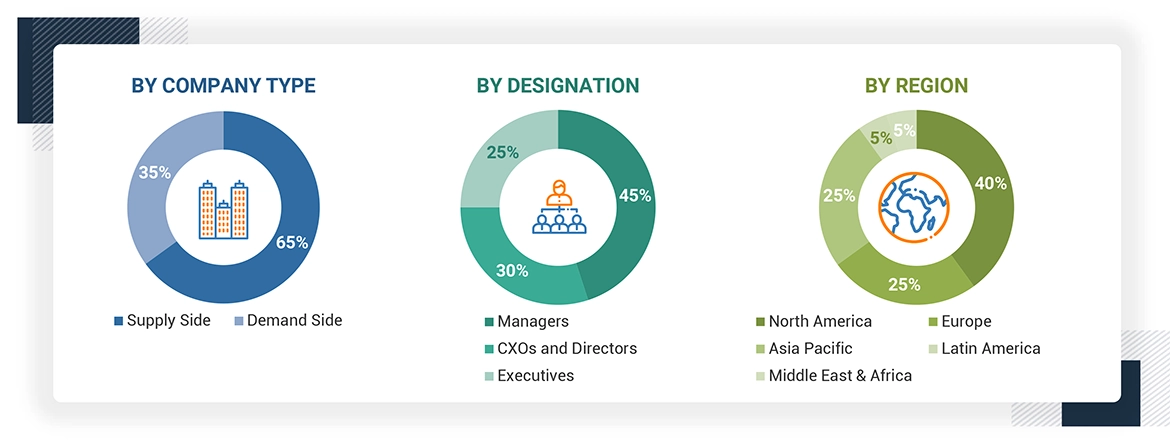
Extensive primary research was conducted after acquiring basic knowledge about the global halal empty capsules market scenario through secondary research. Several primary interviews were conducted with market experts from the demand side, such as pharmaceutical industry, nutraceutical industry, cosmetic industry from the supply side, such as C-level and D-level executives, product managers, marketing & sales managers of key manufacturers, distributors, and channel partners. The primary interviews were conducted across five major regions, including the North America, Europe, Asia Pacific, Latin America, and Middle East & Africa. Approximately 65% and 35% of the primary interviews were conducted with supply-side and demand-side participants, respectively. This primary data was collected through questionnaires, e-mails, online surveys, personal interviews, and telephonic interviews.
The following is a breakdown of the primary respondents:
To know about the assumptions considered for the study, download the pdf brochure
Market Size Estimation
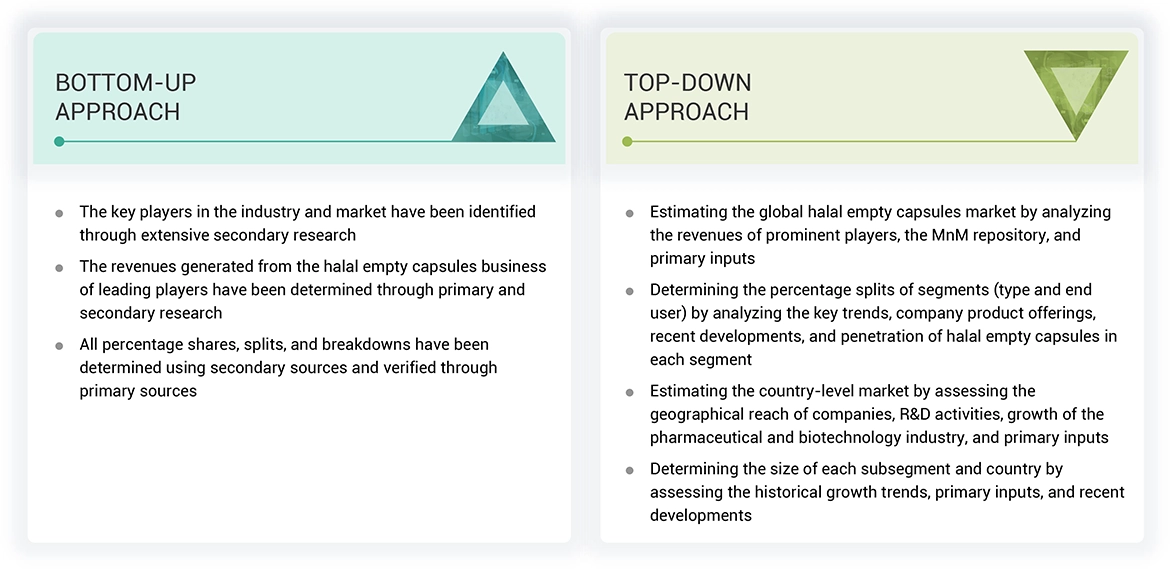
Both top-down and bottom-up approaches were used to estimate and validate the total size of the halal empty capsules market. These methods were also used extensively to estimate the size of various subsegments in the market. The research methodology used to estimate the market size includes the following:
Data Triangulation
After arriving at the market size from the market size estimation process explained above, the total market was divided into several segments and subsegments. To complete the overall market engineering process and arrive at the exact statistics for all segments and subsegments, data triangulation and market breakdown procedures were employed, wherever applicable. The data was triangulated by studying various factors and trends from both the demand and supply sides.
Market Definition
Halal empty capsules are capsules that meet Islamic dietary laws and are suitable for consumption. The ingredients used for halal empty capsules production are derived from halal sources. The capsules should not contain any components from forbidden (haram) animals or materials. The scope of the report covers halal certified empty capsules (gelatin and non-gelatin).
Stakeholders
- Halal Empty Capsules Manufacturing Companies
- Suppliers and distributors of halal empty capsules
- Raw Material Suppliers
- Government bodies/Certification Bodies
- Regulatory bodies
- Pharmaceutical Companies
- Nutraceutical Companies
- Cosmetic Companies
- Business research and consulting service providers
- Venture capitalists
- Market research and consulting firms
Report Objectives
- To define, describe, analyze, and forecast the halal empty capsules market by type, end user, and region
- To provide detailed information regarding the major factors influencing market growth (such as drivers, restraints, opportunities, and challenges)
- To strategically analyze micromarkets1 with respect to individual growth trends, prospects, and contributions to the halal empty capsules market
- To analyze opportunities in the market for stakeholders and provide details of the competitive landscape for market leaders
- To forecast the size of the market segments with respect to five main regions: North America, Europe, the Asia Pacific, Latin America, and Middle East & Africa
- To profile the key players in the halal empty capsules market and comprehensively analyze their product portfolios, market positions, and core competencies
- To track and analyze competitive developments in the halal empty capsules market, such as acquisitions, product launches, expansions, agreements, partnerships, and collaborations
- To benchmark players within the halal halal empty capsules market using the ‘Company Evaluation Matrix' framework, which analyzes market players based on various parameters within the broad categories of business strategy and product strategy
Get the Full Halal Empty Capsules Market Report
Full forecast, segment splits, and company analysis for all Halal Empty Capsules Market.
- Canada Halal Empty Capsules Market
- China Halal Empty Capsules Market
- France Halal Empty Capsules Market
- Germany Halal Empty Capsules Market
- India Halal Empty Capsules Market
- Italy Halal Empty Capsules Market
- Japan Halal Empty Capsules Market
- Rest Of Asia Pacific Halal Empty Capsules Market
- Rest Of Europe Halal Empty Capsules Market
- Spain Halal Empty Capsules Market
- UK Halal Empty Capsules Market
- US Halal Empty Capsules Market
Need a Tailored Report?
Customize this report to your needs
Get 10% FREE Customization
Customize This Report
