
US High-Throughput Screening (HTS) Market (2026-2031)

The US High-Throughput Screening (HTS) Market was valued at $241 Million in 2026 and projected to reach to $300.7 Million by 2031, representing a compound annual growth rate of 7.7%. The US High-Throughput Screening market is poised for steady growth through 2031, supported by robust pharmaceutical R&D spending, increasing prevalence of chronic diseases, and the rising demand for faster drug discovery cycles.


| Market Size in | USD 26.32 MN |
| Market Forecast in | |
| CAGR | |
| Forecast Period | |
| Units Considered | Value (USD MN) |
US High-Throughput Screening (HTS) Market Trends and Insights
- Germany's HTS sector benefits from the country's robust pharmaceutical research infrastructure, advanced laboratory capabilities, and strong investment in drug discovery technologies.
- Germany maintains a leadership position in European life sciences, with significant contributions from both established pharmaceutical companies and emerging biotech firms leveraging HTS platforms for accelerated compound screening and validation. The German HTS market is driven by increasing demand for efficient drug development processes, rising R&D expenditures in the pharmaceutical and biotechnology sectors, and growing adoption of automation in laboratory workflows.
- Germany's commitment to precision medicine and personalized therapeutics further supports market expansion through 2031.
- The country's regulatory environment and access to skilled scientific talent continue to attract global pharmaceutical players seeking to establish or expand HTS operations within Germany's innovation ecosystem..
Key Market Statistics
- CAGR (2026-2031) 7.7% CAGR
- Market Size, 2026 ~USD 241 Million
- Forecast, 2031 ~USD 300.7 Million
- Country US
US High-Throughput Screening (HTS) Market Overview
Market Size & Growth :
The US High-Throughput Screening market is valued at $241.0 million in 2026 and is projected to reach $300.7 million by 2031, growing at a CAGR of 7.7%, driven by increased pharmaceutical R&D investments and drug discovery acceleration.
Technological Advancement :
US pharmaceutical companies are rapidly adopting automated HTS platforms, AI-integrated screening systems, and miniaturized assay technologies to enhance efficiency and reduce time-to-market for new drug candidates.
Regulatory & Compliance Focus :
Stringent FDA regulations and the need for comprehensive preclinical screening data are propelling US biotech and pharma firms to invest heavily in advanced HTS infrastructure and validated screening methodologies.
Competitive Landscape :
Major US pharmaceutical giants and emerging biotech startups are competing intensely to develop proprietary HTS platforms, creating opportunities for technology providers and contract research organizations (CROs).
US High-Throughput Screening (HTS) Market Dynamics
- The integration of artificial intelligence, machine learning, and automation technologies is transforming HTS capabilities, enabling researchers to process larger compound libraries with greater accuracy and reduced costs. Key growth drivers include increased venture capital funding for biotech startups, expansion of personalized medicine initiatives, and growing adoption of HTS in academic research institutions.
- The US market benefits from its advanced infrastructure, skilled workforce, and regulatory framework that incentivizes innovation.
- Strategic partnerships between pharmaceutical companies and technology providers will further accelerate market expansion through 2031..
Market Ecosystem
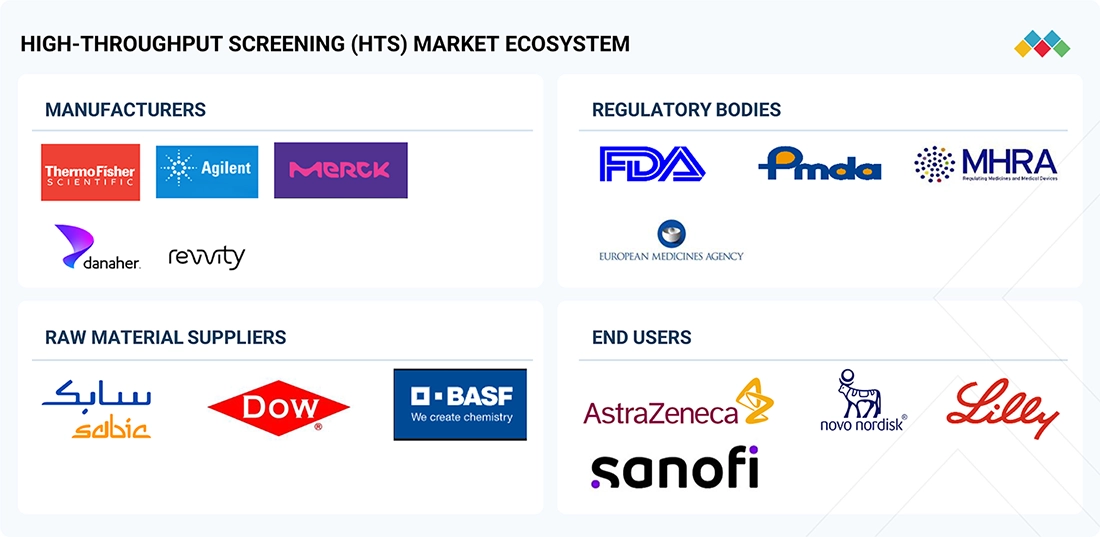
HIGH THROUGHPUT SCREENING MARKET: COMMERCIAL USE CASES ACROSS INDUSTRIES
| COMPANY | USE CASE DESCRIPTION | BENEFITS |
|---|---|---|
 |
Partnered with DyNAbind to deploy a fragment-based DNA-encoded Chemical Library (DEL) platform, enabling simultaneous screening of over 370,000 fragment pairs against novel protein targets. | Enabled access to large-scale DEL screening without requiring dedicated HTS infrastructure; broadened tractable chemical space for novel and difficult targets, delivering more trustworthy hit identification results with significantly reduced false-positive rates. |
 |
Implemented a cell painting-based phenotypic HTS platform integrated with machine learning to predict compound bioactivity across large libraries without running individual biochemical assays for each target | AstraZeneca researchers screened a structurally diverse set of 8,300 compounds in a cell painting assay, then trained ML models on single-point bioactivity data from their internal HTS database to predict and rank compound activity across multiple targets. | The approach enabled prioritization of compounds for probability of activity, effectively using one high-content imaging screen to generate predictions across an entire compound library of ~1 million compounds—substantially reducing the number of individual assays required. |
Logos and trademarks shown above are the property of their respective owners. Their use here is for informational and illustrative purposes only.
Related Ecosystem
Biotechnology
- Reagents
- Polymerase Chain Reaction (PCR)
- Stem Cells
- Assay Kits
- Flow Cytometers
- Thermo Fisher Scientific Inc.
- Merck KGaA
- Danaher Corporation
- Agilent Technologies, Inc.
- Bio-Rad Laboratories, Inc.
Key Takeaways
- Germany's HTS market is valued at $241.0 million in 2026 and expected to reach $300.7 million by 2031 at a 7.7% CAGR.
- Germany's advanced pharmaceutical infrastructure and strong R&D investment position it as a key HTS hub within Europe.
- Increasing automation adoption and precision medicine initiatives are primary growth drivers for Germany's HTS market.
- Germany's skilled workforce and favorable regulatory environment attract multinational pharmaceutical and biotech companies to establish HTS operations.
High-Throughput Screening (HTS) Market Report Scope
| Report Metric | Details |
|---|---|
| Base Year | 2026 |
| Fastest Growing Segment | LIQUID HANDLING SYSTEMS (Application) |
| Forecast Period | 2026–2031 |
| Growth Rate | CAGR of 10.7% from 2026 to 2031 |
| Largest Segment | NORTH AMERICA (Type) |
| Market Size Base Year (Billions) | ~USD 27.61 (2026) |
| Revenue Forecast (Billions) | ~USD 45.9 (2031) |
| Segments Covered | Type, Application, Technology |
US High-Throughput Screening (HTS) Market Report Segmentation
3 segment dimensions are covered across the global market.
By Type
- 2D Cell Cultures
- 3D Cell Cultures
- Alginate/Agarose
- Animal-Derived Hydrogels
- Collagen
- Detection Systems
- Hydrogels
- Imaging Instruments
- Inert Matrix/Solid Scaffolds
- Laboratory Consumables
- Liquid Handling Systems
- Matrigel
- Micropatterned Surfaces
- Other Instruments
- Perfusion Cell Cultures
- Reagents & Assay Kits
- Reporter-Based Assays
- Scaffold-Based Technology
- Scaffold-Free Technology
- Synthetic Hydrogels
By Application
- Biochemical Screening
- Drug Discovery
- Life Science Research
- Other Applications
By Technology
- Cell-Based Assays
- Lab-On-A-Chip
- Label-Free Technology
US: HIGH-THROUGHPUT SCREENING SERVICES MARKET, BY END USER, 2024–2031
| Segment | 2024 | 2025 | 2026 | 2027 | 2028 | 2029 | 2030 | 2031 | CAGR (%) |
|---|---|---|---|---|---|---|---|---|---|
| ACADEMIC & RESEARCH INSTITUTES | 326.7 | 340.6 | 353.9 | 376.6 | 411.1 | 459.9 | 528 | 621.6 | 11.9 |
| OTHER END USERS | 217.2 | 222.7 | 227.4 | 237.8 | 254.9 | 279.9 | 315.2 | 363.9 | 9.9 |
| PHARMACEUTICAL & BIOTECHNOLOGY COMPANIES | 895.4 | 943.3 | 990.1 | 1064.8 | 1174.2 | 1327.2 | 1539.4 | 1831.1 | 13.1 |
| TOTAL | 1439.2 | 1506.6 | 1571.4 | 1679.2 | 1840.1 | 2067 | 2382.6 | 2816.7 | 12.4 |
US: HIGH-THROUGHPUT SCREENING PRODUCTS MARKET, BY END USER, 2024–2031
| Segment | 2024 | 2025 | 2026 | 2027 | 2028 | 2029 | 2030 | 2031 | CAGR (%) |
|---|---|---|---|---|---|---|---|---|---|
| ACADEMIC & RESEARCH INSTITUTES | 1643.5 | 1655.3 | 1713.5 | 1809.8 | 1945.2 | 2119.6 | 2345.2 | 2634.2 | 9 |
| CROS & CDMOS | 1891.3 | 1958.1 | 2083.9 | 2263 | 2501.2 | 2802.9 | 3189.9 | 3686.1 | 12.1 |
| OTHER END USERS | 565 | 572 | 595.1 | 631.9 | 682.9 | 748.3 | 832.7 | 940.9 | 9.6 |
| PHARMACEUTICAL & BIOTECHNOLOGY COMPANIES | 4358.7 | 4467.5 | 4707.5 | 5062.2 | 5541.2 | 6150.7 | 6934.5 | 7939.2 | 11 |
| TOTAL | 8458.5 | 8652.9 | 9100 | 9767 | 10670.5 | 11821.4 | 13302.2 | 15200.4 | 10.8 |
Target Audience
- Pharmaceutical Companies : US pharma firms need detailed HTS market data to optimize drug discovery investments, evaluate technology partnerships, and accelerate pipeline development in a competitive landscape.
- Biotech Startups : Emerging biotech companies require market insights to secure funding, validate business models, and position proprietary HTS platforms effectively within the US market.
- Contract Research Organizations (CROs) : CROs need comprehensive market analysis to identify service expansion opportunities, benchmark capabilities against competitors, and develop targeted offerings for US pharma clients.
- Technology & Equipment Providers : HTS platform and instrumentation vendors require market forecasts and adoption trends to guide product development, sales strategies, and customer acquisition in the US.
- Investment & Venture Capital Firms : Investors need accurate market sizing and growth projections to evaluate biotech and HTS technology companies, assess portfolio opportunities, and make informed funding decisions.
Key Companies in the US High-Throughput Screening (HTS) Market
| Company | HQ | Ownership | Strongest segments |
|---|---|---|---|
| BIOCARTIS SA | Belgium | Private Company | Oncology assay consumables,Instrument systems and service,Other legacy and residual activities, |
| QIAGEN NV | Netherlands | Public Company | Sample technology consumables and instruments,Molecular diagnostics assays (TB, oncology, sexual and reproductive health, viral load),PCR and enzyme solutions (qPCR, dPCR, RT-PCR, configured enzymes), |
| CODEXIS, INC. | United States | Public Company | CodeEvolver platform-enabled enzyme sales and services,ECO Synthesis platform for RNAi and nucleic acid manufacturing,Licensing and royalties from technology partnerships, |
| THERMO FISHER SCIENTIFIC INC. | United States | Public Company | Life Sciences Solutions,Analytical Instruments,Specialty Diagnostics, |
| DANAHER CORPORATION | United States | Public Company | Biotechnology (bioprocessing, single-use, filtration, aseptic fill-finish),Life Sciences (analytical instruments, genomics, lab automation),Diagnostics (clinical instruments, consumables, software, services), |
| MERCK KGAA | Germany | Public Company | Life Science,Healthcare,Electronics, |
| AGILENT TECHNOLOGIES, INC. | United States | Public Company | Life Sciences and Diagnostics Markets,Agilent CrossLab,Applied Markets, |
| REVVITY, INC. | United States | Public Company | Diagnostics (prenatal, neonatal, infectious disease, immunodiagnostics),Life science reagents and assays (BioLegend, Dharmacon, Alpha platforms),Instruments and imaging systems, |
| TECAN GROUP LTD. | Switzerland | Public Company | Liquid handling and automation platforms (incl. Tecan Labwerx),Microplate readers, washers, and detection instruments,Consumables, sequencing reagents, immunoassays, and antibodies, |
| BIO-RAD LABORATORIES, INC. | United States | Public Company | Clinical Diagnostics systems, kits, and quality controls,Life Science instruments and reagents,Informatics and software, |
| CORNING INCORPORATED | United States | Public Company | Optical communications (fiber, cable, hardware, connectivity),Display glass substrates (LCD and OLED),Specialty materials and mobile consumer electronics glass, |
| METTLER-TOLEDO INTERNATIONAL INC. | Switzerland | Public Company | Laboratory instruments and LabX software,Industrial instruments and product inspection,Retail weighing and fresh-goods solutions, |
| LONZA GROUP | Switzerland | Public Company | Integrated Biologics,Advanced Synthesis (small molecules, ADCs, HPAPIs),Specialized Modalities (cell & gene, microbial, bioscience, mRNA), |
| WATERS CORPORATION | United States | Public Company | Liquid Chromatography Systems and Columns,Mass Spectrometry Systems,TA Instruments (Thermal, Rheometry, Calorimetry), |
| SARTORIUS AG | Germany | Public Company | Bioprocess solutions (bioreactors, filtration, chromatography, fluid management),Lab products and services (weighing, pipettes, filtration, microbiological testing),Advanced analytical and cell analysis systems (BLI, SPR, cytometry, live-cell imaging), |
| EPPENDORF SE | Germany | Private Company | Liquid handling (pipettes, dispensers, automated systems),Separation & instrumentation (centrifuges, PCR cyclers, ULT freezers),Consumables (tubes, tips, plates, single-use bioreactors), |
| PORVAIR PLC | United Kingdom | Public Company | Aerospace & Industrial Filtration,Laboratory Instruments and Consumables,Metal Melt Quality (Porous Ceramic Filters), |
BIOCARTIS SA
BIOCARTIS SA is a Belgian private company established in 2014 with 500 employees. The company focuses on molecular diagnostics and personalized medicine solutions.
QIAGEN NV
QIAGEN NV is a Dutch public company founded in 1984 with 5,500 employees. The company is a leading provider of molecular diagnostics, sample preparation, and life sciences research tools.
CODEXIS, INC.
CODEXIS, INC. is a United States public company founded in 2002 with 146 employees. The company develops enzyme engineering and biocatalysis solutions for pharmaceutical and industrial applications.
THERMO FISHER SCIENTIFIC INC.
THERMO FISHER SCIENTIFIC INC. is a United States public company founded in 1956 with 125,000 employees. The company is a global leader in serving science with a broad portfolio of laboratory equipment, reagents, and services.
DANAHER CORPORATION
DANAHER CORPORATION is a United States public company founded in 1969 with 59,000 employees. The company operates a diversified conglomerate with significant presence in life sciences, diagnostics, and environmental solutions.
MERCK KGAA
MERCK KGAA is a German public company founded in 1668 with 59,077 employees. The company is a global science and technology leader operating in pharmaceuticals, life sciences, and performance materials.
AGILENT TECHNOLOGIES, INC.
AGILENT TECHNOLOGIES, INC. is a United States public company founded in 1999 with 18,000 employees. The company provides analytical instruments, software, and services for life sciences, diagnostics, and applied chemical markets.
REVVITY, INC.
REVVITY, INC. is a United States public company founded in 1937 with 11,000 employees. The company develops and manufactures analytical instruments and software for life sciences research and diagnostics.
TECAN GROUP LTD.
TECAN GROUP LTD. is a Swiss public company founded in 1980 with 3,166 employees. The company specializes in laboratory automation and detection solutions for life sciences and diagnostics applications.
BIO-RAD LABORATORIES, INC.
BIO-RAD LABORATORIES, INC. is a United States public company founded in 1952 with 7,450 employees. The company manufactures and distributes life science research products and clinical diagnostics solutions.
CORNING INCORPORATED
CORNING INCORPORATED is a United States public company founded in 1851 with 67,200 employees. The company is a diversified technology leader with significant operations in life sciences, laboratory products, and specialty materials.
METTLER-TOLEDO INTERNATIONAL INC.
METTLER-TOLEDO INTERNATIONAL INC. is a Swiss public company founded in 1991 with 16,600 employees. The company manufactures precision instruments and services for laboratory, industrial, and retail applications.
LONZA GROUP
LONZA GROUP is a Swiss public company founded in 1897 with 20,000 employees. The company is a leading supplier of products and services for the pharmaceutical, biotech, and specialty chemical industries.
WATERS CORPORATION
WATERS CORPORATION is a United States public company founded in 1958 with 7,900 employees. The company develops and manufactures analytical instruments and software for laboratory and life sciences applications.
SARTORIUS AG
SARTORIUS AG is a German public company founded in 1870 with 14,242 employees. The company provides laboratory and process technologies for pharmaceutical, biotech, and food industries.
EPPENDORF SE
EPPENDORF SE is a German private company founded in 1945 with 4,358 employees. The company manufactures laboratory equipment and consumables for life sciences research and diagnostics.
PORVAIR PLC
PORVAIR PLC is a United Kingdom public company founded in 1982 with 992 employees. The company manufactures advanced filtration and separation products for life sciences and industrial applications.
Reasons to Buy this Report
- Strategic Market Sizing : Obtain precise US market valuation ($241M in 2026) and growth projections through 2031 to inform capital allocation, M&A strategies, and competitive positioning decisions.
- Technology Adoption Insights : Understand which HTS technologies are gaining traction in the US market, including AI integration, automation levels, and platform preferences among pharma and biotech organizations.
- Competitive Intelligence : Identify key players, emerging startups, and CRO partnerships shaping the US HTS landscape to benchmark performance and identify collaboration or acquisition opportunities.
- Regulatory & Compliance Guidance : Gain clarity on FDA requirements and compliance standards driving HTS adoption in the US, enabling product development and market entry strategies aligned with regulatory expectations.
- Investment & Growth Opportunities : Discover high-potential segments, emerging applications, and underserved niches within the US HTS market to guide R&D investments and business expansion initiatives.
Frequently asked questions
What is the current size of Germany's High-Throughput Screening market?
Germany's HTS market is valued at $241.0 million in 2026 and is projected to grow to $300.7 million by 2031.
What is the expected growth rate for Germany's HTS market?
Germany's HTS market is expected to grow at a compound annual growth rate (CAGR) of 7.7% from 2026 to 2031.
What factors are driving growth in Germany's HTS market?
Key drivers include increased pharmaceutical R&D spending, growing adoption of laboratory automation, rising demand for efficient drug discovery processes, and Germany's focus on precision medicine and personalized therapeutics.
Why is Germany a significant market for High-Throughput Screening?
Germany's strong pharmaceutical research infrastructure, advanced laboratory capabilities, skilled scientific workforce, and favorable regulatory environment make it a leading HTS market in Europe.
Who are the primary users of HTS technology in Germany?
Primary users include established pharmaceutical companies, emerging biotech firms, contract research organizations (CROs), and academic research institutions engaged in drug discovery and development.
RESEARCH METHODOLOGY
This research study relied heavily on secondary sources, directories, and databases to identify and collect valuable information for analyzing the global high-throughput screening (HTS) market. In-depth interviews were conducted with primary respondents, including key industry participants, subject-matter experts (SMEs), C-level executives of leading market players, and industry consultants, to obtain and verify critical qualitative and quantitative information and to assess the market's growth prospects. The global market size estimated through secondary research was then triangulated with primary research inputs to arrive at the final market size.
Secondary Research
Secondary research was used mainly to identify and collect information for the extensive technical, market-oriented, and commercial study of the high-throughput screening (HTS) market. The secondary sources used for this study include World Health Organization (WHO), American Society for Clinical Laboratory Science (ASCLS), Centers for Disease Control and Prevention (CDC), National Institutes of Health (NIH), National Center for Biotechnology Information (NCBI), American Association for Clinical Chemistry (AACC), National Center for Advancing Translational Sciences (NCATS), American Society for Pharmacology and Experimental Therapeutics (ASPET), National Health Service (NHS), Pharmaceuticals and Medical Devices Agency (PMDA), European Medicines Agency (EMA), Society for Laboratory Automation and Screening (SLAS), European Bioinformatics Institute, and Center for Translational Research, among others. Corporate filings include annual reports, SEC filings, investor presentations, and financial statements; research journals; press releases; and trade, business, and professional associations. Secondary data were collected and analyzed to determine the overall size of the global high-throughput screening (HTS) market, which was subsequently validated through primary research. These sources were also used to obtain key information on major players, market classification, and segmentation aligned with industry trends, regional/country-level markets, market developments, and technology perspectives.
Primary Research
In-depth interviews were conducted with various primary respondents, including key industry participants, subject-matter experts (SMEs), C-level executives of key market players, and industry consultants, among others, to obtain and verify critical qualitative and quantitative information and to assess the market's future prospects. Various primary sources from both the supply and demand sides of the market were interviewed to obtain qualitative and quantitative information. The following is a breakdown of the primary respondents:
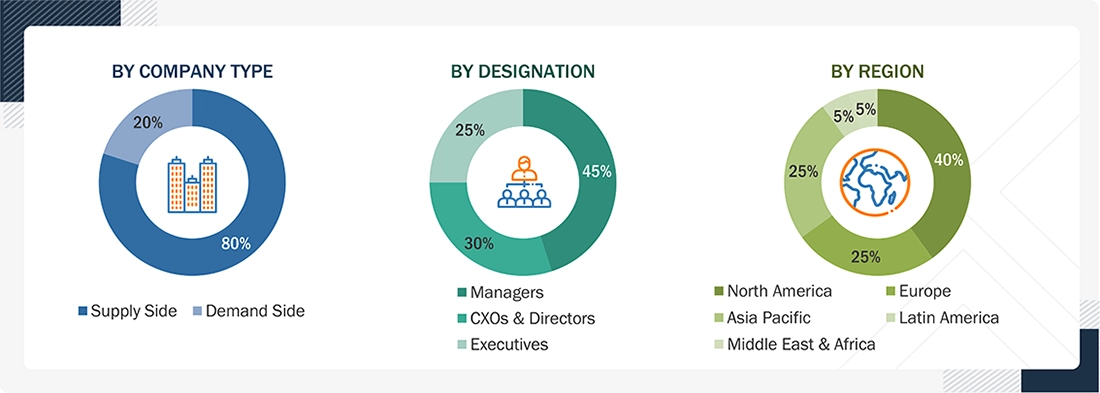
To know about the assumptions considered for the study, download the pdf brochure
Market Size Estimation
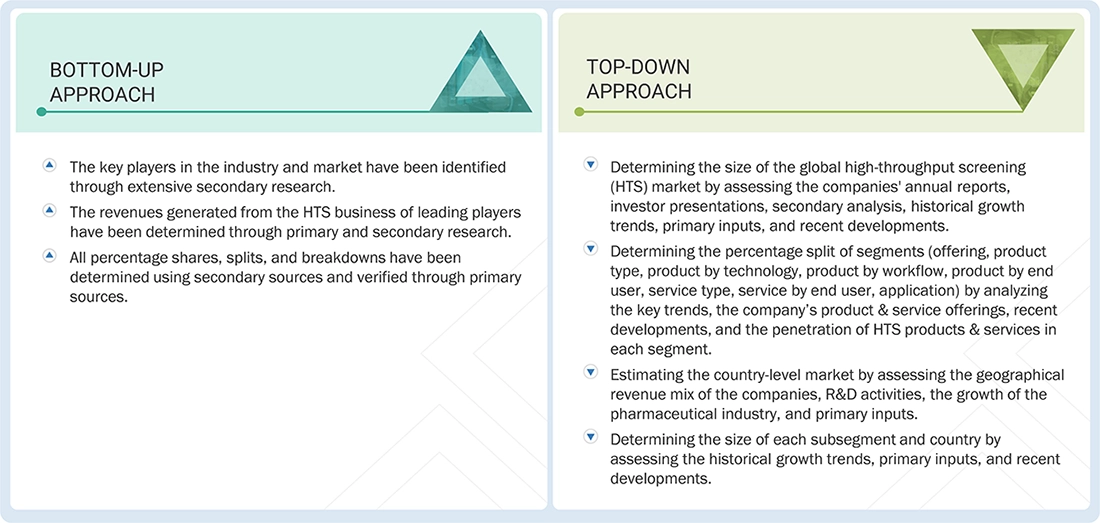
Both top-down and bottom-up approaches were employed to estimate and validate the overall size of the high-throughput screening (HTS) market. These methods were also widely used to determine the size of various market segments. The research methodology used to estimate the market size includes the following:
High-Throughput Screening (HTS) Market : Top-Down and Bottom-Up Approach
Data Triangulation
After estimating the overall market size, the total market was divided into segments and subsegments. Data triangulation and market breakdown techniques were used where applicable to finalize the overall market analysis and obtain precise statistics for all segments and subsegments. The data was triangulated by examining various factors and trends from both demand and supply sides.
Market Definition
High-throughput screening (HTS) is a drug discovery process that involves automated testing of large quantities of chemical or biological compounds against specific biological targets using various binding assays.
The HTS market comprises products (instruments, reagents & consumables, software), and services used to perform automated, parallel screening of large compound or biological libraries against defined biological targets or assays to identify active entities (hits). The high-throughput screening (HTS) market comprises workflow stages from assay development and compound library management to automated large-scale screening and hit identification, culminating in validated screening hits.
Key Stakeholders
- Contract research organizations
- Pharmaceutical & biopharmaceutical companies
- Academic & research institutes
- High-throughput screening instrument & reagent manufacturers
- High-content screening database, service, and software providers
- Venture capitalists & investors
- Market research & consulting firms
- Government associations
- Medical institutions & universities
Report Objectives
- To define, describe, and forecast the high-throughput screening (HTS) market by offering, products by type, products by technology, products by workflow, products by end user, services by type, services by end user, application, and region
- To provide detailed information regarding the major factors influencing market growth (such as drivers, restraints, opportunities, and challenges)
- To analyze the micromarkets1 with respect to individual growth trends, prospects, and contributions to the overall high-throughput screening (HTS) market
- To analyze the opportunities for stakeholders and provide details of the competitive landscape for market leaders
- To forecast the size of the market segments with respect to six regions: North America, Europe, the Asia Pacific, Latin America, the Middle East, and Africa
- To profile the key players and analyze their market shares and core competencies2
- To track and analyze competitive developments, such as product & service launches, agreements, partnerships, acquisitions, and research & development activities
- To analyze and provide funding & investment activities, brand/product/service comparative analysis, and vendor valuation & financial metrics of the high-throughput screening (HTS) market
Customization Options
Based on the given market data, MarketsandMarkets offers customization to meet the company’s specific needs. The following customization options are available for this report:
Portfolio Assessment
- Product/Service Matrix gives a detailed comparison of the product/service portfolios of the top five companies.
Company Information
- Detailed analysis and profiling of additional market players (up to five).
Geographical Analysis
- Further breakdown of the Rest of Europe high-throughput screening (HTS) market, by country
- Further breakdown of the Rest of Asia Pacific high-throughput screening (HTS) market, by country
- Further breakdown of the Rest of Latin America high-throughput screening (HTS) market, by country
Get the Full High-Throughput Screening (HTS) Market Report
Full forecast, segment splits, and company analysis for all High-Throughput Screening (HTS) Market.
- Canada High-Throughput Screening (HTS) Market
- Germany High-Throughput Screening (HTS) Market
- UK High-Throughput Screening (HTS) Market
- France High-Throughput Screening (HTS) Market
- Italy High-Throughput Screening (HTS) Market
- Spain High-Throughput Screening (HTS) Market
- China High-Throughput Screening (HTS) Market
- Japan High-Throughput Screening (HTS) Market
- India High-Throughput Screening (HTS) Market
- Australia High-Throughput Screening (HTS) Market
- South Korea High-Throughput Screening (HTS) Market
- Brazil High-Throughput Screening (HTS) Market
- Mexico High-Throughput Screening (HTS) Market
- Saudi Arabia High-Throughput Screening (HTS) Market
- UAE High-Throughput Screening (HTS) Market
Need a Tailored Report?
Customize this report to your needs
Get 10% FREE Customization
Customize This Report
