
Asia Pacific Hydrogen Hubs Market (2023-2028)

The Asia Pacific Hydrogen Hubs Market was valued at $1054.6 Million in 2023 and projected to reach to $3565.7 Million by 2028, representing a compound annual growth rate of 19.0%. Asia Pacific's hydrogen hubs market is poised for exceptional growth through 2028, driven by regional governments' commitment to decarbonization and the aerospace & defence sector's urgent need for sustainable propulsion solutions.


| Market Size in | USD 26.32 MN |
| Market Forecast in | |
| CAGR | |
| Forecast Period | |
| Units Considered | Value (USD MN) |
Asia Pacific Hydrogen Hubs Market Trends and Insights
- Asia Pacific's hydrogen hub development is driven by regional commitments to decarbonization, particularly in aerospace and defence applications where hydrogen fuel cell technology offers significant operational advantages.
- The region's strategic investments in hydrogen infrastructure and government incentives are positioning Asia Pacific as a critical growth engine for the global hydrogen economy. Asia Pacific's market growth at a 19.0% CAGR reflects accelerating adoption across the aerospace and defence sectors, where hydrogen hubs enable efficient fuel distribution and storage.
- Key markets within Asia Pacific, including Japan, South Korea, and China, are establishing hydrogen production and distribution networks to support emerging aircraft propulsion systems and defence applications.
- By 2028, Asia Pacific is expected to capture a substantial share of global hydrogen hub investments, driven by technological advancement and regulatory support for clean energy transitions..
Key Market Statistics
- CAGR (2023-2028) 19.0% CAGR
- Market Size, 2023 ~USD 1054.6 Million
- Forecast, 2028 ~USD 3565.7 Million
- Geography Asia Pacific
Asia Pacific Hydrogen Hubs Market Overview
Rapid Market Expansion :
Asia Pacific hydrogen hubs market is projected to grow from USD 1,054.6 million in 2023 to USD 3,565.7 million by 2028, representing a robust 19% CAGR, significantly outpacing global growth trends.
Aerospace & Defence Leadership :
The region is leveraging hydrogen fuel cell technology for next-generation aerospace and defence applications, positioning Asia Pacific as a critical hub for sustainable aviation and military propulsion systems.
Regional Decarbonization Commitments :
Major Asia Pacific economies are implementing aggressive net-zero targets and hydrogen infrastructure investments, creating favorable regulatory environments for hydrogen hub development and commercialization.
Strategic Infrastructure Development :
Governments across Asia Pacific are establishing hydrogen production, storage, and distribution networks to support aerospace and defence sectors, with significant capital allocation toward green hydrogen initiatives.
Asia Pacific Hydrogen Hubs Market Dynamics
- Countries including Japan, South Korea, and Australia are investing heavily in hydrogen infrastructure, creating competitive advantages for early-stage hydrogen hub development.
- The region's strategic geographic position and manufacturing capabilities position it as a global leader in hydrogen technology deployment. The convergence of regulatory support, technological advancement, and defence modernization initiatives will accelerate hydrogen adoption across Asia Pacific's aerospace and defence industries.
- Investment in hydrogen production facilities, fuel cell manufacturing, and supply chain infrastructure will create substantial opportunities for market participants.
- By 2028, Asia Pacific is expected to represent a significant portion of global hydrogen hub market value, establishing the region as a cornerstone of the global hydrogen economy..
Market Ecosystem
Related Ecosystem
Key Takeaways
- Asia Pacific hydrogen hubs market valued at USD 1,054.6 million in 2023, expanding to USD 3,565.7 million by 2028.
- Asia Pacific demonstrates a 19.0% CAGR, outpacing global growth and reflecting strong regional demand for hydrogen infrastructure.
- Asia Pacific's aerospace and defence sectors are primary drivers, leveraging hydrogen hubs for fuel cell propulsion and operational efficiency.
- Asia Pacific governments are implementing supportive policies and investments to establish hydrogen production and distribution networks by 2028.
Hydrogen Hubs Market Report Scope
| Report Metric | Details |
|---|---|
| Base Year | 2023 |
| Fastest Growing Segment | AUTOMOTIVE (Industry) |
| Forecast Period | 2023-2028 |
| Growth Rate | CAGR of 18.7% from 2023 to 2028 |
| Largest Segment | ELECTROLYSIS (Supply Technique) |
| Market Size Base Year (Billions) | ~USD 1.92 (2023) |
| Revenue Forecast (Billions) | ~USD 4.51 (2028) |
| Segments Covered | Industry, Supply Technique |
Asia Pacific Hydrogen Hubs Market Report Segmentation
2 segment dimensions are covered across the global market.
By Industry
- Automotive
- Aviation
- Marine
- Other Industries
By Supply Technique
- Electrolysis
- Steam Methane Reforming
Target Audience
- Aerospace & Defence OEMs : Manufacturers need Asia Pacific hydrogen hub market data to evaluate regional fuel cell integration opportunities, supply chain partnerships, and technology deployment timelines for next-generation aircraft and defence systems.
- Energy & Infrastructure Investors : Investment firms require detailed Asia Pacific market forecasts and growth drivers to identify hydrogen hub development opportunities, assess capital requirements, and evaluate long-term returns in the region.
- Government & Policy Makers : Regional governments and defence ministries need market intelligence to align hydrogen infrastructure investments with aerospace and defence sector needs, ensuring strategic alignment with decarbonization goals.
- Hydrogen Technology Providers : Fuel cell manufacturers and hydrogen production companies require Asia Pacific-specific market data to prioritize regional expansion, identify customer segments, and develop localized commercialization strategies.
- Strategic Consultants & Analysts : Business consultants and research firms need comprehensive Asia Pacific hydrogen hub insights to advise clients on market opportunities, competitive positioning, and investment decisions in the aerospace & defence sector.
Countries within Asia Pacific - compare and drill down
| Country | 2025 size (native) |
|---|
Country market size visualization
Reasons to Buy this Report
- Asia Pacific-Specific Market Sizing : Access precise valuation data and forecasts exclusive to Asia Pacific, enabling accurate investment decisions and resource allocation for regional hydrogen hub projects in aerospace and defence sectors.
- Competitive Landscape Intelligence : Identify key players, market leaders, and emerging competitors specifically operating within Asia Pacific's hydrogen ecosystem, including regional partnerships and strategic alliances shaping market dynamics.
- Regulatory & Policy Insights : Understand Asia Pacific-specific government incentives, decarbonization mandates, and hydrogen infrastructure policies affecting aerospace and defence procurement and technology adoption timelines.
- Regional Growth Drivers Analysis : Gain detailed insights into Asia Pacific's unique market catalysts, including defence modernization programs, aviation sustainability requirements, and country-specific hydrogen investment commitments.
- Strategic Market Entry Guidance : Develop informed market entry strategies tailored to Asia Pacific's regulatory environment, supply chain infrastructure, and aerospace & defence sector requirements for hydrogen hub deployment.
Frequently asked questions
What is the current size of the Asia Pacific hydrogen hubs market?
The Asia Pacific hydrogen hubs market was valued at USD 1,054.6 million in 2023 and is projected to grow to USD 3,565.7 million by 2028.
What is the expected growth rate for Asia Pacific hydrogen hubs?
Asia Pacific's hydrogen hubs market is expected to grow at a compound annual growth rate (CAGR) of 19.0% from 2023 to 2028.
Which sectors drive hydrogen hub adoption in Asia Pacific?
The aerospace and defence sectors are primary drivers in Asia Pacific, utilizing hydrogen hubs for fuel cell propulsion systems and operational efficiency improvements.
What factors support hydrogen hub expansion in Asia Pacific?
Asia Pacific's hydrogen hub growth is supported by government decarbonization commitments, regulatory incentives, technological advancement, and strategic infrastructure investments across the region.
Which countries lead hydrogen hub development in Asia Pacific?
Japan, South Korea, and China are establishing leading hydrogen production and distribution networks within Asia Pacific to support aerospace and defence applications.
RESEARCH METHODOLOGY
The study involved extensive data collection, refinement and analysis to estimate the current size of the market for hydrogen hubs. This included exhaustive secondary research using various paid and open source databases to collect qualitative and quantitative information on the hydrogen hubs market, its adjacent markets as well as the parent markets. The next step was the validation of data, findings, assumptions of estimations, and sizing through primaries with industry experts across the hydrogen hub value chain. The demand analysis was carried out to arrive at the overall market size and was followed by market segmentation and data triangulation procedures to drill down on the sizes of segments and sub-segments of the hydrogen hubs market.
Secondary Research
Both paid and unpaid secondary data sources were used to determine the market positions of key players in the industry value chain such as automotive, aviation, marine among others (space, defense)- examining their product portfolios and operational segments. These companies were then ranked basis their sales performance and the strength of their product portfolios. These rankings were validated by primary sources.
The secondary data sources used for the study include financial statements, filings and annual reports of major companies that are vertically integrated in their hydrogen operations including production, conversion and storage of hydrogen. The collected data was analyzed to arrive at the overall size of the hydrogen hubs market, which is then validated via primaries.
Primary Research
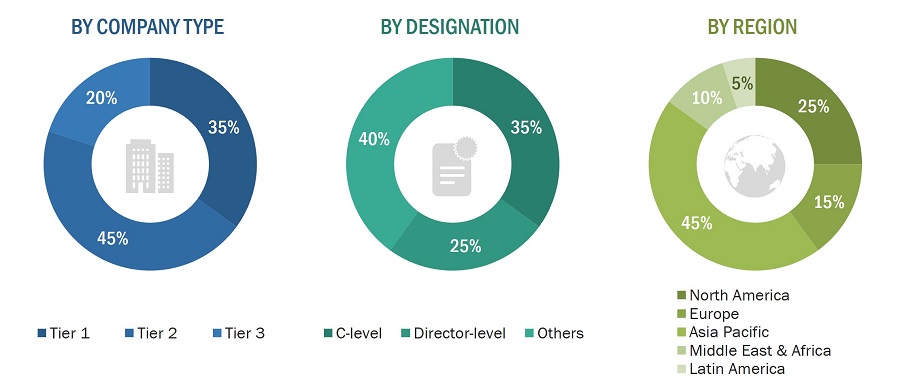
Primary research with market players and participants was conducted after acquiring information on the key influencers and players in hydrogen hub market through secondary research. Several primary interviews were conducted with experts from both demand and supply sides across major regions such as North America, Europe, Asia Pacific, Middle East & Africa and Latin America. This primary data was collected in the form of questionnaires, emails and telephonic interviews.
To know about the assumptions considered for the study, download the pdf brochure
Market Size Estimation
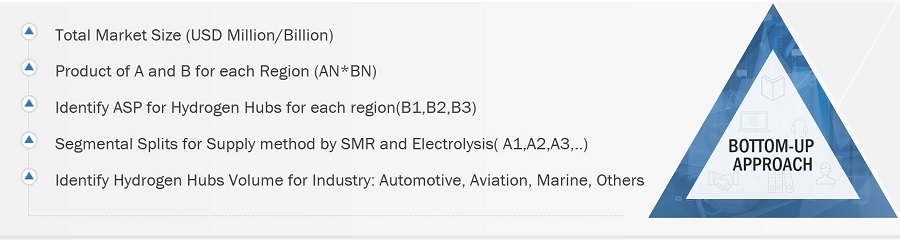
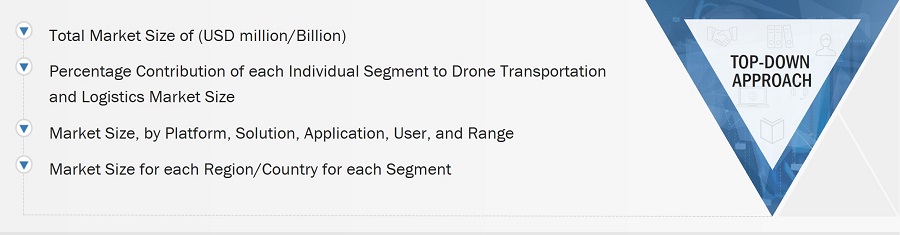
Market estimation is done using a bottom-up approach and validated by a top-down approach. Contracts and developments of on-site hydrogen infrastructure and hub based hydrogen supply contracts were mapped to determine the size of the market, based on the Industry segment. Such data sets provide information on each application's demand aspects Hy drogen hubs. For each Industry sub-segment, all possible end users in the market were identified.
Hydrogen Hubs Market Size: Bottom-up Approach
Hydrogen Hubs market Size: Top-Down Approach
Data Triangulation
After arriving at the overall size of the market, the total market was split into several segments and subsegments. The data triangulation and market breakdown procedures explained below were implemented wherever applicable, to complete the overall market engineering process and arrive at the exact statistics for various market segments and subsegments. The data was triangulated by studying various factors and trends from both, the demand and supply sides. Along with this, the market size was validated using both the top-down and bottom-up approaches.
The following figure indicates the market breakdown structure and the data triangulation procedure implemented in the market engineering process used to develop this report.
Market Definition
A hydrogen hub is an end-to-end facility for the on-site production, storage and effective utilization of hydrogen for end users across various mobility sectors such as Aviation, Marine, Automotive and Defense. The inclusions to the market will be the airports, marine ports, automotive hydrogen refueling stations that are capable of producing hydrogen on-site, storing it & make it available to the end users dependent on it such as Hydrogen powered vehicles, aircraft, ships.
Market Stakeholders
- Hydrogen Supplier
- On site hydrogen production companies
- Refineries and Chemical Companies
- Research Bodies
- Automobile Manufacturers
- Fuel Cell manufacturers
- Defense Organizations
Report Objectives
- To define, describe, segment, and forecast the size of the hydrogen hubs market based on industry, supply technique, end use and region.
- To analyze the degree of competition in the market by mapping the recent developments, products, and services of key market players
- To understand the structure of the hydrogen hubs market by identifying its various segments and subsegments
- To identify and analyze key drivers, restraints, opportunities, and challenges that influence the growth of the market.
- To provide an overview of the tariff and regulatory landscape for the adoption of hybrid boats across regions
- To forecast the size of market segments across North America, Europe, Asia Pacific, Latin America and Middle East &Africa along with major countries in each region
- To identify transportation industry trends, market trends, and technology trends currently prevailing in the market
- To analyze micromarkets1 with respect to individual technological trends and their contribution to the total market
- To analyze opportunities in the market for stakeholders by identifying key market trends
- To profile key market players and comprehensively analyze their market share and core competencies
- To provide a detailed competitive landscape of the market, along with an analysis of business and strategies such as mergers and acquisitions, partnerships, agreements, and product developments in the hydrogen hubs market
- To identify detailed financial positions, key products, and unique selling points of leading companies in the market
Available Customizations
MarketsandMarkets offers the following customizations for this market report:
- Additional country-level analysis of the Hydrogen Hubs market
- Profiling of other market players (up to 5)
Product Analysis
- Product matrix, which provides a detailed comparison of the product portfolio of each company in the Hydrogen Hubs market.
Get the Full Hydrogen Hubs Market Report
Full forecast, segment splits, and company analysis for all Hydrogen Hubs Market.
Need a Tailored Report?
Customize this report to your needs
Get 10% FREE Customization
Customize This Report
