
Saudi Arabia Induction Heating Market (2025-2030)

The Saudi Arabia Induction Heating Market was valued at $7.9 Million in 2025 and projected to reach to $11 Million by 2030, representing a compound annual growth rate of 6.8%. Saudi Arabia's induction heating market is experiencing steady expansion as the nation pursues industrial diversification and energy efficiency goals aligned with Vision 2030.


| Market Size in | USD 26.32 MN |
| Market Forecast in | |
| CAGR | |
| Forecast Period | |
| Units Considered | Value (USD MN) |
Saudi Arabia Induction Heating Market Trends and Insights
- This growth trajectory reflects Saudi Arabia's increasing industrial modernization and energy efficiency initiatives across manufacturing and processing sectors.
- The market in Saudi Arabia is driven by rising demand for advanced heating technologies in oil and gas refining, metal processing, and industrial applications where precision and energy conservation are critical operational priorities..
Key Market Statistics
- CAGR (2025-2030) 6.8% CAGR
- Market Size, 2025 ~USD 7.9 Million
- Forecast, 2030 ~USD 11 Million
- Country Saudi Arabia
Saudi Arabia Induction Heating Market Overview
Market Size & Growth :
Saudi Arabia's induction heating market is valued at $7.9 million in 2025, projected to reach $11.0 million by 2030, with a steady CAGR of 6.8% driven by industrial modernization.
Industrial Modernization :
Saudi Arabia's Vision 2030 initiative is accelerating adoption of advanced heating technologies in manufacturing, petrochemicals, and metal processing sectors across the kingdom.
Energy Efficiency Focus :
Growing emphasis on reducing energy consumption and operational costs in Saudi industrial facilities is driving demand for efficient induction heating solutions over traditional methods.
Manufacturing Sector Expansion :
Diversification of Saudi Arabia's economy beyond oil is spurring investments in domestic manufacturing capabilities, creating new opportunities for induction heating technology deployment.
Saudi Arabia Induction Heating Market Dynamics
- The market's 6.8% CAGR reflects growing adoption across manufacturing, petrochemical processing, and metal fabrication industries seeking to modernize operations and reduce energy consumption.
- Key drivers include government support for industrial development, increased foreign and domestic investments in manufacturing facilities, and rising awareness of induction heating's operational advantages. Looking ahead to 2030, Saudi Arabia's induction heating market will benefit from continued industrial infrastructure development, technological advancements in heating systems, and stricter energy efficiency regulations.
- The kingdom's strategic focus on becoming a global manufacturing hub will necessitate adoption of advanced heating technologies.
- Market growth will be supported by expanding local manufacturing capabilities, increased skilled workforce availability, and growing partnerships between international technology providers and Saudi industrial enterprises..
Market Ecosystem
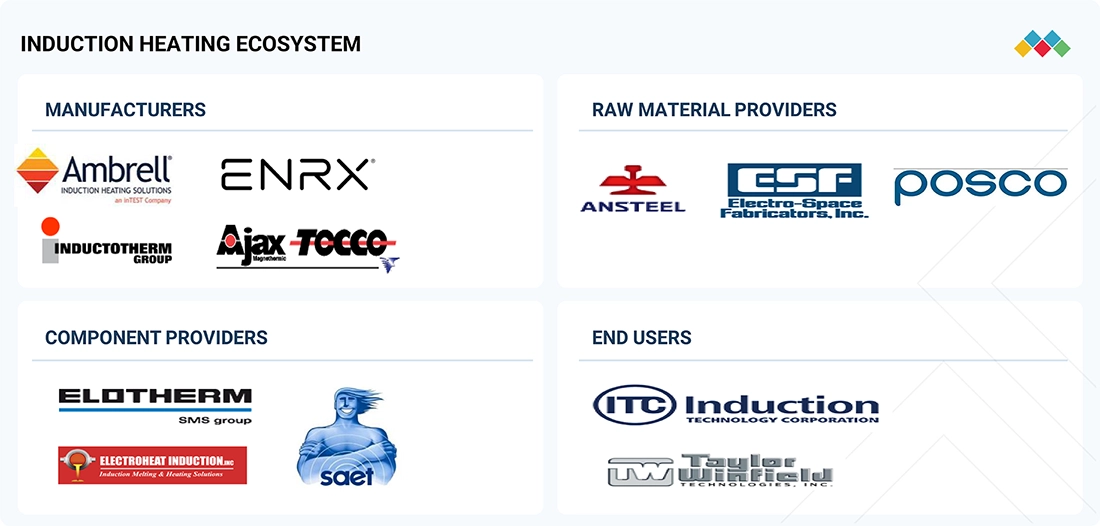
Induction Heating Market: COMMERCIAL USE CASES ACROSS INDUSTRIES
| COMPANY | USE CASE DESCRIPTION | BENEFITS |
|---|---|---|
 |
Supplies induction heating systems for metal heat-treating, forging, brazing, and automotive component hardening. | The solutions offered by ITC provide highly precise and repeatable heating that improves process consistency and product quality. They also help manufacturers lower energy consumption due to the efficiency of induction technologies, while enabling faster heating cycles that significantly increase production throughput. |
 |
Provides industrial induction systems for weld heat-treating, automotive shaft hardening, and advanced materials processing. | Taylor-Winfield’s systems ensure uniform heating across workpieces, which directly improves weld integrity and overall component strength. Their technology reduces operating costs by minimizing heat losses and maintenance requirements while delivering consistent production quality. |
 |
Tata Motors uses induction heating technologies including induction, combustion, and infrared heating for processes such as automotive component hardening, gear and shaft heat-treating, brazing of fuel system components, preheating for welding, and thermal processing of chassis and powertrain parts. | By integrating industrial heating systems into its manufacturing operations, Tata Motors achieves consistent metallurgical properties across critical automotive components, resulting in enhanced durability and performance. |
Logos and trademarks shown above are the property of their respective owners. Their use here is for informational and illustrative purposes only.
Related Ecosystem
Industrial Equipment
- HVAC System
- Fiberglass
- Actuators
- Cartridge Filters
- Electrostatic Precipitators
- Siemens ag
- GRUNDFOS GROUP
- ABB India Limited
- SCHNEIDER ELECTRIC SE
- Emerson Electric Co.
Key Takeaways
- Saudi Arabia's induction heating market is valued at $7.9 million in 2025 and is forecast to reach $11.0 million by 2030.
- The market in Saudi Arabia is growing at a 6.8% CAGR, driven by industrial modernization and energy efficiency demands.
- Saudi Arabia's oil and gas sector represents a primary growth driver for induction heating technology adoption.
- Saudi Arabia's focus on Vision 2030 industrial diversification initiatives supports sustained market expansion through 2030.
Induction Heating Market Report Scope
| Report Metric | Details |
|---|---|
| Base Year | 2025 |
| Fastest Growing Segment | ELECTRONICS & SEMICONDUCTORS (End-Use Industry) |
| Forecast Period | 2025–2030 |
| Growth Rate | CAGR of 7.4% from 2025 to 2030 |
| Largest Segment | 10–100 KW (Power Rating) |
| Market Size Base Year (Billions) | ~USD 0.62 (2025) |
| Revenue Forecast (Billions) | ~USD 0.88 (2030) |
| Segments Covered | Power Rating, Frequency, Application, End-Use Industry |
Saudi Arabia Induction Heating Market Report Segmentation
4 segment dimensions are covered across the global market.
By Power Rating
- 10–100 Kw
- Above 100 Kw
- Less Than 10 Kw
By Frequency
- High
- High.
- Low
- Medium
By Application
- Annealing
- Brazing And Soldering
- Heat Treating
- Metal Melting
- Surface Hardening
By End-Use Industry
- Automotive
- Consumer Appliances
- Electronics & Semiconductors
- Industrial Manufacturing
- Medical Devices
- Metals
- Plastic Processing
Target Audience
- Industrial Equipment Manufacturers : Manufacturers seeking to expand induction heating product lines in Saudi Arabia need market sizing, demand forecasts, and sector-specific application insights for the kingdom's growing industrial base.
- Energy & Utilities Companies : Energy sector players evaluating efficiency solutions and industrial partnerships require detailed Saudi Arabia market data to identify opportunities in the kingdom's modernization initiatives.
- Investment & Private Equity Firms : Investors analyzing opportunities in Saudi Arabia's industrial technology sector need comprehensive market forecasts, growth drivers, and competitive landscape data for due diligence.
- Technology Solution Providers : Companies offering heating technology solutions require Saudi Arabia-specific market intelligence to tailor offerings, identify customer segments, and develop localized go-to-market strategies.
- Government & Policy Advisors : Saudi government agencies and policy makers need market research to support industrial development planning, Vision 2030 initiatives, and energy efficiency program design.
Key Companies in the Saudi Arabia Induction Heating Market
| Company | HQ | Ownership | Strongest segments |
|---|---|---|---|
| INTEST CORPORATION | United States | Public Company | Electronic Test,Environmental Technologies,Process Technologies, |
| PARK-OHIO HOLDINGS CORP. | United States | Public Company | Supply Technologies (Total Supply Management and production components),Assembly Components (fuel rails, pipes, hoses, plastic and rubber assemblies),Engineered Products (induction systems, forging presses, machined and forged products), |
| HAMMOND POWER SOLUTIONS | Canada | Public Company | Dry-type and distribution transformers,Specialty and industrial transformers (drive isolation, furnace, multi-pulse, regulating),Medium voltage distribution and unitized substations, |
| SPC ELECTRONICS CORPORATION | Japan | Private Company | Microwave and millimeter-wave devices (incl. RF modules, isolators, auto tuners),Satellite communication components (LNBs and related),Mobile communication equipment (coverage extension, transceiver amplifiers, front-end modules), |
| RDO INDUCTION, INC. | United States | Private Company | Custom induction heating systems and turnkey lines,Standard power supplies and generators,Coils, tooling, and consumables, |
| DAI-ICHI KIDEN CO., LTD. | Japan | Core electromechanical / motion components,Customized systems and assemblies,Aftermarket, service, and spare parts, | |
| TRUMPF | Germany | Private Company | Machine tools for sheet and pipe machining,Industrial lasers (CO2, disk, fiber, diode, ultrashort pulse),Laser diodes and electronics, |
INTEST CORPORATION
Intest Corporation is a public company based in the United States, founded in 1981 with 396 employees.
PARK-OHIO HOLDINGS CORP.
Park-Ohio Holdings Corp. is a public company founded in 1907 in the United States with 6,300 employees.
HAMMOND POWER SOLUTIONS
Hammond Power Solutions is a public company established in 1917 in Canada with 2,121 employees.
SPC ELECTRONICS CORPORATION
SPC Electronics Corporation is a private company based in Japan, founded in 1946 with 359 employees.
RDO INDUCTION, INC.
RDO Induction, Inc. is a private company based in the United States, founded in 1987.
DAI-ICHI KIDEN CO., LTD.
Dai-Ichi Kiden Co., Ltd. is a company based in Japan, founded in 1967.
TRUMPF
TRUMPF is a private company based in Germany, founded in 1923 with 18,303 employees.
Reasons to Buy this Report
- Market Entry Strategy : Gain detailed insights into Saudi Arabia's specific market dynamics, regulatory environment, and industrial sectors to develop targeted market entry and expansion strategies.
- Competitive Intelligence : Understand local competition, key players, and market positioning within Saudi Arabia's induction heating sector to identify competitive advantages and partnership opportunities.
- Investment Decision Support : Access comprehensive forecasts and growth projections specific to Saudi Arabia through 2030 to support capital allocation and investment decisions in the region.
- Sector-Specific Opportunities : Identify high-growth industrial segments within Saudi Arabia including petrochemicals, manufacturing, and metal processing where induction heating adoption is accelerating.
- Risk Assessment & Mitigation : Evaluate market risks, regulatory changes, and economic factors specific to Saudi Arabia to develop informed business strategies and contingency planning.
Frequently asked questions
What is the current size of the induction heating market in Saudi Arabia?
The induction heating market in Saudi Arabia is estimated at $7.9 million in 2025.
What is the projected market size for induction heating in Saudi Arabia by 2030?
Saudi Arabia's induction heating market is forecast to reach $11.0 million by 2030.
What is the CAGR for the induction heating market in Saudi Arabia?
The induction heating market in Saudi Arabia is expected to grow at a compound annual growth rate of 6.8% from 2025 to 2030.
Which industries drive induction heating demand in Saudi Arabia?
Saudi Arabia's oil and gas refining, metal processing, and industrial manufacturing sectors are primary drivers of induction heating technology adoption.
How does Saudi Arabia's Vision 2030 impact the induction heating market?
Saudi Arabia's Vision 2030 industrial diversification and energy efficiency initiatives create sustained demand for advanced induction heating technologies through 2030.
RESEARCH METHODOLOGY
The study involved major activities in estimating the current size of the Induction Heating market. Exhaustive secondary research was done to collect information on the peer and parent markets. The next step was to validate these findings, assumptions, and sizing with industry experts across the value chain through primary research. Both top-down and bottom-up approaches were employed to estimate the complete market size. Thereafter, market breakdown and data triangulation were used to estimate the market size of the segments and subsegments.
Secondary Research
This research study on the Induction heating market involved the use of extensive secondary sources, directories, and databases, such as Hoovers, Bloomberg, Businessweek, Factiva, International Energy Agency, and BP Statistical Review of World Energy, to identify and collect information useful for a technical, market-oriented, and commercial study of the global Induction Heating market. The other secondary sources included annual reports, press releases, and investor presentations of companies, white papers, certified publications, articles by recognized authors, manufacturer associations, trade directories, and databases.
Primary Research
The Induction heating market comprises a diverse ecosystem of stakeholders, including manufacturers, technology vendors, system integrators, and service providers throughout the value chain. On the demand side, market growth is supported by increasing adoption of Induction Heating in a wide range of applications spanning On the demand side, market growth is supported by increasing adoption of Induction Heating in a wide range of applications spanning metal forging and forming, heat treatment, brazing and soldering, shrink-fitting, melting, annealing, surface hardening, plastic and composite processing, semiconductor manufacturing, and advanced materials processing. These applications require precise, rapid, and energy-efficient heating, prompting industries to shift from conventional combustion systems to electrically powered heating technologies that offer higher control, lower emissions, and better integration with automated production lines. The expanding use of high-quality components in the automotive and electronics industries further reinforces demand for reliable heating processes that ensure metallurgical accuracy and consistent product performance. As industrial operations globally pursue productivity enhancement, energy optimization, and emissions reduction, the adoption of modern Induction Heating solutions continues to rise across all major downstream sectors.
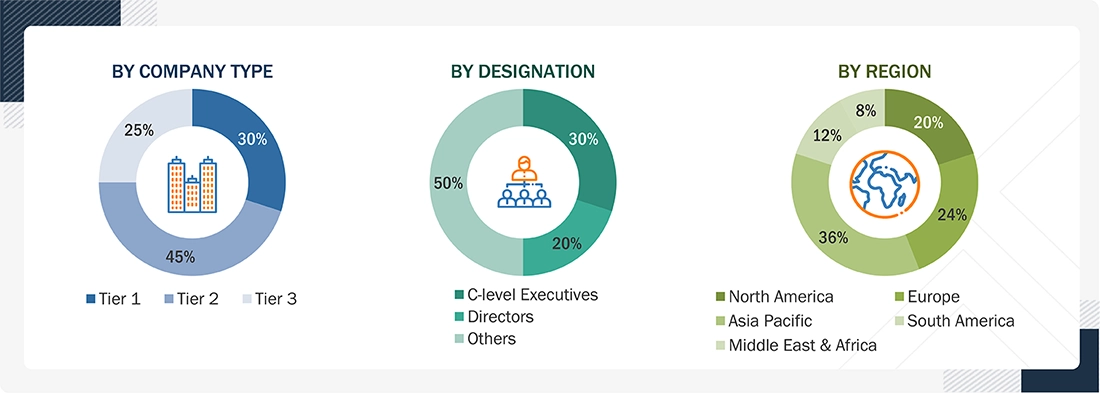
Note: “Others” include sales managers, engineers, and regional managers
The tiers of the companies are defined based on their total revenue as of 2024: Tier 1: >USD 1 billion, Tier 2: USD 500 million–1 billion, and Tier 3: < USD 500 million
To know about the assumptions considered for the study, download the pdf brochure
Market Size Estimation
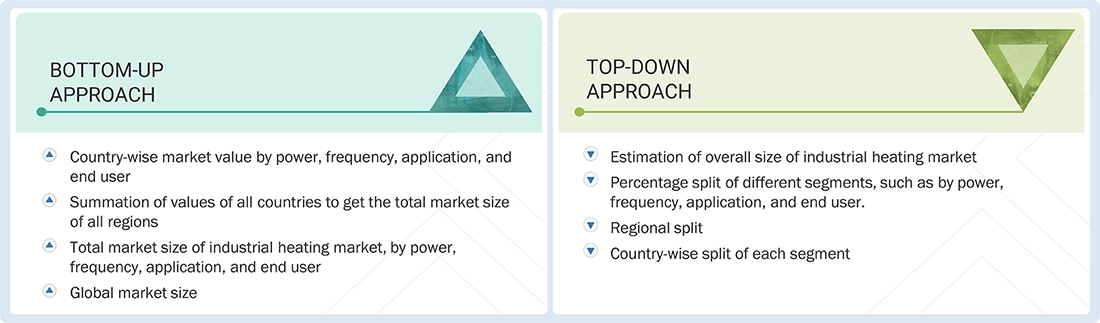
Both the top-down and bottom-up approaches were used to estimate and validate the size of the Induction heating market and its dependent submarkets. The key players in the market were identified through secondary research, and their market share in the respective regions was obtained through primary and secondary research. The research methodology includes the study of the annual and financial reports of top market players and interviews with industry experts, such as chief executive officers, vice presidents, directors, sales managers, and marketing executives, for key quantitative and qualitative insights related to the Induction Heating market.
Data Triangulation
After arriving at the overall market size from the estimation process explained above, the total market has been split into several segments and subsegments. To complete the overall market engineering process and arrive at the exact statistics for all the segments and subsegments, the data triangulation and market breakdown processes have been employed, wherever applicable. The data has been triangulated by studying various factors and trends from both the demand and supply sides. Along with this, the market has been validated using both the top-down and bottom-up approaches.
Market Definition
An induction heating system is a specialized power electronic system/power supply that rectifies AC to DC and then inverts DC into high-frequency AC power for efficient, stable induction heating applications in various industrial processes. This high-frequency AC drives an induction heating coil, generating electromagnetic fields that induce eddy currents in conductive materials, producing rapid, localized, and controllable heating without direct contact, flames, or emissions.
These systems utilize technologies such as induction, infrared, resistance, and RF heating to deliver precise, uniform, and repeatable heating cycles essential for forging, brazing, hardening, melting, annealing, shrink-fitting, and surface treatment. Induction Heating equipment operates through carefully regulated power and frequency parameters, ensuring that heat is applied with the required depth, speed, and thermal accuracy. By replacing traditional gas or fuel-based heating methods with electrically driven systems, industries benefit from higher efficiency, reduced maintenance, lower emissions, and improved process consistency. Induction Heating serves as a critical interface between raw material preparation and finished product quality, enabling fully automated, flexible, and high-performance manufacturing operations across automotive, electronics, and machinery production.
Stakeholders
- Government & research organizations
- Institutional investors
- Investors/Shareholders
- Environmental research institutes
- Manufacturers’ associations
- Induction Heating manufacturers, dealers, and suppliers
- System Integrators and Contractors
- Organizations, forums, alliances, and associations
- Public & private companies
- State and national regulatory authorities
Report Objectives
- To describe and forecast the Induction Heating market, by power, frequency, application, and end user, in terms of value.
- To describe and forecast the Induction heating market for various segments with respect to five main regions: North America, Europe, Asia Pacific, Latin America, and the Middle East & Africa, in terms of value
- To describe and forecast the Induction Heating market, by region, in terms of volume
- To provide detailed information regarding drivers, restraints, opportunities, and challenges influencing the growth of the market
- To provide a detailed overview of the Induction Heating supply chain analysis, use case analysis, key stakeholders and buying criteria, patent analysis, trade analysis, tariff analysis, regulations, macroeconomic outlook, pricing analysis, Porter’s five forces analysis, impact of gen AI/AI, and the 2024 US tariff impact.
- To strategically analyze micromarkets1 with respect to individual growth trends, prospects, and contributions to the total market
- To analyze opportunities in the market for various stakeholders by identifying high-growth segments
- To strategically profile key players and comprehensively analyze their market position in terms of ranking and core competencies2, along with detailing the market’s competitive landscape.
- To analyze growth strategies, such as acquisitions, investments, expansions, and product launches, adopted by market players in the Induction heating market
Get the Full Induction Heating Market Report
Full forecast, segment splits, and company analysis for all Induction Heating Market.
- Italy Induction Heating Market
- Spain Induction Heating Market
- China Induction Heating Market
- Japan Induction Heating Market
- India Induction Heating Market
- Australia Induction Heating Market
- Brazil Induction Heating Market
- Mexico Induction Heating Market
- Argentina Induction Heating Market
- UAE Induction Heating Market
- South Africa Induction Heating Market
- Rest Of Europe Induction Heating Market
- Rest Of Asia Pacific Induction Heating Market
- Rest Of Latin America Induction Heating Market
- GCC Induction Heating Market
- Rest Of GCC Induction Heating Market
- US Induction Heating Market
- Canada Induction Heating Market
- Germany Induction Heating Market
- UK Induction Heating Market
- France Induction Heating Market
Need a Tailored Report?
Customize this report to your needs
Get 10% FREE Customization
Customize This Report
