
Brazil Industrial Absorbents Market (2023-2028)

The Brazil Industrial Absorbents Market was valued at $161.7 Million in 2023 and projected to reach to $207.9 Million by 2028, representing a compound annual growth rate of 5.2%. Brazil's industrial absorbents market is positioned for sustained growth through 2028, driven by the country's expanding manufacturing base and heightened focus on environmental sustainability.


| Market Size in | USD 26.32 MN |
| Market Forecast in | |
| CAGR | |
| Forecast Period | |
| Units Considered | Value (USD MN) |
Brazil Industrial Absorbents Market Trends and Insights
- This growth trajectory reflects Brazil's expanding manufacturing sector, increased regulatory focus on workplace safety and environmental compliance, and rising demand from oil & gas, chemical processing, and automotive industries.
- Brazil's strategic position as South America's largest economy and industrial hub drives sustained investment in spill containment and hazardous material management solutions. The Brazilian market benefits from growing awareness of occupational health standards and stricter environmental regulations governing industrial operations.
- Brazil's diverse industrial base-spanning petrochemicals, food processing, and heavy manufacturing-creates consistent demand for specialized absorbent products.
- Between 2023 and 2028, Brazil is expected to see accelerated adoption of premium absorbent materials driven by modernization of industrial facilities and increased foreign direct investment in manufacturing infrastructure..
Key Market Statistics
- CAGR (2023-2028) 5.2% CAGR
- Market Size, 2023 ~USD 161.7 Million
- Forecast, 2028 ~USD 207.9 Million
- Country Brazil
Brazil Industrial Absorbents Market Overview
Market Valuation :
Brazil's industrial absorbents market reached USD 161.7 million in 2023, with strong growth momentum driven by expanding manufacturing infrastructure and increased industrial activity across multiple sectors.
Regulatory Compliance Growth :
Stricter Brazilian environmental regulations and workplace safety standards are driving adoption of industrial absorbents, particularly in oil & gas operations and chemical processing facilities across the country.
Sector Diversification :
Key demand drivers include Brazil's robust oil & gas industry, chemical processing plants, automotive manufacturing, and food processing sectors, each requiring specialized absorbent solutions for operational efficiency.
Growth Trajectory :
With a projected CAGR of 5.2% through 2028, the market is expected to reach USD 207.9 million, outpacing the global growth rate of 4% and reflecting Brazil's economic expansion and industrial modernization.
Brazil Industrial Absorbents Market Dynamics
- The oil & gas sector, particularly offshore operations, remains a significant growth catalyst, alongside increasing demand from chemical processing and automotive industries.
- Regulatory pressures from CONAMA and other Brazilian environmental agencies are compelling industries to adopt compliant absorbent solutions, creating new market opportunities. The market's 5.2% CAGR reflects Brazil's economic recovery and industrial investment trends.
- Rising awareness of workplace safety standards and environmental protection measures will continue to fuel demand for premium absorbent products.
- Strategic investments in manufacturing capacity and distribution networks by both domestic and international players are expected to enhance market penetration across Brazil's industrial regions, particularly in São Paulo, Rio de Janeiro, and the Northeast industrial corridor..
Market Ecosystem
Related Ecosystem
Resins And Polymers
- Polycarbonate
- Acrylonitrile Butadiene Styrene (ABS)
- Epoxy Resin
- Light Commercial Vehicles (LCVs)
- Polypropylene (PP)
- Basf se
- DOW CHEMICAL COMPANY
- Solvay sa
- Saudi arabia basic industries corporation (sabic)
- DuPont de Nemours, Inc.
Yarns Fabric And Textile
- Agrotech
- Clothtech
- Indutech
- Oekotech
- Packtech
- MILLIKEN & COMPANY
- Toray Industries, Inc.
- 3M COMPANY
- Kimberly-Clark Corporation
- DuPont de Nemours, Inc.
Water Purification
- Corrosion Inhibitors
- Cartridge Filters
- Fiberglass
- Reverse Osmosis
- Acetone
- Veolia
- Basf se
- CALGON CARBON CORPORATION
- SOLENIS
- Kemira oyj
Key Takeaways
- Brazil's industrial absorbents market reached USD 161.7 million in 2023 with a projected value of USD 207.9 million by 2028.
- Brazil is experiencing a 5.2% CAGR, outpacing the global average of 4%, driven by industrial expansion and regulatory compliance.
- Brazil's oil & gas, chemical, and automotive sectors are primary demand drivers for industrial absorbent solutions.
- Brazil's market growth is supported by increasing environmental regulations and workplace safety standards across South America's largest economy.
Industrial Absorbents Market Report Scope
| Report Metric | Details |
|---|---|
| Base Year | 2023 |
| Fastest Growing Segment | PADS (Product) |
| Forecast Period | 2023-2028 |
| Growth Rate | CAGR of 4% from 2023 to 2028 |
| Largest Segment | SYNTHETIC (Material Type) |
| Market Size Base Year (Billions) | ~USD 4.27 (2023) |
| Revenue Forecast (Billions) | ~USD 5.2 (2028) |
| Segments Covered | Type, Product, Material Type, End-Use Industry |
Brazil Industrial Absorbents Market Report Segmentation
4 segment dimensions are covered across the global market.
By Type
- Hazmat/Chemical
- Oil-Only
- Polyacrylate/Polyacrylamide Copolymer
- Sodium Polyacrylate
- Universal
By Product
- Boom & Socks
- Granules
- Pads
- Pillows
- Rolls
- Sheets & Mats
By Material Type
- Natural Inorganic
- Natural Organic
- Synthetic
By End-Use Industry
- Chemical
- Food Processing
- Healthcare
- Oil & Gas
BRAZIL: INDUSTRIAL ABSORBENTS MARKET, BY END-USE INDUSTRY, 2023–2028
| Segment | 2023 | 2024 | 2025 | 2026 | 2027 | 2028 | CAGR (%) |
|---|---|---|---|---|---|---|---|
| CHEMICAL | 34.4 | 36.9 | 39.4 | 41.6 | 43.3 | 45.1 | 5.6 |
| FOOD PROCESSING | 25.3 | 26.8 | 28.2 | 29.5 | 30.4 | 31.2 | 4.3 |
| HEALTHCARE | 12.9 | 13.8 | 14.7 | 15.5 | 16.1 | 16.7 | 5.3 |
| OIL & GAS | 83.1 | 88.8 | 94.5 | 99.5 | 103.5 | 107.4 | 5.3 |
| OTHERS | 6 | 6.4 | 6.7 | 7 | 7.2 | 7.5 | 4.4 |
| TOTAL | 161.7 | 172.5 | 183.5 | 193 | 200.5 | 207.9 | 5.2 |
Target Audience
- Industrial Absorbent Manufacturers : Manufacturers seeking to expand or establish operations in Brazil need detailed market sizing, growth forecasts, and sector-specific demand data to optimize product portfolios and manufacturing capacity planning.
- Oil & Gas Operators : Brazilian and international oil & gas companies require insights into absorbent market trends, regulatory compliance requirements, and supplier landscapes to ensure operational efficiency and environmental compliance.
- Chemical & Processing Companies : Chemical processors and industrial manufacturers in Brazil need market intelligence to source appropriate absorbent solutions, understand competitive pricing, and ensure compliance with local environmental standards.
- Distribution & Logistics Partners : Distributors and logistics providers targeting Brazil's industrial sector require market forecasts and sector analysis to identify growth opportunities, optimize inventory, and develop effective go-to-market strategies.
- Investment & Strategy Consultants : Private equity firms, management consultants, and strategic investors evaluating opportunities in Brazil's industrial chemicals sector need comprehensive market data to assess investment viability and growth potential.
Reasons to Buy this Report
- Market-Specific Sizing & Forecasts : Access precise valuation data for Brazil's market (USD 161.7M in 2023, USD 207.9M by 2028) with country-specific CAGR of 5.2%, enabling accurate budget allocation and revenue projections for Brazilian operations.
- Regulatory & Compliance Insights : Understand Brazil-specific environmental regulations and workplace safety requirements driving absorbent adoption, helping you align products and strategies with local compliance mandates and competitive positioning.
- Sector-Specific Demand Analysis : Identify growth opportunities within Brazil's key industries—oil & gas, chemical processing, automotive, and food processing—with tailored insights into sector-specific absorbent requirements and purchasing patterns.
- Competitive Landscape Intelligence : Gain actionable intelligence on market dynamics, competitive positioning, and growth strategies specific to Brazil, enabling informed decisions on market entry, partnerships, and expansion initiatives.
- Strategic Planning & Risk Mitigation : Leverage Brazil-focused market data to develop targeted go-to-market strategies, identify emerging opportunities, and mitigate risks associated with regulatory changes and market fluctuations in Latin America's largest economy.
Frequently asked questions
What is the current size of Brazil's industrial absorbents market?
Brazil's industrial absorbents market was valued at USD 161.7 million in 2023 and is expected to grow to USD 207.9 million by 2028.
What is the growth rate of Brazil's industrial absorbents market?
Brazil's industrial absorbents market is growing at a CAGR of 5.2% from 2023 to 2028, which exceeds the global growth rate of 4%.
Which industries drive demand for industrial absorbents in Brazil?
Brazil's primary demand drivers include oil & gas exploration and refining, chemical processing, automotive manufacturing, and food processing industries.
What regulatory factors influence Brazil's industrial absorbents market?
Brazil's market is shaped by increasingly stringent environmental regulations, occupational health and safety standards, and spill containment requirements across industrial sectors.
How does Brazil's market growth compare to global trends?
Brazil's 5.2% CAGR outpaces the global industrial absorbents market CAGR of 4%, reflecting stronger regional industrial activity and regulatory enforcement.
RESEARCH METHODOLOGY
The study involved four major activities in estimating the current industrial absorbents market size—exhaustive secondary research collected information on the market, peer, and parent markets. The next step was to validate these findings, assumptions, and measures with industry experts across the value chain of industrial absorbents through primary research. Both top-down and bottom-up approaches were employed to estimate the total market size. After that, market breakdown and data triangulation were used to estimate the size of the segments and sub-segments of the market.
Secondary Research
The research methodology used to estimate and forecast the access control market begins with capturing data on the revenues of key vendors in the market through secondary research. In the secondary research process, various secondary sources, such as Hoovers, Bloomberg BusinessWeek, Factiva, World Bank, and Industry Journals, were referred to identify and collect information for this study. These secondary sources included annual reports, press releases & investor presentations of companies, white papers, certified publications, articles by recognized authors, notifications by regulatory bodies, trade directories, and databases. Vendor offerings have also been taken into consideration to determine market segmentation.
Primary Research
The industrial absorbents market comprises several stakeholders in the supply chain, such as manufacturers, equipment manufacturers, traders, associations, and regulatory organizations. The development of various end-use industries characterizes the demand side of this market. Various primary sources from the supply and demand sides of the market were interviewed to obtain qualitative and quantitative information. Following is the breakdown of the primary respondents:
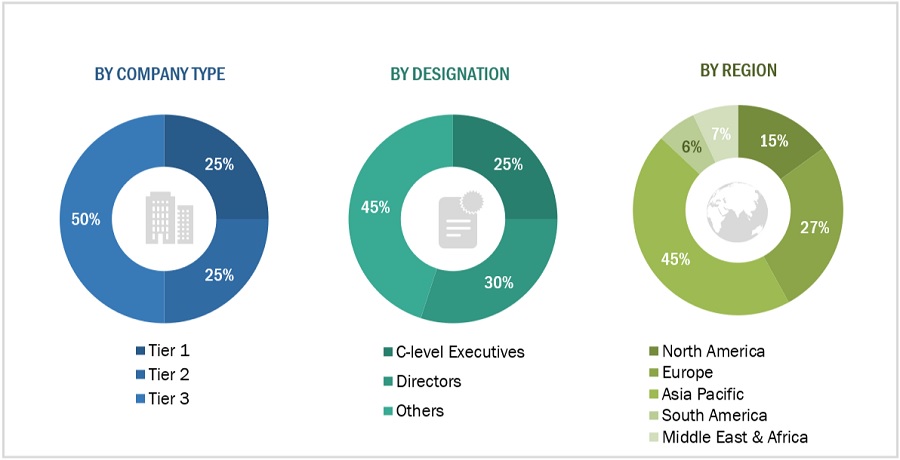
To know about the assumptions considered for the study, download the pdf brochure
Market Size Estimation
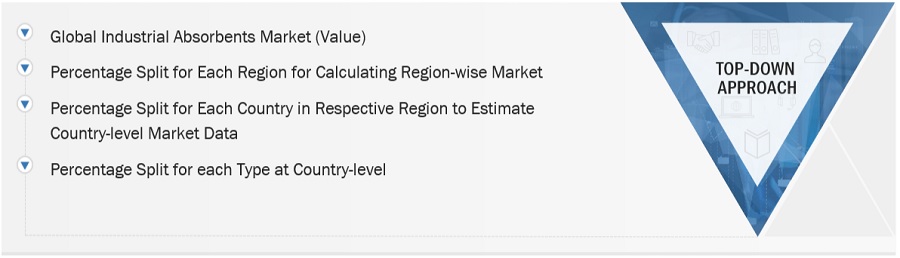
The top-down and bottom-up approaches were used to estimate and validate the total size of the industrial absorbents market. These methods were also used extensively to determine the market size of various segments. The research methodology used to estimate the market size included the following:
- The key players were identified through extensive primary and secondary research.
- The value chain and market size of the industrial absorbents market, in terms of value and volume, were determined through primary and secondary research.
- All percentage shares, splits, and breakdowns were determined using secondary sources and verified through primary sources.
- All possible parameters that affect the market covered in this research study were accounted for, viewed in extensive detail, verified through primary research, and analyzed to obtain the final quantitative and qualitative data.
- The research included the study of reports, reviews, and newsletters of top market players, along with extensive interviews for opinions from key leaders, such as CEOs, directors, and marketing executives.
Global Industrial Absorbents Market Size: Bottom-Up Approach
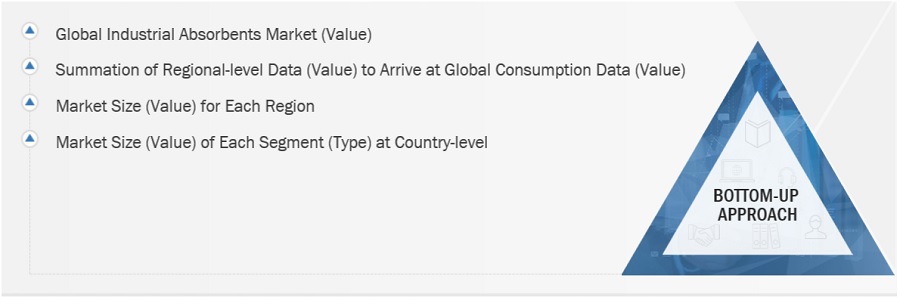
To know about the assumptions considered for the study, Request for Free Sample Report
Global Industrial Absorbents Market Size: Top-Down Approach
Data Triangulation
After arriving at the overall market size using the market size estimation processes as explained above, the market was split into several segments and sub-segments. Data triangulation and market breakdown procedures were employed to complete the overall market engineering process and determine each market segment’s and subsegment’s exact statistics. The market size was calculated globally by summing up the country-level and regional-level data.
Market Definition
Industrial absorbents are porous materials designed to soak up liquids or gases from spills on land or water, serve to avert wastage, damage, or hazards resulting from leaks, drips, sprays, or spills of substances like oil, water, or chemicals during industrial activities. Comprised chiefly of materials such as polypropylene, polyester, polyurethane, cellulose, and clay, these absorbents exhibit oleophilic, hydrophilic, or hydrophobic properties.
The study of the industrial absorbents market encompasses both naturally occurring and synthetic absorbents utilized across various industrial settings for spill control, containment, and remediation purposes. The analysis includes an array of major industrial absorbent products like pads, rolls, pillows, granules, booms & socks, as well as sheets & mats.
Key Stakeholder
- Raw Material Manufacturers
- Industrial Absorbent Manufacturers
- Spill Control Product Manufacturers and Suppliers
- Manufacturers and Suppliers from End-Use Industries
- Environmental Protection Agencies
- Spill Tracking & Surveillance Companies
- Environment Regulatory Bodies and Agencies
- Government and Research Organizations
- Associations and Industrial Bodies
- Research and Consulting Firms
- Investment Banks and Private Equity Firms
Report Objectives:
- To define, describe, and forecast the size of the global industrial absorbents market in terms of value and volume
- To provide detailed information regarding the key factors, such as drivers, restraints, opportunities, and industry-specific challenges, influencing the growth of the industrial absorbents market
- To analyze and forecast the size of various segments (type & nature) of the industrial absorbents market based on five major regions—North America, Europe, Asia Pacific, South America, Middle East & Africa—along with key countries in each of these regions
- To analyze recent developments and competitive strategies, such as expansions, new product developments, partnerships, and acquisitions, product launches to draw the competitive landscape of the market
- To strategically profile the key players in the market and comprehensively analyze their core competencies
Available Customizations:
With the given market data, MarketsandMarkets offers customizations according to client-specific needs.
The following customization options are available for the report:
- Additional country-level analysis of the industrial absorbents market
- Profiling of additional market players (up to 5)
Product Analysis
- Product matrix, which gives a detailed comparison of the product portfolio of each company.
Get the Full Industrial Absorbents Market Report
Full forecast, segment splits, and company analysis for all Industrial Absorbents Market.
- China Industrial Absorbents Market
- Japan Industrial Absorbents Market
- India Industrial Absorbents Market
- South Korea Industrial Absorbents Market
- Germany Industrial Absorbents Market
- France Industrial Absorbents Market
- UK Industrial Absorbents Market
- Spain Industrial Absorbents Market
- Italy Industrial Absorbents Market
- Canada Industrial Absorbents Market
- Mexico Industrial Absorbents Market
- US Industrial Absorbents Market
- Saudi Arabia Industrial Absorbents Market
- UAE Industrial Absorbents Market
- South Africa Industrial Absorbents Market
- Argentina Industrial Absorbents Market
- Rest Of Europe Industrial Absorbents Market
- Rest Of Asia Pacific Industrial Absorbents Market
- Rest Of South America Industrial Absorbents Market
Need a Tailored Report?
Customize this report to your needs
Get 10% FREE Customization
Customize This Report
