
Asia Pacific Industrial Vending Machine Market (2024-2029)

The Asia Pacific Industrial Vending Machine Market was valued at $468.8 Million in 2024 and projected to reach to $798.6 Million by 2029, representing a compound annual growth rate of 11.2%. Asia Pacific's industrial vending machine market is positioned for exceptional growth through 2029, supported by the region's dominance in semiconductor and electronics manufacturing.


| Market Size in | USD 26.32 MN |
| Market Forecast in | |
| CAGR | |
| Forecast Period | |
| Units Considered | Value (USD MN) |
Asia Pacific Industrial Vending Machine Market Trends and Insights
- Asia Pacific's 11.2% compound annual growth rate outpaces the global average, driven by rapid industrialization, semiconductor manufacturing expansion, and increasing adoption of automated supply chain solutions across the region.
- The semiconductor and electronics sector in Asia Pacific is leveraging vending machines to streamline parts distribution, reduce downtime, and enhance operational efficiency in manufacturing facilities. Asia Pacific's dominance in global electronics production positions the region as a critical market for industrial vending solutions.
- Between 2024 and 2029, Asia Pacific is expected to capture significant market share as manufacturers invest in smart vending technologies to support just-in-time inventory management.
- The region's growing emphasis on Industry 4.0 initiatives and digital transformation in manufacturing is accelerating demand for connected vending systems that integrate with enterprise resource planning platforms. Key markets within Asia Pacific, including China, Japan, South Korea, and Southeast Asia, are driving innovation in automated parts dispensing and real-time inventory tracking.
- Asia Pacific's competitive manufacturing landscape and labor cost pressures are compelling companies to adopt industrial vending solutions that improve productivity and reduce manual handling costs..
Key Market Statistics
- CAGR (2024-2029) 11.2% CAGR
- Market Size, 2024 ~USD 468.8 Million
- Forecast, 2029 ~USD 798.6 Million
- Geography Asia Pacific
Asia Pacific Industrial Vending Machine Market Overview
Regional Growth Acceleration :
Asia Pacific's industrial vending machine market is expanding at 11.2% CAGR, significantly outpacing the global average of 10.1%, driven by semiconductor manufacturing boom and rapid industrialization across the region.
China's Market Dominance :
China leads Asia Pacific with $383.9 million in market size, representing over 81% of the region's total market value, fueled by electronics production and supply chain automation investments.
Emerging Growth Hubs :
Japan ($159.6M) and Rest of Asia Pacific ($222.8M) represent significant secondary markets, with India ($32.3M) emerging as a high-potential growth market for industrial automation solutions.
Forecast Expansion Trajectory :
The Asia Pacific market is projected to grow from $468.8 million in 2024 to $798.6 million by 2029, representing a $329.8 million increase driven by semiconductor sector expansion and supply chain digitalization.
Asia Pacific Industrial Vending Machine Market Dynamics
- China's continued industrial expansion, coupled with Japan's advanced automation adoption and India's emerging manufacturing capabilities, creates a multi-layered growth opportunity.
- The region's 11.2% CAGR reflects strong demand for automated supply chain solutions that enhance operational efficiency and reduce downtime in high-volume production environments. Key growth catalysts include increasing labor costs driving automation adoption, government initiatives supporting Industry 4.0 transformation, and rising semiconductor demand from global tech companies.
- Investment in smart factories and IoT-enabled supply chain management across Asia Pacific will further accelerate market penetration.
- By 2029, the region is expected to capture a substantial share of global industrial vending machine adoption, with particular momentum in China, Japan, and Southeast Asian manufacturing hubs..
Market Ecosystem
Related Ecosystem
Key Takeaways
- Asia Pacific industrial vending machine market will grow from $468.8M (2024) to $798.6M (2029) at 11.2% CAGR, outpacing global growth rates.
- Asia Pacific's semiconductor and electronics manufacturing dominance is the primary driver of industrial vending adoption and technological innovation.
- Industry 4.0 digital transformation initiatives across Asia Pacific are accelerating demand for connected, IoT-enabled vending systems with real-time inventory tracking.
- Asia Pacific's competitive labor market and manufacturing pressures are compelling adoption of automated vending solutions to improve efficiency and reduce operational costs.
Industrial Vending Machine Market Report Scope
| Report Metric | Details |
|---|---|
| Base Year | 2024 |
| Fastest Growing Segment | VERTICAL LIFT MACHINES (Type) |
| Forecast Period | 2024-2029 |
| Growth Rate | CAGR of 10.1% from 2024 to 2029 |
| Largest Segment | HARDWARE (Offering) |
| Market Size Base Year (Billions) | ~USD 1.55 (2024) |
| Revenue Forecast (Billions) | ~USD 2.5 (2029) |
| Segments Covered | Offering, Type, Industry, Vertical |
Asia Pacific Industrial Vending Machine Market Report Segmentation
4 segment dimensions are covered across the global market.
By Offering
- Hardware
- Software
By Type
- Bank Kiosks
- Carousel Vending Machines
- Casino Kiosks
- Check-In Kiosks
- Coil Vending Machines
- Employment Kiosks
- Food & Beverage Vending Kiosks
- Information Kiosks
- Other Machines
- Other Self-Service Kiosks
- Other Vending Kiosks
- Patient-Interactive Kiosks
- Photo Kiosks
- Scale Vending Machines
- Self-Service Kiosks
- Ticketing Kiosks
- Vending Kiosks
- Vertical Lift Machines
By Industry
- Aerospace
- Construction
- Healthcare
- Manufacturing
- Oil & Gas
- Other Industries
By Vertical
- Banking & Financial Services
- Entertainment
- Government
- Healthcare
- Hospitality
- Other Verticals
- Retail
- Transportation
Target Audience
- Semiconductor & Electronics Manufacturers : Manufacturers across Asia Pacific need market intelligence to optimize supply chain automation, reduce production downtime, and benchmark automation adoption rates against regional competitors.
- Industrial Vending Machine Vendors : Equipment suppliers require detailed market sizing, growth forecasts, and country-level demand data to prioritize Asia Pacific expansion, allocate resources, and develop region-specific product strategies.
- Supply Chain & Operations Managers : Operations leaders need insights into automation ROI, implementation trends, and best practices across Asia Pacific manufacturing facilities to justify capital investments and improve efficiency.
- Private Equity & Investment Firms : Investors evaluating opportunities in Asia Pacific industrial automation require comprehensive market analysis, growth trajectories, and competitive dynamics to assess portfolio company potential.
- Government & Policy Organizations : Regional economic development agencies and policy makers need market data to understand industrial automation adoption, support Industry 4.0 initiatives, and guide manufacturing sector investments.
Countries within Asia Pacific - compare and drill down
| Country | 2025 size (native) |
|---|---|
| China | USD 383.9 Million |
| Japan | USD 159.6 Million |
| India | USD 32.3 Million |
| Rest Of Asia Pacific | USD 222.8 Million |
Country market size visualization
Reasons to Buy this Report
- Regional Market Sizing & Forecasts : Obtain precise market valuations for Asia Pacific ($468.8M in 2024) and country-level breakdowns including China, Japan, and India, with detailed 5-year projections to 2029.
- Competitive Landscape Analysis : Understand market dynamics specific to Asia Pacific's semiconductor and electronics sectors, identifying key players, market share distribution, and competitive positioning across the region.
- Growth Driver Identification : Access insights into region-specific growth catalysts including rapid industrialization, semiconductor manufacturing expansion, labor cost pressures, and Industry 4.0 adoption rates across Asia Pacific.
- Investment & Expansion Strategy : Leverage country-level market data for China, Japan, India, and emerging markets to identify optimal entry points, partnership opportunities, and expansion strategies in high-growth segments.
- Trend & Technology Insights : Discover Asia Pacific-specific trends in automated supply chain solutions, IoT integration, smart factory adoption, and emerging technologies driving industrial vending machine demand.
Frequently asked questions
What is the current size of the Asia Pacific industrial vending machine market?
The Asia Pacific industrial vending machine market was valued at $468.8 million in 2024 and is projected to reach $798.6 million by 2029.
What is the growth rate for industrial vending machines in Asia Pacific?
Asia Pacific's industrial vending machine market is growing at a compound annual growth rate (CAGR) of 11.2% from 2024 to 2029.
Which countries are driving growth in the Asia Pacific industrial vending market?
Key markets within Asia Pacific including China, Japan, South Korea, and Southeast Asia are driving growth through semiconductor manufacturing expansion and Industry 4.0 adoption.
How is Industry 4.0 impacting Asia Pacific's industrial vending machine market?
Industry 4.0 initiatives across Asia Pacific are accelerating demand for connected, IoT-enabled vending systems that integrate with enterprise resource planning platforms and provide real-time inventory tracking.
Why is Asia Pacific's growth rate higher than the global average?
Asia Pacific's 11.2% CAGR exceeds the global 10.1% average due to rapid industrialization, semiconductor manufacturing dominance, and widespread adoption of automated supply chain solutions in the region.
RESEARCH METHODOLOGY
The study involved four major activities in estimating the current size of the industrial vending machine market. Exhaustive secondary research has been done to collect information on the market, peer, and parent markets. The next step has been to validate these findings, assumptions, and sizing with industry experts across the value chain through primary research. Both top-down and bottom-up approaches have been employed to estimate the total market size. After that, market breakdown and data triangulation methods were used to estimate the market size of segments and subsegments. Two sources of information—secondary and primary—have been used to identify and collect information for an extensive technical and commercial study of the industrial vending machine market.
Secondary Research
Secondary sources include company websites, magazines, industry news, associations, and databases (Factiva and Bloomberg). These secondary sources include annual reports, press releases, investor presentations of companies, white papers, certified publications, articles by recognized authors, regulatory bodies, trade directories, and databases.
Primary Research
Primary sources mainly consist of several experts from the core and related industries, along with preferred industrial vending machine providers, distributors, alliances, standards, and certification organizations related to various segments of this industry’s value chain.
In the primary research process, various primary sources from both the supply and demand sides were interviewed to obtain qualitative and quantitative information on the market. The primary sources from the supply side included various industry experts such as Chief Experience Officers (CXOs), Vice Presidents (VPs), and Directors from business development, marketing, product development/innovation teams, and related key executives from industrial vending machine providers, such as Fastenal Company (US), Airgas, Inc. (US), RUBIX GROUP (UK), MSC Industrial Direct Co., Inc. (US), Turtle (US), and W.W. Grainger, Inc. (US); research organizations, distributors, industry associations, and key opinion leaders. Following is the breakdown of primary respondents.
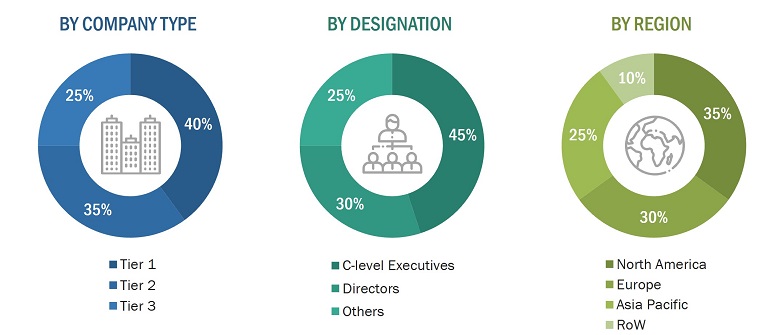
To know about the assumptions considered for the study, download the pdf brochure
Market Size Estimation
Both top-down and bottom-up approaches have been used to estimate and validate the total size of the industrial vending machine market. These methods have also been used extensively to estimate the size of various subsegments in the market. The following research methodology has been used to estimate the market size:
- Major players in the industry and markets have been identified through extensive secondary research.
- The industry’s value chain and market size (in terms of value) have been determined through primary and secondary research processes.
- All percentage shares, splits, and breakdowns have been determined using secondary sources and verified through primary sources.
Top-Down Approach
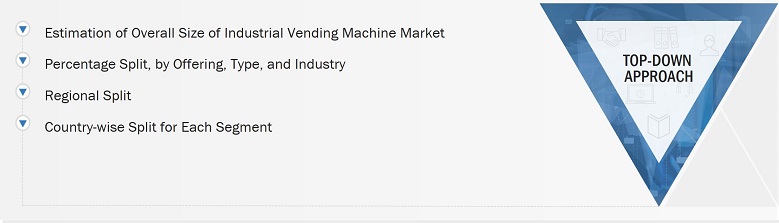
In the top-down approach, the overall market size has been used to estimate the size of the individual market segments (mentioned in market segmentation) through percentage splits from secondary and primary research. For specific market segments, the size of the most appropriate immediate parent market has been used to implement the top-down approach. The bottom-up approach has also been implemented for data obtained from secondary research to validate the market size of various segments.
Industrial Vending Machine Market: Top-Down Approach
Bottom-Up Approach
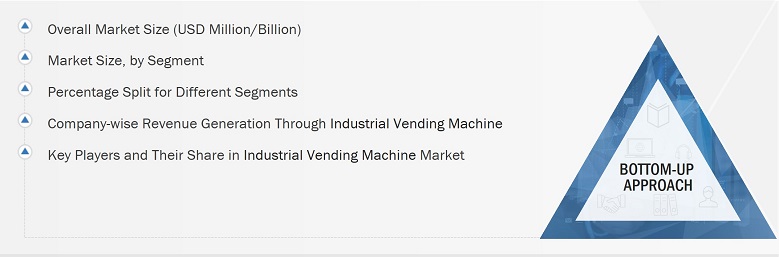
The bottom-up approach has been used to arrive at the overall size of the industrial vending machine market from the revenues of the key players and their market shares. Calculations based on revenues of key companies identified in the market led to the estimation of their overall market size.
Industrial Vending Machine Market: Bottom-up Approach
Data Triangulation
After arriving at the overall market size from the estimation process explained above, the overall market has been split into several segments and subsegments. The market breakdown and data triangulation procedures have been employed, wherever applicable, to complete the overall market engineering process and arrive at the exact statistics for all segments and subsegments. The data has been triangulated by studying various factors and trends from both the demand and supply sides. The market has also been validated using both top-down and bottom-up approaches.
Market Definition
An industrial vending machine is a system used on production sites that automatically dispenses the required maintenance, repair, and operation (MRO) products or personal protective equipment (PPE) 24/7 and performs automatic record-keeping. It dispenses supplies directly to the employees. The industrial vending machine is equipped with sensors, locker units, cameras, internet connectivity, touch display, software, RFID portal tools, biometrics, and cashless payment technology. It can be configured to be accessed by a specific employee or group of employees, for a specific quantity, within a particular time frame. This can help organizations eliminate the unnecessary use of inventory.
Key Stakeholders
- Raw material suppliers
- Industrial vending machine original equipment manufacturers (OEMs)
- Suppliers and distributors
- Vending machine integrators
- Software & hardware providers
- Electronic hardware equipment manufacturers
- Locker units and vending machine controller providers
- Assembly and packaging vendors
- Technical universities
- Government research agencies and private research organizations
- Research institutes and organizations
- Market research and consulting firms
- Technology investors
- Technology standard organizations, forums, alliances, and associations
Report Objectives
- To define and forecast the industrial vending machine market regarding offering, type, and industry.
- To describe and forecast the industrial vending machine market and its value segments for four regions—North America, Europe, Asia Pacific, and the Rest of the World (RoW), along with their respective countries.
- To provide detailed information regarding the drivers, restraints, opportunities, and challenges influencing the growth of the market
- To strategically analyze micro-markets concerning individual growth trends, prospects, and contributions to the overall market
- To study the complete value chain of the industrial vending machine market
- To analyze opportunities in the market for stakeholders by identifying high-growth segments of the market
- To strategically profile key players and comprehensively analyze their market position regarding ranking and core competencies, along with a detailed market competitive landscape.
- To analyze strategic approaches such as agreements, collaborations, and partnerships in the industrial vending machine market
- To provide an analysis of the recession impact on the growth of the market and its segments
Available Customizations
Based on the given market data, MarketsandMarkets offers customizations in the reports according to the client’s specific requirements. The available customization options are as follows:
Company Information
- Detailed analysis and profiling of additional market players (up to 5)
Get the Full Industrial Vending Machine Market Report
Full forecast, segment splits, and company analysis for all Industrial Vending Machine Market.
- US Industrial Vending Machine Market
- Canada Industrial Vending Machine Market
- Mexico Industrial Vending Machine Market
- UK Industrial Vending Machine Market
- Germany Industrial Vending Machine Market
- France Industrial Vending Machine Market
- Spain Industrial Vending Machine Market
- Poland Industrial Vending Machine Market
- Portugal Industrial Vending Machine Market
- Rest Of Europe Industrial Vending Machine Market
- China Industrial Vending Machine Market
- Japan Industrial Vending Machine Market
- India Industrial Vending Machine Market
- Rest Of Asia Pacific Industrial Vending Machine Market
- GCC Countries Industrial Vending Machine Market
- Rest Of Middle East Industrial Vending Machine Market
Need a Tailored Report?
Customize this report to your needs
Get 10% FREE Customization
Customize This Report
