
Malaysia Ink Additives Market (2024-2029)

The Malaysia Ink Additives Market was valued at $73.1 Million in 2024 and projected to reach to $98.3 Million by 2029, representing a compound annual growth rate of 6.1%. Malaysia's ink additives market is poised for significant expansion, driven by the country's growing manufacturing capabilities and increasing investments in digital printing infrastructure.


| Market Size in | USD 26.32 MN |
| Market Forecast in | |
| CAGR | |
| Forecast Period | |
| Units Considered | Value (USD MN) |
Malaysia Ink Additives Market Trends and Insights
- This expansion reflects Malaysia's strengthening position as a regional manufacturing hub for printing and packaging industries.
- Malaysia's demand for high-performance ink additives is driven by increasing adoption of digital printing technologies and growing export-oriented production capabilities across the Asia Pacific region. The Malaysian ink additives market benefits from the country's established chemical and materials processing infrastructure, coupled with rising investments in printing technology modernization.
- Between 2024 and 2029, Malaysia is expected to capture significant market share as local manufacturers and international players establish production and distribution networks.
- Malaysia's strategic location and competitive labor costs position the nation as a key supplier of ink additives to neighboring Southeast Asian markets. Key end-use sectors driving Malaysia's market include packaging, commercial printing, and specialty applications.
- Malaysia's regulatory environment and quality standards alignment with international norms further support market penetration and export growth through 2029..
Key Market Statistics
- CAGR (2024-2029) 6.1% CAGR
- Market Size, 2024 ~USD 73.1 Million
- Forecast, 2029 ~USD 98.3 Million
- Country Malaysia
Malaysia Ink Additives Market Overview
Market Valuation :
Malaysia's ink additives market is valued at USD 73.1 million in 2024, with strong growth trajectory positioning the country as a key regional player in the chemicals and materials sector.
Robust CAGR Growth :
The Malaysian market is expanding at a 6.1% CAGR from 2024-2029, outpacing the global average of 5.3%, indicating accelerating demand and market maturation in the region.
Digital Printing Adoption :
Increasing adoption of digital printing technologies across Malaysia's printing and packaging industries is driving demand for high-performance ink additives and specialty formulations.
Regional Manufacturing Hub :
Malaysia's strengthening position as a regional manufacturing hub for printing and packaging industries creates sustained demand for advanced ink additive solutions and technical support.
Malaysia Ink Additives Market Dynamics
- The projected growth from USD 73.1 million to USD 98.3 million by 2029 reflects strong regional demand and Malaysia's strategic importance in Southeast Asian supply chains.
- Key growth drivers include technological advancements in printing processes, rising consumer demand for high-quality printed materials, and the expansion of packaging industries supporting e-commerce growth.
- The market is expected to benefit from increased collaboration between local manufacturers and international ink additive suppliers, fostering innovation and product development tailored to regional specifications..
Market Ecosystem
Related Ecosystem
Paints And Coatings
- Polyurethane Resin
- Alkyd Resins
- Epoxy Resin
- Polyester Resin
- Acrylics
- Basf se
- JOTUN
- PPG Industries, Inc.
- DOW CHEMICAL COMPANY
- Akzonobel n.v.
Speciality Chemicals
- Corrosion Inhibitors
- Polyetheretherketone (PEEK)
- Acrylonitrile Butadiene Styrene (ABS)
- Epoxy Resin
- Polycarbonate
- Basf se
- DOW CHEMICAL COMPANY
- Evonik industries ag
- Clariant ag.
- Solvay sa
Key Takeaways
- Malaysia's ink additives market is valued at USD 73.1 million in 2024 and will grow to USD 98.3 million by 2029, representing a 6.1% CAGR.
- Malaysia's strategic position as a regional manufacturing hub drives demand for advanced ink additives across printing and packaging sectors.
- Digital printing technology adoption and export-oriented production capabilities are primary growth catalysts for Malaysia's market expansion.
- Malaysia's competitive infrastructure and international quality standards alignment position the country as a key Southeast Asian supplier through 2029.
Ink Additives Market Report Scope
| Report Metric | Details |
|---|---|
| Base Year | 2024 |
| Fastest Growing Segment | DISPERSING & WETTING AGENTS (Type) |
| Forecast Period | 2024-2029 |
| Growth Rate | CAGR of 5.3% from 2024 to 2029 |
| Largest Segment | PACKAGING (Application) |
| Market Size Base Year (Billions) | ~USD 2.24 (2024) |
| Revenue Forecast (Billions) | ~USD 2.9 (2029) |
| Segments Covered | Type, Technology, Process, Application |
Malaysia Ink Additives Market Report Segmentation
4 segment dimensions are covered across the global market.
By Type
- Acrylic
- Dispersing & Wetting Agents
- Foam Control Additives
- Nitrocellulose
- Other Types
- Polyurethane
- Rheology Modifiers
- Slip/Rub Materials
- Uv Curable
- Water-Based
By Technology
- Other Technologies
- Solvent-Based
- Water-Based
By Process
- Digital
- Flexographic
- Flexography
- Gravure
- Lithographic
- Lithography
- Other Processes
By Application
- Commercial Printing
- Corrugated Cardboards
- Flexible Packaging
- Folding Cartons
- Packaging
- Publishing
- Tags & Labels
Target Audience
- Ink Additive Manufacturers : Manufacturers need Malaysia-specific market data to identify growth opportunities, assess competitive positioning, and develop localized product strategies for the expanding regional market.
- Printing & Packaging Companies : Local and regional printing firms require market insights to benchmark performance, identify emerging ink additive technologies, and make informed procurement decisions aligned with market trends.
- Chemical Distributors : Distributors operating in Malaysia need precise market sizing and growth forecasts to optimize inventory management, negotiate supplier contracts, and plan capacity expansion initiatives.
- Investment & Private Equity Firms : Investors evaluating opportunities in Malaysia's chemicals sector require detailed market analysis, growth projections, and competitive landscape data to support due diligence and valuation models.
- Strategic Business Consultants : Consultants advising clients on Southeast Asian expansion strategies need country-specific market intelligence to develop credible business cases and identify high-potential market segments in Malaysia.
Reasons to Buy this Report
- Market-Specific Sizing : Access precise valuation data for Malaysia's ink additives market with verified 2024 baseline (USD 73.1M) and 2029 forecasts (USD 98.3M), enabling accurate business planning and investment decisions.
- Competitive Growth Intelligence : Understand Malaysia's 6.1% CAGR outperformance versus global 5.3% average, identifying market acceleration opportunities and competitive advantages in the regional manufacturing landscape.
- Regional Supply Chain Insights : Leverage detailed analysis of Malaysia's role as a regional manufacturing hub to optimize sourcing strategies, distribution networks, and partnership opportunities across Southeast Asia.
- Technology Adoption Trends : Gain actionable insights into digital printing technology adoption rates and high-performance ink additive requirements specific to Malaysian printing and packaging sectors.
- Strategic Market Entry : Develop targeted go-to-market strategies with country-specific demand drivers, customer segments, and growth catalysts essential for successful market penetration in Malaysia.
Frequently asked questions
What is the current size of Malaysia's ink additives market?
Malaysia's ink additives market was valued at USD 73.1 million in 2024 and is projected to reach USD 98.3 million by 2029.
What is the expected growth rate for Malaysia's ink additives market?
Malaysia's ink additives market is expected to grow at a compound annual growth rate (CAGR) of 6.1% from 2024 to 2029.
Which industries drive demand for ink additives in Malaysia?
Key end-use sectors in Malaysia include packaging, commercial printing, and specialty applications that require high-performance ink formulations.
Why is Malaysia a strategic location for ink additives production?
Malaysia benefits from established chemical processing infrastructure, competitive labor costs, strategic geographic positioning, and alignment with international quality standards.
What factors are accelerating Malaysia's ink additives market growth?
Growth drivers include digital printing technology adoption, export-oriented manufacturing expansion, rising investments in printing modernization, and regional supply chain development.
RESEARCH METHODOLOGY
This research study involves the use of extensive secondary sources, directories, and databases, such as Hoovers, Bloomberg L.P., Factiva, ICIS, and OneSource, to identify and collect information useful for this technical, market-oriented, and commercial study of the global ink additives market. Primary sources are mainly industry experts from core and related industries, preferred suppliers, manufacturers, distributors, service providers, and organizations related to all segments of the value chain of this industry. In-depth interviews were conducted with various primary respondents, including key industry participants, subject matter experts (SMEs), C-level executives of key market players, and industry consultants, among other experts, to obtain and verify critical qualitative and quantitative information as well as assess growth prospects of the market.
Secondary Research
In the secondary research process, different sources were referred to identify and collect information for this study. These secondary sources included annual reports, press releases, and investor presentations of companies, white papers, certified publications, and articles from recognized authors. Secondary research was mainly used to obtain key information about the value chain of the industry, the total pool of key players, market classification, and segmentation according to industry trends to the bottom-most level, regional markets, and key developments from both the market and application perspectives.
Primary Research
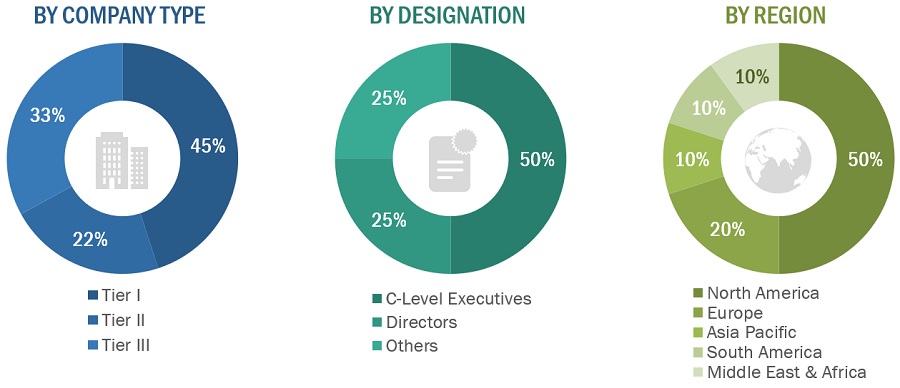
In the primary research process, experts from both the supply and demand sides were interviewed to obtain qualitative and quantitative information for this report. Primary sources from the supply side included industry experts such as chief executive officers (CEOs), vice presidents, marketing directors, and related key executives from major companies and organizations operating in the ink additives market. Primary sources from the demand side include experts and key personnel from the ink industry.
Following is the breakdown of primary respondents:
To know about the assumptions considered for the study, download the pdf brochure
Market Size Estimation
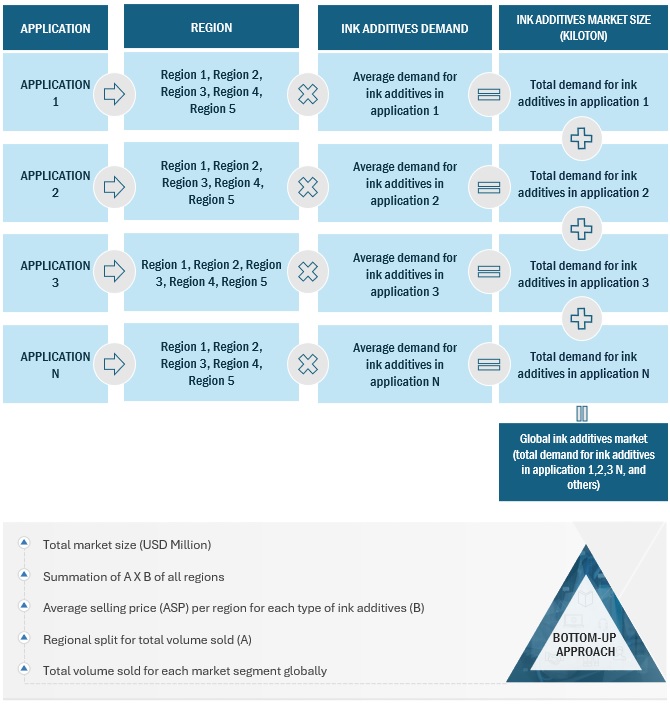
The bottom-up approach has been employed to arrive at the overall size of the ink additives market by estimating the share of ink additives consumed in different applications considered under the scope of the study. The market size in each of the applications has been calculated with the help of the average amount of ink additives used in the pacakging applications to calculate the size of the overall market. Similarly, for other applications of ink additives, the market size has been calculated at the country/regional levels. The outcomes have been summed up to calculate the market size of ink additives at the global level. The average prices for ink additives in different applications have been taken at the regional level. The market size for ink additives, in terms of volume, and the ink additives prices have been multiplied to estimate the global market size in terms of value.
Global Ink Additives Market Size: Bottom Up Approach
To know about the assumptions considered for the study, Request for Free Sample Report
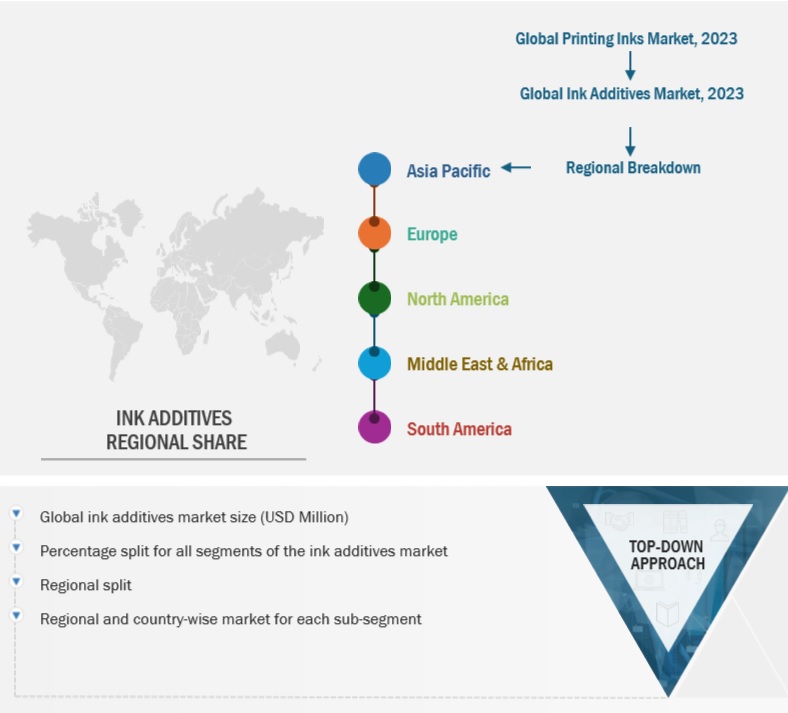
Global Ink Additives Market Size: Top-down Approach
Data Triangulation
After arriving at the total market size, the overall market was split into several segments. The data triangulation procedure was employed, wherever applicable, to complete the market engineering process and arrive at the exact statistics for all segments. The data was triangulated by studying various factors and trends from the demand and supply sides. Along with this, the market was validated using both top-down and bottom-up approaches. It was then verified through primary interviews. Hence, the data was obtained through three sources, one from the top-down approach, second from the bottom-up approach, and the third from expert interviews. The data was assumed to be correct only when the values arrived at from these three points matched.
Market Definition.
According to the National Association of Printing Ink Manufacturers, “Ink additives are chemicals that play a vital role in the formulation of inks by enhancing its physical properties. These additives maintain viscosity and improve wetting of both the substrate and pigment. They also help the ink to run smoothly on the substrate. The high requirement for good wetting, surface protection, and defoaming with good pigment stabilization along with other physical properties make ink additives suitable in applications such as packaging, publishing, and printing.
Key Stakeholders
- Senior Management
- End User
- Finance/Procurement Department
- R&D Department
Report Objectives
- To define, describe, and forecast the size of the ink additives market in terms of value and volume
- To provide detailed information about the key factors (drivers, restraints, opportunities, and challenges) influencing the growth of the market
- To forecast the market size by type, technology, process, and application
- To forecast the market size with respect to five main regions: North America, Europe, Asia Pacific, the Middle East & Africa, and South America
- To strategically analyze micromarkets1 with respect to individual growth trends, prospects, and their contribution to the overall market
- To analyze opportunities in the market for stakeholders and provide a competitive landscape for market leaders
- To analyze competitive developments in the market, such as product development, investment & expansion, and innovation
- To strategically profile the key players and comprehensively analyze their market shares and core competencies2
Note: 1. Micromarkets are defined as the subsegments of the global ink additives market included in the report.
2. Core competencies of companies are determined in terms of the key developments and strategies adopted by them to sustain in the market.
Available Customizations
MarketsandMarkets offers customizations according to the specific needs of the companies with the given market data.
The following customization options are available for the report:
Product Analysis
- Product matrix, which gives a detailed comparison of the product portfolio of each company
Regional Analysis
- Further breakdown of the ink additives market, by country
Company Information
- Detailed analysis and profiling of additional market players (up to five)
Get the Full Ink Additives Market Report
Full forecast, segment splits, and company analysis for all Ink Additives Market.
- China Ink Additives Market
- Japan Ink Additives Market
- South Korea Ink Additives Market
- India Ink Additives Market
- Indonesia Ink Additives Market
- Vietnam Ink Additives Market
- Thailand Ink Additives Market
- Germany Ink Additives Market
- UK Ink Additives Market
- France Ink Additives Market
- Italy Ink Additives Market
- Spain Ink Additives Market
- Turkey Ink Additives Market
- Canada Ink Additives Market
- Mexico Ink Additives Market
- US Ink Additives Market
- Brazil Ink Additives Market
- Argentina Ink Additives Market
- South Africa Ink Additives Market
- Rest Of Europe Ink Additives Market
- Rest Of Asia Pacific Ink Additives Market
- GCC Countries Ink Additives Market
- -Rest Of GCC Countries Ink Additives Market
- Rest Of South America Ink Additives Market
Need a Tailored Report?
Customize this report to your needs
Get 10% FREE Customization
Customize This Report
