
Europe IT Asset Disposition Market (2024-2029)

The Europe IT Asset Disposition Market was valued at $4844.6 Million in 2024 and projected to reach to $6879 Million by 2029, representing a compound annual growth rate of 7.3%. Europe's IT Asset Disposition market is poised for sustained expansion driven by stringent environmental regulations, GDPR compliance requirements, and corporate sustainability commitments.


| Market Size in | USD 26.32 MN |
| Market Forecast in | |
| CAGR | |
| Forecast Period | |
| Units Considered | Value (USD MN) |
Europe IT Asset Disposition Market Trends and Insights
- This 7.3% compound annual growth rate reflects Europe's increasing focus on sustainable electronics recycling, regulatory compliance, and data security across the semiconductor and electronics sectors.
- Europe leads globally in implementing stringent environmental standards and circular economy initiatives that drive demand for professional IT asset disposition services. The European market benefits from strong regulatory frameworks including the WEEE Directive and General Data Protection Regulation, which mandate responsible handling of end-of-life IT equipment.
- Europe's commitment to reducing electronic waste and recovering valuable materials from disposed assets continues to accelerate market adoption among enterprises, data centers, and government organizations.
- Between 2024 and 2029, Europe is expected to maintain its position as a mature, compliance-driven market with increasing investment in certified disposition providers and advanced recycling technologies..
Key Market Statistics
- CAGR (2024-2029) 7.3% CAGR
- Market Size, 2024 ~USD 4844.6 Million
- Forecast, 2029 ~USD 6879 Million
- Geography Europe
Europe IT Asset Disposition Market Overview
Regulatory Leadership :
Europe's stringent WEEE and RoHS directives drive IT asset disposition adoption, positioning the region as a global compliance benchmark for electronics recycling and data security standards.
Sustainability Focus :
European organizations prioritize circular economy principles, with IT asset disposition services enabling resource recovery, carbon footprint reduction, and sustainable supply chain management across the semiconductor sector.
Data Security Imperative :
GDPR compliance requirements fuel demand for certified data destruction and secure asset disposition services, making Europe a critical market for enterprises managing sensitive information across electronics lifecycles.
Market Growth Trajectory :
Europe's IT Asset Disposition market grows at 7.3% CAGR from $4,844.6 million (2024) to $6,879.0 million (2029), reflecting increasing investment in responsible electronics management and regulatory compliance infrastructure.
Europe IT Asset Disposition Market Dynamics
- The region's mature regulatory framework and high environmental consciousness create strong demand for certified asset disposition services across manufacturing, IT, and financial sectors.
- Germany, UK, and France lead market adoption, supported by advanced recycling infrastructure and circular economy initiatives. The forecast period (2024-2029) will see accelerated growth as enterprises increasingly recognize IT asset disposition as a strategic business function rather than a cost center.
- Rising semiconductor production, digital transformation initiatives, and supply chain resilience concerns will further propel market expansion.
- European providers are well-positioned to capitalize on this growth through innovative service offerings, enhanced data security protocols, and expanded geographic coverage across the continent..
Market Ecosystem
Related Ecosystem
Insurance
- Cloud Security
- Security Analytics
- Battery Electric Vehicle (BEV)
- Big Data Analytics
- Black Box
- International Business Machines Corporation
- ROLAND BERGER
- MICROSOFT CORPORATION
- SAP SE
- Oracle Corporation
Electronics System And Components
- Sensors
- Temperature Sensors
- Pressure Sensors
- Actuators
- Image Sensors
- Lenovo
- Samsung
- Texas Instruments Incorporated
- HONEYWELL INTERNATIONAL INC.
- Teledyne Technologies Incorporated
Industrial Iot
- Sensors
- Pressure Sensors
- Flow Sensors
- Gas Sensors
- Image Sensors
- Siemens ag
- ABB India Limited
- HONEYWELL INTERNATIONAL INC.
- Emerson Electric Co.
- SCHNEIDER ELECTRIC SE
Key Takeaways
- Europe's IT Asset Disposition market will grow from $4.8B (2024) to $6.9B (2029) at a 7.3% CAGR, driven by regulatory compliance and sustainability mandates.
- Europe's stringent WEEE Directive and GDPR requirements position the region as the global leader in responsible IT asset management and data security.
- European enterprises increasingly prioritize certified disposition providers to meet environmental targets and recover valuable materials from end-of-life electronics.
- Europe's circular economy initiatives and extended producer responsibility frameworks create sustained demand for professional IT asset disposition services through 2029.
IT Asset Disposition Market Report Scope
| Report Metric | Details |
|---|---|
| Base Year | 2024 |
| Fastest Growing Segment | MEDIA & ENTERTAINMENT (Vertical) |
| Forecast Period | 2024-2029 |
| Growth Rate | CAGR of 7.6% from 2024 to 2029 |
| Largest Segment | LARGE ENTERPRISES (Organization Size) |
| Market Size Base Year (Billions) | ~USD 18.44 (2024) |
| Revenue Forecast (Billions) | ~USD 26.6 (2029) |
| Segments Covered | Service, Organization Size, Asset Type, Vertical |
Europe IT Asset Disposition Market Report Segmentation
4 segment dimensions are covered across the global market.
By Service
- Data Destruction/Data Sanitization
- De-Manufacturing And Recycling
- Logistics Management & Reverse Logistics
- Other Services
- Remarketing And Value Recovery
By Organization Size
- Large Enterprises
- Small And Medium-Sized Enterprises
By Asset Type
- Computers/Laptops
- Mobile Devices
- Peripherals
- Servers
- Storage Devices
By Vertical
- Aerospace & Defense
- Bfsi
- Education
- Healthcare
- It & Telecom
- Manufacturing
- Media & Entertainment
- Public Sector & Government
EUROPE: IT ASSET DISPOSITION MARKET, BY VERTICAL, 2024–2029
| Segment | 2024 | 2025 | 2026 | 2027 | 2028 | 2029 | CAGR (%) |
|---|---|---|---|---|---|---|---|
| AEROSPACE & DEFENSE | 303.3 | 323.4 | 342.3 | 361.3 | 380.2 | 399 | 5.6 |
| BFSI | 1512.1 | 1652.8 | 1793.4 | 1940.2 | 2093 | 2251.7 | 8.3 |
| EDUCATION | 237.8 | 261.5 | 285.4 | 310.5 | 336.9 | 364.6 | 8.9 |
| HEALTHCARE | 360.1 | 387.4 | 413.8 | 440.6 | 467.8 | 495.3 | 6.6 |
| IT & TELECOM | 1441.6 | 1545.3 | 1644.2 | 1744.3 | 1845.3 | 1946.8 | 6.2 |
| MANUFACTURING | 272 | 295.9 | 319.5 | 344.1 | 369.4 | 395.5 | 7.8 |
| MEDIA & ENTERTAINMENT | 149.3 | 165.8 | 182.8 | 201 | 220.3 | 240.8 | 10 |
| OTHERS | 137.9 | 148.6 | 158.3 | 167.4 | 175.9 | 183.4 | 5.9 |
| PUBLIC SECTOR & GOVERNMENT | 430.4 | 464.6 | 497.8 | 531.8 | 566.6 | 601.9 | 6.9 |
| TOTAL | 4844.6 | 5245.3 | 5637.6 | 6041.2 | 6455.4 | 6879 | 7.3 |
Target Audience
- IT Asset Disposition Service Providers : Expand European operations with market-specific insights on regulatory requirements, competitive positioning, and growth opportunities across high-value country markets.
- Electronics Manufacturers & OEMs : Optimize end-of-life product management strategies and supply chain sustainability by understanding European market dynamics and compliance obligations.
- Enterprise IT & Procurement Leaders : Evaluate certified disposition partners and benchmark service costs across European regions to ensure GDPR compliance and sustainability commitments.
- Investment & Private Equity Firms : Identify acquisition targets and growth investments in the European IT asset disposition sector with detailed market sizing and forecast data through 2029.
- Regulatory & Compliance Consultants : Support client advisory services with comprehensive European market intelligence on WEEE, RoHS, and GDPR-driven IT asset disposition requirements and trends.
Countries within Europe - compare and drill down
| Country | 2025 size (native) |
|---|---|
| UK | USD 1395.9 Million |
| Germany | USD 1414.9 Million |
| France | USD 828.8 Million |
| Italy | USD 569.8 Million |
| Netherlands | USD 292.4 Million |
| Belgium | USD 174.3 Million |
| Nordic Countries | USD 640.1 Million |
| Sweden | USD 240 Million |
| Rest Of Europe | USD 1562.9 Million |
Country market size visualization
Reasons to Buy this Report
- Regulatory Compliance Intelligence : Understand WEEE, RoHS, and GDPR requirements across European markets to ensure compliant IT asset disposition strategies and avoid costly penalties.
- Market Sizing by Country : Access detailed market valuations for UK, Germany, France, and other European nations to identify high-growth opportunities and prioritize regional expansion strategies.
- Competitive Landscape Analysis : Benchmark against European market leaders and emerging players to develop differentiated service offerings and capture market share in the 7.3% CAGR growth environment.
- Sustainability & ESG Alignment : Leverage market insights to align IT asset disposition services with corporate ESG goals and circular economy mandates driving European enterprise demand.
- Investment & Growth Forecasting : Make informed capital allocation decisions using 2024-2029 forecast data projecting $2.0 billion market expansion across European semiconductor and electronics sectors.
Frequently asked questions
What is the current size of Europe's IT Asset Disposition market?
Europe's IT Asset Disposition market was valued at $4,844.6 million in 2024 and is projected to reach $6,879.0 million by 2029.
What is the expected growth rate for Europe's IT Asset Disposition market?
Europe's IT Asset Disposition market is expected to grow at a compound annual growth rate (CAGR) of 7.3% from 2024 to 2029.
Which regulations drive Europe's IT Asset Disposition market?
Europe's market is primarily driven by the WEEE Directive, General Data Protection Regulation (GDPR), and extended producer responsibility frameworks that mandate responsible handling and recycling of end-of-life IT equipment.
Why is Europe a leader in IT Asset Disposition services?
Europe leads due to its stringent environmental regulations, circular economy initiatives, strong data protection requirements, and commitment to sustainable electronics recycling and material recovery.
What factors will support Europe's IT Asset Disposition market growth through 2029?
Key growth drivers include increasing regulatory compliance requirements, rising enterprise sustainability commitments, growing data security concerns, and the need to recover valuable materials from disposed electronics.
RESEARCH METHODOLOGY
The study involved four major activities in estimating the size of the IT asset disposition market. Exhaustive secondary research has been done to collect information on the market, peer market, and parent market. Validation of these findings, assumptions, and sizing with industry experts across the value chain through primary research has been the next step. Both top-down and bottom-up approaches have been employed to estimate the global market size. After that, market breakdown and data triangulation have been used to estimate the market sizes of segments and subsegments.
Secondary Research
Various secondary sources were used to identify and collect relevant information. These include corporate filings such as annual reports, press releases, investor presentations, and financial statements; trade, business, and professional associations; white papers, journals, and articles from recognized authors; certified publications related to IT asset disposition; directories; and databases.
Secondary research was conducted to obtain key information about the supply chain of the industry, the monetary chain of the market, the total pool of key players, the segmentation of the market according to industry trends to the bottommost level, geographic markets, and key developments from the market-oriented perspective. Secondary data was collected and analyzed to arrive at the overall market size, which was further validated through primary research.
Primary Research
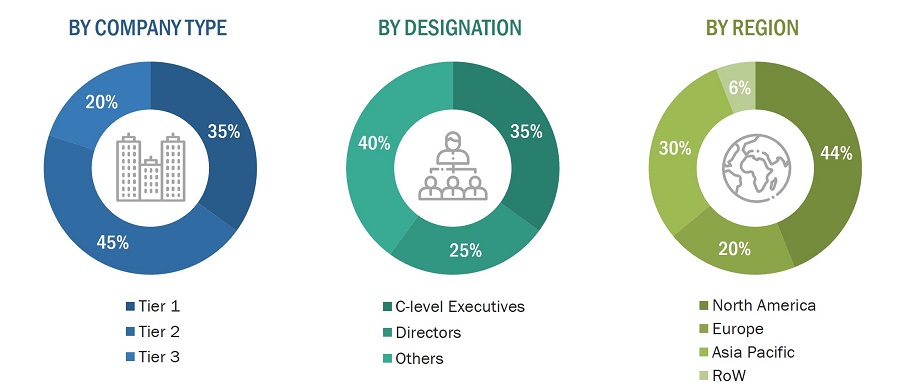
In the primary research process, various primary sources, from both supply and demand sides, were interviewed to obtain qualitative and quantitative information for this report. Primary sources from the supply side included experts such as chief executive officers (CEOs), vice presidents, marketing directors, technology and innovation directors, SMEs, consultants, and related key executives from the major companies and organizations operating in the IT asset disposition market.
After the complete market engineering process (which includes market statistics calculations, market breakdown, market size estimations, market forecasting, and data triangulation), extensive primary research was conducted to gather information and verify and validate the critical market numbers.
Several primary interviews were conducted with experts from both the demand and supply sides across four major regions—North America, Europe, Asia Pacific, and RoW. Approximately 25% of the primary interviews were conducted with demand respondents and 75% with supply respondents. This primary data was collected through questionnaires, emails, and telephonic interviews.
To know about the assumptions considered for the study, download the pdf brochure
Market Size Estimation
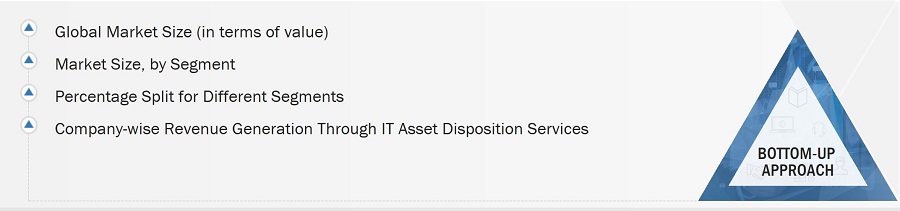
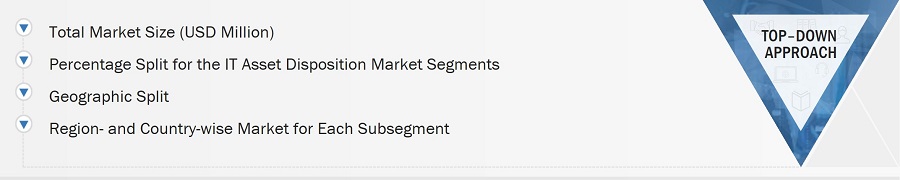
Both top-down and bottom-up approaches have been used to estimate and validate the total size of the IT asset disposition market. These methods have also been extensively used to estimate the sizes of various market subsegments. The research methodology used to estimate the market sizes includes the following:
- More than 25 companies offering IT asset disposition services were identified, and their offerings were mapped based on service, end-user, and region.
- The global IT asset disposition market was derived through the data sanity method. The revenues of ITAD service providers were analyzed through annual reports and press releases and summed up to derive the overall market size.
- For each company, a percentage was assigned to the overall revenue to derive the revenues from the IT asset disposition segment.
- The percentage of each company was assigned after analyzing various factors, including the company’s product offerings, its range of IT asset disposition-related offerings, geographic presence, research & development expenditure and initiatives, and recent developments/strategies adopted for growth in the IT asset disposition market.
- For the CAGR, the market trend analysis of IT asset disposition was carried out by understanding the industry penetration rate and the demand for and supply of IT asset disposition services in different sectors.
- Estimates at every level were verified and crosschecked through discussions with key opinion leaders, including CXOs, directors, operation managers, and domain experts in MarketsandMarkets.
- Various paid and unpaid information sources were studied, such as annual reports, press releases, white papers, and databases.
Market Size Estimation Methodology-Bottom-up Approach
Market Size Estimation Methodology-Top-Down Approach
Data Triangulation
After arriving at the overall market size through the earlier process, the total market was split into several segments. The market breakdown and data triangulation procedures were employed, wherever applicable, to complete the overall market engineering process and arrive at the exact statistics for all the segments and subsegments. The data was triangulated by studying various factors and trends from both the demand and supply sides. The market was validated using both the top-down and bottom-up approaches.
Market Definition
IT asset disposition refers to the disposal of obsolete or unwanted IT equipment in a safe, secure, and environmentally friendly manner. Due to rapid technological advances and the innovation of new products, the IT market is becoming more advanced and competitive. As a result, there is a rise in the number of obsolete equipment in the market—the proper and safe disposal of which is critical to ensure compliance with stringent regulatory standards for the safety of the environment.
End-user organizations often prefer third-party vendors or service providers for the disposition of their used and old IT assets in a safe and secure manner. The key offerings of these service providers in this market space are data destruction/data sanitization, asset recycling, asset remarketing, logistics management, and reverse logistics. These service providers are certified in accordance with regulatory compliances and mandates for the proper disposal of e-waste and data destruction. Assets such as computers/laptops, servers, storage devices, mobile devices, and peripherals are considered for disposition. The market is diversified, with more than 25 companies competing across the value chain to sustain their position and increase their market share.
Stakeholders
- IT asset disposition service providers
- IT asset manufacturing organizations
- Research organizations and consulting companies
- Associations, organizations, forums, and alliances related to IT asset disposition
- Government bodies such as regulatory authorities and policymakers
- Venture capitalists, private equity firms, and start-up companies
Research Objectives
- To define, describe, and forecast the IT asset disposition (ITAD) market, by service, asset type, organization size, vertical, and region, in terms of value
- To provide the market size for North America, Europe, Asia Pacific, and Rest of the World (RoW), along with their respective country-level market sizes, in terms of value
- To provide detailed information regarding the drivers, restraints, opportunities, and challenges that influence market growth
- To provide a detailed overview of the IT asset disposition value chain
- To strategically analyze micromarkets1 with respect to individual growth trends, prospects, and contributions to the total market
- To analyze key trends that shape and influence the global IT asset disposition market
- To profile key players and comprehensively analyze their ranking/share based on their revenues and core competencies2
- To evaluate opportunities in the market for stakeholders and provide details about the competitive landscape of the market
- To scrutinize competitive developments in the IT asset disposition market, such as partnerships, contracts, and research and development (R&D)
Available Customizations:
MarketsandMarkets offers the following customizations for this market report:
- Further breakdown of the market in different regions to the country-level
- Detailed analysis and profiling of additional market players (up to 5)
Get the Full IT Asset Disposition Market Report
Full forecast, segment splits, and company analysis for all IT Asset Disposition Market.
- Canada IT Asset Disposition Market
- US IT Asset Disposition Market
- Mexico IT Asset Disposition Market
- UK IT Asset Disposition Market
- Germany IT Asset Disposition Market
- France IT Asset Disposition Market
- Italy IT Asset Disposition Market
- Netherlands IT Asset Disposition Market
- Belgium IT Asset Disposition Market
- Japan IT Asset Disposition Market
- China IT Asset Disposition Market
- South Korea IT Asset Disposition Market
- India IT Asset Disposition Market
- Nordic Countries IT Asset Disposition Market
- Rest Of Europe IT Asset Disposition Market
- Rest Of Asia Pacific IT Asset Disposition Market
- Other Nordic Countries IT Asset Disposition Market
- Sweden IT Asset Disposition Market
Need a Tailored Report?
Customize this report to your needs
Get 10% FREE Customization
Customize This Report
