
Japan Kaolin Market (2025-2030)

The Japan Kaolin Market was valued at $437.1 Million in 2025 and projected to reach to $627.2 Million by 2030, representing a compound annual growth rate of 7.5%. Japan's kaolin market is poised for steady expansion through 2030, supported by the country's advanced manufacturing base and continued investment in packaging innovation.


| Market Size in | USD 26.32 MN |
| Market Forecast in | |
| CAGR | |
| Forecast Period | |
| Units Considered | Value (USD MN) |
Japan Kaolin Market Trends and Insights
- Japan's kaolin demand is primarily driven by the packaging and construction sectors, where the mineral serves as a critical filler and coating agent.
- The market in Japan reflects strong industrial demand from paper manufacturers, ceramic producers, and construction material suppliers seeking high-quality mineral inputs. The forecast period through 2030 indicates sustained growth momentum for Japan's kaolin market, supported by ongoing industrialization and technological advancement in processing capabilities.
- Japan's emphasis on sustainable manufacturing practices and product quality standards continues to elevate demand for premium-grade kaolin across packaging applications.
- Market participants in Japan are increasingly investing in advanced extraction and beneficiation technologies to meet stringent domestic and export requirements..
Key Market Statistics
- CAGR (2025-2030) 7.5% CAGR
- Market Size, 2025 ~USD 437.1 Million
- Forecast, 2030 ~USD 627.2 Million
- Country Japan
Japan Kaolin Market Overview
Market Valuation :
Japan's kaolin market is valued at USD 437.1 million in 2025 and is projected to reach USD 627.2 million by 2030, representing significant growth in Asia's advanced industrial economy.
Consistent Growth Trajectory :
The Japanese kaolin market is expanding at a CAGR of 7.5%, driven by sustained demand from packaging and construction sectors that rely on kaolin as a critical filler and coating agent.
Packaging Sector Leadership :
Japan's paper and packaging industry remains the primary consumer of kaolin, leveraging the mineral's properties to enhance product quality, brightness, and coating performance in high-value applications.
Construction & Industrial Applications :
Beyond packaging, Japan's construction sector increasingly utilizes kaolin in cement production, ceramics, and specialty applications, supporting diversified market demand across multiple industries.
Japan Kaolin Market Dynamics
- The domestic paper and pulp industry, a traditional kaolin consumer, maintains strong demand for coating and filling applications.
- Additionally, Japan's construction sector recovery and growing emphasis on high-performance materials in ceramics and specialty chemicals will drive incremental consumption.
- The market benefits from Japan's technological sophistication and quality standards, positioning domestic producers and importers favorably in premium kaolin segments. Looking ahead, sustainability initiatives and circular economy principles will shape Japan's kaolin market dynamics.
- Manufacturers are increasingly adopting eco-friendly processing methods and exploring recycled content integration.
- The shift toward lightweight packaging and energy-efficient construction materials creates opportunities for kaolin-enhanced products.
- However, competition from synthetic alternatives and fluctuating raw material costs remain challenges.
- Strategic partnerships between Japanese industrial companies and global kaolin suppliers will be critical to maintaining market growth and meeting evolving customer specifications..
Market Ecosystem
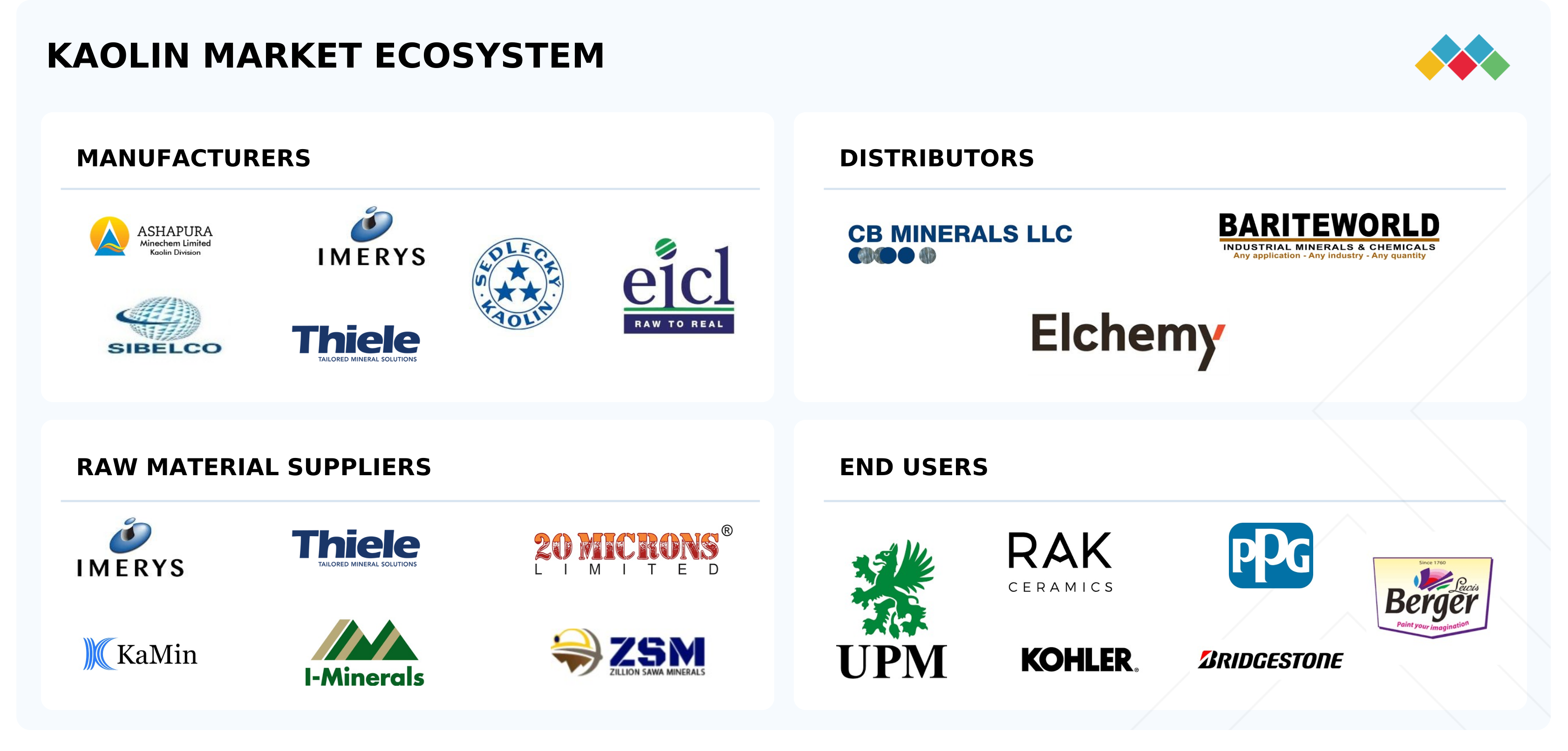
Kaolin Market: COMMERCIAL USE CASES ACROSS INDUSTRIES
| COMPANY | USE CASE DESCRIPTION | BENEFITS |
|---|---|---|
 |
High-grade kaolin as a coating pigment in premium printing papers and magazines | Enhanced print quality, improved brightness and opacity, superior ink receptivity, and reduced show-through |
 |
Calcined kaolin as a functional filler in architectural paints and industrial coatings | Improved scrub resistance, enhanced opacity and hiding power, reduced titanium dioxide usage, and cost optimization |
 |
Purified kaolin in personal care products, including facial masks and cosmetics | Gentle oil absorption, natural detoxification properties, improved skin texture, and enhanced product stability |
 |
Kaolin as key ingredient in ceramic tile manufacturing and sanitaryware production | Enhanced plasticity and workability, improved fired strength, reduced shrinkage, and superior surface finish |
 |
Pharmaceutical-grade kaolin in antidiarrheal medications and drug delivery systems | Safe and effective adsorption properties, regulatory compliance, improved bioavailability, and extended shelf life |
Logos and trademarks shown above are the property of their respective owners. Their use here is for informational and illustrative purposes only.
Related Ecosystem
Key Takeaways
- Japan's kaolin market reaches USD 437.1 million in 2025 with projected growth to USD 627.2 million by 2030.
- Japan's kaolin market expands at a 7.5% CAGR, driven by packaging, construction, and mining sector demand.
- Japan's packaging industry remains the largest consumer of kaolin, leveraging the mineral for paper coating and filler applications.
- Japan's commitment to quality standards and sustainable production practices supports premium kaolin product demand through 2030.
Kaolin Market Report Scope
| Report Metric | Details |
|---|---|
| Base Year | 2025 |
| Fastest Growing Segment | DELAMINATED (Process) |
| Forecast Period | 2025–2030 |
| Growth Rate | CAGR of 7.5% from 2025 to 2030 |
| Largest Segment | NATURAL (Type) |
| Market Size Base Year (Billions) | ~USD 5.76 (2025) |
| Revenue Forecast (Billions) | ~USD 8.27 (2030) |
| Segments Covered | Type, Process, End-Use Industry |
Japan Kaolin Market Report Segmentation
3 segment dimensions are covered across the global market.
By Type
- Natural
- Synthetic
By Process
- Airfloat
- Calcined
- Delaminated
- Surface-Modified
- Water-Washed
By End-Use Industry
- Ceramics & Sanitaryware
- Fiberglass
- Paints & Coatings
- Paper
- Plastics
- Rubber
JAPAN: KAOLIN MARKET, BY END-USE INDUSTRY, 2025–2030
| Segment | 2025 | 2026 | 2027 | 2028 | 2029 | 2030 | CAGR (%) |
|---|---|---|---|---|---|---|---|
| CERAMICS & SANITARYWARE | 184.7 | 199.8 | 216.1 | 233.8 | 252.9 | 273.6 | 8.2 |
| FIBERGLASS | 26.1 | 27.8 | 29.6 | 31.5 | 33.5 | 35.7 | 6.4 |
| OTHERS | 15.7 | 16.7 | 17.6 | 18.7 | 19.8 | 20.9 | 5.8 |
| PAINTS & COATINGS | 17.6 | 18.9 | 20.4 | 22 | 23.7 | 25.5 | 7.7 |
| PAPER | 165.4 | 177.3 | 190 | 203.6 | 218.2 | 233.7 | 7.2 |
| PLASTICS | 15.4 | 16.5 | 17.6 | 18.8 | 20 | 21.4 | 6.8 |
| RUBBER | 12.2 | 12.9 | 13.7 | 14.6 | 15.5 | 16.4 | 6.2 |
| TOTAL | 437.1 | 469.8 | 505 | 542.9 | 583.5 | 627.2 | 7.5 |
Target Audience
- Kaolin Producers & Suppliers : Manufacturers and distributors need Japan-specific market data to assess demand potential, identify customer segments, optimize production capacity, and develop targeted sales strategies for the Japanese market.
- Packaging & Paper Companies : Japanese and international packaging manufacturers require detailed kaolin market insights to secure reliable supply chains, negotiate pricing, and understand competitive sourcing options for coating and filling applications.
- Construction & Building Materials Firms : Construction material producers need Japan market intelligence to evaluate kaolin integration opportunities in cement, ceramics, and specialty products while understanding regulatory and quality requirements.
- Investment & Private Equity Firms : Investors evaluating opportunities in Japan's industrial minerals sector need comprehensive market sizing, growth projections, and competitive analysis to assess investment viability and potential returns.
- Market Research & Consulting Professionals : Analysts and consultants require Japan-specific kaolin market data to support client advisory services, competitive benchmarking, and strategic planning initiatives across packaging, construction, and industrial sectors.
Key Companies in the Japan Kaolin Market
| Company | HQ | Ownership | Strongest segments |
|---|---|---|---|
| IMERYS S.A. | France | Public Company | Natural kaolin,Synthetic kaolin,Water-washed process, |
| 20 MICRONS | India | Public Company | Natural hydrous kaolin (water-washed/airfloat),Calcined kaolin,Engineered/surface-modified kaolin, |
| ASHAPURA GROUP | India | Public Company | Natural kaolin – water-washed,Natural kaolin – calcined,Natural kaolin – delaminated / airfloat / unprocessed, |
| SIBELCO | Belgium | Public Company | Natural Kaolin,Synthetic Kaolin,Water-washed Process, |
| EICL LIMITED | India | Private Company | Natural kaolin – water-washed,Natural kaolin – airfloat & unprocessed,Calcined kaolin, |
IMERYS S.A.
IMERYS S.A. is a public company founded in France in 1880 with 14,878 employees. It is a major player in the industrial minerals sector.
20 MICRONS
20 MICRONS is an Indian public company founded in 1987 with 413 employees. The company operates in the industrial minerals industry.
ASHAPURA GROUP
ASHAPURA GROUP is an Indian public company founded in 1960 with 1,560 employees. The company operates in the minerals and materials sector.
SIBELCO
SIBELCO is a public company founded in Belgium in 1872 with 4,907 employees. It is a leading global producer of industrial minerals.
EICL LIMITED
EICL LIMITED is a private company founded in India in 1891. The company operates in the industrial minerals sector.
Reasons to Buy this Report
- Market Size & Growth Data : Access precise valuation figures for Japan's kaolin market (USD 437.1M in 2025) with detailed 5-year forecasts, enabling accurate budgeting and investment planning for market entry or expansion strategies.
- Sector-Specific Insights : Understand Japan's packaging and construction sectors' kaolin consumption patterns, application requirements, and quality specifications to tailor products and marketing strategies for maximum market penetration.
- Competitive Landscape Analysis : Identify key players, market share distribution, and competitive dynamics specific to Japan's kaolin industry, helping businesses position themselves effectively against local and international competitors.
- Growth Driver Identification : Discover the primary demand catalysts in Japan—including paper manufacturing innovation, construction recovery, and industrial modernization—to capitalize on emerging opportunities and market trends.
- Strategic Decision Support : Leverage Japan-specific market intelligence to make informed decisions on supply chain partnerships, pricing strategies, product development, and geographic resource allocation within the Japanese market.
Frequently asked questions
What is the current size of Japan's kaolin market in 2025?
Japan's kaolin market is valued at USD 437.1 million in 2025, reflecting strong demand from packaging, construction, and mining sectors.
What is the projected size of Japan's kaolin market by 2030?
Japan's kaolin market is forecast to reach USD 627.2 million by 2030, representing significant expansion over the five-year period.
What is the CAGR for Japan's kaolin market?
Japan's kaolin market grows at a compound annual growth rate of 7.5% from 2025 to 2030.
Which industries drive kaolin demand in Japan?
Japan's primary kaolin consumers include packaging manufacturers, construction companies, ceramic producers, and mining operations requiring high-quality mineral inputs.
Why is kaolin important for Japan's packaging sector?
In Japan, kaolin serves as a critical filler and coating agent in paper production, enhancing product quality and meeting stringent manufacturing standards.
RESEARCH METHODOLOGY
The study to estimate the current size of the kaolin market involved two key steps. First, comprehensive secondary research was conducted to gather data on the market and related and parent markets. This was followed by primary research, where insights, assumptions, and market estimates were validated through interviews with industry experts across the value chain. Both top-down and bottom-up methodologies were applied to determine the overall market size. Finally, the market was segmented, and data triangulation techniques were used to refine and validate the estimates for each segment and subsegment.
Secondary Research
Secondary sources consulted for this research included financial reports of kaolin manufacturers, along with data from trade organizations, business publications, and professional associations. The secondary research provided essential insights into the industry's value chain, identified key players, and helped classify and segment the market based on prevailing industry trends at regional and sub-regional levels. The information gathered was thoroughly analyzed to estimate the overall size of the kaolin market, which was then validated through primary research with industry experts.
Primary Research
Extensive primary research was carried out after collecting market insights through secondary research to validate the kaolin market scenario. Several interviews were conducted with industry experts from the demand and supply sides across North America, Europe, Asia Pacific, the Middle East & Africa, and South America. Primary data was gathered through structured questionnaires, emails, and telephonic interviews. On the supply side, respondents included industry professionals such as CXOs, vice presidents, directors, product innovation teams, system integrators, component suppliers, distributors, and other key opinion leaders. These interviews provided valuable insights into market statistics, revenue data, segmentation, size estimations, and forecasts, and enabled data triangulation. On the demand side, stakeholders such as CIOs, CTOs, CSOs, and installation teams from end-user companies were consulted to better understand customer perspectives, current usage patterns, supplier evaluations, and the outlook for kaolin.
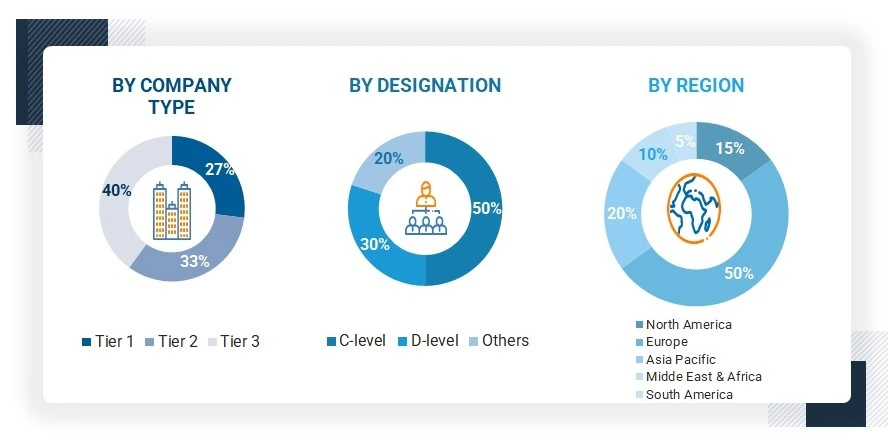
To know about the assumptions considered for the study, download the pdf brochure
Market Size Estimation
The research methodology used to estimate the size of the kaolin market primarily focused on a demand-side approach. Market sizing was conducted by analyzing procurement activities and modernization efforts involving kaolin products across various applications at the regional level. These procurement trends offered valuable insights into the demand patterns within the kaolin industry for each application segment. All relevant segments were thoroughly mapped and integrated to provide a comprehensive view of the market structure and size across different end-use applications.
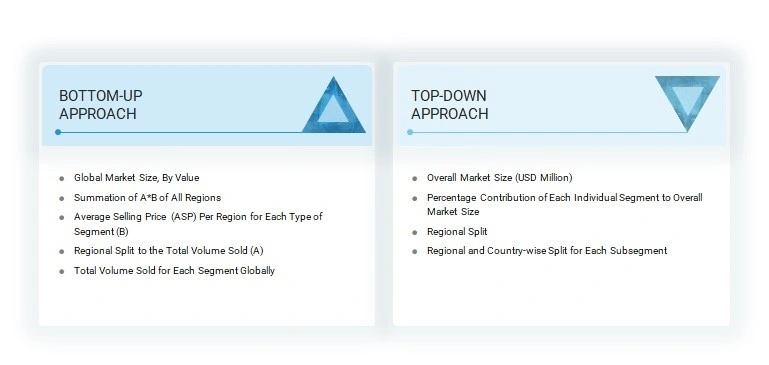
Data Triangulation
After estimating the overall market size through the process explained above, the total market was further segmented into various segments and subsegments. To ensure accuracy, data triangulation and market breakdown techniques were applied wherever relevant, forming a key part of the overall market engineering process. This involved analyzing multiple factors and trends from both the demand and supply sides. Additionally, the final market size and segment-level figures were validated using a combination of top-down and bottom-up approaches to ensure precision and reliability of the statistical estimates.
Market Definition
Kaolin, also known as China clay, is a soft, white, and fine-textured clay composed of kaolinite, a hydrated aluminum silicate. Naturally occurring with a plate-like structure and fine particle size, kaolin is also synthetically producible. It is extracted and processed into various forms such as powder, semi-dry, and liquid slurry. Processed kaolin is widely used across the paper, ceramics & sanitaryware, fiberglass, paints & coatings, rubber, plastics, and cement industries. Its high purity and chemical inertness make it a preferred choice in formulations requiring consistent performance and stability.
Stakeholders
- Kaolin manufacturers
- Ceramic and cement manufacturers
- Universities, governments, and research organizations
- Kaolin associations and industrial bodies
- Research and consulting firms
- R&D institutions
- Environmental support agencies
Report Objectives
- To define, describe, segment, and forecast the size of the kaolin market, by type, process, end-use industry, and region, in terms of volume and value
- To forecast the size of market segments across five major regions (along with country-level data), namely North America, Europe, Asia Pacific, South America, and the Middle East & Africa
- To identify and analyze key drivers, restraints, opportunities, and challenges influencing market growth
- To strategically analyze micro markets with respect to individual growth trends, prospects, and contributions to the overall market
- To analyze opportunities for stakeholders in the market
- To assess recent developments and competitive strategies, such as acquisitions, agreements, contracts, and product developments/launches, to draw the competitive landscape
- To strategically profile the key market players and comprehensively analyze their core competencies
Customization Options
MarketsandMarkets offers the following customizations for this market report:
- Additional country-level analysis of the kaolin market
Product Analysis
- Product matrix, which provides a detailed comparison of the product portfolio of each company's market
Get the Full Kaolin Market Report
Full forecast, segment splits, and company analysis for all Kaolin Market.
- US Kaolin Market
- Canada Kaolin Market
- Mexico Kaolin Market
- Germany Kaolin Market
- UK Kaolin Market
- France Kaolin Market
- Italy Kaolin Market
- Spain Kaolin Market
- Russia Kaolin Market
- China Kaolin Market
- India Kaolin Market
- South Korea Kaolin Market
- Australia Kaolin Market
- Saudi Arabia Kaolin Market
- South Africa Kaolin Market
- Iran Kaolin Market
- Brazil Kaolin Market
- Argentina Kaolin Market
- South America Kaolin Market
- Rest Of Europe Kaolin Market
- Rest Of Asia Pacific Kaolin Market
- GCC Countries Kaolin Market
Need a Tailored Report?
Customize this report to your needs
Get 10% FREE Customization
Customize This Report
