
China Lab Consumables Market (2024-2029)

The China Lab Consumables Market was valued at $1242.8 Million in 2024 and projected to reach to $1963.5 Million by 2029, representing a compound annual growth rate of 9.6%. China's lab consumables market is positioned for sustained growth through 2029, supported by government healthcare reforms, increased R&D investments, and expanding diagnostic capabilities across the country.


| Market Size in | USD 26.32 MN |
| Market Forecast in | |
| CAGR | |
| Forecast Period | |
| Units Considered | Value (USD MN) |
China Lab Consumables Market Trends and Insights
- This growth trajectory reflects China's accelerating investments in healthcare infrastructure, diagnostic capabilities, and research facilities across both public and private sectors.
- China's market expansion outpaces the global average of 7.3% CAGR, driven by rising demand for quality laboratory supplies and increased clinical testing volumes. The lab consumables sector in China benefits from rapid urbanization, growing prevalence of chronic diseases, and government initiatives to strengthen laboratory standards and capacity.
- China's pharmaceutical and biotechnology industries are scaling production, creating sustained demand for specialized consumables including pipette tips, culture media, collection tubes, and filtration products.
- Between 2024 and 2029, China is expected to consolidate its position as a critical market within Asia Pacific, supported by regulatory modernization and increased healthcare spending. China's competitive landscape features both multinational suppliers and emerging domestic manufacturers, intensifying innovation and price competition.
- The market's trajectory reflects China's strategic focus on self-sufficiency in medical supplies and the expansion of laboratory networks in tier-2 and tier-3 cities, ensuring sustained growth momentum through 2029..
Key Market Statistics
- CAGR (2024-2029) 9.6% CAGR
- Market Size, 2024 ~USD 1242.8 Million
- Forecast, 2029 ~USD 1963.5 Million
- Country China
China Lab Consumables Market Overview
Rapid Market Expansion :
China's lab consumables market is growing at 9.6% CAGR, significantly outpacing the global rate of 7.3%, driven by increased healthcare spending and diagnostic infrastructure development across urban and emerging regions.
Government Healthcare Initiatives :
China's substantial investments in healthcare modernization, including the expansion of diagnostic centers and research facilities in both public and private sectors, are fueling sustained demand for laboratory consumables.
Rising Diagnostic Demand :
Growing prevalence of chronic diseases and aging population demographics in China are accelerating the need for laboratory testing, creating consistent demand for consumables across clinical and research settings.
Market Valuation Growth :
The market is projected to grow from USD 1,242.8 million in 2024 to USD 1,963.5 million by 2029, representing a 58% increase in market value over the five-year forecast period.
China Lab Consumables Market Dynamics
- The 9.6% CAGR reflects China's commitment to modernizing its healthcare infrastructure and strengthening diagnostic services in both metropolitan and rural areas.
- Rising healthcare expenditure and the growing prevalence of chronic diseases continue to drive laboratory testing volumes. The market's outperformance relative to global trends indicates strong domestic demand fundamentals and favorable regulatory conditions for consumables manufacturers.
- Continued urbanization, improved healthcare accessibility, and technological advancement in diagnostic procedures are expected to sustain market momentum through 2029, making China a critical growth engine for the global lab consumables industry..
Market Ecosystem
Related Ecosystem
Analytical And Scientific Instrumentation
- Environmental Testing
- Gas Chromatography
- Polymerase Chain Reaction (PCR)
- Automated Liquid Handling Systems
- Flow Cytometry
- Thermo Fisher Scientific Inc.
- Danaher Corporation
- Agilent Technologies, Inc.
- Shimadzu Corporation
- Merck KGaA
Key Takeaways
- China's lab consumables market will grow from USD 1,242.8M (2024) to USD 1,963.5M (2029) at a 9.6% CAGR, outpacing global growth.
- China's healthcare infrastructure expansion and government laboratory standardization initiatives are primary growth catalysts through 2029.
- China's domestic manufacturers are gaining market share alongside multinational competitors, intensifying innovation and competitive pricing.
- China's tier-2 and tier-3 city laboratory expansion represents a significant untapped growth opportunity for consumables suppliers.
Lab Consumables Market Report Scope
| Report Metric | Details |
|---|---|
| Base Year | 2024 |
| Fastest Growing Segment | MICROPLATES (Type) |
| Forecast Period | 2024-2029 |
| Growth Rate | CAGR of 7.3% from 2024 to 2029 |
| Largest Segment | INDUSTRIAL MANUFACTURING (Application) |
| Market Size Base Year (Billions) | ~USD 14.42 (2024) |
| Revenue Forecast (Billions) | ~USD 20.51 (2029) |
| Segments Covered | Type, Application, End User |
China Lab Consumables Market Report Segmentation
3 segment dimensions are covered across the global market.
By Type
- Bags & Wraps
- Centrifuge Tubes & Accessories
- Containers & Vials
- Filters
- Filtration Products
- Microplates
- Other Consumables
- Pipettes & Tips
- Plates & Seals
- Tubes & Racks
By Application
- Clinical Diagnostics
- Environmental Testing
- Forensic Analysis
- Industrial Manufacturing
- Life Science Research
- Materials Analysis
By End User
- Academic & Research Institutes
- Biotechnology Companies
- Diagnostic Centers
- Diagnostics Centers
- Food & Beverage Companies
- Forensic Laboratories
- Hospitals, Surgical Centers, And Clinics
- Other End Users
- Pharmaceutical & Biopharmaceutical Companies
Target Audience
- Medical Device Manufacturers : Manufacturers of lab consumables and diagnostic equipment need China-specific market data to identify growth opportunities, assess market sizing for product launches, and develop localized go-to-market strategies.
- Healthcare Distributors & Suppliers : Distributors operating in China require detailed market intelligence to optimize inventory planning, negotiate supplier contracts, and identify high-growth segments within the lab consumables category.
- Investment & Private Equity Firms : Investors evaluating healthcare sector opportunities in China need comprehensive market analysis, growth projections, and competitive landscape data to assess investment viability and portfolio positioning.
- Healthcare Facility Operators : Hospital networks, diagnostic centers, and research institutions in China use market data to benchmark procurement costs, evaluate supplier performance, and plan capital expenditures for laboratory infrastructure.
- Market Research & Consulting Professionals : Analysts and consultants advising healthcare clients on China market strategy require detailed, country-specific data on market size, growth drivers, and forecasts to support client recommendations and strategic planning.
Reasons to Buy this Report
- Market Size & Growth Data : Access precise valuation figures for China's lab consumables market (USD 1,242.8M in 2024) with detailed 5-year forecasts, enabling accurate business planning and investment decisions specific to this high-growth region.
- Competitive Positioning : Understand China's market dynamics relative to global trends, with the market growing at 9.6% CAGR versus 7.3% globally, helping identify competitive advantages and market entry opportunities in this outperforming segment.
- Demand Driver Analysis : Gain insights into China-specific growth catalysts including government healthcare initiatives, diagnostic infrastructure expansion, and demographic trends driving consumables demand across public and private healthcare sectors.
- Strategic Market Intelligence : Leverage detailed China market analysis to inform product development, distribution strategies, and partnership decisions tailored to local healthcare regulations, purchasing patterns, and emerging opportunities.
- Investment & Expansion Planning : Make data-driven decisions for market entry, expansion, or portfolio allocation in China's lab consumables sector with comprehensive forecasts and market outlook through 2029.
Frequently asked questions
What is the projected market size for lab consumables in China by 2029?
China's lab consumables market is projected to reach USD 1,963.5 million by 2029, growing from USD 1,242.8 million in 2024.
What is the CAGR for China's lab consumables market?
China's lab consumables market is expected to grow at a compound annual growth rate (CAGR) of 9.6% from 2024 to 2029.
What factors are driving growth in China's lab consumables market?
Key drivers include China's healthcare infrastructure investments, rising chronic disease prevalence, government laboratory standardization initiatives, and expansion of diagnostic facilities in tier-2 and tier-3 cities.
How does China's market growth compare to global trends?
China's 9.6% CAGR exceeds the global lab consumables market CAGR of 7.3%, reflecting stronger regional demand and healthcare spending growth.
Who are the main competitors in China's lab consumables market?
China's market includes multinational suppliers and emerging domestic manufacturers, with increasing competition driving innovation and competitive pricing strategies.
RESEARCH METHODOLOGY
This study involved the extensive use of both primary and secondary sources. Exhaustive secondary research was done to collect information on the lab consumables industry. The next step was to validate these findings, assumptions and sizing with industry experts across the value chain using primary research. Different approaches, such as top-down and bottom-up where employed to estimate the total market size. After that, the market breakup and data triangulation procedures were used to estimate the market size of the segments and sub segments of the lab consumables market. The research process involved the study of various factors affecting the industry to identify the segmentation types, industry trends, key players, competitive landscape, key market dynamics, and key player strategies.
Secondary Research
The secondary research process involves the widespread use of secondary sources, directories, databases (such as Bloomberg Businessweek, Factiva, and D&B Hoovers), white papers, annual reports, company house documents, investor presentations, and SEC filings of companies. Secondary research was used to identify and collect information useful for the extensive, technical, market-oriented, and commercial study of the lab consumables market. It was also used to obtain important information about the key players and market classification & segmentation according to industry trends to the bottom-most level and key developments related to market and technology perspectives. A database of the key industry leaders was also prepared using secondary research.
The market for the companies offering lab consumable products is arrived at by secondary data available through paid and unpaid sources analysing the product portfolios of the major companies in the ecosystem and rating the companies by their performance and quality. Various sources were referred to in the secondary research process to identify and collect information for this study full. The secondary research was used to obtain critical information on the industries value chain, the total pool of key players, market classification and segmentation from the market and technology oriented perspectives.
Primary Research
In the primary research process, various sources from both the supply and demand sides were interviewed to obtain qualitative and quantitative information for this report. The primary sources from the supply side include industry experts such as CEOs, vice presidents, marketing and sales directors, technology & innovation directors, and related key executives from various key companies and organizations in the lab consumables market. The primary sources from the demand side include OEMs, private and contract testing organizations and service providers, among others. Primary research was conducted to validate the market segmentation, identify key players in the market, and gather insights on key industry trends & key market dynamics.
After the complete market engineering (calculations for market statistics, market breakdown, market estimation, market forecasting and data triangulation), extensive primary research was conducted to gather information and verify and validate the critical numbers arrived at fill primary research was also conducted to identify the segmentation types industry trends competitive landscape of lab consumables offered by various market players and key market dynamics such as drivers, restraints, opportunities, challenges, industry trends and key players strategies.
In the complete market engineering process, the top down and bottom up approaches were extensively used along with several data regulation methods, to perform the market estimation and market forecasting for the overall market segments and subsegments listed in this report. Extensive qualitative and quantitative analysis was performed on the complete market engineering process to list the key information/ insights through the report.
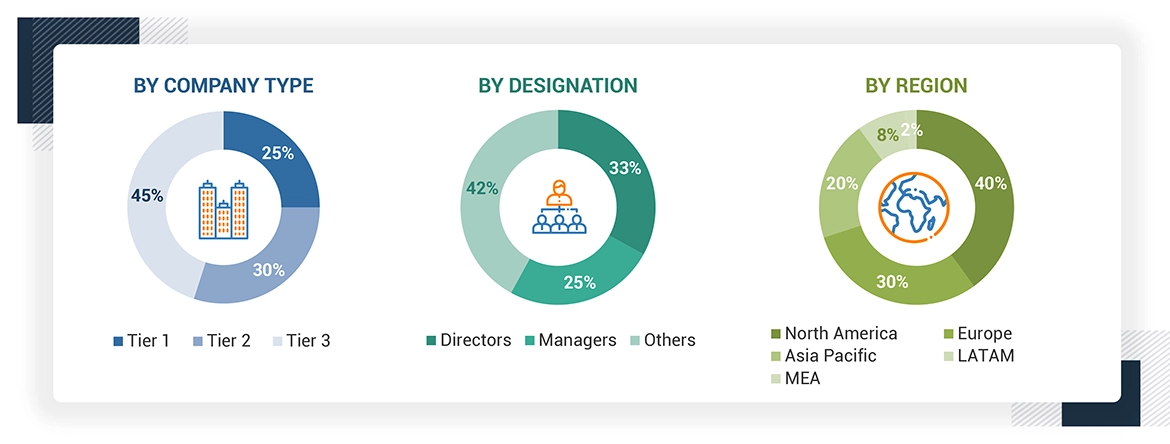
A breakdown of the primary respondents is provided below:
To know about the assumptions considered for the study, download the pdf brochure
*Others include sales managers, marketing managers, business development managers, product managers, distributors, and suppliers.
Note: Companies are classified into tiers based on their total revenue. As of 2022, Tier 1 = >USD 2 billion, Tier 2 = USD 50 million to USD 2 billion, and Tier 3 = < USD 50 million.
Market Size Estimation
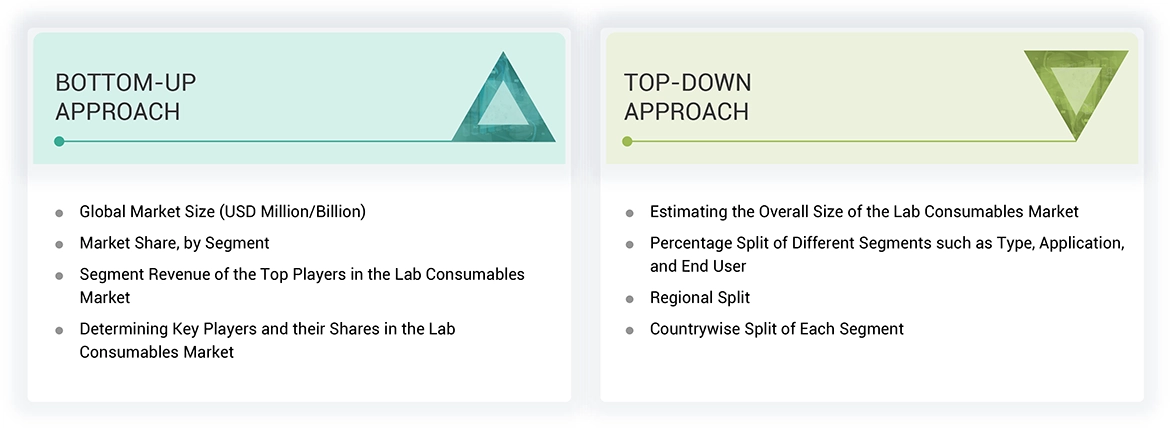
Both top-down and bottom-up approaches were used to estimate and validate the total size of the lab consumable market. These methods were also used extensively to estimate the size of various segments in the market.
To determine the size of the global lab consumables market, revenue share analysis was employed in relation to the leading players. In this case, key players in the market have been identified, with their lab consumables products business revenues determined through various insights gathered during the primary and secondary research phases. Secondary research included the study of top market players' annual and financial reports. On the other hand, primary research incorporated in-depth interviews with key opinion leaders, in particular, chief executive officers, directors, and key marketing executives.
Data Triangulation
After arriving at the overall market size from the market size estimation process explained above, the global lab consumables market was split into segments. Data triangulation and market breakdown procedures were employed to complete the overall market engineering process and arrive at the exact statistics for all segments. The data was triangulated by studying various factors and trends from both the demand and supply sides. Additionally, the lab consumables market was validated using both top-down and bottom-up approaches.
Market Definition
Lab consumables refer to the various tools, equipment, and supplies that are used in laboratory settings for scientific research, testing, and analysis. These consumables are typically designed for single-use and are replaced after each experiment to prevent contamination and ensure accuracy of results. The lab consumables market includes products such as plasticware, glassware, filters, membranes, syringe filters, chromatography columns, reagents, chemicals, enzymes, and antibodies that are necessary for carrying out various tests and experiments.
Stakeholders
- Manufacturers of lab consumables
- Suppliers, distributors, and channel partners of lab consumables
- Pharma and biopharma companies
- Biotechnology companies
- Food and beverage companies
- Hospitals, surgical centers and clinics
- Research laboratories and CROs
- Research and academic institutes
- Material laboratories
- Environmental laboratories
- Government and private laboratories
- Market research and consulting firms
Report Objectives
- To define, describe, and forecast the lab consumables market on the basis of on product type, application, end user and region.
- To provide detailed information regarding the major factors influencing the growth potential of the global lab consumables market (drivers, restraints, opportunities, challenges, and trends).
- To analyze the micro markets with respect to individual growth trends, future prospects, and contributions to the global lab consumables market.
- To analyze key growth opportunities in the global lab consumables market for key stakeholders and provide details of the competitive landscape for market leaders.
- To forecast the size of market segments and/or subsegments with respect to five major regions, namely, North America (the US and Canada), Europe (Germany, the UK, France, Italy, Spain, and Rest of Europe), Asia Pacific (Japan, China, India, Australia, South Korea, and Rest of Asia Pacific), Latin America (Brazil, Mexico, and Rest of Latin America), and the Middle East and Africa (GCC Countries and Rest of MEA).
- To profile the key players in the global lab consumables market and comprehensively analyze their market shares and core competencies.
- To track and analyze the competitive developments undertaken in the global lab consumables market, such as agreements, expansions, and product launches.
Get the Full Lab Consumables Market Report
Full forecast, segment splits, and company analysis for all Lab Consumables Market.
- US Lab Consumables Market
- Canada Lab Consumables Market
- Germany Lab Consumables Market
- France Lab Consumables Market
- UK Lab Consumables Market
- Italy Lab Consumables Market
- Spain Lab Consumables Market
- Japan Lab Consumables Market
- India Lab Consumables Market
- Australia Lab Consumables Market
- South Korea Lab Consumables Market
- Brazil Lab Consumables Market
- Mexico Lab Consumables Market
- Rest Of Europe Lab Consumables Market
- Rest Of Asia Pacific Lab Consumables Market
- Rest Of Latin America Lab Consumables Market
Need a Tailored Report?
Customize this report to your needs
Get 10% FREE Customization
Customize This Report
