
Brazil Leukapheresis Market (2026-2031)

The Brazil Leukapheresis Market was valued at $1.4 Million in 2026 and projected to reach to $1.94 Million by 2031, representing a compound annual growth rate of CAGR 6.7%. Brazil's leukapheresis market is positioned for steady growth driven by increasing adoption of advanced cell therapies and immunotherapies in major medical centers.


| Market Size in | USD 26.32 MN |
| Market Forecast in | |
| CAGR | |
| Forecast Period | |
| Units Considered | Value (USD MN) |
Brazil Leukapheresis Market Trends and Insights
- This growth trajectory reflects Brazil's expanding adoption of cell therapy and immunotherapy treatments, which rely on leukapheresis technology for cell collection and processing.
- Brazil's healthcare infrastructure improvements and increasing investment in advanced therapeutic modalities are driving demand for leukapheresis equipment and services across major medical centers and specialized treatment facilities. The Brazilian market benefits from rising prevalence of hematologic malignancies and autoimmune disorders, coupled with growing awareness of CAR-T cell therapy and other cell-based treatments.
- Brazil's regulatory environment and healthcare reimbursement policies are gradually aligning with international standards, facilitating market entry and adoption of leukapheresis technologies.
- Over the forecast period from 2026 to 2031, Brazil is expected to see increased clinical adoption and institutional investment in apheresis capabilities, positioning the country as a key growth market within Latin America's broader leukapheresis landscape..
Key Market Statistics
- CAGR (2026-2031) CAGR 6.7%
- Market Size, 2026 ~USD 1.4 Million
- Forecast, 2031 ~USD 1.94 Million
- Country Brazil
Brazil Leukapheresis Market Overview
Market Size & Growth :
Brazil's leukapheresis market is valued at USD 1.4 million in 2026, expanding to USD 1.94 million by 2031 at a CAGR of 6.7%, outpacing many Latin American peers in cell therapy adoption.
Cell Therapy Expansion :
Rising investment in CAR-T cell therapies and immunotherapy treatments across Brazilian hospitals and research institutions is driving demand for advanced leukapheresis equipment and services.
Healthcare Infrastructure Development :
Brazil's modernizing healthcare system, supported by government initiatives and private sector growth, is enhancing access to sophisticated cell collection and processing technologies.
Regional Leadership Position :
As Latin America's largest economy, Brazil represents a strategic hub for leukapheresis technology adoption, influencing broader regional market trends and clinical practice standards.
Brazil Leukapheresis Market Dynamics
- The country's expanding healthcare infrastructure and growing investment in biotechnology research are creating favorable conditions for market expansion.
- Government support for innovative treatments and rising patient awareness of cell-based therapies are expected to accelerate demand for leukapheresis services. The market will benefit from partnerships between Brazilian healthcare institutions and international biotech companies, facilitating technology transfer and clinical expertise.
- As reimbursement policies evolve and treatment accessibility improves, leukapheresis adoption is anticipated to accelerate beyond current projections, positioning Brazil as a key growth market in Latin America's cell therapy landscape..
Market Ecosystem
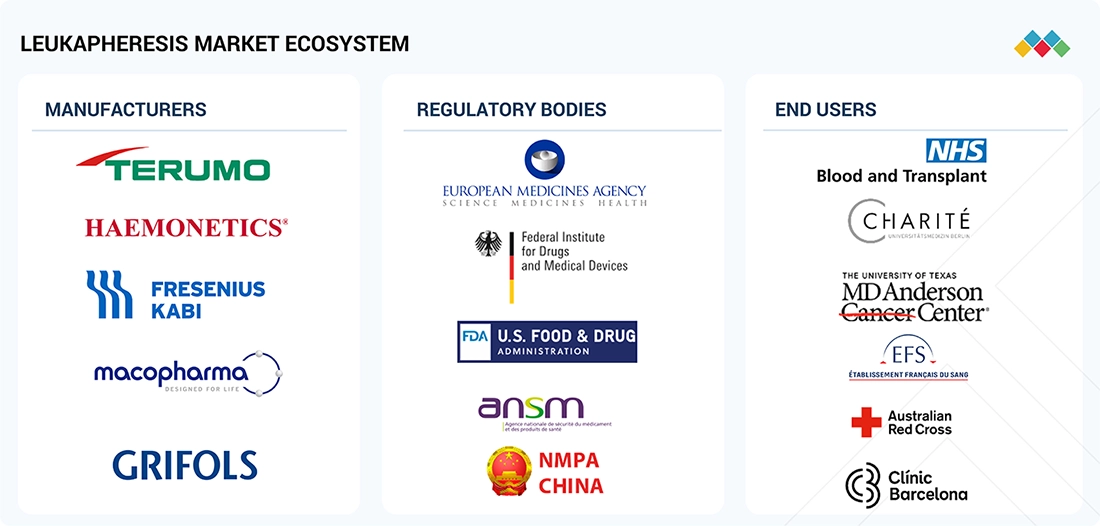
LEUKAPHERESIS MARKET: COMMERCIAL USE CASES ACROSS INDUSTRIES
| COMPANY | USE CASE DESCRIPTION | BENEFITS |
|---|---|---|
 |
Provides the Spectra Optia Apheresis System, one of the most widely used continuous-flow centrifugal devices for therapeutic leukapheresis, mononuclear cell collection, and immune cell harvesting | Used extensively in CGT workflows to collect high-quality starting material for CAR-T and TCR-T manufacturing | High automation, real-time monitoring, customizable protocols, and superior MNC yield support reproducible collections for both clinical and manufacturing settings | Its broad clinical indication library and integrated disposable kits ensure consistency, safety, and scalability |
 |
Provides leukapheresis systems and disposables widely used in hospitals for therapeutic leukocyte reduction and standardized cell collection supporting hematology and oncology workflows | Strong reliability, broad hospital penetration in Europe, integrated consumables portfolio, and compliance with EU clinical and safety standards ensure consistent procedural outcomes |
 |
Supplies automated apheresis platforms used for efficient leukocyte separation in therapeutic leukapheresis and immune cell collection for advanced clinical applications | High automation improves cell yield consistency, reduces procedure time, enhances patient safety, and supports scalable adoption in busy European apheresis centers |
 |
Miltenyi’s CliniMACS Prodigy automates cell processing using leukapheresis-derived inputs, supporting T-cell enrichment, activation, and genetic modification. Their leukopak handling workflows are critical to CGT manufacturing | Closed, automated GMP-compliant processing improves cell viability, reduces operator error, and accelerates manufacturing timelines for CAR-T and other advanced therapies |
 |
Offers apheresis disposables and blood processing solutions supporting leukapheresis procedures within European hospitals and transfusion services | Cost-effective consumables, strong regional presence, and alignment with European blood safety regulations support reliable and compliant leukapheresis operations |
 |
Provides leukapheresis-related systems and blood management solutions used in therapeutic leukocyte reduction and research-grade cell collection across Europe | Deep expertise in blood therapies, strong transfusion network integration, and regulatory experience enable safe procedures and dependable access to leukocyte products |
Logos and trademarks shown above are the property of their respective owners. Their use here is for informational and illustrative purposes only.
Related Ecosystem
Key Takeaways
- Brazil's leukapheresis market is valued at USD 1.4 million in 2026 and will reach USD 1.94 million by 2031 at a 6.7% CAGR.
- Brazil's adoption of CAR-T cell therapy and advanced immunotherapies is driving demand for leukapheresis equipment and services.
- Improving healthcare infrastructure and regulatory alignment in Brazil are facilitating market growth and institutional investment.
- Brazil represents a key growth opportunity within Latin America's leukapheresis market through 2031.
Leukapheresis Market Report Scope
| Report Metric | Details |
|---|---|
| Base Year | 2026 |
| Fastest Growing Segment | MULTIPLE MYELOMA (Indication) |
| Forecast Period | 2026–2031 |
| Growth Rate | CAGR of 8.9% from 2026 to 2031 |
| Largest Segment | ACUTE LYMPHOCYTIC LEUKEMIA (Indication) |
| Market Size Base Year (Billions) | ~USD 0.09 (2026) |
| Revenue Forecast (Billions) | ~USD 0.14 (2031) |
| Segments Covered | Product Type, Product Type 2024–2031, Type, Application, End User, Indication, Leukopak Type |
Brazil Leukapheresis Market Report Segmentation
7 segment dimensions are covered across the global market.
By Product Type
- Devices
- Disposables
- Leukapheresis Devices
- Leukapheresis Disposables
By Product Type 2024–2031
- Collection Kits & Accessories
- Filters & Membrane Consumables
- Tubing Sets & Collection Bag
By Type
- Australia
- Belgium
- Brazil
- Canada
- Centrifugal Devices
- China
- Diseased Leukopaks
- France
- Germany
- India
- Isolated Pbmcs
- Italy
- Japan
- Kingdom Of Saudi Arabia (Ksa)
- Membrane Separators
- Mexico
- Mobilized Leukopaks
- Netherlands
- New Zealand
- Non-Mobilized Leukopaks
- Poland
- Rest Of Asia Pacific
- Rest Of Europe
- Rest Of GCC Countries
- Rest Of Latin America
- Rest Of Middle East & Africa
- South Korea
- Spain
- Switzerland
- Thailand
- UK
- United Arab Emirates (UAE)
- US
By Application
- Research Applications
- Therapeutic Applications
By End User
- Academic & Research Institutes
- Blood Component Providers & Blood Centers
- Contract Research Organizations
- Hospitals & Transfusion Centers
- Pharmaceutical & Biotechnology Companies
By Indication
- Acute Lymphocytic Leukemia
- Chronic Lymphocytic Leukemia
- Hepatocellular Carcinoma
- Multiple Myeloma
- Non-Hodgkin’S Lymphoma
- Other Indications
- Pancreatic Cancer
By Leukopak Type
- Diseased Leukopaks
- Isolated Pbmcs
- Mobilized Leukopaks
- Non-Mobilized Leukopaks
BRAZIL: LEUKAPHERESIS MARKET, BY END USER, 2024–2031
| Segment | 2024 | 2025 | 2026 | 2027 | 2028 | 2029 | 2030 | 2031 | CAGR (%) |
|---|---|---|---|---|---|---|---|---|---|
| ACADEMIC & RESEARCH INSTITUTES | 0.22 | 0.23 | 0.25 | 0.26 | 0.28 | 0.3 | 0.32 | 0.34 | 6.3 |
| BLOOD COMPONENT PROVIDERS & BLOOD CENTERS | 0.86 | 0.92 | 0.99 | 1.06 | 1.15 | 1.24 | 1.33 | 1.44 | 7.7 |
| HOSPITALS & TRANSFUSION CENTERS | 0.3 | 0.32 | 0.35 | 0.37 | 0.4 | 0.43 | 0.46 | 0.49 | 7.1 |
| PHARMACEUTICAL & BIOTECHNOLOGY COMPANIES | 0.14 | 0.14 | 0.15 | 0.16 | 0.16 | 0.17 | 0.18 | 0.19 | 5.1 |
| TOTAL | 1.52 | 1.62 | 1.74 | 1.85 | 1.99 | 2.13 | 2.29 | 2.45 | 7.2 |
BRAZIL: LEUKOPAKS MARKET, BY END USER, 2024–2031
| Segment | 2024 | 2025 | 2026 | 2027 | 2028 | 2029 | 2030 | 2031 | CAGR (%) |
|---|---|---|---|---|---|---|---|---|---|
| ACADEMIC & RESEARCH INSTITUTES | 6.79 | 7.43 | 8.15 | 8.97 | 9.88 | 10.9 | 12.06 | 13.38 | 10.4 |
| CONTRACT RESEARCH ORGANIZATIONS | 0.46 | 0.49 | 0.53 | 0.57 | 0.61 | 0.66 | 0.71 | 0.77 | 8 |
| PHARMACEUTICAL & BIOTECHNOLOGY COMPANIES | 2.2 | 2.44 | 2.72 | 3.03 | 3.39 | 3.8 | 4.27 | 4.8 | 12 |
| TOTAL | 9.44 | 10.36 | 11.4 | 12.56 | 13.88 | 15.36 | 17.04 | 18.95 | 10.7 |
Target Audience
- Medical Device Manufacturers : Manufacturers of leukapheresis equipment and cell processing systems need Brazil-specific market data to assess demand, plan product launches, and identify distribution partnerships in this growing market.
- Healthcare Providers & Hospitals : Brazilian hospitals and medical centers require market insights to justify investments in leukapheresis technology, plan service expansion, and understand competitive positioning in cell therapy offerings.
- Biotech & Pharmaceutical Companies : Cell therapy and immunotherapy developers need Brazil market intelligence to support clinical trial planning, commercialization strategies, and partnerships with local healthcare institutions.
- Healthcare Investors & PE Firms : Investment professionals evaluating opportunities in Brazilian healthcare require validated market data, growth projections, and sector analysis to support due diligence and portfolio decisions.
- Healthcare Consultants & Advisors : Strategy consultants and healthcare advisors serving clients in Brazil need market-specific insights to develop business plans, competitive strategies, and technology adoption recommendations.
Key Companies in the Brazil Leukapheresis Market
| Company | HQ | Ownership | Strongest segments |
|---|---|---|---|
| MAXCYTE, INC | United States | Public Company | ExPERT instruments (ATx, STx, GTx, VLx),Disposable processing assemblies (PAs) and consumables,Licensing and technology access fees, |
MAXCYTE, INC
MaxCyte, Inc. is a United States-based biotechnology company founded in 1998 that specializes in cell engineering technologies. As a publicly traded company, MaxCyte operates with 91 employees and develops innovative solutions for cell-based therapies and research applications.
Reasons to Buy this Report
- Market Entry Strategy : Gain detailed insights into Brazil's leukapheresis market dynamics to develop targeted market entry strategies, identify key stakeholders, and understand competitive positioning in Latin America's largest healthcare market.
- Investment Decision Support : Access comprehensive market sizing and growth projections to support investment decisions in Brazilian healthcare infrastructure, biotech partnerships, and cell therapy facilities with validated financial forecasts.
- Competitive Intelligence : Understand Brazil-specific market trends, regulatory environment, and technology adoption patterns to benchmark against competitors and identify white-space opportunities in the leukapheresis sector.
- Clinical & Operational Planning : Equip healthcare institutions and service providers with market data to plan leukapheresis service expansion, procurement strategies, and capacity investments aligned with projected demand growth.
- Regulatory & Reimbursement Insights : Navigate Brazil's healthcare reimbursement landscape and regulatory requirements with market-specific intelligence on policy trends, pricing dynamics, and coverage decisions affecting leukapheresis adoption.
Frequently asked questions
What is the current size of Brazil's leukapheresis market?
Brazil's leukapheresis market is estimated at USD 1.4 million in 2026.
What is the projected market size for Brazil's leukapheresis market by 2031?
Brazil's leukapheresis market is projected to reach USD 1.94 million by 2031.
What is the CAGR for Brazil's leukapheresis market?
Brazil's leukapheresis market is expected to grow at a compound annual growth rate (CAGR) of 6.7% from 2026 to 2031.
What factors are driving growth in Brazil's leukapheresis market?
Growth in Brazil is driven by rising prevalence of hematologic malignancies, increasing adoption of CAR-T cell therapy, improving healthcare infrastructure, and regulatory alignment with international standards.
How does Brazil's leukapheresis market compare to other Latin American countries?
Brazil represents a key growth market within Latin America's leukapheresis landscape, with expanding institutional investment and clinical adoption of advanced cell therapy technologies.
RESEARCH METHODOLOGY
This study extensively used both primary and secondary sources. The research involved studying various factors affecting the industry to identify segmentation types, industry trends, key players, competitive landscape, key market dynamics, and key player strategies.
Secondary Research
This research study involved the usage of comprehensive secondary sources, directories, databases such as Bloomberg Business, Factiva, and Dun & Bradstreet; white papers; annual reports; company house documents; investor presentations; and SEC filings of companies. Secondary research was used to identify and collect information useful for an extensive, technical, market-oriented, and commercial study of the leukapheresis market. It was also used to identify key players in the market and classify and segment the industry based on trends to the most detailed level. Additionally, significant developments related to market and technology perspectives were noted. A database of the primary industry leaders was also created using secondary research.
Primary Research
In the primary research process, various sources from both the supply and demand sides were interviewed to obtain qualitative and quantitative information for this report. Primary sources from the supply side include project/sales/marketing/business development managers, presidents, CEOs, vice presidents, chairpersons, chief operating officers, chief strategy officers, directors, chief information officers, and chief medical information officers related to the leukapheresis market. Primary sources from the demand side include healthcare professionals from blood component providers & blood centers, academic & research institutes, pharmaceutical & biotechnology companies, and hospitals & transfusion centers.
A breakdown of the primary respondents is provided below:
BREAKDOWN OF PRIMARY INTERVIEWS: SUPPLY-SIDE PARTICIPANTS, BY COMPANY TYPE, DESIGNATION, AND REGION
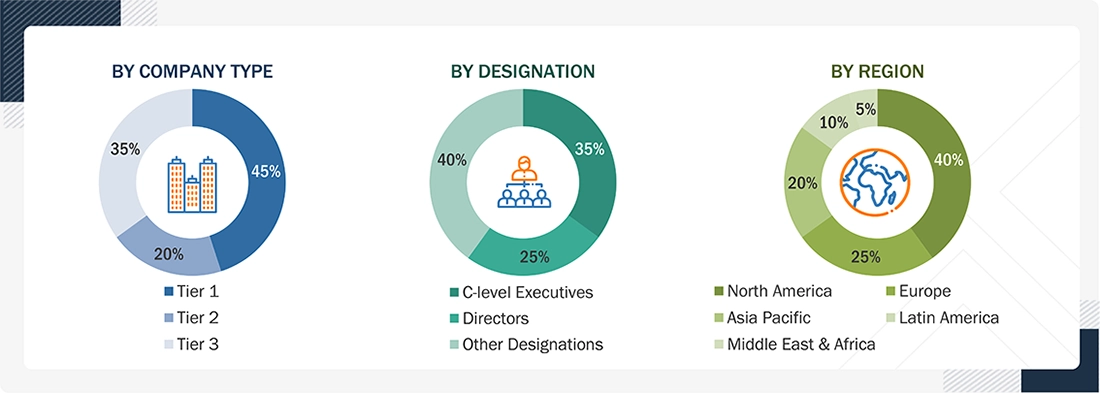
Note 1: C-level executives include CEOs, COOs, CTOs, and VPs.
Note 2: Other designations include sales, marketing, and product managers.
Note 3: Tiers are defined based on a company’s total revenue. As of 2024: Tier 1 = >USD 1 billion, Tier 2 = USD 500 million to USD 1 billion, and Tier 3 = <USD 500 million
To know about the assumptions considered for the study, download the pdf brochure
Market Size Estimation
The total size of the leukapheresis market was determined after data triangulation from three approaches, as mentioned below. After each approach, the weighted average of the three approaches was taken based on the level of assumptions used in each approach.
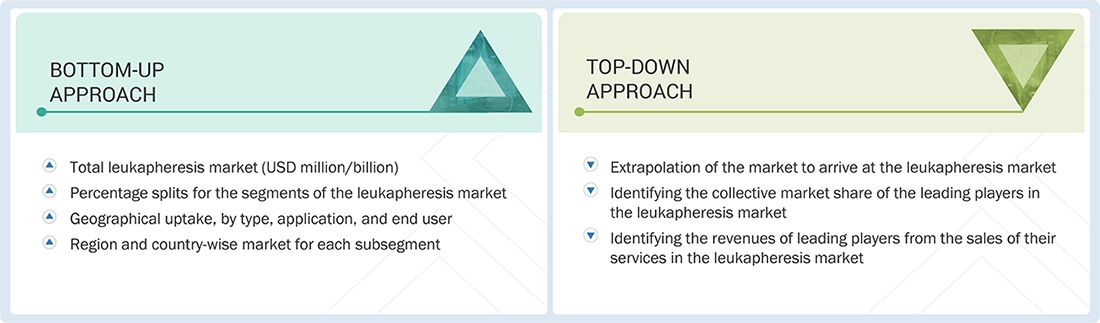
Data Triangulation
After arriving at the market size, the total market was divided into several segments and subsegments. Data triangulation and market breakdown procedures were employed wherever applicable to complete the overall market engineering process and arrive at the exact statistics for all segments and subsegments.
Market Definition
Leukapheresis is the process of separating white blood cells from the whole blood. Therapeutic leukapheresis procedures are used to treat hyperleukocytic leukemia, including acute lymphoblastic leukemia (ALL), chronic lymphocytic leukemia (CLL), multiple myeloma, and non-Hodgkin’s lymphoma.
Leukopaks are enriched leukapheresis products that contain mononuclear leukocytes (lymphocytes and monocytes) and are used to develop cell-based therapeutics
Key Stakeholders
- Apheresis device manufacturers and distributors
- Leukapheresis product manufacturers and distributors
- Leukopak manufacturers and distributors
- Pharmaceutical and biotechnology companies
- Healthcare service providers (including hospitals and transfusion centers)
- Cancer treatment centers
- Blood component providers & blood centers
- Contract research organizations (CROS)
- Academic and research institutes
- Government associations
- Market research and consulting firms
- Venture capitalists and investors
Report Objectives
- To define, describe, segment, and forecast the leukapheresis market by type, application, end user, and region, and the leukopaks market, by type, indication, end user, and region
- To provide detailed information about the factors influencing market growth (such as drivers, restraints, opportunities, and challenges)
- To analyze micromarkets with respect to individual growth trends, prospects, and contributions to the overall leukapheresis market
- To analyze market opportunities for stakeholders and provide details of the competitive landscape for key players
- To forecast the size of the leukapheresis market in five main regions (along with their respective key countries), namely, North America, Europe, Asia Pacific, Latin America, and the Middle East & Africa
- To profile the key players in the leukapheresis market and comprehensively analyze their core competencies and market share
- To track and analyze competitive developments such as acquisitions, product launches, expansions, collaborations, agreements, and partnerships
Available customizations:
With the given market data, MarketsandMarkets offers customizations to meet your company’s specific needs. The following customization options are available for the report:- Company Information
Detailed analysis and profiling of additional market players (up to 5)
- Geographic Analysis
Further breakdown of the Rest of Europe leukapheresis market into Austria, Finland, and other countries
Further breakdown of the Rest of Latin America leukapheresis market into Colombia, Chile, and other countries
- Competitive Landscape Assessment
Market share analysis for North America and Europe, which provides market shares of the top 3–5 key players in the leukapheresis market
Competitive leadership mapping for established players in the US
Get the Full Leukapheresis Market Report
Full forecast, segment splits, and company analysis for all Leukapheresis Market.
- Canada Leukapheresis Market
- US Leukapheresis Market
- Germany Leukapheresis Market
- UK Leukapheresis Market
- Spain Leukapheresis Market
- Italy Leukapheresis Market
- Netherlands Leukapheresis Market
- Poland Leukapheresis Market
- Switzerland Leukapheresis Market
- China Leukapheresis Market
- Japan Leukapheresis Market
- India Leukapheresis Market
- Australia Leukapheresis Market
- South Korea Leukapheresis Market
- New Zealand Leukapheresis Market
- Thailand Leukapheresis Market
- Mexico Leukapheresis Market
- Belgium Leukapheresis Market
- France Leukapheresis Market
- Rest Of Europe Leukapheresis Market
- Rest Of Asia Pacific Leukapheresis Market
Need a Tailored Report?
Customize this report to your needs
Get 10% FREE Customization
Customize This Report
