
Brazil Life Science Instrumentation Market (2025-2030)

The Brazil Life Science Instrumentation Market was valued at $6023 Million in 2025 and projected to reach to $9901 Million by 2030, representing a compound annual growth rate of 8.6%. Brazil's life science instrumentation market is positioned for significant expansion through 2030, growing from $6,023 million to $9,901 million.


| Market Size in | USD 26.32 MN |
| Market Forecast in | |
| CAGR | |
| Forecast Period | |
| Units Considered | Value (USD MN) |
Brazil Life Science Instrumentation Market Trends and Insights
- Chromatography instruments are essential for pharmaceutical development, quality control, and research applications across laboratories worldwide.
- The robust 8.6% compound annual growth rate reflects increasing demand for analytical precision and regulatory compliance in drug discovery and manufacturing processes. Chromatography technologies continue to advance with innovations in separation efficiency and detection capabilities.
- Between 2025 and 2030, Chromatography adoption is expected to accelerate due to rising investments in biopharmaceutical R&D and heightened quality assurance requirements.
- Chromatography systems serve diverse applications including liquid chromatography, gas chromatography, and mass spectrometry coupling, making them indispensable across clinical diagnostics, environmental testing, and food safety sectors. The expansion of Chromatography markets is driven by increasing laboratory automation, growing pharmaceutical pipelines, and stringent regulatory standards globally.
- Chromatography instrumentation providers are responding with integrated solutions that enhance throughput and data management capabilities..
Key Market Statistics
- CAGR (2025-2030) 8.6% CAGR
- Market Size, 2025 ~USD 6023 Million
- Forecast, 2030 ~USD 9901 Million
- Country Brazil
Brazil Life Science Instrumentation Market Overview
Strong Growth Trajectory :
Brazil's life science instrumentation market is experiencing robust expansion at 8.6% CAGR, outpacing the global average of 6.5%, driven by increased pharmaceutical R&D investments and regulatory compliance requirements.
Pharmaceutical Manufacturing Hub :
As Latin America's largest pharmaceutical producer, Brazil's growing domestic and regional drug manufacturing sector is driving demand for advanced chromatography and analytical instrumentation in quality control and development labs.
Government Support & Incentives :
Brazilian government initiatives promoting biotech innovation and healthcare infrastructure development are creating favorable conditions for life science instrumentation adoption across research institutions and manufacturing facilities.
Regional Market Leadership :
Brazil represents the largest life science instrumentation market in South America, with expanding opportunities in contract research organizations, academic institutions, and multinational pharmaceutical operations.
Brazil Life Science Instrumentation Market Dynamics
- This growth is underpinned by increasing pharmaceutical manufacturing capacity, rising investments in biotechnology research, and strengthening regulatory frameworks requiring advanced analytical capabilities.
- The country's strategic importance as a regional pharmaceutical hub attracts multinational companies and supports local innovation ecosystems. Key drivers include growing demand for quality assurance in drug manufacturing, expansion of clinical research activities, and increased adoption of chromatography technologies in food safety and environmental testing.
- Investment in laboratory infrastructure modernization and skilled workforce development will further accelerate market penetration across Brazil's healthcare and life science sectors..
Market Ecosystem

LIFE SCIENCE INSTRUMENTATION MARKET: COMMERCIAL USE CASES ACROSS INDUSTRIES
| COMPANY | USE CASE DESCRIPTION | BENEFITS |
|---|---|---|
 |
Leverages advanced diagnostic technologies such as mass spectrometry, next-generation sequencing, and clinical analyzers for early disease detection, biomarker discovery, and personalized treatment planning. | Improved diagnostic accuracy, faster clinical decision-making, enhanced patient outcomes, and leadership in precision medicine. |
 |
Utilizes chromatography, mass spectrometry, and cell analysis systems in drug discovery, biologics development, and quality control of vaccines and therapeutics. | Accelerated R&D timelines, higher success rates in drug development, robust quality assurance, and faster time-to-market for new medicines. |
 |
Applies spectroscopy, chromatography, and mass spectrometry to analyze food composition, detect contaminants, and ensure safety and nutritional quality across its global supply chain. | Enhanced food safety, consistent product quality, regulatory compliance, and strengthened consumer trust and brand reputation. |
 |
Deploys advanced analytical instrumentation such as mass spectrometry, gas chromatography, and molecular spectroscopy for environmental testing, food analysis, and pharmaceutical quality services. | High-precision testing, faster turnaround times, regulatory compliance support for clients, and expanded service capabilities across multiple industries. |
Logos and trademarks shown above are the property of their respective owners. Their use here is for informational and illustrative purposes only.
Related Ecosystem
Analytical And Scientific Instrumentation
- Environmental Testing
- Gas Chromatography
- Polymerase Chain Reaction (PCR)
- Automated Liquid Handling Systems
- Flow Cytometry
- Thermo Fisher Scientific Inc.
- Danaher Corporation
- Agilent Technologies, Inc.
- Shimadzu Corporation
- Merck KGaA
Key Takeaways
- Chromatography market valued at $6,023 million in 2025, expanding to $9,901 million by 2030 at 8.6% CAGR
- Chromatography technologies are essential for pharmaceutical quality control and regulatory compliance across global laboratories
- Chromatography adoption accelerates through laboratory automation and biopharmaceutical R&D investments
- Chromatography systems integrate advanced detection and separation capabilities for diverse analytical applications
Life Science Instrumentation Market Report Scope
| Report Metric | Details |
|---|---|
| Base Year | 2025 |
| Fastest Growing Segment | NEXT-GENERATION SEQUENCING (NGS) (Type) |
| Forecast Period | 2025–2030 |
| Growth Rate | CAGR of 6.5% from 2025 to 2030 |
| Largest Segment | RESEARCH APPLICATION (Application) |
| Market Size Base Year (Billions) | ~USD 63.39 (2025) |
| Revenue Forecast (Billions) | ~USD 86.85 (2030) |
| Segments Covered | Technology, Type, Application, End User |
Brazil Life Science Instrumentation Market Report Segmentation
4 segment dimensions are covered across the global market.
By Technology
- Cell Counting
- Centrifuges
- Chromatography
- Clinical Chemistry Analyzers
- Electrophoresis
- Flow Cytometry
- Immunoassays
- Liquid Handling Systems
- Lyophilization
- Microscopy
- Next Generation Sequencing (Ngs)
- Next-Generation Sequencing (Ngs)
- Ngs
- Other Technologies
- Pcr
- Polymerase Chain Reaction
- Spectroscopy
By Type
- Atomic Spectrometers
- Automated Cell Counters
- Automated Handling Systems
- Automated Liquid Handling Systems
- Capillary Electrophoresis Systems
- Cell Analyzers
- Cell Sorters
- Colorimeters
- Conductivity And Resistivity Meters
- Dissolved Co2 And O2 Meters
- Dpcr
- Dry Heat Sterilization Instruments
- Electron Handling Systems
- Electron Microscopes
- Electronic Liquid Handling Systems
- Freezers
- Fume Hoods
- Gas Analyzers
- Gas Chromatography (Gc) Systems
- Gas Chromatography Systems
- Gel Electrophoresis Systems
- Heat Sterilization
- Hemocytometers And Manual Cell Counters
- Incubators
- Laboratory Balances
- Laboratory Freezers
- Liquid Chromatography (Lc) Systems
- Liquid Chromatography Systems
- Manifold Freeze Dryer
- Manifold Freeze Dryers
- Manual Handling Systems
- Manual Liquid Handling Systems
- Mass Spectrometers
- Microcentrifuges
- Microplate Dispensers
- Microplate Readers
- Microplate Systems
- Microplate Washers
- Minicentrifuges
- Moist Heat/Steam Sterilization Instruments
- Molecular Spectrometers
- Multipurpose Centrifuges
- Optical Microscopes
- Other Microscopes
- Ph Meters
- Qpcr
- Refrigerators
- Robotic Arms
- Robotic Systems
- Scanning Probe Microscopes
- Shakers/Rotators And Stirrers
- Shell (Rotary) Freeze Dryer
- Shell (Rotary) Freeze Dryers
- Supercritical Fluid Chromatography (Sfc) Systems
- Supercritical Fluid Chromatography Systems
- Thermal Analyzers
- Thin-Layer Chromatography (Tlc) Systems
- Thin-Layer Chromatography Systems
- Titrators
- Toc Analyzers
- Track Robot Systems
- Tray-Style Freeze Dryer
- Tray-Style Freeze Dryers
- Ultracentrifuges
By Application
- Clinical & Diagnostic Applications
- Other Applications
- Research Application
- Research Applications
By End User
- Academic & Research Institutes
- Agriculture & Food Industries
- Clinical Research Organizations
- Environmental Testing Laboratories
- Hospitals And Diagnostic Laboratories
- Other End Users
- Pharmaceutical & Biotechnology Companies
Target Audience
- Pharmaceutical Manufacturers : Brazilian and multinational pharma companies need market intelligence to optimize instrumentation investments, ensure regulatory compliance, and enhance manufacturing efficiency in quality control operations.
- Life Science Equipment Vendors : Instrumentation suppliers require Brazil-specific market data to identify growth opportunities, assess competitive positioning, and develop localized sales and distribution strategies.
- Contract Research Organizations (CROs) : CROs operating in Brazil need market forecasts and growth drivers to justify capital expenditures in laboratory infrastructure and stay competitive in the expanding clinical research sector.
- Investment & Private Equity Firms : Investors evaluating opportunities in Brazilian life sciences require market sizing, growth projections, and sector dynamics to assess portfolio companies and identify acquisition targets.
- Academic & Research Institutions : Universities and research centers need market insights to secure funding, plan laboratory modernization initiatives, and align research capabilities with industry demands in Brazil.
Key Companies in the Brazil Life Science Instrumentation Market
| Company | HQ | Ownership | Strongest segments |
|---|---|---|---|
| PATHEON INC | Netherlands | Private Company | Drug product services (finished dosage manufacturing & packaging),Pharmaceutical development services,Drug substance services (API and biologics), |
| ABCAM PLC | United Kingdom | Private Company | Primary and secondary antibodies,Conjugated antibodies and conjugation kits,Singleplex immunoassays, |
| BECKMAN COULTER | United States | Private Company | Clinical diagnostics (chemistry, immunoassay, hematology, urinalysis, blood banking),Laboratory automation and informatics,Research and discovery instruments and services, |
| CONSORT MEDICAL | United Kingdom | Private Company | Inhalation devices (DPIs, pMDIs, soft-mist) and related services,Injectable and autoinjector platforms,Nasal and other specialty delivery devices, |
| ROCHE HOLDING AG | Switzerland | Public Company | Oncology and hematology therapeutics,Immunology, infectious, and autoimmune therapeutics,Neurology, ophthalmology, respiratory, and transplantation, |
| TOSOH CORPORATION | Japan | Public Company | Basic chemicals and chlor-alkali (caustic soda, sodium bicarbonate, related),Vinyls, petrochemicals, and polymers (VCM, PVC, polyethylene, EVA, synthetic rubbers),Advanced materials (battery materials, quartzware, silica glass, thin films, zeolites, zirconia, fine beads), |
| METTLER-TOLEDO | Switzerland | Public Company | Laboratory instruments & analytics (balances, titrators, pH, thermal, UV/VIS, moisture, cell counting),Industrial instruments (weighing, terminals, product inspection, industrial software),Retail weighing & fresh-goods solutions, |
| CEPHEID INC. | United States | Private Company | GeneXpert instruments,Xpert test cartridges – infectious disease & HAIs,Xpert test cartridges – TB and global health, |
| AT&S | Canada | Public Company | Integrated automation systems (design-build-commissioning),Lifecycle and post-automation services,Software and digital factory solutions, |
| UNILABS | Switzerland | Private Company | Core laboratory testing,Medical imaging,Pathology and centres of excellence, |
| DKK-TOA CORPORATION | Japan | Public Company | Water quality analyzers and integrated monitoring systems,Process analyzers for industrial and refinery applications,Ambient air and emission gas analyzers, |
| GENERAL ELECTRIC | United States | Public Company | Commercial Engines OE,Commercial MRO & Spare Parts,Defense & Propulsion OE, |
| THERMO FISHER SCIENTIFIC INC. | United States | Public Company | Life Sciences Solutions,Analytical Instruments,Specialty Diagnostics, |
| AGILENT TECHNOLOGIES, INC. | United States | Public Company | Life Sciences and Diagnostics Markets,Agilent CrossLab,Applied Markets, |
| DANAHER CORPORATION | United States | Public Company | Biotechnology (bioprocessing and related solutions),Life Sciences (tools, genomics, and analytical instruments),Diagnostics (clinical instruments, consumables, software, services), |
| SHIMADZU CORPORATION | Japan | Public Company | Analytical and Measuring Instruments,Medical Systems,Vacuum and Industrial Machinery, |
| WATERS CORPORATION | United States | Public Company | Liquid Chromatography Systems and Columns,Mass Spectrometry Systems,Thermal Analysis, Rheometry, and Calorimetry (TA segment), |
| BRUKER CORPORATION | United States | Public Company | BSI BioSpin (NMR/EPR and preclinical imaging),BSI CALID (mass spectrometry, molecular diagnostics, automation),BSI Nano (X-ray, AFM, electron microscopy tools), |
| JEOL LTD. | Japan | Public Company | Scientific and Metrology Instruments,Industrial Equipment,Medical Equipment, |
| MERCK KGAA | Germany | Public Company | Life Science (tools, reagents, bioprocessing, CDMO),Healthcare (prescription drugs and biopharmaceuticals),Electronics (semiconductor and display materials, delivery systems), |
| BECTON, DICKINSON AND COMPANY | United States | Public Company | Medical Essentials (syringes, needles, catheters, sharps, basic disposables),Connected Care (infusion pumps, medication management, pharmacy automation, informatics),BioPharma Systems (prefillable drug delivery systems and related solutions), |
| PERKINELMER | United States | Public Company | Diagnostics (prenatal, neonatal, infectious disease, autoimmune),Life science reagents and assay platforms,Instruments, imaging, and detection systems, |
| BIO-RAD LABORATORIES, INC. | United States | Public Company | Clinical Diagnostics,Life Science Research Instruments and Systems,Life Science Reagents and Consumables, |
| EPPENDORF SE | Germany | Private Company | Liquid handling (pipettes, dispensers, automated pipetting),Separation & instrumentation (centrifuges, PCR cyclers, ULT freezers),Bioprocess solutions (fermenters, bioreactors, single-use bioreactors), |
| HORIBA, LTD. | Japan | Public Company | Mobility and transportation test systems,Energy and environment analyzers,Bio and healthcare (life science + IVD), |
| QIAGEN | Netherlands | Public Company | Sample technology consumables and instruments,Immune response (TB and transplant/viral load assays),Oncology and sexual & reproductive health assays, |
| HITACHI HIGH-TECH CORPORATION | Japan | Private Company | Analytical & Medical Solutions (microscopes, clinical analyzers, chromatography, spectrometry),Nano-Technology Solutions (dry etch, CD-SEM, wafer inspection, FPD and HDD tools),Industrial Solutions (ICT, industrial infrastructure, energy, control systems), |
PATHEON INC
Patheon Inc. is a Netherlands-based pharmaceutical services company with 9,100 employees operating as a private company. The company provides contract manufacturing and development services to the pharmaceutical industry.
ABCAM PLC
Abcam PLC is a United Kingdom-based life sciences company founded in 1998 with 1,760 employees. Operating as a private company, Abcam specializes in providing research tools and reagents for the scientific community.
BECKMAN COULTER
Beckman Coulter is a United States-based company founded in 1935 with 11,900 employees operating as a private company. The company manufactures and distributes laboratory instruments and diagnostic equipment.
CONSORT MEDICAL
Consort Medical is a United Kingdom-based private company founded in 1938 with 2,000 employees. The company manufactures and distributes medical devices and pharmaceutical delivery systems.
ROCHE HOLDING AG
Roche Holding AG is a Switzerland-based public company founded in 1896 with 103,249 employees. The company is a global leader in pharmaceuticals, diagnostics, and life sciences research.
TOSOH CORPORATION
Tosoh Corporation is a Japan-based public company founded in 1935 with 14,850 employees. The company manufactures specialty chemicals, pharmaceuticals, and diagnostic products.
METTLER-TOLEDO
Mettler-Toledo is a Switzerland-based public company founded in 1991 with 16,600 employees. The company designs and manufactures precision instruments for laboratory, industrial, and retail applications.
CEPHEID INC.
Cepheid Inc. is a United States-based private company founded in 1996 with 1,700 employees. The company develops and manufactures molecular diagnostic systems and tests.
AT&S
AT&S is a Canada-based public company founded in 1978 with 7,000 employees. The company manufactures printed circuit boards and electronic components.
UNILABS
Unilabs is a Switzerland-based private company founded in 1987 with 1,897 employees. The company provides clinical laboratory and diagnostic testing services.
DKK-TOA CORPORATION
DKK-TOA Corporation is a Japan-based public company founded in 1944 with 639 employees. The company manufactures water quality measurement and analysis instruments.
GENERAL ELECTRIC
General Electric is a United States-based public company founded in 1892 with 57,000 employees. The company operates across multiple sectors including power, renewable energy, aviation, and healthcare.
THERMO FISHER SCIENTIFIC INC.
Thermo Fisher Scientific Inc. is a United States-based public company founded in 1956 with 125,000 employees. The company is a global leader in life sciences, analytical instruments, and laboratory services.
AGILENT TECHNOLOGIES, INC.
Agilent Technologies, Inc. is a United States-based public company founded in 1999 with 18,000 employees. The company manufactures analytical instruments, software, and services for life sciences and diagnostics.
DANAHER CORPORATION
Danaher Corporation is a United States-based public company founded in 1969 with 59,000 employees. The company operates a diversified portfolio of businesses in diagnostics, life sciences, and environmental solutions.
SHIMADZU CORPORATION
Shimadzu Corporation is a Japan-based public company founded in 1875 with 14,649 employees. The company manufactures analytical and measuring instruments, medical devices, and industrial equipment.
WATERS CORPORATION
Waters Corporation is a United States-based public company founded in 1958 with 7,900 employees. The company designs and manufactures analytical instruments and software for laboratory analysis.
BRUKER CORPORATION
Bruker Corporation is a United States-based public company founded in 1960 with 11,085 employees. The company manufactures scientific instruments for molecular and materials research.
JEOL LTD.
JEOL Ltd. is a Japan-based public company founded in 1949 with 3,731 employees. The company manufactures electron microscopes and analytical instruments for scientific research.
MERCK KGAA
Merck KGaA is a Germany-based public company founded in 1668 with 59,077 employees. The company operates in pharmaceuticals, life sciences, and performance materials.
BECTON, DICKINSON AND COMPANY
Becton, Dickinson and Company is a United States-based public company founded in 1897 with 72,000 employees. The company manufactures and distributes medical devices, laboratory equipment, and diagnostic products.
PERKINELMER
PerkinElmer is a United States-based public company founded in 1937 with 11,000 employees. The company provides analytical instruments, software, and services for diagnostics and life sciences research.
BIO-RAD LABORATORIES, INC.
Bio-Rad Laboratories, Inc. is a United States-based public company founded in 1952 with 7,450 employees. The company manufactures and distributes life science research products and clinical diagnostics.
EPPENDORF SE
Eppendorf SE is a Germany-based private company founded in 1945 with 4,358 employees. The company manufactures laboratory equipment and consumables for life sciences research.
HORIBA, LTD.
Horiba, Ltd. is a Japan-based public company founded in 1945 with 9,101 employees. The company manufactures analytical and measuring instruments for automotive, environmental, and medical applications.
QIAGEN
QIAGEN is a Netherlands-based public company founded in 1984 with 5,500 employees. The company develops and manufactures molecular diagnostics and life sciences products.
HITACHI HIGH-TECH CORPORATION
Hitachi High-Tech Corporation is a Japan-based private company founded in 1947 with 11,482 employees. The company manufactures analytical instruments, semiconductor equipment, and industrial systems.
Reasons to Buy this Report
- Market Size & Valuation Data : Access precise market sizing for Brazil ($6,023M in 2025, $9,901M in 2030) with detailed CAGR analysis to support investment decisions and business planning in this high-growth market.
- Competitive Landscape Intelligence : Understand market dynamics specific to Brazil's pharmaceutical and biotech sectors, including key players, market consolidation trends, and competitive positioning strategies for regional expansion.
- Growth Driver Analysis : Identify Brazil-specific growth catalysts including regulatory changes, government incentives, manufacturing expansion, and R&D investments to capitalize on emerging opportunities.
- Regional Market Benchmarking : Compare Brazil's 8.6% CAGR against global 6.5% performance to assess relative attractiveness and prioritize resource allocation across Latin American markets.
- Strategic Entry & Expansion Planning : Leverage Brazil-focused market insights for market entry strategies, partnership identification, and go-to-market planning in Latin America's largest life science instrumentation market.
Frequently asked questions
What is the market size of Chromatography in 2025?
Chromatography market is estimated at $6,023 million in 2025, representing a significant segment of the Life Science Instrumentation Market.
What is the projected Chromatography market size by 2030?
Chromatography market is forecasted to reach $9,901 million by 2030, reflecting sustained growth in analytical instrumentation demand.
What is the CAGR for Chromatography?
Chromatography is projected to grow at a compound annual growth rate of 8.6% from 2025 to 2030.
What applications drive Chromatography demand?
Chromatography demand is driven by pharmaceutical quality control, drug discovery, clinical diagnostics, environmental testing, and food safety applications.
What technologies are included in the Chromatography segment?
Chromatography encompasses liquid chromatography, gas chromatography, supercritical fluid chromatography, and mass spectrometry-coupled systems for analytical separation and detection.
RESEARCH METHODOLOGY
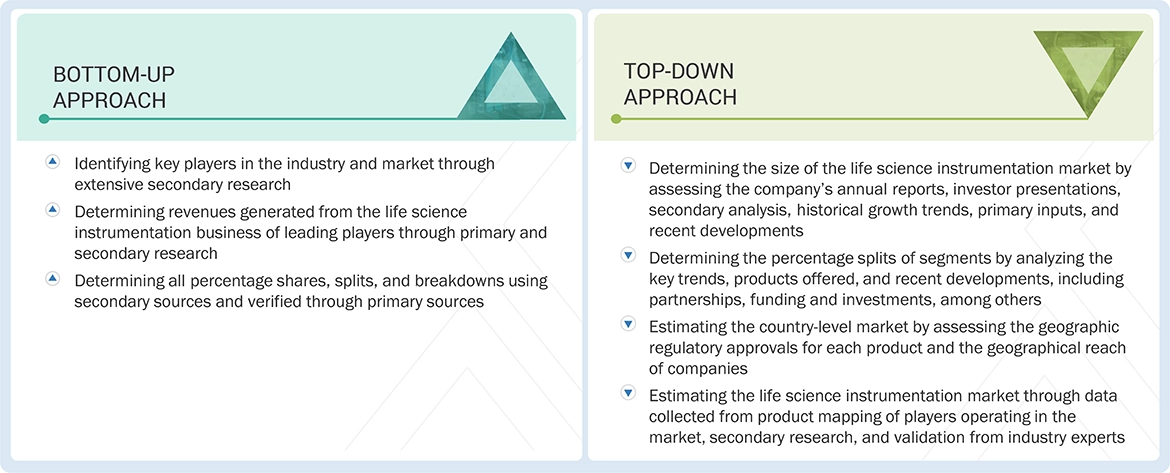
The study involved four major activities in estimating the current size of the life science instrumentation market. Exhaustive secondary research was done to collect information on the market, peer, and parent markets. The next step was to validate these findings, assumptions, and sizing estimates with industry experts across the value chain through primary research. Both top-down and bottom-up approaches were employed to estimate the complete market size. After that, market breakdown and data triangulation were used to estimate the market size of segments and subsegments.
Secondary Research
The secondary research process involves the widespread use of secondary sources, directories, databases (such as Bloomberg Businessweek, Factiva, and D&B Hoovers), white papers, annual reports, company house documents, investor presentations, and SEC filings of companies. Secondary research was used to identify and collect information useful for the extensive, technical, market-oriented, and commercial life science instrumentation market study. It was also used to obtain important information on key players, market classification & segmentation aligned with industry trends to the bottom-most level, and key developments from market and technology perspectives. A database of the key industry leaders was also prepared using secondary research.
Primary Research
In the primary research process, various supply and demand sources were interviewed to obtain qualitative and quantitative information for this report. The primary sources on the supply side include industry experts such as CEOs, vice presidents, marketing and sales directors, technology & innovation directors, and other key executives from leading companies and organizations in the life science instrumentation market. The demand-side primary sources include pharma-biopharma companies, CDMOs, research labs, F&B companies, and service providers. Primary research was conducted to validate the market segmentation, identify key players, and gather insights on key industry trends & key market dynamics.
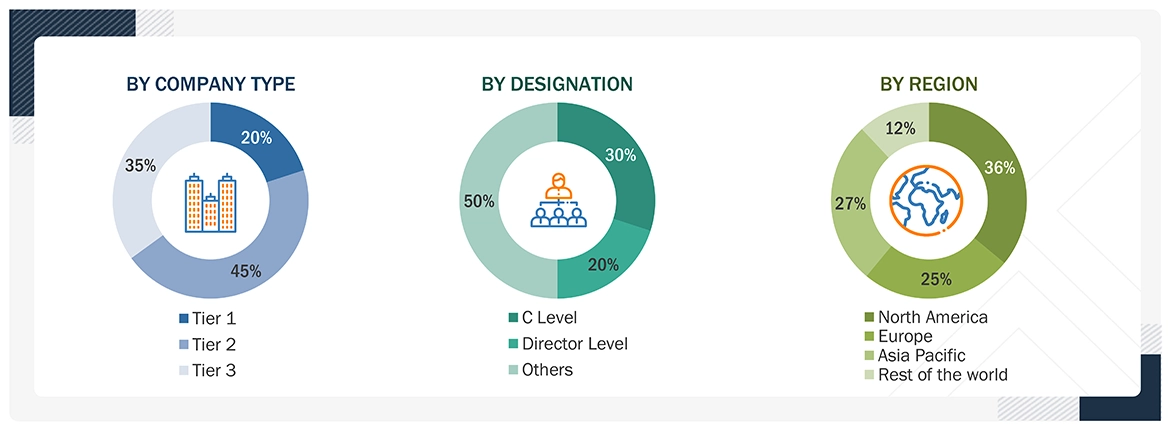
Others include sales managers, marketing managers, business development managers, product managers, distributors, and suppliers.
Note: Companies are classified into tiers based on their total revenue. As of 2025, Tier 1 = >USD 4 billion, Tier 2 = USD 1-2 Billion, and Tier 3 = <USD 1 Billion.
To know about the assumptions considered for the study, download the pdf brochure
Market Size Estimation
In this report, the life science instrumentation market size was determined using the revenue share analysis of leading players. For this purpose, key market players were identified, and their revenues from the market were determined using insights gathered during the primary and secondary research phases. Secondary research included analyzing the annual and financial reports of the top market players. In contrast, primary research included extensive interviews with key opinion leaders, including CEOs, directors, and senior marketing executives.
Segmental revenues were calculated based on the revenue mapping of major solution/service providers to calculate the global market value. This process involved the following steps:
- Generating a list of major global players operating in the life science instrumentation market
- Mapping annual revenues generated by major global players from the technology segment (or nearest reported business unit/product category)
- Revenue mapping of major players to cover a major share of the global market, as of 2025
- Extrapolating the global value of the life science instrumentation market industry.
Data Triangulation
After arriving at the overall market size from the market size estimation process explained above, the global life science instrumentation market was split into segments and subsegments. Data triangulation and market breakdown procedures were employed to complete the overall market engineering process and arrive at the exact statistics for all segments and subsegments. The data was triangulated by studying various factors and trends from both the demand and supply sides. Additionally, the life science instrumentation market was validated using top-down and bottom-up approaches.
Market Definition
Life science techniques encompass a variety of analytical and experimental methodologies including chromatography, spectroscopy, electrophoresis, PCR, and flow cytometry used to study living organisms. These techniques have broad applications across pharmaceuticals and biotechnology, clinical diagnostics, food and beverage testing, environmental monitoring, and industrial chemistry. They are also widely utilized by academic and research institutions as well as forensic laboratories. Overall, these technologies enable scientists to analyze and understand cellular functions and biological systems more effectively.
Key Stakeholders
- Product Manufacturers, Distributors, and Suppliers
- Biotechnology and Pharmaceutical Companies and CROs
- Laboratory Technicians and Workers
- Life Science Instruments Manufacturers, Vendors, and Distributors
- Venture Capitalists and Other Government Funding Organizations
- Research and Consulting Firms
- Healthcare Equipment or Product Suppliers and Distributors
- Group Purchasing Organizations (GPOs)
- Academic Universities and Medical Research Centers
- Environmental Testing Laboratories
- Food and Beverage Testing Centers
- Hospitals and Diagnostic Centers
- Clinical Research Organizations
- R&D Centers
- Business Research and Consulting Firms
- Medical Research Laboratories
- R&D Departments
- Finance/Procurement Departments
Report Objectives
- To define, describe, and forecast the size of the life science instrumentation market based on technology, application, end user, and region
- To provide detailed information regarding the major factors influencing the growth potential of the global life science instrumentation market (drivers, restraints, opportunities, challenges, and trends)
- To analyze the micromarkets with respect to individual growth trends, prospects, and contributions to the global life science instrumentation market
- To analyze key growth opportunities in the global life science instrumentation market for key stakeholders and provide details of the competitive landscape for market leaders
- To forecast the size of market segments and/or subsegments with respect to five major regions: North America (US and Canada), Europe (Germany, France, the UK, Italy, Spain, and the RoE), Asia Pacific (Japan, China, India, Australia, South Korea, and the RoAPAC), Latin America (Brazil, Mexico, and the RoLATAM), and the Middle East & Africa
- To profile the key players in the life science instrumentation market and comprehensively analyze their market shares and core competencies
- To track and analyze the competitive developments undertaken in the global life science instrumentation market, such as product launches, agreements, expansions, and mergers & acquisitions
Available customizations:
Based on the given market data, MarketsandMarkets offers customizations tailored to the company’s specific needs. The following customization options are available for the present global life science instrumentation market report:
Product Analysis
- Product matrix, which gives a detailed comparison of the product portfolios of the top five companies
Company Information
- Detailed analysis and profiling of additional market players (up to five)
Get the Full Life Science Instrumentation Market Report
Full forecast, segment splits, and company analysis for all Life Science Instrumentation Market.
- Canada Life Science Instrumentation Market
- US Life Science Instrumentation Market
- Germany Life Science Instrumentation Market
- UK Life Science Instrumentation Market
- France Life Science Instrumentation Market
- Italy Life Science Instrumentation Market
- Spain Life Science Instrumentation Market
- China Life Science Instrumentation Market
- Japan Life Science Instrumentation Market
- India Life Science Instrumentation Market
- Australia Life Science Instrumentation Market
- South Korea Life Science Instrumentation Market
- Mexico Life Science Instrumentation Market
Need a Tailored Report?
Customize this report to your needs
Get 10% FREE Customization
Customize This Report
