
Japan Mass Spectrometry Market (2024-2029)

The Japan Mass Spectrometry Market was valued at $76.9 Million in 2024 and projected to reach to $138.5 Million by 2029, representing a compound annual growth rate of 10.3%. Japan's mass spectrometry market is positioned for sustained expansion through 2029, driven by technological advancement and healthcare modernization.


| Market Size in | USD 26.32 MN |
| Market Forecast in | |
| CAGR | |
| Forecast Period | |
| Units Considered | Value (USD MN) |
Japan Mass Spectrometry Market Trends and Insights
- This expansion reflects Japan's strong investment in advanced diagnostic technologies and pharmaceutical research infrastructure.
- Japan's healthcare sector increasingly adopts mass spectrometry for clinical diagnostics, drug development, and environmental testing, driven by aging demographics and rising disease prevalence. The Japanese market benefits from the country's leadership in precision medicine and biotechnology innovation.
- Japan's regulatory environment and emphasis on quality assurance in pharmaceutical manufacturing further accelerate mass spectrometry adoption across laboratories and research institutions.
- Between 2024 and 2029, Japan is expected to maintain its position as a key regional hub for mass spectrometry applications in Asia Pacific. Japan's growth trajectory outpaces global averages, with the 10.3% CAGR significantly exceeding the global rate of 7.2%.
- This acceleration is supported by increased R&D spending, hospital modernization initiatives, and growing demand for high-throughput analytical solutions in Japan's competitive pharmaceutical sector..
Key Market Statistics
- CAGR (2024-2029) 10.3% CAGR
- Market Size, 2024 ~USD 76.9 Million
- Forecast, 2029 ~USD 138.5 Million
- Country Japan
Japan Mass Spectrometry Market Overview
Market Valuation Growth :
Japan's mass spectrometry market is valued at $76.9 million in 2024, with a projected CAGR of 10.3% through 2029, reaching $138.5 million. This growth rate significantly outpaces the global average of 7.2%, indicating Japan's accelerating adoption of advanced analytical technologies.
Clinical Diagnostics Expansion :
Japanese healthcare institutions are increasingly integrating mass spectrometry into clinical diagnostic workflows, driven by the nation's aging population and rising demand for precision medicine. This shift is transforming disease detection and patient management protocols across major medical centers.
Pharmaceutical R&D Investment :
Japan's robust pharmaceutical research sector is a key growth driver, with companies investing heavily in mass spectrometry for drug development, biomarker discovery, and quality control. The country's commitment to innovative therapeutics fuels sustained demand for advanced analytical instrumentation.
Environmental & Food Safety Applications :
Beyond healthcare, Japanese regulatory bodies and food manufacturers are expanding mass spectrometry use for environmental monitoring and food safety testing. This diversification across industries creates additional revenue streams and market opportunities in the Japanese market.
Japan Mass Spectrometry Market Dynamics
- The country's sophisticated medical infrastructure, combined with stringent regulatory standards, creates strong demand for precise analytical solutions.
- Investment in personalized medicine and biomarker research further accelerates adoption across clinical and research laboratories. The competitive landscape in Japan is characterized by both established global manufacturers and innovative local players.
- Government support for healthcare innovation and pharmaceutical development initiatives strengthens market fundamentals.
- As Japan addresses healthcare challenges through advanced diagnostics, mass spectrometry adoption will continue to penetrate new clinical applications and institutional settings, supporting the projected 10.3% CAGR through 2029..
Market Ecosystem
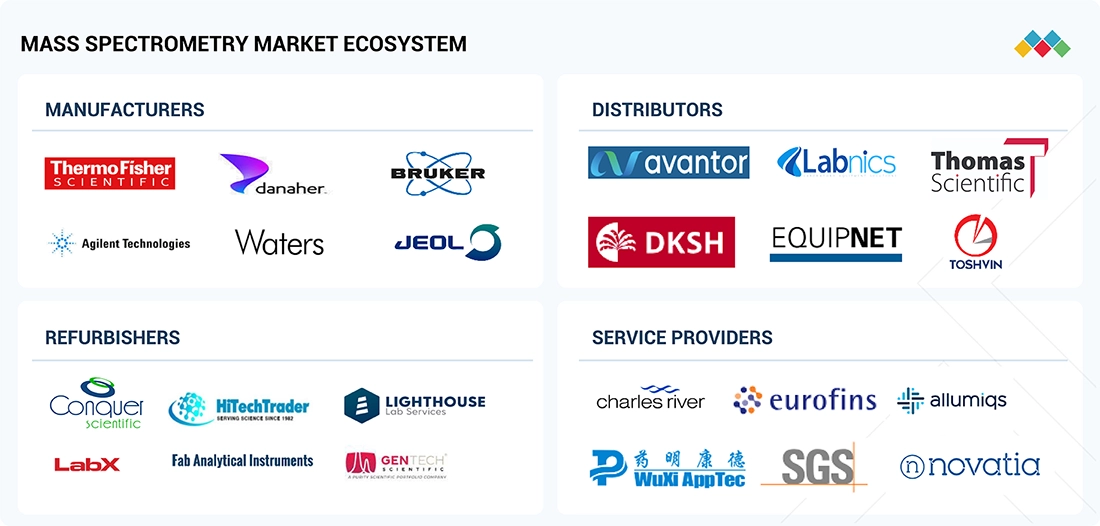
MASS SPECTROMETRY MARKET: COMMERCIAL USE CASES ACROSS INDUSTRIES
| COMPANY | USE CASE DESCRIPTION | BENEFITS |
|---|---|---|
 |
Deployment of Orbitrap Exploris and Orbitrap Astral platforms for proteomics, biomarker discovery, pharma QA/QC, and food safety testing | Ultra-high resolution, accurate mass detection, faster non-target screening, and improved throughput for advanced research and regulated testing | • Enhanced sensitivity and precision in complex sample analysis • Faster identification of biomarkers and contaminants • Reduced analysis time with high-throughput workflows • Improved regulatory compliance and data reliability • Increased operational efficiency in pharmaceutical and food testing laboratories |
 |
Adoption of Triple Quadrupole LC/MS and Q-TOF systems for PFAS analysis, pesticide screening, clinical research, and environmental testing | High sensitivity, reliable trace-level quantification, robust compliance testing, and efficient high-throughput laboratory workflows | • Accurate trace-level detection of hazardous compounds • Improved reproducibility and quantitative performance • Streamlined environmental and clinical testing workflows • Faster turnaround time for routine laboratory analysis • Enhanced compliance with global environmental and safety regulations |
 |
Use of LC-MS/MS and MALDI-TOF platforms in clinical diagnostics, toxicology, pharmaceutical analysis, and food safety applications | Fast and precise quantitative analysis, workflow automation, enhanced reliability, and strong performance in routine analytical testing | • Accelerated clinical and toxicology diagnostics • Higher automation reduces manual intervention and errors • Reliable quantitative results for routine testing • Improved laboratory productivity and scalability • Better decision-making through rapid and precise analytical insights |
 |
Implementation of Xevo MRT and UNIFI-based workflows for metabolomics, lipidomics, biologics characterization, and non-target environmental analysis | High mass accuracy, scalable data analysis, improved compound identification, and faster decision-making for large-cohort and omics studies | • Advanced compound characterization and identification accuracy • Scalable analytics for large omics datasets • Faster interpretation of complex biological and environmental samples • Enhanced research efficiency in metabolomics and biologics studies • Improved data integration and decision-making capabilities |
Logos and trademarks shown above are the property of their respective owners. Their use here is for informational and illustrative purposes only.
Related Ecosystem
Analytical And Scientific Instrumentation
- Environmental Testing
- Gas Chromatography
- Polymerase Chain Reaction (PCR)
- Automated Liquid Handling Systems
- Flow Cytometry
- Thermo Fisher Scientific Inc.
- Danaher Corporation
- Agilent Technologies, Inc.
- Merck KGaA
- Shimadzu Corporation
Key Takeaways
- Japan's mass spectrometry market will nearly double from $76.9M (2024) to $138.5M (2029), driven by pharmaceutical innovation and clinical diagnostics expansion.
- Japan's 10.3% CAGR substantially outpaces the global growth rate of 7.2%, positioning Japan as a high-growth market in Asia Pacific.
- Japan's aging population and emphasis on precision medicine create sustained demand for advanced mass spectrometry applications in healthcare and research.
- Japan's stringent pharmaceutical manufacturing standards and regulatory framework accelerate adoption of mass spectrometry across quality control and analytical laboratories.
Mass Spectrometry Market Report Scope
| Report Metric | Details |
|---|---|
| Base Year | 2024 |
| Fastest Growing Segment | SOFTWARE & SERVICES (Product) |
| Forecast Period | 2024–2029 |
| Growth Rate | CAGR of 7.2% from 2024 to 2029 |
| Largest Segment | INSTRUMENTS (Product) |
| Market Size Base Year (Billions) | ~USD 6.34 (2024) |
| Revenue Forecast (Billions) | ~USD 9.62 (2029) |
| Segments Covered | Inlet Type, Product, Type, Application, End User |
Japan Mass Spectrometry Market Report Segmentation
5 segment dimensions are covered across the global market.
By Inlet Type
- Gc-Ms
- Icp-Ms
- Lc-Ms
- Other Inlet Types
By Product
- Instruments
- Software & Services
By Type
- Fourier Transform Ms
- Hybrid Mass Spectrometry Instruments
- Ion Trap Ms
- Other Mass Spectrometry Instruments
- Quadrupole Ms
- Quadrupole Tof Ms
- Single Mass Spectrometry Instruments
- Time Of Flight Ms
- Time-Of-Flight Ms
- Triple Quadrupole Ms
By Application
- Applied Sciences
- Clinical Diagnostics
- Drug Discovery
- Environmental Testing
- Food Testing
- Omics Research
- Other Applications
- Pharma/Biopharma Manufacturing
By End User
- Biotechnology Companies
- Environmental Testing Labs
- Food & Beverage Industry
- Forensic Labs
- Other End Users
- Petrochemical Industry
- Pharmaceutical Companies
- Research Labs & Academic Institutes
JAPAN: MASS SPECTROMETRY MARKET, BY END USER, 2022–2030
| Segment | 2022 | 2023 | 2024 | 2025 | 2027 | 2028 | 2029 | 2030 | CAGR (%) |
|---|---|---|---|---|---|---|---|---|---|
| BIOTECHNOLOGY COMPANIES | 47.1 | 53.1 | 59.3 | 65.8 | 80 | 87.9 | 96.5 | 105.9 | 10.1 |
| ENVIRONMENTAL TESTING LABS | 41.6 | 46.3 | 51 | 55.8 | 66 | 71.6 | 77.5 | 84 | 8.7 |
| FOOD & BEVERAGE INDUSTRY | 29.2 | 32.2 | 35.2 | 38.2 | 44.4 | 47.7 | 51.2 | 55 | 7.7 |
| FORENSIC LABS | 14.5 | 15.8 | 17.1 | 18.4 | 21 | 22.3 | 23.7 | 25.2 | 6.7 |
| OTHER END USERS | 37.9 | 41.5 | 45 | 48.4 | 55.4 | 59.1 | 62.9 | 67 | 6.9 |
| PETROCHEMICAL INDUSTRY | 12 | 12.8 | 13.5 | 14.1 | 15.1 | 15.6 | 15.9 | 16.2 | 3.2 |
| PHARMACEUTICAL COMPANIES | 65.9 | 75.3 | 85.1 | 95.6 | 118.8 | 131.9 | 146.2 | 162.1 | 11.3 |
| RESEARCH LABS & ACADEMIC INSTITUTES | 43.5 | 47.4 | 51.1 | 54.8 | 62.1 | 65.8 | 69.7 | 73.8 | 6.3 |
| TOTAL | 291.6 | 324.3 | 357.3 | 391 | 462.8 | 501.9 | 543.8 | 589.2 | 8.7 |
Target Audience
- Medical Device Manufacturers : Manufacturers seeking to expand or establish presence in Japan's growing diagnostic market need detailed market sizing, adoption trends, and competitive intelligence to develop effective market entry and growth strategies.
- Pharmaceutical Companies : Japanese and international pharma firms require insights into mass spectrometry adoption in drug development and biomarker research to optimize R&D investments and align with market opportunities in Japan.
- Healthcare Institutions & Laboratories : Hospital networks, diagnostic centers, and research laboratories in Japan need market data to justify capital investments in mass spectrometry equipment and understand technology trends shaping the clinical landscape.
- Investment & Private Equity Firms : Investors evaluating opportunities in Japan's healthcare technology sector require comprehensive market analysis, growth projections, and competitive dynamics to assess investment viability and portfolio positioning.
- Regulatory & Government Bodies : Japanese healthcare regulators and policy makers need market intelligence to inform healthcare technology standards, reimbursement policies, and innovation initiatives supporting the mass spectrometry sector.
Key Companies in the Japan Mass Spectrometry Market
| Company | HQ | Ownership | Strongest segments |
|---|---|---|---|
| PATHEON INC | Netherlands | Private Company | Pharmaceutical development services,Drug product services (finished dosage manufacturing & packaging),Drug substance services (API and biologics), |
| AZBIL CORPORATION | Japan | Public Company | Building Automation Business,Advanced Automation Business,Life Automation Business, |
| INFICON | Switzerland | Public Company | Semiconductor and Thin-Film Process Control (sensors, mass spectrometers, thin film controllers, software),Leak Detectors for HVAC, Refrigeration, and Automotive,Industrial Vacuum and Coating (vacuum components, gauges, RF sensing, xParts, industrial coating), |
| ADVANCED ENERGY | United States | Public Company | Plasma power for semiconductor and thin film,High and low voltage power for industrial, medical, data center, and telecom,Sensing, controls, and instrumentation, |
| CARL ZEISS AG | Germany | Public Company | Ophthalmology – Diagnostics (slit lamps, OCT, fundus, glaucoma),Ophthalmology – Surgical (microscopes, phaco, vitrectomy, IOLs),Ophthalmology – Refractive & Laser (VISUMAX, consumables, digital), |
| CONSORT MEDICAL | United Kingdom | Private Company | Inhalation delivery devices (DPIs, pMDIs, soft-mist),Injectable and autoinjector platforms,Nasal and other specialty delivery devices, |
| WUXI APPTEC | China | Public Company | WuXi Chemistry (small molecules, oligos, peptides, conjugates),WuXi Testing (toxicology, DMPK, bioanalytical, other lab testing),WuXi Biology (discovery biology and related services), |
| AGILENT TECHNOLOGIES, INC. | United States | Public Company | Life Sciences and Diagnostics Markets,Agilent CrossLab,Applied Markets, |
| THERMO FISHER SCIENTIFIC INC. | United States | Public Company | Life Sciences Solutions,Analytical Instruments,Specialty Diagnostics, |
| WATERS CORPORATION | United States | Public Company | Liquid Chromatography Systems and Columns,Mass Spectrometry Systems,Thermal Analysis, Rheometry, and Calorimetry (TA segment), |
| DANAHER | United States | Public Company | Biotechnology (bioprocessing and related solutions),Life Sciences (research tools, genomics, and imaging),Diagnostics (clinical instruments and consumables), |
| BRUKER | United States | Public Company | BSI BioSpin (NMR/EPR and preclinical imaging),BSI CALID (mass spectrometry and diagnostics),BSI Nano (X-ray, AFM, electron microscopy tools), |
| SHIMADZU CORPORATION | Japan | Public Company | Analytical and Measuring Instruments,Medical Systems (X-ray, Angiography, PET, Fluoroscopy),Vacuum and Industrial Machinery, |
| MKS INSTRUMENTS | United States | Public Company | Vacuum Solutions Division (VSD),Photonics Solutions Division (PSD),Material Solutions Division (MSD), |
| PERKINELMER | United States | Public Company | Diagnostics assays, reagents, and screening platforms,Life science reagents, antibodies, and research tools,Instruments, imaging, and detection systems, |
| JEOL LTD. | Japan | Public Company | Scientific and Metrology Instruments,Industrial Equipment,Medical Equipment, |
| HITACHI HIGH-TECH CORPORATION | Japan | Private Company | Nano-Technology Solutions (electron/ion microscopes, CD-SEM, wafer inspection, dry etch, HDD/FPD tools),Analytical & Medical Solutions (clinical analyzers, chromatography, spectrophotometers, XRF, mass spec, titrators),Industrial Solutions (industrial infrastructure, ICT/IoT solutions, instruments and control, automotive sensors, materials), |
| TELEDYNE TECHNOLOGIES INCORPORATED | United States | Public Company | Digital Imaging (visible, IR, UV, X-ray sensors and cameras, MEMS, semiconductors),Instrumentation (monitoring, control, test and measurement, connectivity),Aerospace and Defense Electronics, |
| AMETEK.INC. | United States | Public Company | Process and analytical instruments (oil and gas, petrochemical, pharma, semiconductor, F&B),Aerospace and defense sensors, power, and embedded systems,Power quality, programmable power, and EMC test equipment, |
PATHEON INC
Patheon Inc. is a Netherlands-based private company with 9,100 employees operating in the pharmaceutical and life sciences sector.
AZBIL CORPORATION
Azbil Corporation is a Japanese public company founded in 1906 with 9,170 employees, specializing in automation and control systems.
INFICON
Inficon is a Swiss public company founded in 2000 with 1,731 employees, specializing in vacuum instrumentation and leak detection technology.
ADVANCED ENERGY
Advanced Energy is a United States-based public company founded in 1981 with 13,000 employees providing power conversion and control solutions.
CARL ZEISS AG
Carl Zeiss AG is a German public company founded in 1846 with 5,798 employees specializing in optical systems and precision instruments.
CONSORT MEDICAL
Consort Medical is a United Kingdom-based private company founded in 1938 with 2,000 employees operating in the medical devices sector.
WUXI APPTEC
Wuxi AppTec is a Chinese public company founded in 2000 with 33,834 employees providing pharmaceutical research and development services.
AGILENT TECHNOLOGIES, INC.
Agilent Technologies, Inc. is a United States-based public company founded in 1999 with 18,000 employees specializing in life sciences and diagnostics instrumentation.
THERMO FISHER SCIENTIFIC INC.
Thermo Fisher Scientific Inc. is a United States-based public company founded in 1956 with 125,000 employees providing laboratory equipment, reagents, and services.
WATERS CORPORATION
Waters Corporation is a United States-based public company founded in 1958 with 7,900 employees specializing in analytical laboratory instruments and software.
DANAHER
Danaher is a United States-based public company founded in 1969 with 59,000 employees operating across diversified industrial and life sciences sectors.
BRUKER
Bruker is a United States-based public company founded in 1960 with 11,085 employees specializing in scientific instruments for molecular and materials research.
SHIMADZU CORPORATION
Shimadzu Corporation is a Japanese public company founded in 1875 with 14,649 employees providing analytical and measuring instruments.
MKS INSTRUMENTS
MKS Instruments is a United States-based public company founded in 1961 with 10,200 employees specializing in instruments and control systems for semiconductor and industrial markets.
PERKINELMER
PerkinElmer is a United States-based public company founded in 1937 with 11,000 employees providing diagnostics, life sciences, and environmental testing solutions.
JEOL LTD.
Jeol Ltd. is a Japanese public company founded in 1949 with 3,731 employees specializing in electron microscopes and scientific instruments.
HITACHI HIGH-TECH CORPORATION
Hitachi High-Tech Corporation is a Japanese private company founded in 1947 with 11,482 employees providing analytical instruments and semiconductor equipment.
TELEDYNE TECHNOLOGIES INCORPORATED
Teledyne Technologies Incorporated is a United States-based public company founded in 1960 with 15,800 employees specializing in digital imaging and instrumentation.
AMETEK.INC.
Ametek Inc. is a United States-based public company founded in 1930 with 22,500 employees providing electronic instruments and electromechanical devices.
Reasons to Buy this Report
- Market-Specific Growth Intelligence : Gain detailed insights into Japan's 10.3% CAGR trajectory, significantly outpacing global growth. Understand the unique drivers propelling the market from $76.9M to $138.5M, enabling informed investment and expansion decisions in this high-growth market.
- Clinical Adoption Trends : Access comprehensive data on how Japanese healthcare institutions are integrating mass spectrometry into diagnostic workflows. Identify adoption patterns, institutional preferences, and clinical applications specific to Japan's healthcare ecosystem.
- Pharmaceutical R&D Landscape : Understand Japan's pharmaceutical sector's investment priorities in mass spectrometry technology. Benchmark competitive positioning and identify partnership opportunities with Japanese drug developers and research institutions.
- Regulatory & Compliance Framework : Navigate Japan's stringent regulatory environment with insights into compliance requirements, quality standards, and certification pathways. Ensure products and services align with Japanese healthcare and pharmaceutical regulations.
- Competitive Market Positioning : Analyze the competitive landscape specific to Japan, including local players, market share distribution, and differentiation strategies. Develop targeted go-to-market approaches for the Japanese mass spectrometry market.
Frequently asked questions
What is the current size of Japan's mass spectrometry market?
Japan's mass spectrometry market was valued at $76.9 million in 2024 and is projected to reach $138.5 million by 2029.
What is the expected growth rate for mass spectrometry in Japan?
Japan's mass spectrometry market is expected to grow at a compound annual growth rate (CAGR) of 10.3% from 2024 to 2029.
Why is Japan's mass spectrometry market growing faster than the global average?
Japan's 10.3% CAGR exceeds the global 7.2% rate due to increased pharmaceutical R&D investment, aging demographics, precision medicine adoption, and stringent quality control requirements in manufacturing.
What are the primary applications of mass spectrometry in Japan?
In Japan, mass spectrometry is primarily used for clinical diagnostics, pharmaceutical drug development, quality assurance in manufacturing, environmental testing, and biomarker discovery.
Which sectors drive mass spectrometry demand in Japan?
Japan's pharmaceutical industry, clinical laboratories, research institutions, and contract research organizations (CROs) are the primary drivers of mass spectrometry market growth.
RESEARCH METHODOLOGY
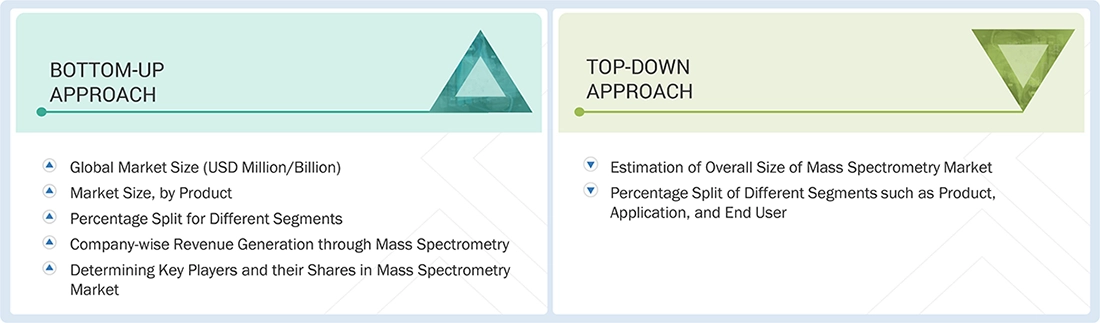
This study balanced primary and secondary research into the mass spectrometry market by analyzing various market variables affecting small, medium, and large businesses. The next step involved conducting primary research with industry experts along the value chain to validate the findings, assumptions, and market sizing. Multiple methodologies, including both top-down and bottom-up approaches, were employed to estimate the overall market size.
The study encompasses market segments, evolving trends, regulatory frameworks, and competitive dynamics. It also examines leading market players and the strategies they employ in this sector. In conclusion, the total market size was estimated using a combination of top-down and bottom-up approaches, with data triangulation to finalize the market size. Primary research was conducted throughout the study to validate and test each hypothesis.
Secondary Research
During the study, secondary research was conducted using a range of sources, including directories and databases such as Bloomberg Businessweek, D&B Hoovers, and Factiva. Additional materials included white papers, annual reports, SEC filings, and investor presentations. This research approach was adopted to collect and analyze data that provides comprehensive, technical, and market-focused insights into the mass spectrometry market. The findings offer insights into key players and market segmentation, informed by recent industry trends and significant developments. A database comprising leading industry figures was also created as part of this secondary research.
Primary Research
Primary research involved activities designed to gather both qualitative and quantitative data. A variety of individuals from both the supply and demand sides were interviewed during this phase. On the supply side, key figures such as CEOs, vice presidents, directors of marketing and sales, directors of technology and innovation, and other important leaders were interviewed by industry experts. On the demand side, primary sources included academic institutions and research organizations. This research aimed to validate market segmentation, identify prominent market participants, and gain insights into significant industry trends and market dynamics through a real-world primary study.
A breakdown of the primary respondents is provided below:
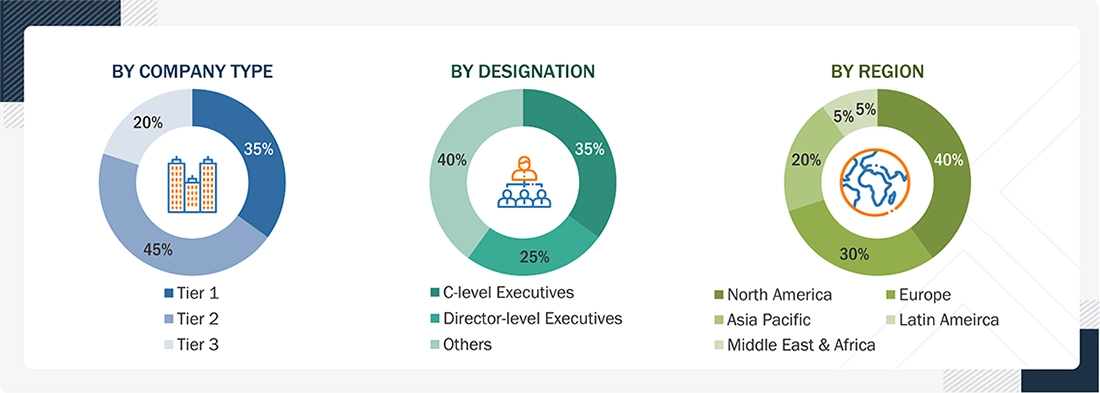
Notes: Others include distributors, suppliers, product managers, business development managers, marketing managers, and sales managers.
Companies are categorized into tiers based on their total revenue. As of 2025, Tier 1 = >USD 1,000 million, Tier 2 = USD 500–1,000 million, and Tier 3 = USD 500 million.
To know about the assumptions considered for the study, download the pdf brochure
Market Size Estimation
This report provides an analysis of the global mass spectrometry market size by reviewing the revenue shares of prominent companies. Key players with significant market shares were identified through secondary research, and their revenue from mass spectrometry instrument sales was calculated and subsequently validated through primary research. The secondary research included an analysis of annual and financial reports from leading market participants. Meanwhile, the primary research involved in-depth interviews with key thought leaders, such as directors, CEOs, and marketing executives.
To calculate the global market value, segmental revenues were determined based on the revenue mapping of service and product providers. The process involved the following steps:
- Generating a list of key players that operate in the mass spectrometry market at the regional or global levels
- Mapping the products of manufacturers of mass spectrometry and related product lines at the regional level
- Mapping the revenues of listed players through the sales of mass spectrometry and related products
- Mapping the revenues of major players to cover at least ~XX% of the global market share as of 2025
- Extrapolating the mapped revenues of players to arrive at the global mass spectrometry market value for the respective segment
- Summing up the market value for all segments and subsegments to achieve the actual value of the global mass spectrometry market
Mass Spectrometry Market : Top-Down and Bottom-Up Approach
Data Triangulation
After estimating the overall market size, the mass spectrometry market was classified into subsegments. The overall market engineering process was finalized through data triangulation and market segmentation, yielding accurate statistics for all segments and subsegments. This triangulation involved analyzing various trends and factors on both the demand and supply sides. Furthermore, the mass spectrometry market data were verified and validated using both top-down and bottom-up approaches.
Market Definition
Mass spectrometry is an advanced analytical technology used to identify, quantify, and characterize chemical compounds, biomolecules, proteins, metabolites, and trace contaminants based on their mass-to-charge ratio. The market includes products such as LC-MS, GC-MS, hybrid mass spectrometry systems, MALDI-TOF, ICP-MS, Orbitrap, and triple quadrupole platforms, which are based on ionization and high-resolution mass analysis technologies. These systems are widely used in pharmaceutical and biopharmaceutical research, clinical diagnostics, proteomics, metabolomics, food safety, environmental testing, toxicology, and forensic applications by end users, including pharmaceutical companies, CROs, clinical laboratories, research institutes, hospitals, and environmental testing laboratories.
Key Stakeholders
- Research & Development Director
- Analytical Laboratory Manager
- Scientist
- Quality Control (QC) Manager
- Quality Assurance (QA) Director
- Procurement Manager
- Supply Chain Manager
- Bioprocessing Manager
- Manufacturing Operations Director
- Clinical Research Manager
- Product Development Scientist
- Regulatory Affairs Manager
- Laboratory Director
- Sales & Marketing Director
- CRO/CDMO Operations Manager
Report Objectives
- To define, describe, and forecast the size of the mass spectrometry market based on product, inlet type, application, end user, and region
- To provide detailed information regarding the factors influencing the growth potential of the global mass spectrometry market (drivers, restraints, opportunities, challenges, and trends)
- To analyze micro markets with respect to individual growth trends, prospects, and contributions to the global mass spectrometry market
- To analyze key growth opportunities in the global mass spectrometry market for key stakeholders and provide details of the competitive landscape for market leaders
- To forecast the size of market segments and/or subsegments concerning five regions, namely, North America (US and Canada), Europe (Germany, France, the UK, Spain, Italy, and the rest of Europe), Asia Pacific (Japan, China, India, Australia, South Korea, and the rest of Asia Pacific), Latin America (Brazil, Mexico, and the rest of Latin America), and the Middle East & Africa (GCC Countries and the rest of the Middle East & Africa)
- To profile the key players in the mass spectrometry market and comprehensively analyze their market shares and core competencies
- To track and analyze the competitive developments undertaken in the global mass spectrometry market, such as product launches/approvals, agreements, expansions, collaborations, and acquisitions
Available customizations:
With the given market data, MarketsandMarkets offers customizations based on your company’s specific needs. The following customization options are available for the present global Mass Spectrometry market report:
Product Analysis
- Product matrix, which gives a detailed comparison of the product portfolios of the top 15 companies
Company Information
- Detailed analysis and profiling of additional market players (up to 13)
Geographic Analysis
- Further breakdown of the Rest of Europe mass spectrometry market into Russia, Belgium, the Netherlands, Switzerland, Austria, Finland, Sweden, Poland, and Portugal
- Further breakdown of the Rest of Asia Pacific mass spectrometry market into Singapore, Taiwan, New Zealand, the Philippines, Malaysia, and other Asia Pacific countries
- Further breakdown of the Rest of Latin America mass spectrometry into Argentina, Chile, Peru, and Colombia
Get the Full Mass Spectrometry Market Report
Full forecast, segment splits, and company analysis for all Mass Spectrometry Market.
- Canada Mass Spectrometry Market
- US Mass Spectrometry Market
- Germany Mass Spectrometry Market
- UK Mass Spectrometry Market
- France Mass Spectrometry Market
- Italy Mass Spectrometry Market
- Spain Mass Spectrometry Market
- China Mass Spectrometry Market
- India Mass Spectrometry Market
- South Korea Mass Spectrometry Market
- Australia Mass Spectrometry Market
- Brazil Mass Spectrometry Market
- Mexico Mass Spectrometry Market
Need a Tailored Report?
Customize this report to your needs
Get 10% FREE Customization
Customize This Report
