
Japan Metaverse in Entertainment Market (2026-2031)

The Japan Metaverse in Entertainment Market was valued at $1620.1 Million in 2026 and projected to reach to $6745.6 Million by 2031, representing a compound annual growth rate of 26.8%. Japan's metaverse in entertainment market is poised for exceptional growth through 2031, driven by the country's robust gaming industry, technological advancement, and consumer enthusiasm for immersive digital experiences.


| Market Size in | USD 26.32 MN |
| Market Forecast in | |
| CAGR | |
| Forecast Period | |
| Units Considered | Value (USD MN) |
Japan Metaverse in Entertainment Market Trends and Insights
- Japan is positioned as a key growth driver within the Asia Pacific region, leveraging its advanced technology infrastructure and strong gaming culture.
- The market in Japan is expected to grow at a compound annual growth rate of 26.8%, outpacing global trends and reflecting the nation's leadership in digital entertainment innovation. Japan's metaverse entertainment sector is fueled by high consumer adoption of virtual experiences, robust investment in immersive technologies, and the integration of metaverse platforms with traditional entertainment franchises.
- Japan's creative industries, including anime, gaming, and pop culture, are increasingly converging with metaverse environments, creating unique monetization opportunities.
- Between 2026 and 2031, Japan is anticipated to capture significant market share through virtual concerts, gaming experiences, and branded digital spaces that resonate with both domestic and international audiences..
Key Market Statistics
- CAGR (2026-2031) 26.8% CAGR
- Market Size, 2026 ~USD 1620.1 Million
- Forecast, 2031 ~USD 6745.6 Million
- Country Japan
Japan Metaverse in Entertainment Market Overview
Market Valuation Growth :
Japan's metaverse in entertainment market is valued at $1,620.1 million in 2026 and is projected to reach $6,745.6 million by 2031, representing a 316% increase over the five-year forecast period.
Superior Growth Rate :
Japan's metaverse entertainment market is growing at a CAGR of 26.8%, outpacing the global average of 25.9%, positioning the country as a high-growth market within the Asia Pacific region.
Gaming Culture Advantage :
Japan's strong gaming heritage and advanced technology infrastructure provide a competitive advantage, with established gaming companies and tech firms driving metaverse entertainment innovation and adoption.
Asia Pacific Leadership :
Japan serves as a key growth driver within the Asia Pacific region, leveraging its digital ecosystem, consumer spending power, and technological capabilities to lead metaverse entertainment expansion.
Japan Metaverse in Entertainment Market Dynamics
- The market's 26.8% CAGR reflects strong demand from both entertainment companies and consumers seeking innovative content delivery platforms.
- Japan's established gaming studios, anime production companies, and tech giants are actively investing in metaverse infrastructure and content creation. The forecast period will see increased integration of metaverse technologies across entertainment verticals, including gaming, virtual concerts, digital fashion, and interactive storytelling.
- Japan's cultural exports and creative industries position it uniquely to develop globally appealing metaverse content.
- Strategic partnerships between traditional entertainment firms and technology providers will accelerate market penetration, while growing consumer adoption of VR/AR devices and blockchain-based digital assets will further fuel expansion through 2031..
Market Ecosystem

METAVERSE IN ENTERTAINMENT MARKET: COMMERCIAL USE CASES ACROSS INDUSTRIES
| COMPANY | USE CASE DESCRIPTION | BENEFITS |
|---|---|---|
 |
Monks Enabled Meta And NBA To Deliver Immersive VR Sports Viewing Experiences | For three seasons, immersive virtual reality (VR) was used to deliver 56 NBA games with far less production infrastructure than traditional broadcasting methods. Social VR also provided new ways for fans to connect between themselves. The flexible architecture of both systems allowed them to provide scalable delivery of immersive experiences. The VR courtside experiences provided high-quality images and video of the game being played. |
 |
Deloitte Enabled Diageo To Deliver Immersive VR & AR Concert Experience For Johnnie Walker | Provided simultaneous live concert experiences through Virtual Reality and Augmented Reality technology for Virtual participants. Achieved significant audience engagement by using various campaigns for Immersive Entertainment. Expanded Immersive Audience Participation in Southeast Asian communities through Digital Platforms. Created a scalable deployment framework for future concert campaigns using immersive technologies. Enhanced experience of brand-related activities through the Immersive Experience Method. |
 |
Accenture Enabled Changi Airport Group To Build ChangiVerse On Roblox For Immersive Digital Engagement | The project received 7M+ visits in its first 3 months, with 2.5M+ unique visitors, and provided a digital audience experience beyond the physical airport environment. There was also an increase in user retention due to the gamified immersive experiences, and virtual interactions led by creators increased global brand interaction. |
Logos and trademarks shown above are the property of their respective owners. Their use here is for informational and illustrative purposes only.
Related Ecosystem
Digitalization And Iot
Software And Services
Key Takeaways
- Japan's metaverse entertainment market is valued at $1,620.1 million in 2026 and is forecast to grow to $6,745.6 million by 2031.
- Japan's market growth rate of 26.8% CAGR exceeds the global average, positioning Japan as a regional leader in metaverse entertainment adoption.
- Japan's strength in gaming, anime, and digital content creation provides competitive advantages for metaverse platform development and virtual experience monetization.
- Japan's investment in immersive technologies and consumer demand for virtual entertainment will drive sustained market expansion through 2031.
Metaverse in Entertainment Market Report Scope
| Report Metric | Details |
|---|---|
| Base Year | 2026 |
| Fastest Growing Segment | ARTIFICIAL INTELLIGENCE (AI) (Technology) |
| Forecast Period | 2026–2031 |
| Growth Rate | CAGR of 25.9% from 2026 to 2031 |
| Largest Segment | SOFTWARE (Offering) |
| Market Size Base Year (Billions) | ~USD 30.62 (2026) |
| Revenue Forecast (Billions) | ~USD 96.87 (2031) |
| Segments Covered | Offering, Software, Hardware, Professional Service, Technology, Entertainment Type, Gaming, Live Event & Concert, Film & Tv, Sport & Esport, Music & Artist Engagement |
Japan Metaverse in Entertainment Market Report Segmentation
11 segment dimensions are covered across the global market.
By Offering
- Hardware
- Professional Services
- Software
By Software
- 3D Mapping, Modeling, & Reconstruction
- Extended Reality Software
- Financial Platforms
- Gaming Engines
- Metaverse Platforms
- Other Software
- Tools To Design, Create, & Test Ar, Vr, & Mr Experiences
By Hardware
- Ar Devices
- Displays
- Mr Devices
- Vr Devices
By Professional Service
- Application Development & System Integration
- Strategy & Business Consulting Services
By Technology
- Artificial Intelligence (AI)
- Blockchain
- Cloud Computing & Edge Computing
- Extended Reality (Xr)
- Other Technologies
- Real-Time 3D & Game Engines
By Entertainment Type
- Anime, Virtual Characters, & Ip-Based Entertainment
- Film & Tv (Ott & Cinematic Experiences)
- Gaming
- Live Events & Concerts
- Music & Artist Engagement
- Social Entertainment
- Sports & Esports
By Gaming
- Competitive & Esports Gaming
- Massively Multiplayer Virtual Worlds
- Other Gaming
- User-Generated Gaming Platforms
By Live Event & Concert
- Branded & Sponsored Virtual Events
- Other Live Events & Concerts
- Ticketed Premium Events
- Virtual Concerts & Music Festivals
By Film & Tv
- Immersive 360°/Vr Content
- Other Film & Tv Experiences
- Virtual Cinemas & Screening Rooms
- Virtual Film Premieres & Promotions
By Sport & Esport
- Fantasy Sports & Predictive Gaming
- Immersive Match Simulations & Replays
- Other Sports & Esports
- Virtual Stadiums & Live Match Viewing
By Music & Artist Engagement
- Digital Albums & Nft Drops
- Fan Communities & Membership Platforms
- Other Music & Artist Engagements
- Virtual Music Experiences & Performances
Target Audience
- Entertainment & Gaming Companies : Japanese and international entertainment studios, game developers, and content creators need Japan-specific market data to guide metaverse content investment, platform selection, and audience engagement strategies.
- Technology & Platform Providers : VR/AR hardware manufacturers, metaverse platform developers, and blockchain companies require detailed Japan market insights to prioritize product development, localization efforts, and partnership strategies.
- Investment & Private Equity Firms : Investors evaluating opportunities in Japan's high-growth metaverse entertainment sector need comprehensive market sizing, growth projections, and competitive landscape analysis for due diligence and portfolio decisions.
- Corporate Strategy & Business Development : C-suite executives and strategic planners at Japanese conglomerates, media companies, and tech firms need market intelligence to inform M&A decisions, partnership opportunities, and digital transformation initiatives.
- Market Research & Consulting Professionals : Analysts, consultants, and research teams require Japan-specific metaverse entertainment data to support client advisory work, competitive benchmarking, and industry trend reporting.
Key Companies in the Japan Metaverse in Entertainment Market
| Company | HQ | Ownership | Strongest segments |
|---|---|---|---|
| ROBLOX | United States | Public Company | Consumer in-experience spending (Robux and items),Developer and creator services,Advertising, brand experiences, and other, |
| META | United States | Public Company | Facebook Core Feed & Stories Ads,Instagram Feed, Stories & Reels Ads,WhatsApp, Messenger & Click-to-Message Ads, |
| MICROSOFT | United States | Public Company | Intelligent Cloud (Azure, server products, GitHub, Nuance, enterprise services),Productivity & Business Processes (Microsoft 365, LinkedIn, Dynamics),Personal Computing (Windows, devices, gaming, search and news advertising), |
| TAKE-TWO INTERACTIVE | United States | Public Company | Console/PC Premium (GTA, Red Dead, BioShock, Borderlands, Civilization, XCOM, Mafia, Max Payne, Midnight Club, LA Noire),Sports Simulation (NBA 2K, WWE 2K, PGA TOUR 2K),Mobile Free-to-Play and Casual (Zynga portfolio, CSR Racing, FarmVille 3, Toon Blast, Toy Blast, Words With Friends, Zynga Poker, others), |
| APPLE | United States | Public Company | iPhone,Mac,iPad, |
| SONY | Japan | Public Company | Game & Network Services,Music,Pictures, |
| United States | Public Company | Search & Other Ads,YouTube Ads & Subscriptions,Google Cloud (incl. AI & Workspace), | |
| UNITY TECHNOLOGIES | United States | Public Company | Create Solutions (engine, tools, runtime, enterprise support),Grow Solutions (ads, user acquisition, monetization, live-ops),Professional and Enterprise Services (consulting, integration, training), |
| CAPGEMINI | France | Public Company | Applications & Technology Services,Consulting, Strategy & Transformation,Cloud Infrastructure & Managed Services, |
ROBLOX
Roblox is a publicly traded online platform founded in 2004 that enables users to create, share, and play immersive 3D games and experiences. With 3,065 employees, the company operates a user-generated content ecosystem where developers can monetize their creations.
META
Meta is a publicly traded technology company founded in 2004 that develops social media platforms, virtual reality hardware, and metaverse technologies. With 77,986 employees, Meta operates Facebook, Instagram, WhatsApp, and Reality Labs divisions.
MICROSOFT
Microsoft is a publicly traded multinational technology corporation founded in 1975 that develops software, cloud services, gaming platforms, and hardware products. The company employs 228,000 people and operates major divisions including Azure, Office 365, Xbox, and LinkedIn.
TAKE-TWO INTERACTIVE
Take-Two Interactive is a publicly traded video game publisher and developer founded in 1993 with 12,909 employees. The company owns major franchises including Grand Theft Auto, NBA 2K, and Borderlands, and develops games across multiple platforms.
APPLE
Apple is a publicly traded technology company founded in 1976 that designs and manufactures consumer electronics, software, and services. With 166,000 employees, Apple produces iPhones, Macs, iPads, wearables, and operates the App Store ecosystem.
SONY
Sony is a publicly traded Japanese multinational conglomerate founded in 1946 with 94,900 employees. The company operates divisions in electronics, gaming (PlayStation), entertainment, and music, among other sectors.
Google is a publicly traded technology company founded in 1998 that provides search engines, advertising platforms, cloud services, and software products. With 194,668 employees, Google operates under parent company Alphabet and offers services including Gmail, YouTube, and Android.
UNITY TECHNOLOGIES
Unity Technologies is a publicly traded software company founded in 2004 with 4,412 employees that develops the Unity game engine and real-time 3D development platform. The company provides tools used by developers to create games and interactive experiences across multiple platforms.
CAPGEMINI
Capgemini is a publicly traded multinational consulting and technology services company founded in 1967 in France with 423,405 employees. The company provides IT consulting, digital transformation, and business services to clients worldwide.
Reasons to Buy this Report
- Japan-Specific Market Sizing : Access precise valuation data for Japan's metaverse entertainment market with detailed 2026-2031 forecasts, enabling accurate financial planning and investment decisions tailored to the Japanese market landscape.
- Competitive Growth Intelligence : Understand Japan's 26.8% CAGR advantage over global averages, identifying why Japan outperforms and how to capitalize on regional growth opportunities ahead of competitors.
- Gaming & Tech Sector Insights : Gain deep understanding of Japan's gaming culture, technology infrastructure, and entertainment industry dynamics that drive metaverse adoption and content creation opportunities.
- Strategic Market Entry Planning : Develop informed go-to-market strategies for Japan with comprehensive analysis of market drivers, consumer behavior, and investment opportunities specific to the Japanese metaverse entertainment ecosystem.
- Regional Leadership Positioning : Leverage Japan's position as an Asia Pacific growth leader to understand regional trends, benchmark performance, and identify expansion opportunities across neighboring markets.
Frequently asked questions
What is the current size of Japan's metaverse entertainment market?
Japan's metaverse entertainment market is estimated at $1,620.1 million in 2026, with strong growth anticipated through the forecast period.
What is the projected market size for Japan's metaverse entertainment sector by 2031?
Japan's metaverse entertainment market is forecast to reach $6,745.6 million by 2031, representing a 26.8% compound annual growth rate.
How does Japan's metaverse entertainment market growth compare to global trends?
Japan's 26.8% CAGR exceeds the global average of 25.9%, demonstrating Japan's accelerated adoption and leadership in metaverse entertainment innovation.
What factors are driving growth in Japan's metaverse entertainment market?
Japan's growth is driven by advanced technology infrastructure, strong gaming and anime industries, high consumer adoption of virtual experiences, and integration of metaverse platforms with entertainment franchises.
Which segments within Japan's metaverse entertainment market are experiencing the most growth?
Virtual gaming experiences, digital concerts, branded virtual spaces, and anime-based metaverse environments are among the fastest-growing segments in Japan's market.
RESEARCH METHODOLOGY
This research study on the metaverse in entertainment market involved extensive secondary sources, directories, IEEE Communication-Efficient: Algorithms and Systems, International Journal of Innovation and Technology Management, and paid databases. Primary sources were mainly industry experts from the core and related industries, preferred asset performance management providers, third-party service providers, consulting service providers, end users, and other commercial enterprises. In-depth interviews with primary respondents, including key industry participants and subject matter experts, were conducted to obtain and verify critical qualitative and quantitative information and assess the market’s prospects.
Secondary Research
In the secondary research process, various sources were referred to identify and collect information for this study. Secondary sources included annual reports, press releases, and investor presentations of companies; white papers, journals, and certified publications; and articles from recognized authors, directories, and databases. The data was also collected from other secondary sources, such as journals, government websites, blogs, and vendors’ websites. Additionally, the asset performance management spending of various countries was extracted from the respective sources.
Primary Research
In the primary research process, various sources from the supply and demand sides were interviewed to obtain qualitative and quantitative information on the market. The primary sources from the supply side included various industry experts, such as Chief Experience Officers (CXOs), Vice Presidents (VPs), and directors specializing in business development, marketing, and asset performance management service providers. It also included key executives from asset performance management vendors, system integrators (SIs), professional service providers, industry associations, and other key opinion leaders.
Breakup of primary profiles:
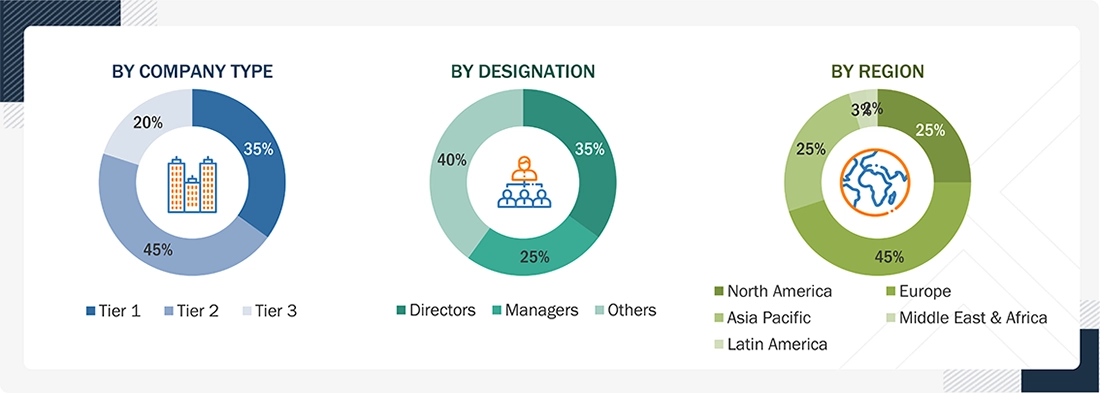
Note: Tier 1 companies’ revenues are more than USD 10 billion; tier 2 companies’ revenues range between USD 1 and 10 billion; and tier 3 companies’ revenues range between USD 500 million and USD 1 billion. Other designations include sales managers, marketing managers, and product managers.
Source: Industry Experts
To know about the assumptions considered for the study, download the pdf brochure
Market Size Estimation
Multiple approaches were adopted to estimate and forecast the metaverse in entertainment market. The first approach involved estimating the market size by companies’ revenue generated through the sale of metaverse in entertainment products.
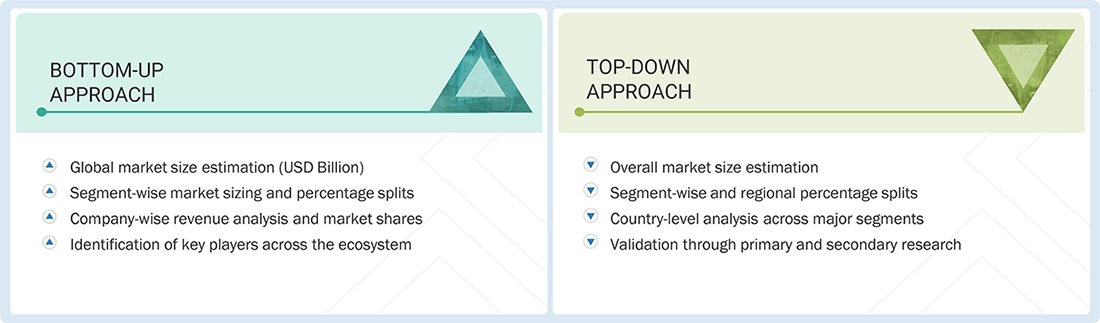
Market Size Estimation Methodology: Top-down Approach
The top-down approach prepared an exhaustive list of all the vendors offering products in the metaverse in entertainment market. The revenue contribution of the market vendors was estimated through annual reports, press releases, funding, investor presentations, paid databases, and primary interviews. Each vendor’s offerings were evaluated based on platform, degree of customization, type, application, end user, and region. The markets were triangulated through primary and secondary research. The primary procedure included extensive interviews for key insights from industry leaders, such as CIOs, CEOs, VPs, directors, and marketing executives. The market numbers were further triangulated with the existing MarketsandMarkets’ repository for validation.
Market Size Estimation Methodology: Bottom-up Approach
The bottom-up approach identified the adoption rate of the metaverse in entertainment products among different verticals in key countries, considering their regions contributing the most to the market share. For cross-validation, the adoption of asset performance management products among enterprises and other use cases for their regions was identified and extrapolated. Use cases identified in different areas were weighed for the market size calculation.
Based on the market numbers, the regional split was determined by primary and secondary sources. The procedure included an analysis of the metaverse in entertainment market’s regional penetration. Based on secondary research, the regional spending on Information and Communications Technology (ICT), socioeconomic analysis of each country, strategic vendor analysis of major asset performance management service providers, and organic and inorganic business development activities of regional and global players were estimated.
Metaverse In Entertainment Market : Top-Down and Bottom-Up Approach
Data Triangulation
After determining the overall market size using the market size estimation processes as explained above, the market was split into several segments and subsegments. Data triangulation and market breakup procedures were employed, wherever applicable, to complete the overall market engineering process and arrive at the exact statistics of each market segment and subsegment. The overall market size was then used in the top-down procedure to estimate the size of other individual markets via percentage splits of the market segmentation.
Market Definition
The metaverse in entertainment market comprises immersive digital platforms, technologies, and services that enable users to interact, socialize, create, and consume entertainment experiences within persistent virtual environments. The market includes virtual gaming worlds, immersive live events, virtual concerts, digital cinemas, sports experiences, social entertainment platforms, and creator-driven virtual ecosystems powered by technologies such as extended reality (XR), artificial intelligence (AI), blockchain, cloud computing, and real-time 3D engines. These platforms facilitate interactive engagement through digital avatars, virtual assets, and immersive content, creating new monetization opportunities for entertainment providers and enhancing audience participation across virtual and physical environments
Key Stakeholders
- Metaverse Platform Providers
- Gaming Companies & Publishers
- Entertainment & Media Companies
- Music Labels & Event Organizers
- Film & Television Studios
- Sports Organizations & Broadcasters
- XR Hardware Manufacturers
- AI & Software Technology Providers
- Cloud & Infrastructure Providers
- Content Creators & Developers
- Digital Asset & NFT Providers
- System Integrators & Consulting Firms
- Brands & Advertisers
Report Objectives
- To define, describe, and forecast the metaverse in entertainment based on offering, technology, entertainment type, and region
- To forecast the market size of the five major regional segments: North America, Europe, Asia Pacific, the Middle East & Africa, and Latin America
- To strategically analyze the market subsegments with respect to individual growth trends, prospects, and contributions to the total market
- To provide detailed information related to the major factors influencing market growth (drivers, restraints, opportunities, and challenges)
- To strategically analyze macro and micro markets with respect to growth trends, prospects, and their contribution to the overall market
- To analyze industry trends, patents and innovations, and pricing data related to the market
- To analyze the opportunities in the market for stakeholders and provide details of the competitive landscape for major players
- To profile key players in the market and comprehensively analyze their market share/ranking and core competencies
- To track and analyze competitive developments, such as mergers & acquisitions, product developments, and partnerships & collaborations in the market
Available customizations:
With the given market data, MarketsandMarkets offers customizations as per the company’s specific needs. The following customization options are available for the report:
Product Analysis
- The product matrix provides a detailed comparison of the product portfolio of each company.
Geographic Analysis
- Further breakup of the North American metaverse in entertainment market
- Further breakup of the European metaverse in entertainment market
- Further breakup of the Asia Pacific metaverse in entertainment market
- Further breakup of the Middle East & African metaverse in entertainment market
- Further breakup of the Latin American metaverse in entertainment market
Company Information
- Detailed analysis and profiling of additional market players (up to five)
Get the Full Metaverse in Entertainment Market Report
Full forecast, segment splits, and company analysis for all Metaverse in Entertainment Market.
- US Metaverse in Entertainment Market
- Canada Metaverse in Entertainment Market
- UK Metaverse in Entertainment Market
- Germany Metaverse in Entertainment Market
- France Metaverse in Entertainment Market
- Italy Metaverse in Entertainment Market
- China Metaverse in Entertainment Market
- India Metaverse in Entertainment Market
- South Korea Metaverse in Entertainment Market
- Saudi Arabia Metaverse in Entertainment Market
- South Africa Metaverse in Entertainment Market
- Brazil Metaverse in Entertainment Market
- Mexico Metaverse in Entertainment Market
- Rest Of Europe Metaverse in Entertainment Market
Need a Tailored Report?
Customize this report to your needs
Get 10% FREE Customization
Customize This Report
