
Japan Mice Model Market (2025-2030)

The Japan Mice Model Market was valued at $74.7 Million in 2025 and projected to reach to $119.3 Million by 2030, representing a compound annual growth rate of 9.8%. Japan's mice model market is poised for sustained expansion through 2030, driven by robust pharmaceutical R&D spending and the country's leadership in preclinical research innovation.


| Market Size in | USD 26.32 MN |
| Market Forecast in | |
| CAGR | |
| Forecast Period | |
| Units Considered | Value (USD MN) |
Japan Mice Model Market Trends and Insights
- Japan has established itself as a critical hub for preclinical research and drug development in Asia Pacific, driven by advanced laboratory infrastructure and strong pharmaceutical R&D investment.
- The market in Japan benefits from increasing demand for genetically modified mouse models and disease-specific research applications across academic institutions and biopharmaceutical companies. The 9.8% compound annual growth rate reflects Japan's commitment to biomedical innovation and regulatory support for animal research models.
- Japan's aging population and prevalence of chronic diseases have intensified the need for sophisticated preclinical testing platforms, positioning mice models as essential tools in drug discovery pipelines.
- Between 2025 and 2030, Japan is expected to see accelerated adoption of advanced breeding technologies and specialized mouse strains tailored to Japanese research priorities..
Key Market Statistics
- CAGR (2025-2030) 9.8% CAGR
- Market Size, 2025 ~USD 74.7 Million
- Forecast, 2030 ~USD 119.3 Million
- Country Japan
Japan Mice Model Market Overview
Market Valuation Growth :
Japan's mice model market is valued at $74.7 million in 2025, with a projected CAGR of 9.8% through 2030, reaching $119.3 million. This growth trajectory reflects Japan's strengthening position in Asia Pacific preclinical research.
Advanced Research Infrastructure :
Japan maintains world-class laboratory facilities and regulatory frameworks that support sophisticated mice model research. The country's commitment to R&D excellence attracts both domestic and international pharmaceutical companies seeking reliable preclinical testing partners.
Genetic Model Demand Surge :
Increasing adoption of genetically modified mice models in Japan's pharmaceutical and biotechnology sectors is driving market expansion. Japanese institutions are leveraging advanced genetic engineering techniques for disease modeling and drug efficacy studies.
Pharmaceutical R&D Investment :
Strong government and private sector investment in drug development across Japan fuels demand for mice models. Major pharmaceutical companies and emerging biotech firms rely heavily on preclinical mouse studies to accelerate their development pipelines.
Japan Mice Model Market Dynamics
- The market benefits from Japan's aging population, which increases demand for novel therapeutics requiring extensive animal testing.
- Regulatory support and institutional collaboration between universities and industry strengthen the ecosystem for mice model utilization. The forecast growth to $119.3 million reflects increasing complexity in drug development, rising adoption of personalized medicine approaches, and Japan's strategic focus on biotechnology advancement.
- Investment in specialized breeding facilities and genetic engineering capabilities will further enhance market competitiveness.
- Japan's role as a regional research hub positions it favorably to capture growing demand from neighboring Asia Pacific markets..
Market Ecosystem
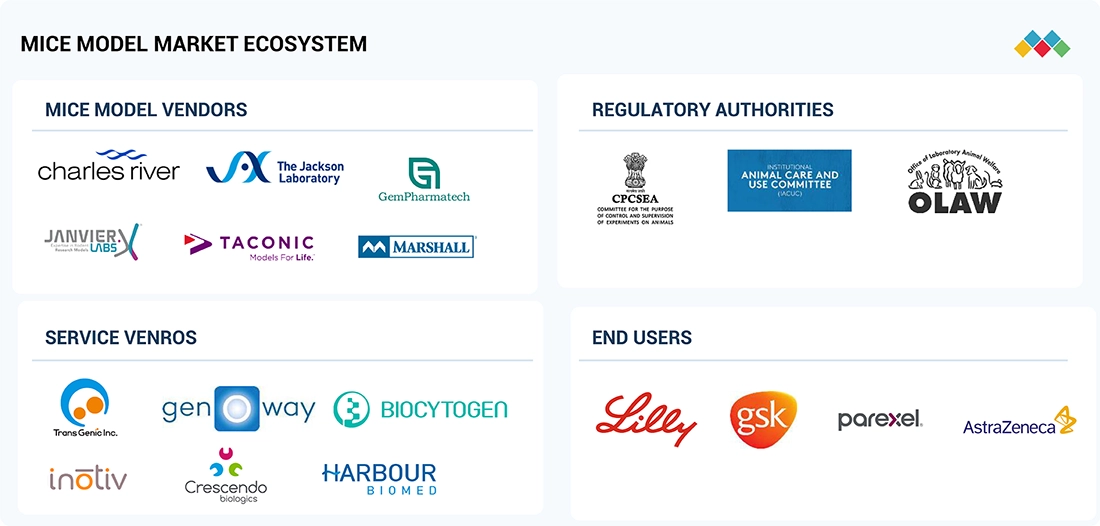
Mice Model Market: COMMERCIAL USE CASES ACROSS INDUSTRIES
| COMPANY | USE CASE DESCRIPTION | BENEFITS |
|---|---|---|
 |
Ran clinical trials in mice using large, patient-derived xenograft (PDX) cohorts that mirror human trial design (arms, stratification, endpoints) to evaluate oncology candidates. | Higher translational predictivity |Improved dose/exposure and regimen selection| Earlier detection of resistance/escape mechanisms |
 |
Used syngeneic and xenograft mouse tumor models to optimize pembrolizumab (anti-PD-1) combinations (sequence, dose, and target selection) prior to clinical studies. | Established combination rationale |Identified responsive tumor phenotypes/biomarkers| De-risked trial design and accelerated progression to first-in-human studies. |
Logos and trademarks shown above are the property of their respective owners. Their use here is for informational and illustrative purposes only.
Related Ecosystem
Biotechnology
- Reagents
- Polymerase Chain Reaction (PCR)
- Stem Cells
- Assay Kits
- Flow Cytometers
- Thermo Fisher Scientific Inc.
- Merck KGaA
- Danaher Corporation
- Agilent Technologies, Inc.
- Bio-Rad Laboratories, Inc.
Key Takeaways
- Japan's mice model market is valued at $74.7 million in 2025 and is forecast to reach $119.3 million by 2030, representing a 9.8% CAGR.
- Japan's advanced research infrastructure and strong pharmaceutical R&D ecosystem position it as a leading market for preclinical mouse models in Asia Pacific.
- Growing demand for genetically modified and disease-specific mouse strains in Japan is driven by increased drug development activities and academic research initiatives.
- Japan's aging population and chronic disease burden are key factors accelerating the adoption of sophisticated mice models for translational research between 2025 and 2030.
Mice Model Market Report Scope
| Report Metric | Details |
|---|---|
| Base Year | 2025 |
| Fastest Growing Segment | SERVICES (Model Type & Service) |
| Forecast Period | 2025–2030 |
| Growth Rate | CAGR of 10% from 2025 to 2030 |
| Largest Segment | MODEL TYPE (Model Type & Service) |
| Market Size Base Year (Billions) | ~USD 1.7 (2025) |
| Revenue Forecast (Billions) | ~USD 2.74 (2030) |
| Segments Covered | Model Type & Service, Type, Technology, Application, Therapeutic Area, End User |
Japan Mice Model Market Report Segmentation
6 segment dimensions are covered across the global market.
By Model Type & Service
- Model Type
- Services
By Type
- Breeding Services
- Cryopreservation Services
- Genetically Engineered Mice
- Hybrid/Congenic Mice
- Inbred Mice
- Other Services
- Outbred Mice
- Quarantine Services
- Rederivation Services
By Technology
- Crispr/Cas9
- Embryonic Stem Cell Injections
- Microinjections
- Nuclear Transfer Technique
- Other Technologies
By Application
- Drug Discovery & Development
- Personalized Medicine
- Research Applications
By Therapeutic Area
- Cardiovascular Diseases
- Immunology
- Metabolic Diseases
- Neurology
- Oncology
- Other Therapeutic Areas
By End User
- Academic & Research Institutes
- Contract Research Organizations (Cros) & Contract Development And Manufacturing Organizations (Cdmos)
- Pharmaceutical & Biotechnology Companies
JAPAN: MICE MODEL TYPE MARKET, BY END USER, 2023–2030
| Segment | 2023 | 2024 | 2025 | 2026 | 2027 | 2028 | 2029 | 2030 | CAGR (%) |
|---|---|---|---|---|---|---|---|---|---|
| ACADEMIC & RESEARCH INSTITUTES | 21.5 | 23.5 | 25.9 | 28.8 | 31.6 | 34.4 | 37.3 | 40.2 | 9.2 |
| CROS & CDMOS | 12.1 | 13.2 | 14.6 | 16.3 | 17.9 | 19.5 | 21.1 | 22.8 | 9.3 |
| PHARMACEUTICAL & BIOTECHNOLOGY COMPANIES | 27.6 | 30.5 | 34.1 | 38.3 | 42.6 | 47 | 51.6 | 56.3 | 10.5 |
| TOTAL | 61.2 | 67.3 | 74.7 | 83.4 | 92 | 100.9 | 110 | 119.3 | 9.8 |
Target Audience
- Pharmaceutical Companies : Japanese and international pharma firms need detailed market data to optimize preclinical research budgets, identify supplier opportunities, and plan drug development timelines aligned with Japan's growing mice model capabilities.
- Biotechnology Firms : Biotech companies require market insights to assess Japan's potential as a preclinical research partner, understand competitive dynamics, and make informed decisions about outsourcing or establishing in-house mouse model facilities.
- Contract Research Organizations (CROs) : CROs operating in Japan need comprehensive market data to benchmark services, identify growth opportunities, and develop competitive strategies in the expanding preclinical research outsourcing market.
- Laboratory & Equipment Suppliers : Vendors of laboratory equipment, breeding systems, and genetic engineering tools require market intelligence to target Japanese research institutions effectively and forecast demand for specialized preclinical research infrastructure.
- Research Institutions & Universities : Japanese academic and research institutions need market data to justify funding requests, benchmark their capabilities against peers, and identify collaboration opportunities with industry partners in the growing mice model research sector.
Key Companies in the Japan Mice Model Market
| Company | HQ | Ownership | Strongest segments |
|---|---|---|---|
| HORIZON DISCOVERY GROUP PLC | United Kingdom | Private Company | Screening,Research Reagents,Diagnostics, |
| LABORATORY CORPORATION OF AMERICA HOLDINGS | United States | Public Company | Routine and wellness diagnostics (chemistry, hematology, urinalysis, wellness programs),Specialty and esoteric testing (gene-based, oncology, infectious disease, women’s health, pharmacogenetics),Biopharma Laboratory Services (clinical trial, central lab, medical device and diagnostic R&D), |
| CHARLES RIVER LABORATORIES | United States | Public Company | Discovery and Safety Assessment,Research Models and Services,Manufacturing Solutions, |
| THE JACKSON LABORATORY | United States | Foundation/Charitable Institution | Mouse breeding and colony management services,Cryopreservation, recovery, and genetic resource management,Phenotyping, efficacy testing, and study-ready induced models, |
| INOTIV | United States | Public Company | Research Models and Services (RMS),Discovery and Safety Assessment (DSA) Services,BASi Scientific Instruments and Software, |
| JSR CORPORATION | Japan | Private Company | Digital Solutions (lithography, photoresists, packaging, CMP, display materials),Plastics (synthetic resins: ABS, AES, AS, ASA),Life Sciences (diagnostic reagents, bioprocess materials, drug discovery support), |
| BIOCYTOGEN | China | Public Company | Gene-Editing Services,Pharmacological Efficacy & Toxicology Services,Model Animals (Breeding & Sales), |
| SHANGHAI MODEL ORGANISMS CENTER, INC. | China | Public Company | Standard and disease mouse models (including toolbox and disease-specific strains),Customized genetically engineered models (KO, KI, humanized, transgenic),Preclinical services (non-GLP tox, PK, pharmacology/PD, phenotype analysis), |
| TRANS GENIC INC. | Japan | Public Company | Drug Discovery Support (non-clinical, bioequivalence, safety tests),Transgenic Models & Reagents (GM mice, antibodies, proteins, cells),Glycan Synthesis & Sugar Chain Analysis, |
| HARBOUR BIOMED | China | Public Company | Harbour Mice platform licensing and collaborations,Immunology clinical assets (e.g., batoclimab, HBM7020, HBM9378),Oncology clinical assets (e.g., porustobart, solid tumor portfolio), |
| GENOWAY | France | Public Company | Custom KO/KI mouse models,Custom KO/KI rat models,Humanized and immunodeficient rodent models (catalog and custom), |
| GEMPHARMATECH | China | Public Company | Standard GEMM catalog (knockout, conditional, knock-in, point-mutation, transgenic),Custom model generation and tool mice,Preclinical testing services, |
| VIVO BIO TECH LTD. | India | Public Company | In vivo and in vitro toxicity, PK/TK, and pharmacology services,SPF lab animals, rodent breeding, custom models, and lab diets,Genotoxicity screening and analytical services, |
HORIZON DISCOVERY GROUP PLC
Horizon Discovery Group PLC is a United Kingdom-based private company founded in 2005 with 428 employees. The company operates in the life sciences sector, providing specialized research and development services.
LABORATORY CORPORATION OF AMERICA HOLDINGS
Laboratory Corporation of America Holdings is a major United States public company founded in 1995 with 66,385 employees. It is a leading provider of clinical laboratory services and drug development support.
CHARLES RIVER LABORATORIES
Charles River Laboratories is a United States public company founded in 1947 with 19,000 employees. The company provides preclinical and clinical laboratory services, research models, and safety assessment services.
THE JACKSON LABORATORY
The Jackson Laboratory is a United States foundation and charitable institution founded in 1929 with 2,100 employees. It is a premier research institution specializing in mammalian genetics and genomics.
INOTIV
Inotiv is a United States public company founded in 1974 with 1,996 employees. The company provides research models, services, and products for the pharmaceutical and biotechnology industries.
JSR CORPORATION
JSR Corporation is a Japan-based private company founded in 1948 with 7,997 employees. The company operates in advanced materials and life sciences sectors.
BIOCYTOGEN
Biocytogen is a China-based public company founded in 2008 with 1,443 employees. The company specializes in the development of genetically engineered animal models for research and drug development.
SHANGHAI MODEL ORGANISMS CENTER, INC.
Shanghai Model Organisms Center, Inc. is a China-based public company founded in 2000 with 848 employees. The company provides model organism services and products for biomedical research.
TRANS GENIC INC.
Trans Genic Inc. is a Japan-based public company founded in 1998 with 227 employees. The company develops and provides transgenic animal models for research applications.
HARBOUR BIOMED
Harbour Biomed is a China-based public company founded in 2016 with 272 employees. The company focuses on antibody and immunotherapy research and development.
GENOWAY
Genoway is a France-based public company founded in 1999 with 157 employees. The company specializes in the generation of genetically modified animal models for research.
GEMPHARMATECH
GemPharmatech is a China-based public company founded in 2017 with 1,590 employees. The company provides laboratory animal models and related research services.
VIVO BIO TECH LTD.
Vivo Bio Tech Ltd. is an India-based public company founded in 1987 with 174 employees. The company provides contract research services and laboratory animal models for pharmaceutical and biotechnology research.
Reasons to Buy this Report
- Market Size & Growth Validation : Obtain precise valuation data for Japan's mice model market with verified CAGR of 9.8% (2025-2030). Make informed investment and expansion decisions backed by comprehensive market sizing and forecast accuracy specific to the Japanese market.
- Competitive Landscape Intelligence : Understand Japan's unique market dynamics, key players, and competitive positioning within Asia Pacific. Identify opportunities to differentiate your offerings and capture market share in this high-growth pharmaceutical research hub.
- Regulatory & Infrastructure Insights : Gain detailed knowledge of Japan's regulatory environment, laboratory standards, and institutional frameworks governing mice model research. Navigate compliance requirements and leverage Japan's advanced infrastructure for market entry or expansion.
- Demand Driver Analysis : Understand specific factors driving Japan's market growth including genetic model adoption, pharmaceutical R&D trends, and aging population healthcare needs. Align product development and marketing strategies with Japan's unique market drivers.
- Strategic Partnership Opportunities : Identify collaboration potential with Japanese research institutions, pharmaceutical companies, and breeding facilities. Leverage market intelligence to establish strategic partnerships and strengthen your presence in this critical Asia Pacific market.
Frequently asked questions
What is the current size of the mice model market in Japan?
The mice model market in Japan is valued at $74.7 million in 2025 and is expected to grow to $119.3 million by 2030.
What is the projected growth rate for Japan's mice model market?
Japan's mice model market is projected to grow at a compound annual growth rate (CAGR) of 9.8% from 2025 to 2030.
What factors are driving growth in Japan's mice model market?
Key drivers include Japan's advanced research infrastructure, strong pharmaceutical R&D investment, aging population, prevalence of chronic diseases, and increasing demand for genetically modified mouse models in drug discovery.
Which sectors are the primary consumers of mice models in Japan?
Primary consumers in Japan include biopharmaceutical companies, academic research institutions, contract research organizations (CROs), and government research facilities engaged in preclinical drug development and translational research.
How does Japan's mice model market compare to other Asia Pacific countries?
Japan maintains a leading position in the Asia Pacific mice model market due to its advanced laboratory infrastructure, regulatory framework supporting animal research, and significant investment in biomedical innovation and pharmaceutical development.
RESEARCH METHODOLOGY
This research study extensively used secondary sources, directories, and databases to identify and collect valuable information to analyze the global mice model market. In-depth interviews were conducted with various primary respondents, including key industry participants, subject-matter experts (SMEs), C-level executives of key market players, and industry consultants, to obtain and verify critical qualitative & quantitative information and assess the market's growth prospects. The global market size estimated through secondary research was then triangulated with inputs from primary research to arrive at the final market size.
Secondary Research
Secondary research was used primarily to identify & collect information for the extensive, technical, market-oriented, and commercial study. The secondary sources used for this study include the International Mouse Phenotyping Consortium (IMPC), Association for Assessment and Accreditation of Laboratory Animal Care International (AAALAC), European Molecular Biology Laboratory−European Bioinformatics Institute (EMBL-EBI), Swiss Laboratory Animal Science Association (SGV), Medical Research Council (MRC), Asian Mouse Mutagenesis Resource Association (AMMRA), Department of Biotechnology (DBT) (India), World Health Organization (WHO), United States Food and Drug Administration (US FDA), Annual Reports, SEC Filings, Investor Presentations, Research Journals, Press Releases, and financial statements. These sources also obtained key information about major players, market classification, and segmentation according to industry trends, regional/country-level markets, market developments, and technology perspectives.
Primary Research
In-depth interviews were conducted with various primary respondents, including key industry participants, subject-matter experts (SMEs), C-level executives of key market players, and industry consultants, to obtain and verify the critical qualitative & quantitative information and assess the prospects of the market. Various primary sources from both the supply & demand sides of the market were interviewed to obtain qualitative and quantitative information. The following is a breakdown of the primary respondents:
The following is a breakdown of the primary respondents:
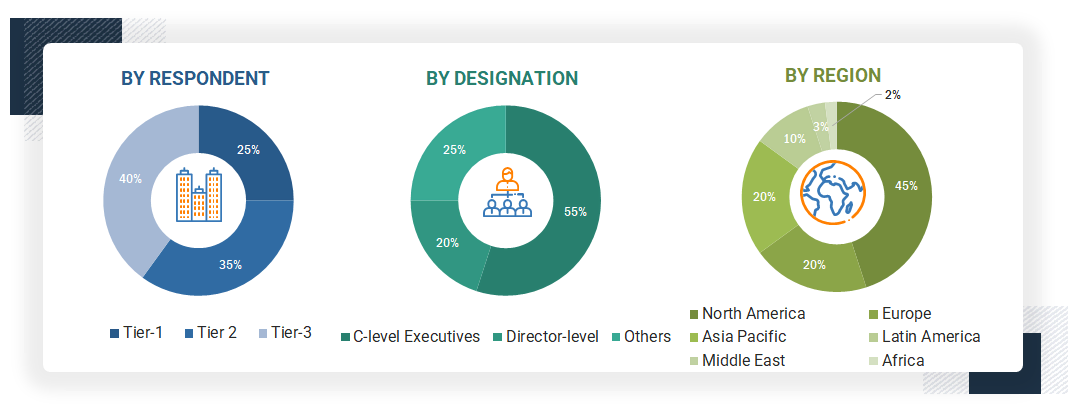
To know about the assumptions considered for the study, download the pdf brochure
Market Size Estimation
Both top-down and bottom-up approaches were used to estimate & validate the total size of the mice model market. These methods were also used extensively to estimate the size of various subsegments in the market. The research methodology used to estimate the market size includes the following:
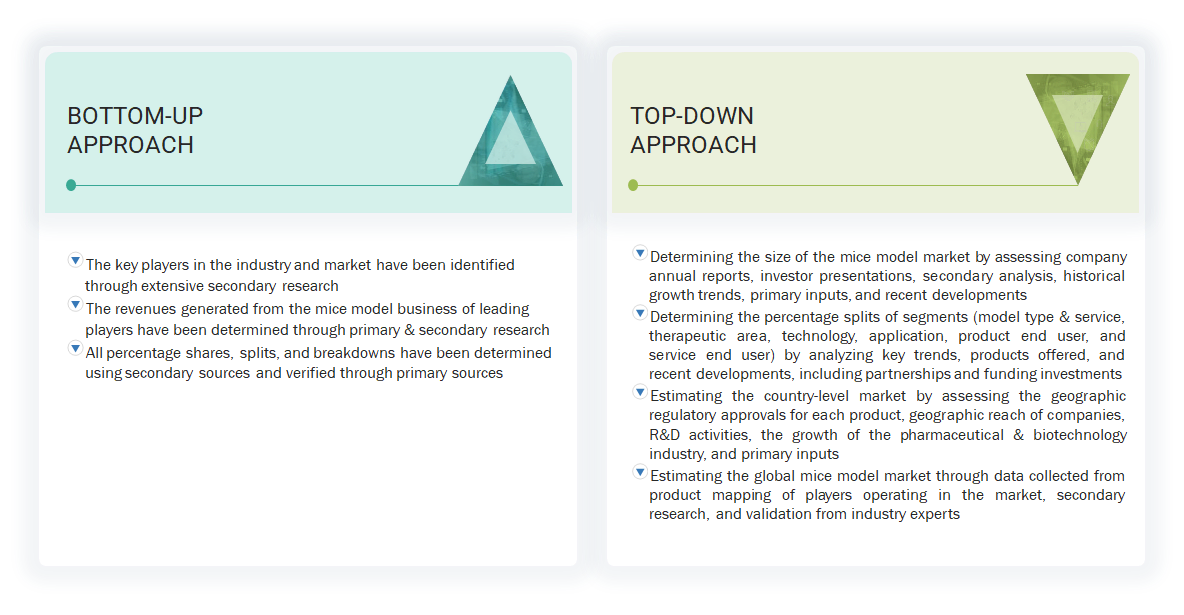
Data Triangulation
The total market was split into several segments and subsegments after arriving at the overall market size from the estimation process. Where applicable, data triangulation and market breakdown procedures were employed to complete the overall market engineering process and arrive at the exact statistics for all segments and subsegments. The data was triangulated by studying various factors and trends from both the demand and supply sides.
Market Definition
An animal model is a valuable resource in biomedical research, chosen for its ability to replicate certain aspects of biological processes or diseases observed in humans. A mouse model is a genetically engineered or naturally occurring mouse strain used in biomedical research to mimic human diseases or conditions. These models are valuable for their biological similarity to humans, ability to be genetically manipulated, and cost-effectiveness, enabling researchers to study disease mechanisms and test novel drug therapies efficiently. Mice share over 95% of human DNA and are biologically similar to humans, thereby being susceptible to similar diseases due to the genetic build-up.
Stakeholders
- Manufacturers & Distributors of Mice Models
- CROs & CDMOs
- Pharmaceutical & Biotechnology Companies
- Academic & Research Institutes
- Market Research & Consulting Firms
- Researchers & Scientists
- Regulatory Authorities & Institutes
Report Objectives
- To define, describe, and forecast the global mice model market based on model type & service, technology, therapeutic area, application, product end user, service end user, and region
- To provide detailed information regarding the leading factors driving the growth of the market (such as drivers, restraints, challenges, and opportunities)
- To strategically analyze micromarkets with respect to individual growth trends, prospects, and contributions to the overall mice models market
- To analyze opportunities in the market for stakeholders and provide details of the competitive landscape for market leaders
- To forecast the size of the market segments with respect to six regions: North America, Europe, the Asia Pacific, Latin America, the Middle East, and Africa
- To strategically profile the key players and comprehensively analyze their product portfolios, market positions, and core competencies
- Track & analyze competitive developments such as acquisitions, product launches, expansions, agreements, partnerships, and R&D activities in the mice models market.
- To analyze and provide funding & investment activities, brand/product comparative analysis, and vendor valuation & financial metrics of the mice model market.
Get the Full Mice Model Market Report
Full forecast, segment splits, and company analysis for all Mice Model Market.
- Rest Of Latin America Mice Model Market
- Ksa Mice Model Market
- Other GCC Countries Mice Model Market
- UAE Mice Model Market
- GCC Countries Mice Model Market
- Rest Of The Middle East Mice Model Market
- US Mice Model Market
- Canada Mice Model Market
- Germany Mice Model Market
- UK Mice Model Market
- France Mice Model Market
- Italy Mice Model Market
- Spain Mice Model Market
- China Mice Model Market
- India Mice Model Market
- Australia Mice Model Market
- South Korea Mice Model Market
- Brazil Mice Model Market
- Mexico Mice Model Market
- United Arab Emirates Mice Model Market
- Rest Of Europe Mice Model Market
- Rest Of The Asia Pacific Mice Model Market
- Rest Of Asia Pacific Mice Model Market
Need a Tailored Report?
Customize this report to your needs
Get 10% FREE Customization
Customize This Report
