
Australia Microgrid Controller Market (2024-2029)

The Australia Microgrid Controller Market was valued at $530 Million in 2024 and projected to reach to $1623.7 Million by 2029, representing a compound annual growth rate of 25.1%. Australia's microgrid controller market is positioned for exceptional growth through 2029, expanding from USD 530.0 million to USD 1,623.7 million.


| Market Size in | USD 26.32 MN |
| Market Forecast in | |
| CAGR | |
| Forecast Period | |
| Units Considered | Value (USD MN) |
Australia Microgrid Controller Market Trends and Insights
- This represents a compound annual growth rate (CAGR) of 25.1%, significantly outpacing global trends.
- Australia's strategic focus on renewable energy integration, grid modernization, and distributed energy resources is driving demand for advanced microgrid control solutions across utilities, industrial facilities, and commercial installations. The Australian market benefits from supportive government policies promoting clean energy adoption and grid resilience.
- Between 2024 and 2029, Australia is expected to see accelerated deployment of microgrid controllers in both urban and remote regions, driven by increasing solar penetration, battery storage integration, and the need for intelligent energy management systems.
- Australia's commitment to decarbonization and energy independence is positioning the country as a key growth market within the Asia Pacific region for semiconductor-based microgrid control technologies..
Key Market Statistics
- CAGR (2024-2029) 25.1% CAGR
- Market Size, 2024 ~USD 530 Million
- Forecast, 2029 ~USD 1623.7 Million
- Country Australia
Australia Microgrid Controller Market Overview
Rapid Market Expansion :
Australia's microgrid controller market is growing at 25.1% CAGR, significantly exceeding the global rate of 22.6%, driven by aggressive renewable energy adoption and grid modernization initiatives across the continent.
Renewable Energy Integration :
Australia's commitment to achieving net-zero emissions by 2050 is accelerating microgrid controller deployment, particularly in solar and wind-rich regions where distributed energy resource management is critical for grid stability.
Government Policy Support :
Federal and state-level incentives, including the Renewable Energy Target and various grid modernization programs, are creating favorable conditions for microgrid controller adoption across commercial, industrial, and utility sectors.
Regional Infrastructure Investment :
Australia's focus on decentralized energy systems and smart grid technologies is spurring investment in advanced microgrid controllers, particularly in remote areas and regional communities seeking energy independence.
Australia Microgrid Controller Market Dynamics
- This trajectory reflects the nation's strategic pivot toward renewable energy integration and distributed energy resource management.
- State-based renewable energy policies, coupled with increasing grid congestion in major urban centers, are compelling utilities and commercial operators to invest in sophisticated microgrid control solutions. The market will be further catalyzed by Australia's aging grid infrastructure requiring modernization, rising electricity costs driving demand for local generation solutions, and growing adoption of rooftop solar paired with battery storage systems.
- Key growth drivers include industrial facilities seeking energy resilience, mining operations in remote regions, and agricultural enterprises implementing sustainable energy practices.
- Continued government support and technological advancement in AI-driven control systems will sustain the 25.1% CAGR through the forecast period..
Market Ecosystem
Related Ecosystem
Electrical System And Components
- Natural Language Processing (NLP)
- Sensors
- Machine Learning
- Temperature Sensors
- Actuators
- ABB India Limited
- Siemens ag
- SCHNEIDER ELECTRIC SE
- Eaton Corporation plc
- Lenovo
Industrial Automation
- Sensors
- Image Sensors
- Manufacturing Execution System (MES)
- Actuators
- Flow Sensors
- Siemens ag
- ABB India Limited
- Emerson Electric Co.
- HONEYWELL INTERNATIONAL INC.
- SCHNEIDER ELECTRIC SE
Information System And Analytics
- Machine Learning
- Natural Language Processing (NLP)
- Sensors
- Software as A Service (SaaS)
- Data Loss Prevention (DLP)
- International Business Machines Corporation
- MICROSOFT CORPORATION
- Amazon.com, Inc.
- Oracle Corporation
Key Takeaways
- Australia's microgrid controller market will grow from $530.0M (2024) to $1,623.7M (2029) at a 25.1% CAGR, outpacing global growth rates.
- Australia's renewable energy targets and grid modernization initiatives are primary catalysts for microgrid controller adoption through 2029.
- Australia's distributed energy resource penetration and battery storage expansion create strong demand for intelligent microgrid control systems.
- Australia's position in Asia Pacific makes it a strategic hub for microgrid controller innovation and deployment in the region.
Microgrid Controller Market Report Scope
| Report Metric | Details |
|---|---|
| Base Year | 2024 |
| Fastest Growing Segment | COMMERCIAL & INDUSTRIAL (End User) |
| Forecast Period | 2024-2029 |
| Growth Rate | CAGR of 22.6% from 2024 to 2029 |
| Largest Segment | GRID-CONNECTED (Connectivity) |
| Market Size Base Year (Billions) | ~USD 6.75 (2024) |
| Revenue Forecast (Billions) | ~USD 18.7 (2029) |
| Segments Covered | Connectivity, Offering, End User |
Australia Microgrid Controller Market Report Segmentation
3 segment dimensions are covered across the global market.
By Connectivity
- Grid-Connected
- Off-Grid
By Offering
- Hardware
- Software & Services
By End User
- Commercial & Industrial
- Government
- Healthcare
- Institutes & Campuses
- Military
- Remote Areas
- Utilities
AUSTRALIA: MICROGRID CONTROLLER MARKET, BY END USER, 2024–2029
| Segment | 2024 | 2025 | 2026 | 2027 | 2028 | 2029 | CAGR (%) |
|---|---|---|---|---|---|---|---|
| COMMERCIAL & INDUSTRIAL | 180.3 | 236.1 | 304.9 | 392 | 504.3 | 646.2 | 29.1 |
| GOVERNMENT | 24.1 | 29 | 34.4 | 40.7 | 48.2 | 56.8 | 18.8 |
| HEALTHCARE | 40.5 | 53.6 | 69.2 | 88 | 110.9 | 138 | 27.8 |
| INSTITUTES & CAMPUSES | 32.8 | 41 | 50.7 | 62.4 | 76.8 | 94.2 | 23.5 |
| MILITARY | 34.4 | 43.8 | 55 | 68.7 | 86 | 107.2 | 25.5 |
| REMOTE AREAS | 195.5 | 241.6 | 294.4 | 357.2 | 433.6 | 524.4 | 21.8 |
| UTILITIES | 22.5 | 27.5 | 33.1 | 39.7 | 47.6 | 56.8 | 20.3 |
| TOTAL | 530 | 672.7 | 841.8 | 1048.7 | 1307.5 | 1623.7 | 25.1 |
Target Audience
- Utility Companies & Grid Operators : Australian utilities require detailed market intelligence on microgrid controller adoption trends, grid modernization ROI, and competitive solutions to optimize distributed energy resource management and grid stability.
- Renewable Energy Developers : Solar and wind project developers in Australia need market data on microgrid controller integration, performance benchmarks, and regulatory requirements to enhance project viability and secure financing.
- Industrial & Commercial Operators : Manufacturing facilities, mining operations, and large commercial enterprises in Australia seek market insights on microgrid solutions for energy cost reduction, resilience, and sustainability goal achievement.
- Technology & Equipment Manufacturers : Semiconductor and electronics companies targeting Australia's microgrid market need competitive analysis, customer requirements, emerging technologies, and growth forecasts to guide product development and market positioning.
- Investment & Consulting Firms : Private equity, venture capital, and management consulting firms require Australia-specific market data for investment thesis validation, portfolio company strategy, and client advisory services in the energy sector.
Reasons to Buy this Report
- Market Size & Growth Validation : Obtain precise market valuation data for Australia (USD 530M in 2024) with verified 25.1% CAGR projections through 2029, enabling accurate business planning and investment decisions specific to the Australian market.
- Competitive Landscape Intelligence : Understand Australia-specific competitive dynamics, key players, market share distribution, and emerging entrants in the microgrid controller sector to identify partnership and acquisition opportunities.
- Regional Regulatory & Policy Insights : Access detailed analysis of Australian federal and state-level policies, renewable energy targets, grid modernization initiatives, and incentive programs shaping market demand and investment priorities.
- Sector-Specific Opportunity Mapping : Identify high-growth segments within Australia including utility-scale deployments, commercial/industrial applications, remote area solutions, and residential battery integration opportunities with tailored growth forecasts.
- Strategic Market Entry Planning : Leverage Australia-focused market research to develop go-to-market strategies, identify ideal customer profiles, assess distribution channels, and benchmark against regional competitors for successful market penetration.
Frequently asked questions
What is the current size of Australia's microgrid controller market?
Australia's microgrid controller market was valued at USD 530.0 million in 2024 and is expected to grow to USD 1,623.7 million by 2029.
What is the projected growth rate for Australia's microgrid controller market?
Australia's microgrid controller market is projected to grow at a compound annual growth rate (CAGR) of 25.1% from 2024 to 2029.
What factors are driving growth in Australia's microgrid controller market?
Australia's growth is driven by renewable energy integration targets, grid modernization initiatives, increasing solar and battery storage deployment, and government policies supporting clean energy adoption.
Which sectors in Australia are adopting microgrid controllers?
Australia's microgrid controller adoption spans utilities, industrial facilities, commercial installations, and remote communities seeking improved energy management and grid resilience.
How does Australia's market growth compare to global trends?
Australia's 25.1% CAGR significantly exceeds the global microgrid controller market CAGR of 22.6%, positioning Australia as a high-growth market within Asia Pacific.
RESEARCH METHODOLOGY
The research report includes four major activities, estimating the size of the microgrid controller market. Secondary research has been done to gather important information about the market and peer markets. To validate the findings, assumptions, and sizing with the primary research with industry experts across the supply chain is the next step. Both bottom-up and top-down approaches have been used to estimate the market size. After this, the market breakdown and data triangulation have been adopted to estimate the market sizes of segments and sub-segments
Secondary Research
During the secondary research phase, a variety of secondary sources were consulted to gather pertinent information for this study. These sources encompassed corporate filings (including annual reports, press releases, investor presentations, and financial statements), as well as data from trade, business, and professional associations. Additionally, white papers, location-based marketing journals, accredited publications, articles authored by recognized experts, directories, and databases were utilized.
The secondary research aimed to acquire crucial insights into the industry's supply chain, market monetary flow, and the comprehensive landscape of key players. It also facilitated the segmentation of the market according to prevailing industry trends, reaching down to granular levels, along with analysis of geographic markets and significant developments from both market and technology perspectives. The secondary data was meticulously collected and analyzed to ascertain the overall market size, which was subsequently corroborated through primary research.
Primary Research
During the process of primary research, a range of primary sources from both the supply and demand sides were engaged to gather qualitative and quantitative insights for this report. On the supply side, primary sources included industry experts such as chief executive officers (CEOs), vice presidents, marketing directors, technology and innovation directors, subject-matter experts (SMEs), consultants, and other key executives from prominent companies and organizations operating within the Microgrid controller market.
Following a comprehensive market engineering process, which involved calculations for market statistics, breakdowns, size estimations, forecasting, and data triangulation, extensive primary research was conducted to collect, verify, and validate critical numerical data. This primary research aimed to identify segmentation types, industry trends, key players, competitive landscapes, and key market dynamics such as drivers, restraints, opportunities, and challenges, as well as to understand the key strategies adopted by market players.
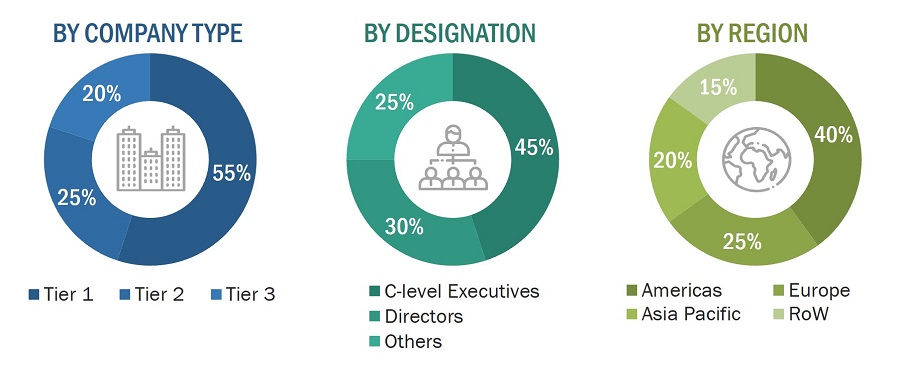
Building upon insights acquired from secondary research on the Microgrid controller market, extensive primary research was conducted. Multiple primary interviews were conducted with experts from both the demand and supply sides across four key regions: North America, Europe, Asia Pacific, and ROW (Middle East, South America, and Africa). Approximately 25% of the primary interviews were conducted with representatives from the demand side, while 75% were with those from the supply side. Primary data collection was carried out through questionnaires, emails, and telephonic interviews.
To know about the assumptions considered for the study, download the pdf brochure
Market Size Estimation
In the market engineering process, both the top-down and bottom-up approaches have been used, along with several data triangulation methods, to perform market estimation and forecasting for the overall market segments and subsegments listed in this report. Extensive qualitative and quantitative analyses have been performed on the market engineering process to list key information/insights.
Key market players have been identified through secondary research, and their market shares have been determined through primary and secondary research. This involves studying their annual and financial reports and interviews with industry experts (such as CEOs, VPs, directors, and marketing executives) for key insights—both quantitative and qualitative.
All percentage shares, splits, and breakdowns have been determined using secondary sources and verified through primary sources. All possible parameters that may affect the markets covered in this research study have been accounted for, viewed in extensive detail, verified through primary research, and analyzed to obtain the final quantitative and qualitative data. This data has been consolidated and supplemented with detailed input and analysis from MarketsandMarkets and presented in the report.
Market Size Estimation Methodology-Bottom-up Approach
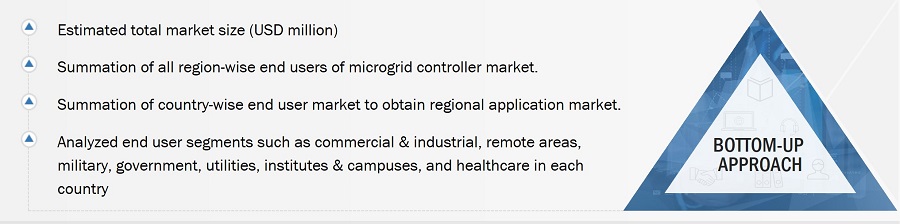
A bottom-up approach was employed to arrive at the overall size of the microgrid controller market from the calculations based on the revenue of key players and their share in the market. Key players in the market were studied. The market size estimations were carried out considering the market size of their microgrid controller offerings.
Market Size Estimation Methodology-Top Down Approach
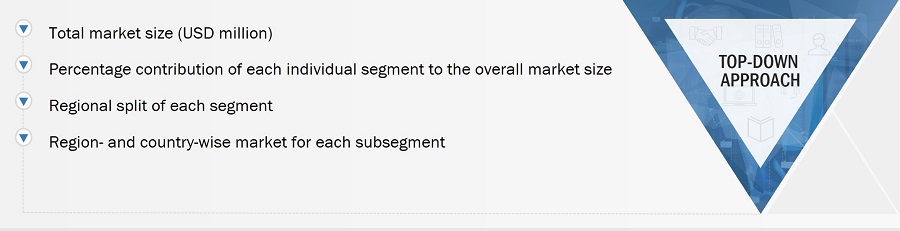
In the top-down methodology, the aggregate market size served as the basis for determining the sizes of individual markets, as outlined in the market segmentation, utilizing percentage allocations derived from primary and secondary research.
To compute the sizes of specific market segments, the most pertinent immediate parent market size was employed in applying the top-down approach. Furthermore, the bottom-up approach was applied to validate the market sizes of various segments using data acquired from secondary research sources.
Estimates of each company's market share were utilized to corroborate the revenue distributions previously utilized in the bottom-up approach. Through a data triangulation process and validation via primary research sources, this study conclusively determined and affirmed both, the overall parent market size and the size of each individual market segment.
Data Triangulation
After arriving at the overall market size from the market size estimation process explained above, the total market was split into several segments and subsegments. Data triangulation was employed to complete the market engineering process and arrive at the exact statistics for all segments and subsegments. The data has been triangulated by studying various factors and trends from both the demand and supply sides. Along with this, the market has been validated using both, the top-down and bottom-up approaches.
Market Definition
A microgrid controller serves as a sophisticated system designed to seamlessly incorporate various distributed energy resources (DERs), energy storage solutions, and renewable energy sources into the operation of a local microgrid. The primary objective is to enhance the efficiency of the microgrid while minimizing overall operational costs, including energy production expenses.
This controller facilitates the management and coordination of DERs and loads within a specific electrical system, ensuring that the frequency and voltage levels remain within acceptable parameters. By optimizing the utilization of fossil fuel-based DERs alongside renewable energy sources, microgrid controllers play a crucial role in enhancing the reliability and sustainability of energy supply within localized grids.
In essence, microgrid controllers act as the brains behind the operation of microgrids, orchestrating the seamless integration of diverse energy resources to meet demand while maintaining grid stability and cost-effectiveness.
Key Stakeholders
- Manufacturers of microgrid controllers
- Original equipment manufacturers
- Research organizations
- Microgrid system integrators and developers
- Transmission system operators
- Energy storage vendors
- Value-added resellers
- Microgrid solution vendors
- Smart grid software vendors
- Solar PV (photovoltaic) companies
- Government agencies
- Utilities
- Investors
- Commercial and industrial buildings
- Technology standards organizations, forums, alliances, and associations
- Venture capitalists and private equity firms
The main objectives of this study are as follows:
- To define, describe, segment, and forecast the size of the microgrid controller market, by connectivity, offering, and end user, in terms of value
- To forecast the market size for various segments with respect to four main regions—the Americas, Europe, Asia Pacific, and the Rest of the World (RoW)—in terms of value and volume
- To provide detailed information regarding the drivers, restraints, opportunities, and challenges influencing the growth of the microgrid controller market
- To study the allied industry supply chain segments and perform a supply chain analysis of the market landscape
- To strategically analyze macro and micromarkets1 with respect to growth trends, prospects, and their contributions to the overall market
- To strategically profile key players in the market and comprehensively analyze their market share/ranking and core competencies2
- To analyze industry trends and patents and innovations in the market
- To analyze competitive developments by players in the microgrid controller market, such as contracts, product launches/developments, expansions, and research & development (R&D) activities
Available Customizations:
With the given market data, MarketsandMarkets offers customizations according to the specific requirements of companies. The following customization options are available for the report:
- Country-wise Information for Asia Pacific
- Detailed analysis and profiling of additional market players (up to five)
Get the Full Microgrid Controller Market Report
Full forecast, segment splits, and company analysis for all Microgrid Controller Market.
- Germany Microgrid Controller Market
- France Microgrid Controller Market
- UK Microgrid Controller Market
- China Microgrid Controller Market
- Japan Microgrid Controller Market
- India Microgrid Controller Market
- Canada Microgrid Controller Market
- Mexico Microgrid Controller Market
- US Microgrid Controller Market
- Rest Of Europe Microgrid Controller Market
- Rest Of Asia Pacific Microgrid Controller Market
- Brazil Microgrid Controller Market
- Rest Of South America Microgrid Controller Market
Need a Tailored Report?
Customize this report to your needs
Get 10% FREE Customization
Customize This Report
