
UAE Military Antenna Market (2024-2029)

The UAE Military Antenna Market was valued at $103.2 Million in 2024 and projected to reach to $122.4 Million by 2029, representing a compound annual growth rate of 3.5%. The UAE military antenna market is poised for steady expansion driven by the nation's comprehensive defense modernization strategy and increased procurement of advanced communication systems.


| Market Size in | USD 26.32 MN |
| Market Forecast in | |
| CAGR | |
| Forecast Period | |
| Units Considered | Value (USD MN) |
UAE Military Antenna Market Trends and Insights
- The UAE's strategic position in the Middle East and its ongoing defense modernization initiatives are driving demand for advanced military communication systems.
- The UAE's investment in next-generation radar, surveillance, and tactical communication platforms is fueling the adoption of sophisticated antenna technologies across air, land, and naval defense sectors. The UAE military antenna market benefits from the country's robust defense budget and partnerships with leading global aerospace and defense manufacturers.
- Between 2024 and 2029, the UAE is expected to strengthen its military capabilities through procurement of advanced antenna systems for unmanned aerial vehicles (UAVs), satellite communications, and electronic warfare applications.
- The UAE's focus on indigenous defense capabilities and technology transfer agreements is creating opportunities for both domestic and international antenna suppliers to establish a foothold in this growing market..
Key Market Statistics
- CAGR (2024-2029) 3.5% CAGR
- Market Size, 2024 ~USD 103.2 Million
- Forecast, 2029 ~USD 122.4 Million
- Country UAE
UAE Military Antenna Market Overview
Market Valuation :
The UAE military antenna market is valued at USD 103.2 million in 2024, with a projected value of USD 122.4 million by 2029, representing steady growth in the region's defense technology sector.
Defense Modernization Drive :
UAE's strategic defense modernization initiatives and investments in next-generation radar and surveillance systems are primary drivers for military antenna demand, supporting regional security objectives.
Growth Trajectory :
The market is expanding at a CAGR of 3.5% through 2029, outpacing global growth rates and reflecting UAE's commitment to advanced military communication infrastructure development.
Geopolitical Positioning :
UAE's critical location in the Middle East and role as a regional defense hub create sustained demand for sophisticated antenna systems supporting command, control, and surveillance operations.
UAE Military Antenna Market Dynamics
- Government investments in next-generation radar platforms, unmanned systems, and integrated surveillance networks are creating sustained demand for high-performance antenna solutions.
- The UAE's role as a regional security leader and its strategic partnerships with international defense contractors continue to support market growth.
- By 2029, the market is expected to reach USD 122.4 million, reflecting the country's commitment to maintaining technological superiority in military communications and defense capabilities across air, land, and maritime domains..
Market Ecosystem
Related Ecosystem
Cns Systems
- C-Band
- Ka-Band
- Antennas
- Unmanned Ground Vehicles (UGV)
- Rotary Wing Aircraft
- L3Harris Technologies, Inc.
- Thales group
- HONEYWELL INTERNATIONAL INC.
- Northrop Grumman Corporation
- LOCKHEED MARTIN CORPORATION
Defence Platforms And Systems
- Sensors
- Unmanned Ground Vehicles (UGV)
- Fighter Aircraft
- Special Mission Aircraft
- Antennas
- BAE Systems plc
- Thales group
- LOCKHEED MARTIN CORPORATION
- Northrop Grumman Corporation
- L3Harris Technologies, Inc.
Key Takeaways
- The UAE military antenna market is valued at USD 103.2 million in 2024 and will reach USD 122.4 million by 2029.
- The UAE's defense modernization strategy is driving demand for advanced antenna systems across multiple military platforms.
- The UAE's growing UAV and satellite communication programs are key growth drivers for military antenna adoption.
- The UAE's partnerships with global defense manufacturers are accelerating technology integration and market expansion.
Military Antenna Market Report Scope
| Report Metric | Details |
|---|---|
| Base Year | 2024 |
| Fastest Growing Segment | ARREY ANTENNAS (Technology) |
| Forecast Period | 2024-2029 |
| Growth Rate | CAGR of 4.6% from 2024 to 2029 |
| Largest Segment | SUPER HIGH FREQUENCY (SHF) (Frequency Band) |
| Market Size Base Year (Billions) | ~USD 4.47 (2024) |
| Revenue Forecast (Billions) | ~USD 5.6 (2029) |
| Segments Covered | Component, Frequency Band, Technology, Platform, Type, Application, Point Of Sale |
UAE Military Antenna Market Report Segmentation
7 segment dimensions are covered across the global market.
By Component
- Feed Horns
- Feed Networks
- Low Noise Block Converters
- Other Components
- Reflectors
By Frequency Band
- Extremely High Frequency
- Extremely High Frequency (Ehf)
- High Frequency
- High Frequency (Hf)
- Super High Frequency
- Super High Frequency (Shf)
- Ultra High Frequency
- Ultra High Frequency (Uhf)
- Very High Frequency
- Very High Frequency (Vhf)
By Technology
- Aperture Antennas
- Array Antennas
- Arrey Antennas
- Lens Antennas
- Microstrip Antennas
- Reflector Antennas
- Wire Antennas
By Platform
- Airborne
- Ground
- Marine
By Type
- Aircraft
- Base Station
- Missile
- Shipboard
- Soldier
- Submarine
- Unmanned Aerial Vehicle
- Unmanned Ground Vehicle
- Unmanned Marine Vehicle
- Vehicle
By Application
- Communication
- Electronic Warfare
- Navigation
- Satcom
- Surveillance
- Telemetry
By Point Of Sale
- Aftermarket
- Oems
UAE: MILITARY ANTENNA MARKET, BY APPLICATION, 2024–2029
| Segment | 2024 | 2025 | 2026 | 2027 | 2028 | 2029 | CAGR (%) |
|---|---|---|---|---|---|---|---|
| COMMUNICATION | 14 | 14.4 | 13.9 | 16.2 | 15.9 | 16.4 | 3.2 |
| ELECTRONIC WARFARE | 26.1 | 27.1 | 26.5 | 31.2 | 30.9 | 32.2 | 4.3 |
| NAVIGATION | 14.8 | 15.3 | 14.8 | 17.4 | 17.1 | 17.8 | 3.8 |
| SATCOM | 10.7 | 11 | 10.6 | 12.4 | 12.2 | 12.6 | 3.4 |
| SURVEILLANCE | 35 | 35.9 | 34.5 | 40.2 | 39.3 | 40.5 | 3 |
| TELEMETRY | 2.7 | 2.7 | 2.6 | 3 | 2.9 | 3 | 1.9 |
| TOTAL | 103.2 | 106.4 | 103 | 120.4 | 118.3 | 122.4 | 3.5 |
Target Audience
- Defense Contractors & OEMs : Military antenna manufacturers and aerospace defense companies need UAE-specific market data to identify procurement opportunities, tailor product offerings, and develop localized sales strategies for this high-growth regional market.
- Government & Military Procurement : UAE defense ministry officials and military procurement teams require market intelligence to benchmark spending, evaluate supplier capabilities, and align antenna system acquisitions with modernization timelines.
- Investment & Private Equity Firms : Investors targeting aerospace and defense sectors need UAE market insights to evaluate portfolio opportunities, assess growth potential, and identify acquisition targets in the military communications space.
- Systems Integrators & Consultants : Defense systems integrators and consulting firms require detailed UAE market data to support client advisory services, feasibility studies, and technology roadmap development for military communication systems.
- Technology Suppliers & Component Manufacturers : Antenna component suppliers and technology vendors need UAE market forecasts to plan production capacity, establish distribution partnerships, and position products for regional defense modernization programs.
Reasons to Buy this Report
- Market-Specific Sizing Data : Access precise valuation figures for the UAE military antenna market with verified 2024 baseline (USD 103.2M) and 2029 forecasts, enabling accurate budget allocation and investment planning.
- Regional Growth Insights : Understand UAE's 3.5% CAGR trajectory and how it compares to global trends, identifying unique growth drivers specific to the region's defense modernization priorities and procurement cycles.
- Strategic Defense Context : Gain intelligence on UAE's defense modernization initiatives, next-generation radar investments, and surveillance system upgrades that directly influence military antenna demand and technology requirements.
- Competitive Positioning : Benchmark your offerings against market dynamics in a high-value Middle Eastern market, understanding local procurement preferences, regulatory requirements, and partnership opportunities with UAE defense entities.
- Investment Decision Support : Make informed decisions on market entry, expansion, or partnership strategies in UAE with comprehensive data on market size, growth trajectory, and defense sector dynamics through 2029.
Frequently asked questions
What is the current size of the UAE military antenna market?
The UAE military antenna market is valued at USD 103.2 million in 2024 and is expected to grow at a CAGR of 3.5% through 2029.
What is the projected market size for the UAE military antenna market by 2029?
The UAE military antenna market is forecast to reach USD 122.4 million by 2029, representing steady growth from the 2024 baseline.
What are the primary drivers of growth in the UAE military antenna market?
The UAE's defense modernization initiatives, UAV procurement programs, satellite communication expansion, and electronic warfare capabilities are the primary growth drivers.
Which military applications are driving antenna demand in the UAE?
The UAE's demand for military antennas is driven by radar systems, tactical communications, unmanned aerial vehicles, satellite communications, and electronic warfare platforms.
How is the UAE's defense strategy influencing the military antenna market?
The UAE's focus on indigenous defense capabilities, technology transfer agreements, and partnerships with global manufacturers are shaping antenna procurement and innovation in the market.
RESEARCH METHODOLOGY
This research study on the military antenna market involved extensive use of secondary sources, directories, and databases such as Hoovers, FlightGlobal, SIPRI, and Factiva for identifying and collecting information relevant to the military antenna market. The primary sources considered included industry experts from the concerned market as well as preferred suppliers, manufacturers, solution providers, technology developers, alliances, and organizations related to all segments of the value chain of this industry. All primary sources were interviewed to obtain and verify critical qualitative and quantitative information as well as assess the growth prospects of the market.
Secondary Research
The market share of companies in the military antenna market was determined using secondary data made available through paid and unpaid sources and by analyzing product portfolios of major companies operating in the market. These companies were rated based on the performance and quality of their products. These data points were further validated by primary sources.
Secondary sources that were referred to for this research study on the military antenna market included government sources such as the US Department of Defense (DoD); defense budgets; military modernization program documents; corporate filings such as annual reports, investor presentations, and financial statements; and trade, business, and professional associations. The secondary data was collected and analyzed to arrive at the overall size of the military antenna market, which was further validated by primary respondents.
Primary Research
Extensive primary research was conducted after obtaining information about the current scenario of the military antenna market through secondary research. Several primary interviews were conducted with market experts from both demand and supply sides across major countries of North America, Europe, Asia Pacific, the Middle East, and the Rest of the World (RoW). This primary data was collected through questionnaires, emails, and telephonic interviews.
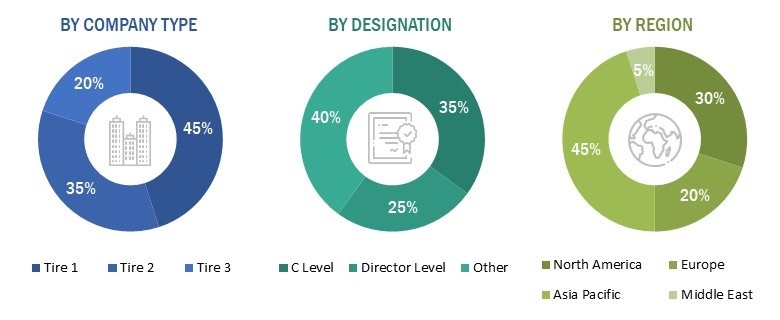
To know about the assumptions considered for the study, download the pdf brochure
Market Size Estimation
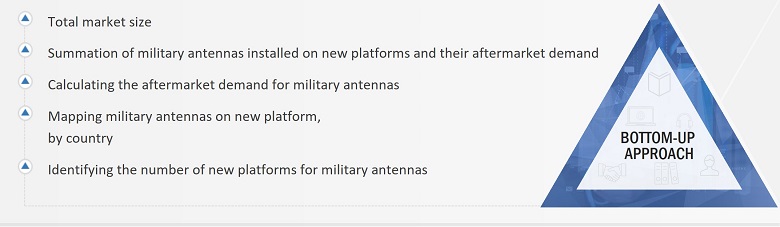
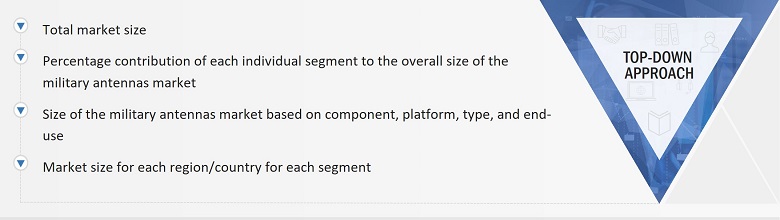
Both top-down and bottom-up approaches were used to estimate and validate the size of the military antenna market. The research methodology used to estimate the market size included the following details:
- Key players in the military antenna market were identified through secondary research, and their market share was determined through primary and secondary research. This included a study of annual and financial reports of top market players and extensive interviews of leaders such as Chief Executive Officers (CEOs), directors, and marketing executives of leading companies operating in the military antenna market.
- All percentage shares, splits, and breakdowns were determined using secondary sources and verified through primary sources.
- All possible parameters affecting the market covered in this research study were accounted for, viewed in extensive detail, verified through primary research, and analyzed to obtain the final quantitative and qualitative data on the military antenna market.
This data was consolidated, enhanced with detailed inputs, analyzed by MarketsandMarkets, and presented in this report.
Market size estimation methodology: Bottom-up Approach
Market size estimation methodology: Top- Down Approach
Data Triangulation
After arriving at the overall size of the military antenna market from the market size estimation process explained above, the total market was split into several segments and subsegments. Data triangulation and market breakdown procedures explained below were implemented, wherever applicable, to complete the overall market engineering process and arrive at the exact statistics for various market segments and subsegments. The data was triangulated by studying various factors and trends from both the demand and supply sides. In addition,, the market size was validated using both top-down and bottom-up approaches.
The following figure indicates the market breakdown structure and data triangulation procedure that were implemented in the market engineering process to make this report on the military antenna market.
Market Definition
? According to IEEE Standard Definitions of Terms, an antenna is any device that converts electronic signals to electromagnetic waves (and vice versa) effectively with minimum loss of signals. The military antenna market encompasses the design, production, and supply of antennas specifically engineered for military use. These antennas are critical for various defense applications, including communication, navigation, surveillance, and electronic warfare. They provide reliable and secure connectivity and data transmission across diverse platforms such as ground vehicles, aircraft, ships, and unmanned systems. This market includes a wide range of antenna types, including satellite communication antennas, radar antennas, and tactical communication antennas, all designed to meet stringent military standards and operational requirements. Antennas for air, ground, and marine platforms are considered under the scope of the study.
Key Stakeholders
- Manufacturers of Military Antennas
- System Integrators
- Original Equipment Manufacturers (OEMs)
- Subcomponent Manufacturers
- Military Service Providers
- Potential Investors (Venture Capitalists)
- Research Organizations
Report Objectives
- To define, describe, segment, and forecast the size of the military antenna market based on technology, platform, component, frequency, application, point of sale, and region from 2020 to 2029
- To forecast the size of various segments of the military antenna market with respect to five regions, namely North America, Europe, Asia Pacific, the Middle East, and the Rest of the World (RoW), and with major countries in these regions.
- To identify and analyze the key drivers, restraints, opportunities, and challenges influencing the growth of the market
- To identify opportunities for stakeholders in the market by studying key market and technology trends
- To analyze competitive developments such as contracts, agreements, acquisitions & partnerships, new product launches & developments, and R&D activities in the market
- To estimate the procurement of military antennas by different countries to track technological advancements in military antennas
- To provide a comprehensive competitive landscape of the market along with an overview of the different strategies adopted by key players to strengthen their position in the market
Available customizations
Along with the market data, MarketsandMarkets offers customizations as per the specific needs of companies. The following customization options are available for the report:
Product Analysis
- Product matrix, which gives a detailed comparison of the product portfolio of each company
Regional Analysis
- Further breakdown of the market segments at country-level
Company Information
- Detailed analysis and profiling of additional market players (up to 5)
Get the Full Military Antenna Market Report
Full forecast, segment splits, and company analysis for all Military Antenna Market.
- Canada Military Antenna Market
- US Military Antenna Market
- UK Military Antenna Market
- France Military Antenna Market
- Germany Military Antenna Market
- Italy Military Antenna Market
- India Military Antenna Market
- Japan Military Antenna Market
- South Korea Military Antenna Market
- Australia Military Antenna Market
- Saudi Arabia Military Antenna Market
- Israel Military Antenna Market
- Rest Of Europe Military Antenna Market
- Rest Of Asia Pacific Military Antenna Market
- Brazil Military Antenna Market
- Latin America Military Antenna Market
Need a Tailored Report?
Customize this report to your needs
Get 10% FREE Customization
Customize This Report
