
North America Mobile Mass Spectrometers Market (2026-2031)

The North America Mobile Mass Spectrometers Market was valued at $192.5 Million in 2026 and projected to reach to $343.7 Million by 2031, representing a compound annual growth rate of 12.3%. North America's mobile mass spectrometers market is poised for sustained expansion through 2031, supported by increasing healthcare expenditure, growing prevalence of chronic diseases, and widespread adoption of portable diagnostic technologies in clinical settings.


| Market Size in | USD 26.32 MN |
| Market Forecast in | |
| CAGR | |
| Forecast Period | |
| Units Considered | Value (USD MN) |
North America Mobile Mass Spectrometers Market Trends and Insights
- This 12.3% compound annual growth rate reflects North America's leadership in healthcare innovation and adoption of advanced diagnostic technologies.
- North America's strong regulatory framework, high healthcare spending, and concentration of medical device manufacturers drive accelerated market penetration across clinical laboratories, hospitals, and point-of-care settings. The North America market benefits from increasing demand for rapid, portable diagnostic solutions in emergency medicine and field-based testing environments.
- North America's aging population and rising prevalence of chronic diseases necessitate faster, more efficient diagnostic capabilities that mobile mass spectrometers provide.
- Investment in healthcare infrastructure and R&D initiatives across North America further supports market expansion through 2031..
Key Market Statistics
- CAGR (2026-2031) 12.3% CAGR
- Market Size, 2026 ~USD 192.5 Million
- Forecast, 2031 ~USD 343.7 Million
- Geography North America
North America Mobile Mass Spectrometers Market Overview
Market Leadership Position :
North America commands the largest share of the global mobile mass spectrometers market, driven by advanced healthcare infrastructure, significant R&D investments, and early adoption of cutting-edge diagnostic technologies across hospitals and clinical laboratories.
Accelerated Growth Trajectory :
With a 12.3% CAGR from 2026 to 2031, North America's market growth outpaces the global average of 11.3%, reflecting strong demand for portable diagnostic solutions and increased healthcare spending in the region.
Regulatory Excellence & Standards :
North America's robust regulatory framework, including FDA oversight and stringent quality standards, ensures high-quality mobile mass spectrometer adoption while building trust among healthcare providers and patients.
Substantial Market Expansion :
The market is projected to grow from $192.5 million in 2026 to $343.7 million by 2031, representing a 78.6% increase driven by technological innovation, clinical validation, and expanding applications in point-of-care diagnostics.
North America Mobile Mass Spectrometers Market Dynamics
- The region's strong emphasis on precision medicine and personalized healthcare drives demand for advanced analytical instruments that enable rapid, accurate diagnostics at the point of care. Key growth catalysts include technological advancements in miniaturization, integration with digital health platforms, and expanding applications in toxicology, microbiology, and pharmaceutical analysis.
- Healthcare institutions across North America are increasingly investing in mobile mass spectrometry solutions to enhance diagnostic capabilities, reduce turnaround times, and improve patient outcomes, positioning the region as a global innovation hub for this critical healthcare technology..
Market Ecosystem

MOBILE MASS SPECTROMETERS MARKET: COMMERCIAL USE CASES ACROSS INDUSTRIES
| COMPANY | USE CASE DESCRIPTION | BENEFITS |
|---|---|---|
 |
The MX908 helps in immediate identification of unknown substances in the field, enabling faster and safer decision-making | Handheld device (e.g., MX908) used by law enforcement and hazmat teams for on-site detection of narcotics, explosives, and chemical threats |
 |
Portable GC-MS systems used for environmental monitoring and field-based chemical analysis (air, soil, water contaminants) | Real-time environmental assessment, allowing quicker regulatory compliance and faster response to contamination events |
 |
Portable GC-MS systems deployed in military and homeland security operations for the detection of hazardous chemicals and toxic industrial compounds | Enhanced situational awareness in mission-critical environments, enabling rapid response and minimizing exposure to dangerous substances |
 |
Field-deployable MS systems (Bruker MM2) for chemical warfare agent (CWA) detection and forensic analysis | Reduces the need for specialized in-house column-packing expertise and labor, reducing the need for specialized workflow |
Logos and trademarks shown above are the property of their respective owners. Their use here is for informational and illustrative purposes only.
Related Ecosystem
Analytical And Scientific Instrumentation
- Environmental Testing
- Gas Chromatography
- Polymerase Chain Reaction (PCR)
- Automated Liquid Handling Systems
- Flow Cytometry
- Thermo Fisher Scientific Inc.
- Danaher Corporation
- Agilent Technologies, Inc.
- Merck KGaA
- Shimadzu Corporation
Key Takeaways
- North America's mobile mass spectrometers market grows at 12.3% CAGR from 2026 to 2031, outpacing global growth.
- North America's market size reaches $343.7 million by 2031, nearly doubling from $192.5 million in 2026.
- North America leads adoption due to advanced healthcare infrastructure, regulatory support, and high diagnostic spending.
- North America's demand is driven by emergency medicine applications, aging demographics, and point-of-care testing expansion.
Mobile Mass Spectrometers Market Report Scope
| Report Metric | Details |
|---|---|
| Base Year | 2026 |
| Fastest Growing Segment | OTHER COMPONENTS (Component) |
| Forecast Period | 2026–2031 |
| Growth Rate | CAGR of 11.3% from 2026 to 2031 |
| Largest Segment | OUTSIDE LAB-BASED APPLICATIONS (Application) |
| Market Size Base Year (Billions) | ~USD 1.68 (2026) |
| Revenue Forecast (Billions) | ~USD 2.87 (2031) |
| Segments Covered | Product Type, Component, Application, Type |
North America Mobile Mass Spectrometers Market Report Segmentation
4 segment dimensions are covered across the global market.
By Product Type
- Benchtop Platforms
- Field Deployable/ Backpack- Based Platforms
- Hand-Held & Portable Platforms
- Other Platforms
By Component
- Detectors
- Electrodes & Electromagnet
- Electrodes & Electromagnets
- Ion Interface & Optics Systems
- Ion Sources
- Mass Analyzers
- Other Components
- Sample Introduction Systems
- Vacuum Systems & Pumps
By Application
- Hand-Held Applications
- Lab-Based Applications
- Outside Lab-Based Applications
By Type
- Cbrn Mission Testing
- Environmental Testing
- Food Testing
- Forensic Toxicology
- Homeland & Border Security
- Military Applications
- Narcotics Detection
- Other Hand-Held Applications
- Other Lab-Based Applications
- Other Outside Lab-Based Applications
- Rapid Response & Disaster Management
Target Audience
- Medical Device Manufacturers : Manufacturers need North America-specific market data to develop competitive mobile mass spectrometer products, understand regulatory pathways, and identify distribution opportunities in the region's high-value healthcare market.
- Healthcare Providers & Hospitals : Hospital administrators and laboratory directors require market insights to evaluate mobile mass spectrometry investments, benchmark adoption rates, and optimize diagnostic capabilities against regional competitors.
- Diagnostic Laboratory Operators : Laboratory managers need detailed market analysis to assess demand for portable diagnostic solutions, plan capital expenditures, and enhance service offerings in North America's competitive diagnostic landscape.
- Investment & Private Equity Firms : Investors seeking North America healthcare technology opportunities require comprehensive market data to evaluate growth potential, identify acquisition targets, and assess return on investment in mobile mass spectrometry companies.
- Healthcare Consultants & Analysts : Consultants advising healthcare organizations need region-specific market intelligence to develop strategic recommendations, support business case development, and guide technology adoption decisions in North America.
Key Companies in the North America Mobile Mass Spectrometers Market
| Company | HQ | Ownership | Strongest segments |
|---|---|---|---|
| THERMO FISHER SCIENTIFIC INC. | United States | Public Company | Portable (lab-centric, transportable systems),Field Deployable (outside lab, ruggedized),Handheld, |
| TELEDYNE TECHNOLOGIES | United States | Public Company | Field Deployable Systems (Outside Lab: CBRN, Military, Homeland Security, Disaster Management),Portable / Handheld (Narcotics, Forensics, On-site Env and Food Checks),Benchtop / Lab-focused (Env, Food, Forensics Labs), |
| 908 DEVICES INC. | United States | Public Company | Handheld Mass Spectrometers (MX908 and related),Portable / Field-Deployable FTIR (ThreatID, VipIR, ProtectIR),Benchtop / Lab-Oriented and Components, |
| BRUKER | United States | Public Company | Portable,Field Deployable,Benchtop (mobile-capable lab use), |
| WATERS CORPORATION | United States | Public Company | Benchtop mobile/transportable MS,Portable field-deployable MS,Handheld MS and ultra-rugged units, |
| AGILENT TECHNOLOGIES, INC. | United States | Public Company | Portable (lab-oriented mobile systems),Field Deployable (outside-lab, vehicle or shelter-based),Handheld, |
| JEOL LTD. | Japan | Public Company | Benchtop (lab-focused mobile workflows),Portable,Field Deployable / Handheld, |
| PERKINELMER | United States | Public Company | Portable,Field Deployable,Benchtop, |
| ASTROTECH CORPORATION | United States | Public Company | Portable / Field Deployable (TRACER 1000, Pro-Control 1000-D2, EN-SCAN),Handheld / Point-of-Use (BreathTest-1000 and compact variants),Lab-focused benchtop and cannabis/hemp (AGLAB-1000), |
| INFICON | Switzerland | Public Company | Outside lab (Narcotics, CBRN, Military, Homeland Security),Lab (Env, food, forensics, Disaster management),Handheld, |
| MICROSAIC | United Kingdom | Public Company | Compact / Portable Mass Spectrometers (Lab & Outside Lab),Modern Water MicroTox CTM/FX/LX Toxicity Monitors,Consumables, Spare Parts, and Services, |
| LECO CORPORATION | United States | Public Company | Benchtop (lab-focused MS adjacencies, integration content),Portable,Field Deployable, |
| HTDS | United States | Public Company | Lab – Environmental & Food,Lab – Forensics & Disaster Management,Outside Lab – Narcotics & CBRN, |
THERMO FISHER SCIENTIFIC INC.
Thermo Fisher Scientific Inc. is a United States-based public company founded in 1956 that employs 125,000 people. The company operates as a major provider of scientific and laboratory solutions.
TELEDYNE TECHNOLOGIES
Teledyne Technologies is a United States-based public company founded in 1960 with 15,800 employees. The company operates across multiple technology and engineering sectors.
908 DEVICES INC.
908 Devices Inc. is a United States-based public company founded in 2012 with 172 employees. The company operates in the analytical instrumentation sector.
BRUKER
Bruker is a United States-based public company founded in 1960 with 11,085 employees. The company provides scientific instruments and analytical solutions.
WATERS CORPORATION
Waters Corporation is a United States-based public company founded in 1958 with 7,900 employees. The company specializes in laboratory analytical instruments and software.
AGILENT TECHNOLOGIES, INC.
Agilent Technologies, Inc. is a United States-based public company founded in 1999 with 18,000 employees. The company provides life sciences, diagnostics, and applied chemical markets solutions.
JEOL LTD.
JEOL Ltd. is a Japan-based public company founded in 1949 with 3,731 employees. The company manufactures electron microscopes and scientific instruments.
PERKINELMER
PerkinElmer is a United States-based public company founded in 1937 with 11,000 employees. The company provides scientific instruments, software, and services for research and diagnostics.
ASTROTECH CORPORATION
AstroTech Corporation is a United States-based public company founded in 1984 with 32 employees. The company operates in the aerospace and technology sectors.
INFICON
INFICON is a Switzerland-based public company founded in 2000 with 1,731 employees. The company provides vacuum instrumentation and leak detection solutions.
MICROSAIC
Microsaic is a United Kingdom-based public company founded in 1998 with 5 employees. The company operates in the analytical instrumentation sector.
LECO CORPORATION
LECO Corporation is a United States-based private company founded in 1895 with 12,000 employees. The company manufactures laboratory instruments and analytical equipment.
HTDS
HTDS is a United States-based public company. Limited information is available regarding the company's founding date and employee count.
Countries within North America - compare and drill down
| Country | 2025 size (native) |
|---|---|
| US | USD 888.3 Million |
| Canada | USD 183.2 Million |
Country market size visualization
Reasons to Buy this Report
- Regional Market Dominance Insights : Gain comprehensive understanding of North America's leadership position in mobile mass spectrometers, including competitive dynamics, market share distribution, and strategic positioning of key players across the US and Canada.
- Growth Opportunity Identification : Identify high-potential segments and applications within North America's 12.3% CAGR growth trajectory, enabling strategic investment decisions and market entry planning for new product launches and partnerships.
- Regulatory & Compliance Framework : Access detailed analysis of North America's FDA regulations, quality standards, and compliance requirements specific to mobile mass spectrometers, ensuring market-ready product development and faster commercialization.
- Country-Level Market Breakdown : Leverage granular market data for the US ($888.3M) and Canada ($183.2M), enabling precise market sizing, demand forecasting, and localized go-to-market strategies tailored to each country's healthcare landscape.
- Competitive Intelligence & Trends : Understand emerging trends, technological innovations, and competitive strategies driving North America's market growth, including adoption patterns in hospitals, diagnostic labs, and emerging point-of-care settings.
Frequently asked questions
What is the current market size of mobile mass spectrometers in North America?
North America's mobile mass spectrometers market was valued at $192.5 million in 2026 and is expected to grow to $343.7 million by 2031.
What is the growth rate for mobile mass spectrometers in North America?
North America's mobile mass spectrometers market is projected to grow at a compound annual growth rate (CAGR) of 12.3% between 2026 and 2031.
Which applications drive North America's mobile mass spectrometers market?
North America's market is driven by emergency medicine, clinical diagnostics, toxicology screening, and point-of-care testing applications across hospitals and laboratories.
Why is North America a leading market for mobile mass spectrometers?
North America leads due to advanced healthcare infrastructure, strong regulatory frameworks, high healthcare expenditure, and significant R&D investment in diagnostic technologies.
What factors support growth in North America's mobile mass spectrometers market?
North America's growth is supported by aging population demographics, rising chronic disease prevalence, demand for rapid diagnostics, and expansion of point-of-care testing capabilities.
RESEARCH METHODOLOGY
This study balanced primary and secondary research for the mobile mass spectrometers market by analyzing various market variables affecting small, medium, and large businesses. The next step involved conducting primary research with industry experts along the value chain to validate the findings, assumptions, and market sizing. Multiple methodologies, including both top-down and bottom-up approaches, were employed to estimate the overall market size.
The study encompasses market segments, evolving trends, regulatory frameworks, and competitive dynamics. It also examines leading market players and the strategies they employ in this sector. In conclusion, the total market size was estimated using a combination of top-down and bottom-up approaches, with data triangulation to finalize the market size. Primary research was conducted throughout the study to validate and test each hypothesis.
Secondary Research
During the study, secondary research was conducted using a range of sources, including directories and databases such as Bloomberg Businessweek, D&B Hoovers, and Factiva. Additional materials included white papers, annual reports, SEC filings, and investor presentations. This research approach was adopted to collect and analyze data that provides comprehensive, technical, and market-focused insights into the mobile mass spectrometers market. The findings offer insights into key players and market segmentation, informed by recent industry trends and significant developments. A database comprising leading industry figures was also created as part of this secondary research.
Primary Research
Primary research involved activities designed to gather both qualitative and quantitative data. A variety of individuals from both the supply and demand sides were interviewed during this phase. On the supply side, key figures such as CEOs, vice presidents, directors of marketing and sales, directors of technology and innovation, and other important leaders were interviewed by industry experts. On the demand side, primary sources included academic institutions and research organizations. This research aimed to validate market segmentation, identify prominent market participants, and gain insights into significant industry trends and market dynamics through a real-world primary study.
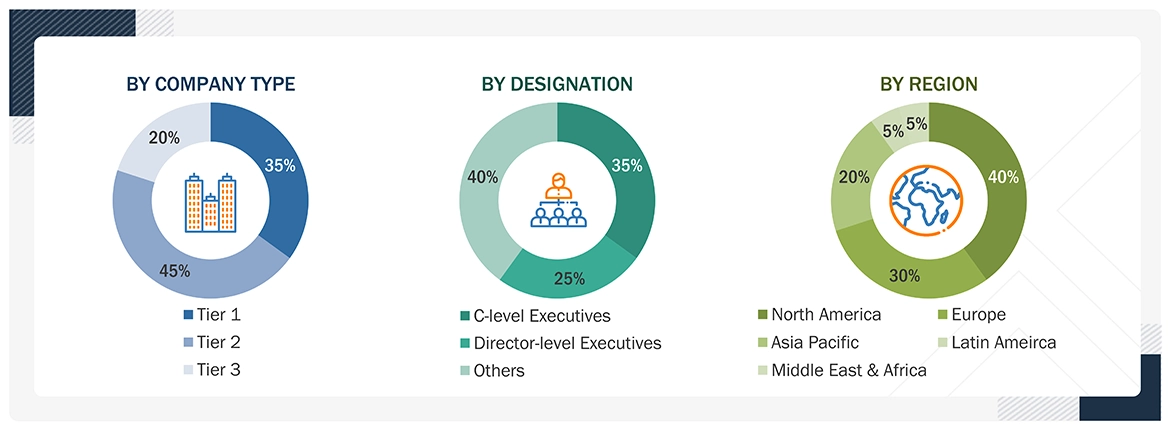
To know about the assumptions considered for the study, download the pdf brochure
Market Size Estimation
This report provides an analysis of the global mobile mass spectrometers market size by reviewing the revenue shares of prominent companies. Key players with significant market shares were identified through secondary research, and their revenue from mobile mass spectrometers sales was calculated and subsequently validated through primary research. The secondary research included an analysis of annual and financial reports from leading market participants. Meanwhile, the primary research involved in-depth interviews with key thought leaders, such as directors, CEOs, and marketing executives.
To calculate the global market value, segmental revenues were derived from revenue mappings provided by service and product providers. The process involved the following steps:
- Generating a list of key players that operate in the mobile mass spectrometers market at the regional or global levels
- Mapping the products of manufacturers of mobile mass spectrometers and related product lines at the regional level
- Mapping the revenues of listed players through the sales of mobile mass spectrometers and related products
- Mapping the revenues of major players to cover at least ~90% of the global market share as of 2024
- Extrapolating the mapped revenues of players to arrive at the global market value for the respective segment
- Summing up the market value for all segments and subsegments to achieve the actual value of the global mobile mass spectrometers market
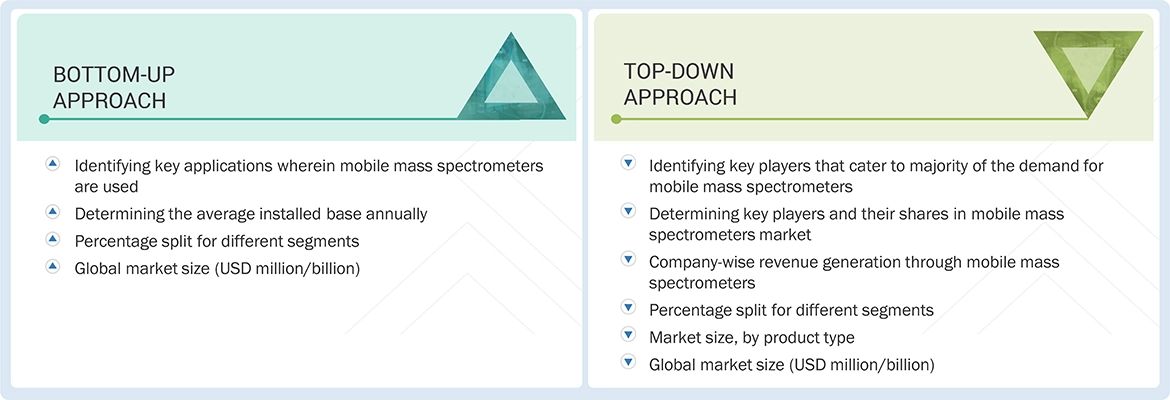
Data Triangulation
After estimating the overall market size, the mobile mass spectrometers market was classified into subsegments. The overall market engineering process was finalized through data triangulation and market segmentation, yielding accurate statistics for all segments and subsegments. This triangulation involved analyzing various trends and factors on both the demand and supply sides. Furthermore, the mobile mass spectrometers market data was verified and validated using both top-down and bottom-up approaches.
Market Definition
A mobile mass spectrometer is a portable device that identifies chemicals on-site by measuring the mass-to-charge ratio of ions. The mobile mass spectrometers market encompasses product types, e.g., handheld and portable platforms; field-deployable, backpack-based platforms used in lab-based applications; point-of-use, lab-based applications; and handheld applications.
Key Stakeholders
- Pharmaceutical companies
- Biopharmaceutical companies
- Contract research organizations (CROs)
- Contract development and manufacturing organizations (CDMOs)
- Defense organizations
- Narcotics testing facilities
- Academic & research institutes
- Regulatory authorities and industry associations
- Venture capitalists and investment firms
- Research labs
Report Objectives
- To define, describe, and forecast the size of the mobile mass spectrometers market based on product type, application, component, and region
- To provide detailed information regarding the major factors influencing the growth potential of the global mobile mass spectrometers market (drivers, restraints, opportunities, challenges, and trends)
- To analyze the micromarkets with respect to individual growth trends, prospects, and contributions to the global mobile mass spectrometers market
- To analyze key growth opportunities in the global mobile mass spectrometers market for key stakeholders and provide details of the competitive landscape for market leaders
- To forecast the size of market segments and/or subsegments with respect to five major regions: North America (US and Canada), Europe (Germany, France, the UK, Spain, Italy, and the RoE), Asia Pacific (Japan, China, India, Australia, South Korea, and RoAPAC), Latin America (Brazil, Mexico, RoLA), and the Middle East & Africa (GCC and RoMEA)
- To profile the key players in the mobile mass spectrometers market and comprehensively analyze their market shares and core competencies
- To analyze the competitive developments undertaken in the global mobile mass spectrometers market, such as product launches, agreements, expansions, and mergers & acquisitions.
Available customizations:
With the market data provided, MarketsandMarkets offers customizations tailored to your company’s specific needs. The following customization options are available for the present global mobile mass spectrometers market report:
Product Analysis
- Product matrix, which gives a detailed comparison of the product portfolios of the top 15 companies
Company Information
- Detailed analysis and profiling of additional market players (up to 13)
Geographic Analysis
- Further breakdown of the Rest of Europe mobile mass spectrometers market into Russia, Belgium, the Netherlands, Switzerland, Austria, Finland, Sweden, Poland, and Portugal
- Further breakdown of the Rest of Asia Pacific mobile mass spectrometers market into Singapore, Taiwan, New Zealand, the Philippines, Malaysia, and other Asia Pacific countries
- Further breakdown of the Rest of Latin America mobile mass spectrometers into Argentina, Chile, Peru, and Colombia.
Get the Full Mobile Mass Spectrometers Market Report
Full forecast, segment splits, and company analysis for all Mobile Mass Spectrometers Market.
- Australia Mobile Mass Spectrometers Market
- South Korea Mobile Mass Spectrometers Market
- Brazil Mobile Mass Spectrometers Market
- Mexico Mobile Mass Spectrometers Market
- Rest Of Europe Mobile Mass Spectrometers Market
- Rest Of Asia Pacific Mobile Mass Spectrometers Market
- Rest Of Latin America Mobile Mass Spectrometers Market
- GCC Countries Mobile Mass Spectrometers Market
- US Mobile Mass Spectrometers Market
- Canada Mobile Mass Spectrometers Market
- Germany Mobile Mass Spectrometers Market
- UK Mobile Mass Spectrometers Market
- France Mobile Mass Spectrometers Market
- Italy Mobile Mass Spectrometers Market
- Spain Mobile Mass Spectrometers Market
- China Mobile Mass Spectrometers Market
- Japan Mobile Mass Spectrometers Market
- India Mobile Mass Spectrometers Market
Need a Tailored Report?
Customize this report to your needs
Get 10% FREE Customization
Customize This Report
