
Rest Of Europe Nanocellulose Market (2024-2029)

The Rest Of Europe Nanocellulose Market was valued at $569.7 Million in 2024 and projected to reach to $1868.2 Million by 2029, representing a compound annual growth rate of 16.0%. Rest Of Europe's nanocellulose market is positioned for accelerated growth through 2029, driven by increasing regulatory pressure for sustainable materials and rising corporate environmental commitments.


| Market Size in | USD 26.32 MN |
| Market Forecast in | |
| CAGR | |
| Forecast Period | |
| Units Considered | Value (USD MN) |
Rest Of Europe Nanocellulose Market Trends and Insights
- This 16.0% compound annual growth rate reflects strong regional demand driven by sustainability initiatives and advanced material adoption across multiple industries.
- Rest Of Europe is positioning itself as a key hub for nanocellulose innovation, with increasing investments in R&D and production capacity. The nanocellulose market in Rest Of Europe is benefiting from stringent environmental regulations and a shift toward bio-based materials in packaging, composites, and specialty applications.
- Rest Of Europe's established chemical and materials infrastructure supports rapid commercialization of nanocellulose technologies.
- Between 2024 and 2029, Rest Of Europe is expected to capture significant market share as manufacturers scale production and develop cost-competitive solutions for industrial end-users..
Key Market Statistics
- CAGR (2024-2029) 16.0% CAGR
- Market Size, 2024 ~USD 569.7 Million
- Forecast, 2029 ~USD 1868.2 Million
- Country Rest Of Europe
Rest Of Europe Nanocellulose Market Overview
Robust Regional Growth :
Rest Of Europe's nanocellulose market is expanding at 16% CAGR, significantly outpacing mature markets. The region is projected to grow from USD 569.7 million in 2024 to USD 1,868.2 million by 2029, demonstrating strong investor confidence and market maturation.
Sustainability-Driven Adoption :
European regulatory frameworks and corporate sustainability commitments are accelerating nanocellulose adoption across packaging, textiles, and composites. Rest Of Europe's stringent environmental standards create favorable conditions for bio-based material innovation and commercialization.
Emerging Innovation Hub :
Rest Of Europe is establishing itself as a key innovation center for nanocellulose applications. Regional research institutions and manufacturers are developing advanced formulations for high-performance composites, coatings, and specialty materials targeting premium market segments.
Cross-Industry Expansion :
Nanocellulose adoption is spreading beyond traditional sectors into pharmaceuticals, cosmetics, and food packaging. Rest Of Europe's diverse industrial base provides multiple growth vectors and reduces market concentration risk compared to single-industry dependent regions.
Rest Of Europe Nanocellulose Market Dynamics
- The region's advanced manufacturing capabilities and strong R&D infrastructure support commercialization of innovative nanocellulose applications across packaging, textiles, and composites sectors.
- Investment in production capacity and technology development is expected to intensify as major chemical and material companies expand regional operations. The market outlook remains positive despite global competition, as Rest Of Europe benefits from proximity to established supply chains, skilled workforce availability, and favorable government incentives for green chemistry initiatives.
- Emerging applications in high-performance composites and specialty coatings present significant growth opportunities.
- Regional consolidation and strategic partnerships are anticipated to accelerate market maturation and drive economies of scale in nanocellulose production..
Market Ecosystem
Related Ecosystem
Fibers And Composites
- Polyetheretherketone (PEEK)
- Polyphenylene Sulfide (PPS)
- Epoxy Resin
- Polycarbonate
- Polyester Resin
- Toray Industries, Inc.
- Teijin Limited
- Sgl carbon se
- Hexcel Corporation
- Solvay sa
Key Takeaways
- Rest Of Europe's nanocellulose market will grow from USD 569.7M (2024) to USD 1,868.2M (2029) at a 16.0% CAGR.
- Rest Of Europe is driven by EU sustainability mandates and demand for eco-friendly materials in packaging and composites.
- Rest Of Europe's established industrial base and R&D infrastructure accelerate nanocellulose commercialization and adoption.
- Rest Of Europe represents a high-growth opportunity as manufacturers scale production and reduce production costs through 2029.
Nanocellulose Market Report Scope
| Report Metric | Details |
|---|---|
| Base Year | 2024 |
| Fastest Growing Segment | OTHER TYPES (Type) |
| Forecast Period | 2024-2029 |
| Growth Rate | CAGR of 23.7% from 2024 to 2029 |
| Largest Segment | HYDROXYPROPYL METHYL CELLULOSE (Product Derivative) |
| Market Size Base Year (Billions) | ~USD 0.62 (2024) |
| Revenue Forecast (Billions) | ~USD 1.8 (2029) |
| Segments Covered | Type, Mfc & Nfc, Raw Material, Application, Product Derivative |
Rest Of Europe Nanocellulose Market Report Segmentation
5 segment dimensions are covered across the global market.
By Type
- Cnc
- Mfc
- Nfc
- Other Types
By Mfc & Nfc
- Mfc
- Nfc
By Raw Material
- Non-Wood
- Wood
By Application
- Biomedical & Pharmaceuticals
- Composites
- Electronics & Sensors
- Other Applications
- Paints & Coatings
- Pulp & Paper
By Product Derivative
- Ethyl Cellulose
- Hydroxyethyl Cellulose
- Hydroxyethyl Methyl Cellulose
- Hydroxypropyl Cellulose
- Hydroxypropyl Methyl Cellulose
- Methyl Cellulose
Target Audience
- Chemical & Material Manufacturers : Rest Of Europe-based and international producers need regional market intelligence to guide production capacity decisions, product portfolio development, and competitive positioning in this high-growth market segment.
- Strategic Business Planners : Corporate strategy teams require detailed Rest Of Europe market data to evaluate regional expansion opportunities, assess market entry feasibility, and develop long-term growth strategies aligned with regional sustainability trends.
- Investment & Private Equity Firms : Investors targeting Rest Of Europe's nanocellulose sector need comprehensive market analysis to identify acquisition targets, evaluate investment returns, and understand regional growth catalysts and risk factors.
- End-User Industries : Packaging, textile, composite, and specialty material companies in Rest Of Europe require market insights to assess nanocellulose sourcing options, evaluate supplier capabilities, and plan material transition strategies.
- Government & Policy Organizations : Regional economic development agencies and policy makers need market data to support green chemistry initiatives, attract nanocellulose investments, and align industrial policy with sustainability objectives specific to Rest Of Europe.
Reasons to Buy this Report
- Regional Market Sizing & Forecasts : Obtain precise market valuation for Rest Of Europe (USD 569.7M in 2024) with detailed 5-year projections. Understand regional growth dynamics at 16% CAGR versus global 23.7% benchmark to identify competitive positioning opportunities.
- Regulatory & Sustainability Landscape : Gain insights into Rest Of Europe's unique regulatory environment driving nanocellulose adoption. Understand how EU sustainability directives and national green chemistry policies create market opportunities and competitive advantages for compliant manufacturers.
- Industry-Specific Application Analysis : Access detailed breakdown of nanocellulose demand across Rest Of Europe's key sectors including packaging, textiles, composites, and emerging applications. Identify high-growth segments and market entry strategies tailored to regional industrial priorities.
- Competitive Intelligence & Market Players : Understand the competitive landscape specific to Rest Of Europe, including regional manufacturers, technology leaders, and emerging innovators. Benchmark your position against regional competitors and identify partnership or acquisition opportunities.
- Investment & Expansion Strategy : Make informed decisions on regional expansion, capacity investment, and product development. Leverage Rest Of Europe-specific market data to justify capital allocation, identify growth hotspots, and optimize go-to-market strategies for maximum ROI.
Frequently asked questions
What is the market size of nanocellulose in Rest Of Europe?
Rest Of Europe's nanocellulose market was valued at USD 569.7 million in 2024 and is projected to reach USD 1,868.2 million by 2029.
What is the growth rate for nanocellulose in Rest Of Europe?
Rest Of Europe's nanocellulose market is expected to grow at a compound annual growth rate (CAGR) of 16.0% from 2024 to 2029.
What drives nanocellulose demand in Rest Of Europe?
Rest Of Europe's nanocellulose demand is driven by EU environmental regulations, sustainability initiatives, and increasing adoption in packaging, composites, and specialty applications.
Which industries use nanocellulose in Rest Of Europe?
Rest Of Europe's nanocellulose is utilized across packaging, composites, automotive, pharmaceuticals, cosmetics, and advanced material applications.
What competitive advantages does Rest Of Europe have in nanocellulose?
Rest Of Europe benefits from established chemical infrastructure, strong R&D capabilities, regulatory support for bio-based materials, and proximity to key European markets.
RESEARCH METHODOLOGY
The study involved four major activities in estimating the current market size of nanocellulose. Exhaustive secondary research was done to collect information on the market, peer, and parent markets. The next step was to validate these findings, assumptions, and sizes with industry experts across the value chain of nanocellulose through primary research. Both top-down and bottom-up approaches were employed to estimate the complete market size. After that, market breakdown and data triangulation were used to estimate the size of the market's segments and sub-segments.
Secondary Research
The research methodology used to estimate and forecast the access control market begins with capturing data on the revenues of key vendors in the market through secondary research. In the secondary research process, various secondary sources, such as Hoovers, Bloomberg BusinessWeek, Factiva, World Bank, and Industry Journals, were referred to for identifying and collecting information for this study. These secondary sources included annual reports, press releases & investor presentations of companies, white papers, certified publications, articles by recognized authors, notifications by regulatory bodies, trade directories, and databases. Vendor offerings have also been taken into consideration to determine market segmentation.
Primary Research
The nanocellulose market comprises several stakeholders, such as raw material suppliers, processors, end-product manufacturers, and regulatory organizations, in the supply chain. The demand side of this market is characterized by the development of pulp & paper, composites, biomedical & pharmaceutical, paints & Coatings, electronics & sensors, and other applications. Advancements in technology characterize the supply side. Various primary sources from the supply and demand sides of the market were interviewed to obtain qualitative and quantitative information. Following is the breakdown of the primary respondents:
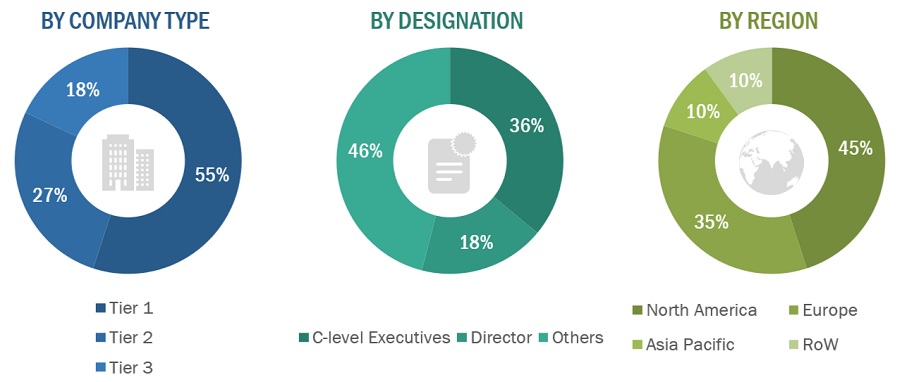
To know about the assumptions considered for the study, download the pdf brochure
Market Size Estimation
The top-down and bottom-up approaches were used to estimate and validate the total size of the nanocellulose market. These methods were also used extensively to determine the size of various sub-segments in the market. The research methodology used to estimate the market size included the following:
- The key players were identified through extensive primary and secondary research.
- The value chain and market size of the industrial evaporators market, in terms of value, were determined through primary and secondary research.
- All percentage shares, splits, and breakdowns were determined using secondary sources and verified through primary sources.
- All possible parameters that affect the market covered in this research study were accounted for, viewed in extensive detail, verified through primary research, and analyzed to obtain the final quantitative and qualitative data.
- The research included the study of reports, reviews, and newsletters of top market players, along with extensive interviews for opinions from key leaders, such as CEOs, directors, and marketing executives.
Global Nanocellulose Market Size: Bottom-Up Approach
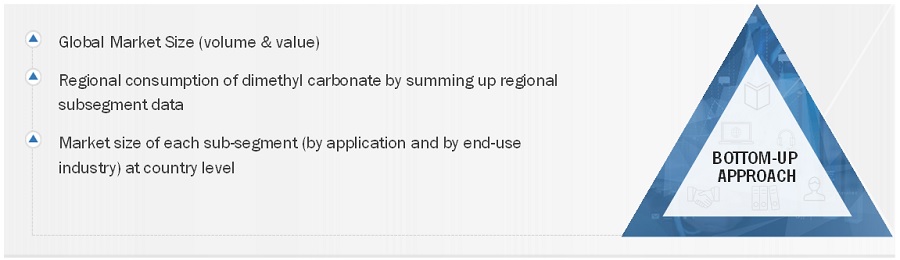
To know about the assumptions considered for the study, Request for Free Sample Report
Global Nanocellulose Market Size: Top-Down Approach
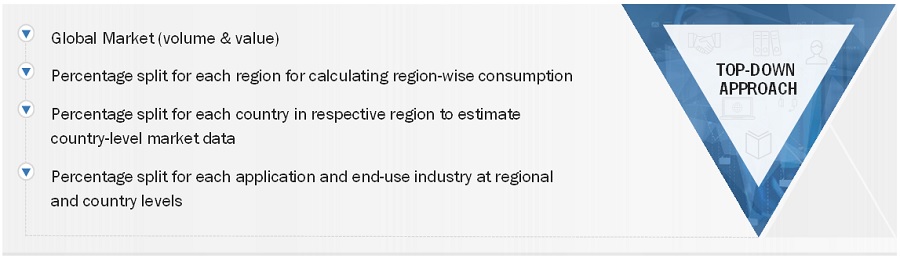
Data Triangulation
The market was split into several segments and sub-segments after arriving at the overall market size using the market size estimation processes as explained above. Data triangulation and market breakdown procedures were employed to complete the overall market engineering process and arrive at the exact statistics of each market segment and subsegment. The data was triangulated by studying various factors and trends from both the demand and supply sides in the pulp & paper, composites, paints & coatings, biomedical & pharmaceuticals, electronic & sensors, and other industries.
Market Definition
Nanocellulose is a bio-based nanomaterial also called nanostructured cellulose. This pseudoplastic material acts like certain gels or fluids thick or viscous in normal conditions but thin out or flow over time. The main types of nanocellulose include microfibrillated cellulose (MFC), nanofibrillated cellulose (NFC), and crystalline nanocellulose or nanocrystalline cellulose (CNC/NCC). Other types of nanocellulose include bacterial nanocellulose and cellulose filaments. Nanocellulose has the potential to take the place of or add to plastic and parts of oil and fracking drilling fluids and emulsifiers.
Key Stakeholder
- Manufacturers of dimethyl carbonate
- Traders, distributors, and suppliers of nanocellulose
- Government and research organizations
- Associations and industrial bodies
- Research and consulting firms
- R&D institutions
- Environment support agencies
- Investment banks and private equity firms
Report Objectives:
- To analyze and forecast the nanocellulose market by type, raw material, and application in terms of value and volume.
- To forecast the market size for various segments concerning four main regions: Asia Pacific, Europe, North America, Rest of the World, along with their key countries
- To provide detailed information regarding drivers, restraints, opportunities, and challenges influencing market growth
- To analyze the opportunities in the market for stakeholders by identifying the high-growth segments of the nanocellulose market
- To strategically analyze the micromarkets1 concerning individual growth trends, growth prospects, and their contribution to the overall market
- To benchmark players within the market using competitive leadership mapping, which analyses market players on various parameters within the broad categories of business and product strategies.
- To map the competitive intelligence based on company profiles, key player strategies, and game-changing developments, such as product launches and developments, expansions, mergers and acquisitions, and contracts and agreements
- To strategically profile the key players and analyze their market shares and core competencies2.
Available Customizations:
With the given market data, MarketsandMarkets offers customizations according to client-specific needs. The following customization options are available for the report:
- Additional country-level analysis of the dimethyl carbonate market
- Profiling of additional market players (up to 5)
- Product matrix, which gives a detailed comparison of the product portfolio of each company.
Get the Full Nanocellulose Market Report
Full forecast, segment splits, and company analysis for all Nanocellulose Market.
- US Nanocellulose Market
- Canada Nanocellulose Market
- Mexico Nanocellulose Market
- Finland Nanocellulose Market
- Sweden Nanocellulose Market
- Norway Nanocellulose Market
- UK Nanocellulose Market
- France Nanocellulose Market
- Germany Nanocellulose Market
- Spain Nanocellulose Market
- Netherlands Nanocellulose Market
- China Nanocellulose Market
- Japan Nanocellulose Market
- India Nanocellulose Market
- Brazil Nanocellulose Market
- Rest Of Asia Pacific Nanocellulose Market
- Others In Row Nanocellulose Market
Need a Tailored Report?
Customize this report to your needs
Get 10% FREE Customization
Customize This Report
