
North America Next Generation Drug Conjugates Market (2026-2031)

The North America Next Generation Drug Conjugates Market was valued at $2941.2 Million in 2026 and projected to reach to $6216.8 Million by 2031, representing a compound annual growth rate of 8.7%. North America's next generation drug conjugates market is poised for sustained expansion through 2031, supported by increasing oncology prevalence, growing adoption of precision medicine approaches, and robust healthcare spending.


| Market Size in | USD 26.32 MN |
| Market Forecast in | |
| CAGR | |
| Forecast Period | |
| Units Considered | Value (USD MN) |
North America Next Generation Drug Conjugates Market Trends and Insights
- This growth trajectory reflects North America's leadership in precision medicine and targeted therapeutics development.
- North America benefits from advanced healthcare infrastructure, substantial R&D investments, and a strong pipeline of innovative conjugate-based therapies addressing oncology and rare diseases. The North America market is driven by increasing adoption of antibody-drug conjugates (ADCs) and other targeted delivery mechanisms across major pharmaceutical hubs in the United States and Canada.
- North America's regulatory environment, supported by FDA approvals and accelerated pathways, enables faster commercialization of next-generation conjugates.
- The region's competitive advantage stems from established biotech ecosystems, strategic partnerships between academic institutions and industry players, and growing clinical evidence supporting conjugate efficacy and safety profiles..
Key Market Statistics
- CAGR (2026-2031) 8.7% CAGR
- Market Size, 2026 ~USD 2941.2 Million
- Forecast, 2031 ~USD 6216.8 Million
- Geography North America
North America Next Generation Drug Conjugates Market Overview
Market Leadership Position :
North America commands the largest share of the global next generation drug conjugates market, driven by the US market valued at $5,879.5 million in 2026, establishing the region as the epicenter for targeted therapeutic innovation.
Accelerated Growth Trajectory :
With an 8.7% CAGR from 2026 to 2031, North America's market is expanding from $2,941.2 million to $6,216.8 million, demonstrating sustained investor confidence and clinical adoption of advanced conjugate technologies.
R&D Investment Concentration :
North America hosts the highest concentration of pharmaceutical R&D spending globally, with major biotech hubs in California, Massachusetts, and the Northeast corridor driving innovation in antibody-drug conjugates and next-generation platforms.
Regulatory Pathway Advantage :
The FDA's expedited approval pathways and breakthrough designation programs enable faster market entry for novel drug conjugates in North America, creating a competitive advantage for developers and earlier patient access.
North America Next Generation Drug Conjugates Market Dynamics
- The region's advanced regulatory framework and established manufacturing infrastructure continue to attract significant capital investment from both established pharmaceutical companies and emerging biotech firms.
- Patent expirations of legacy therapeutics are driving pipeline diversification toward conjugate-based solutions. Key growth catalysts include expanding clinical evidence for multi-drug conjugates, rising combination therapy adoption, and increasing reimbursement coverage for targeted treatments.
- North America's aging population and elevated cancer incidence rates further accelerate market demand.
- Strategic partnerships between academic institutions and industry players strengthen the innovation ecosystem, positioning the region to maintain its global market leadership through the forecast period..
Market Ecosystem
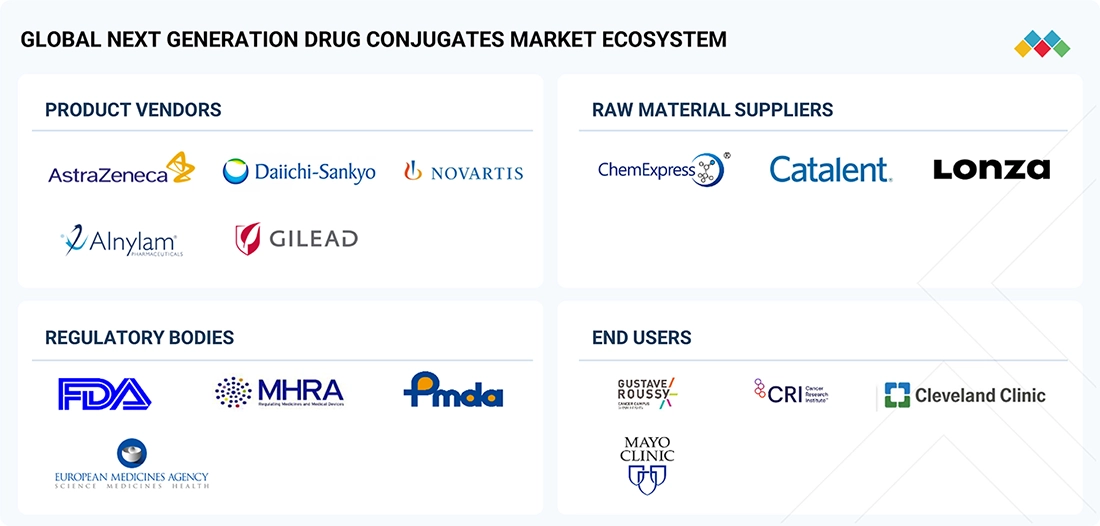
NEXT GENERATION DRUG CONJUGATES (NDCS) MARKET: COMMERCIAL USE CASES ACROSS INDUSTRIES
| COMPANY | USE CASE DESCRIPTION | BENEFITS |
|---|---|---|
 |
Utilizes its DXd (deruxtecan-based) payload platform in next generation ADCs such as HER2-targeting therapies for breast and gastric cancers | Provides enhanced potency and tumor penetration with improved response rates, addressing resistant and heterogeneous tumor profiles |
 |
Develops pyrrolobenzodiazepine (PBD)-based ADCs targeting hematologic malignancies and expanding into solid tumor indications | Delivers ultra-potent payloads that enable effective treatment of aggressive and refractory cancers, improving patient outcomes in niche oncology segments |
Logos and trademarks shown above are the property of their respective owners. Their use here is for informational and illustrative purposes only.
Related Ecosystem
Pharmaceuticals
Key Takeaways
- North America's next generation drug conjugates market will nearly double from $2,941.2M (2026) to $6,216.8M (2031), representing an 8.7% CAGR.
- North America leads global adoption of ADCs and targeted conjugate therapies, driven by robust FDA approval pathways and clinical validation.
- North America's market growth is supported by significant pharmaceutical R&D investments and a mature biotech ecosystem concentrated in the US and Canada.
- North America's regulatory advantages and strong intellectual property protections position the region as the primary commercialization hub for next-generation drug conjugates.
Next Generation Drug Conjugates Market Report Scope
| Report Metric | Details |
|---|---|
| Base Year | 2026 |
| Fastest Growing Segment | PATRITUMAB DERUXTECAN (Product) |
| Forecast Period | 2026–2031 |
| Growth Rate | CAGR of 11.7% from 2026 to 2031 |
| Largest Segment | SMALL MOLECULES (Molecule) |
| Market Size Base Year (Billions) | ~USD 15.72 (2026) |
| Revenue Forecast (Billions) | ~USD 27.33 (2031) |
| Segments Covered | Molecule, Type, Conjugation Type, Product, Target Ligand, Payload Type, Indication |
North America Next Generation Drug Conjugates Market Report Segmentation
7 segment dimensions are covered across the global market.
By Molecule
- Large Molecules
- Small Molecules
By Type
- Antibody-Drug Conjugates
- Antibody–Small Molecule Conjugates
- Cell & Gene Therapies
- High-Potency Small Molecules
- Ligand–Oligonucleotide Conjugates
- Monoclonal Antibodies
- Oligonucleotide & Synthetic Peptides
- Other Conjugates
- Other Large Molecules
- Other Small Molecules
- Peptide–Radionuclide Conjugates
- Radiopharmaceuticals
- Small Molecule–Radionuclide Conjugates
- Therapeutic Peptides & Proteins
- Vaccines
By Conjugation Type
- Antibody Conjugation
- Oligonucleotide Conjugation
- Other Conjugation Types
- Peptide Conjugation
- Protein Conjugation
By Product
- 225Ac-Psma-617
- Amvuttra
- Enhertu
- Other Commercialized Products
- Other Pipeline Products
- Patritumab Deruxtecan
- Pluvicto
- Sacituzumab Tirumotecan
- Trodelvy
By Target Ligand
- Amino Sugars
- Antibodies
- Peptides
- Small Molecules
By Payload Type
- Oligonucleotide Payloads
- Radionuclide Payloads
- Small-Molecule Payloads
By Indication
- Breast Cancer
- Hattr With Polyneuropathy
- Other Indications
- Primary Hyperlipidemia
- Prostate Cancer
Target Audience
- Pharmaceutical Companies : Develop market entry strategies and portfolio optimization plans for North America's $6.2B+ opportunity by 2031, with competitive benchmarking against established players in the US and Canadian markets.
- Biotech & Emerging Innovators : Identify funding opportunities, partnership pathways, and clinical development strategies tailored to North America's advanced regulatory environment and high-value patient populations.
- Investment & Venture Capital Firms : Evaluate investment thesis for drug conjugate companies targeting North America, with detailed market sizing, growth projections, and competitive dynamics across US and Canadian markets.
- Healthcare Providers & Hospitals : Understand adoption trends, clinical efficacy data, and reimbursement landscape for next-generation conjugates to optimize treatment protocols and budget allocation in North American healthcare systems.
- Contract Research & Manufacturing Organizations : Assess demand for manufacturing, development, and clinical services in North America's expanding drug conjugate sector, with insights into capacity requirements and partnership opportunities.
Key Companies in the North America Next Generation Drug Conjugates Market
| Company | HQ | Ownership | Strongest segments |
|---|---|---|---|
| ASTRAZENECA | United Kingdom | Public Company | Oncology (Imfinzi, Imjudo, Tagrisso, Lynparza, Calquence, Enhertu, Orpathys, Truqap, Faslodex, Zoladex, Iressa, others),Cardiovascular, Renal & Metabolism (Farxiga/Forxiga, Brilinta/Brilique, Onglyza, XIGDUO, Qtern, Komboglyze, others),Respiratory & Immunology (Symbicort, Pulmicort, Fasenra, Tezspire, Breztri, Airsupra, Saphnelo, others), |
| DAIICHI SANKYO COMPANY, LIMITED | Japan | Public Company | Oncology (Enhertu, Turalio, Vanflyta, Datroway, Ranmark, Pralia in oncology use, GCTB),Cardiovascular and Metabolic (Lixiana/Savaysa, antihypertensives, Nilemdo, Nustendi, Efient, Canalia),Neurology and Pain (Emgality, Tarlige, Vimpat, Reyvow), |
| NOVARTIS AG | United States | Public Company | Oncology (incl. radioligand therapies),Immunology and Dermatology,Cardiovascular, Renal and Metabolic, |
| ALNYLAM PHARMACEUTICALS, INC | United States | Public Company | ATTR franchise (ONPATTRO, AMVUTTRA, Nucresiran future),Leqvio (inclisiran for hypercholesterolemia, partnered),GIVLAARI (acute hepatic porphyria), |
| GILEAD SCIENCES, INC. | United States | Public Company | HIV (Biktarvy, Descovy, Genvoya, Odefsey, Sunlenca, Symtuza, Yeztugo),Liver disease (Epclusa, Livdelzi, Vemlidy and related),Oncology and cell therapy (Tecartus, Trodelvy, Yescarta and pipeline), |
| IONIS PHARMACEUTICALS, INC. | United States | Public Company | SPINRAZA-related revenue,ATTR and TTR franchise (WAINUA, TEGSEDI, Eplontersen),FCS and metabolic (TRYNGOLZA, WAYLIVRA, Olezarsen), |
| RAKUTEN GROUP, INC. | Japan | Public Company | Internet Services (e-commerce, travel, digital content, advertising, messaging),FinTech (credit card, banking, securities, insurance, payments, crypto),Mobile & Communications (mobile network, communication services, electricity, others), |
| NOVO NORDISK | Denmark | Public Company | Diabetes care (including GLP-1 for diabetes),Obesity and weight management (including GLP-1),Rare blood and endocrine disorders, |
| ADC THERAPEUTICS SA | Switzerland | Public Company | ZYNLONTA – late-line DLBCL,ZYNLONTA – earlier-line DLBCL and indolent lymphomas (trial-related and early access),Pipeline and collaboration/other revenue, |
| SANOFI | France | Public Company | Vaccines (pediatric, RSV, travel, hexavalent),Immunology & Inflammation,Rare Diseases & Neurology, |
| ARROWHEAD PHARMACEUTICALS | United States | Public Company | Collaboration and license revenue,Government and grant funding,Other operating revenue and services, |
| ABBVIE INC. | United States | Public Company | Immunology & Inflammatory (Skyrizi, Rinvoq, related),Hematology-Oncology (Imbruvica, Venclexta, Elahere, Epkinly, Emrelis),Neuroscience & Psychiatry (Vraylar, Duodopa, Vyalev), |
| REGENERON PHARMACEUTICALS INC. | United States | Public Company | EYLEA franchise (incl. 8 mg),Dupixent franchise,Oncology (Libtayo and bispecifics), |
| BICYCLE THERAPEUTICS | United Kingdom | Public Company | Internal oncology BTC and immune agonist pipeline,Partnered oncology and targeted therapy programs,Emerging CNS, neuromuscular, and radiopharmaceutical programs, |
| AVIDITY BIOSCIENCES | United States | Private Company | AOC neuromuscular pipeline (DM1, DMD, FSHD),Platform and discovery-stage AOCs (non-neuromuscular),Grants, services, and other, |
ASTRAZENECA
AstraZeneca is a United Kingdom-based pharmaceutical company founded in 1992 that operates as a public company with 96,100 employees. The company focuses on developing and commercializing prescription medications across multiple therapeutic areas.
DAIICHI SANKYO COMPANY, LIMITED
Daiichi Sankyo Company, Limited is a Japanese pharmaceutical company established in 1899 with 20,171 employees operating as a public company. The organization is engaged in the research, development, and distribution of pharmaceutical products globally.
NOVARTIS AG
Novartis AG is a United States-based pharmaceutical company founded in 1996 with 75,267 employees and public company status. The company develops and markets a diverse portfolio of innovative medicines and healthcare solutions.
ALNYLAM PHARMACEUTICALS, INC
Alnylam Pharmaceuticals, Inc. is a United States pharmaceutical company founded in 2002 with 2,500 employees operating as a public company. The company specializes in developing RNA interference therapeutics for serious diseases.
GILEAD SCIENCES, INC.
Gilead Sciences, Inc. is a United States-based biopharmaceutical company founded in 1987 with 17,000 employees and public company status. The company discovers, develops, and commercializes medicines for diseases including HIV, hepatitis C, and cancer.
IONIS PHARMACEUTICALS, INC.
Ionis Pharmaceuticals, Inc. is a United States pharmaceutical company founded in 1989 with 1,402 employees operating as a public company. The company develops antisense oligonucleotide drugs for treating various genetic and other diseases.
RAKUTEN GROUP, INC.
Rakuten Group, Inc. is a Japanese company founded in 1997 with 29,419 employees operating as a public company. The organization operates diverse business segments including e-commerce, financial services, and digital content.
NOVO NORDISK
Novo Nordisk is a Denmark-based pharmaceutical company founded in 1923 with 67,900 employees and public company status. The company specializes in diabetes care, obesity management, and other chronic disease treatments.
ADC THERAPEUTICS SA
ADC Therapeutics SA is a Switzerland-based biopharmaceutical company founded in 2011 with 191 employees operating as a public company. The company develops antibody-drug conjugate therapies for cancer treatment.
SANOFI
Sanofi is a France-based pharmaceutical company founded in 1994 with 74,846 employees operating as a public company. The company researches, develops, and markets a broad range of pharmaceutical products and vaccines.
ARROWHEAD PHARMACEUTICALS
Arrowhead Pharmaceuticals is a United States biopharmaceutical company founded in 2003 with 711 employees operating as a public company. The company develops RNA-targeted therapeutics for treating serious diseases.
ABBVIE INC.
AbbVie Inc. is a United States pharmaceutical company founded in 2012 with 57,000 employees and public company status. The company discovers, develops, and commercializes medicines for immunology, oncology, virology, and other therapeutic areas.
REGENERON PHARMACEUTICALS INC.
Regeneron Pharmaceuticals Inc. is a United States biopharmaceutical company founded in 1988 with 15,343 employees operating as a public company. The company discovers, develops, and commercializes medicines for serious medical conditions.
BICYCLE THERAPEUTICS
Bicycle Therapeutics is a United Kingdom-based biopharmaceutical company founded in 2009 with 288 employees operating as a public company. The company develops bicycle-based therapeutics for treating cancer and other diseases.
AVIDITY BIOSCIENCES
Avidity Biosciences is a United States biopharmaceutical company founded in 2012 with 511 employees operating as a private company. The company develops RNA-targeted therapies for treating serious diseases.
Countries within North America - compare and drill down
| Country | 2025 size (native) |
|---|---|
| US | USD 5879.5 Million |
| Canada | USD 1516.4 Million |
Country market size visualization
Reasons to Buy this Report
- Market Size & Forecast Precision : Access detailed market valuations for North America ($2,941.2M in 2026, $6,216.8M in 2031) with country-level breakdowns for US and Canada, enabling accurate financial planning and investment decisions.
- Competitive Landscape Intelligence : Understand North America's dominant market position relative to global competitors, with insights into the US market's $5,879.5M valuation and Canada's $1,516.4M opportunity for strategic positioning.
- Regional Growth Drivers : Identify North America-specific catalysts including FDA approval pathways, healthcare infrastructure advantages, and R&D investment concentration that differentiate this region from other markets.
- Investment & Partnership Opportunities : Leverage detailed North American market segmentation to identify high-growth subsegments, emerging biotech hubs, and partnership opportunities with established pharmaceutical players.
- Regulatory & Reimbursement Insights : Gain actionable intelligence on North American regulatory frameworks, reimbursement trends, and healthcare policy impacts specific to drug conjugates for informed market entry strategies.
Frequently asked questions
What is the projected market size for next generation drug conjugates in North America by 2031?
North America's next generation drug conjugates market is projected to reach $6,216.8 million by 2031, growing from $2,941.2 million in 2026 at an 8.7% CAGR.
What factors are driving growth in North America's drug conjugates market?
North America's market growth is driven by increasing ADC adoption, FDA regulatory support, substantial R&D investments, strong clinical evidence, and a mature biotech ecosystem spanning the US and Canada.
How does North America's drug conjugates market compare to global trends?
North America's 8.7% CAGR is slightly lower than the global 11.7% CAGR, reflecting the region's mature market status and established competitive landscape compared to emerging markets.
Which therapeutic areas are driving North America's drug conjugates market?
Oncology and rare diseases are the primary therapeutic drivers in North America, with antibody-drug conjugates (ADCs) representing the largest segment due to proven efficacy in cancer treatment.
What regulatory advantages does North America offer for drug conjugate development?
North America benefits from FDA accelerated approval pathways, robust intellectual property protections, established clinical trial infrastructure, and streamlined regulatory processes that facilitate faster commercialization of next-generation conjugates.
RESEARCH METHODOLOGY
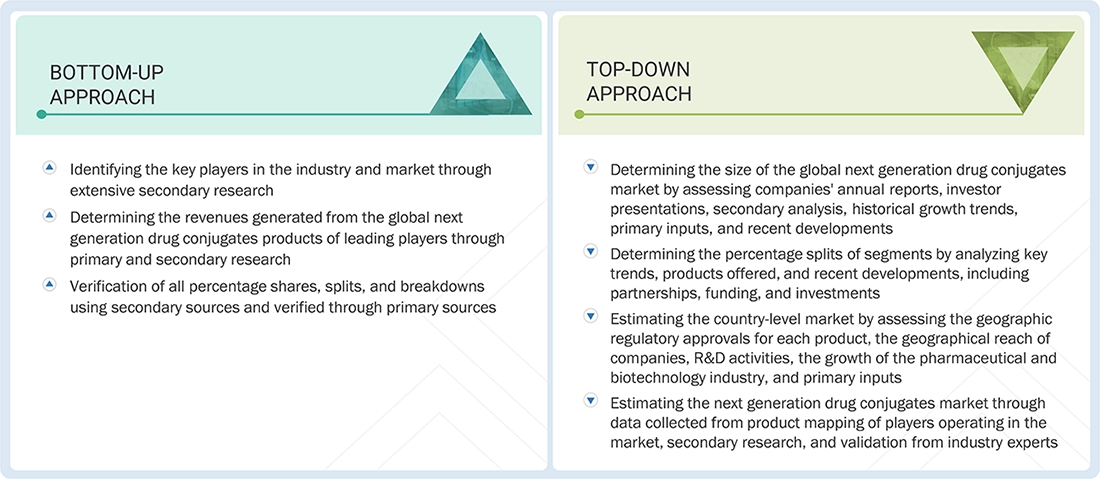
This study involved four major activities in estimating the current size of the next generation drug conjugates market. Exhaustive secondary research was carried out to collect information on the market, its peer markets, and its parent market. These findings, assumptions, and sizing were then validated with industry experts across the value chain through primary research. Both top-down and bottom-up approaches were employed to estimate the complete market size. Following this, the data triangulation procedure was used to estimate the market size of segments and subsegments.
Secondary Research
Secondary research was used mainly to identify and collect information for the extensive, technical, market-oriented, and commercial study. The secondary sources referred for this research study include publications from government sources, such as the National Center for Biotechnology Information (NCBI), National Institutes of Health (NIH), United States Food and Drug Administration (US FDA), European Medicines Agency (EMA), CT.gov, EudraCT, other clinical trial registries, News Articles, Press Releases, Paid Databases, Expert Interviews, and MarketsandMarkets Analysis, among others. Secondary sources also included corporate and regulatory filings (such as annual reports, SEC filings, investor presentations, and financial statements); business magazines and research journals; press releases; and trade, business, and professional associations. These sources were also used to obtain key information about major players, global product revenues, market classification, and segmentation according to industry trends, regional/country-level markets, market developments, and technology perspectives. Secondary data was collected and analyzed to arrive at the overall size of the global next generation drug conjugates market, which was validated through primary research.
Primary Research
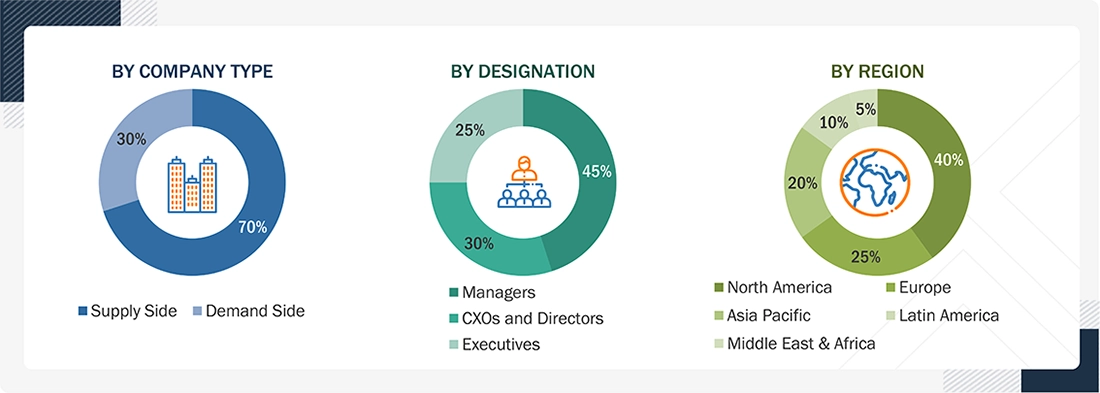
In-depth interviews were conducted with various primary respondents, including key industry participants, subject-matter experts (SMEs), C-level executives of key market players, and industry consultants, among other experts, to obtain and verify the critical qualitative and quantitative information as well as assess future prospects of the market. Various primary sources from both the supply and demand sides of the market were interviewed to obtain qualitative and quantitative information. The following is a breakdown of the primary respondents:
To know about the assumptions considered for the study, download the pdf brochure
Market Size Estimation
The global size of the next generation drug conjugates market was estimated through multiple approaches. A detailed market estimation approach was followed to estimate and validate the value of the market and other dependent submarkets. These methods were also used extensively to estimate the size of various subsegments in the market. The research methodology used to estimate the market size includes the following:
Data Triangulation
After estimating the overall market size from the market size estimation process, the total market was split into several segments. To complete the overall market engineering process and arrive at the exact statistics for all segments, the data triangulation procedure was employed; the data was triangulated by studying various factors and trends from both the demand and supply sides.
Market Definition
Drug conjugates are targeted therapeutic systems in which a biologically or chemically engineered targeting moiety (e.g., antibody, peptide, small-molecule ligand, or oligonucleotide delivery ligand) is conjugated to a therapeutic payload (e.g., cytotoxic drug, radionuclide, or nucleic acid) using linker or conjugation technologies. Next generation drug conjugates are defined by the use of advanced targeting platforms and/or novel payload technologies—particularly small molecules (e.g., topoisomerases, others), radionuclides, and oligonucleotides, enabled by improved linker and conjugation strategies, distinguishing them from earlier auristatin, maytansinoid, and calicheamicin-based conjugates. These enable improved precision, efficacy, and safety compared to earlier-generation conjugates.
Key Stakeholders
- Next generation drug conjugate manufacturing companies
- Distributors and suppliers of next generation drug conjugates
- Healthcare service providers (including hospitals & specialty clinics)
- National and regional research boards and organizations
- Research & development companies
- Clinical research organizations (CROs)
- Biotechnology companies
- Research laboratories & academic institutes
- Market research & consulting firms
- Regulatory bodies
Report Objectives
- To define, describe, and forecast the next generation drug conjugates market by product type, target ligand, payload type, indication, and region
- To provide detailed information regarding the major factors influencing the market growth (such as drivers, restraints, opportunities, and challenges)
- To analyze the micromarkets with respect to individual growth trends, prospects, and contributions to the overall next generation drug conjugates market
- To analyze the opportunities for stakeholders and provide details of the competitive landscape for market leaders
- To forecast the size of the market segments with respect to six regions: North America (US and Canada), Europe (Germany, France, the UK, Italy, Spain, and the Rest of Europe), Asia Pacific (China, Japan, India, South Korea, Australia, and the Rest of Asia Pacific), Latin America (Brazil, Mexico, Argentina, and the Rest of Latin America), the Middle East [GCC (Saudi Arabia (KSA), United Arab Emirates (UAE), and the Rest of GCC) and the Rest of Middle East], and Africa
- To profile the key players and analyze their market shares and core competencies
- To track and analyze competitive developments, such as product launches, partnerships, agreements, collaborations, and expansions
- To benchmark players within the market using the proprietary “Company Evaluation Matrix” framework, which analyzes market players on various parameters within the broad categories of business and product excellence strategy
Available customizations:
With the given market data, MarketsandMarkets offers customizations as per the company’s specific needs. The following customization options are available for the report:
Geographical Analysis
- Further breakdown of the Rest of Europe next generation drug conjugates market, by country
- Further breakdown of the Rest of Asia Pacific next generation drug conjugates market, by country
Company Information
- Detailed analysis and profiling of additional market players (up to five)
Segment Analysis
- Cross-segment analysis
Get the Full Next Generation Drug Conjugates Market Report
Full forecast, segment splits, and company analysis for all Next Generation Drug Conjugates Market.
- Canada Next Generation Drug Conjugates Market
- US Next Generation Drug Conjugates Market
- Germany Next Generation Drug Conjugates Market
- UK Next Generation Drug Conjugates Market
- France Next Generation Drug Conjugates Market
- Italy Next Generation Drug Conjugates Market
- Spain Next Generation Drug Conjugates Market
- China Next Generation Drug Conjugates Market
- Japan Next Generation Drug Conjugates Market
- India Next Generation Drug Conjugates Market
- South Korea Next Generation Drug Conjugates Market
- Australia Next Generation Drug Conjugates Market
- Brazil Next Generation Drug Conjugates Market
- Mexico Next Generation Drug Conjugates Market
- Rest Of Europe Next Generation Drug Conjugates Market
- Rest Of Asia Pacific Next Generation Drug Conjugates Market
- Rest Of Latin America Next Generation Drug Conjugates Market
Need a Tailored Report?
Customize this report to your needs
Get 10% FREE Customization
Customize This Report
