
Norway Omega-3 Market (2025-2030)

The Norway Omega-3 Market was valued at $150.3 Million in 2025 and projected to reach to $257.9 Million by 2030, representing a compound annual growth rate of 11.4%. Norway's omega-3 market demonstrates resilient growth momentum, supported by the nation's deep-rooted seafood culture and premium positioning in global health supplements.


| Market Size in | USD 26.32 MN |
| Market Forecast in | |
| CAGR | |
| Forecast Period | |
| Units Considered | Value (USD MN) |
Norway Omega-3 Market Trends and Insights
- This 11.4% compound annual growth rate reflects Norway's strong consumer awareness of health and wellness, coupled with the nation's rich seafood heritage and established supplement culture.
- Norway's position as a leading fish oil producer and exporter reinforces domestic market penetration, with both pharmaceutical-grade and food-fortified omega-3 products gaining traction among health-conscious consumers. The Norwegian market benefits from high disposable incomes, advanced retail infrastructure, and regulatory frameworks that support functional food innovation.
- Between 2025 and 2030, Norway is expected to see increased demand across multiple channels—from traditional fish oil supplements to plant-based alternatives and fortified food products.
- Consumer preference for natural, sustainably sourced omega-3 ingredients positions Norway as a premium market segment within Europe, driving premium pricing and product differentiation strategies..
Key Market Statistics
- CAGR (2025-2030) 11.4% CAGR
- Market Size, 2025 ~USD 150.3 Million
- Forecast, 2030 ~USD 257.9 Million
- Country Norway
Norway Omega-3 Market Overview
Market Valuation :
Norway's omega-3 market is valued at USD 150.3 million in 2025, with strong growth trajectory driven by health-conscious consumers and established supplement adoption rates significantly above European averages.
Production Leadership :
Norway is a global leader in fish oil production and export, with established aquaculture and marine biotechnology infrastructure supporting both domestic consumption and international supply chains for omega-3 products.
Consumer Health Awareness :
Norwegian consumers demonstrate exceptionally high health and wellness consciousness, with strong cultural emphasis on preventive nutrition and seafood-based dietary supplements driving consistent market demand.
Forecast Growth :
The market is projected to reach USD 257.9 million by 2030, representing an 11.4% CAGR, reflecting sustained consumer investment in preventive health and premium omega-3 formulations tailored to Nordic preferences.
Norway Omega-3 Market Dynamics
- The 11.4% CAGR through 2030 reflects sustained consumer demand for high-quality, sustainably-sourced omega-3 products, with particular strength in fish oil and marine-derived supplements.
- Norwegian manufacturers benefit from stringent quality standards and certifications that enhance product credibility in both domestic and export markets. The market outlook remains positive as Norwegian consumers increasingly prioritize preventive healthcare and functional nutrition.
- Growing awareness of cardiovascular, cognitive, and inflammatory health benefits continues to drive adoption across age demographics.
- Additionally, Norway's commitment to sustainable fishing practices and transparent supply chains positions local producers competitively against global competitors, supporting premium pricing and market expansion through 2030..
Market Ecosystem
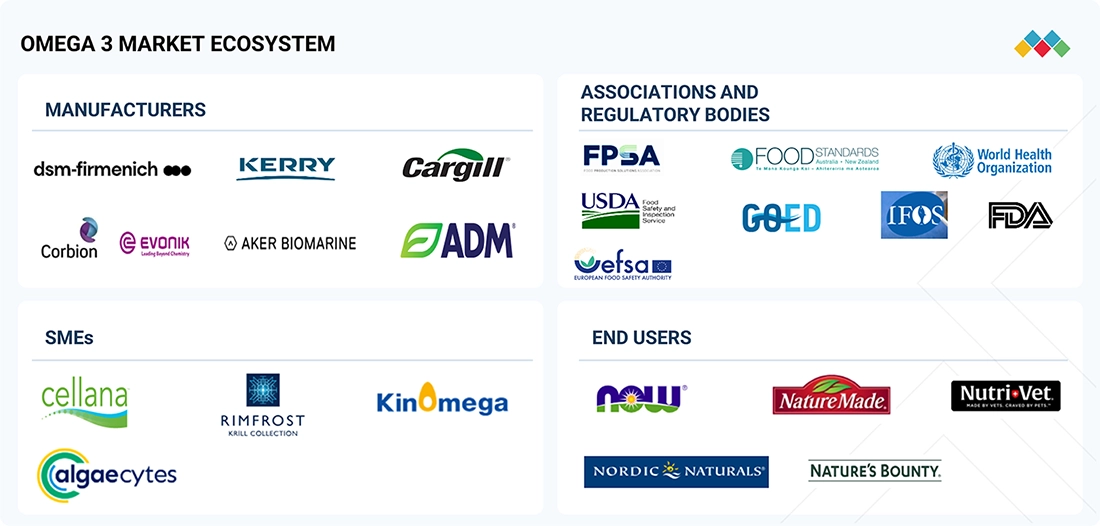
OMEGA-3 MARKET: COMMERCIAL USE CASES ACROSS INDUSTRIES
| COMPANY | USE CASE DESCRIPTION | BENEFITS |
|---|---|---|
 |
Aker BioMarine leveraged Vitafoods Europe 2024 as a platform to showcase its dual expertise in marine (krill oil) and plant-based (algae oil) omega-3 solutions. By introducing FloraMarine, an algae-based DHA product, the company demonstrates its ability to meet growing B2B demand for sustainable, plant-based alternatives while maintaining its leadership in marine-derived nutrition. | Aker BioMarine gains stronger market positioning by expanding into the fast-growing plant-based omega-3 space while reinforcing its leadership in sustainable nutrition. The launch at Vitafoods drives brand visibility, customer engagement, and new B2B growth opportunities. |
 |
Epax introduced EPAX Evolve 05, the first commercially available VLC-PUFA (very long chain polyunsaturated fatty acid) concentrate, at Vitafoods Europe 2024. The product, derived from fish oil and enriched to deliver ~10x higher VLC-PUFA content, targets the healthy aging and specialty health markets (vision, bone, muscle, skin, and fertility). | Epax secures a first-mover advantage in the omega-3 market with the world’s first VLC-PUFA concentrate, backed by EU and US regulatory approvals. This launch expands its reach into the healthy aging and specialty health segments while strengthening its reputation as an innovation leader. |
 |
Utilizing its innovative biotechnology platform, in April 2023, MiAlgae successfully launched NaturAlgae, a dry powder with a high concentration of DHA and other oils. This product can be seamlessly integrated into aquafeeds and pet food recipes, providing the well-known health benefits of omega-3. | Following the recent expansion of its commercial production site north of Glasgow, MiAlgae is poised for significant growth in the aquaculture and pet food sectors. |
Logos and trademarks shown above are the property of their respective owners. Their use here is for informational and illustrative purposes only.
Related Ecosystem
Key Takeaways
- Norway's omega-3 market will grow from USD 150.3M (2025) to USD 257.9M (2030) at an 11.4% CAGR.
- Norway's seafood heritage and high health awareness drive strong domestic demand for omega-3 supplements and fortified foods.
- Premium positioning and sustainability focus enable Norway to command higher price points than European averages.
- Diversification into plant-based and algae-derived omega-3 alternatives is expanding Norway's market addressable segments.
Omega-3 Market Report Scope
| Report Metric | Details |
|---|---|
| Base Year | 2025 |
| Fastest Growing Segment | INFANT FORMULAS (Application) |
| Forecast Period | 2025–2030 |
| Growth Rate | CAGR of 12.2% from 2025 to 2030 |
| Largest Segment | MARINE (Source) |
| Market Size Base Year (Billions) | ~USD 4.36 (2025) |
| Revenue Forecast (Billions) | ~USD 7.76 (2030) |
| Segments Covered | Type, Source, Source Type, Application, Form |
Norway Omega-3 Market Report Segmentation
5 segment dimensions are covered across the global market.
By Type
- Alpha-Linolenic Acid (Ala)
- Docosahexaenoic Acid (Dha)
- Eicosapentaenoic Acid (Epa)
By Source
- Marine
- Plant
By Source Type
- Algae
- Fish
- Krill
- Nuts & Seeds
- Other Marine Sources
- Vegetable Oils
By Application
- Dietary Supplements
- Functional Foods & Beverages
- Infant Formulas
- Pet Food & Feed
- Pharmaceuticals
By Form
- Dry
- Liquid
Target Audience
- Supplement Manufacturers & Producers : Norwegian and international omega-3 supplement producers need market-specific data to optimize product portfolios, identify growth segments, benchmark against local competitors, and capitalize on Norway's premium positioning and export opportunities.
- Retail & Distribution Companies : Retailers, pharmacies, and distributors operating in Norway require detailed market insights to stock appropriate omega-3 products, understand consumer demand patterns, negotiate with suppliers, and maximize shelf space allocation in this growing category.
- Investment & Private Equity Firms : Investors evaluating opportunities in Norway's health supplement sector need comprehensive market data, growth forecasts, and competitive analysis to assess investment returns, identify acquisition targets, and evaluate market entry strategies.
- Healthcare & Wellness Professionals : Nutritionists, healthcare providers, and wellness consultants in Norway benefit from market insights to recommend evidence-based omega-3 products, understand available options, and stay informed on industry trends and product innovations.
- Market Research & Strategy Consultants : Consulting firms and research organizations require Norway-specific omega-3 market data to support client strategy development, competitive analysis, market entry planning, and investment decision-making in the Nordic health supplement sector.
Key Companies in the Norway Omega-3 Market
| Company | HQ | Ownership | Strongest segments |
|---|---|---|---|
| SOJITZ CORPORATION | Japan | Public Company | Automobiles, industrial machinery, and parts trading,Energy, power, and infrastructure (IPP, IPP/IWPP, electricity retail, nuclear-related),Metals, minerals, and resource recycling, |
| STEPAN COMPANY | United States | Public Company | Surfactants,Polymers,Specialty Products, |
| DANONE | France | Public Company | Essential Dairy & Plant-Based,Specialized Nutrition,Waters, |
| WYETH | United States | Private Company | Prescription pharmaceuticals (primary care and specialty),Vaccines and infectious disease therapies,Consumer health and OTC wellness, |
| AMWAY | Malaysia | Public Company | Nutrition & Weight Management (NUTRILITE, bodykey, XS),Beauty & Personal Care (ARTISTRY, G&H, GLISTER, SATINIQUE),Home & Living Solutions (eSpring, ATMOSPHERE, Amway Home), |
| DSM-FIRMENICH | Switzerland | Public Company | Health, Nutrition & Care,Taste, Texture & Health,Perfumery & Beauty, |
| CARGILL, INCORPORATED | United States | Private Company | Grains & Oilseeds Origination, Trading, and Processing,Animal Nutrition & Protein (Livestock, Aquaculture, Meat & Poultry),Food & Beverage Ingredients and Foodservice/Retail Solutions, |
| BASF SE | Germany | Public Company | Chemicals (Petrochemicals & Intermediates),Materials (Isocyanates, Polyamides, Inorganics, Plastics Specialties),Industrial Solutions (Dispersions, Resins, Additives, Catalysts, Electronic Materials), |
| ADM | United States | Public Company | Ag Services and Oilseeds,Carbohydrate Solutions,Nutrition, |
| KERRY GROUP PLC | Ireland | Public Company | Taste solutions (flavours, extracts, taste modulation),Nutrition solutions (enzymes, proteins, lipids, fibre, wellness),Functional ingredients, food and beverage solutions, |
| CORBION | Netherlands | Public Company | Functional Ingredients & Solutions – Food preservation and functional blends,Functional Ingredients & Solutions – Biochemicals and industrial applications,Health & Nutrition – Algae-based omega-3 and nutritional ingredients, |
| AKER BIOMARINE | Norway | Public Company | Human Health Ingredients (Superba, LYSOVETA, Revervia, PL+),Consumer Health Products (US retail krill/fish/plant-based),Emerging Business (Kori, Understory, KRBNX, CaPre, AION), |
| CRODA INTERNATIONAL PLC | United Kingdom | Public Company | Consumer Care (beauty care, actives, home care, fragrances & flavours),Life Sciences (biologics delivery, crop protection, seed enhancement),Industrial Specialties (surfactants, phase change materials, textile finishes), |
| EVONIK INDUSTRIES AG | Germany | Public Company | Advanced Technologies (amino acids, silicas, crosslinkers, hydrogen peroxide),Custom Solutions (coatings, adhesives, sealants, PU, lubricants additives),Infrastructure (butadiene, MTBE, butene-1, isononanol, DINP), |
| POLARIS | United States | Public Company | Off Road (ORVs, military and commercial ORVs),Snowmobiles,On Road (motorcycles, moto-roadsters, quadricycles, light duty vehicles), |
SOJITZ CORPORATION
Sojitz Corporation is a Japanese trading company founded in 1862 with approximately 26,789 employees. Operating as a public company, it engages in diverse business activities across multiple sectors.
STEPAN COMPANY
Stepan Company is a United States-based public company founded in 1932 with 2,328 employees. The company operates in the chemical manufacturing industry.
DANONE
Danone is a French multinational public company founded in 1899 with 88,670 employees. The company is a leading producer of dairy products, plant-based foods, and bottled water.
WYETH
Wyeth is a United States-based private company founded in 1860 with 47,426 employees. The company operates in the pharmaceutical and healthcare industries.
AMWAY
Amway is a Malaysia-based public company founded in 1976 with 308 employees. The company operates in the direct selling and consumer goods sector.
DSM-FIRMENICH
DSM-Firmenich is a Swiss public company founded in 1902 with 26,873 employees. The company specializes in nutrition, health, and beauty solutions.
CARGILL, INCORPORATED
Cargill, Incorporated is a United States-based private company founded in 1865 with 155,000 employees. The company is a major player in agricultural processing, food production, and commodity trading.
BASF SE
BASF SE is a German public company founded in 1865 with 106,428 employees. The company is one of the world's largest chemical manufacturers.
ADM
ADM is a United States-based public company founded in 1902 with 41,147 employees. The company is a global leader in agricultural processing and food ingredient production.
KERRY GROUP PLC
Kerry Group PLC is an Irish public company founded in 1972 with 19,284 employees. The company specializes in food ingredients, flavors, and consumer foods.
CORBION
Corbion is a Netherlands-based public company founded in 1903 with 2,410 employees. The company produces sustainable ingredients and biochemicals for food, packaging, and other industries.
AKER BIOMARINE
Aker Biomarine is a Norwegian public company founded in 2006 with 258 employees. The company specializes in marine-based ingredients and nutritional products.
CRODA INTERNATIONAL PLC
Croda International PLC is a United Kingdom-based public company founded in 1925 with 5,954 employees. The company manufactures specialty chemicals for personal care, health, and industrial applications.
EVONIK INDUSTRIES AG
Evonik Industries AG is a German public company founded in 1847 with 30,643 employees. The company is a leading specialty chemicals manufacturer serving diverse industries.
POLARIS
Polaris is a United States-based public company founded in 1945 with 14,500 employees. The company manufactures powersports vehicles and related products.
Reasons to Buy this Report
- Market-Specific Sizing & Forecasts : Access precise valuation data for Norway's omega-3 market (USD 150.3M in 2025, USD 257.9M in 2030) with country-specific CAGR of 11.4%, enabling accurate financial planning and investment decisions tailored to Norwegian market dynamics.
- Competitive Landscape Intelligence : Understand Norway's unique position as a global fish oil producer and exporter, identifying competitive advantages, local manufacturer capabilities, and opportunities to differentiate products in this premium-positioned Nordic market.
- Consumer Behavior & Preferences : Gain insights into Norwegian consumer health consciousness, seafood heritage influence, and supplement adoption patterns that drive purchasing decisions, enabling targeted marketing strategies and product development aligned with local preferences.
- Regulatory & Sustainability Framework : Navigate Norway's stringent quality standards, sustainability certifications, and regulatory requirements specific to omega-3 products, ensuring compliance and leveraging quality credentials as competitive differentiators in this quality-conscious market.
- Strategic Market Entry & Expansion : Develop informed go-to-market strategies for Norway with country-specific insights on distribution channels, consumer segments, pricing strategies, and growth opportunities in this high-value Nordic market with strong preventive health focus.
Frequently asked questions
What is the current size of Norway's omega-3 market?
Norway's omega-3 market was valued at USD 150.3 million in 2025 and is expected to reach USD 257.9 million by 2030.
What is the projected growth rate for omega-3 in Norway?
Norway's omega-3 market is projected to grow at a compound annual growth rate (CAGR) of 11.4% from 2025 to 2030.
Why is Norway's omega-3 market growing faster than some other European markets?
Norway's strong health consciousness, seafood heritage, high disposable incomes, and established supplement culture drive above-average growth compared to broader European markets.
What product types dominate Norway's omega-3 market?
Norway's market includes fish oil supplements, pharmaceutical-grade products, plant-based alternatives, and omega-3 fortified foods, with premium and sustainably sourced products commanding significant share.
How does Norway's omega-3 market compare to the global market?
Norway's 11.4% CAGR slightly trails the global 12.2% CAGR, but Norway maintains a premium market positioning with higher per-capita consumption and price points.
RESEARCH METHODOLOGY
This study involved two major approaches in estimating the current size of the omega-3 market. Exhaustive secondary research was done to collect information on the type, source, application, form, and manufacturing technology (qualitative) segments of the market. The next step involved validating these findings, assumptions, and sizing with industry experts across the value chain through primary research. Both top-down and bottom-up approaches were employed to estimate the complete market size. Thereafter, data triangulation was used to estimate the market size of segments and subsegments.
Secondary Research
This research study involved the use of extensive secondary sources—directories and databases such as Bloomberg Businessweek and Factiva—to identify and collect information useful for a technical, market-oriented, and commercial market study. In the secondary research process, sources such as annual reports, press releases & investor presentations of companies, white papers, food journals, certified publications, articles from recognized authors, directories, and databases were referred to to identify and collect information. Secondary research was mainly used to obtain key information about the industry’s supply chain, the pool of key players, and market classification and segmentation as per the industry trends to the bottom-most level, regional markets, and key developments from market- and technology-oriented perspectives.
Primary Research
Extensive primary research was conducted after obtaining information regarding the omega-3 market scenario through secondary research. Several primary interviews were conducted with market experts from the demand and supply sides across major countries of North America, Europe, Asia Pacific, South America, and the Rest of the World. Primary data was collected through questionnaires, emails, and telephonic interviews. The primary sources from the supply side included various industry experts, such as chief experience officers (CXOs), vice presidents (VPs), directors from business development, marketing, research, and development teams, and related key executives from distributors and key opinion leaders. Primary interviews were conducted to gather insights such as market statistics, data on revenue collected from the products and services, market breakdowns, market size estimations, market forecasting, and data triangulation. Primary research also helped understand the various trends related to type, source, application, form, and region. Stakeholders from the demand side, such as functional food & beverage manufacturers, dietary supplement manufacturers, pharmaceutical product manufacturers, infant formula manufacturers, and pet-food & feed product manufacturers, were interviewed to understand the buyers’ perspective on the suppliers, products, and the outlook of their business, which will affect the overall market.
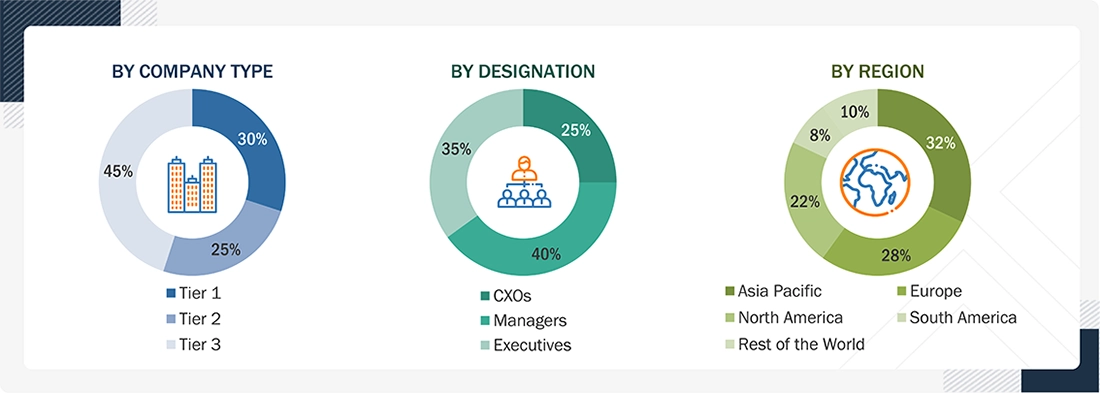
Note: The three tiers of the companies are defined based on their total revenues in 2023 or 2024, as per the availability of financial data: Tier 1: Revenue >USD 1 billion; Tier 2: USD 100 million ≤ revenue ≤ USD 1 billion; Tier 3: Revenue <USD 100 million. RoW includes Africa and the Middle East
|
COMPANY NAME |
DESIGNATION |
|
Cargill, Incorporated (US) |
Product Development Manager |
|
Kerry Group plc (Ireland) |
Sales Head |
|
Corbion (Netherlands) |
Marketing Head |
|
Golden Omega (Chile) |
Sales Head |
|
DSM-Firmenich (Netherlands) |
Senior Research Executive |
|
Algalr Nutrapharms Private Limited (India) |
Business Development Manager |
To know about the assumptions considered for the study, download the pdf brochure
Market Size Estimation
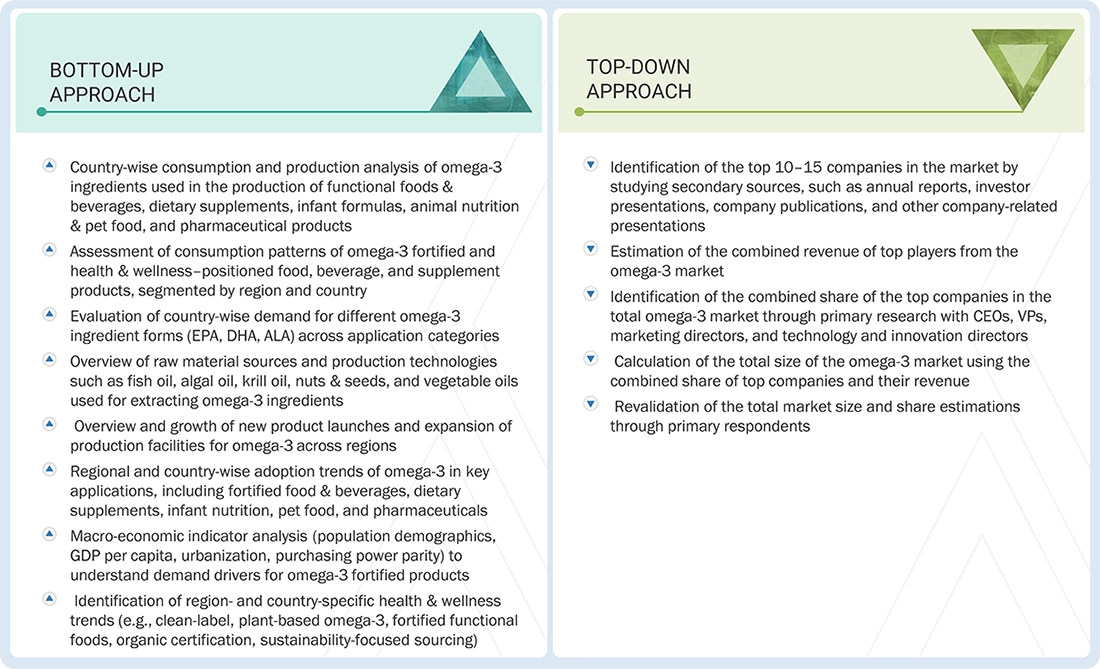
The top-down and bottom-up approaches were used to estimate and validate the total size of the omega-3 market. These approaches were also used extensively to determine the size of various subsegments in the market. The research methodology used to estimate the market size includes the following details:
- The key players in the industry and the overall markets were identified through extensive secondary research.
- All shares, splits, and breakdowns were determined using secondary sources and verified through primary sources.
- All possible parameters that affect the market covered in this research study were accounted for, viewed in extensive detail, verified through primary research, and analyzed to obtain final quantitative and qualitative data.
- The research included the study of reports, reviews, and newsletters of top market players, along with extensive interviews for opinions from leaders, such as CEOs, directors, and marketing executives.
Data Triangulation
After determining the overall market size from the estimation process explained above, the total market was split into several segments and subsegments. The data triangulation procedure was employed, wherever applicable, to estimate the overall omega-3 market and arrive at the exact statistics for all segments and subsegments. The data was triangulated by studying various factors and trends from the demand and supply sides. The market size was also validated using both the top-down and bottom-up approaches.
Market Definition
According to the US Department of Health & Human Services, "Omega-3 fatty acids (omega-3s) have a carbon-carbon double bond located three carbons from the methyl end of the chain. Omega-3s, sometimes referred to as 'n-3s,' are present in certain foods, such as flaxseed and fish, as well as dietary supplements, such as fish oil. Several different omega-3s exist, but the majority of scientific research focuses on three: alpha-linolenic acid (ALA), eicosapentaenoic acid (EPA), and docosahexaenoic acid (DHA). ALA contains 18 carbon atoms, whereas EPA and DHA are considered "long-chain" (LC) omega-3s because EPA contains 20 carbons, and DHA contains 22. ALA is found mainly in plant oils, such as flaxseed, soybean, and canola. DHA and EPA are found in fish and other seafood.
Key Stakeholders
- Raw material suppliers of omega-3
- Omega-3 ingredient manufacturers, suppliers, and dealers
- API, pharmaceutical products, and fortified food manufacturers
- Fisheries and farms
- Intermediate stakeholders, including distributors, retailers, associations, regulatory bodies, and others
- Manufacturers and traders of food & beverage products, dietary supplements, infant formulas, pharmaceuticals, and pet food & feed
- Government organizations, institutes, and research organizations
- Associations and industry bodies:
-
- Food and Agriculture Organization (FAO)
- US Department of Agriculture (USDA)
- US Food and Drug Administration (FDA)
- Food Processing Suppliers Association (FPSA)
- Global Organization for EPA and DHA Omega-3s (GOED)
- Food Safety and Standards Authority of India (FSSAI)
- International Fish Oil Standards Program (IFOS)
- European Food Safety Authority (EFSA)
Report Objectives
- To determine and project the size of the omega-3 market based on type, source, application, form, manufacturing technology (qualitative), and region, over five years, ranging from 2025 to 2030
- To identify the attractive opportunities in the market by determining the largest and fastest-growing segments across regions
- To provide detailed information about the key factors influencing market growth (drivers, restraints, opportunities, and challenges)
- To analyze the opportunities in the market for stakeholders and provide details of the competitive landscape for market leaders
- To analyze the micromarkets with respect to individual growth trends, prospects, and their contribution to the total market
- To identify and profile the key players in the market
- To understand the competitive landscape and identify the major growth strategies adopted by players across the key regions
Customization Options:
ith the given market data, MarketsandMarkets offers customizations according to company-specific scientific needs. The following customization options are available for the report:
PRODUCT ANALYSIS
- Product matrix, which gives a detailed comparison of the product portfolio of each company.
GEOGRAPHIC ANALYSIS
- With the given market data, MarketsandMarkets offers customizations according to company-specific scientific needs.
- Further breakdown of the Rest of Europe omega-3 market into key countries
- Further breakdown of the Rest of Asia Pacific omega-3 market into key countries
- Further breakdown of the Rest of South America omega-3 market into key countries
COMPANY INFORMATION
- Detailed analyses and profiling of additional market players (up to five)
Get the Full Omega-3 Market Report
Full forecast, segment splits, and company analysis for all Omega-3 Market.
- US Omega-3 Market
- Canada Omega-3 Market
- Mexico Omega-3 Market
- Germany Omega-3 Market
- UK Omega-3 Market
- France Omega-3 Market
- Italy Omega-3 Market
- Spain Omega-3 Market
- Netherlands Omega-3 Market
- China Omega-3 Market
- India Omega-3 Market
- Japan Omega-3 Market
- Brazil Omega-3 Market
- Argentina Omega-3 Market
Need a Tailored Report?
Customize this report to your needs
Get 10% FREE Customization
Customize This Report
