
US Patient Derived Xenografts/PDX Models Market (2025-2030)

The US Patient Derived Xenografts/PDX Models Market was valued at $139.1 Million in 2025 and projected to reach to $217 Million by 2030, representing a compound annual growth rate of 9.3%. The US PDX Models market is poised for sustained growth through 2030, driven by increasing pharmaceutical R&D spending, rising adoption of precision oncology approaches, and growing partnerships between academic institutions and commercial PDX providers.


| Market Size in | USD 26.32 MN |
| Market Forecast in | |
| CAGR | |
| Forecast Period | |
| Units Considered | Value (USD MN) |
US Patient Derived Xenografts/PDX Models Market Trends and Insights
- The US market benefits from robust pharmaceutical R&D infrastructure, significant investment in precision medicine, and strong adoption of advanced preclinical models among leading research institutions and biotech companies.
- The US dominates PDX adoption due to its concentration of major pharmaceutical firms, academic medical centers, and contract research organizations seeking more predictive tumor models for oncology drug development. Driving growth in the US market are increasing cancer incidence rates, rising demand for personalized medicine approaches, and regulatory pressure for more predictive preclinical models before clinical trials.
- The US PDX market is characterized by high-value contracts with pharmaceutical and biotechnology companies, substantial government funding through NIH and NSF, and growing partnerships between academic institutions and commercial PDX service providers.
- By 2030, the US market is anticipated to capture significant share of global PDX demand as precision oncology becomes standard practice in drug development pipelines..
Key Market Statistics
- CAGR (2025-2030) 9.3% CAGR
- Market Size, 2025 ~USD 139.1 Million
- Forecast, 2030 ~USD 217 Million
- Country US
US Patient Derived Xenografts/PDX Models Market Overview
Market Valuation :
The US PDX Models market is valued at $139.1 million in 2025 and is projected to reach $217.0 million by 2030, driven by increasing adoption of personalized medicine approaches across major pharmaceutical and biotech companies.
Strong R&D Infrastructure :
The US benefits from world-leading pharmaceutical R&D capabilities, with major research institutions and biotech hubs investing heavily in advanced preclinical models to accelerate drug development timelines and improve success rates.
Precision Medicine Investment :
Significant government and private sector funding for precision medicine initiatives has positioned the US as a leader in adopting PDX models for patient-specific cancer research and therapeutic development.
Growth Trajectory :
With a CAGR of 9.3% through 2030, the US market is expanding faster than many other preclinical model segments, reflecting growing recognition of PDX models' superior predictive value in oncology drug development.
US Patient Derived Xenografts/PDX Models Market Dynamics
- Leading US biotech and pharmaceutical companies are increasingly integrating PDX models into their drug development pipelines to improve clinical trial success rates and reduce time-to-market.
- The market will benefit from continued investment in personalized medicine infrastructure, regulatory support for advanced preclinical models, and expanding applications beyond oncology into other therapeutic areas.
- Strategic collaborations between research institutions and commercial entities will further accelerate market penetration across the US..
Market Ecosystem
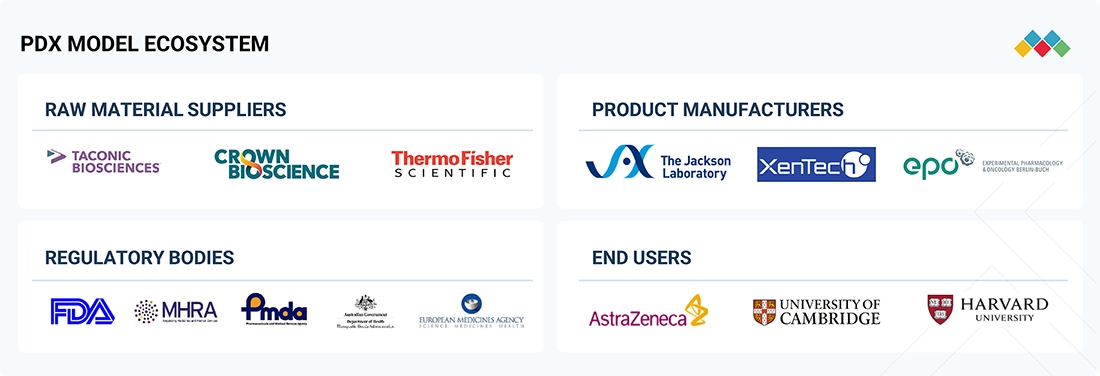
PDX Models Market: COMMERCIAL USE CASES ACROSS INDUSTRIES
| COMPANY | USE CASE DESCRIPTION | BENEFITS |
|---|---|---|
 |
Collaboration of Hsieh Lab with PDX Core to develop PDX lines from bladder cancer patients, validate them, then use them to identify therapeutic vulnerabilities (e.g., translation inhibitors) and organoid lines derived from PDX. | Enables academic research to rapidly test mechanistic hypotheses in clinically-derived models, speeds up discovery of therapeutic targets and supports publication/funding outcomes. |
 |
Employs TumorGraft PDX models across multiple cancer types to evaluate targeted therapies and combination regimens for efficacy and resistance mechanisms. | Enhances therapeutic decision-making, validates drug response profiles, and reduces clinical attrition risk. |
Logos and trademarks shown above are the property of their respective owners. Their use here is for informational and illustrative purposes only.
Related Ecosystem
Biotechnology
- Reagents
- Polymerase Chain Reaction (PCR)
- Stem Cells
- Assay Kits
- Flow Cytometers
- Thermo Fisher Scientific Inc.
- Merck KGaA
- Danaher Corporation
- Agilent Technologies, Inc.
- Bio-Rad Laboratories, Inc.
Pharmaceuticals
- Bioreactors
- Analytical Testing
- Bioanalytical Testing Services
- Cell Counters
- Data Management Services
- Merck KGaA
- Thermo Fisher Scientific Inc.
- SANOFI
- NOVARTIS
- Pfizer Inc.
Key Takeaways
- The US PDX models market is valued at $139.1 million in 2025 and will reach $217.0 million by 2030, growing at a 9.3% CAGR.
- The US leads global PDX adoption driven by strong pharmaceutical R&D spending, precision medicine initiatives, and regulatory requirements for predictive preclinical models.
- US market growth is fueled by increasing cancer prevalence, demand for personalized oncology approaches, and partnerships between biotech firms and academic research centers.
- The US PDX market is dominated by high-value pharmaceutical contracts and substantial government funding, positioning it as the largest regional market for xenograft models.
Patient Derived Xenografts/PDX Models Market Report Scope
| Report Metric | Details |
|---|---|
| Base Year | 2025 |
| Fastest Growing Segment | ORTHOTOPIC IMPLANTATION (Implantation Method) |
| Forecast Period | 2025–2030 |
| Growth Rate | CAGR of 12.5% from 2025 to 2030 |
| Largest Segment | PDX MODELS (Model Type & Service) |
| Market Size Base Year (Billions) | ~USD 0.37 (2025) |
| Revenue Forecast (Billions) | ~USD 0.66 (2030) |
| Segments Covered | Model Type & Service, Type, Implantation Method |
US Patient Derived Xenografts/PDX Models Market Report Segmentation
3 segment dimensions are covered across the global market.
By Model Type & Service
- Pdx Models
- Pdx Services
By Type
- Cryopreservation Services
- Model Characterization Services
- Model Creation & Expansion Services
- Mouse Model
- Other Pdx Services
- Rat Model
By Implantation Method
- Orthotopic Implantation
- Other Implantation Methods
- Subcutaneous Implantation
US: PATIENT-DERIVED XENOGRAFT (PDX) MODELS MARKET, BY END USER, 2023–2030
| Segment | 2023 | 2024 | 2025 | 2026 | 2027 | 2028 | 2029 | 2030 | CAGR (%) |
|---|---|---|---|---|---|---|---|---|---|
| ACADEMIC & RESEARCH INSTITUTES | 36 | 39.3 | 43 | 47.1 | 51.3 | 55.8 | 60.6 | 65.7 | 8.9 |
| CROS & CDMOS | 23.6 | 25.6 | 28 | 30.5 | 33.1 | 35.8 | 38.8 | 41.9 | 8.4 |
| PHARMACEUTICAL & BIOTECHNOLOGY COMPANIES | 75.7 | 83.3 | 92 | 101.6 | 111.7 | 122.4 | 134.1 | 146.8 | 9.8 |
| TOTAL | 135.3 | 148.2 | 162.9 | 179.3 | 196.2 | 214 | 233.5 | 254.4 | 9.3 |
Target Audience
- Pharmaceutical Companies : US-based and multinational pharma firms need market intelligence to optimize preclinical development strategies, evaluate PDX service providers, and allocate R&D budgets for oncology drug development programs.
- Biotech & CRO Organizations : Emerging biotech companies and contract research organizations require US market data to identify partnership opportunities, benchmark service offerings, and position PDX capabilities competitively.
- Academic & Research Institutions : Leading US research centers and cancer institutes need market insights to justify funding requests, establish commercial partnerships, and align PDX research programs with industry demand.
- PDX Service Providers : Commercial PDX model developers and xenograft specialists require detailed US market analysis to refine business models, identify customer segments, and forecast revenue opportunities.
- Investment & Private Equity Firms : Investors evaluating opportunities in precision medicine and preclinical research need comprehensive US market data to assess portfolio companies, identify acquisition targets, and evaluate market growth potential.
Key Companies in the US Patient Derived Xenografts/PDX Models Market
| Company | HQ | Ownership | Strongest segments |
|---|---|---|---|
| CHARLES RIVER LABORATORIES | United States | Public Company | Research Models and Services,Discovery and Safety Assessment,Manufacturing Solutions, |
| THE JACKSON LABORATORY | United States | Foundation/Charitable Institution | Mouse breeding & colony management,Phenotyping, efficacy testing & study-ready induced models,Genetic research services & bioinformatics, |
| INOTIV | United States | Public Company | Research Models and Services (RMS),Discovery and Safety Assessment (DSA) Services,BASi Scientific Instruments and Software, |
| JSR CORPORATION | Japan | Private Company | Digital Solutions (lithography, photoresists, CMP, display, 3D printing),Plastics (ABS, AES, AS, ASA resins),Life Sciences (diagnostics, reagents, bioprocess, drug discovery support), |
| GENOWAY | France | Public Company | Custom mouse models (KO/KI, humanized, immune checkpoint),Custom rat models (KO/KI, immunodeficient, reconstituted),Custom cell lines (KO/KI, reporter, inducible), |
| BIOCYTOGEN PHARMACEUTICALS CO., LTD. | China | Public Company | Gene-Editing Services,Pharmacological Efficacy and Toxicology Services,Model Animals, |
| CHAMPIONS ONCOLOGY, INC. | United States | Public Company | Tumorgraft-based translational oncology services,Personalized cancer care / patient-specific Tumorgraft programs,Lumin Bioinformatics and data-driven software, |
| PHARMARON | China | Public Company | Laboratory Services,Chemical and Formulation Process Development and Manufacturing Services (Small Molecule CDMO),Clinical Research Services, |
| SYNGENE INTERNATIONAL LIMITED | India | Public Company | Discovery services (chemistry and biology),Development services (preclinical, CMC, clinical development),Manufacturing (API and drug product, including biologics), |
| LABCORP | United States | Public Company | Routine and preventive diagnostics (chemistry, hematology, urinalysis, wellness),Specialty and esoteric testing (genetic, oncology, infectious disease, women’s health),Biopharma laboratory services and clinical trial testing, |
| EUROFINS SCIENTIFIC | Luxembourg | Public Company | Food and Feed Testing,Environmental Testing,Biopharma Testing and Services, |
CHARLES RIVER LABORATORIES
Charles River Laboratories is a public company founded in 1947 and headquartered in the United States. With 19,000 employees, it operates as a major provider of preclinical and clinical laboratory services.
THE JACKSON LABORATORY
The Jackson Laboratory is a foundation-based charitable institution founded in 1929 in the United States. The organization employs 2,100 staff members and focuses on genetic research and related scientific services.
INOTIV
INOTIV is a public company founded in 1974 and based in the United States. The company operates with 1,996 employees and provides research and development services.
JSR CORPORATION
JSR Corporation is a private company founded in 1948 and headquartered in Japan. With 7,997 employees, the company operates across multiple business segments.
GENOWAY
GENOWAY is a public company founded in 1999 and based in France. The organization employs 157 staff members and operates in the biotechnology sector.
BIOCYTOGEN PHARMACEUTICALS CO., LTD.
BIOCYTOGEN PHARMACEUTICALS CO., LTD. is a public company founded in 2008 and based in China. The company employs 1,443 staff members and operates in the pharmaceutical and biotechnology sectors.
CHAMPIONS ONCOLOGY, INC.
Champions Oncology, Inc. is a public company founded in 1985 and based in the United States. The company employs 214 staff members and operates in the oncology research and services sector.
PHARMARON
PHARMARON is a public company founded in 2004 and based in China. With 25,088 employees, the company provides drug discovery and development services.
SYNGENE INTERNATIONAL LIMITED
Syngene International Limited is a public company founded in 1993 and headquartered in India. The organization employs 6,692 staff members and provides integrated drug discovery and development services.
LABCORP
LabCorp is a public company founded in 1995 and based in the United States. With 66,385 employees, it operates as a major provider of clinical laboratory and diagnostic services.
EUROFINS SCIENTIFIC
Eurofins Scientific is a public company founded in 1987 and headquartered in Luxembourg. The organization employs 65,694 staff members and provides laboratory testing and analytical services across multiple industries.
Reasons to Buy this Report
- Market Size & Growth Data : Access precise US market valuation ($139.1M in 2025) and 2030 forecasts with detailed CAGR analysis to benchmark investment decisions and identify growth opportunities specific to the American market.
- Competitive Landscape Intelligence : Understand the competitive positioning of US-based PDX providers, research institutions, and pharmaceutical companies leveraging these models to inform partnership and acquisition strategies.
- Regulatory & Reimbursement Insights : Gain clarity on US regulatory pathways, FDA guidance, and reimbursement mechanisms that influence PDX model adoption and commercialization strategies for preclinical research services.
- End-User Adoption Trends : Identify which US pharmaceutical, biotech, and academic institutions are leading PDX adoption, their investment patterns, and decision-making criteria for selecting PDX service providers.
- Strategic Market Positioning : Develop data-driven go-to-market strategies tailored to the US market, including customer segmentation, pricing benchmarks, and growth acceleration opportunities in precision oncology.
Frequently asked questions
What is the current size of the US PDX models market?
The US Patient Derived Xenografts market is valued at $139.1 million in 2025 and is projected to grow to $217.0 million by 2030.
What is the growth rate of the US PDX market?
The US PDX models market is expected to grow at a compound annual growth rate (CAGR) of 9.3% from 2025 to 2030.
Why is the US a leading market for PDX models?
The US dominates the PDX market due to its advanced pharmaceutical R&D infrastructure, significant precision medicine investments, strong regulatory support, and concentration of major biotech and pharmaceutical companies.
What factors are driving growth in the US PDX market?
Key growth drivers in the US include rising cancer incidence, increased demand for personalized medicine, regulatory pressure for predictive preclinical models, and growing partnerships between academic institutions and commercial PDX providers.
Who are the primary customers for PDX models in the US?
Primary US customers include pharmaceutical companies, biotechnology firms, contract research organizations (CROs), academic medical centers, and government research institutions conducting oncology drug development.
RESEARCH METHODOLOGY
This research study extensively utilized secondary sources, directories, and databases to identify and collect valuable information for analyzing the global PDX model market. In-depth interviews were conducted with various primary respondents, including key industry participants, subject-matter experts (SMEs), C-level executives of key market players, and industry consultants, to obtain and verify critical qualitative & quantitative information and assess the growth prospects of the market. The global market size estimated through secondary research was triangulated with inputs from primary research to determine the final market size.
Secondary Research
Secondary research was primarily used to identify and collect information for the comprehensive technical, market-oriented, and commercial study of the PDX model market. The secondary sources used for this study include World Health Organization (WHO), American Association for Cancer Research, American Association for Laboratory Animal Science, EurOPDX, European Animal Research Association, European Society for Medical Oncology, European Association for Cancer Research, Federation for Laboratory of Cell Therapy, International Journal of Non-Communicable Diseases, European Medicines Agency (EMA), Alliance for Regenerative Medicine (ARM); ACS Journals; Corporate filings such as annual reports, SEC filings, investor presentations, and financial statements; research journals; press releases; and trade, business, and professional associations.
Secondary data were collected and analyzed to determine the overall size of the global PDX model market, which was subsequently validated through primary research. These sources were also used to gather key information about major players, market classification, and segmentation based on industry trends, regional/country-level markets, market developments, and technological perspectives.
Primary Research
In-depth interviews were conducted with various primary respondents, including key industry participants, subject-matter experts (SMEs), C-level executives of key market players, and industry consultants, to obtain and verify critical qualitative & quantitative information and assess the market’s prospects. Various primary sources from the supply & demand sides of the market were interviewed to obtain qualitative and quantitative information.
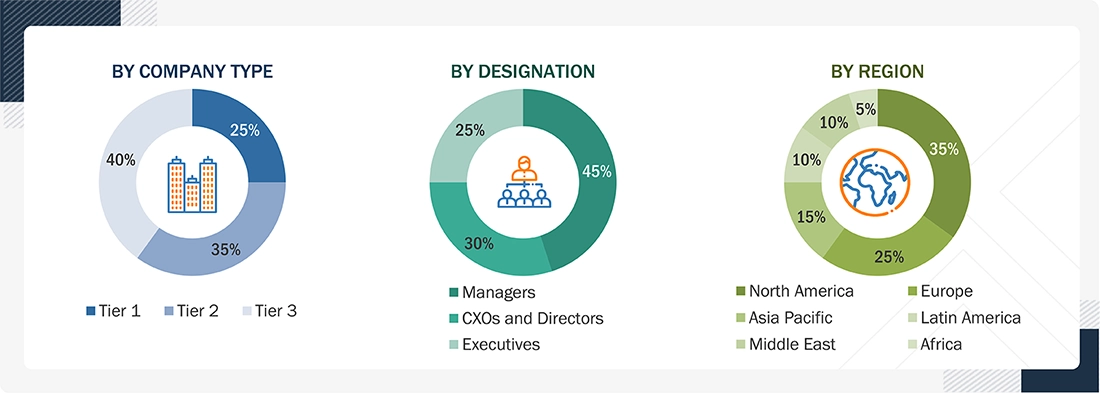
To know about the assumptions considered for the study, download the pdf brochure
Market Size Estimation
The top-down and bottom-up approaches were used to estimate & validate the total size of the PDX model market. These methods were also used extensively to estimate the size of various market segments.
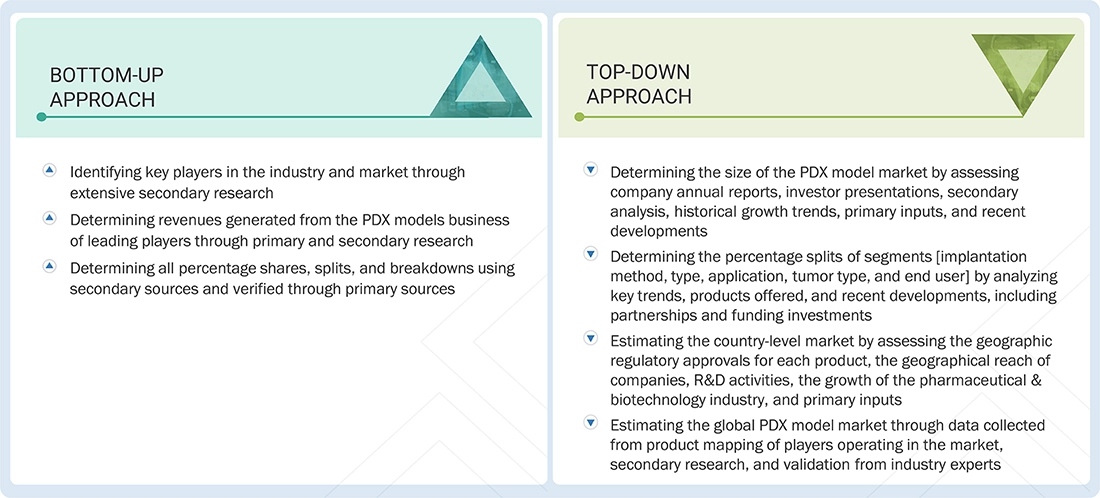
Data Triangulation
After evaluating the overall market size through the market size estimation process, the total market was divided into several segments and subsegments. Data triangulation and market breakdown procedures were used, whenever applicable, to complete the overall market engineering process and obtain precise statistics for all segments and subsegments. The data was triangulated by analyzing various factors and trends from the demand and supply sides.
Market Definition
Patient-derived xenografts (PDXs) are models of cancer where the tissue or cells from a patient’s tumor are implanted into an immunodeficient or humanized mouse. These models have been used to grow cancer tissues after they were removed from a patient. The PDX model is an important tool for cancer research. It is used to study the biology of cancer, test the efficacy of new therapies, and predict the response to therapy in individual patients.
The study offers an in-depth analysis of the PDX model market, examining contemporary market trends and developments, as well as its potential growth from 2025 to 2030. It includes detailed market trends, the competitive landscape, market size, forecasts, and the analysis of the key PDX model product providers.
Stakeholders
- Pharmaceutical & biotechnology companies
- Contract research organizations (CROs)
- Academic & research institutes
- Preclinical and translational research centers
- Life science companies
- Regulatory bodies
- Contract development and manufacturing organizations (CDMOs)
- Cancer research consortia & foundations
- Venture capitalists & strategic investors
- Government associations
- Medical institutions & universities
- Hospitals & clinics
Report Objectives
- To define, describe, and forecast the PDX model market based on implantation method, type, tumor type, application, end user, and region
- To provide detailed information regarding the major factors influencing the market growth (such as drivers, restraints, opportunities, and challenges)
- To strategically analyze micromarkets concerning individual growth trends, prospects, and contributions to the overall PDX model market
- To analyze the opportunities in the market for stakeholders and provide details of the competitive landscape for market leaders
- To forecast the size of the market segments concerning six main regions, namely, North America, Europe, the Asia Pacific, Latin America, the Middle East, and Africa
- To strategically profile the key players in the PDX model market and comprehensively analyze their core competencies and market rankings
- To track and analyze competitive developments such as acquisitions, expansions, agreements, partnerships, and collaborations in the PDX model market
- To benchmark players within the PDX model market using the ‘Company Evaluation Matrix' framework, which analyzes market players based on various parameters within the broad categories of business and product strategy
Get the Full Patient Derived Xenografts/PDX Models Market Report
Full forecast, segment splits, and company analysis for all Patient Derived Xenografts/PDX Models Market.
- Canada Patient Derived Xenografts/PDX Models Market
- Germany Patient Derived Xenografts/PDX Models Market
- UK Patient Derived Xenografts/PDX Models Market
- France Patient Derived Xenografts/PDX Models Market
- Italy Patient Derived Xenografts/PDX Models Market
- Spain Patient Derived Xenografts/PDX Models Market
- China Patient Derived Xenografts/PDX Models Market
- Japan Patient Derived Xenografts/PDX Models Market
- India Patient Derived Xenografts/PDX Models Market
- Australia Patient Derived Xenografts/PDX Models Market
- South Korea Patient Derived Xenografts/PDX Models Market
- Brazil Patient Derived Xenografts/PDX Models Market
- Mexico Patient Derived Xenografts/PDX Models Market
- UAE Patient Derived Xenografts/PDX Models Market
- Rest Of Europe Patient Derived Xenografts/PDX Models Market
- Rest Of Asia Pacific Patient Derived Xenografts/PDX Models Market
- Rest Of Latin America Patient Derived Xenografts/PDX Models Market
- Kingdom Of Saudi Arabia Patient Derived Xenografts/PDX Models Market
- Rest Of GCC Countries Patient Derived Xenografts/PDX Models Market
Need a Tailored Report?
Customize this report to your needs
Get 10% FREE Customization
Customize This Report
