
Europe Penetration Testing as a Service (PTaaS) Market (2026-2031)

The Europe Penetration Testing as a Service (PTaaS) Market was valued at $136.1 Million in 2026 and projected to reach to $384.7 Million by 2031, representing a compound annual growth rate of 23.1%. Europe's Penetration Testing as a Service market is positioned for sustained high-growth expansion through 2031, underpinned by regulatory mandates and organizational digital transformation initiatives.


| Market Size in | USD 26.32 MN |
| Market Forecast in | |
| CAGR | |
| Forecast Period | |
| Units Considered | Value (USD MN) |
Europe Penetration Testing as a Service (PTaaS) Market Trends and Insights
- This represents a compound annual growth rate of 23.1%, reflecting Europe's heightened focus on cybersecurity compliance and regulatory frameworks such as GDPR and NIS2.
- Europe's demand for PTaaS is driven by increasing sophistication of cyber threats, mandatory security assessments across regulated industries, and the region's commitment to digital resilience. Organizations across Europe are increasingly adopting PTaaS solutions to streamline vulnerability management and reduce security infrastructure costs.
- Europe's mature IT landscape and stringent data protection requirements position the region as a critical market for managed penetration testing services.
- The forecast period through 2031 anticipates accelerated adoption as European enterprises prioritize continuous security validation and third-party risk assessments..
Key Market Statistics
- CAGR (2026-2031) 23.1% CAGR
- Market Size, 2026 ~USD 136.1 Million
- Forecast, 2031 ~USD 384.7 Million
- Geography Europe
Europe Penetration Testing as a Service (PTaaS) Market Overview
GDPR & NIS2 Compliance Drivers :
Europe's stringent regulatory frameworks, particularly GDPR and the newly implemented NIS2 Directive, are compelling organizations across all sectors to adopt PTaaS solutions to demonstrate continuous security compliance and vulnerability management.
23.1% CAGR Through 2031 :
Europe's PTaaS market is projected to grow from $136.1 million in 2026 to $384.7 million by 2031, significantly outpacing global growth at 23.1% CAGR, driven by digital transformation and heightened cyber threat awareness.
UK & Germany Market Leadership :
The UK ($178.8M) and Germany ($126.5M) represent the largest PTaaS markets in Europe, reflecting their advanced cybersecurity infrastructure, financial services concentration, and strong regulatory enforcement mechanisms.
Enterprise Security Maturity :
European enterprises are increasingly sophisticated in their security posture, with PTaaS adoption accelerating among financial institutions, healthcare providers, and critical infrastructure operators seeking managed vulnerability assessment capabilities.
Europe Penetration Testing as a Service (PTaaS) Market Dynamics
- The region's mature cybersecurity ecosystem and stringent data protection requirements create a compelling business case for PTaaS adoption across enterprise segments.
- Financial services, healthcare, and government sectors are leading adoption, with mid-market organizations increasingly recognizing PTaaS as a cost-effective alternative to in-house security teams. The competitive landscape is intensifying as global PTaaS providers establish European operations and local specialists expand service offerings.
- Investment in automation, AI-driven vulnerability detection, and compliance reporting capabilities will differentiate market leaders.
- European organizations' preference for GDPR-compliant, EU-based service providers presents opportunities for regional vendors while creating barriers for non-compliant international competitors..
Market Ecosystem
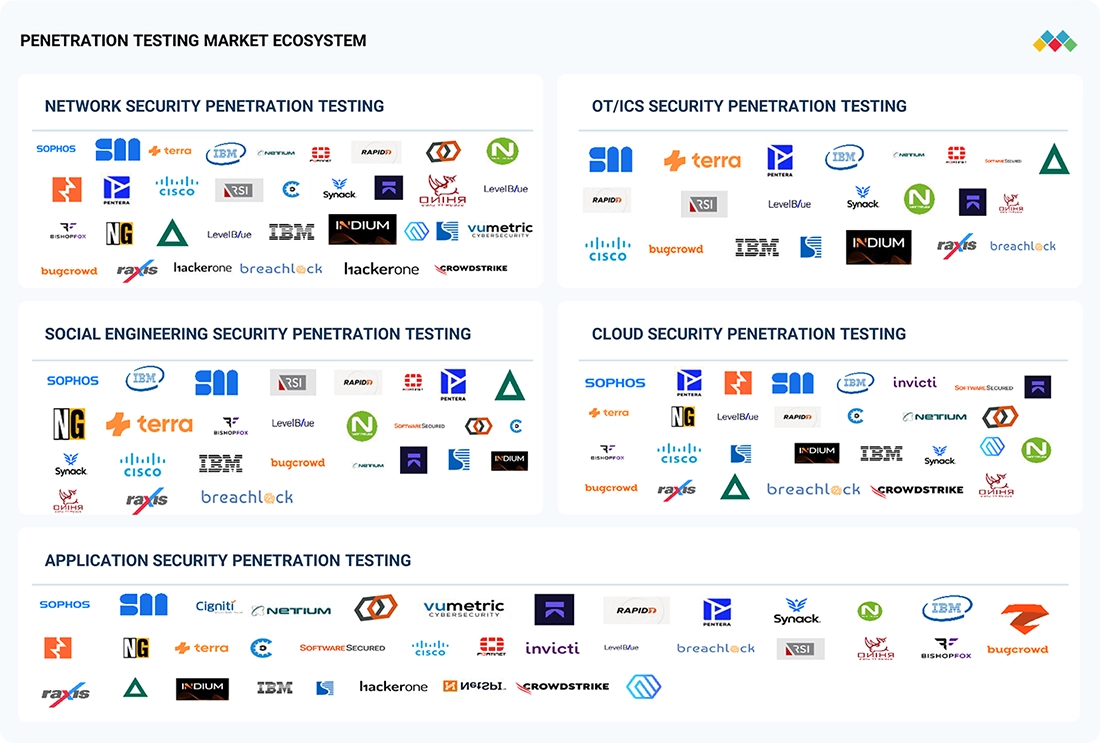
PENETRATION TESTING AS A SERVICE MARKET: COMMERCIAL USE CASES ACROSS INDUSTRIES
| COMPANY | USE CASE DESCRIPTION | BENEFITS |
|---|---|---|
 |
Trimble, a global technology company, integrated NetSPI’s PTaaS platform into its product development lifecycle to continuously test applications, infrastructure, and cloud assets for vulnerabilities during development and deployment. The platform enabled security teams and developers to collaborate with pentesters and track vulnerabilities in real time. | Enabled continuous vulnerability discovery across products, improved collaboration between developers and security teams, accelerated remediation cycles, and strengthened overall product security posture. |
 |
General Motors (GM) implemented HackerOne’s bug bounty and PTaaS platform to crowdsource vulnerability discovery across its connected vehicle ecosystem, including web platforms and mobile applications. Ethical hackers identified multiple vulnerabilities before they could be exploited. | Enabled large-scale vulnerability discovery, improved security of connected vehicle systems, reduced risk of cyberattacks, and strengthened GM’s automotive cybersecurity posture. |
 |
Okta, an identity and access management provider, leveraged Cobalt’s Pentest-as-a-Service platform to perform on-demand penetration testing integrated into its development lifecycle. Security teams used the platform to quickly launch pentests and track vulnerabilities through real-time reporting dashboards. | Reduced pentest turnaround time, enabled continuous testing aligned with DevOps workflows, improved vulnerability remediation speed, and strengthened application security. |
Logos and trademarks shown above are the property of their respective owners. Their use here is for informational and illustrative purposes only.
Related Ecosystem
Application Security
Cyber Security
Endpoint Security
Key Takeaways
- Europe's PTaaS market will grow from $136.1M (2026) to $384.7M (2031) at a 23.1% CAGR, outpacing global growth.
- Regulatory mandates including GDPR, NIS2, and sector-specific compliance requirements are primary adoption drivers across Europe.
- Europe's enterprises are shifting from ad-hoc penetration testing to continuous, managed PTaaS models for enhanced security posture.
- The region's mature cybersecurity ecosystem and high digital transformation investment create sustained demand through 2031.
Penetration Testing as a Service (PTaaS) Market Report Scope
| Report Metric | Details |
|---|---|
| Base Year | 2026 |
| Fastest Growing Segment | HEALTHCARE (Vertical) |
| Forecast Period | 2026–2031 |
| Growth Rate | CAGR of 22.6% from 2026 to 2031 |
| Largest Segment | PLATFORMS (Offering) |
| Market Size Base Year (Billions) | ~USD 0.71 (2026) |
| Revenue Forecast (Billions) | ~USD 1.98 (2031) |
| Segments Covered | Offering, Attack Surface, Type, Organization Size, Vertical |
Europe Penetration Testing as a Service (PTaaS) Market Report Segmentation
5 segment dimensions are covered across the global market.
By Offering
- Managed Services
- Platforms
By Attack Surface
- Application Security
- Cloud Security
- Network Security
- Ot/Ics Systems
- Social Engineering
By Type
- Api
- Apis
- External Network
- External Networks
- Internal Network
- Internal Networks
- Mobile Application
- Mobile Applications
- Web Application
- Web Applications
By Organization Size
- Large Enterprises
- Smes
By Vertical
- Bfsi
- Energy & Utilities
- Government & Public Sector
- Healthcare
- It & Ites
- Manufacturing
- Other Verticals
- Retail & Ecommerce
- Telecommunications
EUROPE: PENETRATION TESTING-AS-A-SERVICE (PTAAS) MARKET, BY VERTICAL, 2026–2031
| Segment | 2026 | 2027 | 2028 | 2029 | 2030 | 2031 | CAGR (%) |
|---|---|---|---|---|---|---|---|
| BFSI | 38.9 | 47.9 | 58.6 | 70.9 | 85.3 | 100.9 | 21 |
| ENERGY & UTILITIES | 9.2 | 11.5 | 14.2 | 17.5 | 21.3 | 25.2 | 22.4 |
| GOVERNMENT & PUBLIC SECTOR | 18.4 | 22.4 | 27 | 32.2 | 38.3 | 45.1 | 19.6 |
| HEALTHCARE | 31.5 | 40.2 | 50.6 | 63.1 | 78.3 | 98.7 | 25.7 |
| IT & ITES | 25.9 | 32.7 | 40.8 | 50.5 | 62.2 | 75.8 | 23.9 |
| MANUFACTURING | 13.9 | 17.2 | 21.1 | 25.6 | 30.9 | 37.1 | 21.7 |
| OTHER VERTICALS | 7.2 | 8.4 | 9.9 | 11.4 | 13 | 15 | 15.8 |
| RETAIL & ECOMMERCE | 19.9 | 25 | 31.1 | 38.4 | 47.1 | 57.2 | 23.5 |
| TELECOMMUNICATIONS | 15.9 | 19.4 | 23.5 | 28.3 | 33.8 | 38.5 | 19.4 |
| TOTAL | 180.8 | 224.6 | 276.8 | 338 | 410.2 | 493.4 | 22.2 |
REST OF EUROPE: PENETRATION TESTING-AS-A-SERVICE (PTAAS) MARKET, BY VERTICAL, 2026–2031
| Segment | 2026 | 2027 | 2028 | 2029 | 2030 | 2031 | CAGR (%) |
|---|---|---|---|---|---|---|---|
| BFSI | 8.4 | 10.4 | 12.8 | 15.6 | 18.8 | 22.3 | 21.6 |
| ENERGY & UTILITIES | 2 | 2.5 | 3.1 | 3.8 | 4.7 | 5.5 | 23 |
| GOVERNMENT & PUBLIC SECTOR | 4 | 4.8 | 5.9 | 7 | 8.4 | 9.9 | 20.2 |
| HEALTHCARE | 6.8 | 8.7 | 11 | 13.8 | 17.2 | 21.7 | 26.3 |
| IT & ITES | 5.6 | 7.1 | 8.9 | 11 | 13.6 | 16.7 | 24.5 |
| MANUFACTURING | 3 | 3.7 | 4.6 | 5.6 | 6.8 | 8.2 | 22.2 |
| OTHER VERTICALS | 1.5 | 1.8 | 2.1 | 2.4 | 2.8 | 3.2 | 15.9 |
| RETAIL & ECOMMERCE | 4.3 | 5.4 | 6.8 | 8.4 | 10.3 | 12.6 | 24 |
| TELECOMMUNICATIONS | 3.4 | 4.2 | 5.1 | 6.2 | 7.4 | 8.5 | 19.9 |
| TOTAL | 38.9 | 48.6 | 60.2 | 73.8 | 90 | 108.6 | 22.8 |
Target Audience
- PTaaS Solution Providers : European and international PTaaS vendors require detailed market sizing, competitive positioning, and regulatory landscape insights to optimize go-to-market strategies and service offerings for European enterprises.
- Enterprise Security Leaders : CISOs and security directors across European organizations need market intelligence on PTaaS capabilities, vendor benchmarking, and compliance alignment to inform vendor selection and budget allocation decisions.
- Management Consulting Firms : Strategy and cybersecurity consultants advising European clients require market data, trend analysis, and competitive intelligence to support digital transformation and security posture recommendations.
- Private Equity & Investors : Investment firms evaluating PTaaS companies or cybersecurity portfolios need European market forecasts, growth drivers, and competitive dynamics to assess investment returns and portfolio optimization.
- Regulatory & Compliance Bodies : Government agencies and regulatory organizations benefit from market insights on PTaaS adoption rates and compliance effectiveness to inform cybersecurity policy development and enforcement strategies.
Countries within Europe - compare and drill down
| Country | 2025 size (native) |
|---|---|
| UK | USD 178.8 Million |
| Germany | USD 126.5 Million |
| France | USD 48.7 Million |
| Italy | USD 30.9 Million |
| Rest Of Europe | USD 108.6 Million |
Country market size visualization
Reasons to Buy this Report
- Regulatory Compliance Intelligence : Understand how GDPR, NIS2, and emerging European regulations are reshaping PTaaS demand, enabling strategic positioning for compliance-driven market opportunities across the region.
- Country-Level Market Sizing : Access granular market data for UK, Germany, France, Italy, and Rest of Europe segments, identifying high-growth markets and regional investment priorities for expansion strategies.
- Competitive Landscape Analysis : Benchmark against regional and global PTaaS providers operating in Europe, understanding market consolidation trends, service differentiation, and competitive positioning strategies.
- Sector-Specific Demand Drivers : Identify which European industries (financial services, healthcare, critical infrastructure) are driving PTaaS adoption and forecast sector-specific growth trajectories through 2031.
- Investment & Partnership Opportunities : Discover high-potential markets, emerging vendors, and M&A targets within Europe's rapidly expanding PTaaS ecosystem, supporting capital allocation and strategic partnership decisions.
Frequently asked questions
What is the projected market size for PTaaS in Europe by 2031?
Europe's PTaaS market is projected to reach $384.7 million by 2031, growing from $136.1 million in 2026 at a 23.1% CAGR.
What regulatory drivers are accelerating PTaaS adoption in Europe?
Europe's adoption is driven by GDPR compliance requirements, the NIS2 Directive, and sector-specific regulations in finance, healthcare, and critical infrastructure that mandate regular security assessments.
How does Europe's PTaaS growth compare to global trends?
Europe's 23.1% CAGR slightly exceeds the global average of 22.6%, reflecting the region's strong regulatory environment and mature cybersecurity investment landscape.
Which industries in Europe are driving PTaaS demand?
Financial services, healthcare, critical infrastructure, telecommunications, and government sectors in Europe are primary PTaaS adopters due to stringent compliance and security requirements.
What is the primary shift in Europe's penetration testing approach?
European organizations are transitioning from traditional one-time penetration tests to continuous, managed PTaaS models that provide ongoing vulnerability assessment and compliance validation.
RESEARCH METHODOLOGY
Secondary research was conducted to collect information useful for this technical, market-oriented, and commercial study of the Penetration Testing as a Service (PTaaS) market. The next step involved validating these findings, assumptions, and sizing with industry experts across the value chain using primary research. Different approaches, including top-down and bottom-up methods, were employed to estimate the total market size. After that, the market breakup and data triangulation procedures were used to estimate the size of the segments and subsegments of the PTaaS market.
Secondary Research
During the secondary research process, various secondary sources were consulted to identify and collect information relevant to the study. The secondary sources included annual reports, press releases, investor presentations of PTaaS vendors, forums, certified publications, and whitepapers. The secondary research was mainly used to obtain key information about the industry’s supply chain, the total pool of key players, market classification and segmentation according to industry trends to the bottom-most level, regional markets, and key developments from both market- and technology-oriented perspectives, all of which were further validated by primary sources.
Primary Research
In the primary research process, various primary sources from both the supply and demand sides were interviewed to obtain qualitative and quantitative information for this report. The primary sources from the supply side included various industry experts, including chief executive officers (CEOs), vice presidents (VPs), marketing directors, technology and innovation directors, and related key executives from various key companies and organizations operating in the PTaaS market.
In the market engineering process, top-down and bottom-up approaches were extensively used, along with several data triangulation methods, to perform market estimation and forecasting for the overall market segments and subsegments listed in this report. Extensive qualitative and quantitative analysis was performed on the complete market engineering process to list key information/insights throughout the report.
After the complete market engineering process (including calculations for market statistics, market breakups, market size estimations, market forecasts, and data triangulation), extensive primary research was conducted to gather information and verify & validate the critical numbers arrived at. The primary research was also conducted to identify the segmentation types, industry trends, competitive landscape of PTaaS market players, and key market dynamics, such as drivers, restraints, opportunities, challenges, industry trends, and key strategies.
Following is the breakup of the primary study:
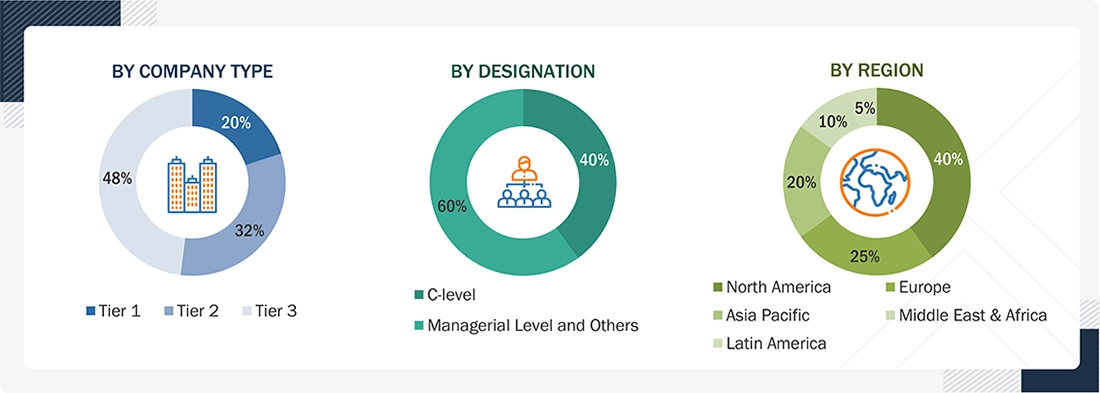
Note: Tier 1 companies receive revenues higher than USD 10 billion; Tier 2 companies' revenues range between USD 1 and 10 billion; and Tier 3 companies' revenues range between USD 500 million and USD 1 billion. Other designations include sales, marketing, and product managers.
To know about the assumptions considered for the study, download the pdf brochure
Market Size Estimation
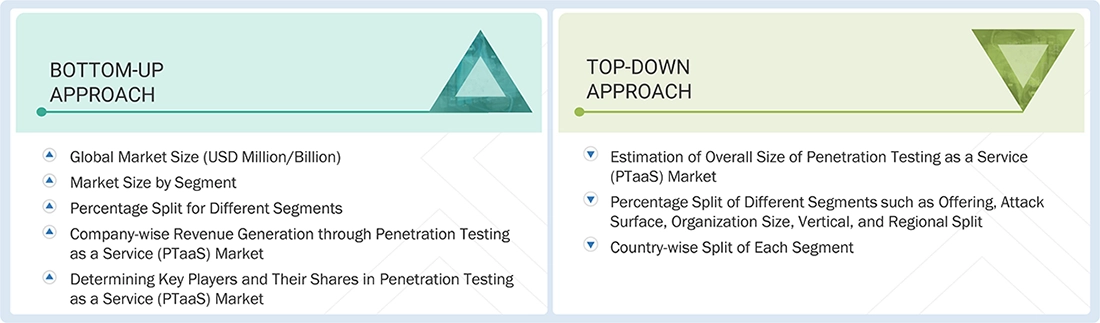
Top-down and bottom-up approaches were employed to estimate and validate the size of the PTaaS market, as well as the size of various dependent sub-segments within the overall PTaaS market. The research methodology used to estimate the market size includes the following details: critical players in the market were identified through secondary research, and their market shares in the respective regions were determined through primary and secondary research. This entire procedure involved studying the annual and financial reports of the top market players, and extensive interviews with key industry leaders, including CEOs, VPs, directors, and marketing executives, to gather valuable insights.
All percentage splits and breakdowns were determined using secondary sources and verified through primary sources. All possible parameters that affect the market covered in this research study were accounted for, viewed in extensive detail, verified through primary research, and analyzed to get the final quantitative and qualitative data. This data was consolidated and added to detailed inputs and analysis from MarketsandMarkets.
Penetration Testing as a Service Market : Top-Down and Bottom-Up Approach
Data Triangulation
The market was split into several segments and subsegments after arriving at the overall market size using the market size estimation processes explained above. The data triangulation and market breakup procedures were employed, wherever applicable, to complete the overall market engineering process and arrive at the exact statistics of each market segment and subsegment. The data was triangulated by studying various factors and trends from both the demand and supply sides.
Market Definition
According to MarketsandMarkets, penetration testing is a proactive cybersecurity assessment approach in which authorized professionals simulate real-world cyberattacks on networks, applications, systems, or devices to identify exploitable vulnerabilities, assess security control effectiveness, and provide remediation recommendations to reduce organizational risk and strengthen overall security posture.
Key Stakeholders
- Chief Technology and Data Officers
- Consulting Service Providers
- Cybersecurity Professionals
- Business Analysts
- Information Technology (IT) Professionals
- Government Agencies
- Investors and Venture Capitalists
- Small And Medium-Sized Enterprises (SMEs) and Large Enterprises
- Third-party Providers
- Consultants/Consultancies/Advisory Firms
Report Objectives
- To describe and forecast the Penetration Testing as a Service (PTaaS) market by offering, attack surface, organization size, vertical, and region from 2025 to 2031, and analyze the various macroeconomic and microeconomic factors that affect market growth
- To forecast the market size of five major regions: North America, Europe, Asia Pacific, the Middle East & Africa, and Latin America
- To analyze the subsegments of the market with respect to individual growth trends, prospects, and contributions to the overall market
- To provide detailed information regarding major factors (drivers, restraints, opportunities, and challenges) influencing the growth of the market
- To analyze opportunities in the market for stakeholders and provide details of the competitive landscape of major players
- To profile key market players; provide a comparative analysis based on the business overviews, regional presence, product offerings, business strategies, and key financials; and illustrate the competitive landscape of the market.
- To analyze competitive developments, such as mergers & acquisitions, product developments, partnerships and collaborations, and research & development (R&D) activities, in the market
Available customizations:
With the given market data, MarketsandMarkets offers customizations based on company-specific needs. The following customization options are available for the report:
Geographic Analysis
- Further breakup of the Asia Pacific market into countries that contribute to the rest of the regional market size.
- Further breakup of the North American market into countries that contribute to the rest of the regional market size.
- Further breakup of the Latin American market into countries that contribute to the rest of the regional market size
- Further breakup of the Middle East & African market into countries that contribute to the rest of the regional market size
- Further breakup of the European market into countries that contribute to the rest of the regional market size
Company Information
- Detailed analysis and profiling of additional market players (up to 5)
Get the Full Penetration Testing as a Service (PTaaS) Market Report
Full forecast, segment splits, and company analysis for all Penetration Testing as a Service (PTaaS) Market.
- US Penetration Testing as a Service (PTaaS) Market
- Canada Penetration Testing as a Service (PTaaS) Market
- UK Penetration Testing as a Service (PTaaS) Market
- Germany Penetration Testing as a Service (PTaaS) Market
- France Penetration Testing as a Service (PTaaS) Market
- Italy Penetration Testing as a Service (PTaaS) Market
- China Penetration Testing as a Service (PTaaS) Market
- Japan Penetration Testing as a Service (PTaaS) Market
- India Penetration Testing as a Service (PTaaS) Market
- UAE Penetration Testing as a Service (PTaaS) Market
- Brazil Penetration Testing as a Service (PTaaS) Market
- Mexico Penetration Testing as a Service (PTaaS) Market
- Rest Of Europe Penetration Testing as a Service (PTaaS) Market
- Rest Of Asia Pacific Penetration Testing as a Service (PTaaS) Market
Need a Tailored Report?
Customize this report to your needs
Get 10% FREE Customization
Customize This Report
