
China PFAS Waste Management Market (2026-2031)

The China PFAS Waste Management Market was valued at $251.9 Million in 2026 and projected to reach to $359.8 Million by 2031, representing a compound annual growth rate of 7.4%. China's PFAS waste management market is positioned for sustained growth as environmental regulations tighten and industrial sectors prioritize contamination control.


| Market Size in | USD 26.32 MN |
| Market Forecast in | |
| CAGR | |
| Forecast Period | |
| Units Considered | Value (USD MN) |
China PFAS Waste Management Market Trends and Insights
- This growth trajectory reflects China's intensifying regulatory focus on per- and polyfluoroalkyl substances (PFAS) contamination, driven by environmental concerns and industrial compliance requirements.
- China's manufacturing sector, particularly electronics, textiles, and chemical production, generates significant PFAS-laden waste streams that require specialized treatment and disposal solutions. The 7.4% compound annual growth rate (CAGR) in China outpaces the global average of 6.2%, underscoring the country's accelerating commitment to environmental remediation and circular economy principles.
- China's investment in advanced waste treatment technologies, including thermal destruction, chemical oxidation, and adsorption-based systems, is reshaping the competitive landscape.
- Government initiatives and stricter enforcement of environmental standards are compelling Chinese manufacturers and waste management operators to adopt compliant PFAS disposal practices, positioning China as a critical growth market within the Asia Pacific region..
Key Market Statistics
- CAGR (2026-2031) 7.4% CAGR
- Market Size, 2026 ~USD 251.9 Million
- Forecast, 2031 ~USD 359.8 Million
- Country China
China PFAS Waste Management Market Overview
Rapid Market Expansion :
China's PFAS waste management market is projected to grow from USD 251.9 million in 2026 to USD 359.8 million by 2031, representing a robust 7.4% CAGR, outpacing the global growth rate of 6.2%.
Regulatory Compliance Pressure :
Intensifying Chinese environmental regulations and stricter PFAS contamination standards are driving industrial compliance investments across manufacturing, electronics, and chemical sectors.
Manufacturing Sector Leadership :
China's dominant manufacturing base, particularly in electronics, textiles, and chemical production, generates significant PFAS waste streams requiring specialized management and treatment solutions.
Environmental Remediation Focus :
Growing awareness of PFAS contamination in water systems and soil across industrial regions is accelerating demand for advanced waste treatment technologies and disposal infrastructure.
China PFAS Waste Management Market Dynamics
- The country's manufacturing dominance creates substantial demand for specialized waste treatment solutions, particularly in electronics, textiles, and chemical production.
- Government initiatives targeting water quality and soil remediation are expected to drive infrastructure investments and technology adoption across the decade. The market will benefit from increasing corporate sustainability commitments and international trade compliance requirements.
- Chinese enterprises are investing in advanced treatment technologies, including thermal destruction, chemical oxidation, and landfill solutions.
- Strategic partnerships between waste management companies and industrial manufacturers will accelerate market penetration, positioning China as a critical hub for PFAS waste management innovation and implementation..
Market Ecosystem
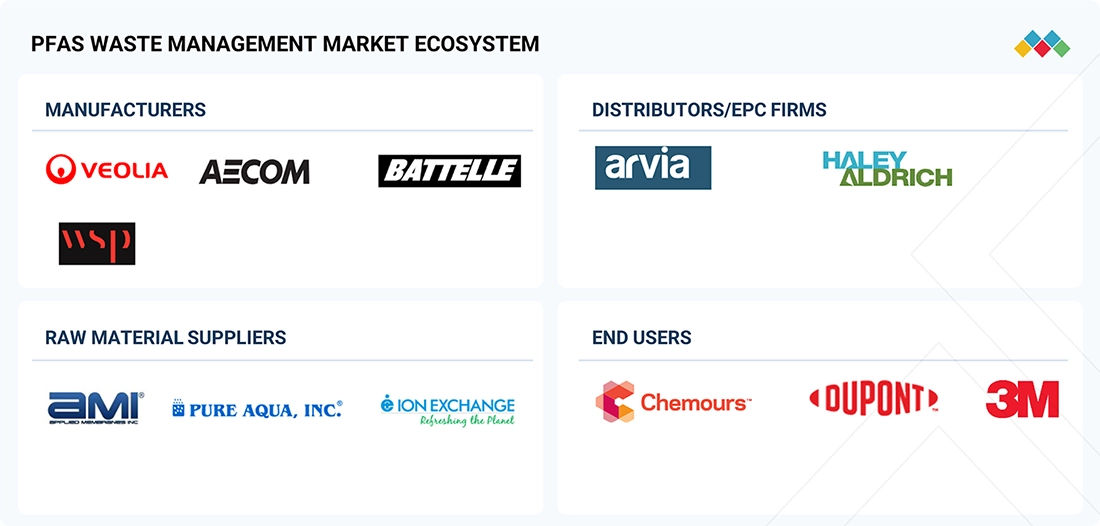
PFAS WASTE MANAGEMENT MARKET: COMMERCIAL USE CASES ACROSS INDUSTRIES
| COMPANY | USE CASE DESCRIPTION | BENEFITS |
|---|---|---|
 |
Implementation of advanced PFAS destruction systems for wastewater from specialty chemicals and coatings production | Achieved regulatory compliance with EU PFAS limits |
 |
Deployment of PFAS removal technologies for process water at fluorochemical plants | Strengthened environmental stewardship and ESG profile |
 |
Adoption of industrial PFAS destruction technologies for textile dyeing and finishing wastewater treatment | Reduced environmental and social risk exposure |
Logos and trademarks shown above are the property of their respective owners. Their use here is for informational and illustrative purposes only.
Related Ecosystem
Speciality Chemicals
- Corrosion Inhibitors
- Polyetheretherketone (PEEK)
- Acrylonitrile Butadiene Styrene (ABS)
- Epoxy Resin
- Polycarbonate
- Basf se
- DOW CHEMICAL COMPANY
- Evonik industries ag
- Clariant ag.
- Solvay sa
Key Takeaways
- China's PFAS waste management market is valued at USD 251.9 million in 2026 and will grow to USD 359.8 million by 2031, representing a 7.4% CAGR that exceeds global growth rates.
- China's manufacturing-intensive economy, particularly in electronics, textiles, and chemicals, generates substantial PFAS waste requiring specialized treatment and disposal infrastructure.
- Regulatory tightening and government enforcement of environmental standards are accelerating China's adoption of advanced PFAS treatment technologies and compliant waste management practices.
- China's investment in thermal destruction, chemical oxidation, and adsorption-based PFAS treatment solutions positions the country as a key innovation hub within the Asia Pacific region.
PFAS Waste Management Market Report Scope
| Report Metric | Details |
|---|---|
| Base Year | 2026 |
| Fastest Growing Segment | –OTHER THERMAL DESTRUCTION TECHNOLOGIES (Treatment Technology) |
| Forecast Period | 2026–2031 |
| Growth Rate | CAGR of 6.2% from 2026 to 2031 |
| Largest Segment | THERMAL DESTRUCTION (Treatment Technology) |
| Market Size Base Year (Billions) | ~USD 2.21 (2026) |
| Revenue Forecast (Billions) | ~USD 2.98 (2031) |
| Segments Covered | Treatment Technology, Service Type, End-Use Industry |
China PFAS Waste Management Market Report Segmentation
3 segment dimensions are covered across the global market.
By Treatment Technology
- Landfilling
- Other Treatment Technologies
- Recycling & Recovery
- Stabilization & Solidification
- Thermal Destruction
- –Incineration
- –Other Thermal Destruction Technologies
- –Thermal Carbon Reactivation
By Service Type
- Off-Site
- On-Site
By End-Use Industry
- Commercial
- Industrial
- Municipal
- –Chemical & Petrochemical
- –Drinking Water Treatment Plants
- –Electronics & Semiconductor
- –Military
- –Oil & Gas
- –Other Industrial
- –Textile
- –Wastewater Treatment Plants
CHINA: PFAS WASTE MANAGEMENT MARKET, BY END-USE INDUSTRY, 2026–2031
| Segment | 2026 | 2027 | 2028 | 2029 | 2030 | 2031 | CAGR (%) |
|---|---|---|---|---|---|---|---|
| COMMERCIAL | 99.4 | 107.8 | 117.1 | 127.3 | 138.6 | 148.3 | 8.3 |
| INDUSTRIAL | 319.2 | 342.1 | 367.2 | 394.7 | 424.9 | 449.6 | 7.1 |
| MUNICIPAL | 91.3 | 98.5 | 106.5 | 115.3 | 125 | 133.2 | 7.9 |
| TOTAL | 509.9 | 548.5 | 590.8 | 637.3 | 688.4 | 731.1 | 7.5 |
Target Audience
- Environmental Compliance Officers : Need detailed China market insights to navigate regulatory requirements, assess compliance costs, and implement PFAS waste management strategies across manufacturing operations.
- Waste Management Companies : Require market sizing and growth forecasts for China to evaluate expansion opportunities, develop service offerings, and allocate resources to high-demand regions.
- Industrial Manufacturers : Seek China-specific data on PFAS waste treatment solutions, regulatory obligations, and market trends to optimize waste management practices and reduce environmental liability.
- Investment & Private Equity Firms : Need comprehensive market analysis of China's PFAS waste management sector to identify investment opportunities, assess growth potential, and evaluate portfolio companies.
- Technology & Equipment Providers : Require detailed market intelligence on China's PFAS treatment technology demand, competitive landscape, and regulatory drivers to guide product development and sales strategies.
Key Companies in the China PFAS Waste Management Market
| Company | HQ | Ownership | Strongest segments |
|---|---|---|---|
| VEOLIA | France | Public Company | Destruction (thermal, advanced oxidation, other destructive technologies),Recycling & Recovery,Others (containment, transport, pre-treatment, consulting), |
| AECOM | United States | Public Company | Destruction technologies (thermal, advanced oxidation, high-temperature processes),Recycling & Recovery (concentrate management, media regeneration, PFAS capture),Other PFAS services (site investigation, risk assessment, permitting, program advisory), |
| WSP | Canada | Public Company | Destruction technologies–linked consulting and program management,Recycling & recovery–linked advisory and feasibility,Other PFAS services (risk assessment, permitting, compliance, monitoring), |
| JACOBS | United States | Public Company | Destruction technologies (design, integration, oversight),Recycling & recovery (capture, concentration, resource recovery),Other services (site assessment, monitoring, strategy), |
| INDAVER | Belgium | Private Company | Destruction,Recycling & Recovery,Others, |
| ENVIROPACIFIC SERVICES LIMITED | Australia | Private Company | Destruction,Recycling & Recovery,Others, |
VEOLIA
Veolia is a French public company founded in 1853 that operates as a global leader in environmental services with 203,100 employees. The company provides water, waste, and energy management solutions across multiple continents.
AECOM
AECOM is a United States-based public company founded in 1980 with 51,000 employees that delivers professional services in design, consulting, construction, and management across infrastructure and environmental sectors.
WSP
WSP is a Canadian public company established in 1993 with 82,500 employees providing professional services in engineering, design, and consulting for infrastructure and environmental projects globally.
JACOBS
Jacobs is a United States public company founded in 1947 with 47,000 employees providing engineering, design, and consulting services for critical infrastructure and environmental projects worldwide.
INDAVER
Indaver is a Belgian private company with 1,536 employees operating in waste management and environmental services.
ENVIROPACIFIC SERVICES LIMITED
Enviropacific Services Limited is an Australian private company founded in 2001 with 267 employees providing environmental and waste management services.
Reasons to Buy this Report
- Market Size & Growth Validation : Obtain precise market valuation data for China (USD 251.9M in 2026) with verified 7.4% CAGR forecasts through 2031, enabling accurate investment planning and competitive positioning.
- Regulatory Landscape Intelligence : Understand China-specific environmental regulations, compliance requirements, and government initiatives driving PFAS waste management adoption across industrial sectors.
- Sector-Specific Opportunity Analysis : Identify high-growth segments within China's manufacturing, electronics, textiles, and chemical industries with detailed insights into PFAS waste generation and treatment demand.
- Competitive Strategy Development : Benchmark against regional competitors and develop market entry or expansion strategies tailored to China's unique regulatory environment and industrial structure.
- Investment Decision Support : Access comprehensive market data to support capital allocation decisions, partnership evaluations, and technology investment priorities specific to the Chinese market.
Frequently asked questions
What is the current market size of PFAS waste management in China?
China's PFAS waste management market was valued at USD 251.9 million in 2026 and is projected to reach USD 359.8 million by 2031.
What is the growth rate of China's PFAS waste management market?
China's PFAS waste management market is growing at a compound annual growth rate (CAGR) of 7.4% from 2026 to 2031, outpacing the global average of 6.2%.
Which industries in China generate the most PFAS waste?
China's electronics, textiles, chemical manufacturing, and industrial coating sectors are primary generators of PFAS-contaminated waste streams requiring specialized management.
What treatment technologies are driving growth in China's PFAS waste management market?
Advanced technologies including thermal destruction, chemical oxidation, adsorption-based systems, and incineration are key drivers of market expansion in China.
How are Chinese regulations influencing PFAS waste management adoption?
Stricter government enforcement of environmental standards and regulatory compliance requirements are compelling Chinese manufacturers and waste operators to invest in compliant PFAS disposal solutions.
RESEARCH METHODOLOGY
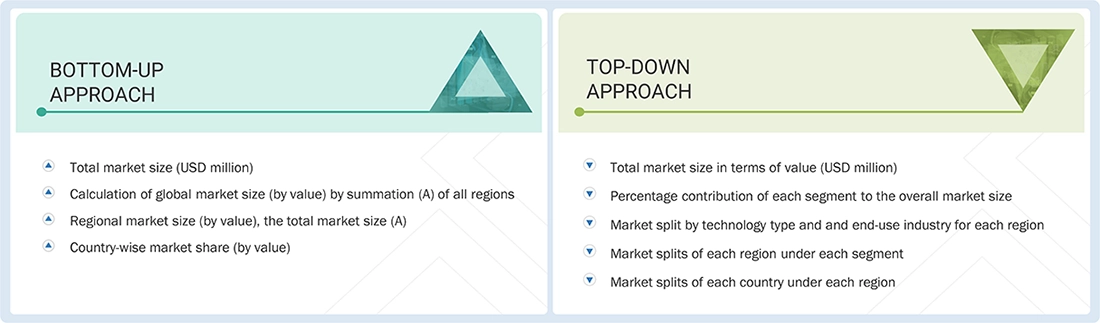
The study involves two major activities in estimating the current market size for the PFAS waste management market. Exhaustive secondary research was done to collect information on the market, peer market, and parent market. The next step was to validate these findings, assumptions, and sizing with industry experts across the value chain through primary research. Both top-down and bottom-up approaches were employed to estimate the complete market size. Following this, market breakdown and data triangulation were employed to determine the market size of segments and subsegments.
Secondary Research
Secondary sources referred to for this research study include financial statements of companies offering PFAS waste management and information from various trade, business, and professional associations. Secondary research has been used to obtain critical information about the industry's value chain, the total pool of key players, market classification, and segmentation according to industry trends to the bottom-most level and regional markets. Secondary data was collected and analyzed to arrive at the overall size of the PFAS waste management market, which was validated through primary respondents.
Primary Research
Extensive primary research was conducted after obtaining information regarding the PFAS waste management market scenario through secondary research. Several primary interviews were conducted with market experts from both the demand and supply sides across major countries of North America, Europe, Asia Pacific, the Middle East & Africa, and South America. Primary data was collected through questionnaires, emails, and telephonic interviews. The primary sources from the supply side included various industry experts, such as Chief X Officers (CXOs), Vice Presidents (VPs), Directors from business development, marketing, product development/innovation teams, and related key executives from PFAS waste management industry vendors; material providers; distributors; and key opinion leaders. Primary interviews were conducted to gather insights, including market statistics, revenue data from products and services, market breakdowns, market size estimations, market forecasting, and data triangulation. Primary research also helped in understanding the various trends related to material, sources, manufacturing processes, applications, and regions. Stakeholders from the demand side, such as CIOs, CTOs, CSOs, and installation teams of the customer/end users who are seeking PFAS waste management, were interviewed to understand the buyer's perspective on the suppliers, products, component providers, and their current usage of PFAS waste management technologies and future outlook of their business, which will affect the overall market.
Breakup of Primary Research:
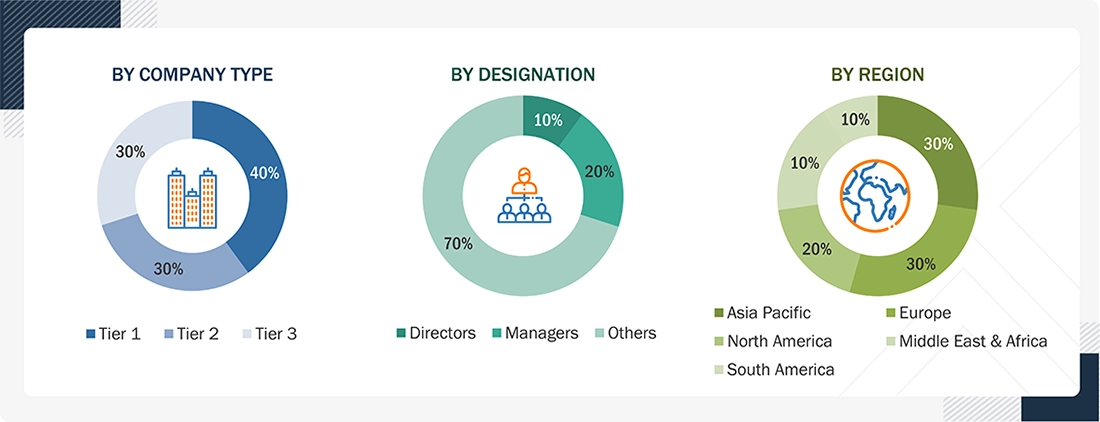
To know about the assumptions considered for the study, download the pdf brochure
Market Size Estimation
The research methodology used to estimate the size of the PFAS waste management market includes the following details. The sizing of the market was undertaken from the demand side. The market was upsized based on the demand for PFAS waste management products in different applications at a regional level. Such procurements provide information on the demand aspects of the PFAS waste management industry for each end-use industry. For each end-use industry, all possible segments of the PFAS waste management market were integrated and mapped.
Data Triangulation
After arriving at the overall size from the market size estimation process explained above, the total market was split into several segments and subsegments. The data triangulation and market breakdown procedures explained below were implemented, wherever applicable, to complete the overall market engineering process and arrive at the exact statistics for various market segments and subsegments. The data was triangulated by studying various factors and trends from the demand and supply sides. Along with this, the market size was validated using both the top-down and bottom-up approaches.
Market Definition
The PFAS waste management market includes all technologies, media, systems, and related services that remove PFAS compounds from water and environmental media to achieve strict regulatory standards that protect public health and allow safe discharge or reuse. The solution includes various destruction, solidification, and recycling & recovery technologies (thermal destruction, electrochemical oxidation, supercritical water oxidation, and complementary technologies) and integration and support services that cover municipal drinking water, industrial wastewater, and groundwater remediation.
Stakeholders
- PFAS Waste Management Technology Manufacturers
- PFAS Waste Management Technology Distributors and Suppliers
- Universities, Governments, and Research Organizations
- Associations and Industrial Bodies
- R&D Institutes
- Environmental Support Agencies
- Investment Banks and Private Equity Firms
- Research and Consulting Firms
Report Objectives
- To define, describe, and forecast the PFAS waste management market size in terms of value
- To provide detailed information regarding the key factors, such as drivers, restraints, opportunities, and challenges influencing market growth
- To analyze and project the global PFAS waste management market by technology, service type, end-use industry, and region
- To forecast the market size concerning five main regions (along with country-level data), namely, North America, Europe, Asia Pacific, the Middle East & Africa, and South America, and analyze the significant region-specific trends
- To strategically analyze micromarkets with respect to individual growth trends, prospects, and contributions of the submarkets to the overall market
- To analyze the market opportunities and the competitive landscape for stakeholders and market leaders
- To assess recent market developments and competitive strategies, such as agreements, contracts, acquisitions, partnerships & collaboration, and new product developments/new product launches, to draw the competitive landscape
- To strategically profile the key market players and comprehensively analyze their core competencies
Get the Full PFAS Waste Management Market Report
Full forecast, segment splits, and company analysis for all PFAS Waste Management Market.
- US PFAS Waste Management Market
- Canada PFAS Waste Management Market
- Mexico PFAS Waste Management Market
- Germany PFAS Waste Management Market
- France PFAS Waste Management Market
- UK PFAS Waste Management Market
- Japan PFAS Waste Management Market
- Australia PFAS Waste Management Market
- South Africa PFAS Waste Management Market
- Rest Of Europe PFAS Waste Management Market
- Rest Of Asia Pacific PFAS Waste Management Market
- GCC Countries PFAS Waste Management Market
Need a Tailored Report?
Customize this report to your needs
Get 10% FREE Customization
Customize This Report
