
France Phosphorous Trichloride Market (2025-2030)

The France Phosphorous Trichloride Market was valued at $101.2 Million in 2025 and projected to reach to $128.8 Million by 2030, representing a compound annual growth rate of 4.9%. France's phosphorous trichloride market is poised for moderate but consistent growth through 2030, supported by sustained demand from the agrochemical sector and expanding pharmaceutical manufacturing activities.


| Market Size in | USD 26.32 MN |
| Market Forecast in | |
| CAGR | |
| Forecast Period | |
| Units Considered | Value (USD MN) |
France Phosphorous Trichloride Market Trends and Insights
- France maintains a strategic position within Europe's chemical manufacturing sector, with phosphorous trichloride serving as a critical intermediate in agrochemical, pharmaceutical, and specialty chemical production.
- The market in France is driven by steady demand from established industrial sectors and regulatory frameworks that support chemical innovation and sustainable production practices. The growth trajectory for France's phosphorous trichloride market reflects moderate but consistent expansion through the forecast period.
- France's chemical industry benefits from advanced infrastructure, skilled workforce, and proximity to key European markets, positioning the country as a reliable supplier and consumer of phosphorous trichloride derivatives.
- Between 2025 and 2030, France is expected to experience incremental capacity utilization improvements and increased adoption in high-value applications, though growth remains measured compared to emerging markets..
Key Market Statistics
- CAGR (2025-2030) 4.9% CAGR
- Market Size, 2025 ~USD 101.2 Million
- Forecast, 2030 ~USD 128.8 Million
- Country France
France Phosphorous Trichloride Market Overview
Market Size & Growth :
France's phosphorous trichloride market is valued at USD 101.2 million in 2025, with projected growth to USD 128.8 million by 2030, reflecting a steady CAGR of 4.9% driven by robust demand from agrochemical and pharmaceutical sectors.
Strategic European Position :
France maintains a critical role in Europe's chemical manufacturing ecosystem, leveraging its advanced infrastructure and regulatory expertise to serve as a key hub for phosphorous trichloride production and distribution across the continent.
End-Use Applications :
The French market is primarily driven by agrochemical formulations, pharmaceutical intermediates, and specialty chemical manufacturing, with phosphorous trichloride serving as an essential raw material for pesticide and drug synthesis.
Regulatory & Compliance Environment :
France's stringent EU chemical regulations and REACH compliance framework create both barriers to entry and competitive advantages for established manufacturers, ensuring high-quality production standards and market stability.
France Phosphorous Trichloride Market Dynamics
- The country's position within the EU regulatory framework and its advanced chemical infrastructure provide a stable foundation for market expansion.
- However, growth remains tempered compared to global rates due to mature market conditions and stringent environmental regulations.
- Investment in sustainable production technologies and compliance with evolving EU directives will be critical for market participants seeking to capitalize on emerging opportunities in specialty chemicals and green chemistry applications..
Market Ecosystem
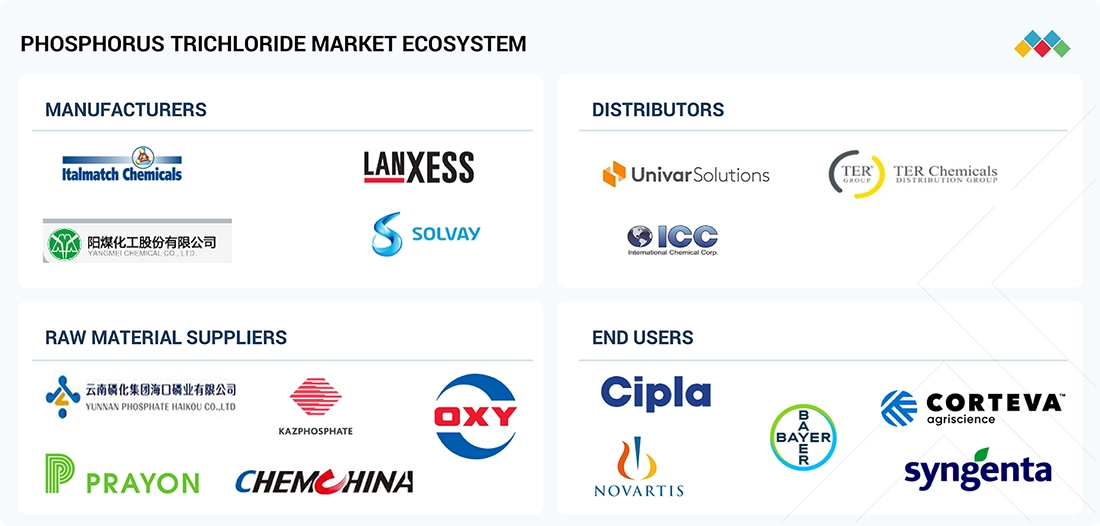
Phosphorous Trichloride Market: COMMERCIAL USE CASES ACROSS INDUSTRIES
| COMPANY | USE CASE DESCRIPTION | BENEFITS |
|---|---|---|
 |
Employs phosphorus trichloride in the manufacture of flame retardants such as Fyrol TPP (triphenyl phosphate) and Fyrolflex RDP for plastics and electronics applications. | Provides enhanced flame resistance, ensures regulatory compliance in electrical & building materials, and supports sustainable material innovation. |
 |
Uses phosphorus trichloride to synthesize aminotris (methylenephosphonic acid) (ATMP) and hydroxyethylidene diphosphonic acid (HEDP), key water treatment chemicals for scale and corrosion control. | Delivers high-performance inhibitors, extends industrial equipment lifespan, and reduces corrosion and scaling in power and chemical plants. |
 |
Integrates phosphorus trichloride in producing Disflamoll and Levagard series of organophosphorus flame retardants and plasticizers used in polyurethane foams, PVC, and engineering plastics. | Improves thermal stability and fire retardancy of polymers, ensuring durability, regulatory compliance, and safety in automotive and construction sectors. |
 |
Applies phosphorus trichloride in the manufacture of phosphorus-based intermediates like phosphorus oxychloride (POCl3) and triphenyl phosphite, used in battery electrolytes, polymer additives, and chemical catalysts. | Enables high-purity phosphorus chemistry, supports EV battery material innovation, and improves energy efficiency in advanced material synthesis. |
Logos and trademarks shown above are the property of their respective owners. Their use here is for informational and illustrative purposes only.
Related Ecosystem
Speciality Chemicals
- Corrosion Inhibitors
- Polyetheretherketone (PEEK)
- Acrylonitrile Butadiene Styrene (ABS)
- Epoxy Resin
- Polycarbonate
- Basf se
- DOW CHEMICAL COMPANY
- Evonik industries ag
- Clariant ag.
- Solvay sa
Key Takeaways
- France's phosphorous trichloride market is valued at USD 101.2 million in 2025 and will reach USD 128.8 million by 2030, growing at 4.9% CAGR.
- France leverages its advanced chemical infrastructure and regulatory environment to maintain stable demand for phosphorous trichloride in agrochemical and pharmaceutical applications.
- Growth in France is driven by incremental capacity improvements and adoption in specialty chemical sectors rather than rapid market expansion.
- France's position within the European chemical supply chain supports consistent phosphorous trichloride consumption through 2030.
Phosphorous Trichloride Market Report Scope
| Report Metric | Details |
|---|---|
| Base Year | 2025 |
| Fastest Growing Segment | DIRECT CHLORINATION (Production Method) |
| Forecast Period | 2025–2030 |
| Growth Rate | CAGR of 8.2% from 2025 to 2030 |
| Largest Segment | DIRECT SALES (Sales Channel) |
| Market Size Base Year (Billions) | ~USD 2.43 (2025) |
| Revenue Forecast (Billions) | ~USD 3.6 (2030) |
| Segments Covered | Grade, Sales Channel, Production Method, Application |
France Phosphorous Trichloride Market Report Segmentation
4 segment dimensions are covered across the global market.
By Grade
- Analytical
- Industrial
- Other Grades
- Pharmaceutical
- Pure
By Sales Channel
- Direct Sales
- Distributors & Traders
- Other Sales Channels
By Production Method
- Direct Chlorination
- Substitution Reactions
By Application
- Agrochemicals & Pharmaceutical
- EV Battery Chemicals
- Flame Retardants
- Oil & Gas
- Other Applications
- Plastic Additives
- Surfactants
- Water Treatment
FRANCE: PHOSPHORUS TRICHLORIDE MARKET, BY APPLICATION, 2025–2030
| Segment | 2025 | 2026 | 2027 | 2028 | 2029 | 2030 | CAGR (%) |
|---|---|---|---|---|---|---|---|
| AGROCHEMICALS & PHARMACEUTICAL | 46.4 | 48.8 | 51.4 | 54.1 | 57.2 | 60.5 | 5.4 |
| EV BATTERY CHEMICALS | 24 | 25.1 | 26.3 | 27.6 | 29 | 30.5 | 4.9 |
| FLAME RETARDANTS | 8.4 | 8.8 | 9.1 | 9.5 | 9.9 | 10.4 | 4.2 |
| OIL & GAS | 3.3 | 3.5 | 3.6 | 3.8 | 4 | 4.3 | 5.3 |
| OTHER APPLICATIONS | 1.8 | 1.9 | 2 | 2.1 | 2.1 | 2.2 | 4.1 |
| PLASTIC ADDITIVES | 4.8 | 5 | 5.2 | 5.4 | 5.7 | 5.9 | 4.4 |
| SURFACTANTS | 7.4 | 7.7 | 8 | 8.3 | 8.6 | 9 | 3.9 |
| WATER TREATMENT | 5 | 5.2 | 5.4 | 5.6 | 5.8 | 6 | 3.7 |
| TOTAL | 101.2 | 105.9 | 110.9 | 116.4 | 122.3 | 128.8 | 4.9 |
Target Audience
- Chemical Manufacturers & Producers : Producers of phosphorous trichloride and related chemicals need France-specific market data to assess production capacity requirements, pricing strategies, and competitive positioning within the European market.
- Agrochemical Companies : Agrochemical manufacturers sourcing phosphorous trichloride intermediates require detailed French market insights to optimize supply chain decisions, identify local suppliers, and forecast raw material costs.
- Pharmaceutical & Specialty Chemical Firms : Pharmaceutical and specialty chemical producers need France market intelligence to understand demand trends, regulatory requirements, and sourcing opportunities for critical chemical intermediates.
- Investment & Private Equity Firms : Investors evaluating opportunities in France's chemical sector require comprehensive market analysis, growth projections, and competitive assessments to support M&A and capital allocation decisions.
- Distributors & Supply Chain Partners : Chemical distributors and logistics providers need France-specific market data to optimize inventory management, identify growth segments, and develop targeted sales strategies for regional customers.
Key Companies in the France Phosphorous Trichloride Market
| Company | HQ | Ownership | Strongest segments |
|---|---|---|---|
| ZHEJIANG XIN AN CHEMICAL GROUP CO., LTD | China | Public Company | Industrial Grade – Agrochemicals & Pharmaceuticals,Industrial Grade – Plastic Additives & Flame Retardants,Industrial Grade – Surfactants, Oil & Gas, Water Treatment, |
| ICL | Israel | Public Company | Agrochemicals and Pharmaceuticals,Flame Retardants,Plastic Additives, |
| HENAN QINGSHUIYUAN TECHNOLOGY CO., LTD | China | Public Company | Water Treatment (PCl3-derived phosphonates & polymers),Agrochemicals and Pharmaceuticals (intermediates),Oil & Gas and Surfactants, |
| LANXESS | Germany | Public Company | Agrochemicals and Pharmaceuticals,Plastic Additives,Flame Retardants, |
| SOLVAY | Belgium | Public Company | Agrochemicals and Pharmaceuticals,Plastic Additives,Flame Retardants, |
| ITALMATCH CHEMICALS S.P.A | Italy | Private Company | Plastic Additives,Agrochemicals and Pharmaceuticals,Surfactants, |
| HUBEI XINGFA CHEMICALS GROUP CO., LTD | China | Public Company | Agrochemicals and Pharmaceuticals,Flame Retardants,Plastic Additives, |
| EXCEL INDUSTRIES LTD. | India | Public Company | Agrochemicals and Pharmaceuticals,Plastic Additives and Polymer Additives,Surfactants and Soaps & Detergents, |
| COROMANDEL INTERNATIONAL LTD. | India | Public Company | Agrochemicals,Pharmaceuticals,Plastic Additives & Flame Retardants, |
| CC ROKITA SPólKA AKCYJNA | Poland | Private Company |
ZHEJIANG XIN AN CHEMICAL GROUP CO., LTD
Zhejiang Xin An Chemical Group Co., Ltd is a Chinese public company founded in 1965 that operates in the chemical industry.
ICL
ICL is an Israeli public company founded in 1968 with approximately 12,000 employees, operating in the chemical sector.
HENAN QINGSHUIYUAN TECHNOLOGY CO., LTD
Henan Qingshuiyuan Technology Co., Ltd is a Chinese public company established in 1995 with 844 employees.
LANXESS
Lanxess is a German public company founded in 1863 with 11,630 employees, operating as a major chemical manufacturer.
SOLVAY
Solvay is a Belgian public company established in 1863 with 8,400 employees, engaged in the chemical industry.
ITALMATCH CHEMICALS S.P.A
Italmatch Chemicals S.p.A is an Italian private company founded in 1997 with 1,096 employees operating in the chemical sector.
HUBEI XINGFA CHEMICALS GROUP CO., LTD
Hubei Xingfa Chemicals Group Co., Ltd is a Chinese public company founded in 1984 with 14,580 employees.
EXCEL INDUSTRIES LTD.
Excel Industries Ltd. is an Indian public company established in 1941 with 1,112 employees operating in the chemical industry.
COROMANDEL INTERNATIONAL LTD.
Coromandel International Ltd. is an Indian public company founded in 1901 with 6,299 employees engaged in chemical manufacturing.
CC ROKITA SPólKA AKCYJNA
CC Rokita Spólka Akcyjna is a Polish private company established in 2012.
Reasons to Buy this Report
- Country-Specific Market Sizing : Obtain precise market valuation for France (USD 101.2M in 2025) with detailed 5-year forecasts, enabling accurate budgeting and investment decisions tailored to the French market landscape.
- Competitive Landscape Intelligence : Understand France-specific competitive dynamics, key manufacturers, market share distribution, and strategic positioning within Europe's chemical sector to identify partnership and acquisition opportunities.
- Regulatory & Compliance Insights : Navigate France's complex EU REACH regulations, environmental standards, and chemical safety requirements with expert analysis of compliance costs and market implications for your operations.
- End-Use Demand Analysis : Identify growth drivers across French agrochemical, pharmaceutical, and specialty chemical sectors with segment-level demand forecasts to optimize product development and market entry strategies.
- Strategic Market Entry Planning : Leverage France-focused insights on distribution channels, customer preferences, regulatory pathways, and growth opportunities to develop targeted go-to-market strategies and maximize ROI.
Frequently asked questions
What is the current market size of phosphorous trichloride in France?
France's phosphorous trichloride market is estimated at USD 101.2 million in 2025.
What is the projected market size for phosphorous trichloride in France by 2030?
France's phosphorous trichloride market is projected to reach USD 128.8 million by 2030.
What is the CAGR for phosphorous trichloride in France?
France's phosphorous trichloride market is expected to grow at a CAGR of 4.9% from 2025 to 2030.
Which industries drive phosphorous trichloride demand in France?
France's phosphorous trichloride demand is primarily driven by agrochemical, pharmaceutical, and specialty chemical manufacturing sectors.
How does France's phosphorous trichloride market compare to global growth?
France's 4.9% CAGR is lower than the global CAGR of 8.2%, reflecting more mature market dynamics in Western Europe.
RESEARCH METHODOLOGY
The study involved four major activities to estimate the current size of the global phosphorous trichloride market. Exhaustive secondary research was carried out to collect information on the market, the peer product market, and the parent product group market. The next step was to validate these findings, assumptions, and sizes with industry experts across the value chain of phosphorous trichloride through primary research. The top-down and bottom-up approaches were employed to estimate the overall size of the phosphorous trichloride market. After that, market breakdown and data triangulation procedures were used to determine the size of different segments and subsegments of the market.
Secondary Research
The market for the companies offering phosphorous trichloride is arrived at by secondary data available through paid and unpaid sources, analyzing the product portfolios of the major companies in the ecosystem, and rating the companies by their performance and quality. Various secondary sources, such as Business Standard, Bloomberg, World Bank, and Factiva, were referred to identify and collect information for this study on the phosphorous trichloride market. In the secondary research process, various secondary sources were referred to identify and collect information related to the study. Secondary sources included annual reports, press releases, and investor presentations of phosphorous trichloride vendors, forums, certified publications, and whitepapers. Secondary research was used to obtain critical information on the industry’s value chain, the total pool of key players, market classification, and segmentation from the market and technology-oriented perspectives.
Primary Research
In the primary research process, various primary sources from both the supply and demand sides were interviewed to obtain qualitative and quantitative information for this report. The primary sources from the supply side included industry experts, such as Chief Executive Officers (CEOs), Vice Presidents (VPs), marketing directors, technology and innovation directors, and related key executives from several key companies and organizations operating in the phosphorous trichloride market. After the complete market engineering (calculations for market statistics, market breakdown, market size estimations, market forecasting, and data triangulation), extensive primary research was conducted to gather information and verify and validate the critical numbers arrived at. Primary research was also conducted to identify the segmentation types, industry trends, competitive landscape of phosphorous trichloride offered by various market players, and key market dynamics, such as drivers, restraints, opportunities, challenges, industry trends, and key player strategies. In the complete market engineering process, the top-down and bottom-up approaches and several data triangulation methods were extensively used to perform the market estimation and market forecasting for the overall market segments and subsegments listed in this report. Extensive qualitative and quantitative analysis was performed on the complete market engineering process to list the key information/insights throughout the report.
Following is the breakdown of primary respondents:
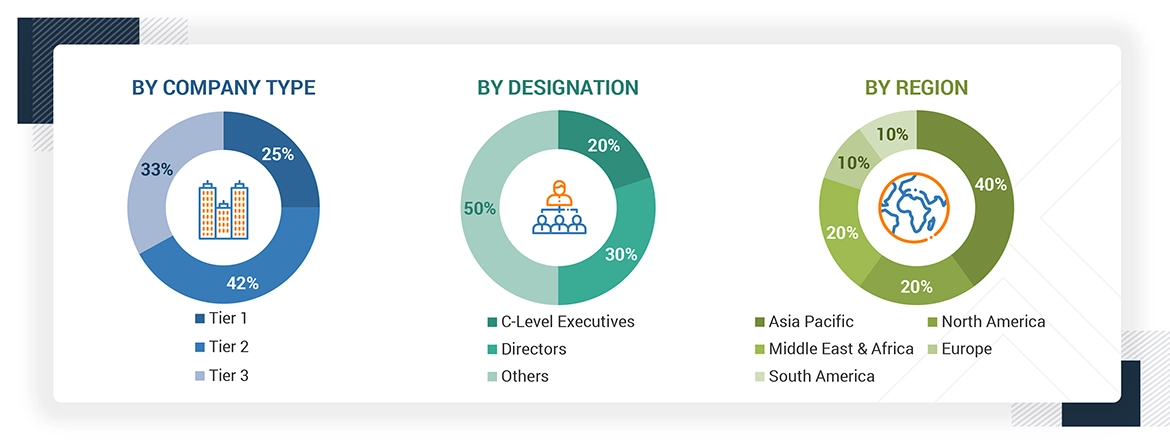
Notes: Other designations include sales, marketing, and product managers.
Tier 1: >USD 1 Billion; Tier 2: USD 500 million–1 Billion; and Tier 3: < USD 500 million.
To know about the assumptions considered for the study, download the pdf brochure
Market Size Estimation
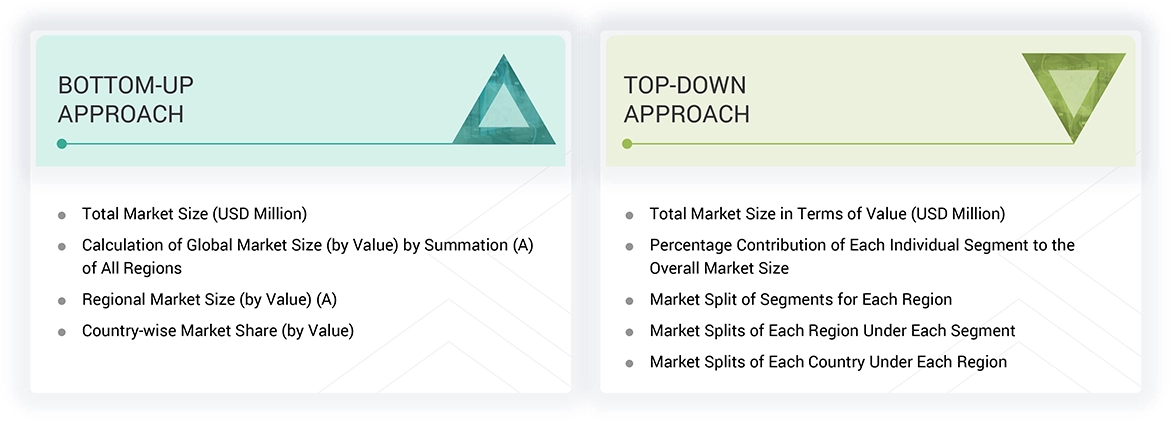
The top-down and bottom-up approaches were used to estimate and validate the size of the global phosphorous trichloride market. These approaches were also used extensively to estimate the size of various dependent market segments. The research methodology used to estimate the market size included the following:
Data Triangulation
After arriving at the overall market size using the market size estimation processes, the market was split into several segments and subsegments. The data triangulation and market breakup procedures were employed, wherever applicable, to complete the overall market engineering process and arrive at the exact statistics of each market segment and subsegment. The data was triangulated by studying various factors and trends from both the demand and supply sides.
Market Definition
Phosphorous trichloride is a colorless to yellow/orange fuming liquid and is characterized as a highly useful and highly reactive inorganic chemical compound primarily employed as an intermediate in the production of a wide variety of phosphorus-containing chemicals. Phosphorous trichloride is generated through the controlled reaction of yellow phosphorus (P4) with dry chlorine gas. Phosphorous trichloride is an important intermediate in the production of pesticides and herbicides (such as glyphosate), plasticizers, flame retardants, surfactants, and pharmaceutical intermediates. Phosphorous trichloride is a toxic compound that is highly corrosive and moisture-sensitive; elementally, and must be handled, stored, and transported correctly due to its reaction with water generating hydrogen chloride and phosphorous acid.
Stakeholders
- Phosphorous Trichloride Manufacturers
- Raw Material Suppliers
- Downstream Converters and Processors
- Distributors and Traders
- Industry Associations and Regulatory Bodies
- End Users
Report Objectives
- To define, describe, and forecast the size of the global phosphorous trichloride market based on application, grade, sales channel, and region in terms of value and volume
- To provide detailed information on the significant drivers, restraints, opportunities, and challenges influencing the market
- To strategically analyze micromarkets concerning individual growth trends, prospects, and their contribution to the market
- To assess the growth opportunities in the market for stakeholders and provide details on the competitive landscape for market leaders
- To forecast the market size of segments and subsegments for North America, Europe, Asia Pacific, South America, and the Middle East & Africa
- To strategically profile key players and comprehensively analyze their market shares and core competencies
- To analyze competitive developments such as product launches, acquisitions, expansions, partnerships, and agreements in the phosphorous trichloride market
- To provide the impact of AI/Gen AI on the market.
Get the Full Phosphorous Trichloride Market Report
Full forecast, segment splits, and company analysis for all Phosphorous Trichloride Market.
- Rest Of Europe Phosphorous Trichloride Market
- Rest Of Asia Pacific Phosphorous Trichloride Market
- GCC Countries Phosphorous Trichloride Market
- –Rest Of GCC Countries Phosphorous Trichloride Market
- Rest Of South America Phosphorous Trichloride Market
- US Phosphorous Trichloride Market
- Canada Phosphorous Trichloride Market
- Mexico Phosphorous Trichloride Market
- Germany Phosphorous Trichloride Market
- UK Phosphorous Trichloride Market
- Italy Phosphorous Trichloride Market
- Spain Phosphorous Trichloride Market
- China Phosphorous Trichloride Market
- Japan Phosphorous Trichloride Market
- India Phosphorous Trichloride Market
- South Korea Phosphorous Trichloride Market
- South Africa Phosphorous Trichloride Market
- Brazil Phosphorous Trichloride Market
- Argentina Phosphorous Trichloride Market
Need a Tailored Report?
Customize this report to your needs
Get 10% FREE Customization
Customize This Report
