
Germany Propylene Oxide Market (2025-2030)

The Germany Propylene Oxide Market was valued at $607.6 Million in 2025 and projected to reach to $728.6 Million by 2030, representing a compound annual growth rate of 3.7%. Germany's propylene oxide market is poised for steady growth through 2030, driven by sustained demand from the polyurethane foam industry and expanding applications in specialty chemicals.


| Market Size in | USD 26.32 MN |
| Market Forecast in | |
| CAGR | |
| Forecast Period | |
| Units Considered | Value (USD MN) |
Germany Propylene Oxide Market Trends and Insights
- Germany maintains a significant position within the European propylene oxide sector, driven by robust demand from polyurethane foam, glycol ether, and specialty chemical applications.
- The country's advanced chemical manufacturing infrastructure and strong automotive and construction industries support steady market expansion through the forecast period. Germany's propylene oxide market growth is underpinned by increasing consumption in polyol production for rigid and flexible foam applications, particularly in building insulation and automotive seating.
- The market in Germany benefits from stringent environmental regulations that encourage adoption of cleaner production technologies and sustainable chemical solutions.
- Between 2025 and 2030, Germany is expected to see moderate but consistent demand growth, supported by recovery in construction activity and continued investment in industrial modernization across the chemical sector..
Key Market Statistics
- CAGR (2025-2030) 3.7% CAGR
- Market Size, 2025 ~USD 607.6 Million
- Forecast, 2030 ~USD 728.6 Million
- Country Germany
Germany Propylene Oxide Market Overview
Market Valuation :
Germany's propylene oxide market is valued at USD 607.6 million in 2025, with projected growth to USD 728.6 million by 2030, reflecting steady expansion in Central Europe's chemical sector.
Growth Trajectory :
The German market exhibits a CAGR of 3.7% through 2030, outpacing broader economic growth and demonstrating resilience in specialty chemical applications despite global market volatility.
Key Application Drivers :
Polyurethane foam production, glycol ether synthesis, and specialty chemical manufacturing are the primary demand drivers in Germany, supported by the country's advanced industrial base and automotive sector.
Regional Significance :
Germany maintains a strategic position within the European propylene oxide market, leveraging its chemical infrastructure, technical expertise, and established supply chains for competitive advantage.
Germany Propylene Oxide Market Dynamics
- The country's strong manufacturing base, particularly in automotive and construction sectors, continues to support consumption patterns.
- Investment in sustainable production methods and regulatory compliance with EU chemical standards will shape market dynamics. The German market benefits from advanced technological capabilities and established distribution networks across Europe.
- While the 3.7% CAGR reflects moderate growth compared to global rates, it underscores stable demand fundamentals and market maturity.
- Strategic focus on innovation and green chemistry initiatives positions Germany as a key hub for propylene oxide applications in the European region..
Market Ecosystem
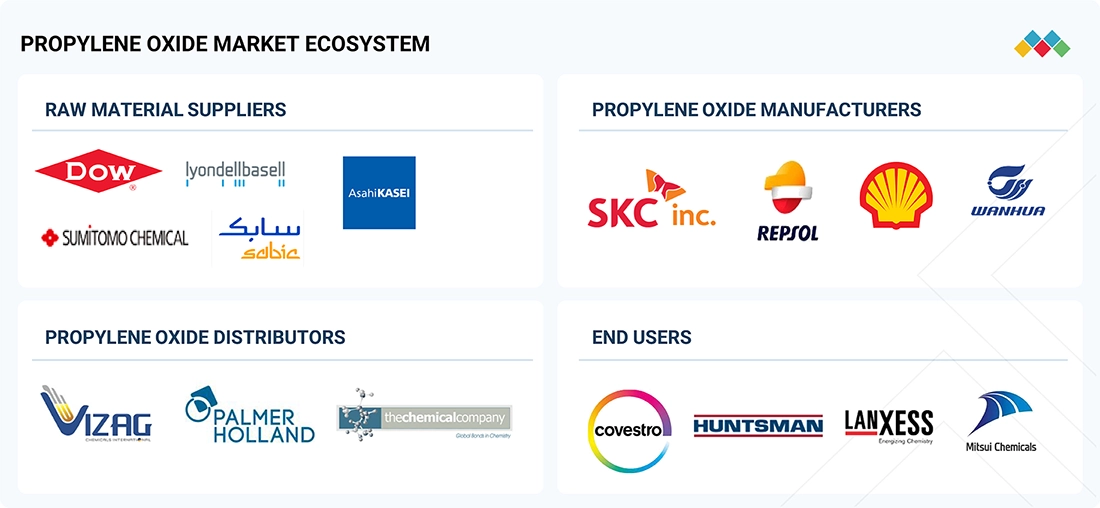
PROPYLENE OXIDE MARKET: COMMERCIAL USE CASES ACROSS INDUSTRIES
| COMPANY | USE CASE DESCRIPTION | BENEFITS |
|---|---|---|
 |
Produces propylene oxide for polyether polyols used in polyurethane foams for insulation, furniture, and automotive interiors | Improves energy efficiency in buildings and vehicles | Enables lightweighting | Supports durable and high-performance materials |
 |
Uses propylene oxide to manufacture polyether polyols and propylene glycols for construction, packaging, and consumer goods | Enhances thermal insulation | Improves product durability | Supports sustainable building solutions |
 |
Produces PO via advanced technologies (including PO/TBA route) for polyurethane foams and industrial chemicals | Cost-efficient large-scale production | High product purity | Broad application flexibility |
 |
Manufactures propylene oxide using the Shell PO/SM process for downstream polyurethane and chemical applications | Integrated value chain efficiency | High yields | Reduced by-product waste |
 |
Uses propylene oxide to produce polycarbonate polyols and polyurethane raw materials for coatings, adhesives, and elastomers | Enables high-performance coatings | Improved durability and flexibility | Supports low-VOC formulations |
Logos and trademarks shown above are the property of their respective owners. Their use here is for informational and illustrative purposes only.
Related Ecosystem
Bulk Chemicals And Inorganics
- Corrosion Inhibitors
- Glycol Ethers
- Acetic Acid
- Acetone
- Ammonium Nitrate
- Basf se
- DOW CHEMICAL COMPANY
- Exxon Mobil Corporation
- AZELIS HOLDINGS SA
- Sinopec limited
Key Takeaways
- Germany's propylene oxide market is valued at USD 607.6 million in 2025 and will reach USD 728.6 million by 2030 at a 3.7% CAGR.
- Germany's market growth is driven by strong demand from polyurethane foam production for automotive and construction applications.
- Stringent EU environmental regulations in Germany encourage adoption of sustainable and efficient propylene oxide production technologies.
- Germany's advanced chemical infrastructure and industrial base position it as a key European hub for propylene oxide manufacturing and consumption.
Propylene Oxide Market Report Scope
| Report Metric | Details |
|---|---|
| Base Year | 2025 |
| Fastest Growing Segment | POLYETHER POLYOLS (Application) |
| Forecast Period | 2025–2030 |
| Growth Rate | CAGR of 4.9% from 2025 to 2030 |
| Largest Segment | POLYETHER POLYOLS (Application) |
| Market Size Base Year (Billions) | ~USD 14.86 (2025) |
| Revenue Forecast (Billions) | ~USD 18.88 (2030) |
| Segments Covered | Application, End-Use Industry, Production Process |
Germany Propylene Oxide Market Report Segmentation
3 segment dimensions are covered across the global market.
By Application
- Glycol Ether Applications
- Glycol Ethers
- Other Applications
- Polyether Polyols
- Propylene Glycol
By End-Use Industry
- Automotive
- Building & Construction
- Chemical & Pharmaceutical
- Electronics
- Other End-Use Industries
- Packaging
- Textile & Furnishing
By Production Process
- Chlorohydrin Process
- Cumene-Based Process
- Hydrogen Peroxide Process
- Styrene Monomer Process
- Tba Co-Product Process
GERMANY: PROPYLENE OXIDE MARKET, BY APPLICATION, 2025–2030
| Segment | 2025 | 2026 | 2027 | 2028 | 2029 | 2030 | CAGR (%) |
|---|---|---|---|---|---|---|---|
| GLYCOL ETHERS | 67.5 | 70.2 | 73 | 75.9 | 79 | 82.1 | 4 |
| OTHER APPLICATIONS | 57.7 | 59.8 | 62 | 64.3 | 66.7 | 69.2 | 3.7 |
| POLYETHER POLYOLS | 687.6 | 718.7 | 751.2 | 785.1 | 820.6 | 857.7 | 4.5 |
| PROPYLENE GLYCOL | 154.4 | 160.7 | 167.3 | 174.2 | 181.4 | 188.9 | 4.1 |
| TOTAL | 967.1 | 1009.4 | 1053.5 | 1099.6 | 1147.7 | 1197.9 | 4.4 |
Target Audience
- Chemical Manufacturers : Propylene oxide producers and chemical manufacturers need Germany-specific market data to optimize production capacity, identify growth opportunities, and develop targeted sales strategies for this key European market.
- Polyurethane Producers : Polyurethane foam manufacturers require detailed insights into German propylene oxide supply dynamics and pricing trends to secure reliable feedstock and manage production costs effectively.
- Investment & Private Equity : Investors evaluating opportunities in the German chemical sector need precise market valuations, growth forecasts, and competitive landscape analysis to make informed investment decisions.
- Supply Chain & Procurement : Procurement professionals and supply chain managers need Germany-specific market intelligence to negotiate contracts, identify suppliers, and optimize sourcing strategies for propylene oxide.
- Business Development & Strategy : Corporate strategists and business development teams require localized market data to assess expansion opportunities, competitive positioning, and market entry strategies in Germany's chemical sector.
Key Companies in the Germany Propylene Oxide Market
| Company | HQ | Ownership | Strongest segments |
|---|---|---|---|
| MOL GROUP | Hungary | Public Company | Refined fuels (gasoline, diesel, heating oil, bunker, JET A-1, LPG/autogas),Petrochemicals and black products (bitumen, HFO, petrolcoke, residues),Retail convenience, mobility solutions, and digital services, |
| DOW | United States | Public Company | Packaging & Specialty Plastics,Industrial Intermediates & Infrastructure,Performance Materials & Coatings, |
| SHELL | United Kingdom | Public Company | Integrated Gas (including LNG and GTL),Upstream (oil, gas, and NGLs),Marketing (mobility, lubricants, commercial fuels, EV charging), |
| BASF | Germany | Public Company | Chemicals,Materials,Industrial Solutions, |
| AGC INC. | United States | Public Company | High-horsepower and row-crop tractors,Utility and compact tractors,Combines and harvesting equipment, |
| REPSOL | Spain | Public Company | Industrial (refining, trading, wholesale fuels, hydrogen and synthetic fuels),Customer (mobility/gas stations, power and gas retail, lubricants, LPG, biofuels),Upstream (oil and gas exploration and production, low-carbon geological solutions), |
| TOKUYAMA CORPORATION | Japan | Public Company | Chemicals Products (chlor-alkali, PVC, solvents, basic inorganics),Cement and Building Materials,Electronics Advanced Materials (poly-Si, silica, AIN, BN, high-purity chemicals), |
| SUMITOMO CHEMICAL CO., LTD. | Japan | Public Company | Essential & Green Materials,Agro & Life Solutions,Sumitomo Pharma, |
| SKC | New Zealand | Public Company | Land-based Gaming (casinos),Hotels, Conventions, and Attractions,Food & Beverage, |
| EVONIK | Germany | Public Company | Advanced Technologies,Custom Solutions,Infrastructure, |
| SABIC | Saudi Arabia | Public Company | Commodity petrochemicals (olefins, methanol, aromatics, glycols, MTBE, CO2),Polyolefins (PE and PP, including compounds),Specialties and engineering thermoplastics, |
| BALCHEM CORP. | United States | Public Company | Human Nutrition & Health,Animal Nutrition & Health,Specialty Products, |
| INDORAMA VENTURES PUBLIC COMPANY LIMITED | Thailand | Public Company | Combined PET (PET value chain and specialty PET-related chemicals, including recycling),Fibers (polyester, rayon, nylon, polypropylene, composites, worsted wool),Indovinya (specialty chemical solutions and integrated surfactants), |
| PCC SE | Germany | Private Company | Polyols and polyurethane systems,Surfactants and derivatives,Chlorine, monochloroacetic acid, and chlorine derivatives, |
MOL GROUP
MOL GROUP is a Hungarian public company founded in 1991 with 24,744 employees, operating as an integrated oil and gas company.
DOW
DOW is a United States-based public company established in 1897 with 34,600 employees, operating in the chemical and materials science industry.
SHELL
SHELL is a United Kingdom-based public company founded in 1897 with 84,000 employees, operating as a major integrated energy and petrochemicals company.
BASF
BASF is a German public company established in 1865 with 106,428 employees, operating as a leading global chemical and materials manufacturer.
AGC INC.
AGC INC. is a United States-based public company founded in 1990 with 22,000 employees, operating in the chemical and specialty materials industry.
REPSOL
REPSOL is a Spanish public company founded in 1927 with 24,881 employees, operating as an integrated oil and gas company.
TOKUYAMA CORPORATION
TOKUYAMA CORPORATION is a Japanese public company established in 1918 with 6,390 employees, operating in the chemical and materials manufacturing sector.
SUMITOMO CHEMICAL CO., LTD.
SUMITOMO CHEMICAL CO., LTD. is a Japanese public company founded in 1913 with 27,491 employees, operating as a diversified chemical manufacturer.
SKC
SKC is a New Zealand-based public company founded in 1994 with 4,500 employees, operating in the chemical and materials industry.
EVONIK
EVONIK is a German public company established in 1847 with 30,643 employees, operating as a specialty chemicals and advanced materials manufacturer.
SABIC
SABIC is a Saudi Arabian public company founded in 1976 with 35,000 employees, operating as a global petrochemicals and chemicals manufacturer.
BALCHEM CORP.
BALCHEM CORP. is a United States-based public company established in 1967 with 1,368 employees, operating in specialty ingredients and chemical products.
INDORAMA VENTURES PUBLIC COMPANY LIMITED
INDORAMA VENTURES PUBLIC COMPANY LIMITED is a Thai public company founded in 1994 with 22,027 employees, operating as a petrochemicals and specialty chemicals manufacturer.
PCC SE
PCC SE is a German private company founded in 1993 with 3,115 employees, operating in the chemical and specialty chemicals sector.
Reasons to Buy this Report
- Precise Market Sizing : Access validated market valuations specific to Germany with exact figures for 2025 (USD 607.6M) and 2030 (USD 728.6M), enabling accurate financial planning and investment decisions.
- Growth Trajectory Insights : Understand Germany's 3.7% CAGR within the context of global 4.9% growth, identifying localized opportunities and competitive positioning in the Central European chemical market.
- Application-Specific Intelligence : Gain detailed insights into Germany's primary propylene oxide applications including polyurethane foam, glycol ethers, and specialty chemicals, with demand drivers unique to the German industrial landscape.
- Strategic Market Positioning : Leverage Germany's role as a key European hub to understand supply chain dynamics, regulatory environment, and competitive advantages for market entry or expansion strategies.
- Forecast-Driven Planning : Utilize 5-year projections to develop long-term business strategies, capacity planning, and resource allocation aligned with Germany's steady market growth and industrial demand patterns.
Frequently asked questions
What is the current market size of propylene oxide in Germany?
Germany's propylene oxide market is valued at USD 607.6 million in 2025.
What is the projected market size for propylene oxide in Germany by 2030?
Germany's propylene oxide market is projected to reach USD 728.6 million by 2030.
What is the CAGR for propylene oxide in Germany from 2025 to 2030?
Germany's propylene oxide market is expected to grow at a CAGR of 3.7% between 2025 and 2030.
Which industries drive propylene oxide demand in Germany?
Germany's propylene oxide demand is primarily driven by polyurethane foam production, glycol ether manufacturing, and specialty chemical applications in automotive and construction sectors.
How do environmental regulations impact Germany's propylene oxide market?
Stringent EU environmental regulations in Germany encourage manufacturers to adopt cleaner production technologies and sustainable chemical solutions, supporting market modernization and growth.
RESEARCH METHODOLOGY
The research methodology used to estimate the current size of the propylene oxide market consisted of four major activities. Extensive secondary research was performed to acquire detailed information about the market, peer markets, and parent markets. These findings, assumptions, and metrics were verified through primary research with experts from both the demand and supply sides of the propylene oxide value chain. Both top-down and bottom-up approaches were used to estimate the total market size. The estimation of market sizes for various segments and subsegments in the market was finalized using full market segmentation and data triangulation techniques.
Secondary Research
The research methodology for estimating and forecasting the propylene oxide market begins with gathering data on key vendors’ revenues by doing secondary research. The secondary research process involves consulting a range of secondary sources, including Hoover’s, Bloomberg Businessweek, Factiva, the World Bank, and industry-specific journals. These secondary sources encompass annual reports, press releases, investor presentations, white papers, certified publications, articles from recognized authors, regulatory notifications, trade directories, and databases. Also, vendor offerings are taken into consideration to inform market segmentation.
Primary Research
The propylene oxide market comprises several stakeholders, including raw material suppliers, processors, end-product manufacturers, and regulatory organizations, throughout the supply chain. The demand side of this market is characterized by the development of various industries, including mobility, power, chemicals, industrial, and grid injection, among others. The supply side is characterized by advancements in technology and a wide range of diverse applications. Various primary sources from both the supply and demand sides of the market were interviewed to obtain qualitative and quantitative information. The following is the breakdown of the primary respondents:
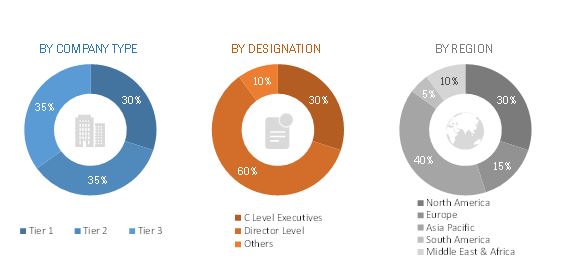
To know about the assumptions considered for the study, download the pdf brochure
Market Size Estimation
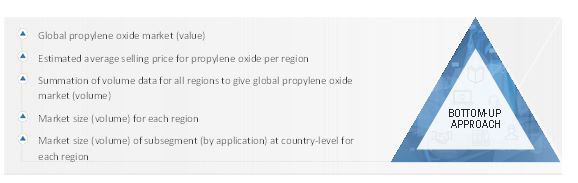
The top-down and bottom-up approaches have been used to estimate and validate the total size of the propylene oxide market. These approaches have also been used extensively to estimate the size of various dependent market subsegments. The research methodology used to estimate the market size included the following.
The following segments provide details about the overall market size estimation process employed in this study:
- Extensive primary and secondary research was done to identify the key players.
- The value chain and market size in terms of value of the propylene oxide market were determined through primary and secondary research.
- All percentage shares, splits, and breakdowns were collected through secondary sources and verified through primary sources.
- All possible parameters that affect the market were covered in this research study and are viewed in extensive detail, verified through primary research, and analyzed to obtain the final quantitative and qualitative data.
- The study of reports, reviews, and newsletters of top market players, along with extensive interviews for opinions from key leaders, such as CEOs, directors, and marketing executives, is included in this research.
Propylene oxide Market Size: Bottom-Up Approach
Data Triangulation
After estimating the overall market size using the above estimation process, the market was split into various segments and subsegments. Data triangulation and market segmentation techniques, along with the market engineering process, were employed to obtain precise market analysis data for each segment and its subsegments.
Objectives of the Report
- To define, describe, and forecast the size of the propylene oxide market, in terms of volume and value; based on application, production process, end–use industry, and region
- To provide detailed information regarding the key factors, such as drivers, restraints, opportunities, and industry–specific challenges, influencing the growth of the propylene oxide market
- To strategically analyze micromarkets with respect to individual growth trends, prospects, and their contribution to the total market
- To analyze opportunities in the market for stakeholders and provide a competitive landscape of the market leaders
- To project the size of the market and its submarkets, in terms of value and volume, with respect to five main regions (along with their respective key countries), namely, North America, Asia Pacific, Europe, Latin America, and the Middle East & Africa
- To provide ecosystem analysis, case study analysis, value chain, patent analysis, technology analysis, pricing analysis, Porter’s five forces analysis, key stakeholders and buying criteria, investment and funding scenario, trade analysis, impact of AI/Gen AI and 2025 US tariff, key conferences and events, regulatory bodies, government agencies, and regulations pertaining to the market under study
- To strategically profile the key players and comprehensively analyze their core competencies
- To analyze competitive developments such as mergers & acquisitions, product launches, and research & development in the propylene oxide market
- To provide the macroeconomic outlook for all regions considered under the study
Available Customizations
With the given market data, MarketsandMarkets offers customizations according to the client-specific needs.
The following customization options are available for the report:
- Additional country-level analysis of the propylene oxide market
- Profiling of additional market players (up to five)
Product Analysis
-
Product matrix, which provides a detailed comparison of each company’s product portfolio.
Get the Full Propylene Oxide Market Report
Full forecast, segment splits, and company analysis for all Propylene Oxide Market.
- China Propylene Oxide Market
- Japan Propylene Oxide Market
- India Propylene Oxide Market
- South Korea Propylene Oxide Market
- Thailand Propylene Oxide Market
- Australia Propylene Oxide Market
- Canada Propylene Oxide Market
- Mexico Propylene Oxide Market
- US Propylene Oxide Market
- France Propylene Oxide Market
- UK Propylene Oxide Market
- Italy Propylene Oxide Market
- Spain Propylene Oxide Market
- Netherlands Propylene Oxide Market
- Russia Propylene Oxide Market
- Saudi Arabia Propylene Oxide Market
- UAE Propylene Oxide Market
- South Africa Propylene Oxide Market
- Brazil Propylene Oxide Market
- Argentina Propylene Oxide Market
- Chile Propylene Oxide Market
- Rest Of Europe Propylene Oxide Market
- Rest Of Asia Pacific Propylene Oxide Market
- Rest Of GCC Propylene Oxide Market
Need a Tailored Report?
Customize this report to your needs
Get 10% FREE Customization
Customize This Report
