
South Africa Protocatechuic Acid Market (2025-2030)

The South Africa Protocatechuic Acid Market was valued at $0.31 Million in 2025 and projected to reach to $0.43 Million by 2030, representing a compound annual growth rate of 7.2%. South Africa's protocatechuic acid market is positioned for steady growth through 2030, driven by increasing pharmaceutical applications and rising demand for natural antioxidants in healthcare formulations.


| Market Size in | USD 26.32 MN |
| Market Forecast in | |
| CAGR | |
| Forecast Period | |
| Units Considered | Value (USD MN) |
South Africa Protocatechuic Acid Market Trends and Insights
- In 2025, South Africa's market is estimated at $0.31 million, with projections indicating growth to $0.43 million by 2030, representing a compound annual growth rate of 7.2%.
- This steady expansion reflects South Africa's increasing adoption of protocatechuic acid across pharmaceutical, cosmetic, and food preservation applications.
- South Africa's market growth is supported by rising demand for natural antioxidants and the country's expanding chemical manufacturing base.
- The forecast period through 2030 demonstrates South Africa's potential as a key market for specialty chemicals in the African continent, driven by industrial diversification and regulatory support for high-value chemical products..
Key Market Statistics
- CAGR (2025-2030) 7.2% CAGR
- Market Size, 2025 ~USD 0.31 Million
- Forecast, 2030 ~USD 0.43 Million
- Country South Africa
South Africa Protocatechuic Acid Market Overview
Market Size & Growth :
South Africa's protocatechuic acid market is valued at $0.31 million in 2025, projected to reach $0.43 million by 2030, with a steady CAGR of 7.2%, outpacing regional averages in adoption rates.
Regional Position :
As a niche but expanding segment within the Middle East Africa region, South Africa represents a strategic growth opportunity with increasing pharmaceutical and industrial applications driving market expansion.
Pharmaceutical Adoption :
South Africa's growing pharmaceutical sector is increasingly incorporating protocatechuic acid in formulations, driven by rising healthcare investments and demand for natural antioxidant compounds in medicinal products.
Market Dynamics :
The South African market benefits from improving supply chain infrastructure, regulatory support for specialty chemicals, and expanding end-user industries including cosmetics, food additives, and nutraceuticals.
South Africa Protocatechuic Acid Market Dynamics
- The market's 7.2% CAGR reflects growing awareness among manufacturers and healthcare providers regarding the compound's therapeutic benefits.
- Expanding industrial applications in cosmetics and food preservation sectors further support market expansion.
- Government initiatives promoting local chemical manufacturing and pharmaceutical development create favorable conditions for market players.
- However, competition from alternative antioxidants and supply chain constraints may moderate growth rates.
- Strategic partnerships with regional distributors and investment in production capacity will be critical for capturing emerging opportunities in this developing market segment..
Market Ecosystem
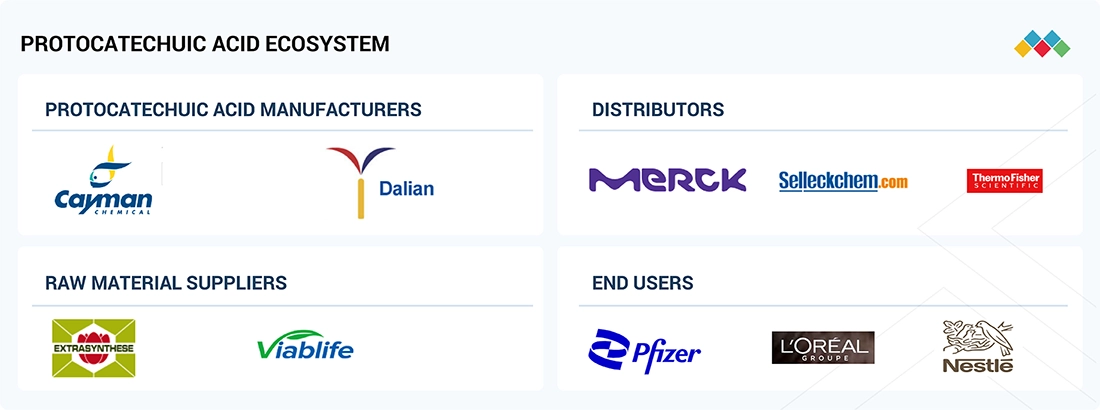
Protocatechuic Acid Market: COMMERCIAL USE CASES ACROSS INDUSTRIES
| COMPANY | USE CASE DESCRIPTION | BENEFITS |
|---|---|---|
 |
Development of PCA-based antioxidant and anti-inflammatory formulations for chronic disease management | Enhanced therapeutic efficacy| Reduced oxidative stress| Potential applications in cardiovascular and neuroprotective drugs |
 |
Use of PCA in skin-care formulations as a natural antioxidant and anti-aging ingredient | Improved skin protection from free radicals| Eco-friendly alternative to synthetic antioxidants| Enhanced brand sustainability image |
 |
Incorporation of PCA as a natural preservative and antioxidant in functional foods & beverages | Longer shelf life| Clean-label solutions| Consumer preference for natural ingredients |
 |
Research into PCA-derived biodegradable polymers and coatings for sustainable packaging | Development of eco-friendly materials| Reduced environmental impact| Alignment with circular economy goals |
Logos and trademarks shown above are the property of their respective owners. Their use here is for informational and illustrative purposes only.
Related Ecosystem
Green Bio Chemicals
Key Takeaways
- South Africa's protocatechuic acid market is valued at $0.31 million in 2025 and is expected to grow to $0.43 million by 2030.
- South Africa demonstrates a 7.2% CAGR, reflecting steady demand for natural antioxidants in pharmaceutical and cosmetic sectors.
- South Africa's market growth is driven by industrial diversification and increased adoption of specialty chemicals across multiple end-use industries.
- South Africa represents a strategic opportunity within the Middle East Africa region for protocatechuic acid suppliers and manufacturers.
Protocatechuic Acid Market Report Scope
| Report Metric | Details |
|---|---|
| Base Year | 2025 |
| Fastest Growing Segment | –INK COLORANTS (Application) |
| Forecast Period | 2025–2030 |
| Growth Rate | CAGR of 10.5% from 2025 to 2030 |
| Largest Segment | POWDER/ CRYSTALLINE (Form) |
| Market Size Base Year (Billions) | ~USD 0.01 (2025) |
| Revenue Forecast (Billions) | ~USD 0.02 (2030) |
| Segments Covered | Grade, Form, Production Process, Application |
South Africa Protocatechuic Acid Market Report Segmentation
4 segment dimensions are covered across the global market.
By Grade
- Industrial Grade
- Lower Grade
- Ultra-High Purity Grade
By Form
- Granules
- Liquid
- Powder/ Crystalline
By Production Process
- Chemical Synthesis
- Natural Extraction/ Bio-Based
- Natural Extraction/Bio-Based
By Application
- Chemical Intermediates
- Dyes
- Feed Additives & Nutraceuticals
- Other Applications
- Polymers
- Preservatives & Antioxidants
- Rust Inhibitors
- –Agrochemical Intermediates
- –Animal Feed Additives
- –Corrosion Protection Solutions
- –Cosmetic Preservatives
- –Food Preservatives
- –Functional Health Ingredients
- –Industrial Antioxidants
- –Industrial Lubricant Additives
- –Ink Colorants
- –Leather Dyes
- –Metal Coatings
- –Nutritional Supplements
- –Pharmaceutical Intermediates
- –Plastic Stabilizers
- –Polymer Additives
- –Resin Modifiers
- –Specialty Chemical Intermediates
- –Textile Dyes
Target Audience
- Pharmaceutical Manufacturers : South African and regional pharma companies need market data to evaluate protocatechuic acid integration into formulations and assess local demand potential for antioxidant ingredients.
- Chemical Distributors & Suppliers : Local and international distributors require South Africa-specific market forecasts and customer insights to optimize inventory, pricing strategies, and sales planning for specialty chemicals.
- Investment & Private Equity Firms : Investors evaluating opportunities in South Africa's chemical and pharmaceutical sectors need accurate market sizing and growth projections to assess portfolio companies and acquisition targets.
- Cosmetics & Nutraceutical Companies : Manufacturers in South Africa's growing cosmetics and nutraceutical industries need market intelligence on protocatechuic acid availability, pricing, and competitive positioning for product development.
- Government & Trade Organizations : South African government agencies and trade bodies require market data to inform industrial policy, support local chemical manufacturing initiatives, and facilitate sector development strategies.
Key Companies in the South Africa Protocatechuic Acid Market
| Company | HQ | Ownership | Strongest segments |
|---|---|---|---|
| VERTEXYN (NANJING) BIOWORKS | China | Custom/contract bioprocessing and development services,Bioprocess reagents, media, and consumables,Engineered strains, cell lines, and genetic constructs, | |
| TAIZHOU ZHONGDA CHEMICAL CO., LTD. | China | Pharmaceutical intermediates and fine chemicals,Agrochemical intermediates,Coatings, dyes, and pigment intermediates, | |
| SIGMA-ALDRICH | United States | Private Company | Chemicals and Biochemicals Catalog,Cell Culture, Media, and mRNA Inputs,Filtration, Water Purification, and Labware, |
VERTEXYN (NANJING) BIOWORKS
VERTEXYN (NANJING) BIOWORKS is a biotech company based in China.
TAIZHOU ZHONGDA CHEMICAL CO., LTD.
TAIZHOU ZHONGDA CHEMICAL CO., LTD. is a chemical company based in China.
SIGMA-ALDRICH
SIGMA-ALDRICH is a private chemical and life sciences company founded in 1951 and based in the United States, with approximately 9,800 employees.
Reasons to Buy this Report
- Localized Market Intelligence : Gain country-specific insights into South Africa's protocatechuic acid market dynamics, competitive landscape, and growth drivers that differ from broader regional or global trends.
- Investment Decision Support : Make informed investment and expansion decisions with accurate market sizing ($0.31M in 2025) and reliable 5-year forecasts ($0.43M by 2030) specific to the South African market.
- Competitive Positioning : Understand South Africa's market position within the Middle East Africa region, identify competitive gaps, and develop targeted strategies for market penetration and growth.
- End-User Opportunity Mapping : Identify and prioritize pharmaceutical, cosmetic, and industrial end-users in South Africa with specific demand patterns and purchasing behaviors for protocatechuic acid applications.
- Regulatory & Supply Chain Insights : Access South Africa-specific regulatory requirements, supply chain infrastructure assessments, and distribution channel analysis to optimize market entry and operational strategies.
Frequently asked questions
What is the current market size of protocatechuic acid in South Africa?
South Africa's protocatechuic acid market is estimated at $0.31 million in 2025 and is projected to reach $0.43 million by 2030.
What is the expected growth rate for protocatechuic acid in South Africa?
South Africa's protocatechuic acid market is expected to grow at a compound annual growth rate of 7.2% from 2025 to 2030.
Which industries drive protocatechuic acid demand in South Africa?
South Africa's demand for protocatechuic acid is primarily driven by pharmaceutical, cosmetic, and food preservation industries seeking natural antioxidant solutions.
How does South Africa's market compare to global trends?
While the global protocatechuic acid market grows at 10.5% CAGR, South Africa's 7.2% growth rate reflects the country's emerging market status within the specialty chemicals sector.
What factors support protocatechuic acid market growth in South Africa?
South Africa's market growth is supported by industrial diversification, regulatory support for specialty chemicals, and increasing consumer demand for natural antioxidants.
RESEARCH METHODOLOGY
The study involved four major activities in estimating the market size of the protocatechuic acid. Exhaustive secondary research was done to collect information on the market, the peer market, and the parent market. The next step was to validate these findings, assumptions, and sizing with industry experts across the value chain through primary research. Both top-down and bottom-up approaches were employed to estimate the complete market size. Thereafter, the market breakdown and data triangulation procedures were used to estimate the market size of the segments and subsegments.
Secondary Research
In the secondary research process, various secondary sources have been referred to for identifying and collecting information for this study. These secondary sources include annual reports, press releases, investor presentations of companies, white papers, certified publications, trade directories, articles from recognized authors, gold standard and silver standard websites, and databases.
Secondary research has been used to obtain key information about the value chain of the industry, monetary chain of the market, the total pool of key Protocatechuic acid classification and segmentation according to industry trends to the bottom-most level, and regional markets. It was also used to obtain information about the key developments from a market-oriented perspective.
Primary Research
The Protocatechuic acid comprises several stakeholders in the value chain, which include raw material suppliers, manufacturers, and end users. Various primary sources from the supply and demand sides of the protocatechuic acid have been interviewed to obtain qualitative and quantitative information. The primary interviewees from the demand side include key opinion leaders in end-use sectors. The primary sources from the supply side include manufacturers, associations, and institutions involved in the Protocatechuic acid industry. Primary interviews were conducted to gather insights such as market statistics, data on revenue collected from the products and services, market breakdowns, market size estimations, market forecasting, and data triangulation. Primary research also helped in understanding the various trends related to chemistry, application, and region. Stakeholders from the demand side, such as CIOs, CTOs, and CSOs, were interviewed to understand the buyer’s perspective on the suppliers, products, component providers, and their current usage of Protocatechuic acid and future outlook of their business, which will affect the overall market.
The breakdown of profiles of the primary interviewees is illustrated in the figure below:
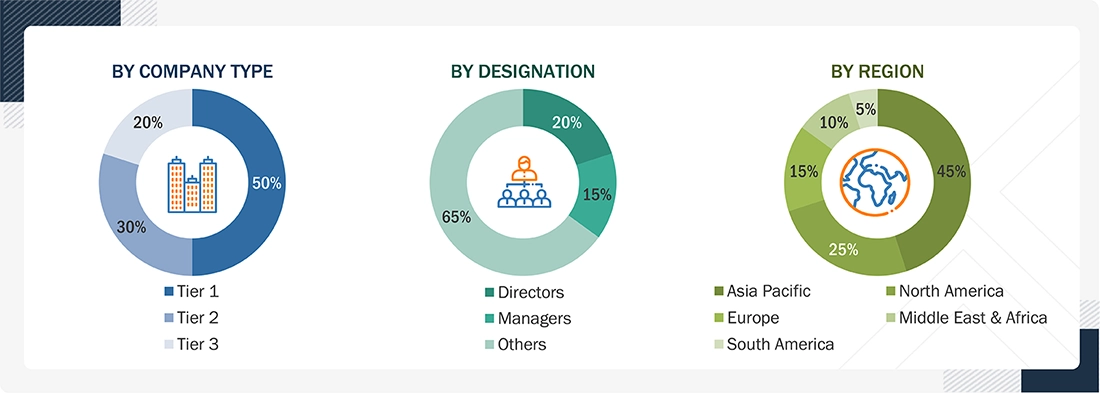
Note: Tier 1, Tier 2, and Tier 3 companies are classified based on their market revenue in 2024, available in the public domain, product portfolios, and geographical presence.
Other designations include sales representatives, production heads, and technicians.
To know about the assumptions considered for the study, download the pdf brochure
Market Size Estimation
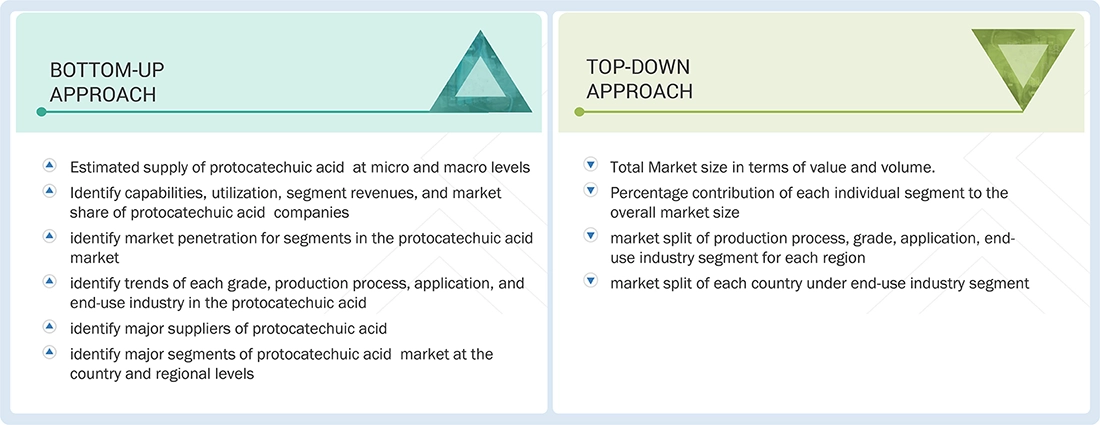
The top-down approach was used to estimate and validate the size of various submarkets for Protocatechuic acid in the region. The research methodology used to estimate the market size included the following steps:
- The key players in the industry have been identified through extensive secondary research.
- The supply chain of the industry has been determined through primary and secondary research.
- All percentage shares, splits, and breakdowns based on type, electrode material, application, and end-use industries, region were determined using secondary sources and verified through primary sources.
- All possible parameters that affect the markets covered in this research study were accounted for, viewed in extensive detail, verified through primary research, and analyzed to get the final quantitative and qualitative data. This data was consolidated and added with detailed inputs and analysis, and presented in this report.
Data Triangulation
After arriving at the total market size from the estimation process above, the overall market has been split into several segments and sub-segments. To complete the overall market engineering process and arrive at the exact statistics for all the segments and sub-segments, the data triangulation and market breakdown procedures have been employed, wherever applicable. The data has been triangulated by studying various factors and trends from both the demand and supply sides. Along with this, the market size has been validated by using both the top-down and bottom-up approaches and primary interviews. Hence, for every data segment, there have been three sources: top-down approach, bottom-up approach, and expert interviews. The data was assumed correct when the values arrived from the three sources matched.
Market Definition
Protocatechuic acid (PCA) is a naturally occurring phenolic compound and a type of dihydroxybenzoic acid that belongs to the family of hydroxybenzoic acids, widely recognized for its potent antioxidant, anti-inflammatory, and antimicrobial properties. Structurally, PCA contains two hydroxyl groups attached to a benzene ring, which enable it to neutralize free radicals and reduce oxidative stress, making it an important bioactive molecule in health-related applications. It is commonly found in various natural sources such as green tea, berries, olives, rice bran, and certain medicinal plants, often as a metabolite of more complex polyphenols like anthocyanins and procyanidins. Additionally, it serves as a chemical intermediate in organic synthesis, contributing to the production of dyes, flavors, and polymers. With its multifunctional biological activities and versatile applications, protocatechuic acid is gaining significant attention in both scientific research and industrial markets worldwide.
Stakeholders
- Protocatechuic acid manufacturers
- Protocatechuic acid traders, distributors, and suppliers
- Raw material suppliers
- Government and private research organizations
- Associations and industrial bodies
- R&D institutions
- Environmental support agencies
Report Objectives
- To define, describe, and forecast the size of the Protocatechuic acid, in terms of value and volume.
- To provide detailed information regarding the major factors (drivers, opportunities, restraints, and challenges) influencing the growth of the market.
- To estimate and forecast the market size based on grade, production process, application, end-use industries, and region.
- To forecast the size of the market with respect to major regions, namely, North America, Europe, the Middle East & Africa, South America, along with their key countries.
- To strategically analyze micromarkets with respect to individual growth trends, prospects, and their contribution to the overall market.
- To analyze opportunities in the market for stakeholders and provide a competitive landscape of market leaders.
- To track and analyze recent developments such as partnerships, agreements, joint ventures, collaborations, announcements, awards, and expansion in the market.
- To strategically profile key market players and comprehensively analyze their core competencies.
Get the Full Protocatechuic Acid Market Report
Full forecast, segment splits, and company analysis for all Protocatechuic Acid Market.
- China Protocatechuic Acid Market
- Japan Protocatechuic Acid Market
- India Protocatechuic Acid Market
- South Korea Protocatechuic Acid Market
- US Protocatechuic Acid Market
- Canada Protocatechuic Acid Market
- Mexico Protocatechuic Acid Market
- Germany Protocatechuic Acid Market
- UK Protocatechuic Acid Market
- France Protocatechuic Acid Market
- Italy Protocatechuic Acid Market
- Spain Protocatechuic Acid Market
- Brazil Protocatechuic Acid Market
- Argentina Protocatechuic Acid Market
Need a Tailored Report?
Customize this report to your needs
Get 10% FREE Customization
Customize This Report
