
Europe Rare Earth Magnets Market (2025-2030)

The Europe Rare Earth Magnets Market was valued at $2699 Million in 2025 and projected to reach to $3487.1 Million by 2030, representing a compound annual growth rate of 5.3%. Europe's rare earth magnets market is positioned for sustained growth through 2030, driven by industrial modernization and technological innovation across packaging, construction, mining, and gases sectors.


| Market Size in | USD 26.32 MN |
| Market Forecast in | |
| CAGR | |
| Forecast Period | |
| Units Considered | Value (USD MN) |
Europe Rare Earth Magnets Market Trends and Insights
- This steady expansion reflects Europe's increasing demand across packaging, construction, mining, and gases sectors, driven by industrial modernization and technological advancement.
- Europe's market growth is supported by stringent regulatory frameworks promoting sustainable manufacturing and the region's commitment to circular economy principles. The European rare earth magnets market benefits from robust infrastructure investments and the region's leadership in advanced manufacturing technologies.
- Between 2025 and 2030, Europe is expected to maintain moderate but consistent growth as industries across construction and mining sectors integrate high-performance magnetic solutions.
- Europe's strategic focus on reducing supply chain dependencies and developing domestic rare earth processing capabilities further strengthens market resilience and long-term growth prospects..
Key Market Statistics
- CAGR (2025-2030) 5.3% CAGR
- Market Size, 2025 ~USD 2699 Million
- Forecast, 2030 ~USD 3487.1 Million
- Geography Europe
Europe Rare Earth Magnets Market Overview
Market Valuation :
Europe's rare earth magnets market is valued at USD 2,699.0 million in 2025, with Germany leading as the largest market contributor at USD 2,092.4 million, representing over 77% of the regional market share.
Growth Trajectory :
The European market is projected to reach USD 3,487.1 million by 2030, demonstrating a steady CAGR of 5.3%, outpacing global growth expectations and reflecting strong industrial demand across key sectors.
Sector Drivers :
Growth is driven by increasing demand across packaging, construction, mining, and gases sectors, fueled by industrial modernization, technological advancement, and Europe's commitment to sustainable manufacturing practices.
Regional Distribution :
France (USD 920.9M), Italy (USD 441.3M), and the UK (USD 354.6M) represent significant secondary markets, while Rest of Europe contributes USD 752.8 million, creating a diversified market landscape across the continent.
Europe Rare Earth Magnets Market Dynamics
- Germany's dominance as the regional leader reflects strong manufacturing capabilities and demand from advanced industrial applications.
- The 5.3% CAGR indicates steady expansion, supported by increasing adoption of rare earth magnets in automation, renewable energy infrastructure, and precision engineering applications across the continent. The European market benefits from stringent quality standards, advanced supply chain infrastructure, and growing investments in sustainable manufacturing.
- Secondary markets in France, Italy, and the UK are experiencing accelerated growth as industries modernize and adopt advanced magnetic technologies.
- Strategic focus on supply chain resilience and technological innovation will be critical for market participants to capitalize on emerging opportunities through 2030..
Market Ecosystem
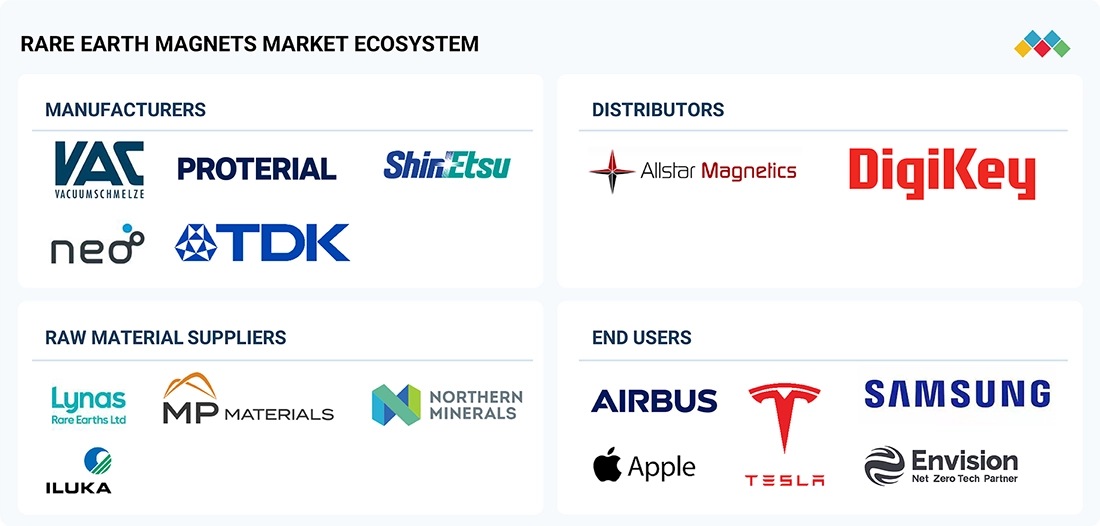
Rare Earth Magnets Market: COMMERCIAL USE CASES ACROSS INDUSTRIES
| COMPANY | USE CASE DESCRIPTION | BENEFITS |
|---|---|---|
 |
The development of permanent magnet alloys based on SmCo and new joining technologies for cobalt-iron laminations is aimed at enhancing power density and reducing weight for sustainable transportation. | Electric motors with greater power density, reduced size and weight, minimal eddy current losses, and a scalable manufacturing process enable widespread adoption and enhanced sustainability. |
 |
Development and commercialization of NMX-F1SH-HF and NMX-G1NH-HF neodymium sintered magnets, designed for high temperature performance without relying on heavy rare earths like terbium and dysprosium. | Magnets with high heat resistance, high magnetic flux, and coercivity offer improved motor performance while mitigating resource depletion risks and reducing environmental impacts. |
 |
The development of EcoFlux magnets uses a proprietary process that eliminates harmful mining practices and reduces energy consumption, integrating magnet-to-magnet recycling with 100% post-consumer rare earth material. | They offer magnets with high magnetic performance, reduced environmental impact, 20% less heavy rare earth element content, and the potential for large-scale, closed-loop recycling. |
Logos and trademarks shown above are the property of their respective owners. Their use here is for informational and illustrative purposes only.
Related Ecosystem
Mining Minerals And Metals
- Wastewater Treatment
- Fiberglass
- Light Commercial Vehicles (LCVs)
- Nitrogen
- Acetic Acid
- LHOIST S.A
- SEVERSTAL JSC
- ArcelorMittal S.A.
- TW METALS, INC.
- Linde plc
Key Takeaways
- Europe's rare earth magnets market will grow from USD 2,699.0M (2025) to USD 3,487.1M (2030) at a 5.3% CAGR.
- Europe's market is driven by demand from packaging, construction, mining, and gases industries with emphasis on sustainable practices.
- Europe's regulatory environment and circular economy initiatives create competitive advantages for advanced magnetic solutions.
- Europe's strategic investments in domestic rare earth processing reduce supply chain vulnerabilities through 2030.
Rare Earth Magnets Market Report Scope
| Report Metric | Details |
|---|---|
| Base Year | 2025 |
| Fastest Growing Segment | BONDED (Manufacturing Process) |
| Forecast Period | 2025–2030 |
| Growth Rate | CAGR of 6.4% from 2025 to 2030 |
| Largest Segment | SINTERED (Manufacturing Process) |
| Market Size Base Year (Billions) | ~USD 22.01 (2025) |
| Revenue Forecast (Billions) | ~USD 30.01 (2030) |
| Segments Covered | Type, Manufacturing Process, End-Use Industry |
Europe Rare Earth Magnets Market Report Segmentation
3 segment dimensions are covered across the global market.
By Type
- Neodymium-Iron-Boron Magnet
- Samarium-Cobalt Magnet
By Manufacturing Process
- Bonded
- Sintered
By End-Use Industry
- Aerospace & Defense
- Automotive
- Consumer Electronics
- Energy
- Industrial
- Other End-Use Industries
Target Audience
- Manufacturing & Industrial Companies : European manufacturers in packaging, construction, and mining sectors need market intelligence to optimize rare earth magnet sourcing, assess supply chain risks, and plan technology upgrades aligned with market growth.
- Rare Earth Magnet Producers & Suppliers : Magnet manufacturers and suppliers require detailed market segmentation, country-level demand forecasts, and competitive landscape data to identify high-growth regions, optimize production capacity, and expand market presence.
- Investment & Private Equity Firms : Investors evaluating opportunities in European industrial materials need comprehensive market sizing, growth projections, and sector analysis to assess investment returns and identify acquisition targets in the rare earth magnets space.
- Strategic Consultants & Business Advisors : Consulting firms advising European industrial clients require detailed market data, regional trends, and competitive insights to develop growth strategies, market entry plans, and operational optimization recommendations.
- Government & Trade Organizations : European trade bodies and government agencies need market intelligence to inform industrial policy, supply chain resilience initiatives, and strategic planning for critical materials and advanced manufacturing sectors.
Key Companies in the Europe Rare Earth Magnets Market
| Company | HQ | Ownership | Strongest segments |
|---|---|---|---|
| PROTERIAL, LTD. | Japan | Private Company | NdFeB Magnets – Sintered,NdFeB Magnets – Bonded,SmCo Magnets, |
| SHIN-ETSU CHEMICAL CO., LTD. | Japan | Public Company | NdFeB – Sintered,NdFeB – Bonded,SmCo – Sintered, |
| TDK CORPORATION | Japan | Public Company | NdFeB Magnets,SmCo Magnets,Sintered Magnets, |
| JL MAG RARE-EARTH CO., LTD. | China | Public Company | NdFeB – Sintered,NdFeB – Bonded,SmCo Magnets, |
| NEO PERFORMANCE MATERIALS | Canada | Public Company | NdFeB (bonded powders and compression molded magnets),SmCo magnets and powders,Sintered magnets (via partners and select in-house), |
| NINGBO YUNSHENG CO., LTD. | China | Public Company | Sintered NdFeB Magnets,Bonded NdFeB Magnets,Magnetic Assemblies (Tiles, Rings, Rotors, Linear Motors), |
| YANTAI ZHENGHAI MAGNETIC MATERIAL CO., LTD. | China | Public Company | NdFeB – Sintered,NdFeB – Bonded,SmCo – Sintered, |
| PERMAG | India | NdFeB Magnets,SmCo Magnets,Sintered Magnets (all types), |
PROTERIAL, LTD.
PROTERIAL, LTD. is a Japanese private company founded in 1910 with 26,496 employees. The company operates in the materials and advanced technology sector.
SHIN-ETSU CHEMICAL CO., LTD.
SHIN-ETSU CHEMICAL CO., LTD. is a Japanese public company founded in 1926 with 27,342 employees. The company is engaged in chemical manufacturing and related industries.
TDK CORPORATION
TDK CORPORATION is a Japanese public company founded in 1935 with 106,545 employees. The company is a major manufacturer of electronic components and materials.
JL MAG RARE-EARTH CO., LTD.
JL MAG RARE-EARTH CO., LTD. is a Chinese public company founded in 2008 with 7,302 employees. The company operates in the rare-earth materials sector.
NEO PERFORMANCE MATERIALS
NEO PERFORMANCE MATERIALS is a Canadian public company founded in 1994 with 1,547 employees. The company operates in the advanced materials and performance materials sector.
NINGBO YUNSHENG CO., LTD.
NINGBO YUNSHENG CO., LTD. is a Chinese public company founded in 1994 with 3,581 employees. The company is engaged in manufacturing and materials production.
YANTAI ZHENGHAI MAGNETIC MATERIAL CO., LTD.
YANTAI ZHENGHAI MAGNETIC MATERIAL CO., LTD. is a Chinese public company founded in 2000 with 3,318 employees. The company specializes in magnetic materials manufacturing.
PERMAG
PERMAG is an Indian company founded in 1985. Additional company details are unavailable.
Countries within Europe - compare and drill down
| Country | 2025 size (native) |
|---|---|
| Germany | USD 2092.4 Million |
| France | USD 920.9 Million |
| Italy | USD 441.3 Million |
| UK | USD 354.6 Million |
| Rest of Europe | USD 752.8 Million |
Country market size visualization
Reasons to Buy this Report
- Market Leadership Intelligence : Gain comprehensive insights into Germany's dominant position (USD 2,092.4M) and understand competitive dynamics across France, Italy, and the UK to identify market entry and expansion opportunities.
- Sector-Specific Demand Analysis : Access detailed breakdowns of rare earth magnet demand across packaging, construction, mining, and gases sectors specific to European markets, enabling targeted product development and marketing strategies.
- Growth Forecasting & Planning : Leverage accurate 2030 projections (USD 3,487.1M at 5.3% CAGR) to develop strategic business plans, investment decisions, and resource allocation aligned with European market expansion timelines.
- Regional Market Segmentation : Understand country-level market sizes and dynamics across Germany, France, Italy, UK, and Rest of Europe to optimize distribution networks, partnerships, and localized go-to-market strategies.
- Competitive Benchmarking : Compare European market performance against global trends (6.4% global CAGR) to identify competitive advantages, market gaps, and opportunities for differentiation in the rare earth magnets sector.
Frequently asked questions
What is the current size of Europe's rare earth magnets market?
Europe's rare earth magnets market is valued at USD 2,699.0 million in 2025.
What is the projected market size for Europe by 2030?
Europe's rare earth magnets market is forecast to reach USD 3,487.1 million by 2030.
What is the CAGR for Europe's rare earth magnets market?
Europe's rare earth magnets market is expected to grow at a compound annual growth rate (CAGR) of 5.3% from 2025 to 2030.
Which industries drive demand for rare earth magnets in Europe?
Europe's rare earth magnets demand is primarily driven by packaging, construction, mining, and gases sectors.
What factors support growth in Europe's rare earth magnets market?
Europe's market growth is supported by regulatory frameworks promoting sustainability, circular economy initiatives, infrastructure investments, and efforts to develop domestic rare earth processing capabilities.
RESEARCH METHODOLOGY
The study involved four major activities to estimate the current size of the global rare earth magnets market. Exhaustive secondary research was carried out to collect information on the market, the peer product market, and the parent product group market. The next step was to validate these findings, assumptions, and sizes with the industry experts across the value chain of rare earth magnets through primary research. The top-down and bottom-up approaches were employed to estimate the overall size of the rare earth magnets market. After that, market breakdown and data triangulation procedures were used to determine the size of different market segments.
Secondary Research
The market for the companies offering rare earth magnets is arrived at by secondary data available through paid and unpaid sources, analyzing the product portfolios of the major companies in the ecosystem, and rating the companies by their performance and quality. Various secondary sources, such as Business Standard, Bloomberg, World Bank, and Factiva, were referred to in order to identify and collect information for this study on the rare earth magnets market. In the secondary research process, various secondary sources were referred to identify and collect information related to the study. Secondary sources included annual reports, press releases, and investor presentations of rare earth magnets vendors, forums, certified publications, and whitepapers. The secondary research was used to obtain critical information on the industry’s value chain, the total pool of key players, market classification, and segmentation from the market and technology-oriented perspectives.
Primary Research
In the primary research process, various primary sources from both the supply and demand sides were interviewed to obtain qualitative and quantitative information for this report. The primary sources from the supply side included industry experts, such as Chief Executive Officers (CEOs), Vice Presidents (VPs), marketing directors, technology and innovation directors, and related key executives from several key companies and organizations operating in the rare earth magnets market. After the complete market engineering (calculations for market statistics, market breakdown, market size estimations, market forecasting, and data triangulation), extensive primary research was conducted to gather information and verify and validate the critical numbers arrived at. Primary research was also conducted to identify the segmentation types, industry trends, competitive landscape of rare earth magnets offered by various market players, and key market dynamics, such as drivers, restraints, opportunities, challenges, industry trends, and key player strategies. In the complete market engineering process, the top-down and bottom-up approaches and several data triangulation methods were extensively used to perform the market estimation and market forecasting for the overall market segments and subsegments listed in this report. Extensive qualitative and quantitative analysis was performed on the complete market engineering process to list the key information/insights throughout the report.
The following is the breakdown of primary respondents:
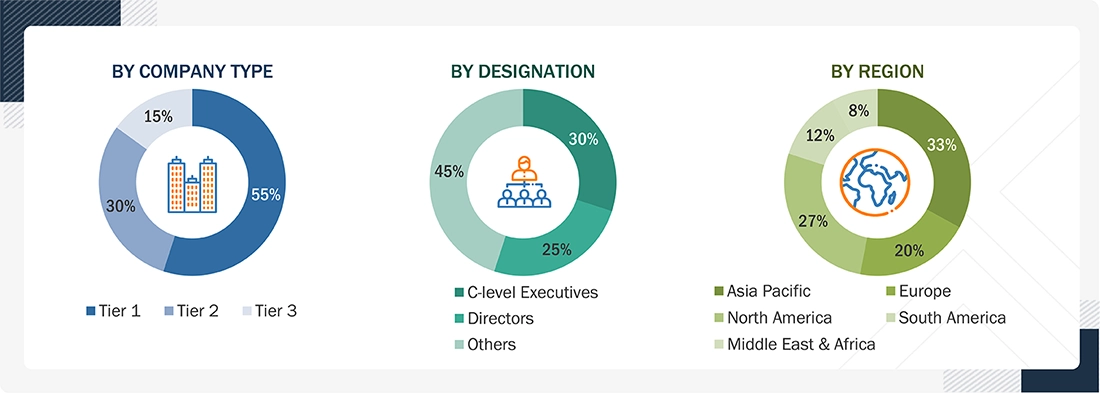
Notes: Other designations include sales, marketing, and product managers.
Tier 1: Greater than USD 1 Billion; Tier 2: Between USD 500 million and USD 1 Billion; and Tier 3: Less than USD 500 million
To know about the assumptions considered for the study, download the pdf brochure
Market Size Estimation
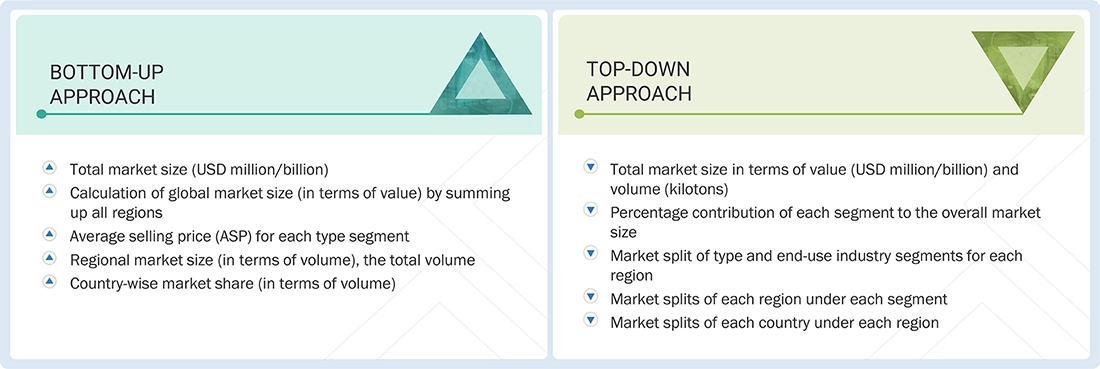
The top-down and bottom-up approaches were used to estimate and validate the size of the global rare earth magnets market. These approaches were also used extensively to estimate the size of various dependent market segments. The research methodology used to estimate the market size included the following:
Data Triangulation
After arriving at the overall market size using the market size estimation processes, the market was split into several segments and subsegments. The data triangulation procedure was employed, wherever applicable, to complete the overall market engineering process and arrive at the exact statistics of each market segment and subsegment. The data was triangulated by studying various factors and trends from both the demand and supply sides.
Market Definition
According to the Rare Earths Industry Association, rare-earth elements (REE) are a group of 17 elements on the periodic table, consisting of the lanthanoid series, and scandium and yttrium. Rare earth magnets are composed of these rare earth metals and elements, specifically categorized into two main types: neodymium magnets (NdFeB) and samarium cobalt magnets (SmCo). Each type has distinct characteristics that make it suitable for different applications. These magnets are popular for their remarkably strong magnetic fields, which significantly exceed those of traditional magnets. Additionally, they exhibit a high level of magnetic longevity, meaning they retain their magnetism over time. Due to these properties, rare earth magnets are widely utilized in advanced technologies, including electric vehicles, wind turbines, and various medical devices.
Stakeholders
- Raw material suppliers
- Rare earth magnet manufacturers
- Manufacturing technology providers
- Industry associations
- Mining associations
- Traders, distributors, and suppliers
- Non-governmental organizations (NGOs), government and regional agencies, and research organizations
Report Objectives
- To define, describe, and forecast the size of the global rare earth magnets market based on type, manufacturing process, end-use industry, and region in terms of value and volume
- To provide detailed information on the significant drivers, restraints, opportunities, and challenges influencing the market
- To strategically analyze micromarkets concerning individual growth trends, prospects, and their contribution to the market
- To assess the growth opportunities in the market for stakeholders and provide details on the competitive landscape for market leaders
- To forecast the market size of segments for North America, Europe, Asia Pacific, South America, and the Middle East & Africa
- To strategically profile key players and comprehensively analyze their market shares and core competencies
- To analyze competitive developments such as product launches, expansions, partnerships, and acquisitions in the rare earth magnets market
- To provide the impact of AI on the market
Get the Full Rare Earth Magnets Market Report
Full forecast, segment splits, and company analysis for all Rare Earth Magnets Market.
- China Rare Earth Magnets Market
- Japan Rare Earth Magnets Market
- India Rare Earth Magnets Market
- South Korea Rare Earth Magnets Market
- Indonesia Rare Earth Magnets Market
- Germany Rare Earth Magnets Market
- France Rare Earth Magnets Market
- Italy Rare Earth Magnets Market
- UK Rare Earth Magnets Market
- Canada Rare Earth Magnets Market
- Mexico Rare Earth Magnets Market
- US Rare Earth Magnets Market
- South Africa Rare Earth Magnets Market
- Brazil Rare Earth Magnets Market
- Argentina Rare Earth Magnets Market
- Rest Of Europe Rare Earth Magnets Market
- Rest Of Asia Pacific Rare Earth Magnets Market
- GCC Countries Rare Earth Magnets Market
- –Rest Of GCC Rare Earth Magnets Market
- Rest Of South America Rare Earth Magnets Market
Need a Tailored Report?
Customize this report to your needs
Get 10% FREE Customization
Customize This Report
