
North America Remote Patient Monitoring (RPM) Market (2026-2031)

The North America Remote Patient Monitoring (RPM) Market was valued at $13521.1 Million in 2026 and projected to reach to $23802 Million by 2031, representing a compound annual growth rate of 12.0%. North America's Remote Patient Monitoring market is positioned for sustained expansion through 2031, with the 12.0% CAGR reflecting strong demand from healthcare providers seeking to optimize patient outcomes while managing operational costs.


| Market Size in | USD 26.32 MN |
| Market Forecast in | |
| CAGR | |
| Forecast Period | |
| Units Considered | Value (USD MN) |
North America Remote Patient Monitoring (RPM) Market Trends and Insights
- This 12.0% compound annual growth rate reflects North America's leadership in digital health adoption, driven by aging populations, chronic disease prevalence, and healthcare cost pressures across the United States and Canada.
- North America's advanced healthcare infrastructure and strong reimbursement frameworks position the region as a critical market for RPM solutions. The North America RPM market benefits from increasing regulatory support and payer acceptance, particularly in the United States where Medicare and private insurers have expanded coverage for remote monitoring services.
- North America's technology-savvy population and high smartphone penetration accelerate patient adoption of RPM platforms.
- Between 2026 and 2031, North America is expected to maintain its dominant market share, driven by investments in interoperable health IT systems and integrated care delivery models that prioritize continuous patient engagement and real-time clinical decision-making..
Key Market Statistics
- CAGR (2026-2031) 12.0% CAGR
- Market Size, 2026 ~USD 13521.1 Million
- Forecast, 2031 ~USD 23802 Million
- Geography North America
North America Remote Patient Monitoring (RPM) Market Overview
Market Leadership Position :
North America commands the largest share of the global RPM market, driven by advanced healthcare infrastructure, high digital health adoption rates, and strong regulatory support from FDA and Health Canada for remote monitoring technologies.
Aging Population Catalyst :
The region's rapidly aging demographic, particularly in the United States and Canada, is accelerating RPM adoption for chronic disease management, with seniors representing the fastest-growing user segment for continuous health monitoring solutions.
Healthcare Cost Pressures :
Rising healthcare expenditures and labor shortages across North American hospitals and clinics are driving investment in RPM solutions to reduce hospital readmissions, emergency visits, and overall care delivery costs.
Reimbursement Expansion :
Increased Medicare and private insurance coverage for RPM services in the United States, combined with Canadian provincial health system integration, is removing financial barriers and accelerating market penetration across both countries.
North America Remote Patient Monitoring (RPM) Market Dynamics
- The region benefits from mature digital health ecosystems, robust cybersecurity frameworks, and established reimbursement pathways that facilitate rapid technology adoption.
- Integration of AI-driven analytics and wearable devices into RPM platforms is expected to enhance clinical efficacy and patient engagement.
- Both the United States and Canada are investing heavily in telehealth infrastructure and remote care capabilities, supported by favorable regulatory environments and healthcare system modernization initiatives.
- Market growth will be sustained by increasing prevalence of cardiovascular diseases, diabetes, and respiratory conditions requiring continuous monitoring..
Market Ecosystem
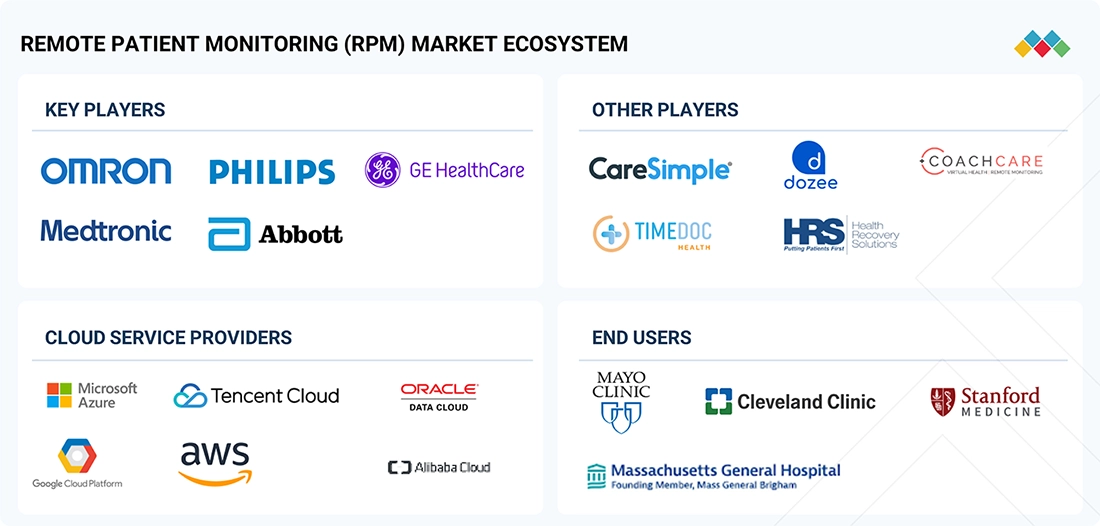
REMOTE PATIENT MONITORING MARKET: COMMERCIAL USE CASES ACROSS INDUSTRIES
| COMPANY | USE CASE DESCRIPTION | BENEFITS |
|---|---|---|
 |
Virtual Care Management and connected monitoring for chronic conditions (diabetes, COPD, heart disease) | Reduces hospital readmissions, improves outcomes and patient engagement, lowers care costs |
 |
VitalSight home blood pressure and weight monitoring linked to clinicians | Enables early intervention, better hypertension control, and continuous patient oversight |
 |
MyCareLink Smart and Vital Sync for remote monitoring of implantable and hospital-to-home patients | Early detection of complications, reduced hospital stay and improved chronic care management |
 |
Deployment of RPM/virtual-care solutions by combining GE’s inpatient/acute monitoring portfolio with home-based virtual-care and remote-monitoring | Extends hospital-grade monitoring to home, improves capacity, and reduces readmissions |
 |
CardioMEMS HF System for remote monitoring of heart-failure patients | Cuts hospitalizations and mortality, enables proactive treatment, and enhances quality of life |
Logos and trademarks shown above are the property of their respective owners. Their use here is for informational and illustrative purposes only.
Related Ecosystem
Cardiovascular Devices
Diagnostic Imaging
Healthcare It
Key Takeaways
- North America's RPM market will grow from $13.5B (2026) to $23.8B (2031) at a 12.0% CAGR, reflecting strong digital health adoption.
- North America leads globally in RPM implementation due to advanced healthcare infrastructure, regulatory support, and favorable reimbursement policies.
- North America's aging population and high chronic disease burden drive demand for continuous remote monitoring solutions across cardiology, diabetes, and respiratory care.
- North America's interoperable health IT ecosystem and integrated care delivery models position the region for sustained RPM market expansion through 2031.
Remote Patient Monitoring (RPM) Market Report Scope
| Report Metric | Details |
|---|---|
| Base Year | 2026 |
| Fastest Growing Segment | SYNCHRONOUS (Transmission Type) |
| Forecast Period | 2026–2031 |
| Growth Rate | CAGR of 12.8% from 2026 to 2031 |
| Largest Segment | HEALTHCARE PROVIDERS (End User) |
| Market Size Base Year (Billions) | ~USD 36.32 (2026) |
| Revenue Forecast (Billions) | ~USD 66.33 (2031) |
| Segments Covered | Component, Function, Type, Deployment Model, Transmission Type, Indication, End User, Deployment Type |
North America Remote Patient Monitoring (RPM) Market Report Segmentation
8 segment dimensions are covered across the global market.
By Component
- Devices
- Services
- Software
By Function
- Blood Glucose Monitoring
- Cardiac Monitoring
- Fetal & Neonatal Monitoring
- Multiparameter Monitoring
- Neurological Monitoring
- Other Monitoring Devices
- Pulse Oximeters
- Respiratory Monitoring
- Thermometers
- Weight Monitoring
By Type
- Ambulatory Surgical Centers, Ambulatory Care Centers, And Other Outpatient Settings
- Handheld & Portable
- Handheld & Portable Devices
- Home Healthcare
- Hospitals
- Implantable
- Implantable Devices
- Long-Term Care & Assisted Living Facilities
- Other Healthcare Providers
- Others (Stationary Devices And Others)
- Others (Stationary Devices, And Others)
- Wearable
- Wearable Devices
By Deployment Model
- Cloud-Based Model
- On-Premise Model
By Transmission Type
- Asynchronous
- Synchronous
By Indication
- Cardiology
- Diabetes
- Mental Health
- Neurology
- Oncology
- Other Indications
- Respiratory Disorders
- Sleep Disorders
- Wellness Improvement
By End User
- Healthcare Payers
- Healthcare Providers
- Medtech Companies
- Other End Users
- Patients
- Pharmaceutical & Biotechnology Companies
By Deployment Type
- Cloud-Based
- On-Premises
Target Audience
- Healthcare Providers & Hospital Systems : Hospital networks and clinics across North America need RPM market data to evaluate technology investments, benchmark against competitors, and justify capital expenditures for remote monitoring infrastructure.
- Medical Device & Software Vendors : RPM platform developers and device manufacturers require North American market intelligence to guide product development, identify partnership opportunities, and prioritize geographic expansion strategies.
- Healthcare Investors & Private Equity : Investment firms evaluating RPM companies and digital health portfolios need regional market forecasts, growth drivers, and competitive dynamics to assess acquisition targets and investment returns in North America.
- Insurance & Payer Organizations : Health insurers and managed care organizations need RPM market insights to design reimbursement policies, negotiate vendor contracts, and understand cost-benefit implications for North American patient populations.
- Healthcare Consultants & Analysts : Strategy consultants and market researchers require detailed North American RPM data to support client advisory work, competitive benchmarking, and long-term healthcare technology roadmap development.
Key Companies in the North America Remote Patient Monitoring (RPM) Market
| Company | HQ | Ownership | Strongest segments |
|---|---|---|---|
| KONINKLIJKE PHILIPS N.V. | Netherlands | Public Company | Diagnosis & Treatment (Imaging and Image Guided Therapy),Connected Care (Monitoring, Enterprise Informatics, Sleep and Respiratory Care),Personal Health, |
| MEDTRONIC | Ireland | Public Company | Cardiovascular Portfolio,Neuroscience Portfolio,Medical Surgical Portfolio (incl. Diabetes and Monitoring), |
| GE HEALTHCARE | United States | Public Company | Imaging,Advanced Visualization Solutions (AVS),Patient Care Solutions (PCS), |
| ABBOTT | United States | Public Company | Diagnostic Products,Medical Devices,Nutritional Products, |
| ORACLE | United States | Public Company | Cloud Applications (Fusion ERP/EPM/SCM/HCM, NetSuite, CX, Health),Database and Infrastructure Technologies (Oracle DB, MySQL, Autonomous, Middleware, Java),Cloud Infrastructure (Compute, Storage, Networking, AI/ML, Digital Assistant, Blockchain), |
| BOSTON SCIENTIFIC CORPORATION | United States | Public Company | Cardiovascular (structural heart, CRM, LAAC, peripheral interventions),MedSurg – Endoscopy (GI, pancreaticobiliary, infection prevention, single-use scopes),MedSurg – Urology and Pelvic Health, |
| NIHON KOHDEN CORPORATION | Japan | Public Company | Patient monitors and clinical information systems,Physiological measuring equipment (EEG, ECG, EMG, polygraphs),Defibrillators, AEDs, and resuscitation devices, |
| SIEMENS HEALTHINEERS AG | Germany | Public Company | Imaging,Diagnostics,Varian (Oncology), |
| BAXTER | United States | Public Company | Medical Products & Therapies (IV solutions, infusion, parenteral nutrition, renal and related therapies),Healthcare Systems & Technologies (smart beds, monitoring, OR integration, surgical equipment, respiratory devices),Pharmaceuticals (generic and specialty injectables, inhaled anesthetics, compounding services), |
KONINKLIJKE PHILIPS N.V.
Koninklijke Philips N.V. is a Dutch multinational public company founded in 1891 with 64,317 employees, operating across healthcare and technology sectors.
MEDTRONIC
Medtronic is a public medical technology company founded in 1949 in Ireland with 95,000 employees, providing medical devices and healthcare solutions.
GE HEALTHCARE
GE Healthcare is a public healthcare company established in 2022 in the United States with 54,000 employees, offering medical imaging and healthcare technology.
ABBOTT
Abbott is a public healthcare and diagnostics company founded in 1888 in the United States with 115,000 employees.
ORACLE
Oracle is a public software and cloud computing company founded in 1977 in the United States with 141,000 employees.
BOSTON SCIENTIFIC CORPORATION
Boston Scientific Corporation is a public medical device company founded in 1979 in the United States with 59,000 employees.
NIHON KOHDEN CORPORATION
Nihon Kohden Corporation is a Japanese public company founded in 1951 with 6,116 employees, specializing in medical equipment and healthcare technology.
SIEMENS HEALTHINEERS AG
Siemens Healthineers AG is a German public healthcare company founded in 1896 with 72,369 employees, providing medical imaging and diagnostic solutions.
BAXTER
Baxter is a public healthcare company founded in 1931 in the United States with 37,500 employees, specializing in medical devices and pharmaceuticals.
Countries within North America - compare and drill down
| Country | 2025 size (native) |
|---|---|
| Canada | USD 724.7 Million |
Country market size visualization
Reasons to Buy this Report
- Regional Market Sizing & Forecasts : Access precise market valuations for North America ($13.5B in 2026, $23.8B in 2031) with country-level breakdowns for the United States and Canada, enabling accurate budget allocation and revenue projections.
- Competitive Landscape Intelligence : Identify leading RPM vendors, technology platforms, and service providers dominating the North American market, including their market share, strategic partnerships, and differentiation strategies.
- Regulatory & Reimbursement Insights : Understand FDA approval pathways, Medicare/Medicaid coverage policies, and Canadian provincial reimbursement frameworks that directly impact RPM adoption rates and commercial viability in North America.
- End-User Adoption Trends : Analyze hospital systems, primary care networks, and specialty clinics' RPM implementation strategies, including technology preferences, integration challenges, and ROI expectations specific to North American healthcare settings.
- Growth Opportunity Mapping : Identify high-potential segments (cardiology, diabetes, COPD), emerging use cases, and underserved patient populations in North America where RPM solutions can capture market share and drive profitability.
Frequently asked questions
What is the projected market size for Remote Patient Monitoring in North America by 2031?
North America's RPM market is projected to reach $23,802.0 million by 2031, up from $13,521.1 million in 2026, representing a 12.0% CAGR.
What factors are driving RPM market growth in North America?
North America's RPM growth is driven by an aging population, rising chronic disease prevalence, expanded Medicare and private payer reimbursement, advanced healthcare IT infrastructure, and high patient technology adoption rates.
How does North America's RPM market compare to global growth rates?
North America's 12.0% CAGR is slightly below the global 12.8% CAGR, but North America maintains the largest absolute market value and strongest reimbursement ecosystem for RPM solutions.
Which chronic conditions are most monitored through RPM in North America?
North America's RPM deployments focus primarily on cardiovascular disease, diabetes management, chronic obstructive pulmonary disease (COPD), and hypertension, where remote monitoring improves outcomes and reduces hospitalizations.
What regulatory changes are supporting RPM adoption in North America?
North America has seen expanded Medicare coverage for RPM services, FDA clearances for remote monitoring devices, and state-level telehealth regulations that facilitate broader RPM implementation across healthcare systems.
RESEARCH METHODOLOGY
The study involved major activities in estimating the current market size for the remote patient monitoring market.
Exhaustive secondary research was done to collect information on the remote patient monitoring industry. The next step was to validate these findings, assumptions, and sizing with industry experts across the value chain using primary research. Different approaches, such as top-down and bottom-up, were employed to estimate the total market size. After that, the market breakup and data triangulation procedures were used to estimate the market size of the segments and subsegments of the remote patient monitoring market.
Secondary Research
In the secondary research process, various secondary sources such as annual reports, press releases & investor presentations of companies, white papers, certified publications, articles by recognized authors, gold-standard & silver-standard websites, regulatory bodies, and databases (such as D&B Hoovers, Bloomberg Business, and Factiva) were referred to in order to identify and collect information for the study of the remote patient monitoring market. It was also used to obtain important information about the top players, market classification, and segmentation according to industry trends to the bottom-most level, geographic markets, and key developments related to the market. A database of the key industry leaders was also prepared using secondary research.
Primary Research
Extensive primary research was conducted after acquiring basic knowledge about the global remote patient monitoring market scenario through secondary research. Several primary interviews were conducted with market experts from both the demand side (Hospital directors, Hospital Vice Presidents, Department heads, and Critical care specialists ) and supply side (such as C-level and D-level executives, technology experts, product managers, marketing and sales managers, among others) across five major regions—North America, Europe, Asia Pacific, Latin America, and Middle East & Africa. This primary data was collected through questionnaires, e-mails, online surveys, personal interviews, and telephonic interviews.
BREAKDOWN OF PRIMARY INTERVIEW PARTICIPANTS
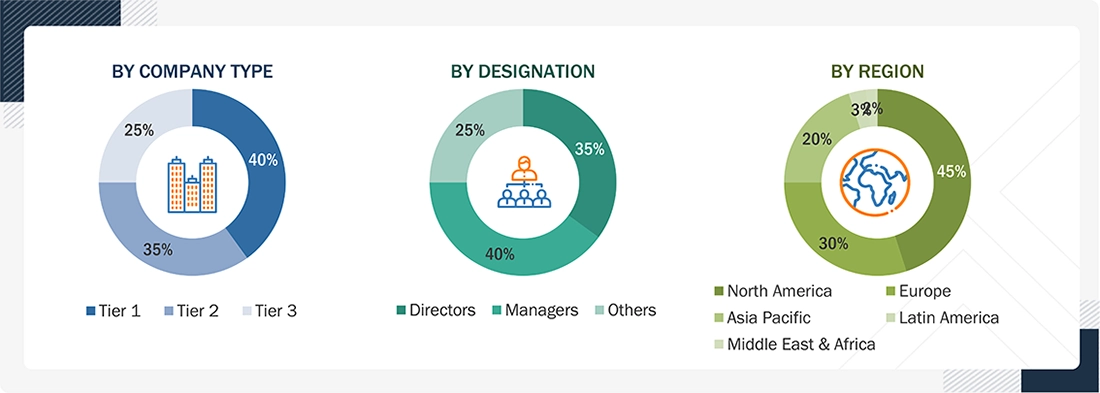
Note 1: Others include sales managers, marketing managers, and product managers.
Note 2: Tiers of companies are defined on the basis of their total revenues in 2025. Tier 1 = >USD 1 billion, Tier 2 = USD 500 million to USD 1 billion, and Tier 3 = <USD 500 million.
To know about the assumptions considered for the study, download the pdf brochure
Market Size Estimation
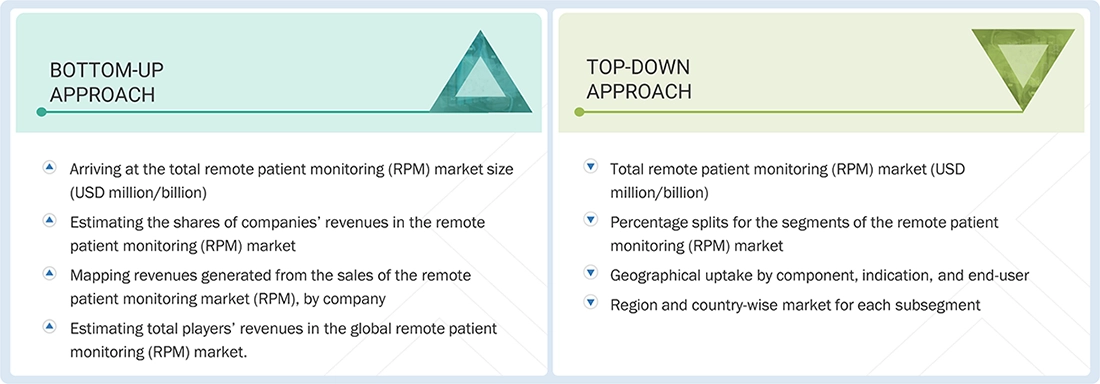
Both top-down and bottom-up approaches were used to estimate and validate the total size of the remote patient monitoring market. These methods were also used extensively to estimate the size of various subsegments in the market.
The research methodology used to estimate the market size includes the following:
Data Triangulation
After arriving at the overall market size—using the market size estimation processes—the market was split into several segments and subsegments. To complete the overall market engineering process and arrive at the exact statistics of each market segment and sub-segment, data triangulation and market breakdown procedures were employed, wherever applicable. The data was triangulated by studying various factors and trends from both the demand and supply sides in the remote patient monitoring market.
Market Definition
The remote patient monitoring (RPM) market involves the use of technology to remotely monitor and manage patients' health conditions outside of traditional healthcare settings, as well as in patient settings. It leverages devices such as wearables, sensors, and mobile applications to track vital signs and chronic diseases. RPM allows healthcare providers to access real-time data for better decision-making and personalized care.
Key Stakeholders
- RPM Equipment and devices Manufacturers
- Suppliers and Distributors of RPM Equipment
- RPM software provider
- Healthcare IT Service Providers
- Healthcare Insurance Companies/Payers
- Healthcare Institutions/Providers (Hospitals, Clinics, Medical Groups, Physician Practices, Diagnostic Centers, and Outpatient Clinics)
- Venture Capitalists
- Government Bodies/Regulatory Bodies
- Corporate Entities
- Accountable Care Organizations
- RPM Resource Centers
- Research and Consulting Firms
- Medical Research Institutes
- Clinical Departments
Report Objectives
- To define, describe, and forecast the global remote patient monitoring market based on component, indication, end user, and region.
- To provide detailed information regarding the major factors (such as drivers, restraints, opportunities, and challenges) influencing the market growth
- To strategically analyze micro-markets with respect to individual growth trends, prospects, and contributions to the overall remote patient monitoring market
- To analyze opportunities in the market for stakeholders and provide details of the competitive landscape for market leaders.
- To strategically analyze the market structure profile of the key players of the remote patient monitoring market and comprehensively analyze their core competencies.
- To forecast the size of the market segments with respect to five regions, namely, North America, Europe, Asia Pacific, Latin America, and the Middle East & Africa.
- To track and analyze competitive developments such as product launches and enhancements, investments, partnerships, collaborations, acquisitions, expansions, funding, grants, agreements, sales contracts, product testing, FDA approval, product approval, and alliances in the remote patient monitoring market during the forecast period.
Available customizations:
With the given market data, MarketsandMarkets offers customizations as per the company’s specific needs. The following customization options are available for the report:
- Product Analysis: Product matrix, which gives a detailed comparison of the product portfolios of each company.
- Geographic Analysis: Further breakdown of Latin American remote patient monitoring into specific countries, the Middle East, and Africa remote patient monitoring into specific countries, and further breakdown of European remote patient monitoring into specific countries
Get the Full Remote Patient Monitoring (RPM) Market Report
Full forecast, segment splits, and company analysis for all Remote Patient Monitoring (RPM) Market.
- Rest Of Europe Remote Patient Monitoring (RPM) Market
- Rest Of Asia Pacific Remote Patient Monitoring (RPM) Market
- Canada Remote Patient Monitoring (RPM) Market
- US Remote Patient Monitoring (RPM) Market
- Germany Remote Patient Monitoring (RPM) Market
- UK Remote Patient Monitoring (RPM) Market
- France Remote Patient Monitoring (RPM) Market
- Italy Remote Patient Monitoring (RPM) Market
- Spain Remote Patient Monitoring (RPM) Market
- China Remote Patient Monitoring (RPM) Market
- Japan Remote Patient Monitoring (RPM) Market
- India Remote Patient Monitoring (RPM) Market
- Australia Remote Patient Monitoring (RPM) Market
- South Korea Remote Patient Monitoring (RPM) Market
- Brazil Remote Patient Monitoring (RPM) Market
- Mexico Remote Patient Monitoring (RPM) Market
- Saudi Arabia Remote Patient Monitoring (RPM) Market
- UAE Remote Patient Monitoring (RPM) Market
- South Africa Remote Patient Monitoring (RPM) Market
Need a Tailored Report?
Customize this report to your needs
Get 10% FREE Customization
Customize This Report
