
Asia Pacific Seed Treatment Market (2025-2030)

The Asia Pacific Seed Treatment Market was valued at $1160.2 Million in 2025 and projected to reach to $1728.2 Million by 2030, representing a compound annual growth rate of 8.3%. The Asia Pacific seed treatment market is poised for sustained expansion through 2030, supported by increasing agricultural investments, government initiatives promoting modern farming practices, and growing awareness of seed treatment's role in crop protection.


| Market Size in | USD 26.32 MN |
| Market Forecast in | |
| CAGR | |
| Forecast Period | |
| Units Considered | Value (USD MN) |
Asia Pacific Seed Treatment Market Trends and Insights
- Asia Pacific's agricultural sector is increasingly adopting seed treatment solutions to enhance crop yields, protect against pathogens, and improve seed viability across diverse farming systems.
- The region's growing population, rising food demand, and intensifying agricultural practices are driving widespread adoption of chemical and biological seed treatments among farmers in Asia Pacific. Asia Pacific's seed treatment market growth is supported by expanding mechanized farming, government agricultural initiatives, and rising awareness of sustainable crop protection methods.
- Key markets within Asia Pacific include India, China, and Southeast Asian nations, where smallholder and commercial farmers are investing in seed treatment technologies to optimize productivity.
- Between 2025 and 2030, Asia Pacific is expected to maintain strong momentum, with the market growing at a compound annual growth rate of 8.3%, outpacing global trends and reflecting the region's critical role in global agricultural development..
Key Market Statistics
- CAGR (2025-2030) 8.3% CAGR
- Market Size, 2025 ~USD 1160.2 Million
- Forecast, 2030 ~USD 1728.2 Million
- Geography Asia Pacific
Asia Pacific Seed Treatment Market Overview
Strong Regional Growth Trajectory :
Asia Pacific seed treatment market is expanding at 8.3% CAGR, outpacing the global average of 7.7%, driven by intensifying agricultural modernization and crop protection demands across the region.
Rising Adoption in Diverse Farming Systems :
Farmers across Asia Pacific are increasingly integrating seed treatment solutions to enhance crop yields, combat regional pathogens, and improve seed viability in both smallholder and commercial farming operations.
Population Growth Fueling Food Security Needs :
Asia Pacific's rapidly growing population is creating sustained demand for higher agricultural productivity, positioning seed treatment as a critical technology for meeting regional food security objectives.
Market Expansion Potential :
Projected growth from $1,160.2 million in 2025 to $1,728.2 million by 2030 reflects significant untapped opportunities in emerging markets and increasing farmer awareness of seed treatment benefits.
Asia Pacific Seed Treatment Market Dynamics
- Key drivers include rising pest and disease pressures, climate variability concerns, and the region's shift toward higher-value crop production.
- India and China represent major growth engines, with expanding commercial agriculture sectors and rising adoption of advanced agronomic solutions.
- The market will benefit from improved distribution networks, farmer education programs, and regulatory support for seed treatment adoption across diverse agroecological zones..
Market Ecosystem

seed treatment market: COMMERCIAL USE CASES ACROSS INDUSTRIES
| COMPANY | USE CASE DESCRIPTION | BENEFITS |
|---|---|---|
 |
Uses treated seeds for commercial corn, soybean, and vegetable production | Enhances germination, crop resilience, and overall yield |
 |
Implements chemical and biological seed treatments for farmers | Protects seeds from pests and diseases, improving productivity |
 |
Provides seed-applied solutions, including nutrients and biostimulants | Improves early plant vigor and nutrient uptake for higher crop performance |
 |
Applies liquid and dry treated seeds in large-scale farming across cereals, oilseeds, and vegetables | Ensures uniform germination, strong early growth, and disease protection |
Logos and trademarks shown above are the property of their respective owners. Their use here is for informational and illustrative purposes only.
Related Ecosystem
Seeds And Others
- Auxins
- Bacillus Thuringiensis
- Beauveria Bassiana
- Bionematicides
- Carbamates
- Corteva, Inc.
- BAYER AG
- Basf se
- AZELIS HOLDINGS SA
- ARYSTA LIFESCIENCE CORPORATION
Key Takeaways
- Asia Pacific seed treatment market valued at $1,160.2 million in 2025, expanding to $1,728.2 million by 2030 at 8.3% CAGR
- Rising food security concerns and population growth in Asia Pacific are accelerating adoption of advanced seed treatment technologies
- Asia Pacific's 8.3% CAGR outpaces the global average, positioning the region as a high-growth market for seed treatment solutions
- Government support for agricultural modernization and sustainable farming practices in Asia Pacific is driving market expansion through 2030
Seed Treatment Market Report Scope
| Report Metric | Details |
|---|---|
| Base Year | 2025 |
| Fastest Growing Segment | OTHER TECHNIQUES (Application Technique) |
| Forecast Period | 2025–2030 |
| Growth Rate | CAGR of 7.7% from 2025 to 2030 |
| Largest Segment | CHEMICAL SEED TREATMENT (Type) |
| Market Size Base Year (Billions) | ~USD 7.86 (2025) |
| Revenue Forecast (Billions) | ~USD 11.39 (2030) |
| Segments Covered | Type, Function, Application Technique, Formulation, Crop Type, Crop, Application Technique 2020–2024 |
Asia Pacific Seed Treatment Market Report Segmentation
7 segment dimensions are covered across the global market.
By Type
- Amino Acids
- Auxins
- Bacillus
- Bacillus Thuringiensis
- Baculovirus
- Beauveria Bassiana
- Biochemicals
- Biofertilizers
- Biofungicides
- Bioinsecticides
- Biological Seed Protection
- Biological Seed Treatment
- Biologicals
- Bionematicides & Others
- Biostimulants
- Carbamates
- Carbendazim
- Carboxin
- Chemical Seed Protection
- Chemical Seed Treatment
- Clothianidin
- Cytokinins
- Ethylene
- Fumigants
- Fungicides
- Gibberellins
- Humic Substances
- Imidacloprid
- Insecticides
- Metarhizium Anisopliae
- Microbial Amendments
- Microbials
- Minerals & Vitamins
- Nematicides & Others
- Nitrogen-Fixing Biofertilizers
- Non-Chemical Seed Treatment
- Organophosphate
- Organophosphates
- Other Active Ingredients
- Other Biofertilizers
- Other Biofungicides
- Other Bioinsecticides
- Other Fungicides
- Other Insecticides
- Other Nematicides
- Other Plant Growth Regulators
- Phosphate Solubilizing & Mobilizing Biofertilizers
- Physical Seed Treatment
- Plant Growth Regulators
- Potassium Solubilizing & Mobilizing Biofertilizers
- Pseudomonas
- Seaweed Extracts
- Seed Disinfection
- Seed Priming
- Streptomyces
- Tebuconazole
- Thiamethoxam
- Thiram
- Trichoderma
- Verticillium Lecanii
By Function
- Seed Enhancement
- Seed Protection
By Application Technique
- Built-Up Pelleting
- Dry Dressing
- Encrusting
- Film Coating
- Hydropriming
- Matrix Priming
- Mist Spray
- Osmopriming
- Other Techniques
- Precision Pelleting
- Seed Coating
- Seed Dressing
- Seed Pelleting
- Slurry Treatment
- Thermal Disinfection
- Tumble/Pan Pelleting
- Uv/Irradiation
By Formulation
- Cf
- Ds
- Es
- Fs
- Gf
- Ls
- Ss
- Wg
- Ws
By Crop Type
- Cereals & Grains
- Fruits & Vegetables
- Oilseeds & Pulses
- Other Crop Types
By Crop
- Alfalfa
- Barley
- Berries
- Canola
- Citrus Fruits
- Corn
- Cotton
- Flower Seeds
- Forages
- Leafy Vegetables
- Other Cereals & Grains
- Other Fruits & Vegetables
- Other Oilseeds & Pulses
- Pome Fruits
- Rice
- Root & Tuber Vegetables
- Sorghum
- Soybean
- Sunflower
- Turf Grasses
- Wheat
By Application Technique 2020–2024
- Other Application Techniques
- Seed Coating
- Seed Dressing
- Seed Pelleting
Target Audience
- Agricultural Input Manufacturers : Seed treatment product developers and agrochemical companies need Asia Pacific market intelligence to identify growth opportunities, optimize product portfolios, and establish regional distribution partnerships.
- Agribusiness & Distribution Companies : Regional distributors and agribusiness firms require detailed market forecasts and country-specific data to plan inventory, expand market coverage, and capitalize on the 8.3% regional growth trajectory.
- Investment & Private Equity Firms : Investors evaluating agricultural technology opportunities in Asia Pacific need comprehensive market sizing, growth projections, and competitive analysis to assess investment returns and portfolio fit.
- Government & Agricultural Policy Bodies : Regional agricultural ministries and policy organizations use market data to design crop protection strategies, set food security targets, and develop farmer support programs aligned with market trends.
- Agricultural Research & Extension Services : Research institutions and extension agencies require market insights to align seed treatment research priorities, develop farmer training programs, and support technology adoption initiatives across Asia Pacific.
Countries within Asia Pacific - compare and drill down
| Country | 2025 size (native) |
|---|---|
| China | USD 439.7 Million |
| India | USD 710.2 Million |
| Japan | USD 322.9 Million |
Country market size visualization
Reasons to Buy this Report
- Regional Market Sizing & Forecasts : Access precise market valuations for Asia Pacific ($1,160.2M in 2025) with country-level breakdowns for India, China, and Japan, enabling targeted investment and expansion strategies.
- Competitive Landscape Analysis : Understand regional competitive dynamics, key players' market positioning, and growth strategies specific to Asia Pacific's diverse agricultural markets and regulatory environments.
- Growth Driver Identification : Identify region-specific growth catalysts including population trends, food security imperatives, pest pressures, and government agricultural modernization initiatives driving seed treatment adoption.
- Country-Level Opportunity Assessment : Evaluate market potential across major Asia Pacific economies with differentiated insights on farmer adoption rates, distribution channels, and regulatory frameworks by country.
- Strategic Decision Support : Leverage Asia Pacific-focused data to inform market entry strategies, product positioning, partnership development, and resource allocation decisions in high-growth agricultural markets.
Frequently asked questions
What is the current size of the Asia Pacific seed treatment market?
The Asia Pacific seed treatment market is valued at $1,160.2 million in 2025 and is projected to grow to $1,728.2 million by 2030.
What is the growth rate for seed treatment in Asia Pacific?
Asia Pacific's seed treatment market is growing at a compound annual growth rate (CAGR) of 8.3% from 2025 to 2030.
Which countries drive the Asia Pacific seed treatment market?
Major markets in Asia Pacific include India, China, and Southeast Asian nations, where agricultural modernization and rising crop protection demand are strongest.
What factors are driving growth in Asia Pacific's seed treatment market?
Key drivers include rising population and food demand, government agricultural initiatives, mechanized farming expansion, and increased adoption of sustainable crop protection methods across Asia Pacific.
How does Asia Pacific's growth compare to global seed treatment market trends?
Asia Pacific's 8.3% CAGR exceeds the global average of 7.7%, making the region one of the fastest-growing segments in the worldwide seed treatment market.
RESEARCH METHODOLOGY
The study involved two major approaches in estimating the current size of the global seed treatment market: exhaustive secondary research collected information on the market, peer, and parent markets. The next step was to validate these findings, assumptions, and sizing with industry experts across the value chain through primary research. The top-down and bottom-up approaches were employed to estimate the complete market size. Thereafter, market breakdown and data triangulation were used to estimate the market size of segments and subsegments.
Secondary Research
This research study involved extensive secondary sources—directories and databases such as Bloomberg Businessweek and Factiva—to identify and collect valuable information for a technical, market-oriented, and commercial market study.
In the secondary research process, various sources, such as company annual reports, press releases, investor presentations, white papers, food journals, certified publications, articles from recognized authors, directories, and databases, were used to identify and collect information.
Secondary research was mainly used to obtain key information about the industry’s supply chain, the total pool of key players, market classification and segmentation according to industry trends to the bottom-most level, regional markets, and key developments from market—and technology-oriented perspectives.
Primary Research
After obtaining information regarding the seed treatment market through secondary research, extensive primary research was conducted. Several primary interviews were conducted with market experts from the demand and supply sides across major countries of North America, Europe, Asia Pacific, South America, and the Rest of the World. Primary data was collected through questionnaires, emails, and telephone interviews.
The primary sources from the supply side included various industry experts, such as Chief X Officers (CXOs), Vice Presidents (VPs), directors from business development, marketing, research, and development teams, and related key executives from distributors and key opinion leaders. Primary interviews were conducted to gather insights such as market statistics, data on revenue collected from the products and services, market breakdowns, market size estimations, market forecasting, and data triangulation.
Primary research also helped understand the various trends related to the global seed treatment market based on type, function, formulation, crop type, application technique, and regions. Stakeholders from the demand side, including seed companies, agricultural cooperatives and distributors, agri-input retailers and dealers, and farmers and growers, were interviewed to gain insights into their perspectives on suppliers, products, and their current usage of the seed treatment market. This understanding will help us assess the overall market outlook and its impact on business trends.
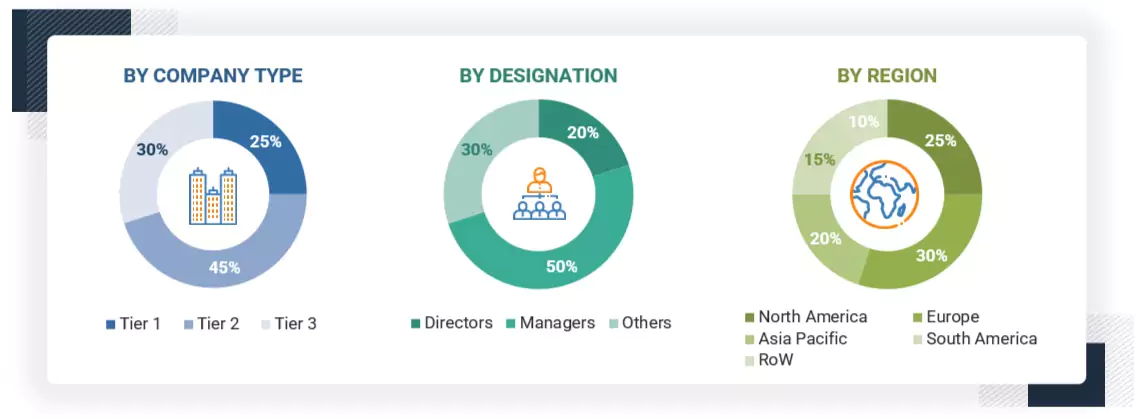
Note: The three tiers of the companies are defined based on their total revenues in 2022 or 2023,
as per the availability of financial data: Tier 1: Revenue > USD 1 billion; Tier 2: USD 100 million = Revenue = USD 1 billion;
Tier 3: Revenue < USD 100 million.
To know about the assumptions considered for the study, download the pdf brochure
|
COMPANY NAME |
DESIGNATION |
|
BASF SE (Germany) |
Sales Manager |
|
Syngenta (Switzerland) |
Territory Sales Manager |
|
Bayer AG (Germany) |
Regional Marketing Manager |
|
Corteva (US) |
Operations Manager |
|
UPL (India) |
Marketing Manager |
Market Size Estimation
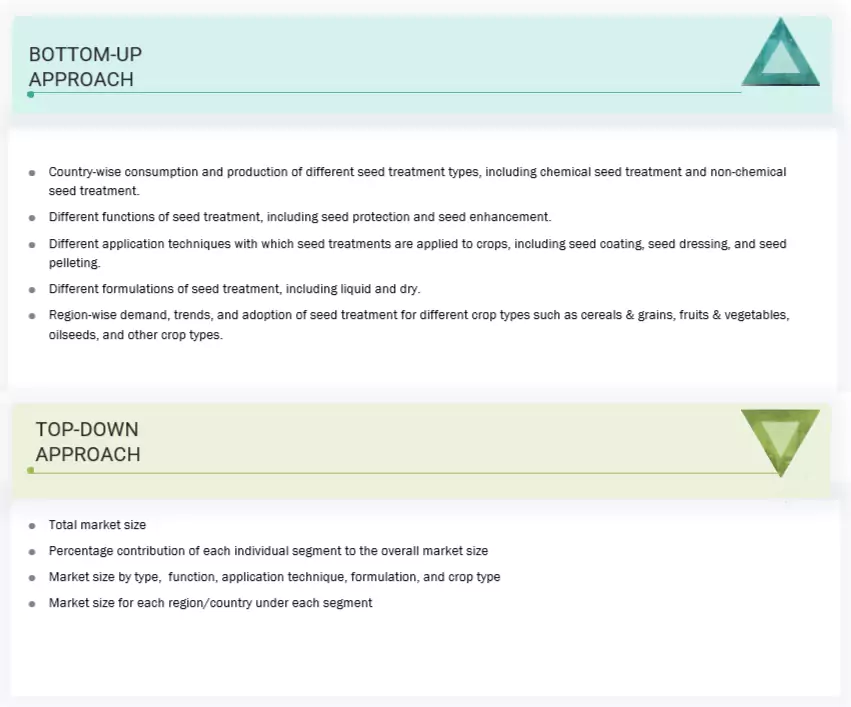
The top-down and bottom-up approaches were used to estimate and validate the total size of the seed treatment market. These approaches were also used extensively to determine the size of various subsegments in the market. The research methodology used to estimate the market size includes the following details.
- The key players in the industry and the overall markets were identified through extensive secondary research.
- All shares, splits, and breakdowns were determined using secondary sources and verified through primary sources.
- All possible parameters that affect the market covered in this research study were accounted for, viewed in extensive detail, verified through primary research, and analyzed to obtain final quantitative and qualitative data.
- The research included the study of reports, reviews, and newsletters of top market players, along with extensive interviews for opinions from leaders, such as CEOs, directors, and marketing executives.
Seed Treatment Market : Top-Down and Bottom-Up Approach
Data Triangulation
After determining the overall market size from the above estimation process, the total market was split into several segments and subsegments. Wherever applicable, the data triangulation and market breakdown procedures were employed to estimate the overall seed treatment market and arrive at the exact statistics for all segments and subsegments. The data was triangulated by studying various factors and trends from the demand and supply sides. The market size was also validated using both the top-down and bottom-up approaches.
Market Definition
According to the International Seed Federation, “Seed treatments are the biological, physical, and chemical agents and techniques applied to seed to provide protection and improve the establishment of healthy crops.”
Seed treatments are chemical/biological substances or physical techniques used on seeds or vegetative propagation materials to protect them by controlling disease organisms, insects, or other pests. Seed treatment products mainly include insecticides, bactericides, and fungicides. Seed treatments also help improve the establishment of healthy crops by treating the seeds with the required nutrients.
Stakeholders
- Seed treatment manufacturers, formulators, and blenders
- Seed treatment traders, suppliers, distributors, importers, and exporters
- Crop protection chemical providers and manufacturers
- Agriculture co-operative societies
- Commercial research & development (R&D) organizations and financial institutions
Associations, regulatory bodies, and other industry-related bodies:
- European Seed Treatment Association (ESTA)
- Crop Protection Association (CPA)
- European Crop Protection Association (ECPA)
- American Seed Trade Association (ASTA)
- National Seed Association of India (NSAI)
- International Seed Federation (ISF)
- French Crop Protection Association (UIPP)
- CropLife
- Canadian Food Inspection Agency (CFIA)
- US Environmental Protection Agency (EPA)
Report Objectives
- To determine and project the size of the seed treatment market based on type, function, formulation, crop type, application technique, and regions in terms of value over five years, ranging from 2025 to 2030
- To identify the attractive opportunities in the market by determining the largest and fastest-growing segments across regions
- To provide detailed information about the key factors influencing market growth (drivers, restraints, opportunities, and challenges)
- To analyze the opportunities in the market for stakeholders and provide details of the competitive landscape for market leaders
- To analyze the micromarkets with respect to individual growth trends, prospects, and their contribution to the total market
- To identify and profile the key players in the seed treatment market
- To understand the competitive landscape and identify the major growth strategies adopted by players across the key regions
Available Customizations
With the given market data, MarketsandMarkets offers customizations according to company-specific scientific needs.
The following customization options are available for the report:
Product Analysis
- Product matrix, which gives a detailed comparison of the product portfolio of each company.
Geographic Analysis as per Feasibility
With the given market data, MarketsandMarkets offers customizations according to company-specific scientific needs.
- Further breakdown of the Rest of European seed treatment market into key countries
- Further breakdown of the Rest of Asia Pacific seed treatment market into key countries
- Further breakdown of the Rest of South American seed treatment market into key countries
Company Information
- Detailed analyses and profiling of additional market players (up to five)
Get the Full Seed Treatment Market Report
Full forecast, segment splits, and company analysis for all Seed Treatment Market.
- US Seed Treatment Market
- Canada Seed Treatment Market
- Mexico Seed Treatment Market
- Brazil Seed Treatment Market
- Argentina Seed Treatment Market
- France Seed Treatment Market
- Germany Seed Treatment Market
- Spain Seed Treatment Market
- Italy Seed Treatment Market
- UK Seed Treatment Market
- China Seed Treatment Market
- India Seed Treatment Market
- Japan Seed Treatment Market
Need a Tailored Report?
Customize this report to your needs
Get 10% FREE Customization
Customize This Report
