
Australia Sepsis Diagnostics Market (2024-2029)

The Australia Sepsis Diagnostics Market was valued at $14 Million in 2024 and projected to reach to $19.5 Million by 2029, representing a compound annual growth rate of 6.9%. Australia's sepsis diagnostics market is positioned for consistent growth as the nation's healthcare system continues to modernize critical care capabilities.


| Market Size in | USD 26.32 MN |
| Market Forecast in | |
| CAGR | |
| Forecast Period | |
| Units Considered | Value (USD MN) |
Australia Sepsis Diagnostics Market Trends and Insights
- This expansion reflects Australia's commitment to improving critical care infrastructure and early sepsis detection capabilities across hospitals and diagnostic laboratories.
- Australia's healthcare system is increasingly adopting rapid diagnostic technologies to reduce time-to-treatment and improve patient outcomes in sepsis management. The Australian market is driven by rising sepsis incidence, aging population demographics, and heightened clinical awareness of the need for rapid, accurate diagnostics.
- Australia's regulatory environment and strong healthcare spending support innovation in sepsis diagnostic platforms.
- Between 2024 and 2029, Australia is expected to see accelerated adoption of molecular and immunoassay-based sepsis tests, particularly in intensive care units and emergency departments across major metropolitan and regional centers..
Key Market Statistics
- CAGR (2024-2029) 6.9% CAGR
- Market Size, 2024 ~USD 14 Million
- Forecast, 2029 ~USD 19.5 Million
- Country Australia
Australia Sepsis Diagnostics Market Overview
Market Valuation :
Australia's sepsis diagnostics market is valued at $14.0 million in 2024, with a projected CAGR of 6.9% through 2029, reaching $19.5 million by forecast end.
Healthcare System Modernization :
Australian hospitals and diagnostic laboratories are increasingly investing in rapid diagnostic technologies to enhance early sepsis detection and improve critical care outcomes across the nation.
Regional Growth Drivers :
Australia's commitment to improving critical care infrastructure, combined with rising sepsis awareness among healthcare providers, is driving steady market expansion and technology adoption.
Diagnostic Technology Adoption :
Australian healthcare facilities are prioritizing rapid sepsis diagnostic solutions to reduce time-to-treatment and improve patient survival rates in intensive care settings.
Australia Sepsis Diagnostics Market Dynamics
- The 6.9% CAGR reflects increasing investment in rapid diagnostic technologies and heightened awareness of sepsis management protocols among Australian hospitals and pathology laboratories.
- Government initiatives supporting healthcare infrastructure improvements and the emphasis on reducing hospital-acquired infections are key growth catalysts. The forecast period through 2029 will likely see expanded adoption of point-of-care testing and molecular diagnostic platforms across Australian healthcare networks.
- Rising sepsis incidence rates, coupled with regulatory support for advanced diagnostic solutions, will drive market expansion.
- Australian diagnostic providers and healthcare institutions are expected to increasingly integrate automated sepsis detection systems to enhance clinical outcomes and operational efficiency..
Market Ecosystem
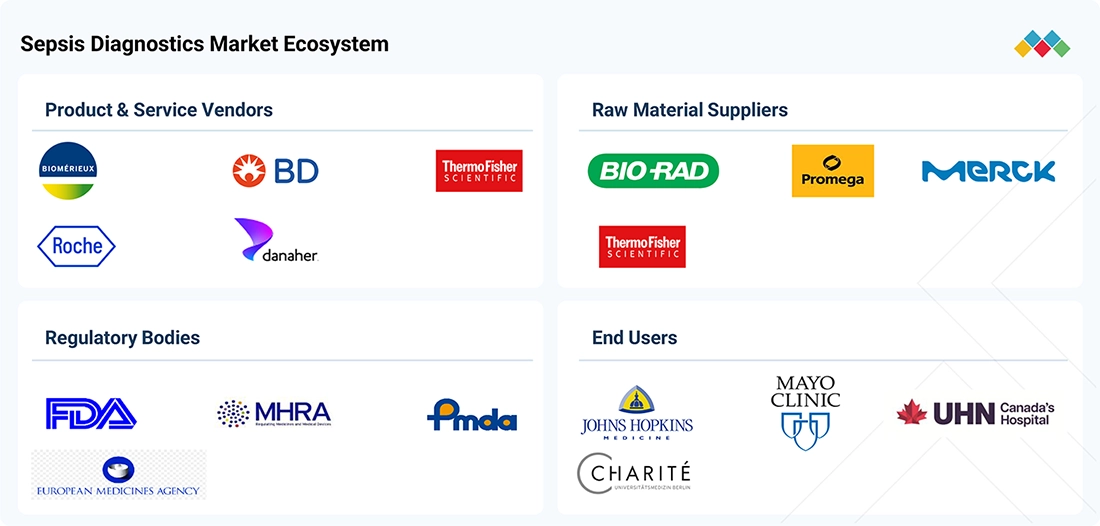
SEPSIS DIAGNOSTICS MARKET: COMMERCIAL USE CASES ACROSS INDUSTRIES
| COMPANY | USE CASE DESCRIPTION | BENEFITS |
|---|---|---|
 |
Provides integrated sepsis diagnostics solutions across automated blood culture, rapid syndromic molecular testing, microbial identification, and antimicrobial susceptibility testing through platforms used in hospital microbiology laboratories | Enables faster bloodstream infection detection, rapid pathogen identification, improved antimicrobial selection, and stronger antimicrobial stewardship support |
 |
Supports sepsis and bloodstream infection diagnostics through blood culture systems, specimen collection products, microbiology automation, and antimicrobial susceptibility testing solutions used across hospitals and reference laboratories | Improves laboratory workflow efficiency, supports high-volume microbiology testing, reduces turnaround time, and helps clinicians optimize antibiotic therapy |
 |
Through its diagnostics businesses, provides molecular diagnostics, clinical chemistry, immunoassay, and laboratory automation solutions that support infectious disease testing and sepsis-related clinical decision-making | Supports rapid pathogen detection, biomarker-based assessment, automated laboratory workflows, and improved diagnosis of suspected sepsis cases |
Logos and trademarks shown above are the property of their respective owners. Their use here is for informational and illustrative purposes only.
Related Ecosystem
In Vitro Diagnostics
- Polymerase Chain Reaction (PCR)
- Enzyme-Linked Immunosorbent Assay (ELISA)
- Dna Microarrays
- Assay Kits
- Microarrays
- ROCHE HOLDINGS AG
- Thermo Fisher Scientific Inc.
- Danaher Corporation
- Abbott Laboratories
- Biomerieux s.a.
Key Takeaways
- Australia's sepsis diagnostics market is valued at $14.0 million in 2024 and will grow to $19.5 million by 2029, representing a 6.9% CAGR.
- Australia's aging population and rising sepsis prevalence are key drivers of diagnostic demand across Australian healthcare facilities.
- Australia's advanced healthcare infrastructure and regulatory framework support rapid adoption of innovative sepsis diagnostic technologies.
- Australia's market growth is fueled by increased clinical focus on early sepsis detection and time-sensitive treatment protocols in Australian hospitals.
Sepsis Diagnostics Market Report Scope
| Report Metric | Details |
|---|---|
| Base Year | 2024 |
| Fastest Growing Segment | POINT-OF-CARE TESTS (Test Type) |
| Forecast Period | 2024–2029 |
| Growth Rate | CAGR of 7% from 2024 to 2029 |
| Largest Segment | BLOOD CULTURE (Technology) |
| Market Size Base Year (Billions) | ~USD 0.63 (2024) |
| Revenue Forecast (Billions) | ~USD 0.89 (2029) |
| Segments Covered | Technology, Product, Method, Pathogen Type, Type, Test Type, End User |
Australia Sepsis Diagnostics Market Report Segmentation
7 segment dimensions are covered across the global market.
By Technology
- Biomarkers
- Blood Culture
- Flow Cytometry
- Immunoassays
- Microfluidics
- Molecular Diagnostics
By Product
- Assays & Reagent Kits
- Blood Culture Media
- Instruments
- Software
By Method
- Automated Diagnostics
- Conventional Diagnostics
By Pathogen Type
- Bacterial Sepsis
- Fungal Sepsis
- Other Pathogen Types
By Type
- Dna Sequencing
- Gram-Negative Bacteria
- Gram-Negative Bacterial Sepsis
- Gram-Positive Bacteria
- Gram-Positive Bacterial Sepsis
- Microarrays
- Peptide Nucleic Acid-Fluorescent In Situ Hybridization
- Polymerase Chain Reaction
By Test Type
- Laboratory Tests
- Point-Of-Care Tests
By End User
- Hospitals And Specialty Clinics
- Pathology And Reference Laboratories
- Research Laboratories, Academic Institutes, And Cros
Target Audience
- In Vitro Diagnostics Manufacturers : IVD companies need Australia-specific market data to assess market potential, benchmark competitive positioning, and develop localized product strategies for sepsis diagnostic platforms.
- Hospital & Pathology Laboratory Administrators : Healthcare facility leaders require market insights to justify capital investments in rapid sepsis diagnostic systems, evaluate vendor options, and optimize critical care laboratory operations.
- Medical Device Distributors & Suppliers : Australian distributors need detailed market analysis to identify growth opportunities, understand customer requirements, and develop effective sales strategies for sepsis diagnostic solutions.
- Healthcare Investment & Consulting Firms : Investment professionals and consultants require Australia-focused market data for due diligence, portfolio analysis, and strategic recommendations in the sepsis diagnostics sector.
- Government & Healthcare Policy Makers : Australian health authorities and policymakers need market intelligence to inform healthcare infrastructure planning, funding allocation, and sepsis management protocol development.
Key Companies in the Australia Sepsis Diagnostics Market
| Company | HQ | Ownership | Strongest segments |
|---|---|---|---|
| CEPHEID INC. | United States | Private Company | GeneXpert instruments and Xpert test cartridges,SmartCycler system and associated reagents,Collaborative and specialized assays (e.g., TB, Ebola, USPS BDS), |
| NANOSPHERE, INC | United States | Private Company | Infectious disease molecular assays,Pharmacogenetic and human genetic assays,Protein and ultra-sensitive multiplex assays, |
| TOSOH CORPORATION | Japan | Public Company | Basic chemicals and chlor-alkali (caustic soda, VCM, EDC, sodium bicarbonate),Polymers and petrochemicals (PE, EVA, PVC pastes, synthetic rubber, functional polymers),Advanced materials (battery materials, quartzware, silica glass, thin films, zeolites, zirconia), |
| BIOMÉRIEUX | France | Public Company | Clinical microbiology (ID/AST, blood culture, culture media),Syndromic and molecular diagnostics (BIOFIRE, SPOTFIRE, ARGENE, NUCLISENS, EMAG),Immunoassay and sepsis markers (VIDAS, Hybiome CLIA), |
| BECTON, DICKINSON AND COMPANY | United States | Public Company | Medical Essentials (syringes, needles, vascular access, sharps, basic disposables),Connected Care (infusion, medication management, pharmacy automation, informatics),BioPharma Systems (prefillable drug delivery systems), |
| DANAHER CORPORATION | United States | Public Company | Biotechnology (bioprocessing and related tools),Life Sciences (instruments, genomics, and reagents),Diagnostics (clinical instruments and consumables), |
| T2 BIOSYSTEMS, INC. | United States | Public Company | T2Dx instrument,T2Candida panel,T2Bacteria panel, |
| DIASORIN S.P.A. | Italy | Public Company | Immunodiagnostics – Infectious & Gastrointestinal Diseases, Hepatitis & Retroviruses,Immunodiagnostics – Endocrinology & Metabolic Disorders,Tumor Markers and Oncology Assays, |
| THERMO FISHER SCIENTIFIC INC. | United States | Public Company | Life Sciences Solutions,Analytical Instruments,Specialty Diagnostics, |
| BRUKER CORPORATION | United States | Public Company | BSI BioSpin (NMR/EPR and preclinical imaging),BSI CALID (mass spectrometry and molecular diagnostics),BSI Nano (X-ray, AFM, electron microscopy tools), |
| QUIDELORTHO CORPORATION | United States | Public Company | Labs (clinical chemistry and immunoassay),Transfusion Medicine,Point of Care, |
| SYSMEX CORPORATION | Japan | Public Company | Hematology analyzers and reagents (XN-Series, XN-V, ProCyte Dx),Coagulation systems and reagents,Blood gas, electrolyte, and urinalysis analyzers, |
| ABBOTT LABORATORIES | United States | Public Company | Medical Devices,Diagnostic Products,Nutritional Products, |
| SIEMENS HEALTHINEERS | Germany | Public Company | Imaging,Diagnostics,Varian (Oncology), |
| QIAGEN N.V. | Netherlands | Public Company | Sample technology consumables (nucleic acid stabilization/purification),Immune response and infectious disease assays (incl. TB IGRA),Oncology and sexual/reproductive health assays, |
| SEEGENE, INC. | South Korea | Public Company | Respiratory disease detection,Gastrointestinal disease detection,STI and HPV detection, |
| PHC HOLDINGS CORPORATION | Japan | Public Company | Diabetes Management,Healthcare Solutions (EMR, receipt, pharmacy, wellness),Diagnostic and Life Sciences Equipment, |
CEPHEID INC.
Cepheid Inc. is a private molecular diagnostics company founded in 1996 in the United States with 1,700 employees. The company develops and manufactures diagnostic systems and tests.
NANOSPHERE, INC
Nanosphere, Inc. is a private diagnostic company founded in 1998 in the United States with 148 employees. The company focuses on molecular diagnostic technologies.
TOSOH CORPORATION
Tosoh Corporation is a Japanese public company founded in 1935 with 14,850 employees. The company operates across multiple business segments including diagnostics and healthcare products.
BIOMÉRIEUX
bioMérieux is a French public company founded in 1963 with 14,894 employees. The company specializes in in vitro diagnostics for infectious diseases and industrial microbiology.
BECTON, DICKINSON AND COMPANY
Becton, Dickinson and Company is a United States public company founded in 1897 with 72,000 employees. The company is a global medical technology manufacturer producing diagnostic systems, devices, and reagents.
DANAHER CORPORATION
Danaher Corporation is a United States public company founded in 1969 with 59,000 employees. The company operates a diversified portfolio of businesses including diagnostics and life sciences.
T2 BIOSYSTEMS, INC.
T2 Biosystems, Inc. is a United States public company founded in 2006 with 113 employees. The company develops rapid diagnostic technologies for infectious diseases.
DIASORIN S.P.A.
DiaSorin S.p.A. is an Italian public company founded in 1968 with 3,242 employees. The company manufactures and distributes in vitro diagnostic products.
THERMO FISHER SCIENTIFIC INC.
Thermo Fisher Scientific Inc. is a United States public company founded in 1956 with 125,000 employees. The company is a global leader in serving science with laboratory equipment, reagents, and diagnostic solutions.
BRUKER CORPORATION
Bruker Corporation is a United States public company founded in 1960 with 11,085 employees. The company manufactures scientific instruments and analytical systems for research and diagnostics.
QUIDELORTHO CORPORATION
Qiagen N.V. is a Netherlands public company founded in 1984 with 5,500 employees. The company develops and manufactures molecular diagnostics and sample preparation technologies.
SYSMEX CORPORATION
QuidelOrtho Corporation is a United States public company founded in 1979 with 6,500 employees. The company develops and manufactures rapid diagnostic tests and point-of-care solutions.
ABBOTT LABORATORIES
Sysmex Corporation is a Japanese public company founded in 1968 with 10,861 employees. The company manufactures and sells in vitro diagnostic systems and reagents.
SIEMENS HEALTHINEERS
Siemens Healthineers is a German public company founded in 1896 with 72,369 employees. The company develops and manufactures diagnostic imaging, laboratory diagnostics, and point-of-care testing systems.
QIAGEN N.V.
QIAGEN N.V. is a Netherlands public company founded in 1984 with 5,500 employees. The company develops and manufactures molecular diagnostics and sample preparation technologies.
SEEGENE, INC.
Seegene, Inc. is a South Korean public company founded in 2000 with 216 employees. The company develops and manufactures molecular diagnostic products and multiplex PCR technologies.
PHC HOLDINGS CORPORATION
PHC Holdings Corporation is a Japanese public company founded in 1948 with 8,647 employees. The company manufactures and sells medical devices and diagnostic equipment.
Reasons to Buy this Report
- Market Size & Growth Data : Access precise valuation figures for Australia's sepsis diagnostics market ($14.0M in 2024) with detailed CAGR projections through 2029, enabling accurate financial forecasting and investment planning.
- Competitive Landscape Intelligence : Understand the competitive positioning of diagnostic providers and technology vendors operating within Australia's sepsis diagnostics sector, identifying market opportunities and strategic partnerships.
- Healthcare Infrastructure Insights : Gain detailed knowledge of Australian hospital adoption rates, diagnostic laboratory capabilities, and critical care infrastructure investments driving sepsis diagnostic technology implementation.
- Regulatory & Reimbursement Environment : Obtain comprehensive analysis of Australian healthcare regulations, pathology reimbursement models, and government policies influencing sepsis diagnostic adoption and market dynamics.
- Strategic Market Entry Planning : Leverage Australia-specific market data to develop targeted go-to-market strategies, identify key stakeholders, and prioritize distribution channels for sepsis diagnostic solutions.
Frequently asked questions
What is the current size of Australia's sepsis diagnostics market?
Australia's sepsis diagnostics market was valued at $14.0 million in 2024 and is projected to reach $19.5 million by 2029.
What is the growth rate of Australia's sepsis diagnostics market?
Australia's sepsis diagnostics market is growing at a compound annual growth rate (CAGR) of 6.9% from 2024 to 2029.
What factors are driving growth in Australia's sepsis diagnostics market?
Australia's market growth is driven by an aging population, rising sepsis incidence, increased clinical awareness, strong healthcare spending, and adoption of rapid diagnostic technologies in Australian hospitals.
Which diagnostic technologies are most prevalent in Australia's sepsis market?
Australia's sepsis diagnostics market is increasingly adopting molecular and immunoassay-based diagnostic platforms, particularly in intensive care units and emergency departments.
How does Australia's market compare to the broader Asia Pacific region?
Australia's sepsis diagnostics market, growing at 6.9% CAGR, reflects strong healthcare infrastructure and regulatory support, positioning Australia as a key market within the Asia Pacific region.
RESEARCH METHODOLOGY
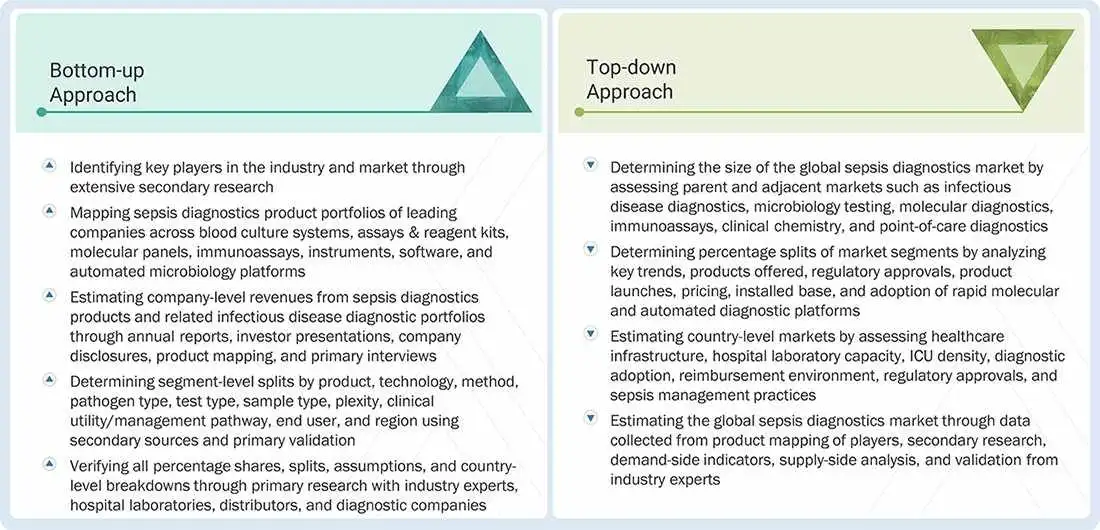
This study involved four major activities to estimate the current size of the sepsis diagnostics market. Exhaustive secondary research was conducted to gather information on the market, its peer markets, and its parent market. These findings, assumptions, and sizing were then validated with industry experts across the value chain through primary research. Both top-down and bottom-up approaches were employed to estimate the total market size. Following this, data triangulation was used to estimate the market size of segments and subsegments.
Secondary Research
Secondary research was primarily used to identify and gather information for the extensive, technical, market-oriented, and commercial study of the global sepsis diagnostics market. The secondary sources used in this study include publications from government and public health organizations such as the World Health Organization (WHO), Centers for Disease Control and Prevention (CDC), National Institutes of Health (NIH), National Center for Biotechnology Information (NCBI), Food and Drug Administration (FDA), European Medicines Agency (EMA), European Centre for Disease Prevention and Control (ECDC), and other regional health authorities. Secondary sources also included corporate and regulatory filings such as annual reports, SEC filings, investor presentations, and financial statements; company websites; product brochures and catalogs; press releases; peer-reviewed journals; clinical guidelines; sepsis-related publications; and infectious disease databases, among others.
These sources provided key information on major players, product portfolios, global product revenues, market classification, sepsis diagnostics technologies, product launches, regulatory approvals, clinical adoption trends, antimicrobial stewardship initiatives, and regional and country-level market developments. Secondary data were collected and analyzed to estimate the size of the global sepsis diagnostics market, and the findings were validated through primary research.
Primary Research
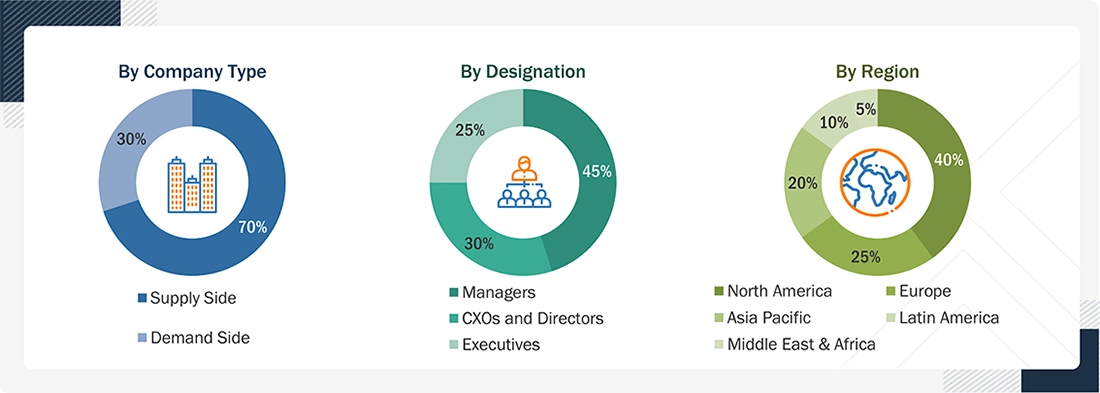
In-depth interviews were conducted with primary respondents, including key industry participants, subject-matter experts, C-level executives of key market players, product managers, laboratory directors, infectious disease specialists, microbiologists, pathologists, hospital procurement professionals, consultants, and other stakeholders to obtain and verify critical qualitative and quantitative information and to assess market prospects. Primary sources from both the supply and demand sides of the market were interviewed to gather qualitative and quantitative information. The following is a breakdown of the primary respondents:
To know about the assumptions considered for the study, download the pdf brochure
Market Size Estimation
The global size of the sepsis diagnostics market was estimated using multiple approaches. A detailed market estimation approach was used to estimate and validate the market value and other dependent submarkets. These methods were also used extensively to estimate the size of various subsegments in the market, including product, technology, method, pathogen type, test type, sample type, complexity, clinical utility/management pathway, end user, and region.
The market size estimate included revenues from blood culture media, assays and reagent kits, instruments, and software used in sepsis diagnostics. It also included technologies such as blood culture/microbiology testing, immunoassays, molecular diagnostics, flow cytometry, mass spectrometry, and clinical chemistry and blood gas analysis. Company revenues, product mapping, installed base, test volumes, average selling prices, adoption rates, disease burden, hospital testing patterns, and regional laboratory infrastructure were analyzed to estimate the market size.
Data Triangulation
After estimating the overall market size through the market size estimation process, the total market was divided into several segments. To complete the overall market engineering process and arrive at the exact statistics for all segments, the data triangulation procedure was employed; it involved analyzing various factors and trends from both the demand and supply sides.
On the supply side, company revenues, product portfolios, installed base, product launches, regulatory approvals, geographic presence, and diagnostic platform adoption were analyzed. On the demand side, sepsis incidence, bloodstream infection burden, hospital admissions, ICU testing volumes, laboratory test utilization, antimicrobial stewardship requirements, and adoption of rapid molecular and biomarker-based diagnostics were considered. The final estimates were validated through primary interviews and cross-checked against secondary research.
Market Definition
Sepsis diagnostics refers to in vitro diagnostic products, platforms, and testing solutions used for the early detection, diagnosis, pathogen identification, risk stratification, antimicrobial stewardship support, and prognosis/outcome prediction of sepsis and bloodstream infections. These diagnostics help clinicians identify infection, determine the causative pathogen, assess disease severity, support antimicrobial treatment decisions, and monitor patient condition in emergency departments, ICUs, hospitals, specialty clinics, and diagnostic laboratories. The market includes blood culture media, assays and reagent kits, instruments, and software used across technologies such as blood culture/microbiology testing, immunoassays, molecular diagnostics, flow cytometry, mass spectrometry, and clinical chemistry and blood gas analysis. It also includes laboratory and point-of-care tests used for bacterial, fungal, parasitic, and polymicrobial sepsis, as well as other sepsis-related diagnostic applications.
Key Stakeholders
- Manufacturers and distributors of sepsis diagnostics products
- In vitro diagnostic (IVD) companies
- Blood culture and microbiology testing companies
- Molecular diagnostics companies
- Immunoassay and biomarker testing companies
- Mass spectrometry and microbial identification platform providers
- Clinical chemistry and blood gas analyzer manufacturers
- Point-of-care diagnostics companies
- Hospital laboratories
- Pathology and reference laboratories
- Hospitals and specialty clinics
- Emergency departments and intensive care units
- Infectious disease specialists, microbiologists, and pathologists
- Research laboratories and academic institutes
- Clinical research organizations (CROs)
- Contract research and diagnostic service providers
- Regulatory authorities and government health agencies
- Public health organizations
- Group purchasing organizations and hospital procurement teams
- Diagnostics suppliers and raw material providers
- Market research and consulting firms
- Venture capitalists and investors
Report Objectives
- To define, describe, segment, and forecast the global sepsis diagnostics market, by product, technology, method, pathogen type, test type, sample type, plexity, clinical utility/management pathway, end user, and region
- To provide detailed information regarding the major factors influencing market growth (such as drivers, restraints, opportunities, and challenges)
- To analyze micromarkets with respect to individual growth trends, prospects, and contributions to the overall sepsis diagnostics market
- To analyze market opportunities for stakeholders and provide details of the competitive landscape for key players
- To forecast the size of the market segments with respect to six regions: North America(US and Canada), Europe (Germany, France, the UK, Switzerland, Italy, Spain, and the Rest of Europe), Asia Pacific (China, Japan, India, South Korea, Australia, and the Rest of Asia Pacific), Latin America (Brazil, Mexico, and the Rest of Latin America), the Middle East [GCC and the Rest of Middle East], and Africa
- To profile the key players and comprehensively analyze their product portfolios, market positions, and core competencies
- To analyze company developments such as product launches & approvals, partnerships, acquisitions, agreements, collaborations, expansions, and other developments
- To benchmark players within the market using the proprietary “Company Evaluation Matrix” framework, which analyzes market players on various parameters within the broad categories of business and product excellence strategy
Available customizations:
With the given market data, MarketsandMarkets offers customizations as per the company’s specific needs. The following customization options are available for the report:
Geographical Analysis
- Further breakdown of the Rest of Europe Sepsis Diagnostics market, by country
- Further breakdown of the Rest of Asia Pacific Sepsis Diagnostics market, by country
Company Information
- Detailed analysis and profiling of additional market players (up to five)
Segment Analysis
- Cross-segment analysis
Get the Full Sepsis Diagnostics Market Report
Full forecast, segment splits, and company analysis for all Sepsis Diagnostics Market.
- US Sepsis Diagnostics Market
- Canada Sepsis Diagnostics Market
- Germany Sepsis Diagnostics Market
- UK Sepsis Diagnostics Market
- France Sepsis Diagnostics Market
- Italy Sepsis Diagnostics Market
- Spain Sepsis Diagnostics Market
- Japan Sepsis Diagnostics Market
- China Sepsis Diagnostics Market
- India Sepsis Diagnostics Market
- South Korea Sepsis Diagnostics Market
- Brazil Sepsis Diagnostics Market
- Mexico Sepsis Diagnostics Market
Need a Tailored Report?
Customize this report to your needs
Get 10% FREE Customization
Customize This Report
